
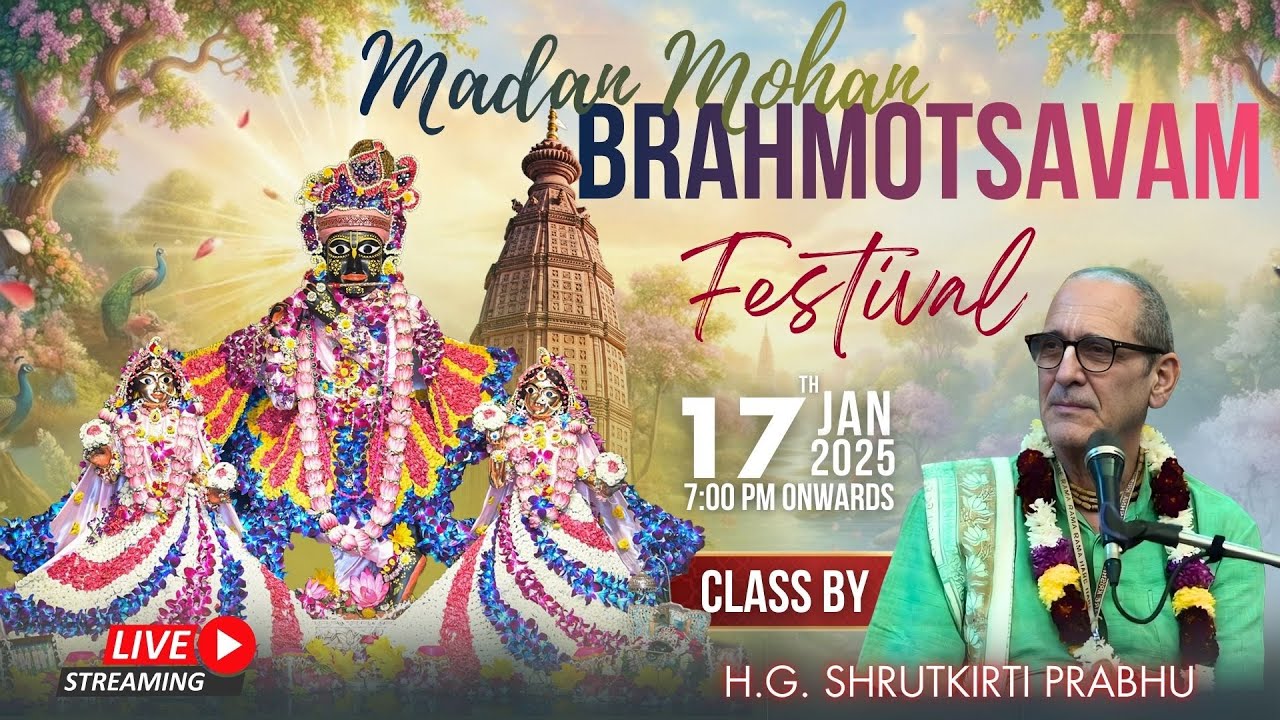
On 17 January 2026, Govardhan Eco Village hosted the Madan Mohan Brahmotsavam Festival, a live celebration honoring the divine glories of Sri Sri Radha Madan Mohan Ji. The occasion featured a special Brahmotsava class by H.G. Shrutkirti Prabhu, bringing together devotion, scholarship, and contemplative practice in a spiritually resonant setting.
The Brahmotsavam tradition, rooted in temple culture and bhakti practice, foregrounds rituals and reflections that cultivate humility, gratitude, and seva. In the GEV environmentknown for integrating spiritual practice with ecological stewardshipthe festival’s atmosphere emphasized mindful participation, kirtan, and shared remembrance of sacred narratives associated with Sri Sri Radha Madan Mohan Ji.
H.G. Shrutkirti Prabhu’s class offered structured insights into Gaudiya Vaishnava teachings with an accessible, reflective tone. Participants noted the clarity with which themes such as divine compassion, the transformative power of nama-japa, and the centrality of service were presented. The discourse aligned devotional fervor with practical guidance for daily sadhanaencouraging consistent chanting, attentive listening, and an ethic of care toward all beings.
The festival’s reflections resonate across the dharmic traditions of Hinduism, Buddhism, Jainism, and Sikhism. Bhakti’s emphasis on compassion and inner purification harmonizes with Buddhist mindfulness and metta, Jain ahimsa and aparigraha, and Sikh seva and simran. This shared ethical and spiritual ground nurtures unity in spiritual diversity, affirming that sincere practicethrough varied pathwayssupports a common aspiration toward wisdom, peace, and service.
For many attendees, the live setting at GEV heightened contemplative awareness, making the teachings feel immediate and applicable. Common takeaways included: cultivating steadiness in personal practice (abhyasa), integrating service into ordinary routines, and engaging with community in a spirit of interfaith respect within the broader dharmic family. The festival’s devotional arcdarshan, kirtan, and reflective studyencouraged participants to translate inspiration into daily discipline.
Beyond its ceremonial beauty, the Madan Mohan Brahmotsavam Festival served as a living classroom. The synthesis of ritual and reflection demonstrated how sacred celebration can deepen understanding of scripture, strengthen communal bonds, and inspire ethical action. In this shared space, devotion became both a personal commitment and a collective undertaking, fostering harmony, compassion, and unity.
Inspired by this post on Dandavats.
