
-
Why Hinduism Has No Commandments: Dharma’s Liberating, Context-Sensitive Ethics

Hinduism’s ethical core is not a fixed list of commandments but the dynamic, context‑sensitive framework of dharma. Drawing on the Vedas, Upanishads, the Bhagavad Gita, and the Dharmashastra tradition, it integrates personal virtue, social responsibility, and a vision of the highest good. This article explains sadharana and vishesha dharma, Mimamsa hermeneutics, and yogic disciplines such…
-
Lenskart revises style guide: Bindi, Sindoor, Tilak, Kalwa affirmed for inclusive workplaces

Lenskart has reportedly revised its style guide to explicitly permit Bindi, Sindoor, Tilak, and Kalwa, offering a practical blueprint for how consumer brands in India can respect religious expression without compromising safety or professionalism. The episode highlights the importance of clarity in corporate dress code and grooming policies to avoid discretionary enforcement at store level.…
-
Beyond Material Perception: Dharmic Wisdom to End the Cycle of Hoping Against Hope
Many public ideologies look different yet fail for the same reason: they rely on sensory empiricism while ignoring ethical and spiritual knowledge. This article clarifies how the ‘Daiva’ way—understood across Hinduism, Buddhism, Jainism, and Sikhism—reintroduces moral causality and higher purpose, transforming short-lived enthusiasm into resilient, reality-based hope. Drawing on pramāṇa theory, the Bhagavad Gita’s analysis…
-
When Darkness Becomes Light: Dharmic Perspectives for Clarity, Compassion, and Unity

This essay unpacks the metaphor “Darkness from one side is light from the other side” through Hindu philosophy and its sister Dharmic traditions—Buddhism, Jainism, and Sikhism. Drawing on the Upanishads, the Bhagavad Gita, Advaita Vedanta, Nyaya, Samkhya, and Yoga, it explains why perspectives diverge and how disciplined methods convert contradiction into clarity. Jain Anekantavada and…
-
Warkari ‘Radicalisation’ Row: Hindutva Leaders Rebuke Pawar, Evidence, Context, and Dharmic Unity
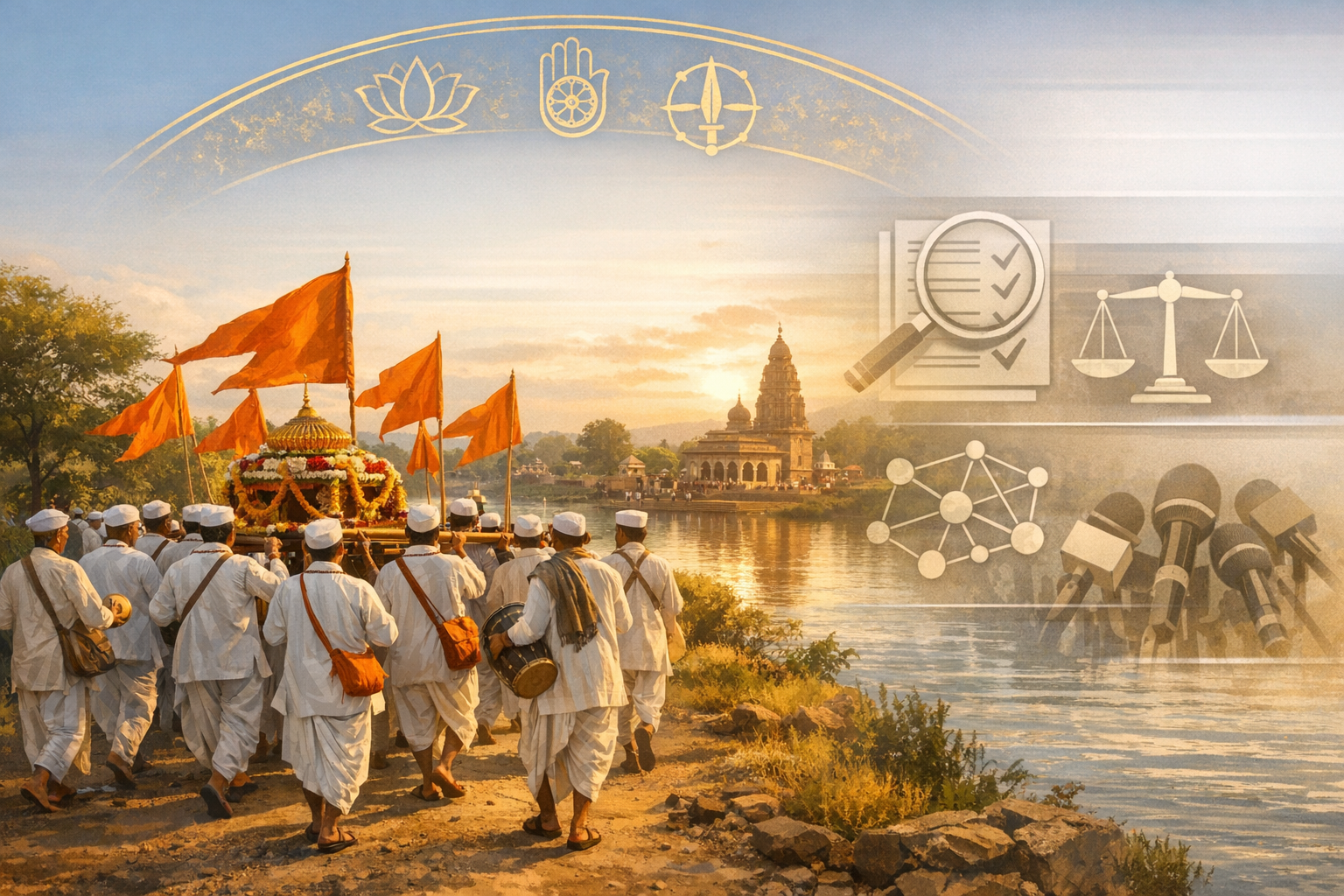
A remark by Sharad Pawar alleging “radicalisation” in the Warkari movement set off a political debate in Maharashtra, prompting forceful rebuttals from Hindutva leaders and Warkari organisations. This analysis situates the controversy within the Warkari Sampradaya’s Bhakti ethos—public devotion, kirtan, abhang, seva, and humility—while clarifying what security scholarship actually means by “radicalisation.” It explains why…
-
Saints Power a Nationwide Dharmic Renaissance: Alok Kumar on Ethical, Voluntary ‘Ghar Wapsi’
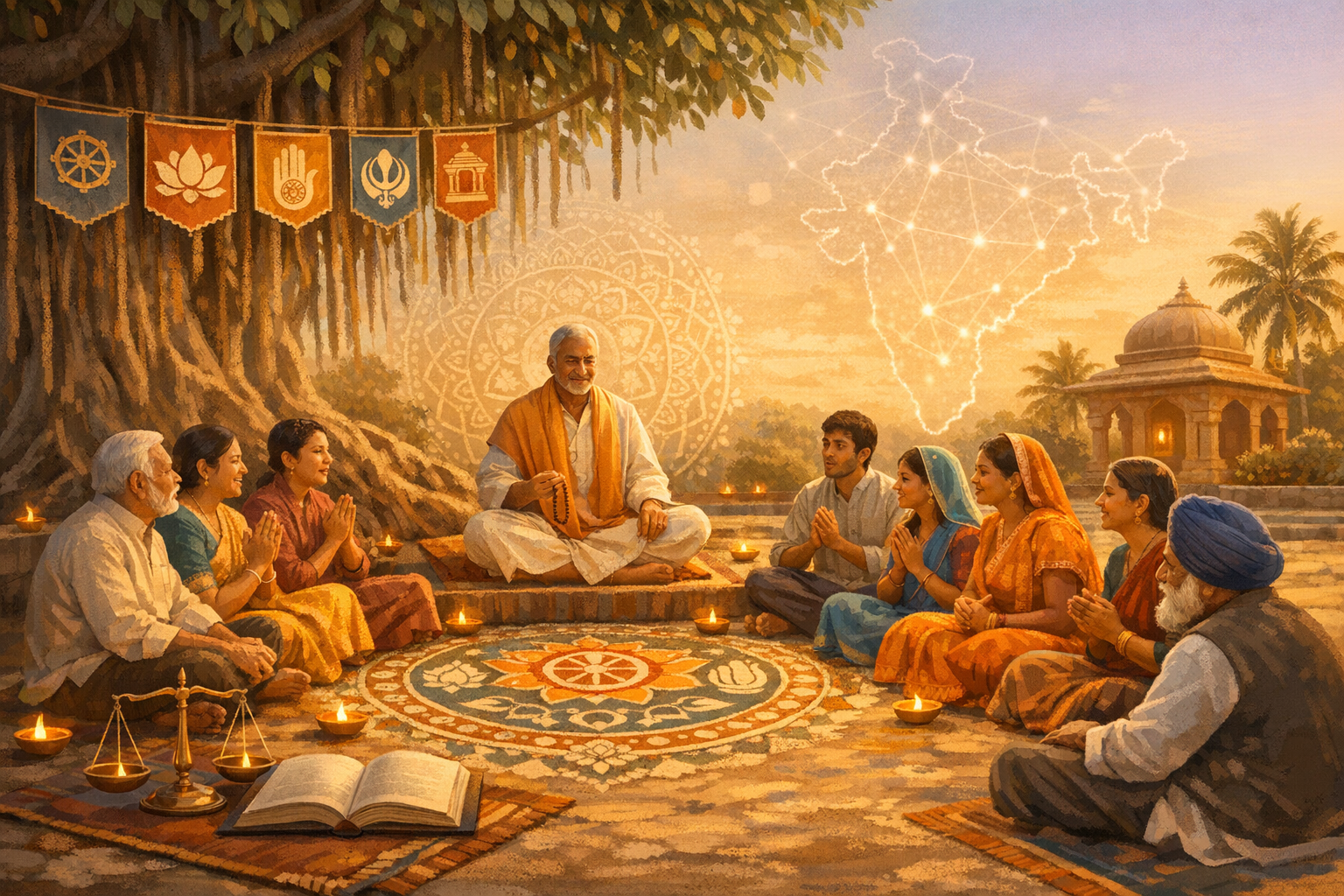
Advocate Alok Kumar (VHP) noted in Goa that saints are catalyzing a nationwide wave of ‘ghar wapsi’ by expanding Dharmic awareness at the grassroots. This analysis frames ‘ghar wapsi’ as a voluntary, plural, and constitutionally grounded homecoming to Dharmic heritage encompassing Hinduism, Buddhism, Jainism, and Sikhism. It explains the legal context (Articles 25–28 and state…
-
Why Questioning Is Sacred in Hinduism: A Deep Dive into Dharmic Philosophy and Pluralism

This article examines why questioning is sacred in Hinduism and the wider dharmic traditions, showing how inquiry anchors both philosophy and spiritual practice. It explains how the Upanishads, the Bhagavad Gita, and the classical darshanas institutionalize rigorous debate, evidence, and contemplative verification. Readers learn practical tools from pramana theory to navigate misinformation, and from disciplines…
-
Ego’s Illusion of Difference: Dharmic Wisdom on Avidya, Unity in Diversity, and Healing
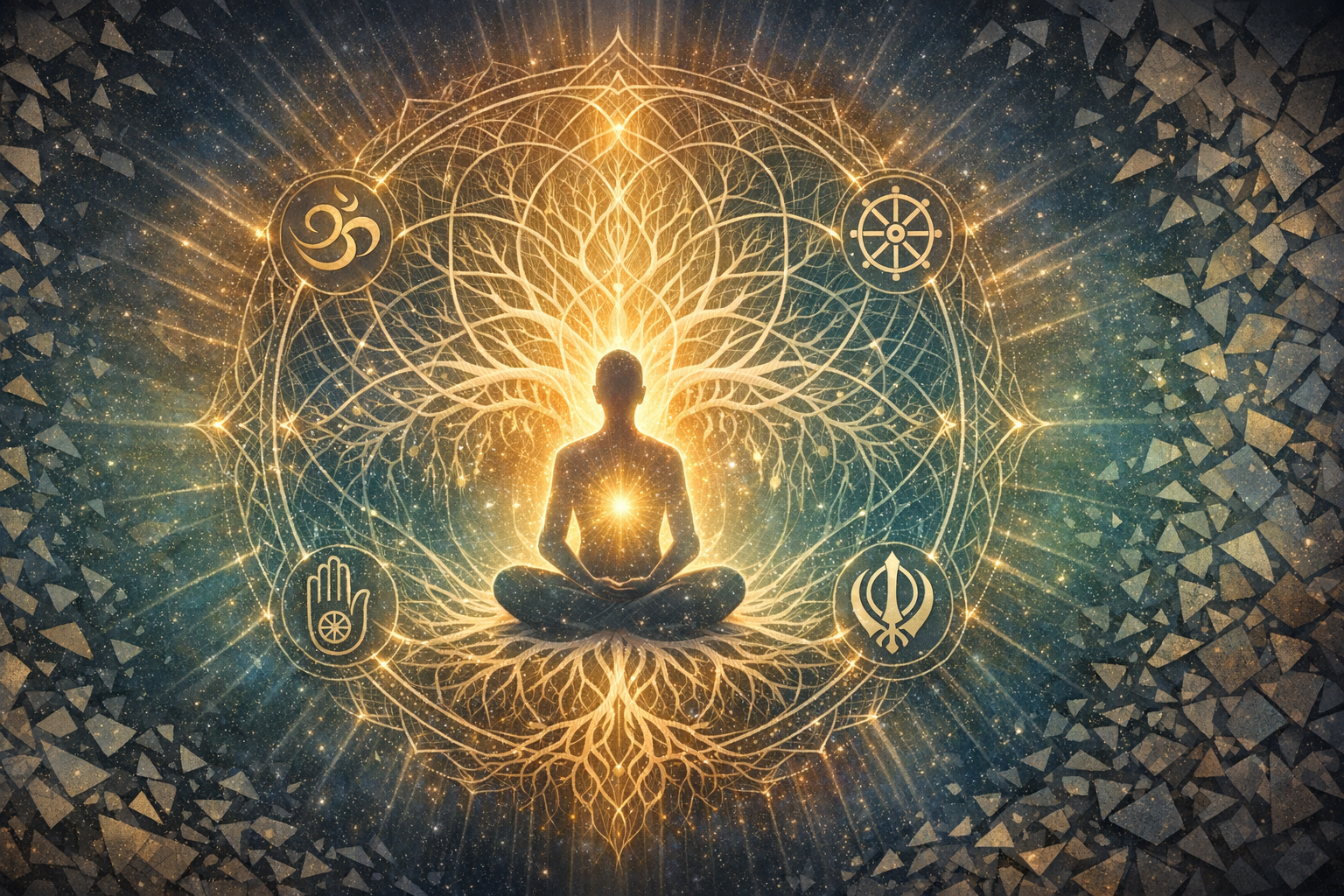
This essay examines why humans manufacture differences where none ultimately exist, using a dharmic framework drawn from the Upanishads, the Bhagavad Gita, Yoga Sutra, Anekantavada, Buddhist anatta, and Sikh teachings on Ik Onkar. It explains how avidya and ahankara harden provisional distinctions into identity, and how sama-darshana resists that process. It integrates classical Indian logic…
-
Mudgala Upanishad and the Purushasukta: Decoding Cosmic Personhood, Unity, and Dharma
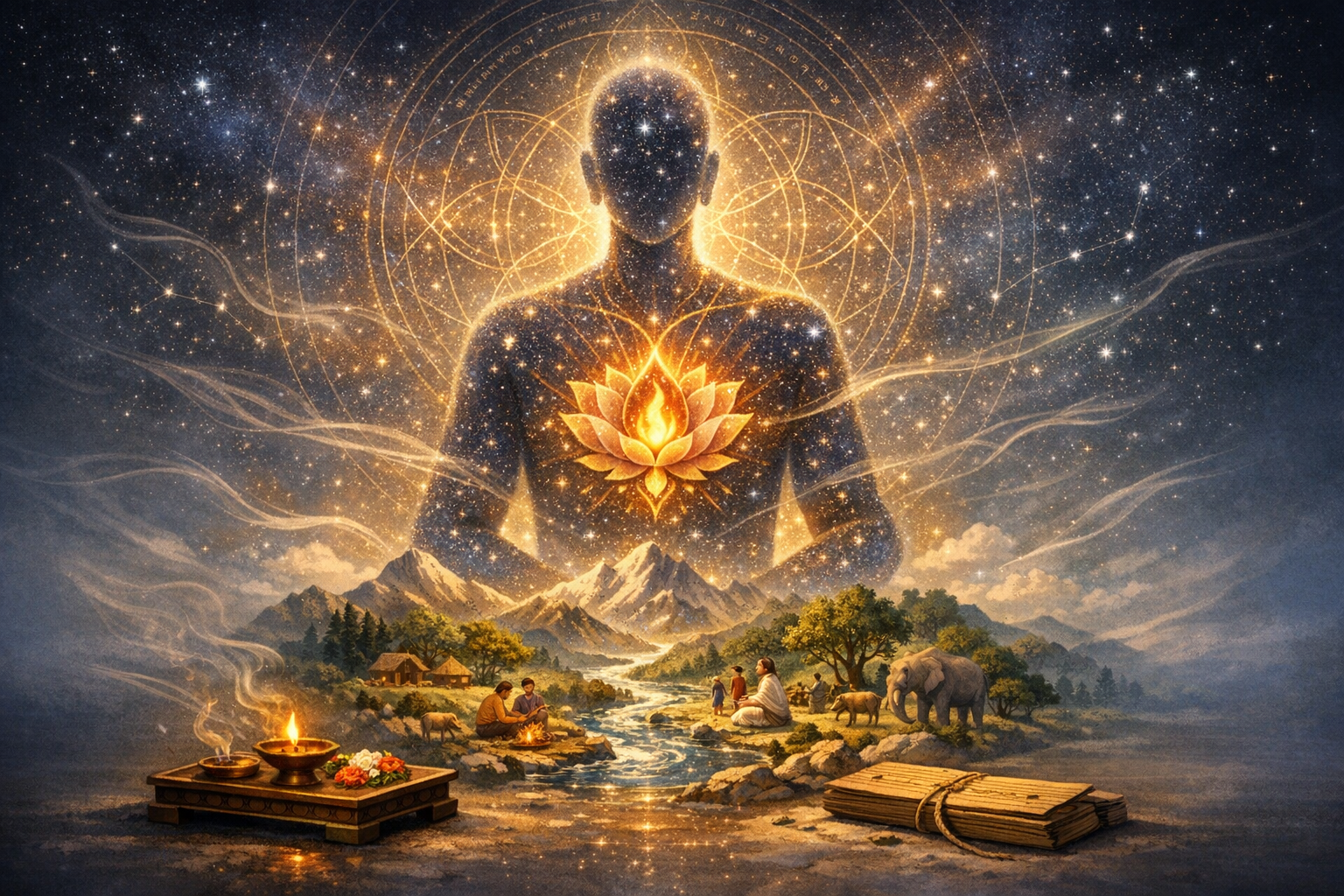
The Mudgala Upanishad, preserved in several Rigvedic lists, offers a concise contemplative counterpart to the Purushasukta (Rig Veda 10.90). Read together, they articulate a powerful vision of the Cosmic Person (Purusha) that harmonizes ritual symbolism with precise Upanishadic metaphysics. The essay explains key motifs—immanence and transcendence, cosmic sacrifice, and microcosm–macrocosm mappings—while clarifying socially sensitive verses…
-
Beyond Ritual and Dogma: Hindu Wisdom on Moving from Religion to Transformative Spirituality

This article clarifies the often-misunderstood difference between a religious person and a spiritual person through the lens of Hindu thought and its dharmic siblings. It explains how Hindu scriptures integrate dharma (form, ethics, and ritual) with adhyatma (direct realization) to support an inner transformation culminating in moksha. The discussion highlights Bhagavad Gita harmonies of karma,…
-
From Faith to Fellowship: A Family’s Peaceful Embrace of Sanatan Dharma at Bageshwar Dham
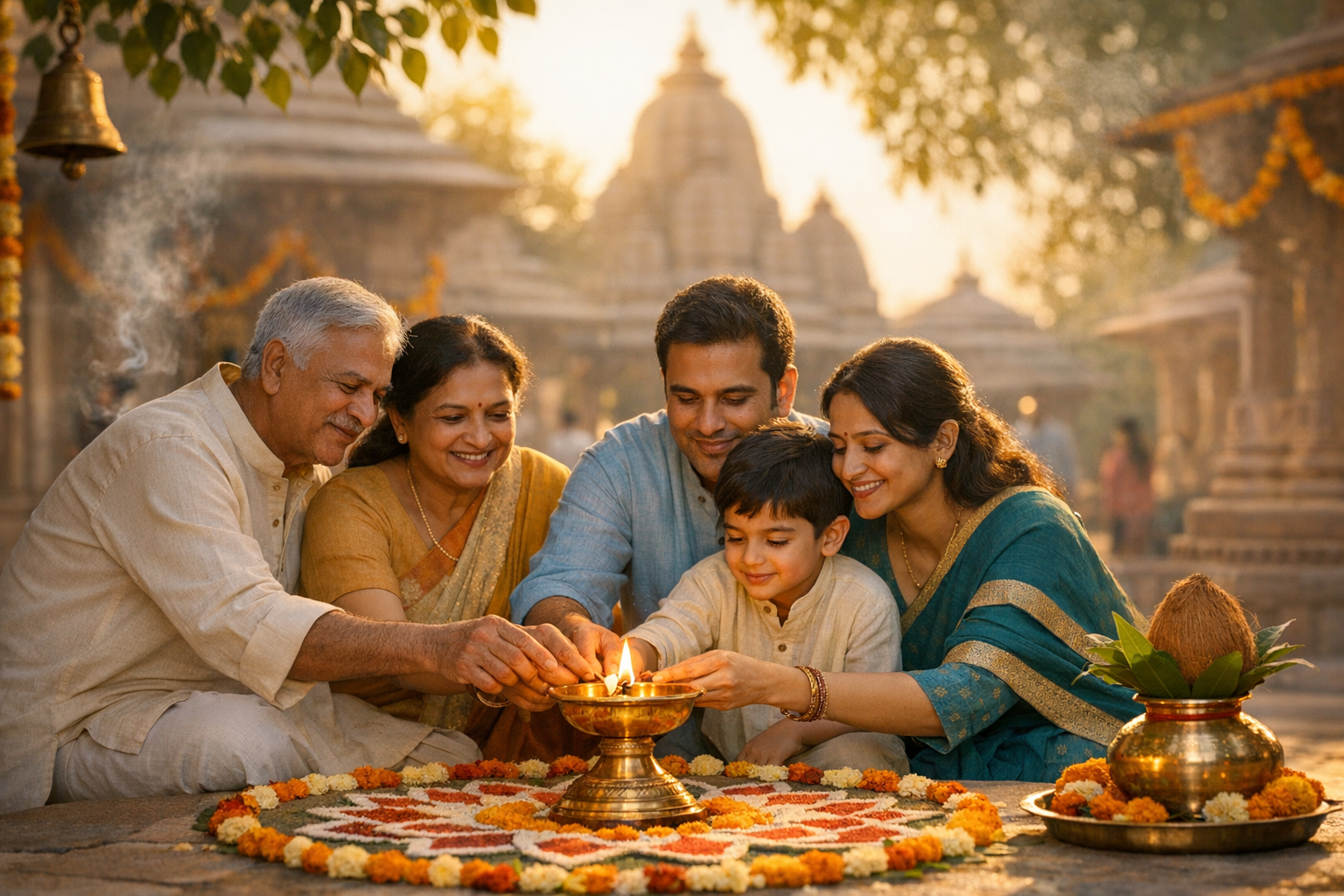
A family publicly embraced Sanatan Dharma at Bageshwar Dham in Chhatarpur, Madhya Pradesh, on April 1, 2026, with reported name changes to Arjun Singh and Priya Singh. This analysis situates the event within India’s constitutional protections for freedom of conscience while emphasizing state-level compliance requirements that guard against force, fraud, or inducement. It explains the…
-
From Dogma to Dignity: A Human-Centered Blueprint for Dharmic Unity and Compassion
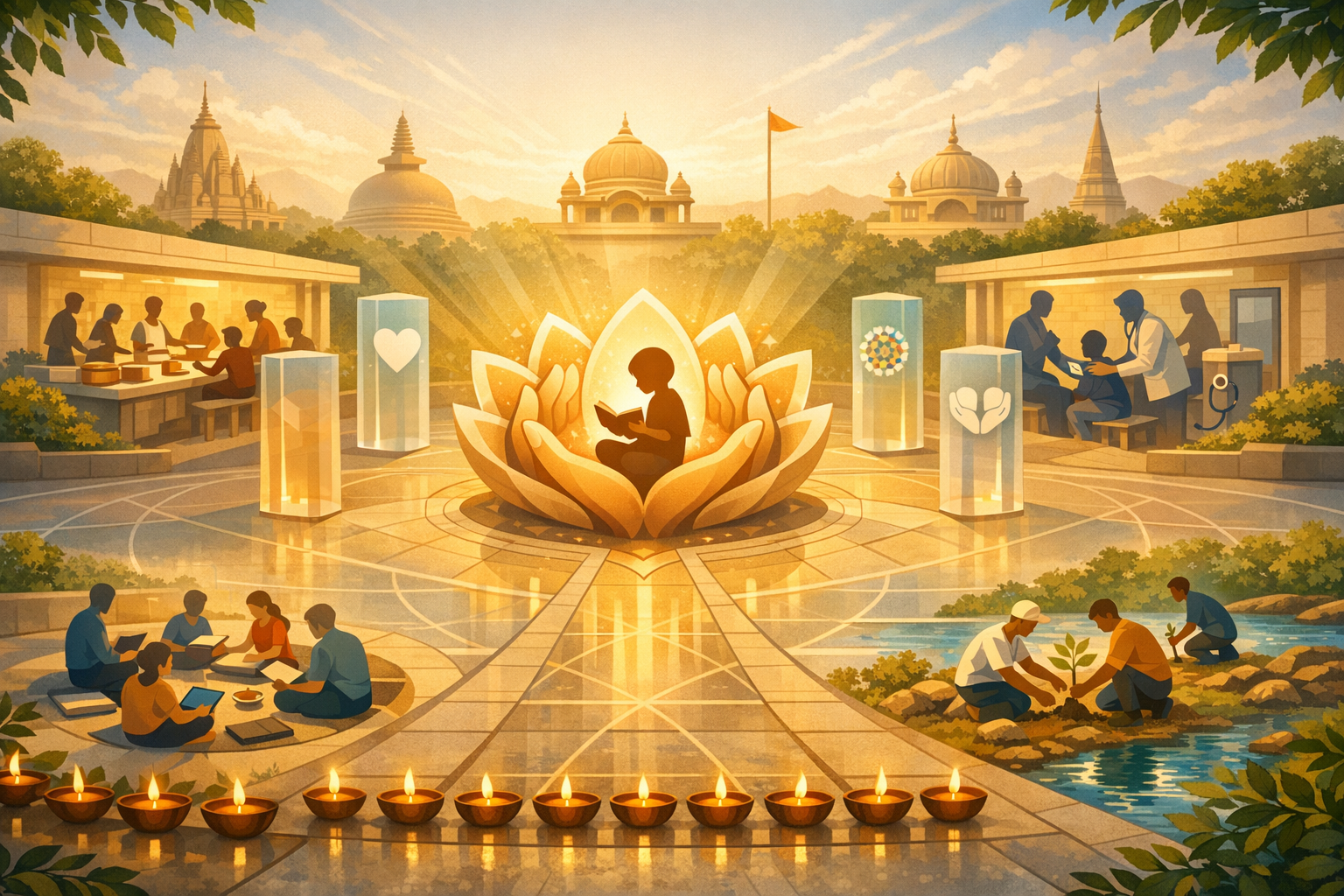
Religions increasingly overshadow the people they were meant to serve. This analysis proposes a Human-Centered Dharma Framework that realigns Hindu, Buddhist, Jain, and Sikh institutions with their ethical cores—Ahimsa, seva, Anekantavada, Ishta, and Vasudhaiva Kutumbakam. It outlines practical governance, service design, and transparency measures, including minimum service thresholds, Human Dignity Reports, and pluralist inclusion. The…
-
Hindu Population 2050: Pew Projections, South Asian Demographic Shifts, and India’s Roadmap
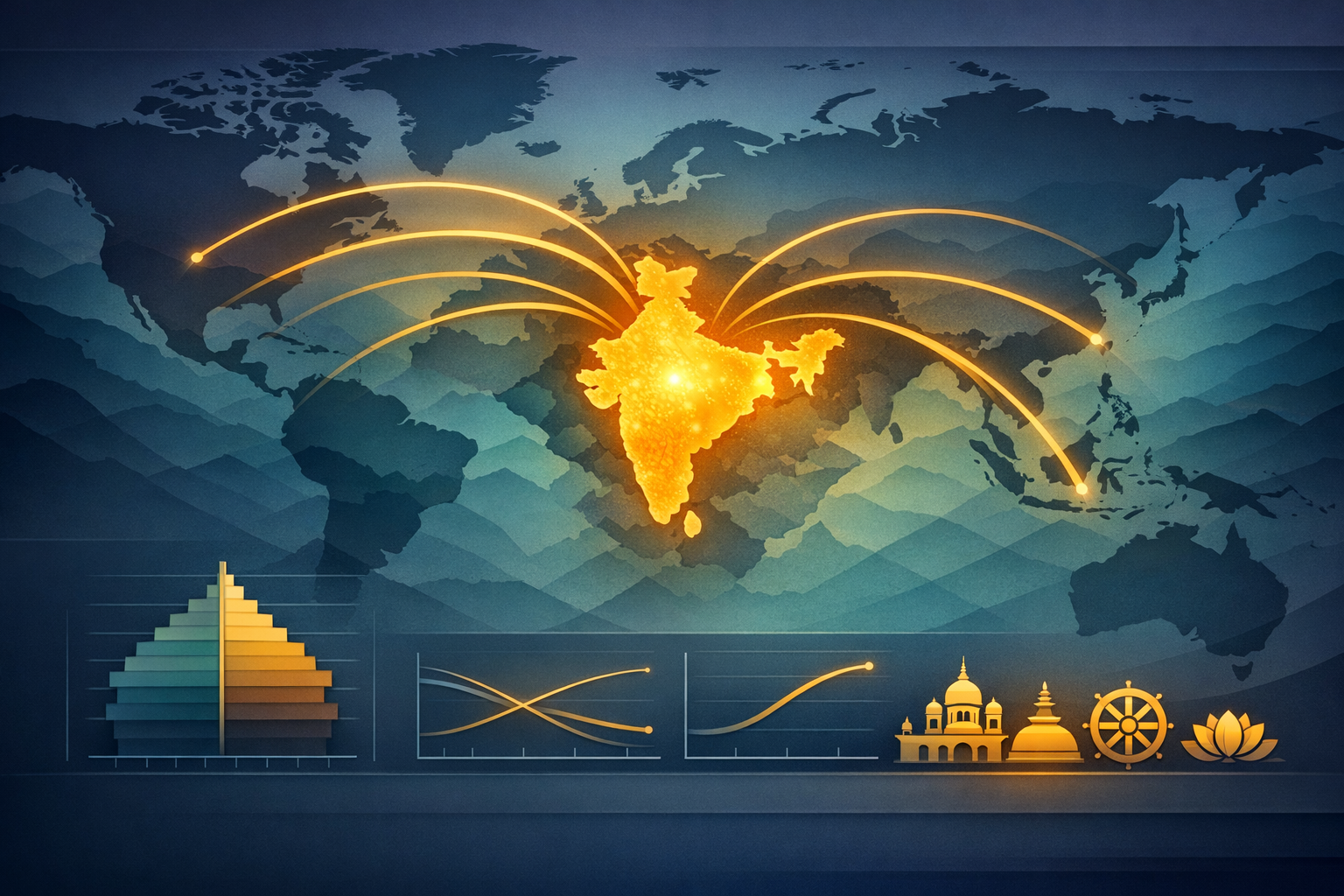
Pew Research Center’s cohort-component projections to 2050 indicate that Hindus will grow substantially in absolute numbers while maintaining a broadly stable global share. India remains the demographic center of gravity and a Hindu-majority nation, even as fertility converges across communities due to education, urbanization, and health gains. Nepal sustains a Hindu-majority profile, Sri Lanka and…
-
Vasudhaiva Kutumbakam Today: A Dharmic Blueprint for Unity, Security, and Shared Prosperity
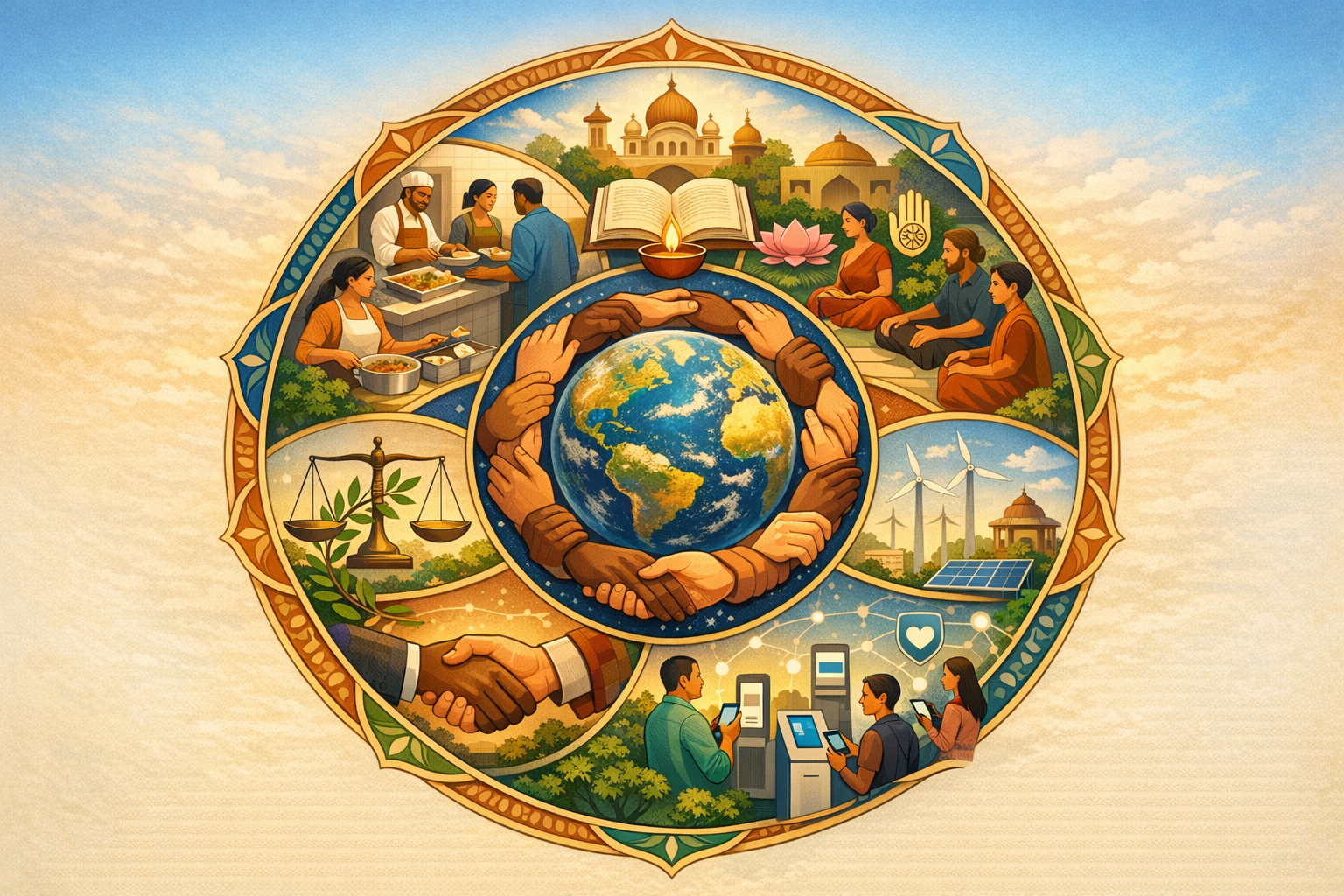
Vasudhaiva Kutumbakam — the world is one family — is reframed here as a practical, measurable framework for public policy, interfaith harmony, and global cooperation. Rooted in the Maha Upanishad and echoed across Buddhism, Jainism, and Sikhism, the concept aligns ethical statecraft with inclusive development and human security. The analysis outlines design principles — dignity…
-
Beyond Hashtags: Interfaith Festival Etiquette, Reciprocity, and Real Secularism in India
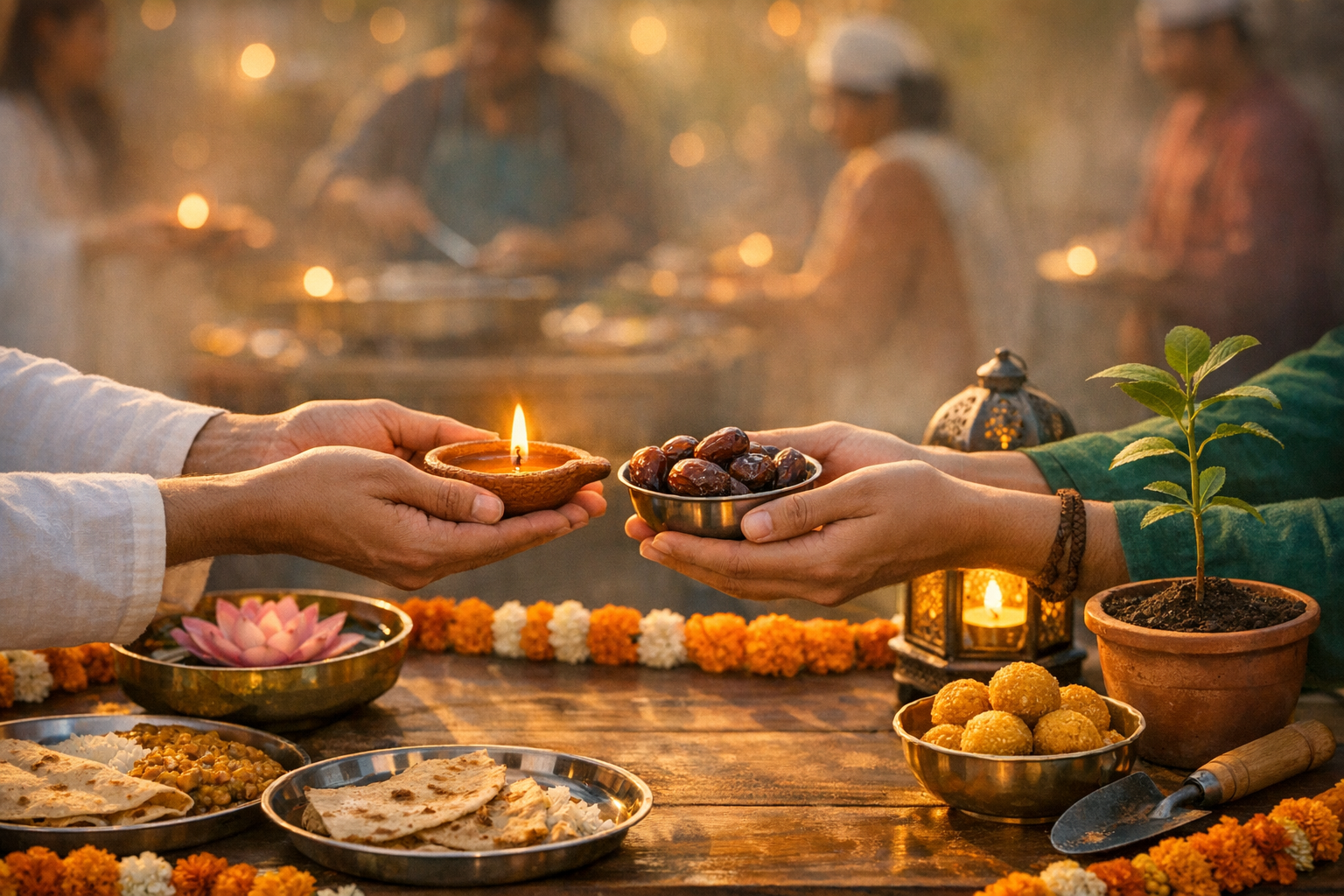
A viral trend of Hindus adopting Muslim surnames at Iftar offers a timely chance to deepen interfaith reciprocity rather than reduce it to spectacle. This analysis reframes Indian secularism as participatory coexistence, linking symbolic gestures to consistent, respectful engagement across Diwali, Eid, Gurpurab, Vesak, Paryushan, and Navratri. Drawing on ideas from ritual studies and signaling…
-
Beyond Temple Walls: Powerful Lessons on Sadhana, Seva, and Guru-Dharma Across Dharmic Traditions
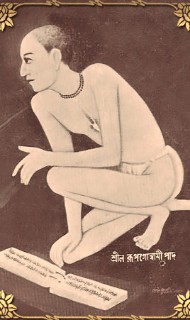
A historic 1983 letter read in the Dallas temple frames the temple as a training ground, not a compulsory residence, affirming that disciplined sadhana and seva can flourish inside or beyond ashram walls. Placed in a broader Dharmic context—Hinduism, Buddhism, Jainism, and Sikhism—the message supports a living synergy between institutions and householders. The analysis maps…
-
Profound Insights from Srimad-Bhagavatam 11.9.15: Avadhuta’s 24 Gurus for Inner Unity
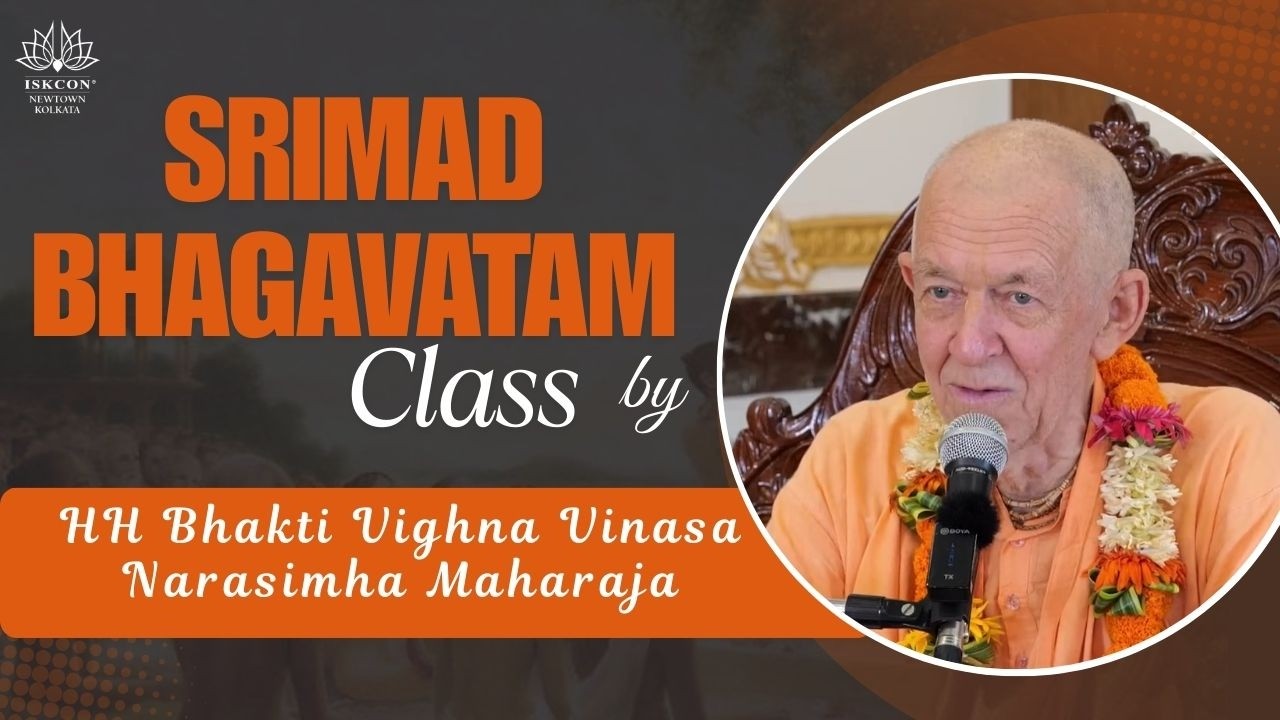
Srimad-Bhagavatam 11.9.15 sits inside the Avadhuta brāhmaṇa’s curriculum of twenty-four teachers, showing how equanimity, detachment, and devotion are cultivated by learning directly from nature and human experience. This analysis, informed by the class of HH Bhakti Vighna Vinasa Narasimha Swami Maharaj, explains the verse’s role in stabilizing attention, refining ethical judgment, and anchoring spiritual practice…
-
Beyond Fear: Dharmic Pluralism in Hinduism—Ishta, Gita, Upanishads—Uniting Diverse Paths
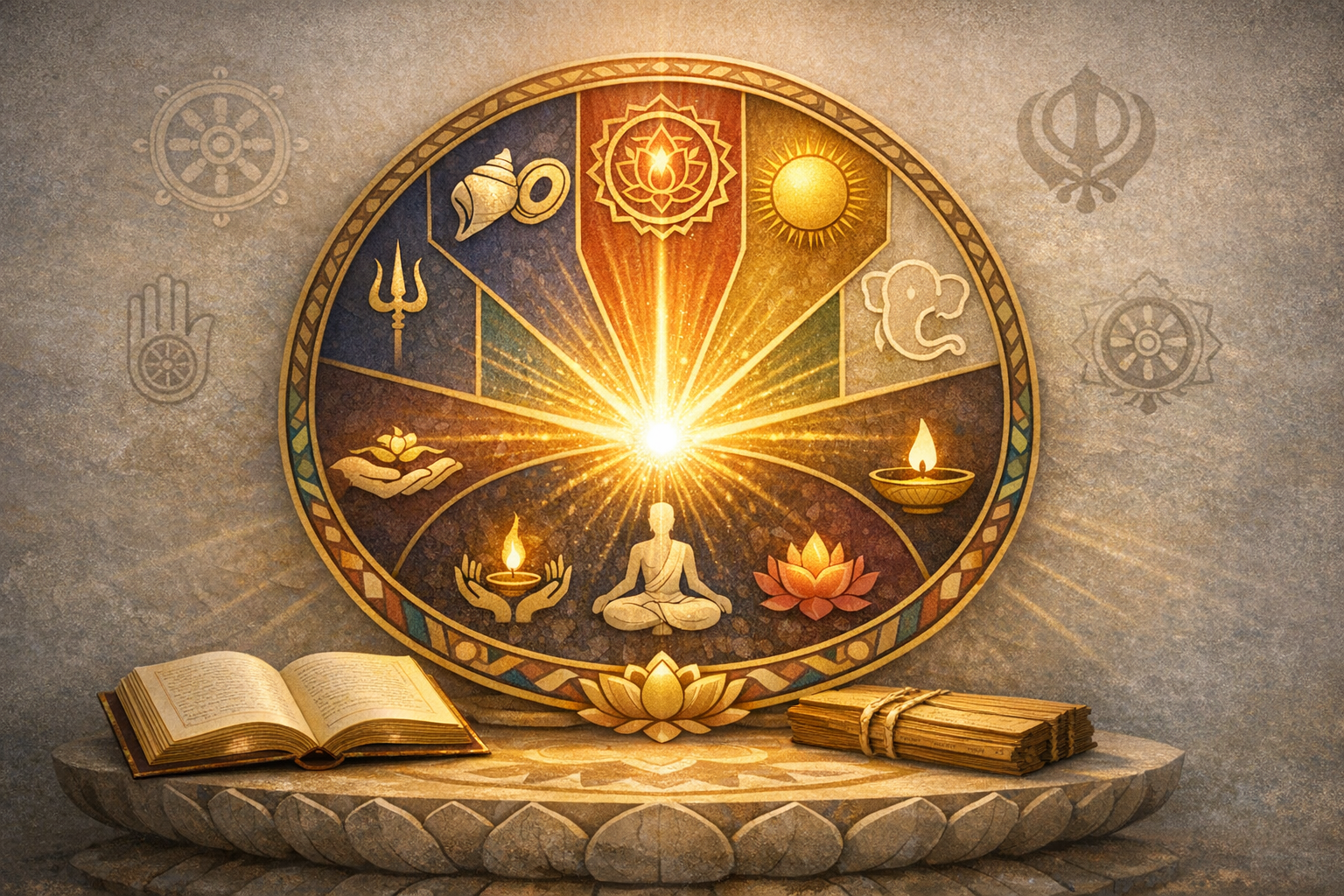
This analysis explains how Hinduism replaces fear-based religious identity with a rigorous philosophy of unity-in-diversity grounded in the Upanishads and the Bhagavad Gita. It details the Ishta principle, panchayatana-puja, and the four yogas as practical engines of pluralism that honor individual temperament while aiming at a shared telos. It situates Hindu pluralism within the broader…
-
Relativity, Interconnectedness, and Impermanence in Sikh Philosophy: Clarity for Dharmic Unity
This long-form exploration clarifies how Sikh philosophy integrates relativity, interconnectedness, and impermanence under Ik Oankar and hukam. It explains why perspective-awareness enhances, rather than weakens, commitment to Truth, and how interconnectedness turns metaphysics into concrete seva for sarbat da bhala. It shows how impermanence frees the heart from clinging without collapsing into nihilism, orienting life…
-
Shabad Beyond the Palki & Rumaalay: The Living Guru, Inner Listening, and Dharmic Unity

This essay clarifies why “Shabad is the Essence of my Existence” by centering the living reality of Shabad Guru in Sikhi and explaining what truly lies “Beyond the Palki & Rumaalay.” It distinguishes reverential aesthetics from spiritual essence, showing how Palki, Rumaalay, and maryada honor the Guru while serving the primary aim of listening and…