
-
Lakshmi Ganapati in the 32 Forms: Tantric Iconography, Sacred Symbolism, and Meaning
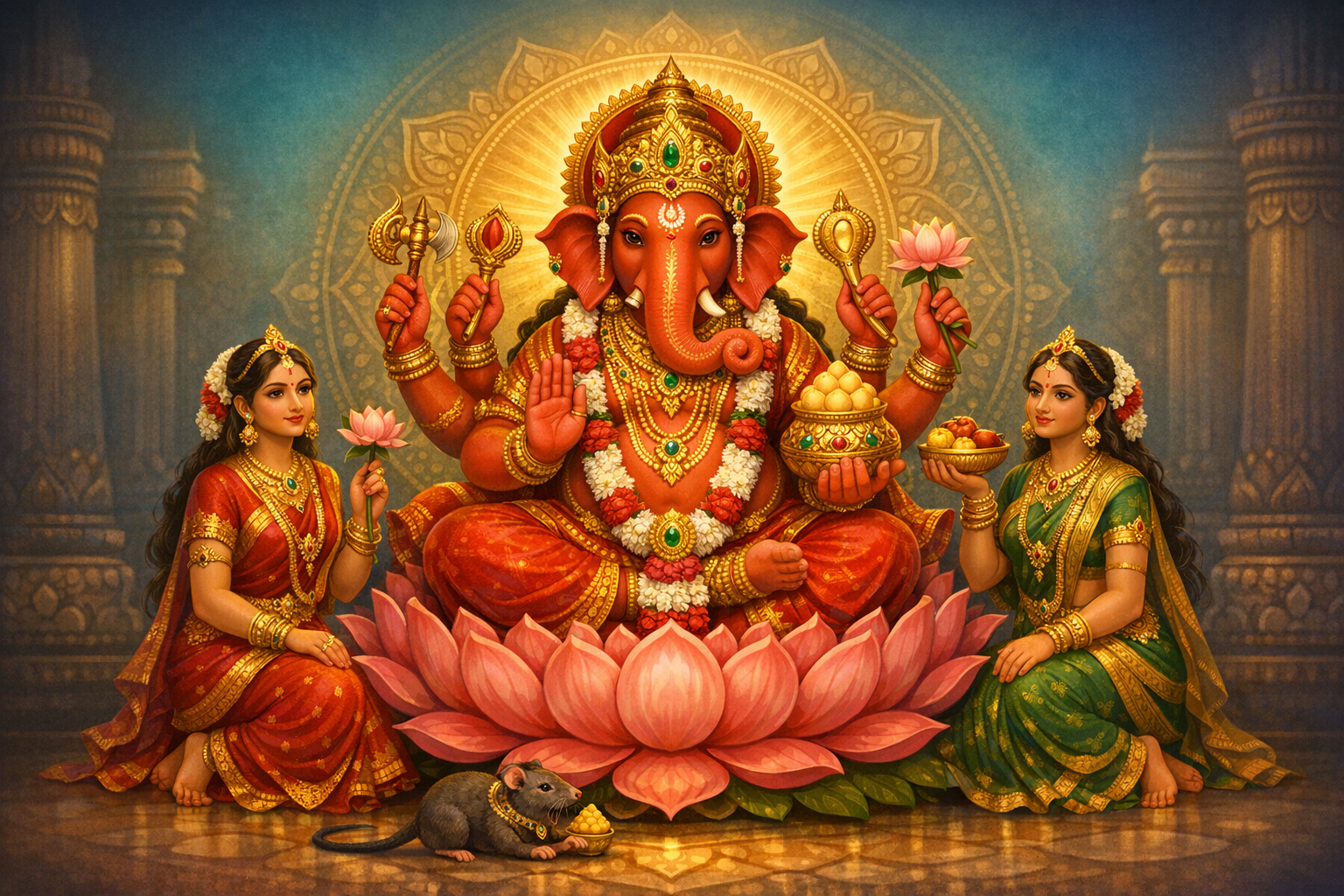
Lakshmi Ganapatione of Ganesha’s thirty-two formsembodies the sacred union of wisdom and prosperity within a Tantric and puranic framework. This in-depth guide clarifies that the name denotes Ganesha infused with Lakshmi-tattva, often attended by Siddhi and Riddhi, rather than a substitution with Goddess Lakshmi. Readers will learn how each attributepasha, ankusha, ratna-kumbha, modaka, and lotusmaps…
-
Asitanga Bhairava Unveiled: Iconography, Mantras, and the Sacred Power of the Golden Lord
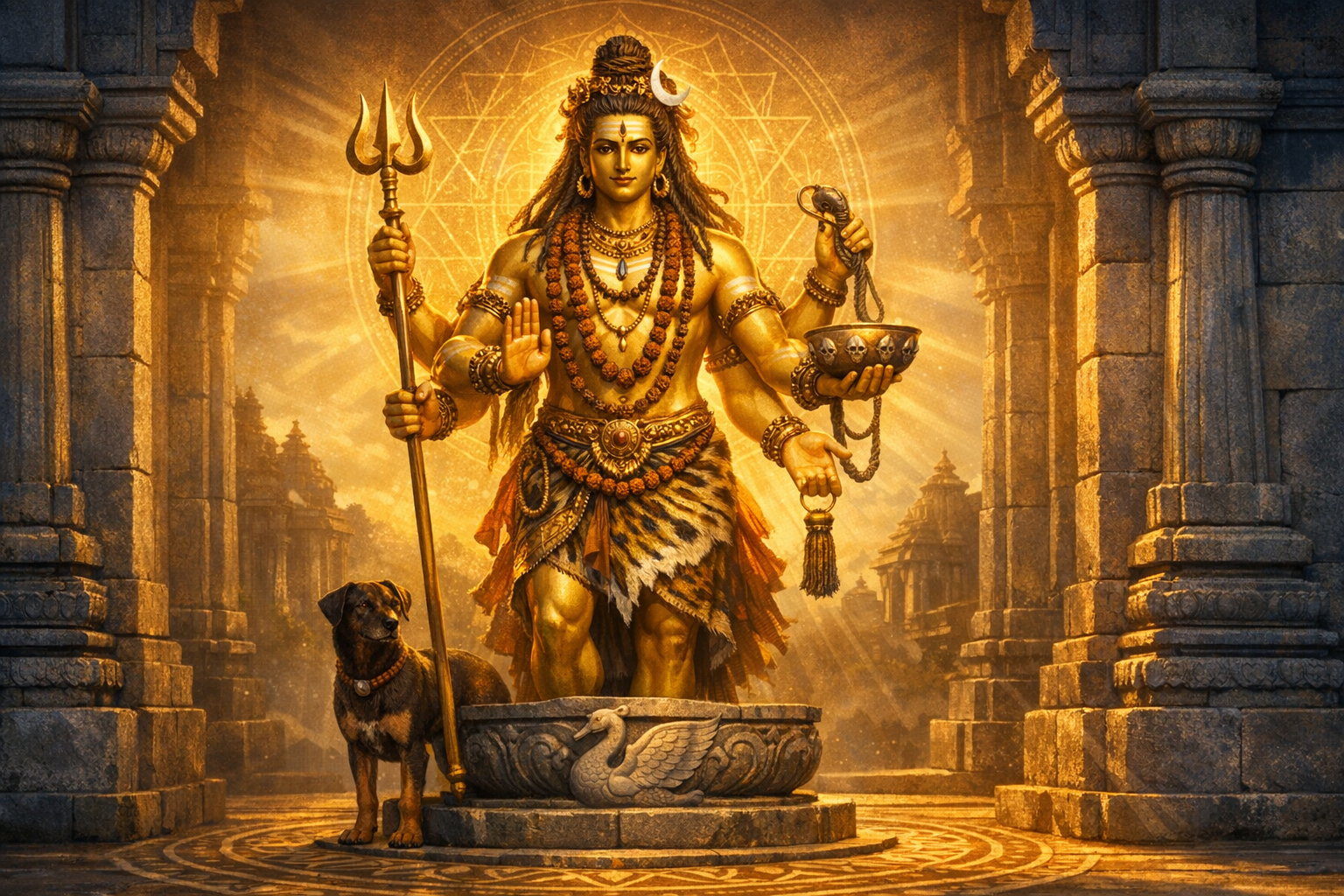
Asitanga Bhairava, the Golden Lord of the First Octet, embodies a luminous, eastward guardianship that unites protection with awakening. This long-form exploration decodes his iconographygolden hue, trident, drum, skull-bowl, and threshold placementso readers can recognize and interpret the form in temples and texts. It clarifies how attributes map to disciplined practice, turning weapons into inner…
-
Agneyas among the Gandharvas: Timeless Insights into Kubera’s Celestial Musicians
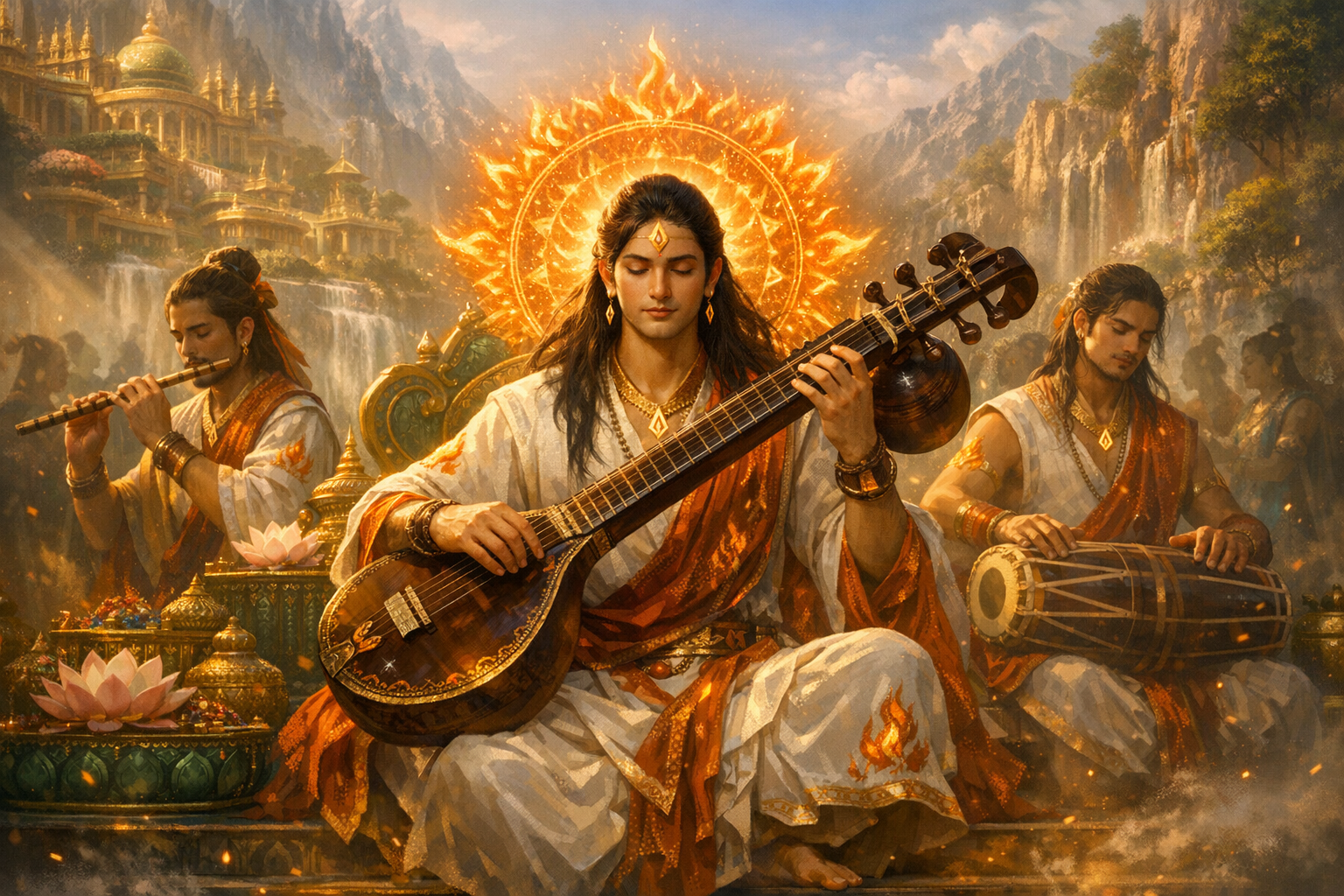
This article examines the Agneyas as a Gandharva collective in Hinduism, drawing on Puranic and allied textual traditions to clarify their identity as celestial musicians and attendants in divine courts. It explains how several narratives place the Agneyas in the orbit of Kubera (Vaiśravaṇa), the god of wealth and guardian of the northern direction, where…
-
Dashabhujeshwara Decoded: Five-Faced, Ten-Armed ShivaIconography, Mantras, Ritual Power
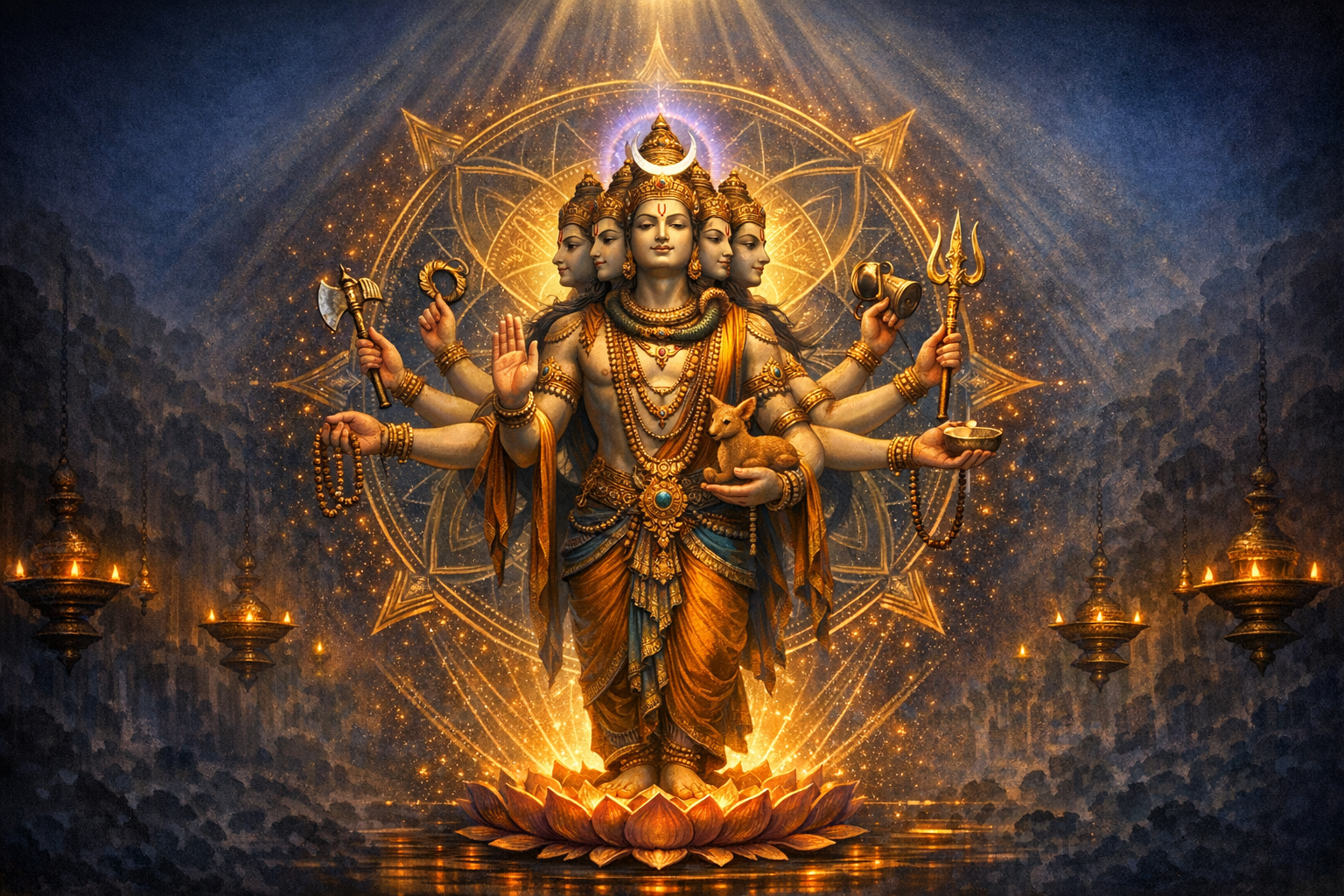
Shiva’s Dashabhujeshwara formfive-faced and ten-armedembodies the Pañcabrahma theology in which one Absolute performs five cosmic acts: creation, sustenance, dissolution, concealment, and grace. Drawing on the Śiva Purāṇa, Āgamas, and Śilpa-Śāstras, this explainer clarifies how each face (Tatpuruṣa, Aghora, Vāmadeva, Sadyojāta, Īśāna) aligns with directions, mantras, and meditative practice. It decodes the ten arms as sovereignty…
-
Did Goddess Lakshmi Slay Demons? Scriptural Evidence on Kolhasura and Mahishasura
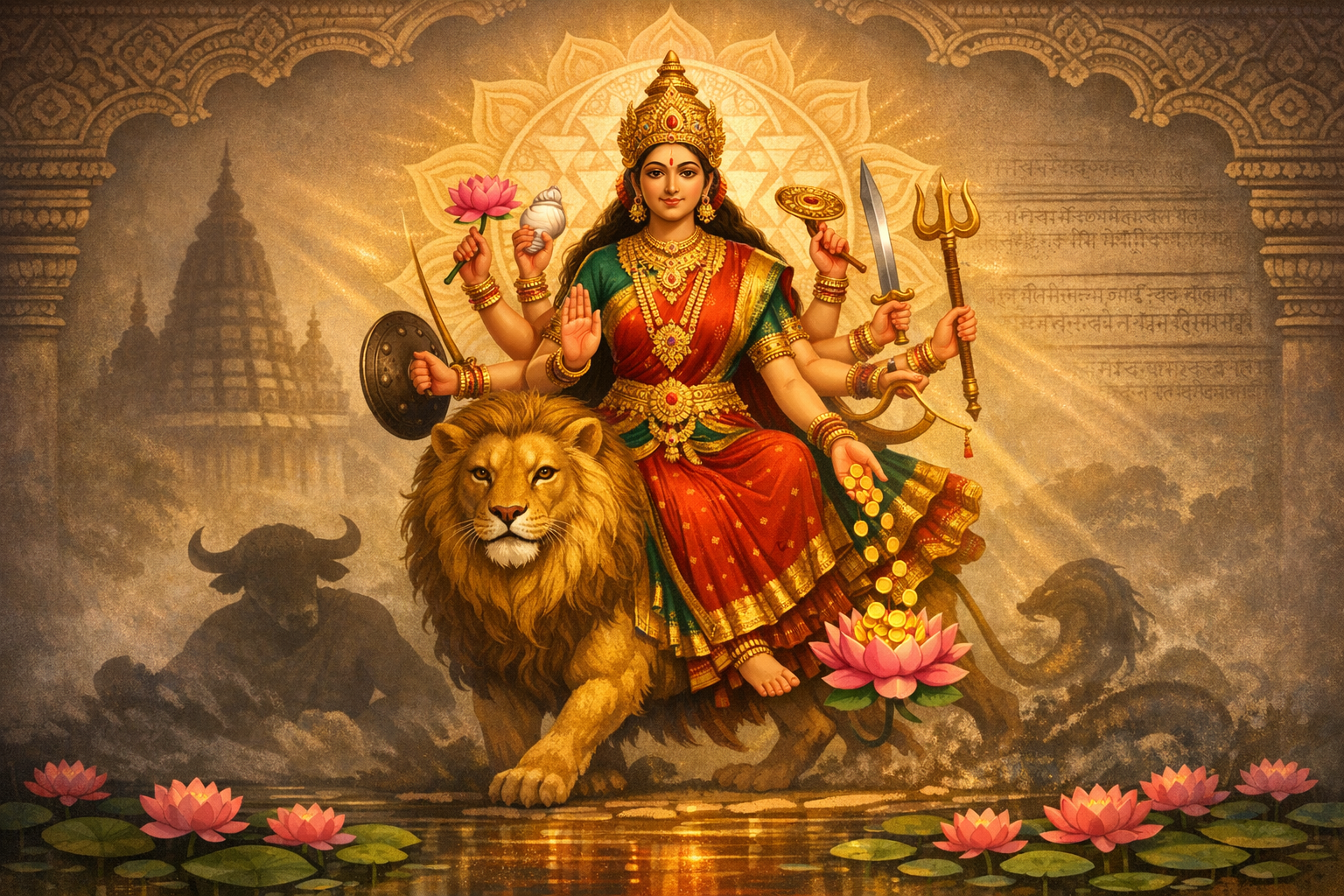
Did Goddess Lakshmi slay demons? Scriptural and regional traditions answer yes in her fierce Mahalakshmi form. The Skanda Purana’s Karavira Mahatmya narrates Mahalakshmi (Ambabai) defeating Kolhasura at Kolhapur, while the Devi Mahatmya’s Mahishasuramardini cycleoften assimilated devotionally to Mahalakshmicaptures the goddess’s triumph over Mahishasura. This article clarifies how Śrī-Lakshmi’s benevolent identity and Mahalakshmi’s protective power coexist…
-
Hanuman’s Honeybee Stratagem: Foiling Mahiravana in Patala to Save Rama and Lakshmana
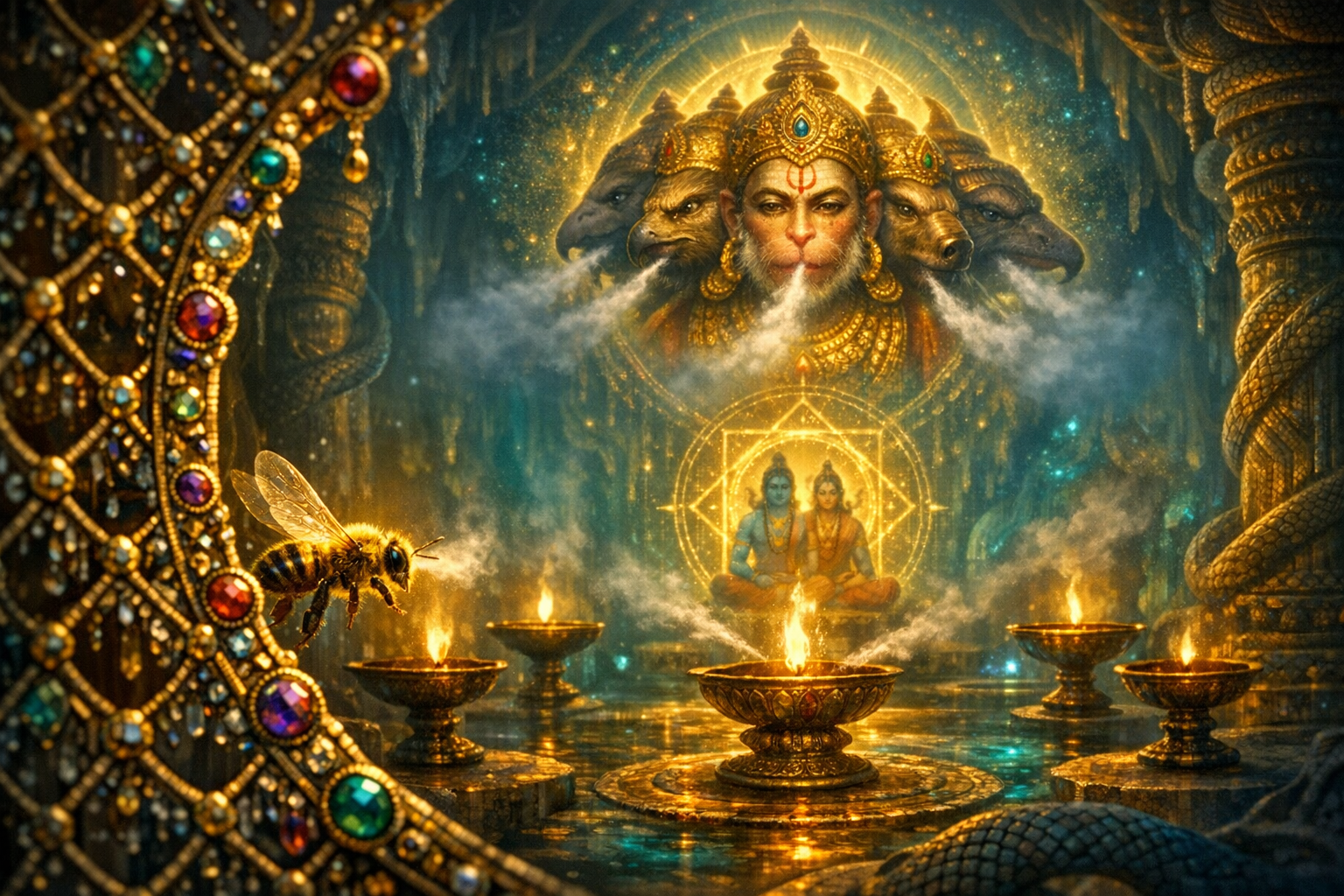
This long-form analysis narrates how Hanuman’s honeybee form and Panchamukhi manifestation foil Mahiravana’s Patala ritual to rescue Rama and Lakshmana. It situates the episode in later and regional Ramayana traditions, clarifying its relationship to Valmiki while highlighting its wide cultural reception in performance and temple iconography. The essay unpacks Patala cosmology, the five-lamp life-bond, and…
-
Decoding Vishnudharmottara Purana: The Awe-Inspiring Vyuha Manifestations of Vishnu
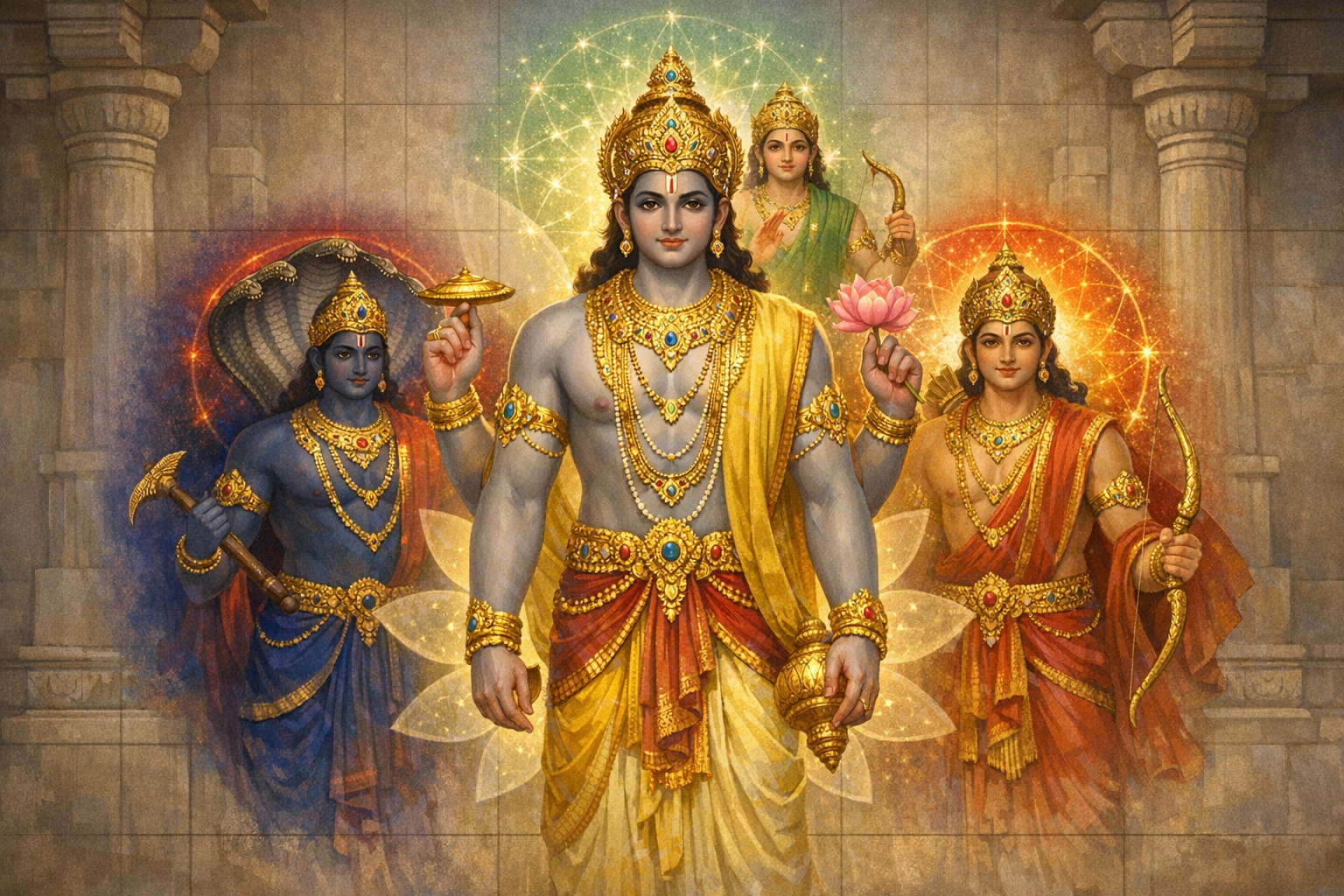
This article decodes the Vyuha doctrine of Vaishnava theology through the lens of the Vishnudharmottara Purana and the Pancharatra–Vaikhanasa traditions. It explains the fourfold emanationsVasudeva, Sankarshana, Pradyumna, and Aniruddhaand the classical distribution of the six divine excellences across them. It shows how the Purana’s image-making canons turn metaphysics into clear, teachable iconography, especially in Caturvyuha…
-
Makaradhwaja and Hanuman’s Karmaphala: Unveiling Dharma, Lineage, and the Fire of Lanka

This essay offers a scholarly, engaging reading of Makaradhwajathe wondrous “son of Hanuman” said to arise from sweat after the Lanka Dahanaas a profound meditation on karmaphala in the Ramayana tradition. It clarifies that the tale is absent from the Valmiki Ramayana and instead flourishes in later and regional sources such as the Krittivasi Ramayan,…
-
Swarnakarshana Bhairava: Guardian of Gold, Prosperity, and Dharma in Kali Yuga
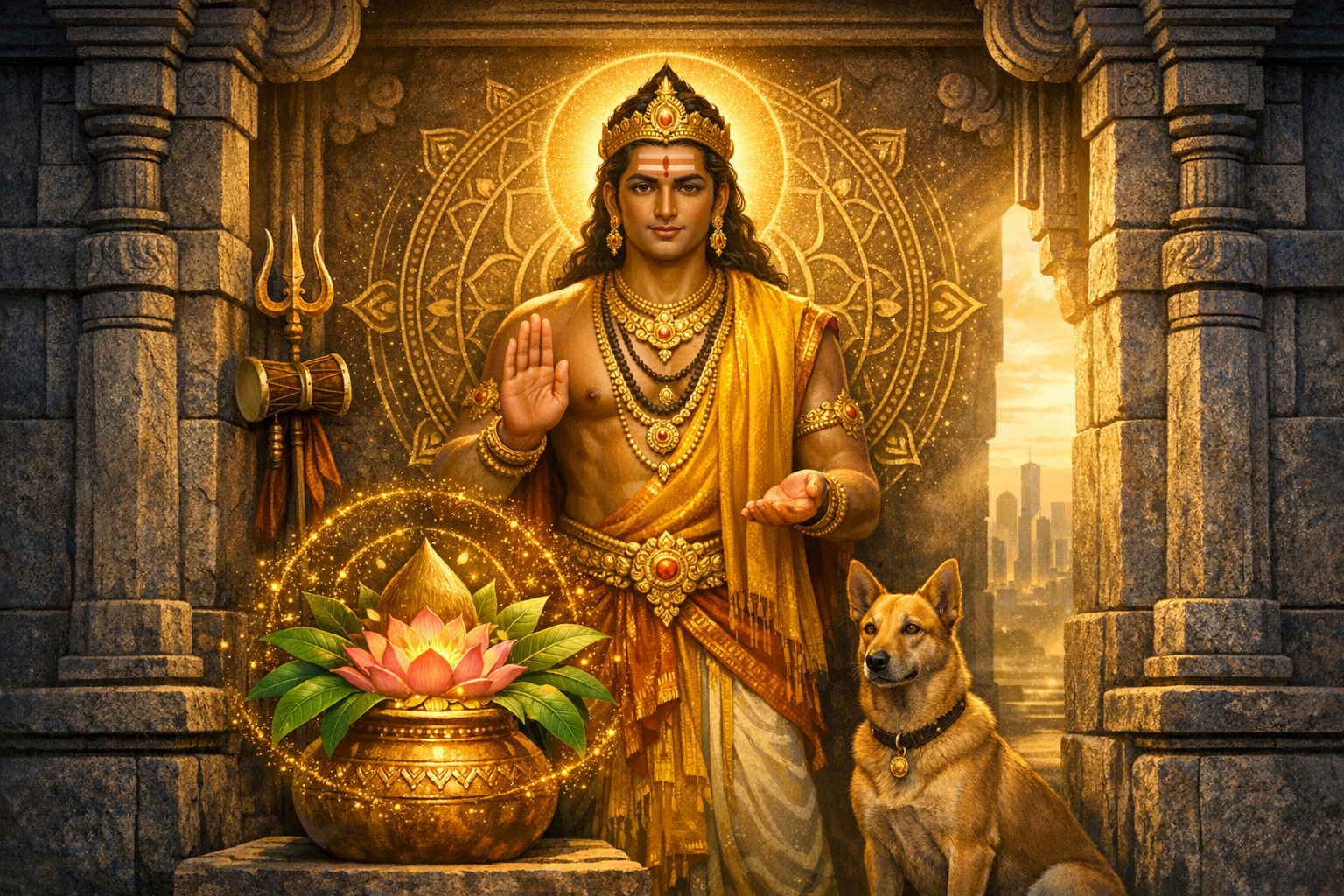
Swarnakarshana Bhairava“the one who draws gold”is a Shaiva Tantric form that links prosperity to disciplined guardianship, especially relevant in Kali Yuga. The iconography, often golden and protective, signals plenitude anchored in vigilance and ethics rather than greed. Textual and ritual traditions frame this Bhairava as a kṣetrapāla of resources, aligning wealth with dharma, responsibility, and…
-
Rakshasas Reconsidered: Three Orders, Genealogies, and Dharma Across Hindu Scriptures

Rakshasas in Hindu scriptures are not a single moral type but a spectrum of beings whose actions and destinies illuminate dharma. A threefold interpretive modelsattva-, rajas-, and tamas-aligned Rakshasasmaps consistent patterns across the Ramayana, Mahabharata, and Puranic genealogies. Vibhishana, Ravana, and figures such as Khara and Kirmira exemplify distinct ethical orientations that readers can recognize…
-
Bhairava’s Untamed Jata: Shiva’s Tantric Iconography, Cosmic Fire, and the Discipline of Time
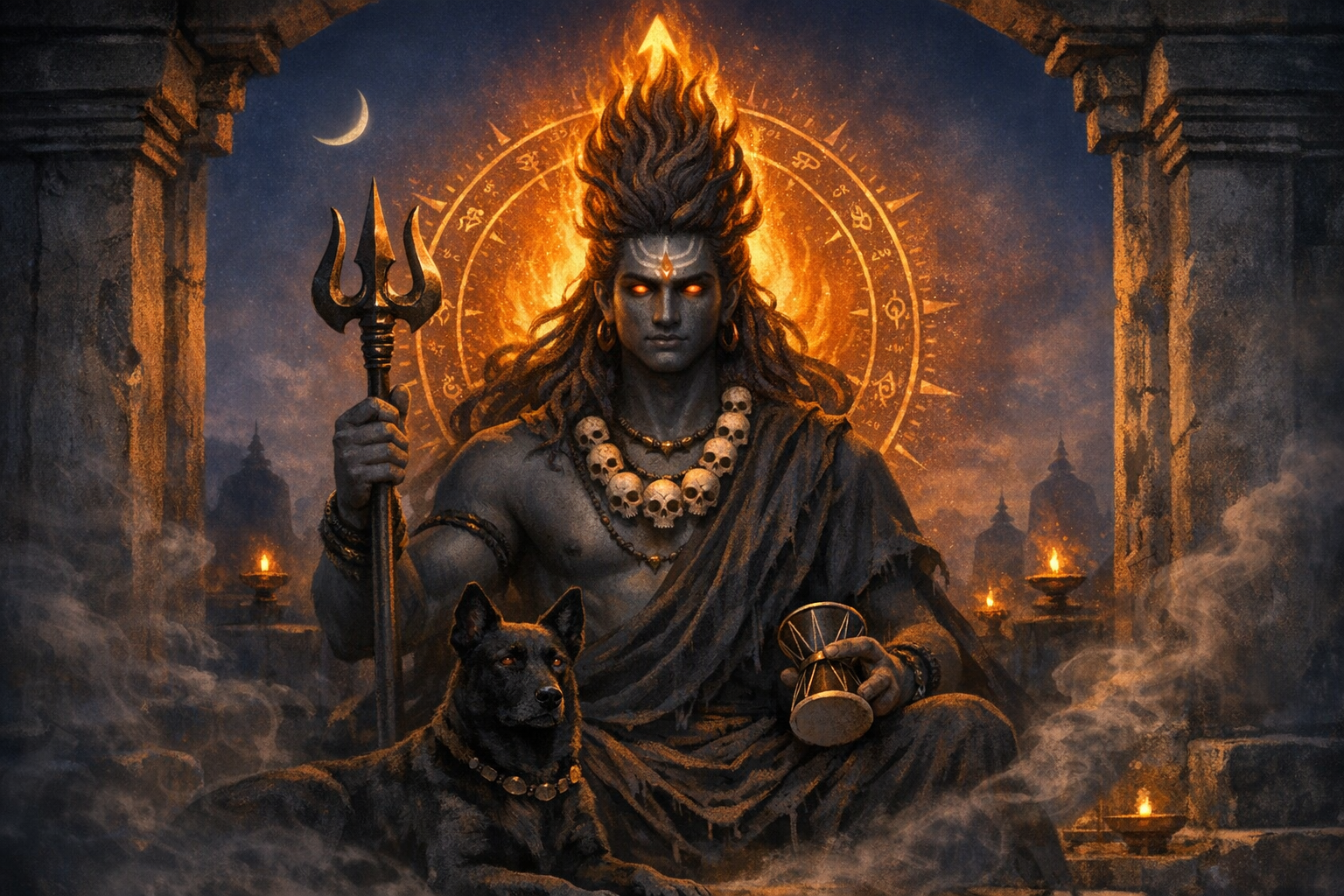
Bhairava’s untamed jataoften described as a “matted flame”is a precise iconographic language rather than a dramatic flourish. Drawing on Agamic and Purāṇic traditions (including the Skanda Purāṇa’s Kāśī Khaṇḍa), the flame-like hair encodes tapas (ascetic heat), the governance of time (kāla), and the ethics of vigilant guardianship. Read through a yogic lens, it symbolizes the…
-
When Shiva Bled: Vamana Purana’s Origin of the Eight Bhairavas and Andhaka’s Fall
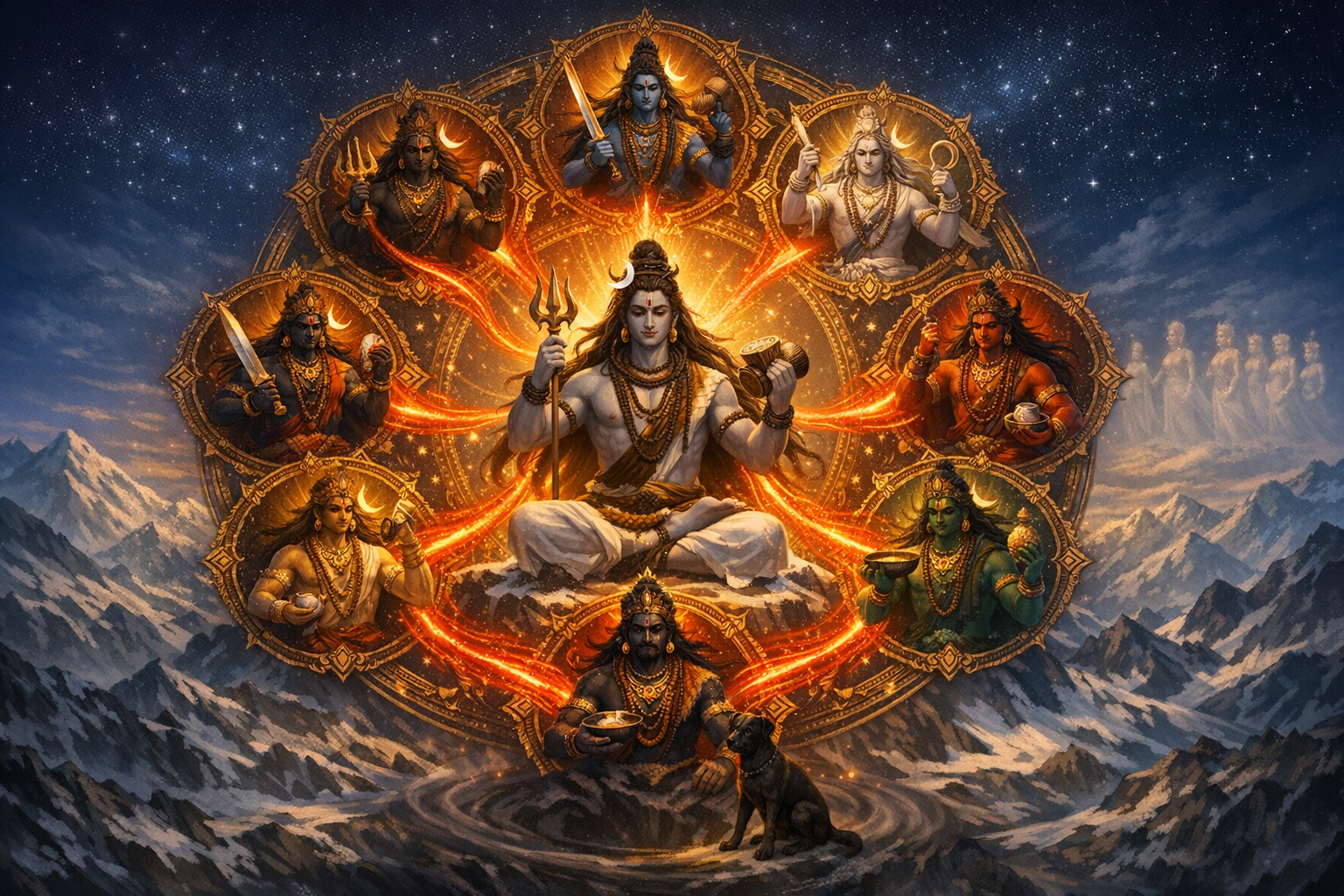
The Vamana Purana narrates a riveting moment”when Shiva bled”to explain how the Eight Bhairavas arose to stop the multiplication of the asura Andhaka and restore cosmic order. Read alongside the Shiva Purana and Skanda Purana, the episode highlights a shared Shakta–Shaiva method: intercept proliferating harm and convert it into insight. The Ashta Bhairavas appear as…
-
What Happens After Death? Garuda Purana’s Vivid Journey of the Soul, Karma, and Liberation

The Garuda Purana’s teachings on what happens after death combine vivid narrative with careful ethics and ritual guidance. Rather than inducing fear, these descriptions function as moral instruction, emphasizing accountability (karma), communal care (śrāddha and piṇḍa-dāna), and the ultimate aim of liberation (moksha). Read alongside Upaniṣadic psychology, death can be seen as akin to deep…
-
From Jamun to Jambudvipa: Sacred Dark Hues, Divine Cosmology, and Bharata’s Enduring Soul

Jamun’s deep purple hue, Jambudvipa’s sacred geography, and the dark complexions of Divine iconography converge to reveal a unifying civilizational vision of Bharata. Drawing on Hindu Puranas, Buddhist Pali sources, and Jain cosmography, the analysis shows how Jambudvipa frames Bharata-varsha as a moral and spiritual habitat rather than a mere map. The essay connects sacred…
-
Pradhanikarahasya on Mahalakshmi’s Supremacy: Unveiling the Primordial Shakti of Creation
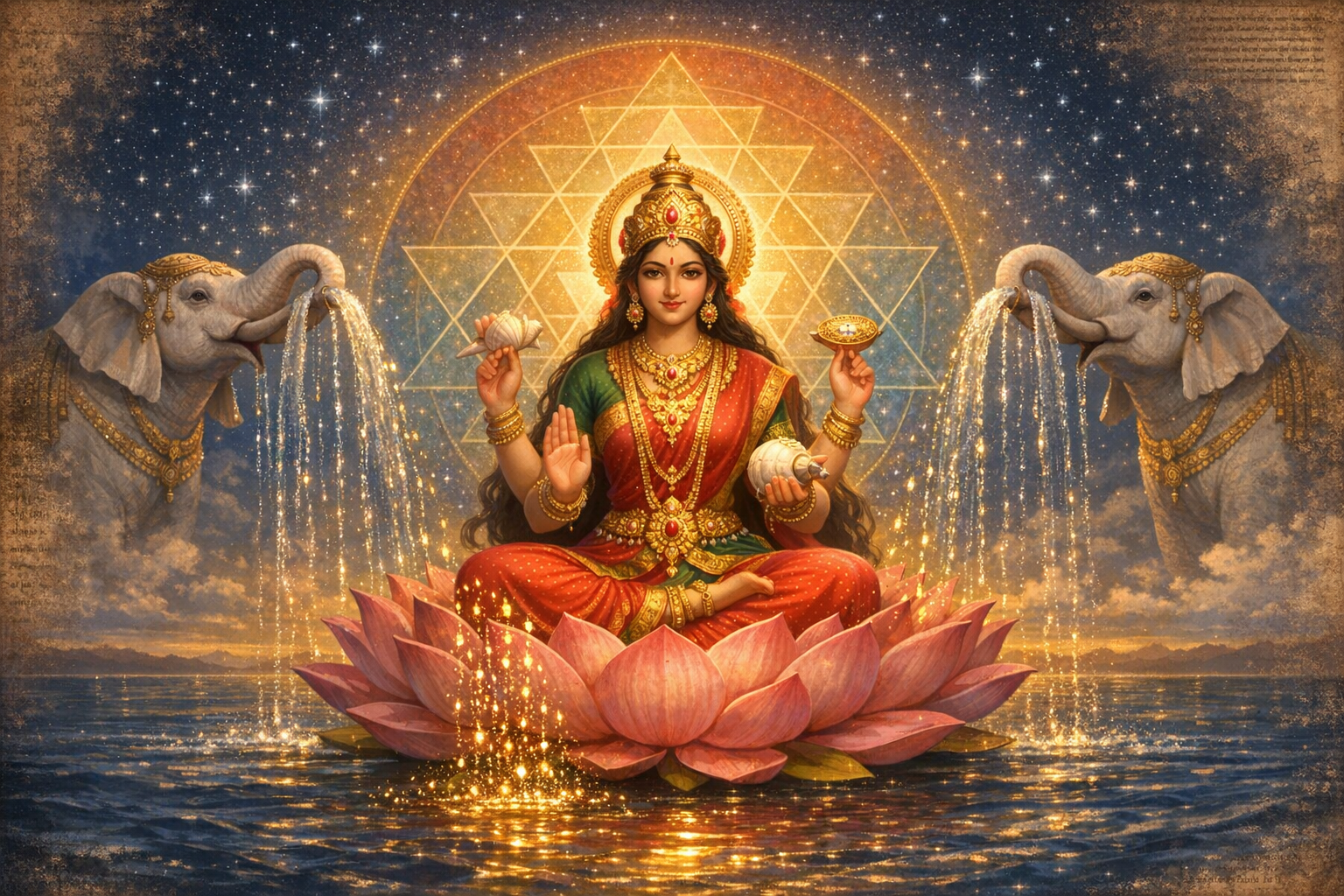
Pradhanikarahasya, an annex to the Devimahatmya (Durgasaptashati), presents a rigorous Shakta theology in which Mahalakshmi is the primordial source of creation. It integrates Vedic and Upanishadic insights to show how Shakti is both nirguna and saguna, aligning non-dual metaphysics with living devotion. The text decodes the Devimahatmya’s three episodes through the three gunas, offering a…
-
Bhim Ekadashi 2026 (Nirjala): Powerful Pandava Vrat, Date, Puja Vidhi, Parana & Significance

Bhim Ekadashi 2026also called Nirjala, Bhimseni, or Pandava Ekadashifalls on Thursday, June 25, aligning with Jyeshtha Shukla Ekadashi in the Hindu calendar. Revered as the most austere of the 24 Ekadashi vratas, it is associated with Bhima of the Mahabharata and the discipline of a waterless fast. This guide explains the date, the lunar-tithi basis,…
-
Nirjala Ekadashi 2026: Ultimate Waterless FastDate, Vrat Vidhi, Katha, Parana Rules

Nirjala Ekadashi 2026 falls on Thursday, 25 June (India) and is known as the most austere Ekadashia complete fast without water dedicated to Vishnu. Rooted in the Brahma Vaivarta Purana and celebrated as Pandava or Bhimsen Ekadashi, it is said to grant the merit of observing all Ekadashis in a year when undertaken correctly. The…
-
The Donkey’s Silence at Krishna’s Birth: Textual Evidence, Folk Memory, and Sacred Symbolism

A widely told folk variant claims a donkey brayed during Devaki’s earlier births yet fell silent at Krishna’s birthsometimes after Vasudeva’s quiet prayer that no sound betray the child. Canonical sources such as the Bhagavata Purana and Harivamsa do not mention a donkey, focusing instead on a divinely wrought hush: chains loosened, doors opened, and…
-
Tripura’s Death-Reviving Nectar and Shiva’s Cosmic Arrow: Power, Ethics, and Dharmic Unity
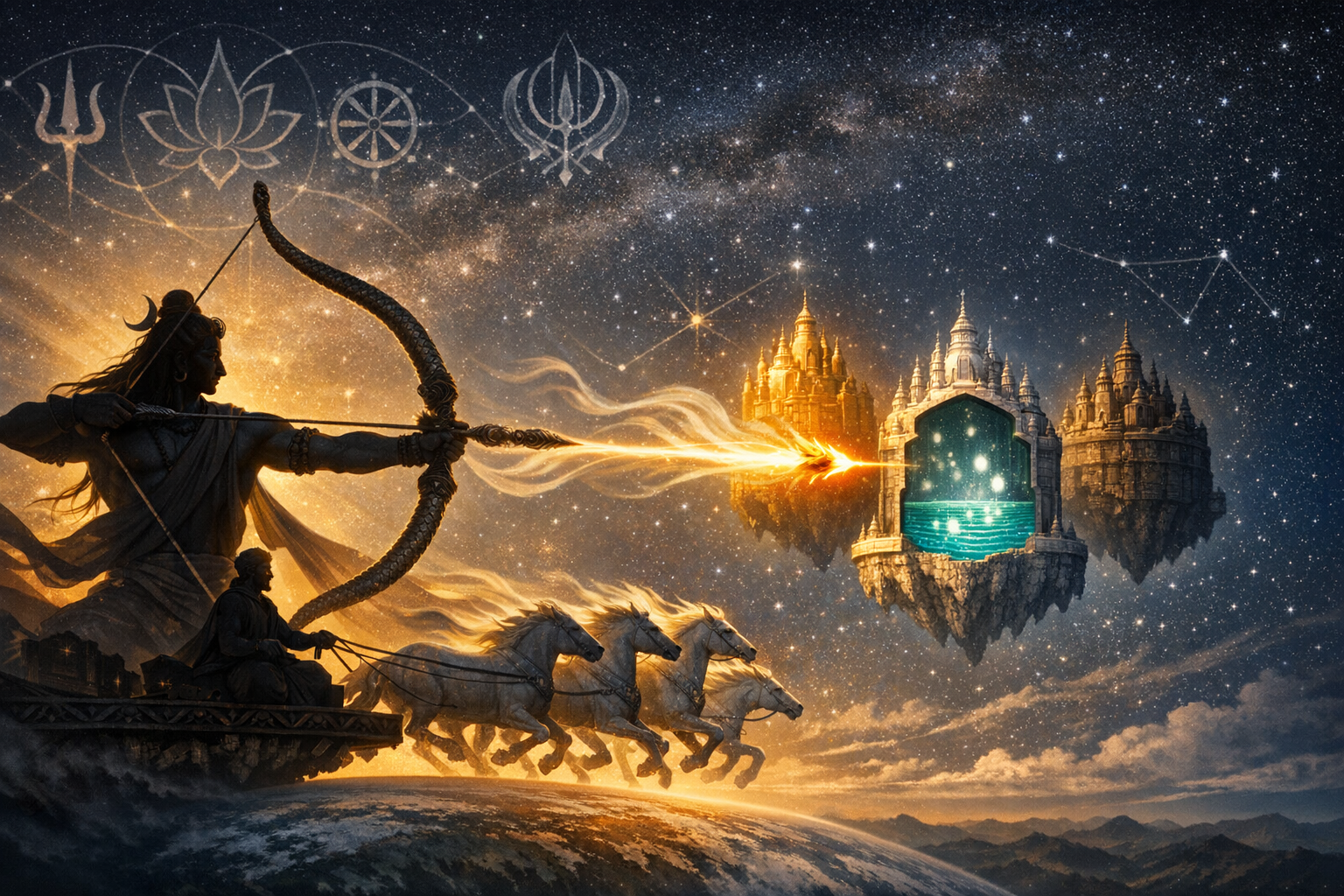
This long-form, research-informed retelling examines the Purāṇic episode of Tripura, three mobile fortresses granted by Brahma to the asura brothers and sustained by a sacred reservoir of death‑reviving nectar. It outlines how Shiva’s single cosmic arrowreleased at a rare celestial alignmentresolved a conflict made otherwise insoluble by continual revivification. Drawing on Shiva Purana, Linga Purana,…
-
Unlocking Tripurantaka: Shiva’s Cosmic ArcherIconography, Temple Art, and Inner Alchemy
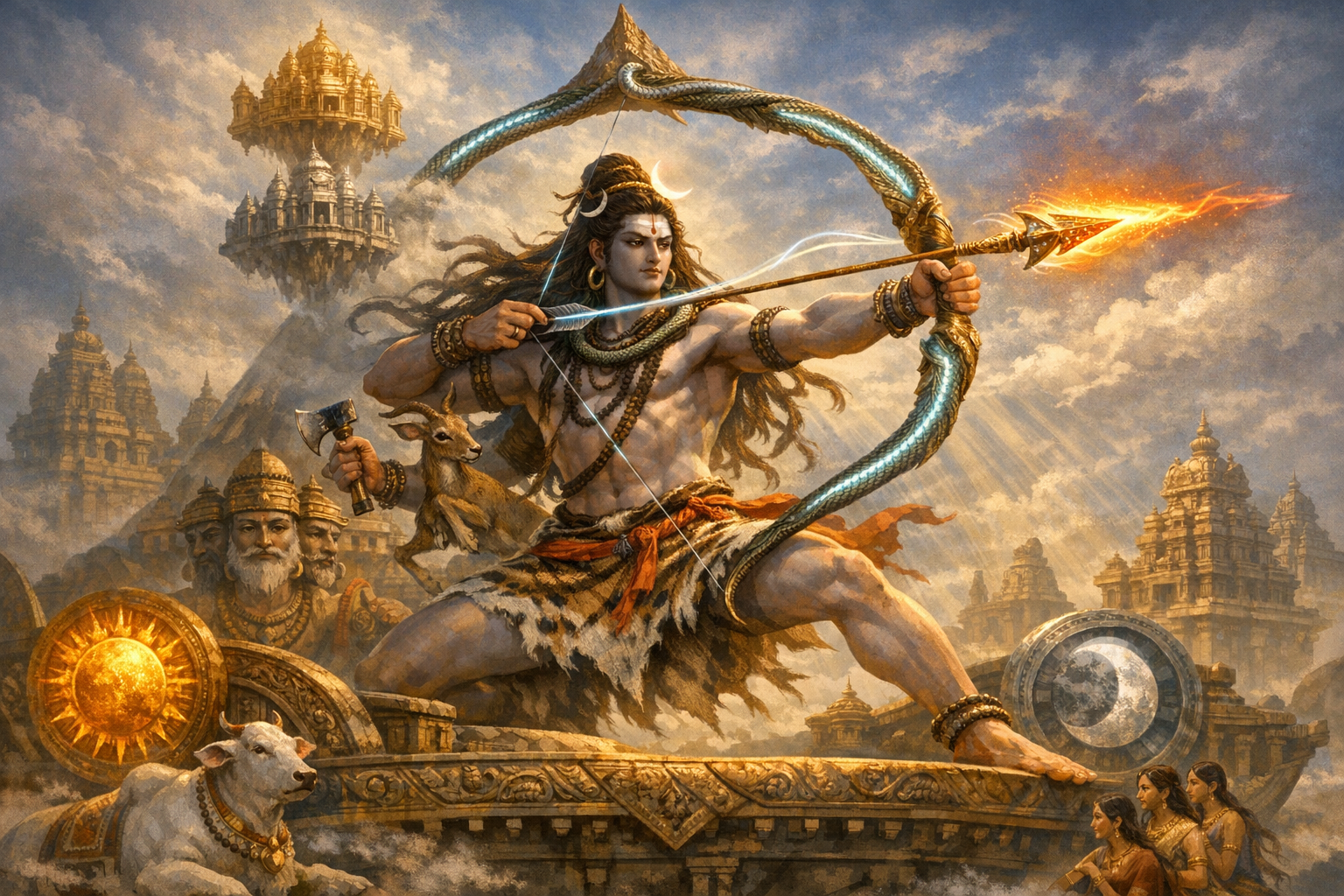
Tripurantaka, Shiva’s cosmic archer, unites myth, philosophy, and temple art into a single visual theology. This long-form exploration traces the Puranic narrative of Tripura Samhara, decodes canonical iconography from bow to chariot, and surveys major temple depictions from Ellora to the Chola heartland. Readers learn how to identify Tripurantaka murtis, understand Agamic design rules, and…