
-
Gifting the Shaligram Stone: Profound Punya and the Sacred Dharma Ban on Selling

Dānasacred givingis celebrated across the dharmic traditions, and nowhere is its meaning more vivid than in gifting the Shaligram stone, the Śāligrāma-śilā revered as a svayambhū form of Viṣṇu. Puranic literature associates this act with boundless puṇya while insisting that a Shaligram must never be sold. The prohibition is not mere formality; it preserves the…
-
Avatar vs Prophet: Decoding Sacred Roles, Divine Presence, and Dharma Across Faiths

This in-depth analysis explains the core difference between a Hindu avatāra and an Abrahamic prophet by examining ontology, revelation, soteriology, and ritual life. It shows how the avatāra is the Divine Presence entering the world to restore dharma, while the prophet is a human messenger who conveys God’s guidance. The piece nuances the comparison by…
-
Parashurama: The Saint-Warrior Avatar Who Reset Kshatra Dharma and Reclaimed the Land

Parashurama, the sixth avatar of Lord Vishnu and a devoted bhakta of Lord Shiva, embodies the union of spiritual austerity and disciplined strength to restore dharma. Scriptural accounts from the Bhagavata Purana, Vishnu Purana, Ramayana, and Mahabharata portray his mission as a principled reform of Kshatriya power when it strays into adharma. The narrative explores…
-
Veda Murtis Demystified: Living Forms that Illuminate Vedic Wisdom, Ritual, and Iconography

Hindu tradition presents the Vedas as living, relational knowledge by personifying them as Veda Murtisanthropomorphic embodiments that translate sacred sound into contemplative sight. Grounded in Mīmāṃsā, Agamas, and Śilpa-śāstra canons, these forms do not replace scripture; they deepen Vedic study by aligning hearing, seeing, and practice. Typical depictions personify the four Vedas with manuscripts and…
-
‘Gavyapataye’ Bhairava: Tantric Guardian of Cows, Compassion, and Sacred Ecology

Gavyapataye Bhairava reveals Bhairava’s Tantric role as guardian of cattle, food purity, and sacred ecology. The epithet’s Sanskrit morphology (gavya + pati) ties devotion directly to agrarian life and ritual substrates like pañcagavya. Set within Bhairava-sahasranāma practice, it unites vigilant protection with compassionate stewardship. Textual, iconographic, and ethnographic threadsspanning Skanda Purāṇa references, temple sub-shrines, and…
-
Narasimha Iconography Decoded: Forms, Symbols, and Sacred Meanings in Hindu Temple Art

This long-form guide decodes the iconography of NarasimhaHinduism’s half-lion, half-man avatar of Vishnuacross textual sources, temple sculpture, and living ritual. It details the major forms (Ugra/Kevala, Lakshmi-Narasimha, Yoga-Narasimha, Jvala/Krodha), their attributes and mudras, and how Shilpa Shastras and Agamas govern measurements and aesthetics. Readers learn to recognize narrative panels (pillar-theophany, twilight justice) and to interpret…
-
Ravana, Ganesha, and Shiva’s Atmalinga: Decoding the Gokarna Legend, Symbolism, and Dharma

The legend of Shiva’s Atmalinga and Ravanacentral to the Gokarna Mahabaleshwar Temple traditionexplains how Ganesha redirected immense power to uphold dharma without violating Shiva’s boon. It frames the Atmalinga as Shiva’s undivided essence and shows that vows ethically constrain even divinely granted power. Ravana’s devotion is honored, yet the narrative cautions against concentrating absolute power…
-
From Flower to Faith: Uncovering Puja’s Roots, Vedic Evolution, and Sacred Simplicity

This essay explores the timeless essence of puja by tracing its etymology, ritual history, and lived practice, from the Dravidian echo of ‘pu’ (flower) to Sanskrit notions of honor and reverence. It clarifies how Vedic, Purāṇic, and Agamic sources shaped today’s home and temple worship, including pañcopacāra and śoḍaśopacāra frameworks. Readers gain practical guidance for…
-
Maharshi Shukadeva (Shuka Muni): The Fearless Sage Who Voiced the Bhagavata Purana

Sage Śukaknown as Maharshi Shukadeva, Shuka Muni, and Shuka Brahmais celebrated as the realized narrator of the Bhagavata Purana and the son of Veda Vyasa. Classical sources, including the Mahabharata and Puranas, portray him as the archetypal paramahamsa who unites jñāna, bhakti, and vairāgya. His seven-day discourse (saptāha) to King Parikshit distills creation, avatāra theology,…
-
Kirata Sastha of Ayyappa: The Divine Hunter-Guardian of Dharma in Kerala’s Living Traditions

Kirata Sastharevered in northern Kerala as Vettakkoru Makanoffers a dynamic, guardian dimension to the Ayyappa (Dharma Sastha) tradition. This analysis traces the kirata (hunter) motif from the Mahabharata to Kerala’s living practices, showing how regional ritual, iconography, and ecology inform a distinctive protector-deity. It explains why Kirata Sastha complements Sabarimala’s Yoga Sastha, uniting inner discipline…
-
Narada Jayanti 2026: Date, Tithi, Puja Vidhi and Devarshi Narada’s Timeless Legacy

Narada Jayanti 2026, the birth anniversary of Devarshi Narada, falls on May 2 and is observed on Vaishakha bahula Pratipada/Jyeshta Krishna Paksha Pratipada. Grounded in the tithi system of Hindu astronomy, the date can vary by time zone, making a local Panchang essential. The day honors Narada’s multidimensional legacyas Brahma Manasa Putra, master of sacred…
-
18 Research-Backed Facts about Ganesha: Iconography, Mantras, Festivals, and Global Legacy

This comprehensive, research-grounded guide presents 18 essential facts about Ganeshahis Puranic origins, rich iconography, mantras, and threshold role as Prathama Pujya. Readers will learn how symbols such as the goad, noose, modaka, and the mouse vahana communicate psychological discipline and ethical intent. The overview explains the eight incarnations (Mudgala Purana), monthly observances like Sankatahara Chaturthi,…
-
Panchamrita Abhisheka Explained: The Sacred Science of Milk, Curd, Honey, Jaggery, and Ghee

Panchamrita Abhishekausing milk, curd, ghee, honey, and jaggery/sugarstands on a foundation of scriptural sanction, symbolic depth, and practical wisdom. Puranas and Agamas prescribe these edible, sattvika substances because they nourish, purify, and sweeten both the murti and the devotee’s inner state. Ayurveda further clarifies their properties: milk soothes, curd transforms, ghee illumines, honey harmonizes, and…
-
Basava Purana Unveiled: Palkuriki Somanatha’s Epic of Basavanna, Ishtalinga, and Equality
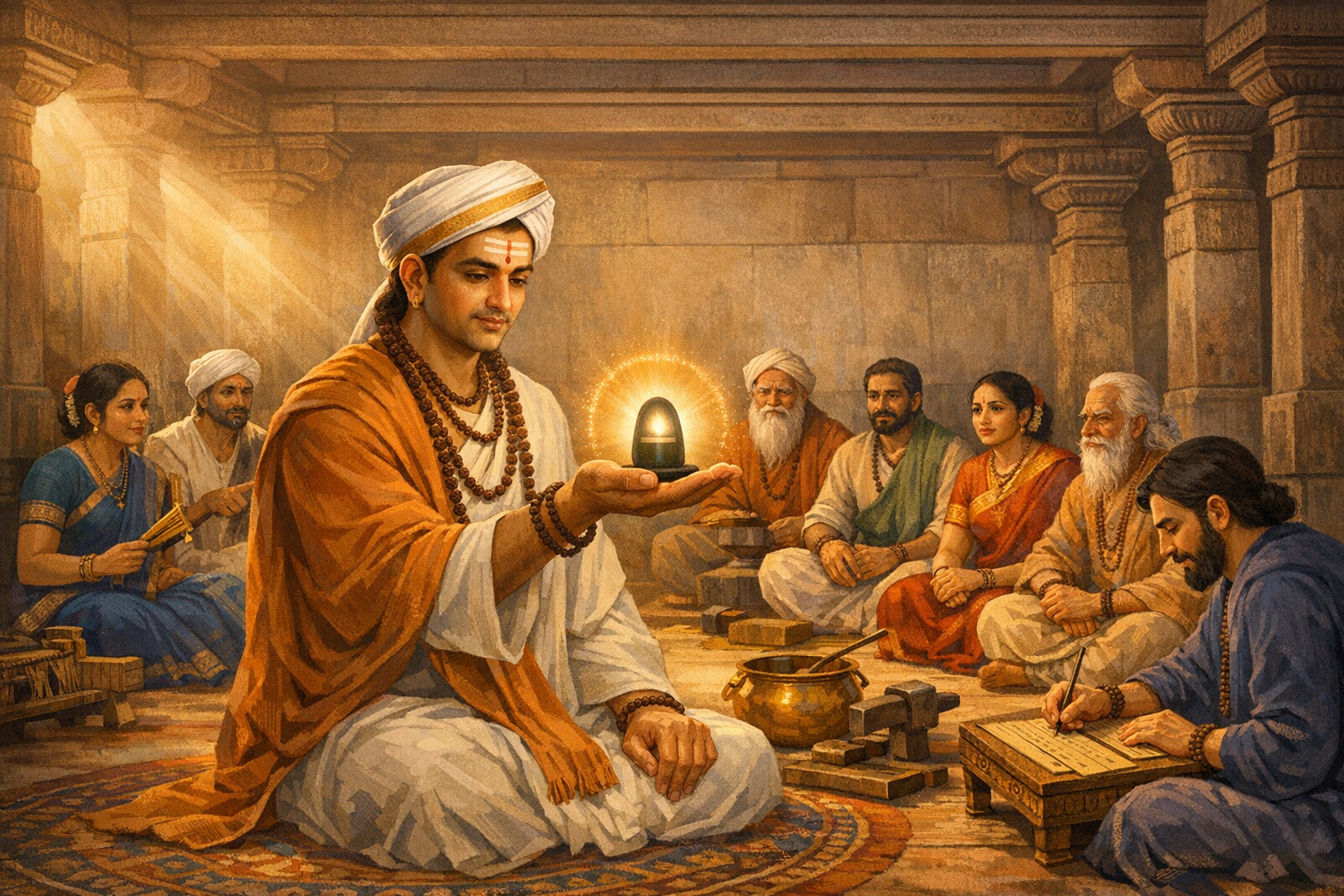
Basava Purana is a 13th-century Telugu epic by Palkuriki Somanatha that celebrates Basavanna (Basaveshwara) and codifies Lingayat principles through the Ishtalinga, Kayaka (work as worship), and Dasoha (sharing and service). Set against the vibrant bhakti milieu of medieval Deccan, it blends hagiography with social ethics and community dialogue through the Anubhava Mantapa. The poem’s dvipada…
-
Mohini Ekadashi Vrat Katha: Purana Story, Ritual Rules, and Deep Spiritual Benefits

Mohini Ekadashi, observed on Vaishakh Shukla Ekadashi, unites practitioners through a precise lunar observance, disciplined fasting, and devotion to Vishnu. This comprehensive guide explains calendar determination, Smarta–Vaishnava nuances, and the Dwadashi parana window with Hari Vasara considerations. It presents the Purana-based Mohini Ekadashi Vrat KathaDhrishtabuddhi’s transformation through the sage Kaundinya’s instructionas the narrative key to…
-
Dasavatara Jayanti 2026–2027: Authoritative Guide to Dates, Rituals, and the Ten Avatars of Vishnu

This authoritative guide to Dasavatara Jayanti 2026–2027 explains the ten incarnations of Lord Vishnu, the classical tithi framework for each Jayanti, and how to align observances with regional Panchang traditions. It clarifies Amanta vs Purnimanta month systems, sunrise-based tithi boundaries, and sampradaya-specific rules (e.g., Janmashtami midnight and Rama Navami midday). Each avatara’s theological meaning and…
-
Dashamahavidya Jayanti 2026–2027: Accurate Tithi Guide, Deep Meanings, and Home Puja Methods

This comprehensive guide to Dashamahavidya Jayanti 2026–2027 explains how the ten Jayantis of Mahatara, Matangi, Bagalamukhi, Chinnamastika, Dhumavati, Mahakali, Bhuvaneshwari, Kamala, Tripurabhairavi & Lalita are determined by tithi, with clear notes on regional calendar differences. It summarises widely observed tithis for each Mahavidya, indicates likely 2026–2027 Gregorian windows, and offers practical home-puja methods aligned to…
-
Divine Dwarapalakas of Lord Murugan: Sumukha & SudehaVeerabahu’s Fearless Gatekeepers of Dharma

This in-depth exploration examines Sumukha and Sudehathe revered sons of Lord Veerabahuwho serve as the Dwarapalakas (divine gatekeepers) of Lord Murugan. It situates their roles within the wider narrative arcs of the Skanda Purana and Tamil traditions, linking their valor in the Surapadman campaign to their enduring presence at the temple threshold. Readers gain a…
-
Are the Puranas Just Fiction? A Rigorous, Heart-Centered Guide to Finding God and Trusting Truth

Are the Puranas fiction or a reservoir of living wisdom? This analysis explains how Puranic narratives operate beyond a literal-versus-fable dichotomy by integrating mythic memory, ethics, ritual rationale, and contemplative instruction. Drawing on Indian epistemology (pramāṇa), it clarifies how śabda (trustworthy testimony), anumāna (inference), and yogic pratyakṣa (direct insight) jointly ground a rational, testable faith.…
-
Soul in Stone: Classical Hindu Aesthetics, Vishnudharmottara Purana, and Living Sculpture

Classical Hindu aesthetics treats sculpture as a disciplined pathway for making consciousness visible in matter. Drawing on the Vishnudharmottara Purana’s Chitra-sutra, especially Chapter 43 of the third khanda, this article explains how pramana (proportion), bhava (expression), and lavanya (grace) turn craft into living art. It shows how the six limbs of painting inform sculpture, why…