
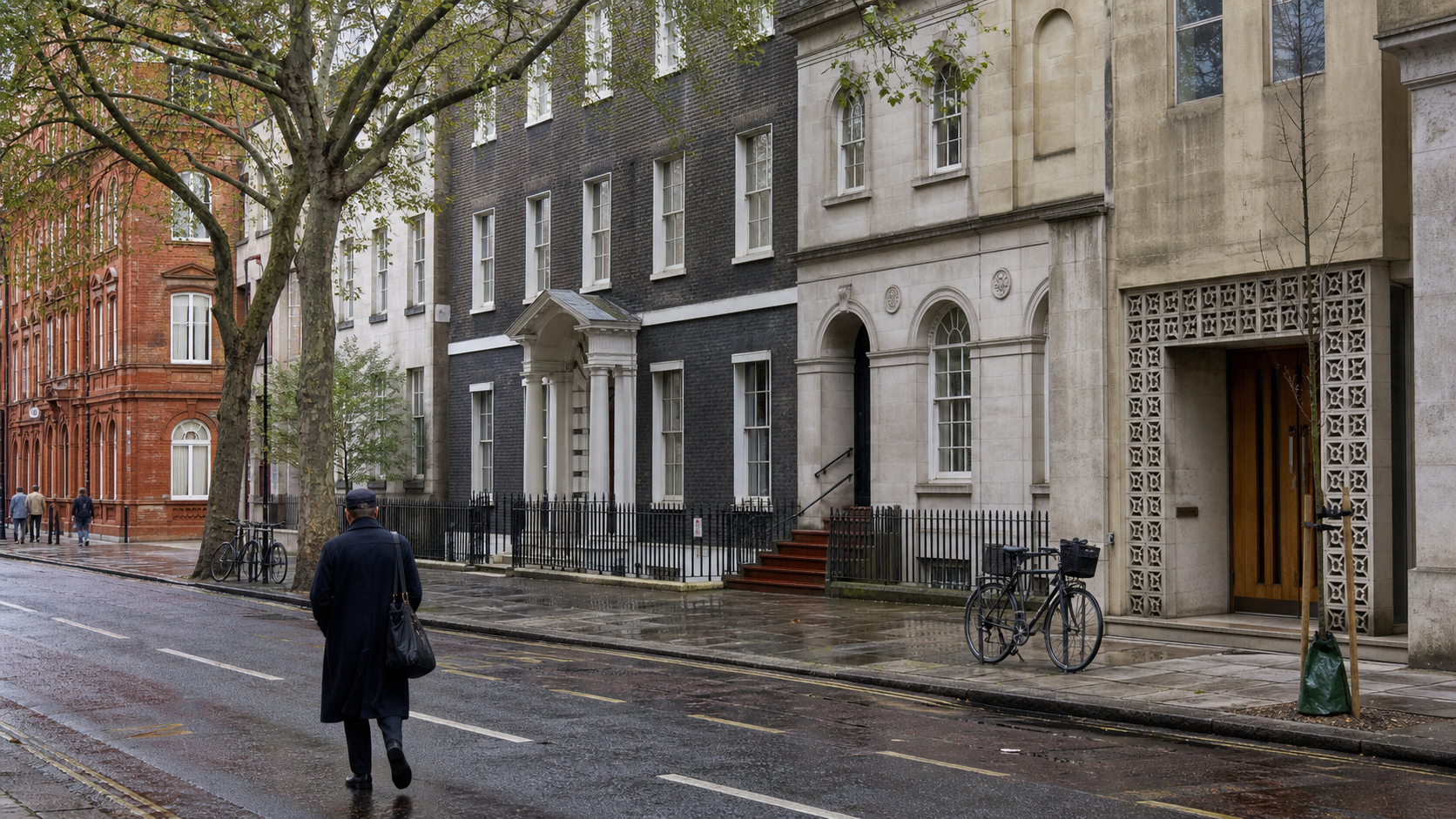
If you come to Bloomsbury expecting a neat procession of sacred sites, you may overlook what makes the area spiritually revealing. Its interfaith character is encountered in quieter ways: traditions remain distinct while sharing streets shaped by books, scholarship, architecture and everyday civic life.
You don’t need specialist knowledge to read that landscape well. Begin near Bury Place, slow your pace, and distinguish what you can actually see from what you merely assume. The reward is more than an attractive London walk. It is a practical lesson in how pluralism can preserve difference without turning difference into distance.
Begin near Bury Place with a question, not a checklist
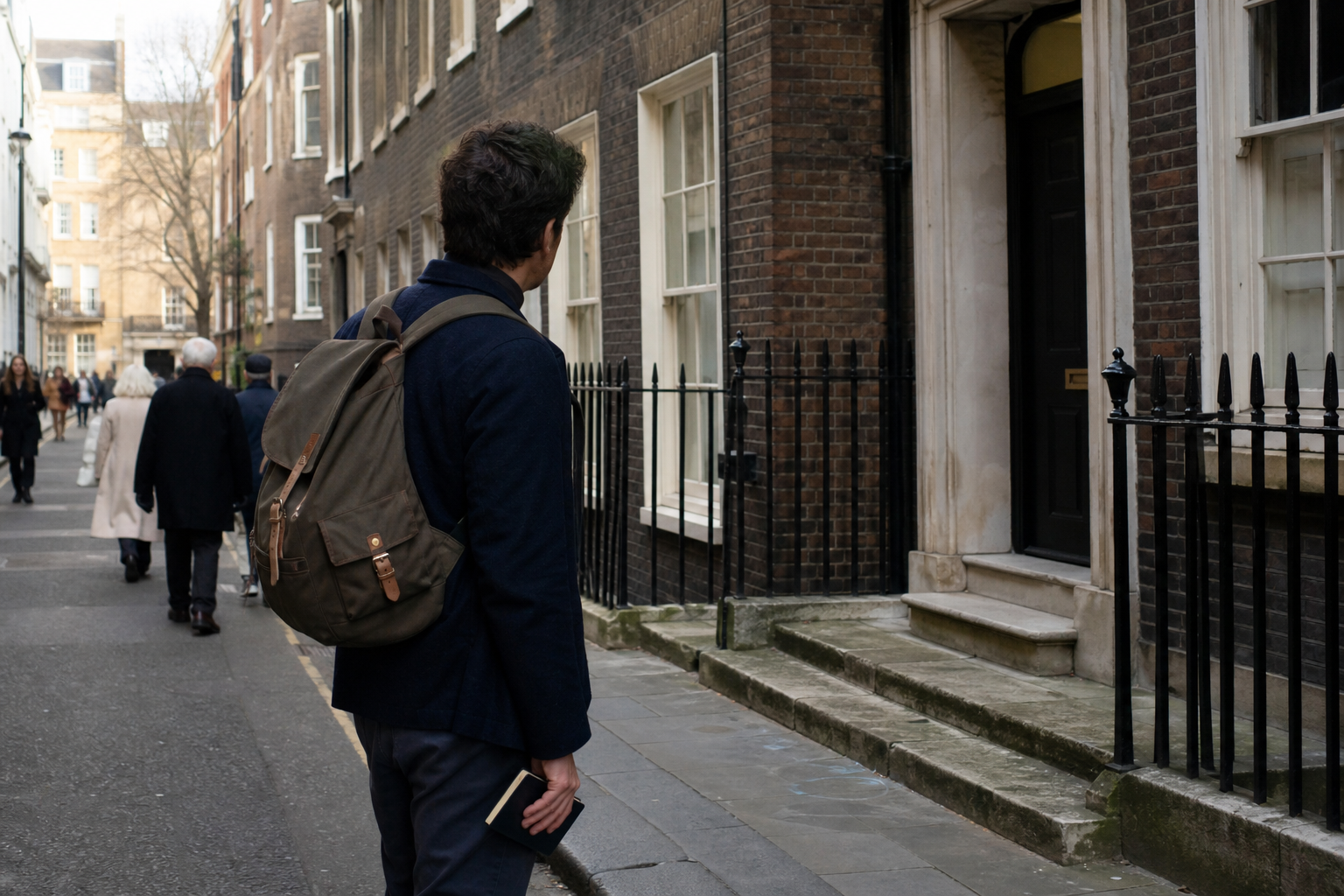
A winter walk beginning near 7 Bury Place in WC1A offers a useful point of entry. Quiet facades, book-filled windows, warm brick and the measured rhythm of the street bring scholarship, culture and spiritual inquiry into the same field of attention. None of those features proves that a building is sacred. Together, however, they help explain why Bloomsbury can feel like a threshold between the academic and the contemplative.
Choose one question before you set out: How does a city make room for spiritual difference? Keep that question open as you walk. It will stop the outing from becoming a hunt for exotic objects and direct your attention towards relationships: a bookshop beside an academic building, an old facade serving a present community, or a religious vocabulary appearing within an otherwise ordinary street.
Pay attention to pace as well as place. Bloomsbury’s value becomes clearer when you aren’t rushing from landmark to landmark. On the first stretch, resist the impulse to photograph everything. Look at entrances, windows, notices, books and the movement of people. Ask what is public, what is private and what remains uncertain. That simple discipline turns sightseeing into observation.
Pluralism here means proximity, not sameness
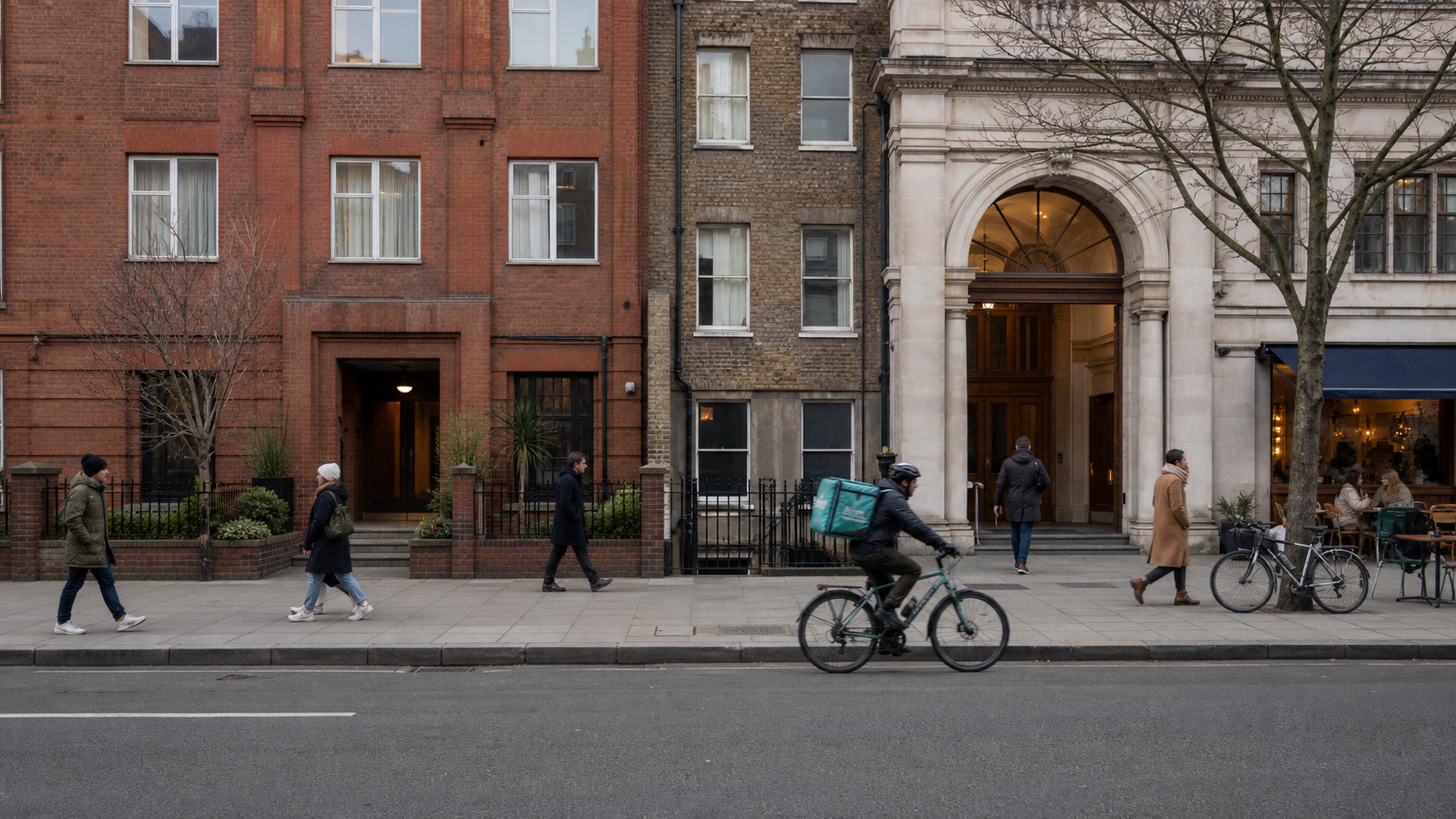
The easiest mistake is to read an interfaith landscape as evidence that religions are interchangeable. They aren’t. Hinduism, Buddhism, Jainism and Sikhism belong to the civilizational history of Bharat and can be discussed as Dharmic traditions, but the family resemblance doesn’t erase their separate teachings, authorities, communities and forms of practice.
That distinction changes what you should notice. Don’t ask only, “What do these traditions have in common?” Also ask, “What does each tradition say in its own voice?” Shared ethical concerns or contemplative practices can support conversation, but they shouldn’t become a shortcut for declaring every path identical. Respect begins when another tradition is allowed to define itself.
This is especially important for Dharmic visitors. Words such as dharma, meditation, guru and yoga often travel far beyond the communities that formed them. In a book-lined district, a familiar term may appear in a devotional, philosophical, academic or commercial setting. Read the surrounding language before deciding what it means. A word’s presence doesn’t guarantee that its original context has travelled with it.
Bloomsbury therefore offers a more demanding form of unity in diversity. Unity is the willingness to share civic space, listen and learn. Diversity is the right of each path to retain its name and integrity. If either half disappears, pluralism becomes shallow: separation without dialogue on one side, or a vague blended spirituality on the other.
Use four lenses to read the spiritual landscape
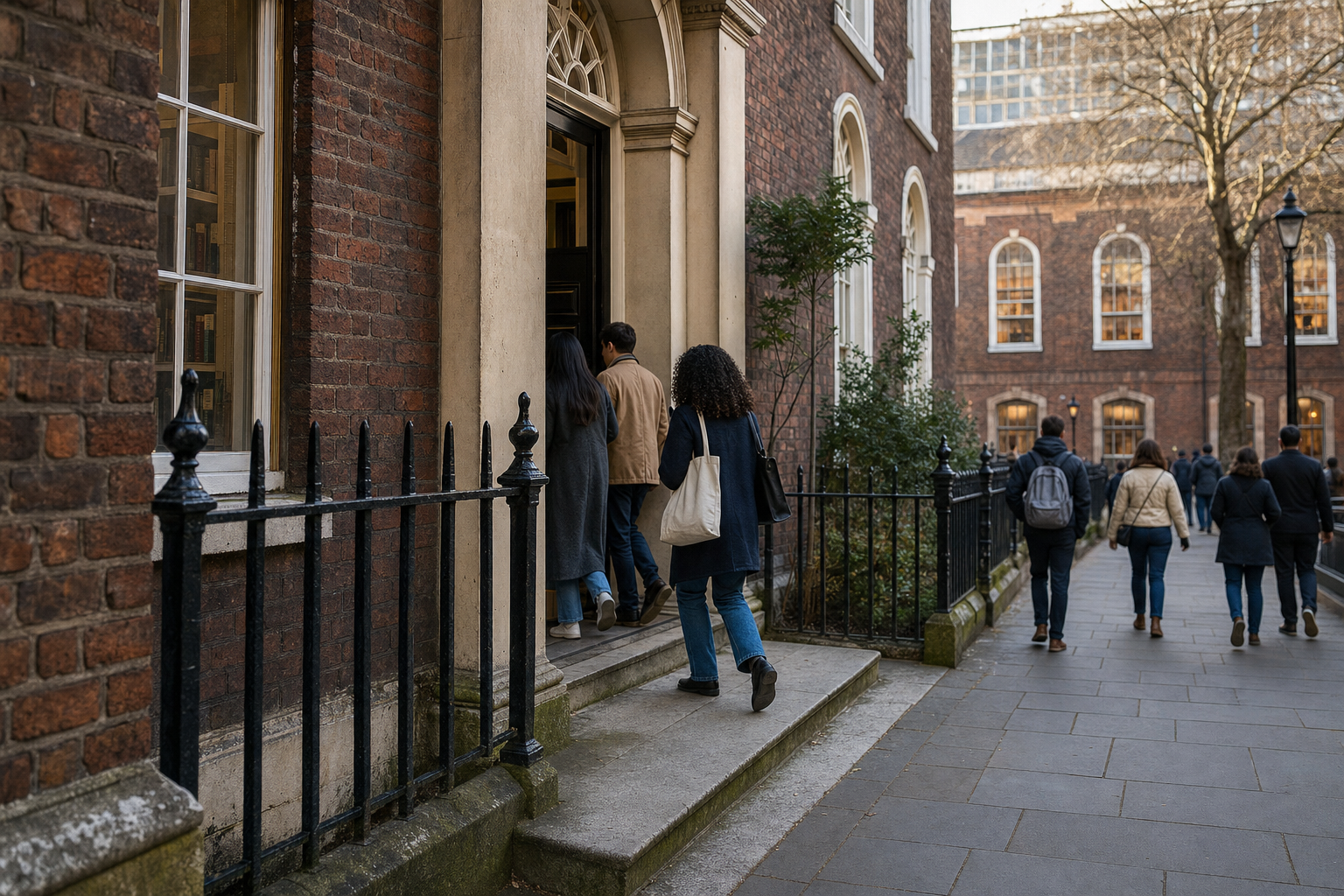
A useful walk needs more than an open mind; it needs a method. Use these lenses as you move through WC1A:
- Thresholds: Notice doors, windows and entrances. They show how institutions meet the street. An open display invites public attention; a discreet entrance may signal privacy. Neither tells you everything about the community inside.
- Texts: Read visible titles, notices and names carefully. Ask whether the language is devotional, historical, philosophical or promotional. This helps you separate a tradition’s self-understanding from an outsider’s interpretation.
- Continuity: Look at how older architecture carries present uses. A historic facade isn’t merely scenery, and a modern purpose doesn’t cancel the building’s past. The two layers can coexist without becoming the same thing.
- Civic tone: Observe how difference appears in ordinary public space. Spiritual coexistence isn’t confined to formal dialogue. It is also expressed through restraint, neighbourliness and the ability of unlike communities to remain visible without constant spectacle.
Keep your conclusions proportionate to the evidence. A window display can show that an idea is circulating; it cannot tell you how widely a belief is held. An architectural detail can reveal history; it cannot identify the convictions of the people passing beneath it. This restraint isn’t timidity. It is the difference between attentive cultural reading and projecting a preferred story onto the city.
If you make notes, divide each entry into observation, interpretation and question. “A Buddhist title appears beside a work on Hindu philosophy” is an observation. “The shop encourages interfaith comparison” is an interpretation. “Who selected these titles, and for whom?” is a question. Keeping those categories separate makes your later reflections more honest.
Turn the walk into a respectful spiritual practice
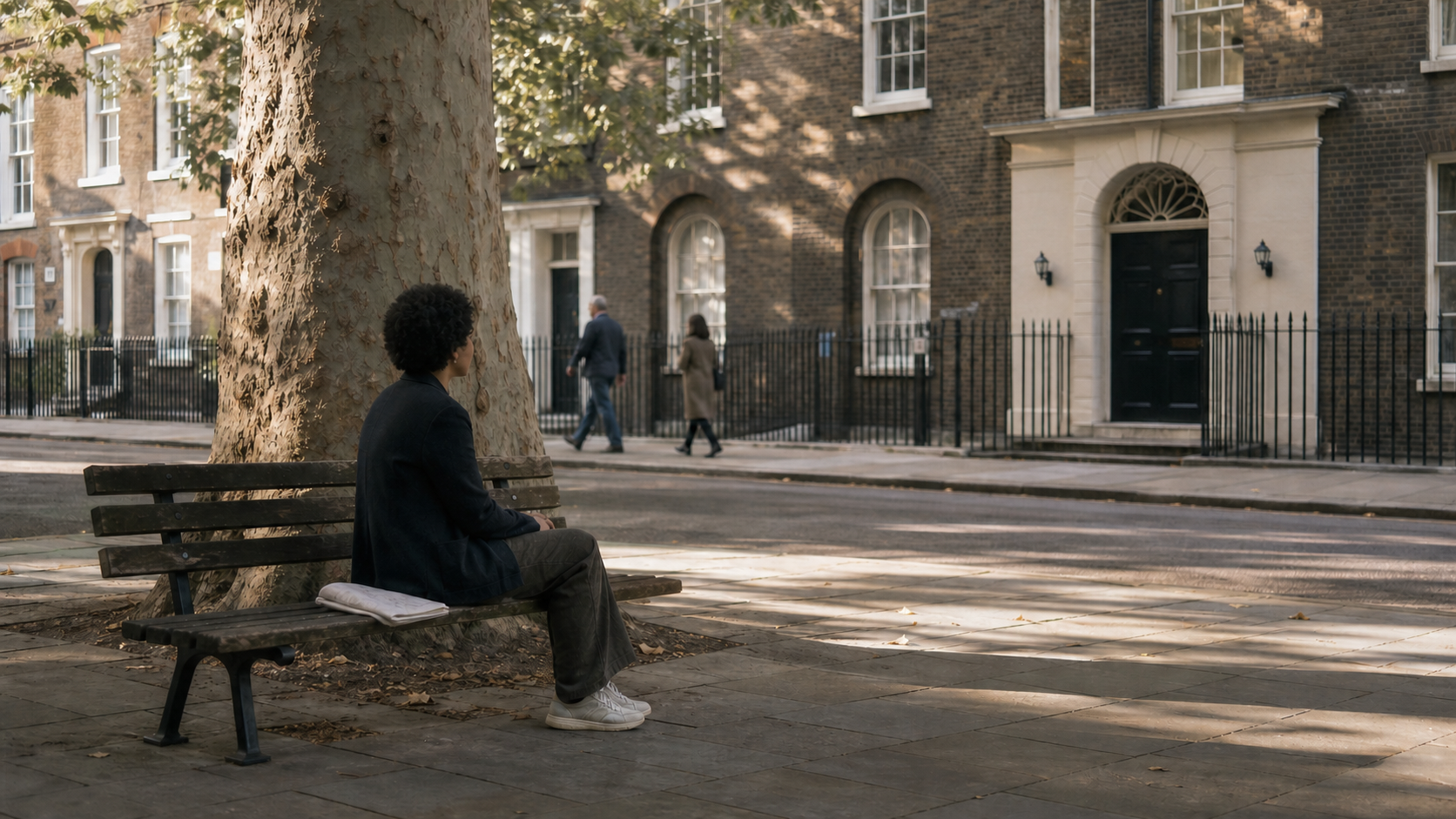
You can approach Bloomsbury contemplatively without pretending that the street itself is a temple. The practice lies in disciplined attention: seeing what is present, withholding premature judgement and allowing another path to remain other.
- Set an intention before you begin. Choose curiosity, not confirmation. If you arrive determined to prove that all religions are one, or that coexistence is impossible, you will notice only what supports your conclusion.
- Walk slowly enough to read. Give windows, inscriptions and notices more than a passing glance. Context often sits in the smaller words surrounding the term that first caught your eye.
- Name only what you can identify. Don’t assign a person, object or building to a tradition from appearance alone. Record uncertainty instead of filling it with a guess.
- Respect boundaries. If you encounter a place of practice, follow its stated visitor rules. Don’t photograph people, ceremonies or interiors merely because they are visible.
- End with unanswered questions. Ask what you observed directly, what you inferred and what requires further learning. A worthwhile interfaith walk should refine your questions, not manufacture instant expertise.
This method also protects against two opposite habits. One is romanticising diversity as effortless harmony. The other is treating every difference as a conflict. Shared streets don’t prove complete agreement, but disagreement doesn’t prevent considerate coexistence. Look for the actual civic relationship rather than forcing the neighbourhood into either story.
Key takeaways for your Bloomsbury walk
- Start near Bury Place and treat the surrounding streets as a landscape to read, not a checklist to complete.
- Notice books, facades, thresholds and public language, but don’t treat visual clues as proof of private belief.
- Approach Hinduism, Buddhism, Jainism and Sikhism as related within a Dharmic civilizational setting while preserving their distinct identities.
- Separate what you observed from what you inferred; turn uncertainty into a question rather than a claim.
- Judge interfaith life by the quality of coexistence and attention, not by whether every tradition has been blended into one.
On your next walk through WC1A, choose one block and give it your full attention. Read before interpreting, ask before concluding, and let each tradition retain its own voice. That is a modest practice, but it is how a plural city becomes legible without becoming flattened.
References
