
-
Srimad Bhagavatam 11.3.47 Unpacked: Transformative Bhakti Sadhana at ISKCON Juhu
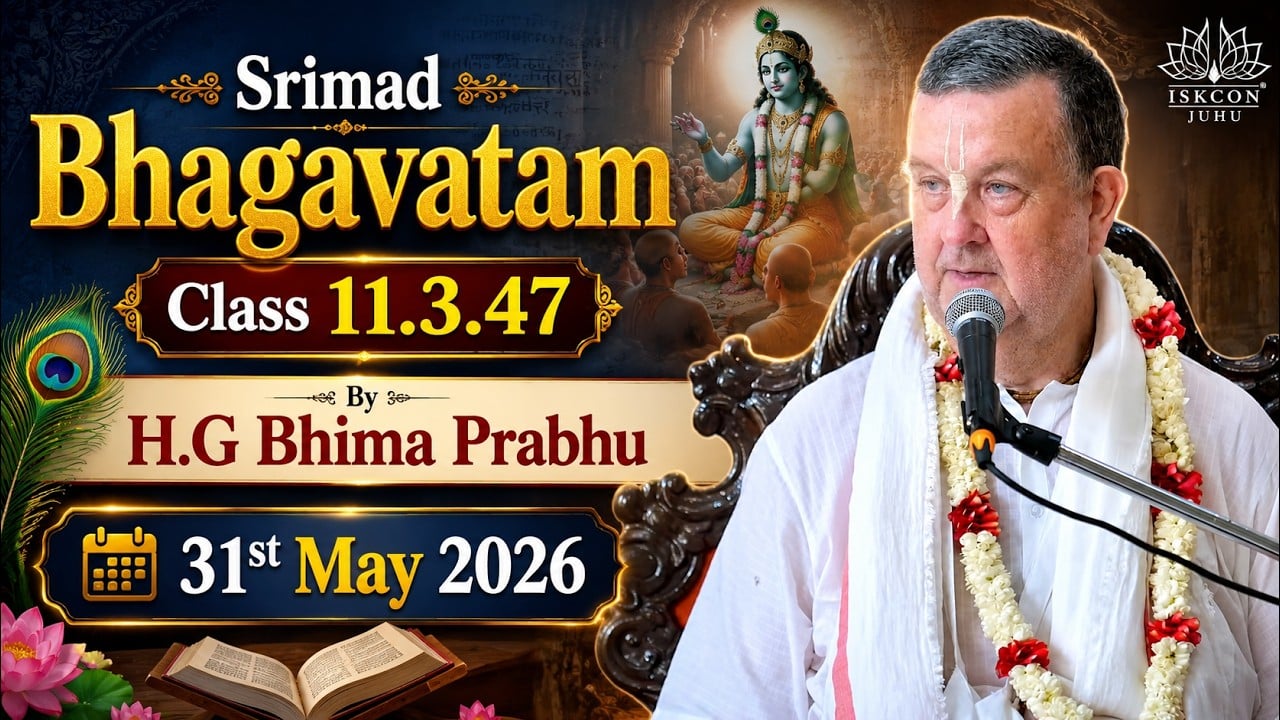
This ISKCON Juhu class by H.G Bhima Prabhu (31st May 2026) unpacks Srimad Bhagavatam 11.3.47 within the broader Nimi–Nava-yogendra dialogue, showing how guru-guided practice, satsaṅga, Deity worship, and nāma-kīrtana cohere into a practical science of devotion. The discussion links 11.3.47 to 11.3.21’s injunction to seek a realized teacher and translates the chapter’s teachings into an…
-
Nearly 300,000 Spiritual Literatures Shared: WSN March 2026 Sankirtan Highlights and Temple Rankings

The March 2026 World Sankirtan Newsletter records a near-300,000 distribution of spiritual literatures worldwide, highlighting the enduring outreach of ISKCON temples. Mumbai-Juhu, Vrindavan, and Silicon Valley (ISV) lead the large category, while London-Soho, Bengaluru-South, and San Diego top the medium segment. Small centers such as Atlanta Krishna Life, Surat, and Swansea, and maha-small leaders Baltimore,…
-
SB 11.2.42 Decoded at ISKCON Vrindavan: Vedavyasa Priya Swami on Bhakti, Anubhava, Vairāgya

Srimad-Bhagavatam 11.2.42 offers a rigorous, lived measure of spiritual progressdevotion (bhakti), experiential realization (pareśānubhava), and natural detachment (virakti) arising together like satisfaction, nourishment, and hunger’s relief when eating. Presented at ISKCON Vrindavan by His Holiness Vedavyasa Priya Swami Maharaj on 30-05-2026, the teaching clarifies how to verify inner growth without sectarian anxiety. Readers gain a…
-
SB 10.6.22–23 Decoded: Mercy, Protection, and Purification in HG Bhakta Prabhu’s Class
This Śrīmad Bhāgavatam (SB 10.6.22–23) session with HG Bhakta Prabhu at Hare Krishna Melbourne examines the pivotal moments in the Pūtanā narrative when fear turns into faith-guided action. The analysis highlights three core themesdivine protection (rakṣaṇa), maternal compassion (vatsalya), and ritual purification (śuddhi)and shows how they function together in Vraja’s communal response. Drawing on the…
-
Lead with Devotion, Live Unattached: Dhruva Maharaja’s Lessons in Bhagavatam 4.12 (10–16)
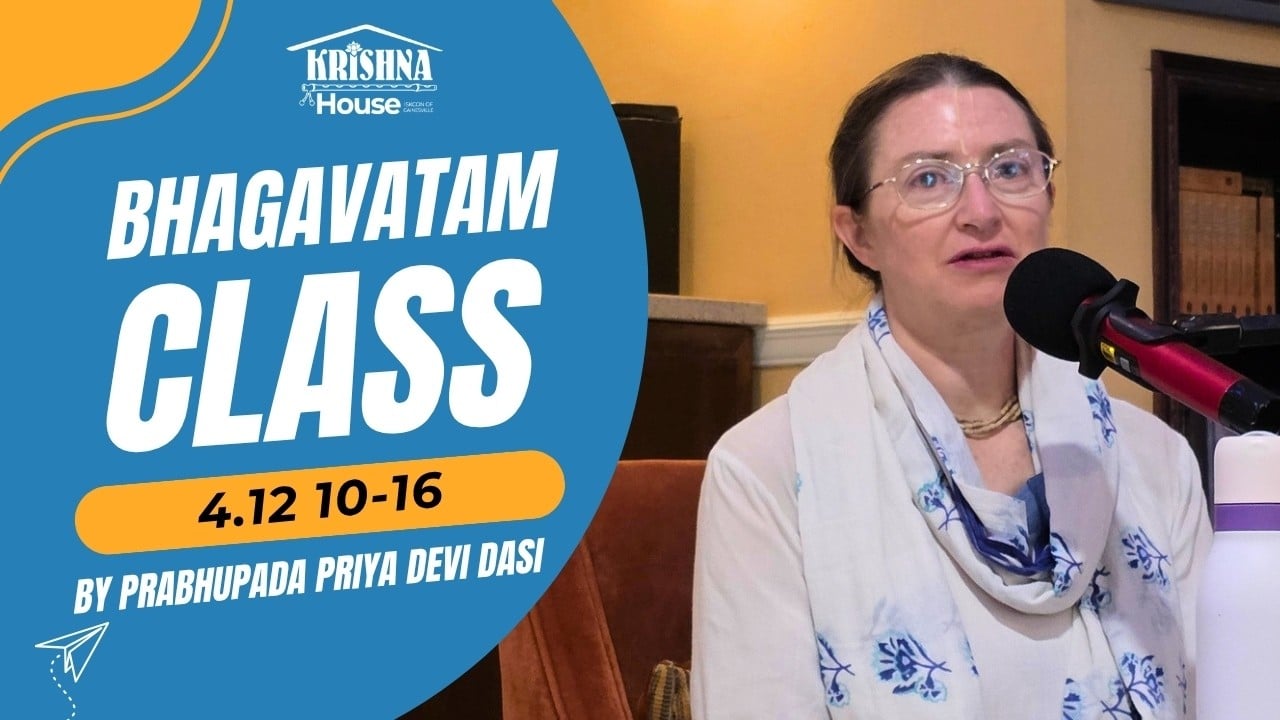
Bhagavatam 4.12 (10–16) presents Dhruva Maharaja as a saint-king who unites devotion with rāja-dharma, demonstrating how to lead decisively while remaining inwardly detached. The passage operationalizes the Bhagavad-Gita’s counsel to act and remember simultaneously, turning smaraṇaṁ into a discipline that purifies action at its source. Readers gain a practical, stepwise protocolestablish attention with śravaṇa-kīrtana, return…
-
Krishna’s Personal Descent on Earth: Scriptural Evidence, Bhakti Practice, and Dharmic Unity

This in-depth exploration examines the Vaishnava conviction that Lord Krishna personally descended to Earth, situating the claim within scriptural sources (Bhagavad Gita, Bhagavata Purana, Brahma-samhita) and the technical doctrine of avatara-tattva. It shows how Gaudiya concepts like achintya-bheda-abheda map divine unity and plurality, while the yuga-dharma of nama-sankirtana translates theology into transformative practice. Using the…
-
Why Balarama Wears Blue: Profound Symbolism of Strength, Serenity, and Seva Revealed

Balarama’s fair form and blue garment, described in the Bhagavata tradition, operate as a visual theology encoding strength, serenity, and selfless service. The Sanskrit color terms nīla, śyāma, and pīta clarify the chromatic contrast with Krishna and convey deeper cosmological moods. Vaishnava exegesis links Balarama’s blue attire to his identities as ādi-guru, Ananta Śeṣa, and…
-
Decoding Srimad Bhagavatam 3.26.9: Sankhya, Consciousness, and a Roadmap to Dharmic Unity

This in-depth exploration of Srimad Bhagavatam 3.26.9, inspired by H.H Subhag Swami Maharaj’s discourse at ISKCON Mayapur, unpacks Kapila’s Sankhya as a precise map of consciousness, causality, and liberation. It clarifies how purusha, prakriti, time, and the three gunas co-operate to shape experience, and why that structure makes ethical effort and devotion both meaningful and…
-
Dhruva’s Turning Point: Manu’s Counsel on Anger, Humility, and Surrender (SB 4.11.15–35)
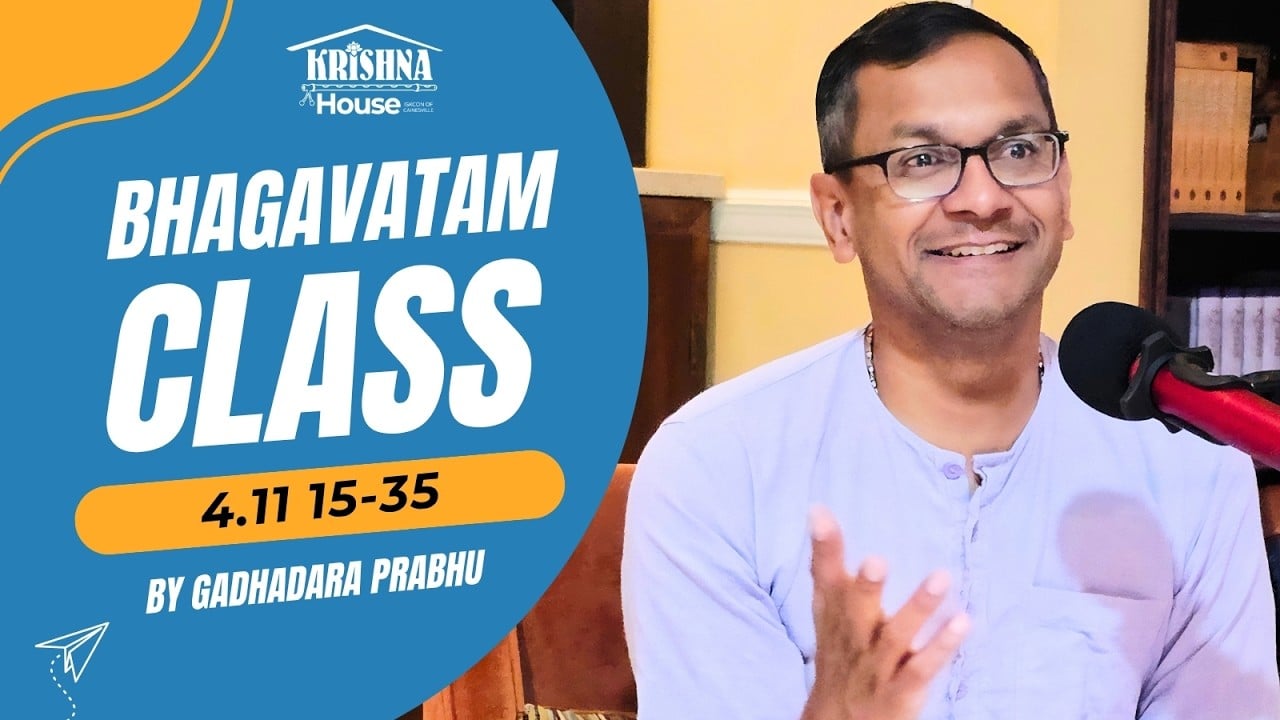
Bhagavatam Class 4.11 15–35 explores Svayambhuva Manu’s intervention as Dhruva Maharaja shifts from reactive anger to disciplined humility. The class clarifies a core Vaishnava principle: the Supreme Lord is the ultimate cause behind all causes, guiding practitioners toward surrender rather than escalation. Verse 27 functions as a cognitive pivot, redirecting the mind from krodha to…
-
The Peril of Vaishnava Aparādha: SB 11.1.13–15 and the Yadu Dynasty’s Devastating Fall
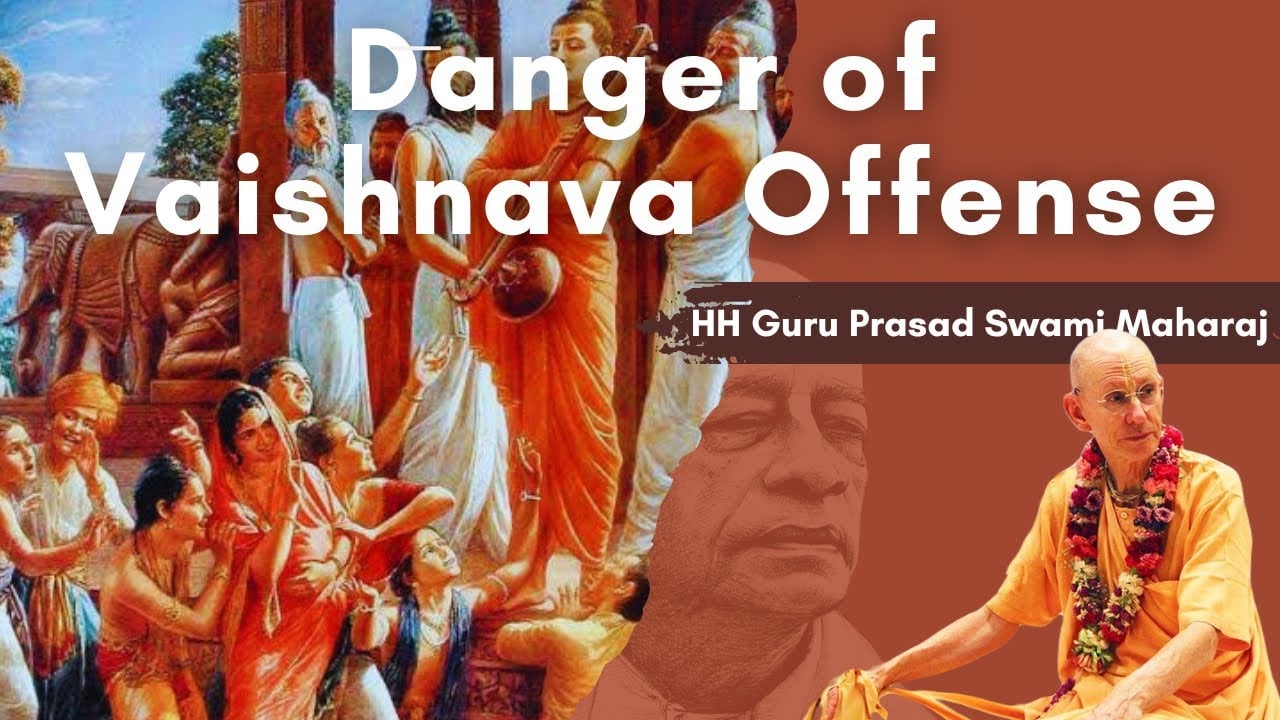
Srimad Bhagavatam 11.1.13–15 warns that mocking saintly personsillustrated by the Yadu youths disguising Samba as a pregnant womancarries devastating karmic and social consequences. Drawing on HH Guru Prasad Swami Maharaj’s insights, this analysis clarifies the doctrine of Vaishnava aparādha and shows how even technical fixes cannot undo moral causes. Readers gain precise context for the…
-
Conquering the Disease of Envy: SB 3.29’s Remedy for Respect, Ahimsa, and Dharmic Unity
This deep-dive, inspired by a Brambleton, VA discourse on May 21, 2026, examines why envy (īrṣyā, asūyā, mātsarya) is the principal obstacle to authentic respect and spiritual growth. Drawing on Srimad Bhagavatam 3.29, it maps how envy aligns with rajas and tamas and why non-envious devotion in sattva is essential. The analysis integrates parallel remedies…
-
Srimad-Bhagavatam: Timeless Wisdom That Transcends Dharma, Artha, Kama, and Moksha

Srimad-Bhagavatam, the Bhagavata Purana, honors the classic Hindu puruṣārthasdharma, artha, kāma, and mokṣawhile demonstrating how each is perfected and transcended through bhakti. Presented through a refined narrative and commentarial tradition, it integrates theology, cosmology, ethics, and contemplative practice. Readers encounter vivid exemplars such as Dhruva, Prahlāda, Ajamila, Gajendra, and Ambarīṣa, alongside philosophical teachings that unite…
-
Golden Grace and Neem-born Humility: Decoding ‘Gauranga’ and ‘Nimai’ of Chaitanya Mahaprabhu
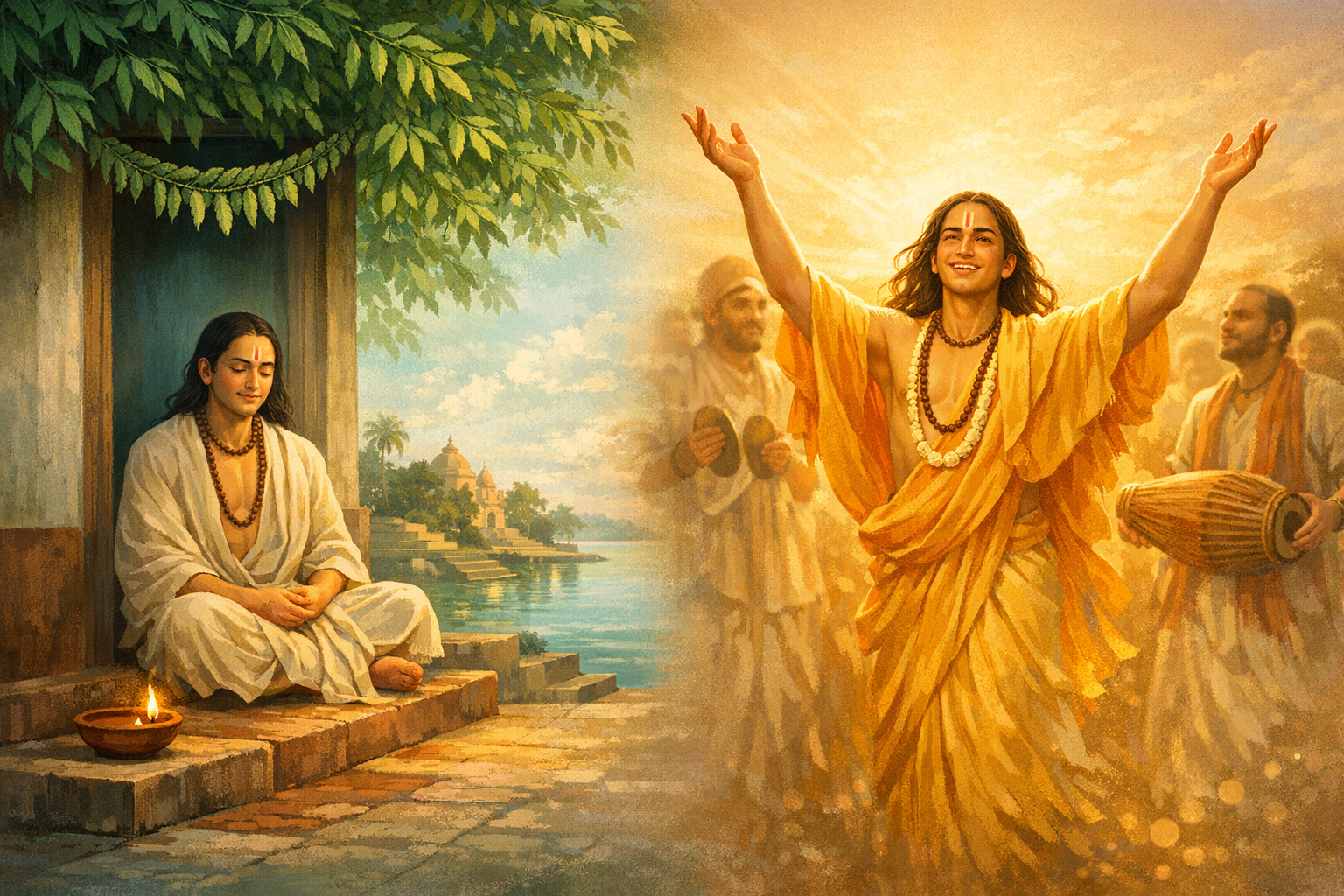
This article decodes the dual symbolism embedded in Chaitanya Mahaprabhu’s epithets “Nimai” and “Gauranga.” It explains how “Nimai,” rooted in neem’s purificatory aura and Bengal’s domestic piety, conveys protection, intimacy, and inner cleansing. It then unpacks “Gauranga” as a theological epithet signifying Krishna’s golden, compassion-filled form, central to Gaudiya Vaishnavism’s mission of Nama Sankirtana. Drawing…
-
Nandagopa, Krishna’s Foster-Father: A Powerful Study in Dharma, Adoption, and Love Beyond Blood
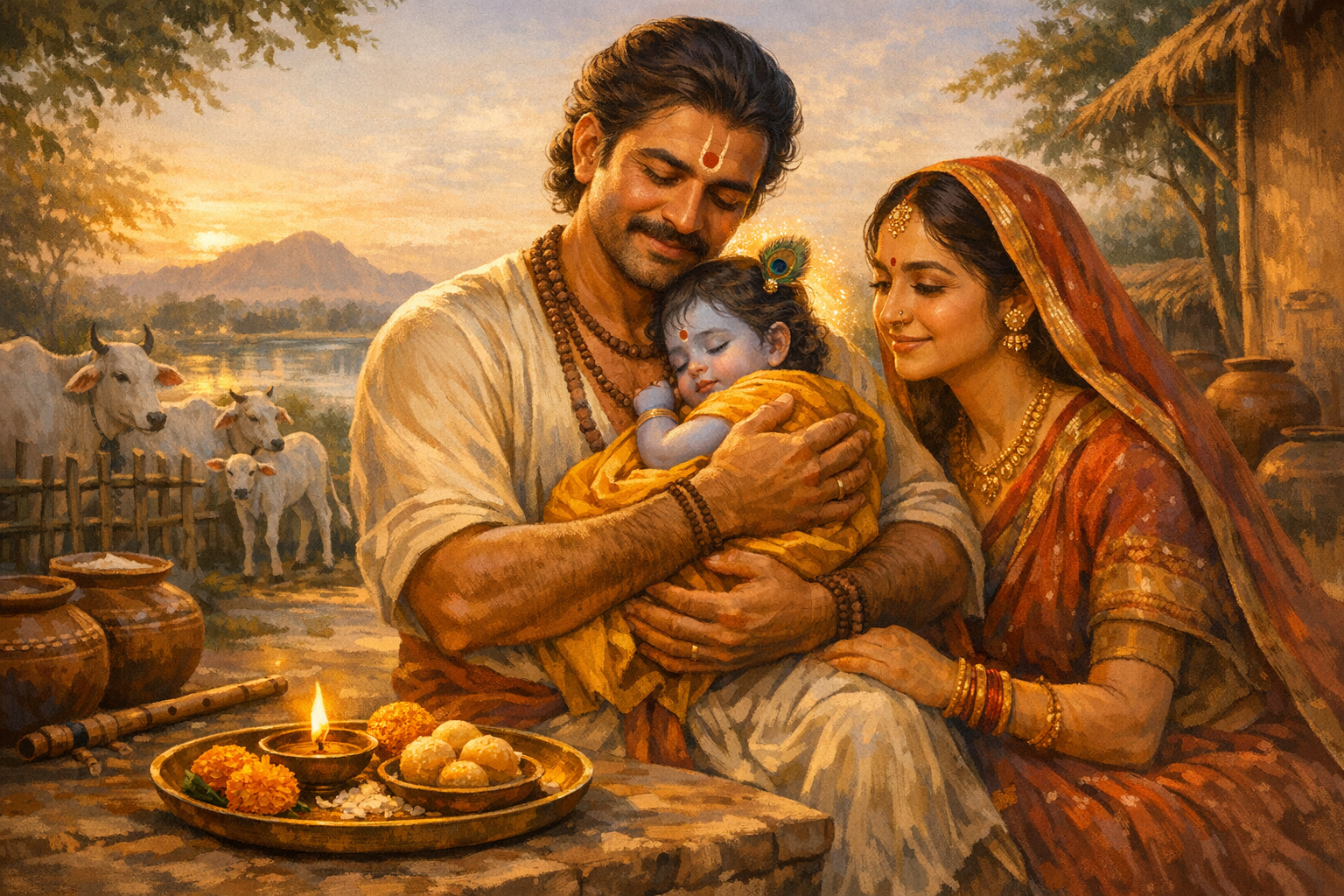
NandagopaNanda Maharaja of Vrajaembodies a dharmic model of fatherhood defined by nurture rather than blood. Drawing on the Bhagavata Purana and allied traditions, this analysis situates him as Krishna’s foster-father who performs samskaras, protects the child, and leads the Gopa community with ethical clarity. The study explores adoption and kinship in Dharmashastra, shows how bhakti…
-
SB 4.9.37–53 Decoded: Dhruva’s Unshakable Devotion, Cosmic Boons, and Inner Renewal
Srimad-Bhagavatam Canto 4, Chapter 9, verses 37–53 narrate how Dhruva Maharaja’s devotion matures from personal austerity to public responsibility. The passage culminates in Dhruvalokasymbolizing unwavering devotionand a restored social order that validates rajadharma as service. Drawing on themes often highlighted by Kalakantha Prabhu, the analysis explains how bhakti integrates knowledge and action while transmuting anger…
-
Lilasuka (Bilvamangala): The Enigmatic Poet‑Saint behind the Timeless Krishna Karnamrita

Lilasuka (Bilvamangala) stands as an enigmatic poet-saint whose Krishna Karnamrita shaped the language of devotion across centuries. This long-form exploration situates the work within Sanskrit poetics, Bhagavata Purana theology, and Gaudiya transmission, while noting manuscript variants and dating debates. Readers gain a technical view of meters, imagery, and alaṅkāra that make the text a model…
-
The Donkey’s Silence at Krishna’s Birth: Textual Evidence, Folk Memory, and Sacred Symbolism

A widely told folk variant claims a donkey brayed during Devaki’s earlier births yet fell silent at Krishna’s birthsometimes after Vasudeva’s quiet prayer that no sound betray the child. Canonical sources such as the Bhagavata Purana and Harivamsa do not mention a donkey, focusing instead on a divinely wrought hush: chains loosened, doors opened, and…
-
Srimad Bhagavatam 10.66.21–24: Paundraka’s Fall, Kāśī’s Fire, and Dharmic Governance
This in-depth reading of Srimad Bhagavatam 10.66.21–24, contextualized by a Villa Vrindavana ISKCON discourse (15/5/2026), explains how Paundraka’s imposture and Kāśī’s retaliatory abhicāra illustrate the karmic recoil of weaponized ritual and the necessity of right-seeing (Sudarśana). Readers gain a precise grasp of the chapter’s ethical architectureego inflation, misuse of sacred means, and restoration of order…
-
Srimad Bhagavatam Distribution Guide: Ethical, Scalable, Data-Driven Outreach to 100,008 Homes

This guide presents an ethical, inclusive, and data-driven framework for distributing Srimad Bhagavatam at scale, aligning cultural heritage stewardship with modern outreach practices. It situates the Bhagavata Purana within the wider corpus of Hindu scriptures and emphasizes unity among Hinduism, Buddhism, Jainism, and Sikhism through non-coercive, consent-based engagement. The roadmap covers volunteer training, legal compliance,…
-
HG Daivi Shakti Mataji illuminates Srila Prabhupada Lilamrita: Rigorous Insights and Living Bhakti

This in-depth exploration of HG Daivi Shakti Mataji || Srila Prabhupada Lilamrita || 17-05-2026 presents Srila Prabhupada-lilamrta as both an authorized biography and a living guide to bhakti-yoga. It explains the work’s sources, method, and theological framing in Gaudiya Vaishnavism, while translating those insights into practical, measurable disciplines. Readers gain a clear view of how…