
-
Three Who Saw Krishna’s Infinite VishvarupaArjuna, Sanjaya, Akrura: Evidence and Insights

This long-form study examines the three principal witnesses to Krishna’s viśvarūpaArjuna, Sanjaya, and Akrurausing the Bhagavad Gita, Mahabharata, and Bhagavata Purana as primary touchpoints. It clarifies how divya cakṣuḥ (divine sight) conditions the experience, why Arjuna’s battlefield vision is pedagogically unique, and how Sanjaya’s Vyasa-given perception mediates revelation to a wider audience. Akrura’s Yamuna theophany…
-
Srimad Bhagavatam Decoded: Profound Insights from His Grace Radheshyam Prabhu’s ISKCON Class
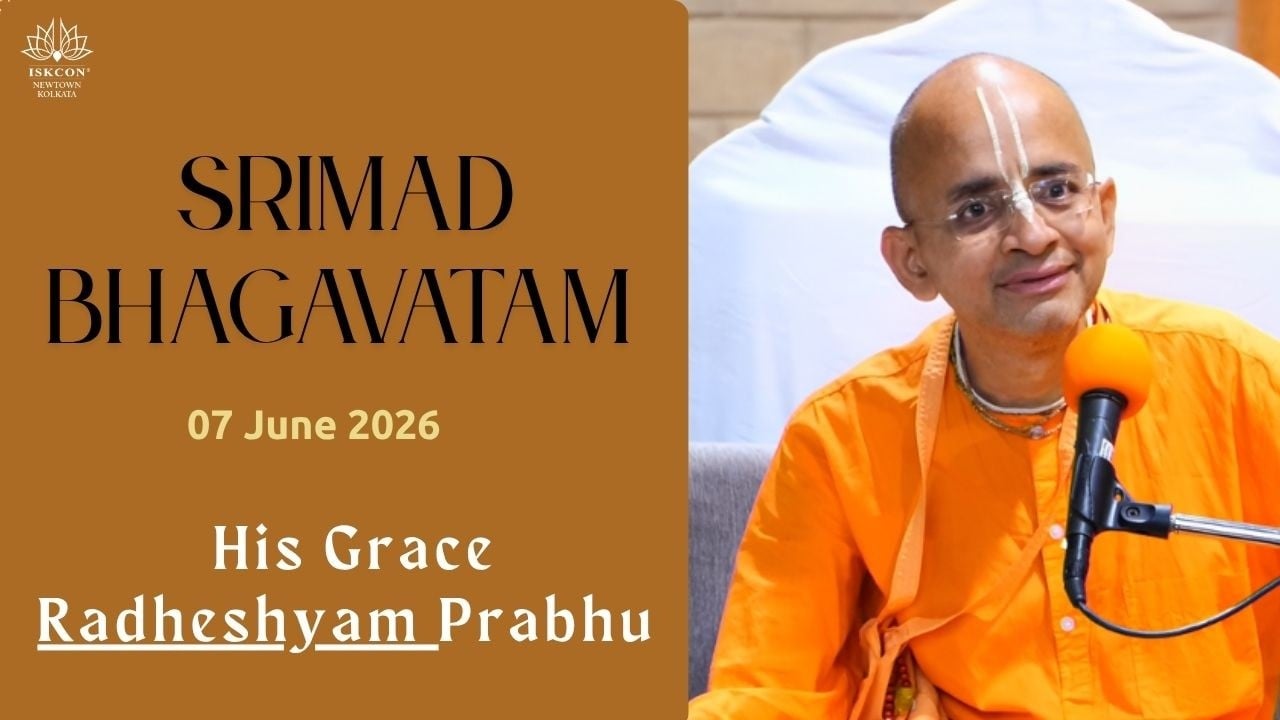
This in-depth overview distills the core insights from a Srimad Bhagavatam class by His Grace Radheshyam Prabhu, hosted by ISKCON New Town, Kolkata. It situates the Bhagavata Purana historically and theologically, outlines Gaudiya Vaishnava hermeneutics, and clarifies key bhakti-yoga processes. Readers gain a practical study routine, a clear map of spiritual progression, and research-informed reflections…
-
Unveiling the Cosmic Blueprint: Srimad Bhagavatam SB 2.5.11 with HG Mukunda Datta Prabhu
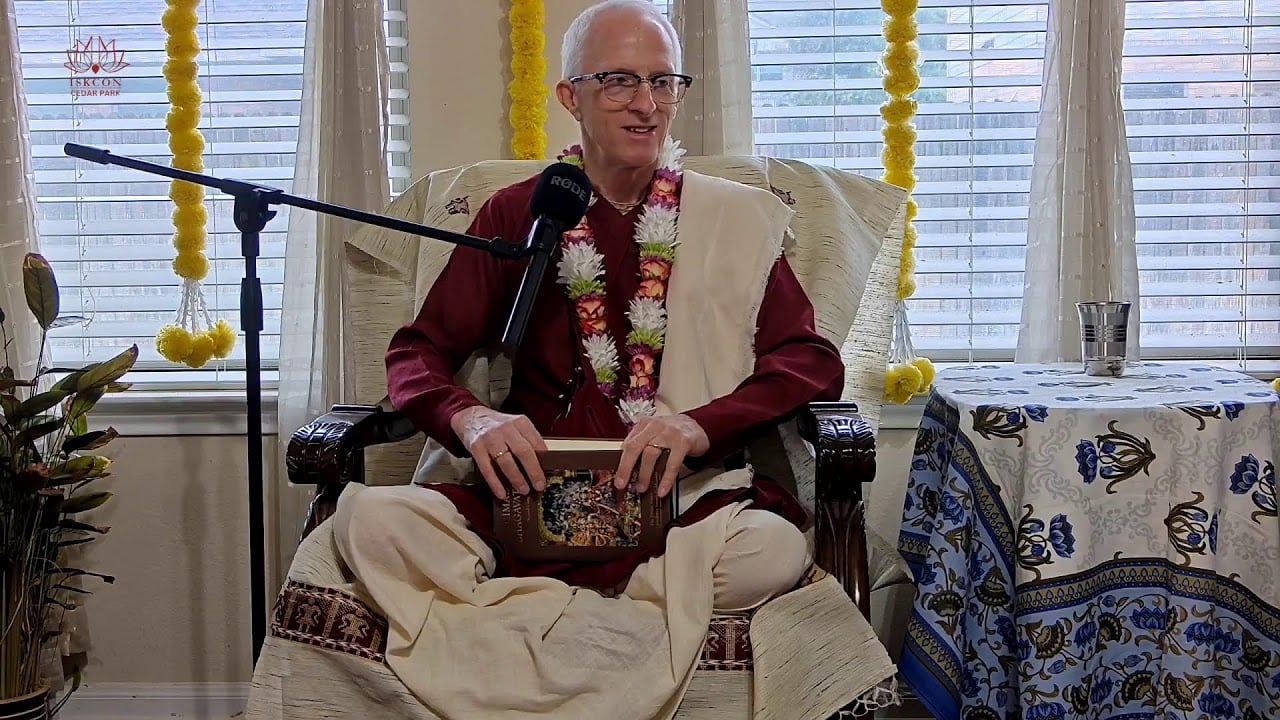
This in-depth analysis of Srimad Bhagavatam SB 2.5.11, based on a June 5, 2026 class by HG Mukunda Datta Prabhu at the Hare Krishna Temple of Austin (ISKCON Cedar Park), situates the verse within the Bhagavata Purana’s rigorous cosmology. It explains how the Supreme functions as the cause of all causes, activating pradhana through kala,…
-
HH Niranjan Swami in Boston: The Transformative Power of Kirtan, Sound, and Gaudiya Bhakti
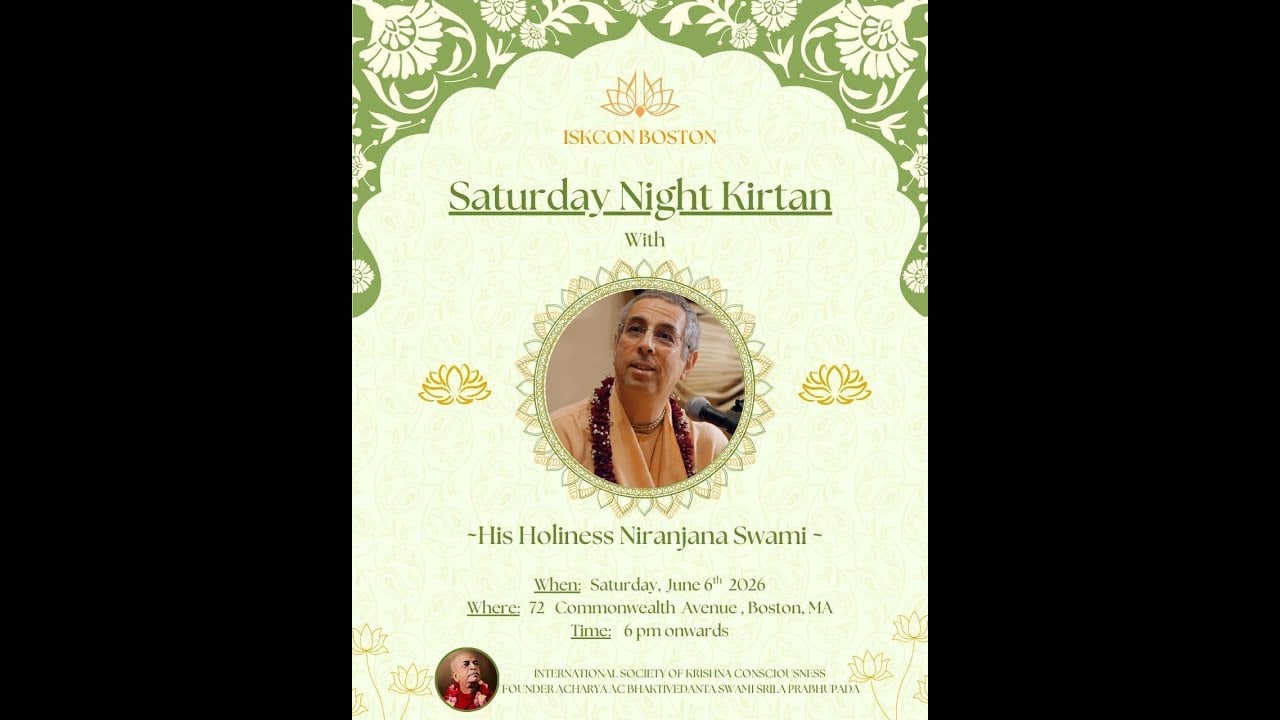
On 6 June 2026, ISKCON Boston hosted a kirtan led by HH Niranjan Swami Maharaj, highlighting how Gaudiya Vaishnava congregational chanting fuses scripture, music, and community. The practice centered on the maha-mantra and the disciplined use of raga and tala, demonstrating how structure supports devotion. Participants experienced the psychosocial benefits of group singingentrainment, focus, and…
-
SB 4.18.19 Unveiled: Timeless Eco-Dharma, Raja-Dharma, and Bhakti for Modern Life
This article distills the core teachings of SB 4.18.19, as highlighted in a session with HG Pancaratna Prabhu on ISKCON NYC TV, to show how Maharaja Prithu integrates eco-dharma, raja-dharma, and bhakti into a coherent public ethic. Readers gain a precise understanding of how Srimad-Bhagavatam frames ethical leadership as service and nature as a sacred…
-
Bridging God and Science: Vaishnava Sāṅkhya’s Insights for Christian Theologies of Nature

This essay explores how Christian models of divine action engage modern science and shows how the theistic Sāṅkhya of the Bhagavata Purana (Srimad-Bhagavatam) deepens that conversation. It clarifies primary and secondary causation, non-interventionist action, and kenotic/panentheistic intuitions in light of Vaishnava metaphysics. By mapping guṇa-based regularities to scientific laws and explaining non-physical causation through the…
-
Awaken Intense Attraction to Sri Krishna: Two Transformative KeysLila Hearing and Seva

A clear pathway for rekindling attraction to Sri Krishna emerges from the bhakti tradition: center daily life on seva and sustain regular hearing of Krishna’s names, qualities, and lila. Together, these two keys nourish the heart and protect it from seeking false shelter in māyā. Drawing on Srila Visvanatha Cakravarti Thakur’s insightsamvardhanam samposanam laulyam dadati…
-
Transforming Campuses: TSP’s Scalable, Inclusive Installations of Srimad Bhagavatam Sets
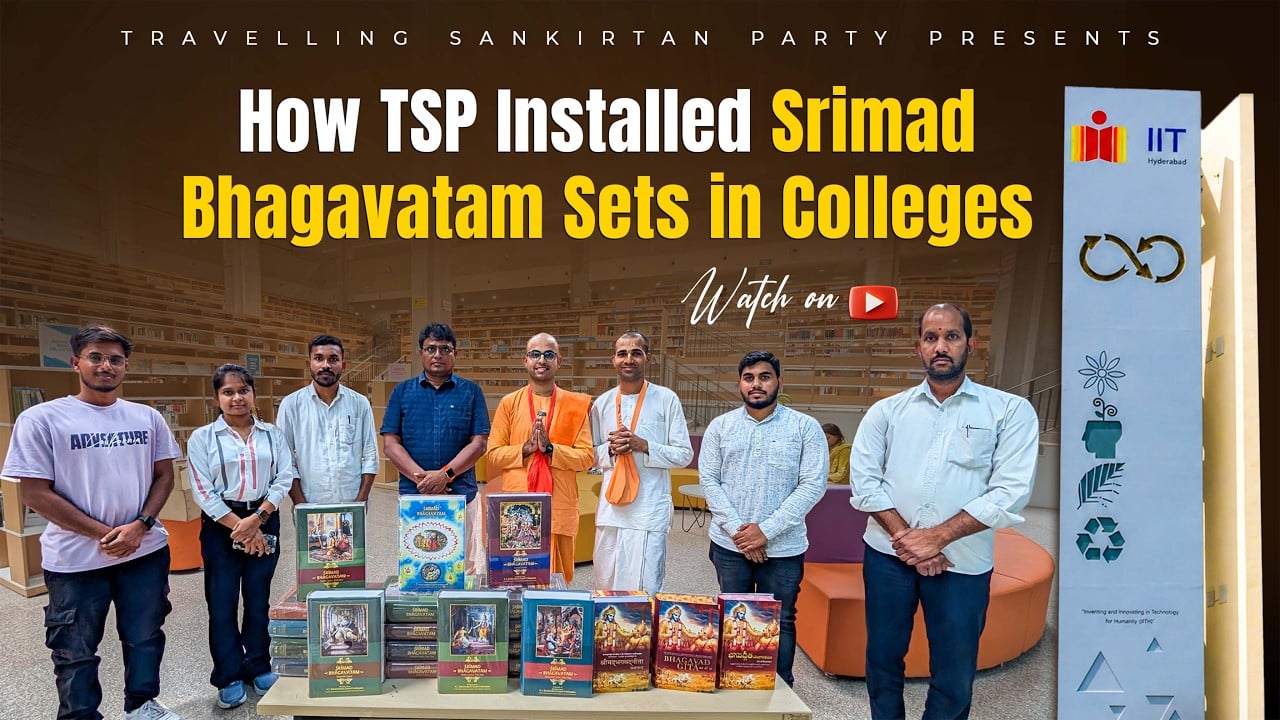
The Traveling Sankirtan Party (TSP) developed a policy-aligned, librarian-led model to install complete Srimad Bhagavatam sets in college libraries and campus lounges. The approach respects collection development standards, enhances discoverability through robust metadata, and situates the text within Hinduism’s broader intellectual heritage. Faculty and administrators welcomed the sets as primary sources that support ethics, philosophy,…
-
Five Supreme Forms of Vishnu: Definitive Guide to Para, Vyuha, Vibhava, Antaryami, Archa
This in-depth guide explains the five supreme forms of VishnuPara, Vyuha, Vibhava, Antaryami, and Archashowing how one reality spans transcendence and immanence. It grounds each form in authoritative sources such as the Pancharatra Agamas, the Mahabharata’s Narayaniya, the Bhagavata Purana, and Vedanta discussions in the Brahma Sutra. Readers gain a clear, technical understanding alongside practical…
-
Watering the Tree of Love: Seeing Sri Krishna in Every Heart and Practicing Universal Compassion

True bhakti cannot be confined to temple walls; it must recognize Sri Krishna in every heart. Drawing on the Bhagavad-gita and the Bhagavata Purana, this article clarifies the famous “water the root, nourish the leaves” metaphor and its limits, showing why neglecting people while worshipping the Divine renders devotion spiritually ineffective. It integrates Lord Kapiladeva’s…
-
Wild Berries and Boundless Bhakti: Shabari, Krishna, and the Sacred Gift of Food
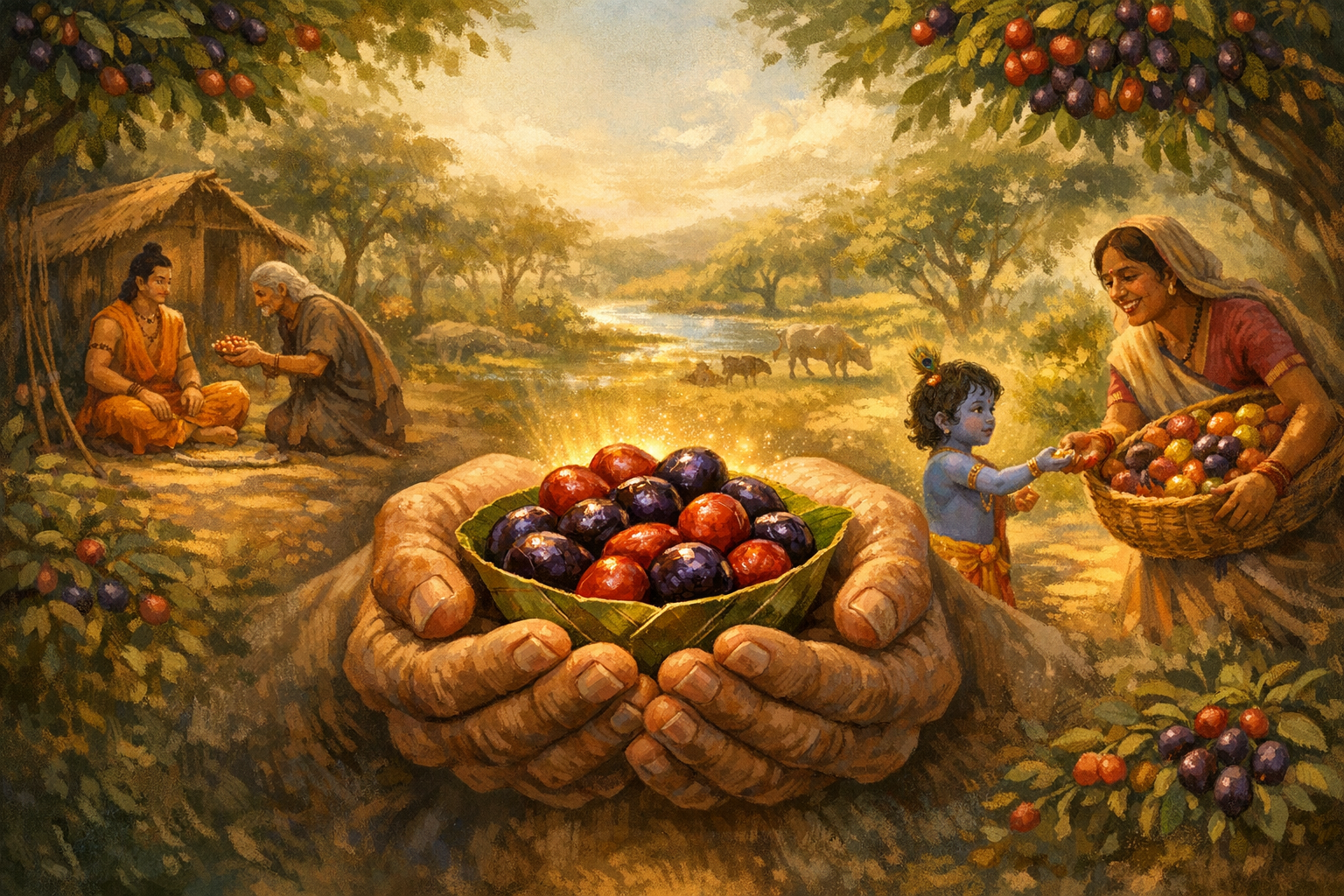
Wild berries in the Ramayana and Krishna traditions encode a precise theology of bhakti, a social ethic of sharing, and an ecologically rooted way of life. Shabari’s ber (jujube) in the Ramayana and the fruits exchanged in Vraja with Krishna show how humble offerings become sacred through loving intention and grateful acceptance. The narratives dissolve…
-
Lakshmi on Narasimha’s Lap: Fierce Grace, Fearless Protection, and the Devotee’s Ascent

The classical icon of Lakshmi-Narasimha answers a timeless question: how does righteous fury become lasting refuge? Scriptural narratives from the Bhagavata Purana and Vishnu Purana reveal Narasimha’s justice; Lakshmi’s presence on His lap makes that power tender and accessible. Abhaya and Varada mudras, alongside shankha and chakra, convey fearless protection and generous prosperity for the…
-
Lifting Govardhana: Scholarly Insights on Srimad Bhagavatam 10.25.8–14 and Dharmic Unity
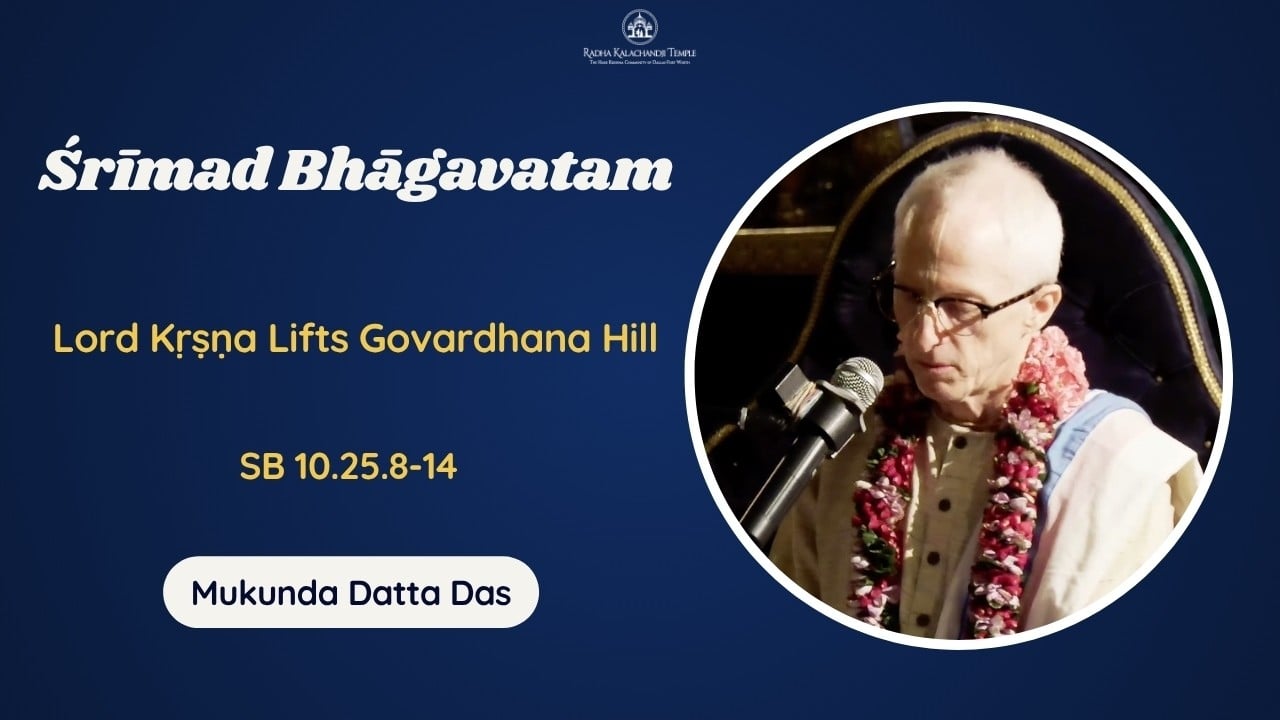
This academically grounded reading of Srimad Bhagavatam 10.25.8–14 situates the Govardhana episode at the intersection of theology, ethics, and community resilience. It explains how Indra’s pride, Vṛndāvana’s peril, and Kṛṣṇa’s protective response create a compact teaching on humility and stewardship. Readers gain a clear narrative map of verses 8–14, lexical insights (Govardhana and Samvartaka), and…
-
Vatsalya Rasa: When God Becomes a ChildParental Love at the Heart of Bhakti

Vatsalya rasa, the bhakti mood of parental love, reveals a distinctive Hindu insight: the Divine can be cherished, protected, and served as a beloved child. Anchored in the Bhagavata Purana and refined by rasa theory, it replaces distance with intimacy and translates theology into daily care. Practices such as Bala Gopala sevā, Kartika worship with…
-
Makhan in Krishna’s Hand: Unveiling the Profound Symbolism of Ladoo Gopal’s Butter

The butter in Krishna’s handmakhan or navanītaencodes far more than pastoral charm. This in-depth exploration situates Ladoo Gopal’s butter within Vraja’s dairy lifeworld, Vedic ritual use of ghee, and the Bhāgavata Purāṇa’s Vraja-līlā. It interprets butter as the refined essence born from steady churning, linking household practice to theological grace: Krishna receives the devotee’s best…
-
Samudra Manthan Unveiled: Esoteric Symbolism, Yogic Science, and Dharmic Unity for Inner Alchemy

This long-form exploration decodes the Samudra Manthan as a precise, multilayered guide to inner alchemy and social harmony. Drawing on the Bhagavata Purana and Vishnu Purana, it maps each elementMandara, Vasuki, Kurma, halahala, Lakshmi, Dhanvantari, and Mohinito yogic physiology, ethics, and contemplative practice. Readers gain practical methods to metabolize emotional “toxins,” stabilize attention, and cultivate…
-
When Krishna Wore a Nose Ring: The Sacred Mohini Swarupa and Vrindavan’s Stri-Vesha Rite

This long-form exploration examines the Vrindavan tradition of adorning Krishna in stri-veshasometimes with a nose ringas a devotional expression of Mohini Swarupa grounded in Vaishnava theology. It situates the practice within the Bhagavata Purana’s narrative world, Yashoda’s maternal protection, and Braj oral lore, clarifying the distinction between Mohini Avatar and veṣa within liturgy. Readers gain…
-
The Unchanging Supreme Self: Uddhava Gita’s Profound Guide to Inner Freedom in Turbulent Times

The Uddhava Gita teaches that the supreme self (ātman) remains unchanged and unaffected by the material world, a principle that is both philosophically rigorous and practically transformative. Set within the Bhagavata Purana, it integrates Vedānta’s discernment with Bhakti’s warmth and Karma Yoga’s responsibility to offer a complete path to moksha. The text’s emphasis on the…
-
Liberating Symbols: Why Vishnu Shuns the Pāśaand What His Ayudhas Reveal About Dharma

The pāśa (noose) signifies binding power in Hindu iconography, commonly linked to Varuṇa, Yama, and in Śaiva–Śākta and Gaṇeśa imagery, but it is deliberately absent from Vishnu’s standard repertoire. Agamic and Purāṇic canons specify Vishnu’s emblematic ayudhasśaṅkha, cakra, gadā, and padmawhose semantics emphasize refuge, clarity, just strength, and purity rather than restraint. Epic narratives reinforce…
-
Seeing the Divine in Everyone: Bhagavatam 3.29 and Timeless Dharmic Ethics for Peers
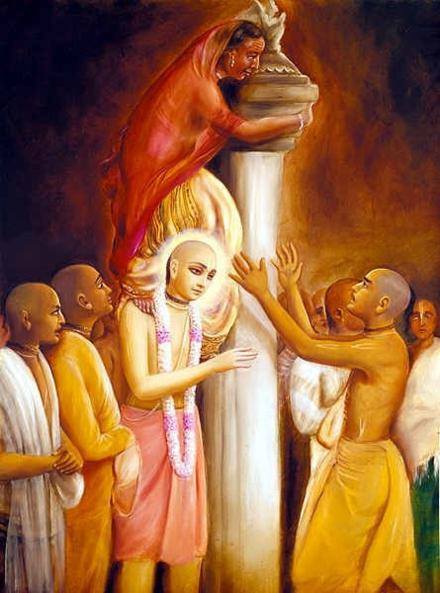
Srimad Bhagavatam 3.29 sets a precise ethic for peer relationships in devotional life: disrespect, disregard, hatred, and criticism are forbidden. Grounded in the vision of Paramatma within all beings, this teaching links authentic Deity worship to universal respect, warning that ritual without compassion is imitation worship. Classical commentaries by Vishvanatha Cakravarti Thakura and Sridhara Svami…