
-
Decoding SB 1.16.5: Dharma‑Bull, Mother Earth, and Kali‑yuga in Srila Prabhupada’s Teachings

SB 1.16.5 presents the iconic tableau of the Dharma‑bull and Mother Earth to diagnose the onset of Kali‑yuga as both a moral and ecological crisis. Through Srila Prabhupada’s teachings, the verse becomes a practical framework: strengthen truthfulness, cleanliness, mercy, and austerity to restore social trust and environmental balance. The episode models just governance in the…
-
ISKCON London Srimad Bhagavatam: Deep Bhakti, Living Wisdom, Dharmic Unity | 23 Jun 2026

On 23 June 2026, ISKCON London hosted a Srimad Bhagavatam class that combined rigorous textual study with practical guidance for daily life. Framed within Gaudiya Vaishnavism and Srila Prabhupada’s purports, the session presented bhakti-yoga as a disciplined, transformative practice rather than sentiment. Participants explored how the Bhagavatam’s nine processes of devotion refine character, stabilize attention,…
-
Srimad Bhagavatam 2.2.27 Decoded: Transformative Focus, Paramatma Realization, and Bhakti Yoga

Srimad Bhagavatam 2.2.27 synthesizes Chapter Two’s yogic arcpratyahara, dharana, and dhyanainto steadfast remembrance of the Paramatma in the heart. Read alongside community practice in settings such as ISV BYS, the verse frames technique as servant to bhakti, where breath, attention, and sacred sound converge. The result is a stable, tender clarity that supports both inner…
-
Unveiling Gauni Bhakti: Harness the Heart’s Innate Devotion in Hinduism for Dharmic Unity

Gauni Bhakti names the heart’s innate devotionan unforced, everyday reverence that precedes argument or ritualand shows how natural feeling can mature into steady spiritual practice. By clarifying the philological sense of gauna (secondary) alongside its experiential sense (everyday and natural), the piece reconciles textual theology with lived devotion. Drawing on the Bhagavad Gita, the Bhagavata…
-
Decoding ŚB 4.19.13: Prithu’s Sacrifices, Indra’s Envy, and the Power of Dharmic Unity
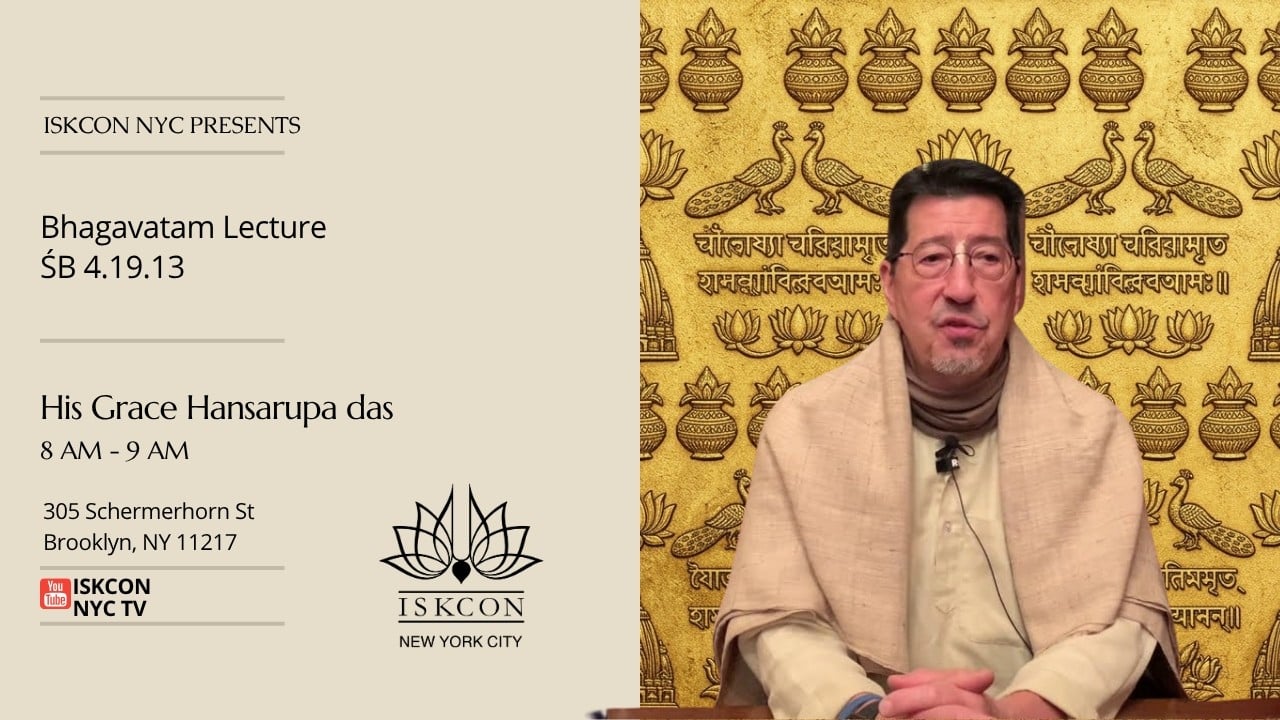
ŚB 4.19.13, discussed in a thoughtful NYC satsanga by HG Hansarupa das, anchors King Prithu’s sacrifices in the Srimad Bhagavatham as a model of ethical leadership and devotion-centered ritual. The verse sits within a chapter that warns against spiritual opportunism and reaffirms that yajña is meaningful only when guided by humility, integrity, and compassion. Framed…
-
Kamadeva Unveiled: Reclaiming Hinduism’s Sacred Science of LoveNot Lust
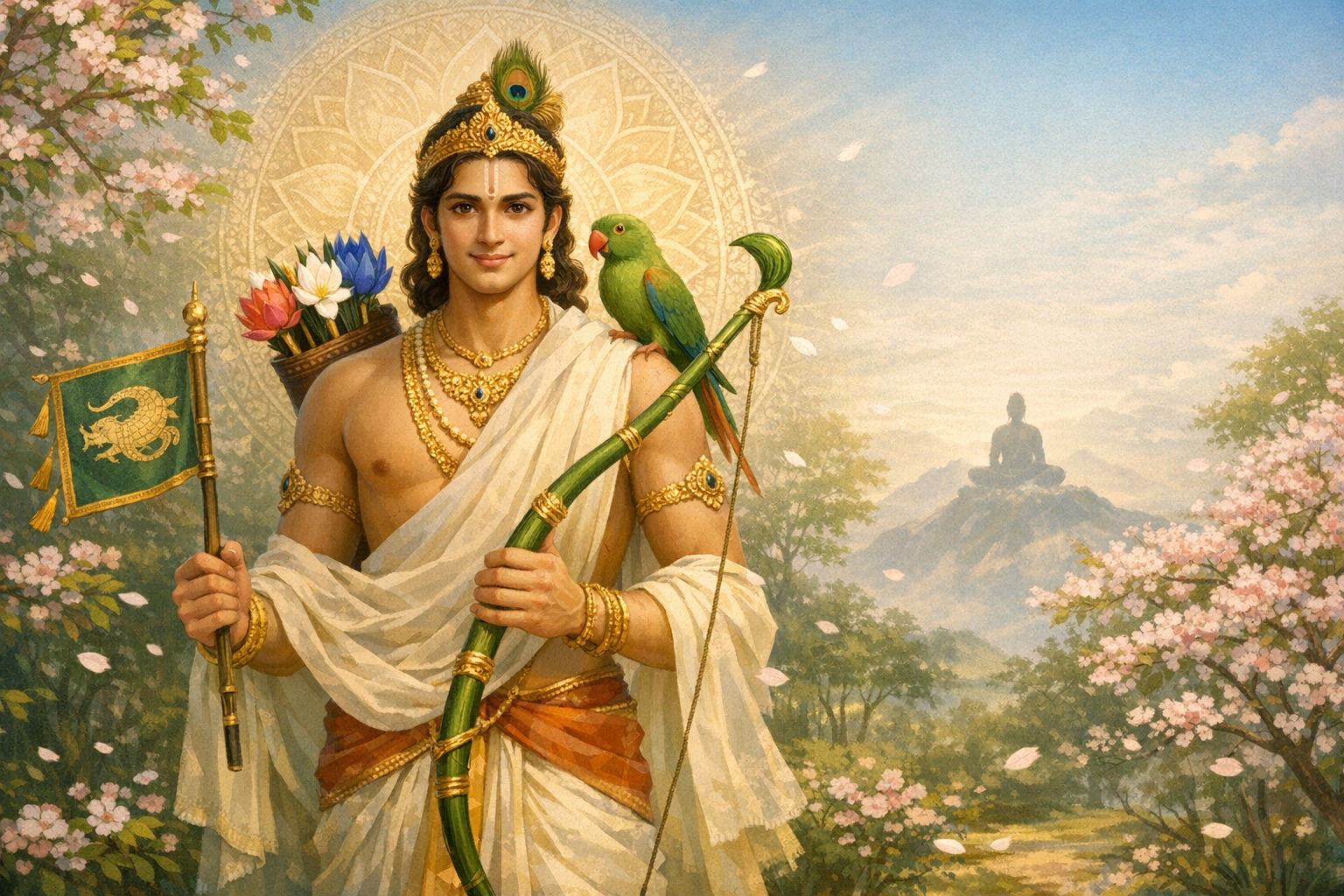
Kamadeva in Hindu thought is not a Cupid-like figure of conquest but the ethically governed power of love and creative desire. Vedic and Atharvavedic sources locate kama at the heart of cosmogenesis, while Purāṇic narratives refine it through the Ananga episode and Pradyumna motif. Framed within the purusharthas, kama is pursued under dharma, distinguishing love’s…
-
Bheema Vrata and Bhishma Panchaka: Definitive, Sacred Guide to Dates, Rituals, Meaning

Many devotees confuse Bheema Vrata with the five-day Bhishma Panchaka of Kartik Maas. This guide distinguishes them clearly: Bhishma Panchaka runs from Prabodhini Ekadashi to Kartik Purnima, while Bheema Vrata (Bhima Dwadashi) occurs in Magha. It explains ritual flow, fasting options, and calendar details (tithi, parana, and panchanga nuances) with references to Padma Purana, Skanda…
-
How Krishna Consciousness Transforms Lives: Insights from HH Bhakti Marga Swami’s Journey
This in-depth reflection uses HH Bhakti Marga Swami’s journey to illuminate how Krishna Consciousness, rooted in the Bhagavad Gita and the Bhagavata Purana, offers a practical, non-coercive path of transformation. Readers discover a precise framework for bhakti-yogadaily japa, kirtan, study, and sevasupported by ethical guardrails and community (satsanga). The article maps classical stages of growth,…
-
Krishna’s Sakatasura Lila Decoded: Samsara’s Wheel, Karma, and a Practical Path to Liberation

The episode of Krishna breaking the Sakatasura-possessed cart is a concentrated lesson on samsara, karma, and liberation. It presents the cart as a symbol of cyclical time, habits, and inherited burdens, while Krishna’s effortless kick embodies grace and awakened clarity. Read through Advaita, Vishishtadvaita, and Dvaita, the narrative integrates grace and disciplined practice as complementary…
-
Narasimha, Vishnu’s Fiercest Grace: The Most Personal and Shortest Avatar Explained

This article examines why Narasimha is revered as both the most personal and the shortest of Vishnu’s Avatars. Drawing on the Bhagavata Purana and related sources, it explains how Narasimha’s liminal theophany at dusk fulfills Dharma while honoring Brahma’s boon to Hiranyakashipu. It unpacks the theologydevotion’s efficacy, justice’s precision, and compassion’s primacyand explores the iconography…
-
Epic Duel of Curses: King Nimi, Sage Vashishta, and the Birth of Videha (Mithila)
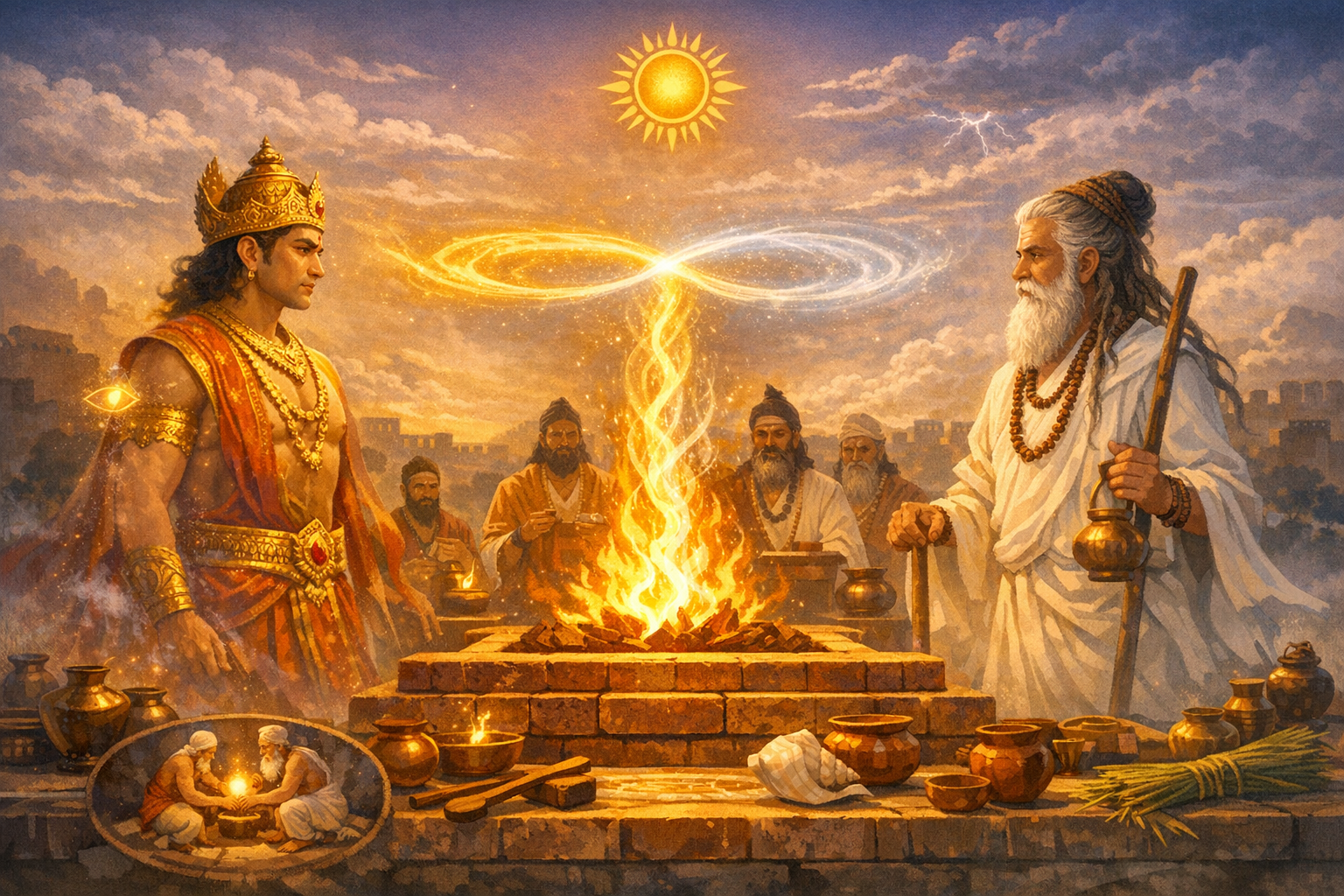
This meticulously researched retelling of King Nimi’s clash with Sage Vashishta explains how a completed Yagna under Kousika Rishi led to a dramatic exchange of cursesand to the very birth of Videha and Mithila. It situates the episode within Vedic ritual practice, clarifying roles, timing, and the ethics of prior commitments. It connects Purāṇic genealogy…
-
Narakasura and the Vaishnavastra: Epic fall and the luminous triumph of Naraka Chaturdashi

This long-form retelling examines Narakasura’s rise and fall through the theological lens of the Vaishnavastra, clarifying how sacred force aligns with preservation rather than domination. It traces Bhaumasura’s origin from Varaha and Bhudevi, details his descent into adharma at Pragjyotisha, and explains Krishna’s campaign culminating in the festival memory of Naraka Chaturdashi. The piece reconciles…
-
Śrīmad Bhāgavatam 3.26.37 Decoded: Kapila’s Sāṅkhya and Mastery of the Working Senses
Śrīmad Bhāgavatam 3.26.37 offers a precise Sāṅkhya blueprint for understanding embodied agency by enumerating the core functions of the working senses. The opening, “ŚB 3.26.37 cālanaṁ vyūhanaṁ prāptir …”, signals a fivefold map of actionmovement, manipulation, acquisition, elimination, and procreationeach ethically regulable. Read with Kapila’s wider ontology, the verse becomes a practical guide to mastering…
-
SB 10.38.11: Akrūra’s Yearning for Kṛṣṇa DarśanaProfound, Practical Lessons by HG Bhagavat Ashraya Das
This in-depth reflection on Srimad Bhagavatam SB 10.38.11, inspired by a class delivered by HG Bhagavat Ashraya Das at Atma Lounge Folkestone, situates Akrūra’s yearning for Kṛṣṇa’s darśana within the literary, theological, and ethical architecture of the Tenth Canto. Readers gain a clear narrative context for the verse, a rigorous analysis of darśana as transformed…
-
Radha–Krishna, Bhakti, and Opera: Sir John Tavener’s Mantra Quest and the Cosmic Rasa-līlā

In 2005, Sir John Tavener and Ranchor Prime centered an ambitious Krishna opera on the theological and musical problem of choosing a mantra for Radha–Krishna’s love duet. This essay maps the devotional core of rāsā-līlā (Bhagavata Purāṇa 10.29–33) to operatic craft using Rūpa Gosvāmi’s rasa theory. It outlines why nāma is doctrine as much as…
-
Navneet Priya: Why Krishna Loves Fresh ButterVatsalya-Rasa, Damodara Līlā, and Living Ritual

Navneet PriyaHe who loves fresh butterencapsulates Krishna’s bāla-līlā and the theology of vatsalya-rasa in a single, tender epithet. Etymologically, navanīta (freshly extracted butter) and priya (beloved) point to essence and intimacy, themes amplified in Śrīmad-Bhāgavatam’s Damodara-līlā where Yaśodā’s maternal love literally “binds” the Divine. The name functions as portable theology: it informs ritual offerings (makkhan-miśrī),…
-
Ratha-yatra Unveiled: The Lord’s Journey to Vrindavan and the Path of Living Bhakti
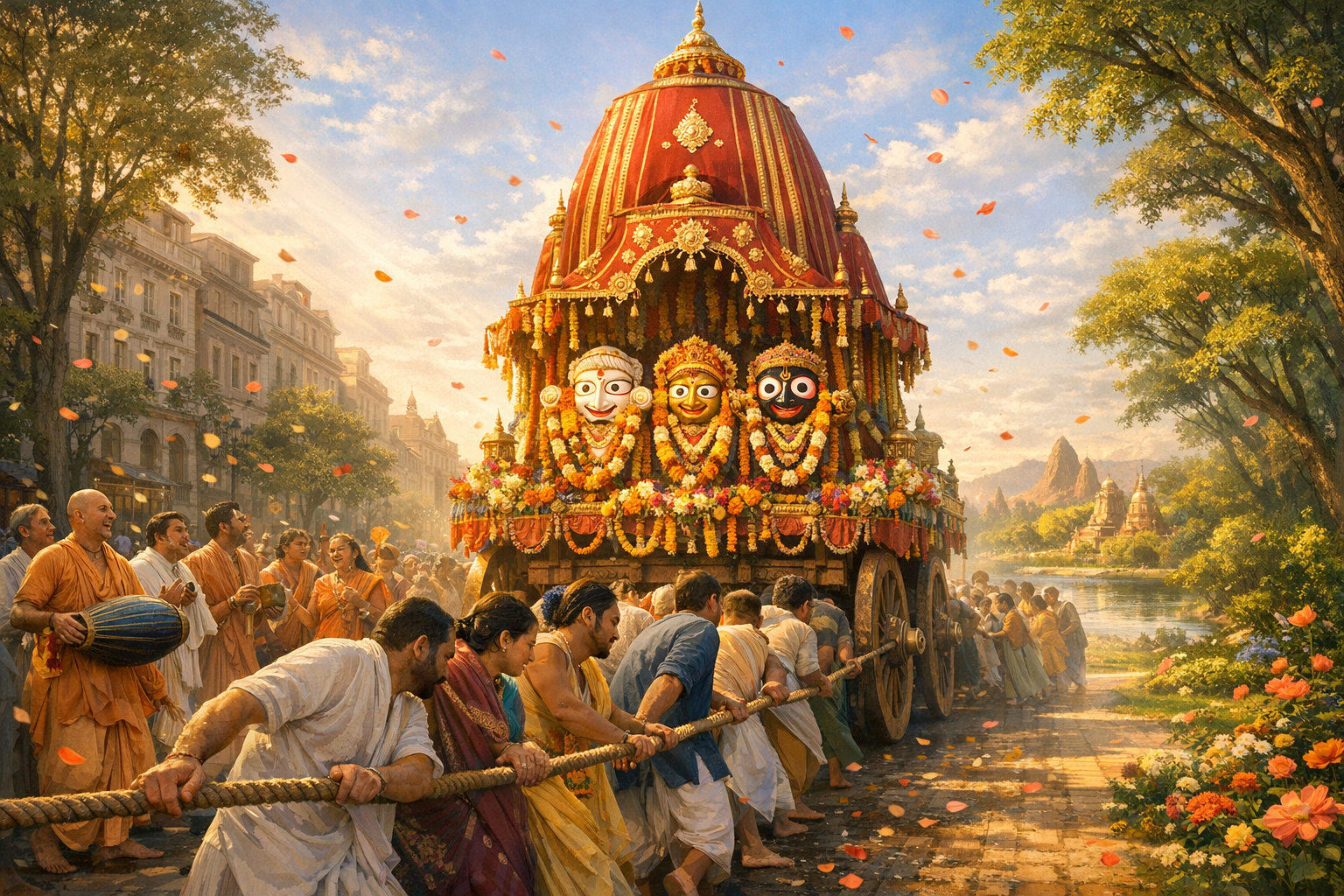
This analysis distills the theological and cultural significance of “Lord’s Journey To Vrindavan,” as presented at ISKCON Berlin (Krishna Berlin – ɪsᴋᴄᴏɴ) by HG Bhanu Nandini devi dasi. It explains how Ratha-yatra embodies both an outward procession and an inward transformation grounded in the Bhagavad-Gita and the Bhagavata Purana. Readers learn how the chariot, ropes,…
-
Decoding SB 1.2.6: The Power of Ahaitukī Bhakti in Villa Vrindavana’s Global ISKCON Satsang
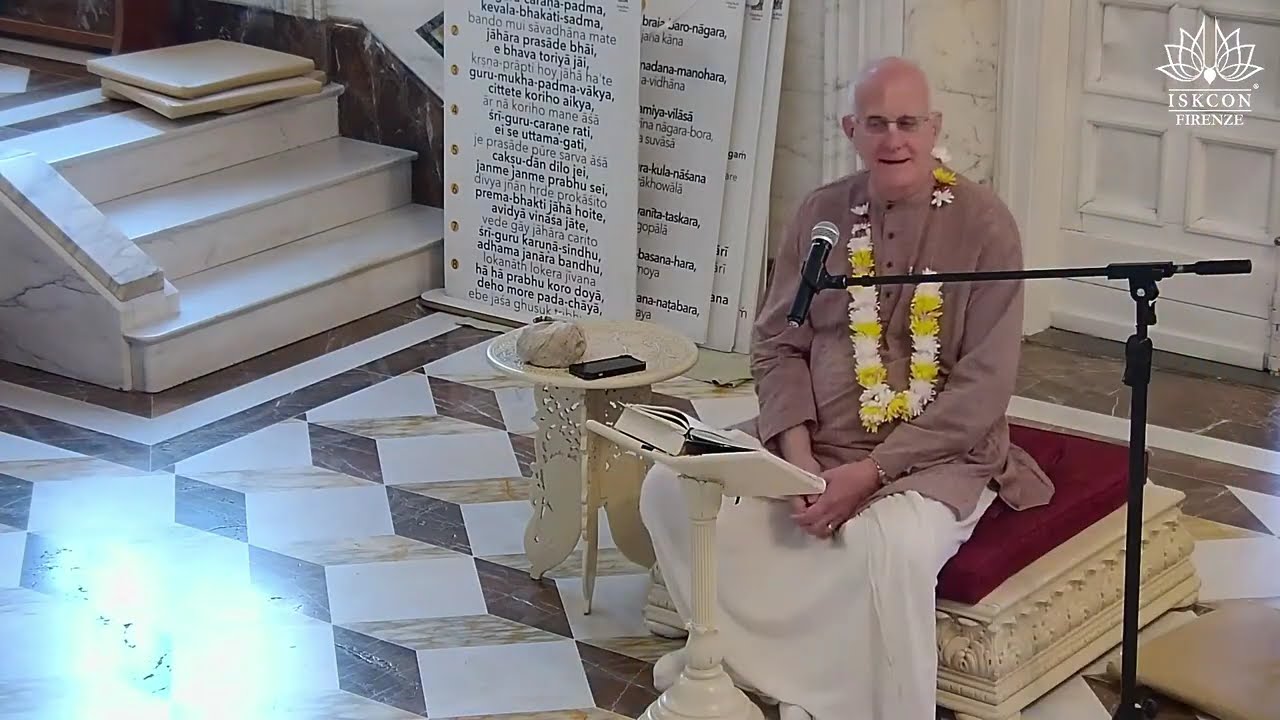
Streamed from Villa Vrindavana (ISKCON Florence), this deep-dive into Srimad Bhagavatam 1.2.6 explains why selfless (ahaitukī) and uninterrupted (apratihatā) devotion is presented as the supreme dharma for all. The article clarifies each Sanskrit term, situates the verse in its original narrative, and links its insights to practical disciplineshearing, chanting, service, and studyin a digitally connected…
-
Prahlada’s Hearth: SB 5.18.9 on Narasimha, Fearless Compassion, and Dharmic Dialogue

This analysis distills insights shared by Rukmini D.D acbsp at the ISKCON Communications Retreat into a clear, actionable reading of Srimad-Bhagavatam (SB) 5.18.9. It situates the verse within the Bhagavata Purana, explains its philological and theological contours, and clarifies how Narasimha’s omnipresent shelter grounds real-world fearlessness. The discussion translates the verse into a communications ethic…
-
Decoding Yuga Sandhya: The Cosmic Twilight Between Yugas and Its Dharmic Significance

Yuga Sandhya, or Yuga Sandhi, denotes the transitional ‘cosmic twilight’ between two Yugas in Hindu cosmology. Classical Purāṇic arithmetic specifies dawn and dusk segments bracketing each Yuga, emphasizing that change proceeds lawfully and gradually. The Dvapara–Kali junction, anchored to the 3102 BCE epoch, illustrates how avatars and ethical recalibrations mark these thresholds. Read diagnostically, sandhi…