-
Religious Significance of the Yamuna River: Mythology, Pilgrimage, and Dharmic Ecology

This in-depth overview explains why the Yamuna Riverreverentially known as Yamunaji and Kalindiholds enduring religious significance in Hindu Dharma and stands as a unifying symbol across the dharmic traditions of Hinduism, Buddhism, Jainism, and Sikhism. Readers will discover the river’s Vedic and Puranic foundations, her identity as Yami (sister of Yama and daughter of Surya),…
-
Narayaneeyam: A Soul-Stirring, Scholarly Guide to the Bhagavata Purana in 100 Dasakas

Nārāyaṇīyam (Narayaneeyam) condenses the Srimad Bhagavatham into 100 daśakas and just over a thousand ślokas, uniting poetry, philosophy, and devotion. Composed in 16th‑century Kerala by Melpathur Nārāyaṇa Bhaṭṭathiri at Guruvayur, it offers a structured path from cosmology and avatāras to Krishna’s intimate līlās and a culminating meditative vision. This guide clarifies its history, architecture, meters,…
-
Dhruva’s Homecoming in Srimad Bhagavatham 4.9 (18–26): Transformative Grace and Dharma

This in-depth, verse-focused reading of Srimad Bhagavatham 4.9 (18–26) examines Dhruva Maharaja’s homecoming as a masterclass in devotion, ethical leadership, and reconciliation. It situates the passage within the broader Dhruva narrative, highlighting how grace, disciplined practice, and guru-guidance transform reactive motives into service. Readers gain clear, actionable insights on integrating bhakti with rāja-dharma, healing family…
-
Tasting the Whole Krishna: Beyond One‑Dish Devotion to the Complete Vishvarupa Experience
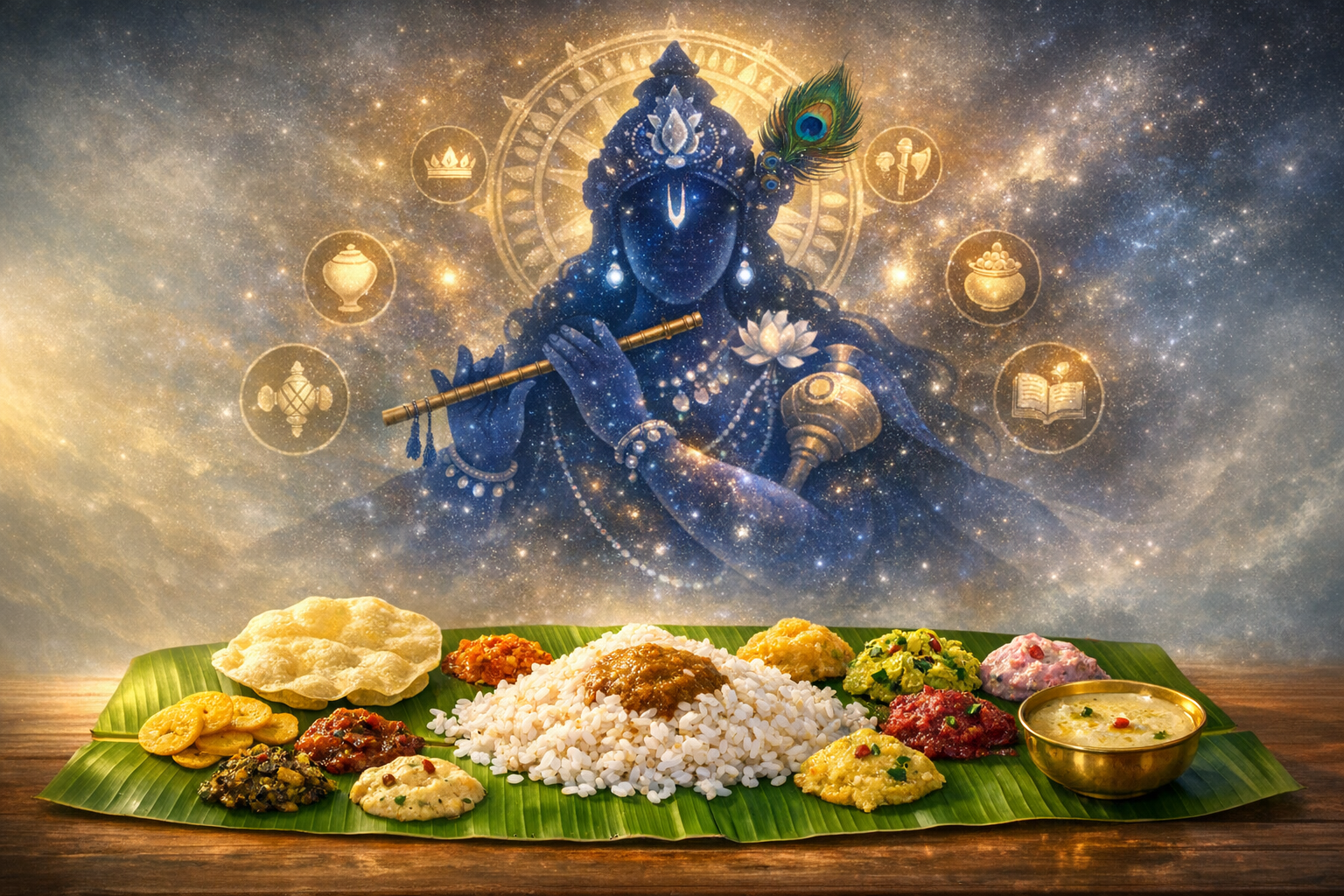
A Kerala Sadhya on a banana leaf offers the perfect metaphor for understanding Sri Krishna: tasting only the sweet payasam is not the same as experiencing the complete meal. This long-form reflection shows how the Bhagavad Gita, the Bhagavata Purana, and Vaishnava theology present a whole visionVishvarupa, six divine opulences, multiple rasas, and the vyūha…
-
Unveiling the Musala of Balarama: Agrarian Power, Sacred Iconography, and Divine Strength
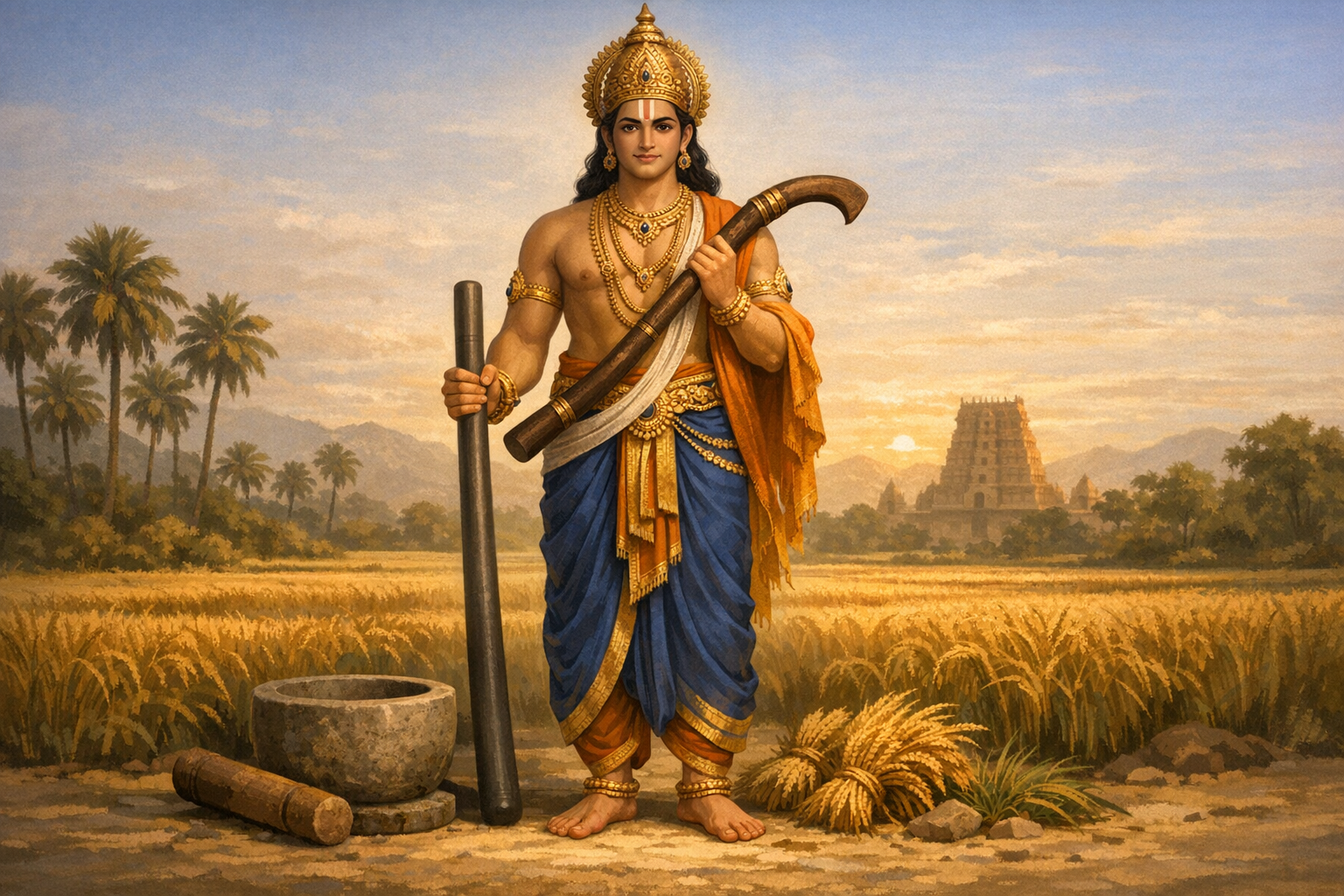
The musalaBalarama’s sacred pestleembodies agrarian power transformed into protective, ethical strength. This long-form analysis clarifies how its cylindrical form differs from the gadā, why Vaishnava texts hail Balarama as Hala-muṣala-dhara, and how the Mausala Parva frames the musala as a moral instrument entwined with dharma and time. Readers learn practical iconographic cues for identifying the…
-
Jwarahareshwara Shiva: Rare Three-Headed Healer Guarding Humanity from Disease and Fear

Jwarahareshwara Shiva is a rare and powerful healing manifestation of Lord Shiva, envisioned with three heads, three legs, and six arms to symbolize balance, fearlessness, and compassionate protection. The form integrates Vedic portrayals of Rudra as the supreme healer with Puranic narratives that dramatize the pacification of disease and dread. Its triadic symbolism aligns closely…
-
Why Kamsa Spared Devaki and Vasudeva: Prophecy, Pitru Dosha, and the Tyrant’s Dilemma

A prophecy at a wedding foretells that Devakī’s eighth son will slay Kamsa, forcing the tyrant into a chilling moral and political calculus. Drawing on the Bhagavata Purana, Dharmashastras, and later Jyotisha-based exegesis, the analysis explains why Kamsa kept Devakī and Vasudeva together rather than separate them. The prophecy’s literal wording, fear of grave sins…
-
Srimad Bhagavatam 1.13.50: Vidura’s call to detachment, duty, and bhakti | ISKCON Ljubljana
This analysis situates Srimad Bhagavatam 1.13.50 within Canto 1’s narrative of Vidura guiding Dhṛtarāṣṭra toward timely renunciation, clarifying how duty, detachment, and devotion align in practice. It explains why the verse is read as a constructive call to reorient life around ātma-tattva and bhakti, not as escapism, and shows how vanaprastha embodies humane, responsible transition.…
-
Time, Intention, and Destiny: Deep Insights on S.B. 3.14.40 at ISKCON Chowpatty (10 May 2026)

On 10 May 2026 at ISKCON Chowpatty, Mumbai, H.G. Gauranga Prabhu examined Srimad-Bhagavatam 3.14.40, highlighting how time (kāla), intention (saṅkalpa), and ethical regulation (vrata-niyama) shape outcomes. The discourse situated Diti and Kaśyapa’s dusk encounter within a theology of guṇas and auspicious timing, while showing how divine grace through Lord Vishnu restores balance. Practical guidance emphasized…
-
Decoding SB 11.02.23–26: Transformative Bhakti, Sādhu-Lakṣaṇa, and Dharmic Unity

This analysis presents SB 11.02.23–26 as a compact, rigorous guide to how bhakti becomes visible in character and community. Situated in the Nimi–Nava-yogendra dialogue of the Bhagavata Purana’s eleventh canto, the verses map the progression from inner devotion to stable virtues such as compassion, restraint, and truthfulness. The discussion clarifies the synergy of bhakti, realization,…
-
Kamsa Syndrome: How Fear Breeds Tyranny and How Dharmic Wisdom Defuses It

The Bhagavata Purana’s portrait of Kamsa presents a precise psychology of tyranny: fear, mishandled as policy, becomes a self-fulfilling catastrophe. This article defines the “Kamsa syndrome” and analyzes how a single prophecy, filtered through insecurity, produced surveillance, purges, and escalating violence in Mathura. It reads the narrative alongside the Bhagavad Gita’s ethics of abhaya and…
-
Why Bathing Women Hid from Vyasa but Not Shuka: A Deep Dive into Gaze, Purity, and Dharma

A classic Hindu teaching story contrasts how women bathing in a pond responded to Vyasa and to his son Shuka, and it reveals a layered ethic of consciousness and context. The narrative illustrates how a jivanmukta’s non-objectifying gaze fosters ease, while a revered householder’s presence naturally elicits social modesty. Read through Advaita, bhakti, and yoga…
-
Bhagavan Parashurama: Warrior‑Sage Avatar of Vishnu Who Restored Dharma and Balance

Bhagavan Parashurama, the sixth avatar of Vishnu and a devoted worshipper of Shiva, embodies the Hari–Hara unity at the heart of Sanatana Dharma. Drawing on the Bhagavata Purana, Vishnu Purana, the Mahabharata, and the Ramayana, this comprehensive essay explains how Parashurama restored ethical order when royal power became predatory, then withdrew in penance to model…
-
Omnipotence and Sacred Sound: Why Krishna’s Words Remain a Living Presence Across Traditions

Omnipotence in Vedic philosophy explains how Krishna remains in unbroken companionship with living beings through sacred sound. Vaishnava theology teaches nāma–nāmi abheda, the non-difference between the Divine Name and the Divine Person, grounding the transformative power of the Hare Krishna Mahāmantra. The principle of śabda-brahman shows that divine words are not merely symbolic; they are…
-
15 Timeless Tales from Srimad Bhagavatham: Devotion, Dharma, and Transformative Wisdom
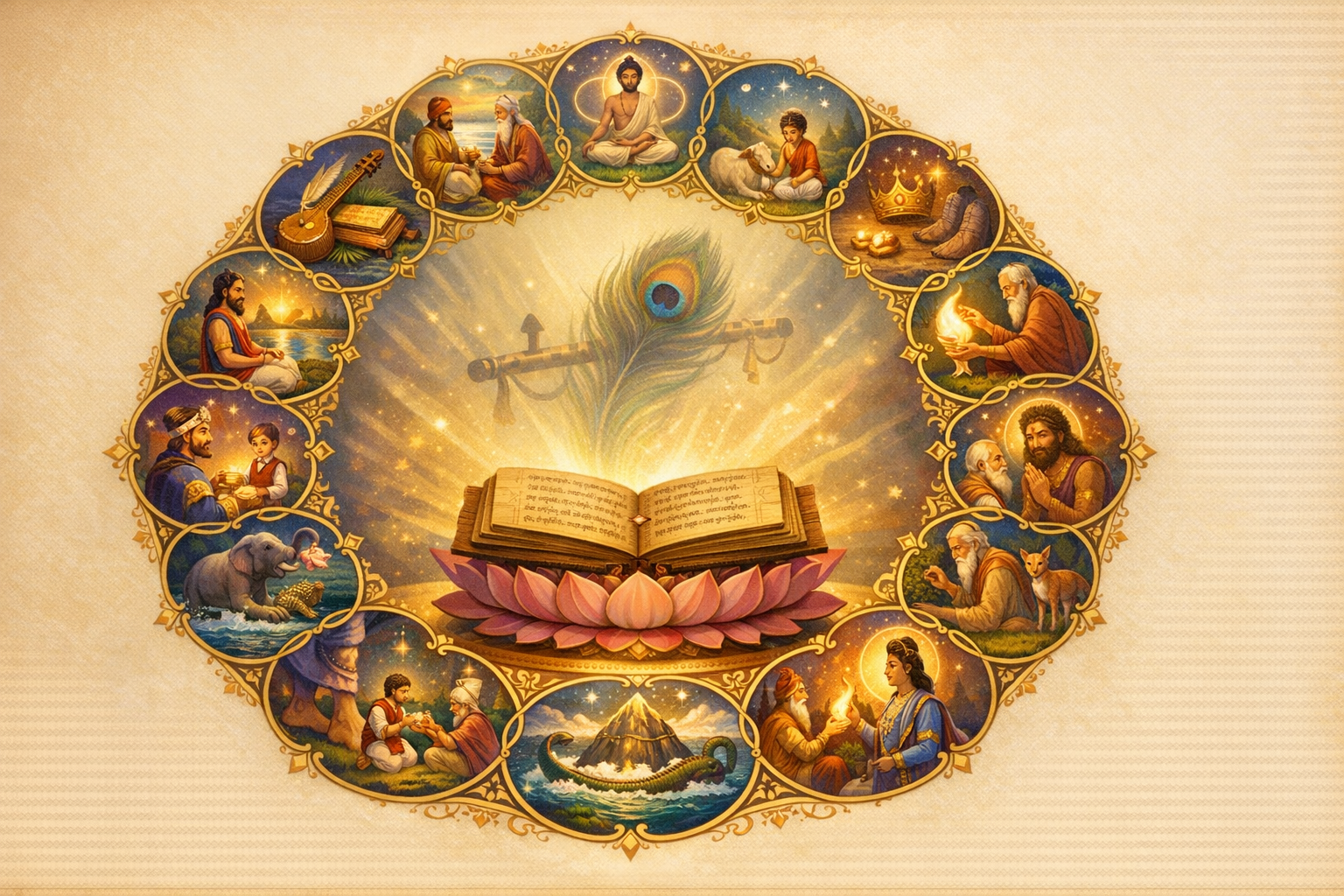
Srimad Bhagavatham (Bhagavata Purana) unites devotion, wisdom, and ethical action through narratives that are as practical as they are profound. This long-form guide curates 15 celebrated talesfrom Dhruva’s tapas and Prahlada’s fearlessness to Ambarisha’s forbearance and Krishna’s Govardhan-lilaeach situated in its Skandha context. Readers gain both narrative clarity and theological depth, including the power of…
-
Sringara Murti in Krishna: A Transformative Exploration of Divine Beauty, Rasa, and Bhakti

Sringara Murti presents a rigorous yet tender theology in which divine beauty becomes a disciplined means of knowing. Centered on Krishna and illuminated by the Bhagavata Purana, Gita Govinda, and Vaishnava aesthetics, it shows how śṛṅgāra transforms emotion into insight. The article details rasa theory, iconographic cues such as tribhaṅga and veṇu, and the ritual…
-
Beyond Metaphor: Srimad-Bhagavatam on Reality, Consciousness, and an Enchanted Cosmos

This essay explains how Srimad-Bhagavatam dissolves the divide between literal reality and poetic metaphor by advancing a consciousness-first ontology. It shows why the Bhagavata Purana treats fear, love, and intelligence as living principles, situates humans within a multilayered cosmos of devas, gandharvas, and siddhas, and uses rasa-rich poetry as a genuine mode of knowledge. Readers…
-
Bhagavan and Ishvara, One Truth: Why Vishnu and Shiva Bear These Timeless Honorifics

The titles Bhagavan and Ishvara carry precise theological weight in Hindu philosophy without enforcing hierarchy. Bhagavan highlights the plenary, relational fullness of the Divine, while Ishvara emphasizes sovereign lordship and cosmic governance. Scriptures apply both titles across deitiesVishnu is called Ishvara, and Shiva is addressed as Bhagavansignaling complementarity rather than exclusivity. Vedantic schools, Shaiva traditions,…
-
Śrīmad Bhāgavatam 3.22.28 and Nṛsiṁha Caturdaśī: Timeless Dharma, Protective Grace, and Bhakti Power
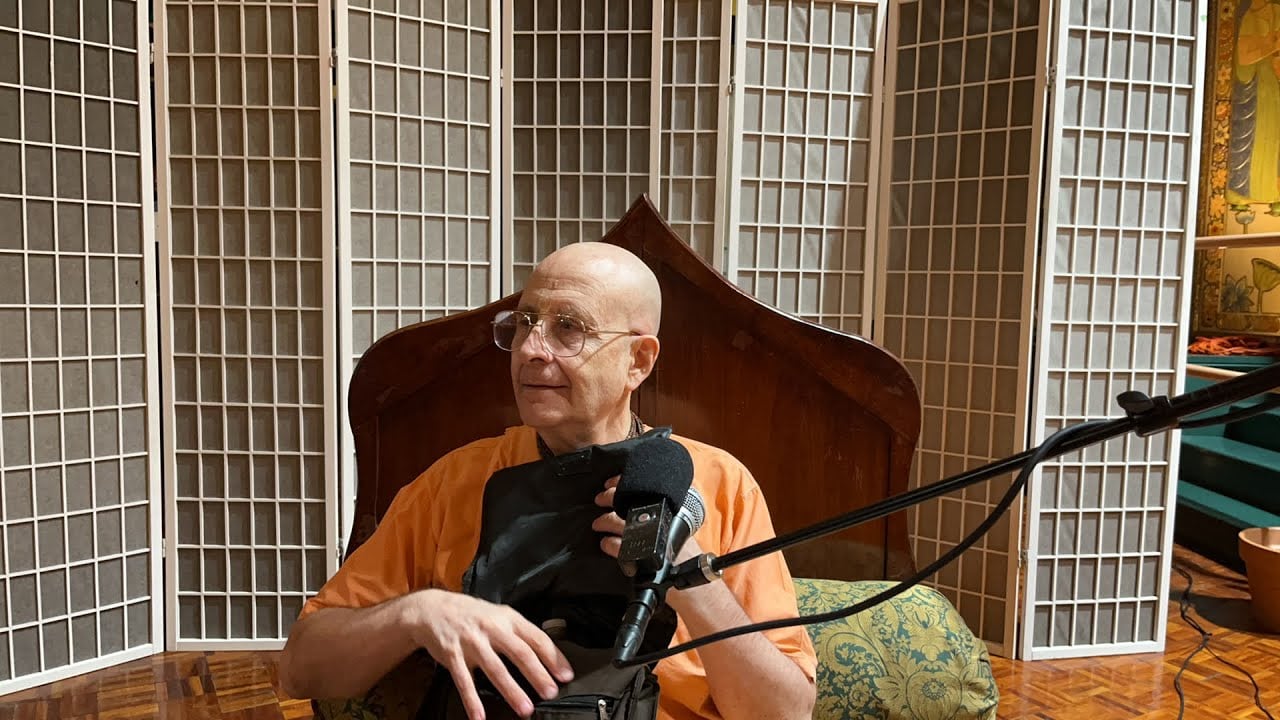
Śrīmad Bhāgavatam 3.22.28 situates household vows within a God-centered ethic, showing how domestic life becomes a disciplined path of bhakti-yoga. Read alongside the devotional mood of Nṛsiṁha Caturdaśī, the verse underscores a unified principle: sincere vows invite protective grace. The Prahlāda–Nṛsiṁha narrative exemplifies devotion under trial and the Lord’s compassionate precision in safeguarding truth. Practical…