Category: Spiritual Insight

  • Who Qualifies as a True Guru? Timeless Dharmic Criteria for Compassionate, Wise Guidance

    Who Qualifies as a True Guru? Timeless Dharmic Criteria for Compassionate, Wise Guidance

    What makes someone a true guru? Drawing on Hari-bhakti-vilāsa and Śrīmad-Bhāgavatam (11.3.21; 11.10.5), this reflection outlines classical qualifications: deep scriptural immersion, realized wisdom, and serene conduct. It highlights shared criteria across Hinduism, Buddhism, Jainism, and Sikhism, showing how authentic guidance unites rather than divides. Readers gain a practical checklist for discernment, focusing on compassion, ethical…

  • The Sacred Pace: Dharmic Wisdom on Slow, Mindful Progress for Lasting Inner Peace

    The Sacred Pace: Dharmic Wisdom on Slow, Mindful Progress for Lasting Inner Peace

    Modern speed often delivers exhaustion rather than fulfillment. Dharmic wisdom across Hinduism, Buddhism, Jainism, and Sikhism converges on a practical remedy: slow, steady, mindful progress. Hindu philosophy and Patanjali’s principle of nairantarya abhyase emphasize continuity over haste, cultivating resilience and clarity. Mindfulness, seva, and patient inquiry align personal growth with Dharma. The result is less…

  • Dharma vs Adharma: The Inner Battle Shaping Life—Practical Wisdom from Dharmic Traditions

    Dharma vs Adharma: The Inner Battle Shaping Life—Practical Wisdom from Dharmic Traditions

    Dharma and Adharma describe an inner moral struggle that shapes choices, character, and destiny. Drawing on the Bhagavad Gita, the Upanishads, and allied Dharmic wisdom, this piece explains how clarity (buddhi), the gunas, and steady practice (abhyasa) tip the balance toward ethical action. It shows how Hindu, Buddhist, Jain, and Sikh traditions converge on shared…

  • Unveiling Prajapati in the Bhagavad Gita: Cosmic Creator and the Sacred Bond of Yajna

    Unveiling Prajapati in the Bhagavad Gita: Cosmic Creator and the Sacred Bond of Yajna

    Prajapati, the “Lord of living beings,” anchors the Bhagavad Gita’s profound teaching on yajna—sacred reciprocity that sustains both cosmic order and human society. Etymologically and theologically rich, Prajapati points to a creation suffused with ethical responsibility and gratitude. The Gita reframes yajna beyond ritual as selfless action, aligning intention with the common good through Karma…

  • Uttarayana Punyakalam Tharpana, 14 Jan 2026: Exact Sankalpa, Auspicious Timings, and Significance

    Uttarayana Punyakalam Tharpana, 14 Jan 2026: Exact Sankalpa, Auspicious Timings, and Significance

    14 January 2026, the day of Makara Ravi Sankramanam, is an auspicious time for Uttarayana Punyakalam Tharpana. This overview explains the significance of Uttarayana, why the solar transition into Makara matters, and how Sankalpa precisely frames the ritual. The commonly cited line—“Viswavasu nama samvathsare, Utharayane, hemantha rithou, Makara mase, Krishna pakshe, adhya […]”—is preserved to…

  • Jan 11, 2026 Panchang: Ashtami→Navami Timings, Auspicious Moments, Nakshatra and Rashi Guide

    Jan 11, 2026 Panchang: Ashtami→Navami Timings, Auspicious Moments, Nakshatra and Rashi Guide

    On Sunday, January 11, 2026, Krishna Paksha Ashtami prevails until 12:15 PM, followed by Krishna Paksha Navami. This clear Tithi transition helps devotees time puja, japa, and vrata practices with confidence. Readers are guided to choose stable, interruption-free periods—especially in the forenoon—for auspicious actions, while confirming city-specific Muhurat from a local Panchang. Because Nakshatra and…

  • Empty the Cup to Fill the Soul: Hindu Wisdom on Ego, Learning, and Spiritual Growth

    Empty the Cup to Fill the Soul: Hindu Wisdom on Ego, Learning, and Spiritual Growth

    This article explores the Hindu metaphor of the “empty vessel,” showing how releasing ego creates the space necessary for continuous learning and spiritual growth. It explains the paradox that genuine wisdom requires inner emptiness, contrasting avidyā (illusion of knowledge) with jñāna (true insight). Drawing on the Bhagavad Gita and Upanishadic methods, it highlights humility, contemplation,…

  • Mother Goddess Dhara & Dakshinamurthy Shiva: Sacred Union of Wisdom-Shakti

    Mother Goddess Dhara & Dakshinamurthy Shiva: Sacred Union of Wisdom-Shakti

    Sanatana Dharma venerates Dakshinamurthy as the Adi Guru whose luminous silence reveals inner knowledge. Honoring “Mother Goddess Dhara” as the flowing Shakti of wisdom offers a symbolic, devotional complement to this south-facing form of Shiva. The union of wisdom and Shakti affirms an Advaita insight: consciousness and its compassionate expression are inseparable. Framed through the…

  • Why Black Matters in Dharmic Life: Powerful Protection, Inner Confidence, and Devotion

    Why Black Matters in Dharmic Life: Powerful Protection, Inner Confidence, and Devotion

    Black holds profound significance across dharmic traditions, symbolizing protection, discipline, and inner steadiness. In Hindu practice, it is closely linked with Lord Shaneeswarar (Shani) and guardian deities like Muneeswarar, reflecting themes of karmic balance and safeguarding. Ayyappa devotees wear black during vratham to express austerity, humility, and equality ahead of the Sabarimala pilgrimage. Many practitioners…

  • Vibhishana’s Wise Boon in the Ramayana: Timeless Dharma Over Power—and Why It Matters

    Vibhishana’s Wise Boon in the Ramayana: Timeless Dharma Over Power—and Why It Matters

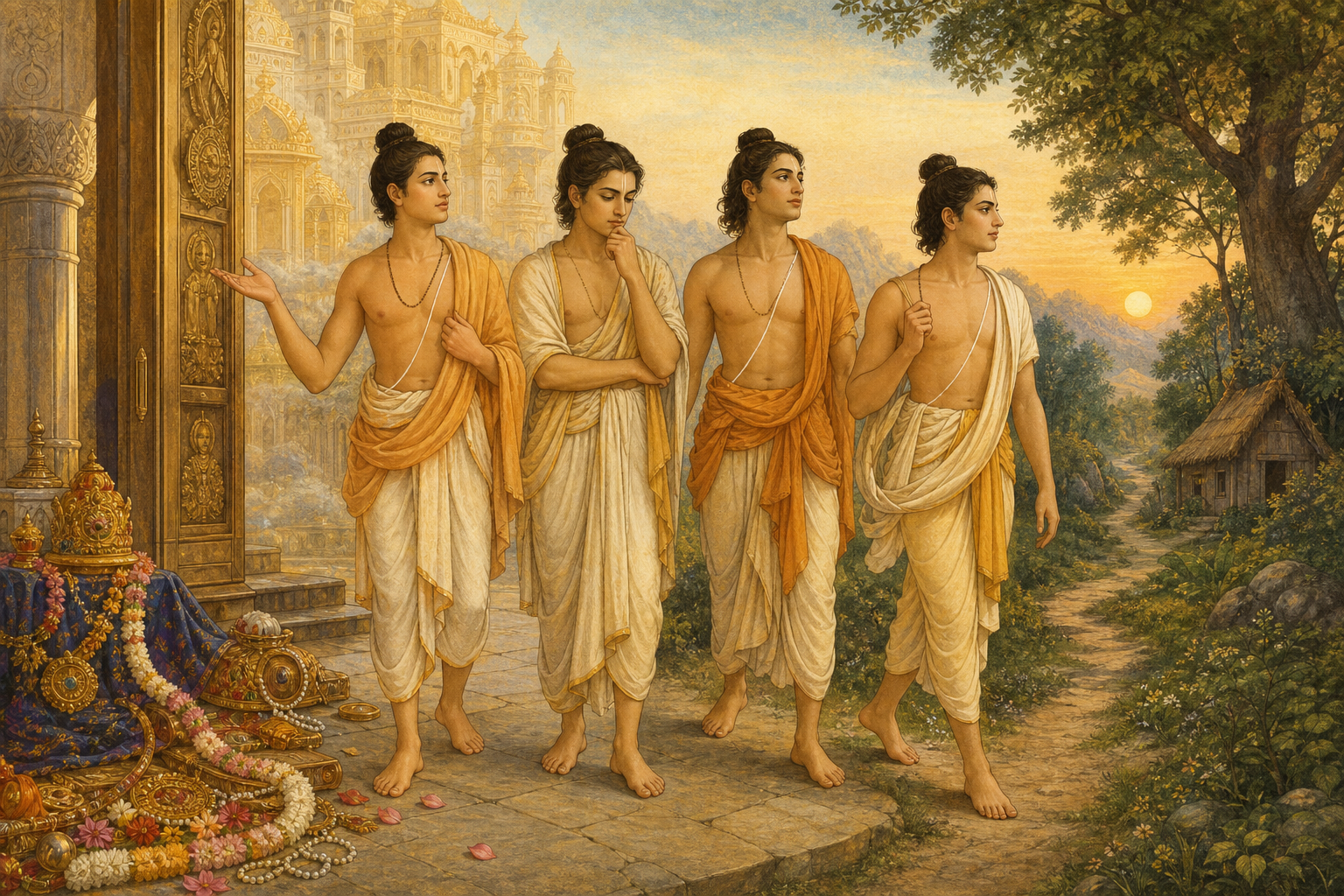
    The Ramayana records three pivotal boons, yet Vibhishana’s dharma-centered request proves the most transformative. Rather than seeking power, he asked for unwavering righteousness and moral clarity, and this orientation shaped the fate of Lanka. His counsel to Ravana, subsequent sharanagati to Sri Rama, and ethical leadership grounded the war’s outcome in dharma and adharma. The…

  • Decoding Shiva’s Timeless Jata Mukuta: Kaumudi, Kapala, Sarpa and Dharmic Unity

    Decoding Shiva’s Timeless Jata Mukuta: Kaumudi, Kapala, Sarpa and Dharmic Unity

    Shiva’s Jata Mukuta, adorned with Kaumudi – Kapala – Sarpa, distills a deep program for inner clarity, ethical grounding, and courageous transformation. The crescent moon cools the mind and aligns attention to nature’s rhythms; the skull teaches humility through impermanence; the serpent awakens vigilant, protective awareness. Early Chalukya sculptures at Badami preserve this iconographic triad…

  • At Death the Mind Shapes Destiny: Insights from Srimad Bhagavatam 10.1.36–45

    At Death the Mind Shapes Destiny: Insights from Srimad Bhagavatam 10.1.36–45

    Srimad Bhagavatam 10.1.36–45 teaches that the mind’s thinking, feeling, and willing at death direct the next embodiment. The principle links karma with a moral psychology in which habits and intentions shape destiny. Readers gain a practical framework: daily remembrance, scriptural study, meditation, and service stabilize attention and prepare consciousness for a peaceful transition. The message…

  • Reflections of the Soul—SB 10.1.43 with HG Aniruddha Prabhu: Calm Mind, Clear Vision

    Reflections of the Soul—SB 10.1.43 with HG Aniruddha Prabhu: Calm Mind, Clear Vision

    This session on Srimad-Bhagavatam (SB) 10.1.43 with HG Aniruddha Prabhu uses a vivid reflection metaphor to clarify how mental turbulence distorts perception while the self remains unchanged. It draws unifying parallels across Hindu, Buddhist, Jain, and Sikh traditions, showing a shared commitment to clarity and compassion. Practical takeaways include breath awareness, mantra-japa, and contemplative self-inquiry…

  • Happiness Beyond Problems: Hindu Wisdom for Unshakable Inner Peace and Resilient Living

    Happiness Beyond Problems: Hindu Wisdom for Unshakable Inner Peace and Resilient Living

    Hindu philosophy reframes happiness as inner steadiness rather than problem-free living. Drawing on the Bhagavad Gita, Karma Yoga, and meditative practices, it shows how equanimity reduces reactivity and supports ethical clarity. Practical tools—mindfulness, pranayama, Yoga, and reflective self-inquiry—help cultivate resilience and emotional balance. Everyday challenges then become opportunities for insight instead of triggers for turmoil.…

  • From Limitation to Liberation: How Physical Weakness Fuels Spiritual Power in Dharmic Wisdom

    From Limitation to Liberation: How Physical Weakness Fuels Spiritual Power in Dharmic Wisdom

    Hindu scriptures and the wider dharmic traditions illuminate a shared truth: physical limitations can become instruments of spiritual power. Examples such as Rishi Ashtavakra, Vāmana, Ganesha’s broken tusk, and Surdas show how weakness transforms into insight and purpose. Buddhism reframes illness and pain as fields for compassion and mindfulness; Jain narratives elevate tapas that turns…

  • Chaturtha Visarga Shradh Explained: Honor Three Generations, Preserve Ancestral Bonds

    Chaturtha Visarga Shradh Explained: Honor Three Generations, Preserve Ancestral Bonds

    Chaturtha Visarga Shradh (Caturtha Visarga) focuses Shradh offerings on three generations of ancestors while intentionally omitting the fourth and beyond. Grounded in Dharmashastra concepts of sapinda and samanodaka, it preserves ritual precision and devotional clarity. Families commonly observe it during Pitru Paksha or on specific death anniversaries, adapting practice to regional and familial traditions. The…

  • Auspicious Days for Mithuna (Gemini) Rashi in 2026: Expert Guide to Make Milestones Count

    This guide explains how to identify auspicious days for Mithuna (Gemini) Rashi in 2026 using a clear, Panchang-based method. It outlines the importance of the Moon’s transit through Mithuna and its Nakshatras—Mrigashirsha (3 & 4), Ardra (1–4), and Punarvasu (1–3). It highlights supportive factors such as Shukla Paksha, favorable yogas and karanas, and Mercury’s weekday.…

  • Poush Purnima (Shakambari Jayanti) on 3 Jan 2026: Auspicious Date, Significance, and Magh Snan Guide

    Poush Purnima (Shakambari Jayanti) on 3 Jan 2026: Auspicious Date, Significance, and Magh Snan Guide

    Poush Purnima (Shakambari Jayanti) falls on Saturday, 3 January 2026, marking the Full Moon of the Poush month in the Hindu calendar. The day begins the revered Magh Snan period in North India and emphasizes gratitude, purity, and charity. Observances include early-morning snan, puja, japa, and community-focused daan, with many households performing Satyanarayan Puja. While…

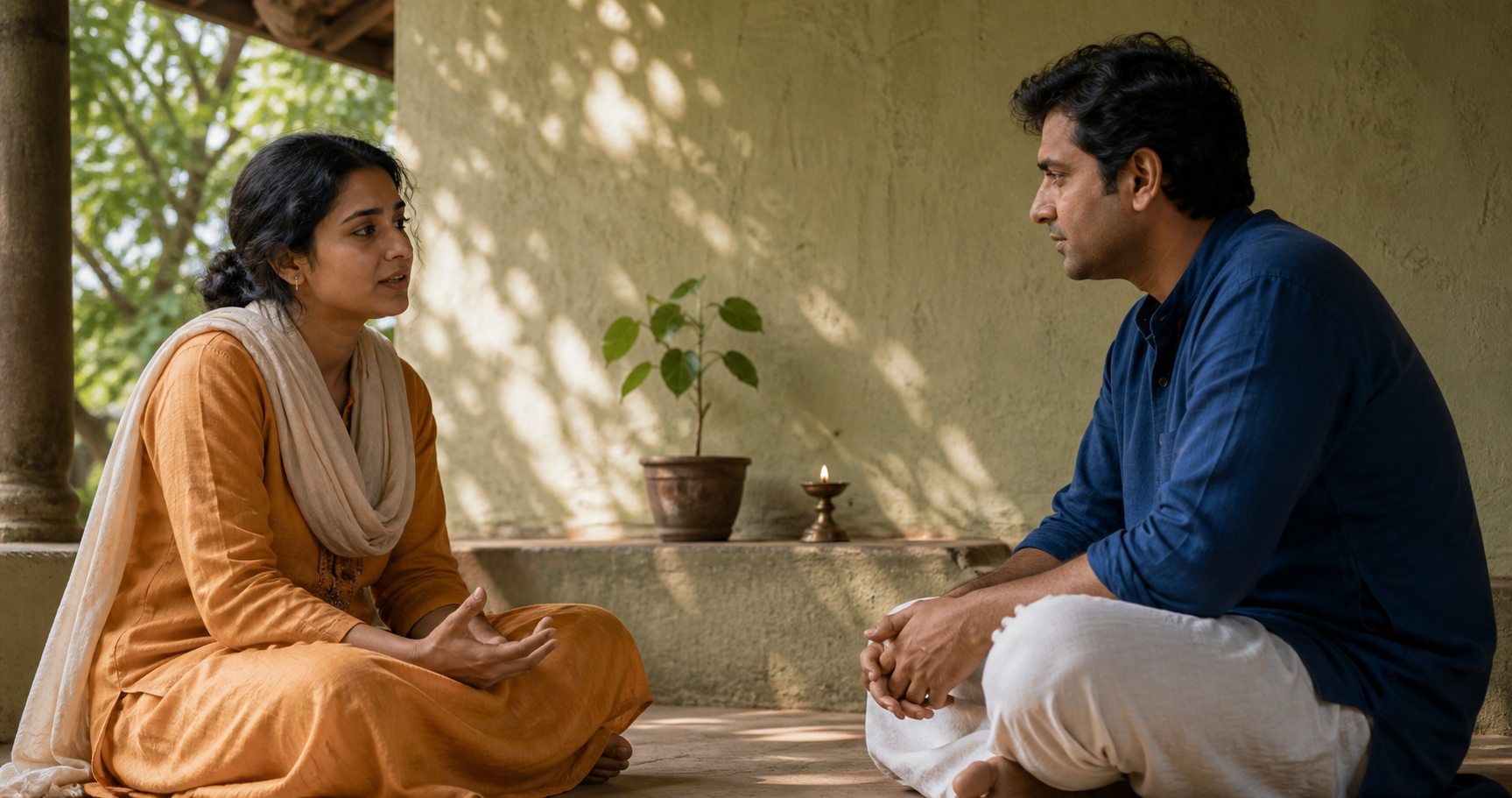
  • When Money Vanished: How Reframing Worth Rescued a Marriage and Built Inner Wealth

    When Money Vanished: How Reframing Worth Rescued a Marriage and Built Inner Wealth

    Financial stress can erode self-worth and strain relationships, but reframing identity from provider to partner restores connection and dignity. This narrative analyzes how mindful communication—naming fear rather than disputing bills—reduces defensiveness and builds teamwork. A daily “Proof of Worth” log documents non-financial value, countering money shame and strengthening emotional resilience. Practical examples show how small…

  • Awaken the Silent Witness: Master the Mind with Dharmic Wisdom for Calm and Clarity

    Awaken the Silent Witness: Master the Mind with Dharmic Wisdom for Calm and Clarity

    Sakshi-bhava—the unaffected witness—offers a practical, dharmic way to master the mind without suppressing emotions or withdrawing from life. Rooted in the Upanishads, the Bhagavad Gita, and Yoga philosophy, it cultivates equanimity (samatva), ethical clarity (viveka), and compassionate action through Karma Yoga. Breath-centered pranayama, daily dhyana, steady japa, and informal mindfulness build this capacity in realistic,…