

You may have encountered Mahakapala while asking a difficult question: can divine grace reach someone who has spent much of life serving the wrong cause? His fate offers hope, but it is not an escape clause. No soul should be declared beyond grace, yet no act of adharma becomes acceptable merely because grace remains possible.
For you, the practical question is not how to imitate a warrior’s death. It is how to recognize when loyalty, pride, fear, or habit has pulled you away from dharma, and how to turn while you can still choose your next act.
Read Mahakapala’s fate at the scale the tradition allows
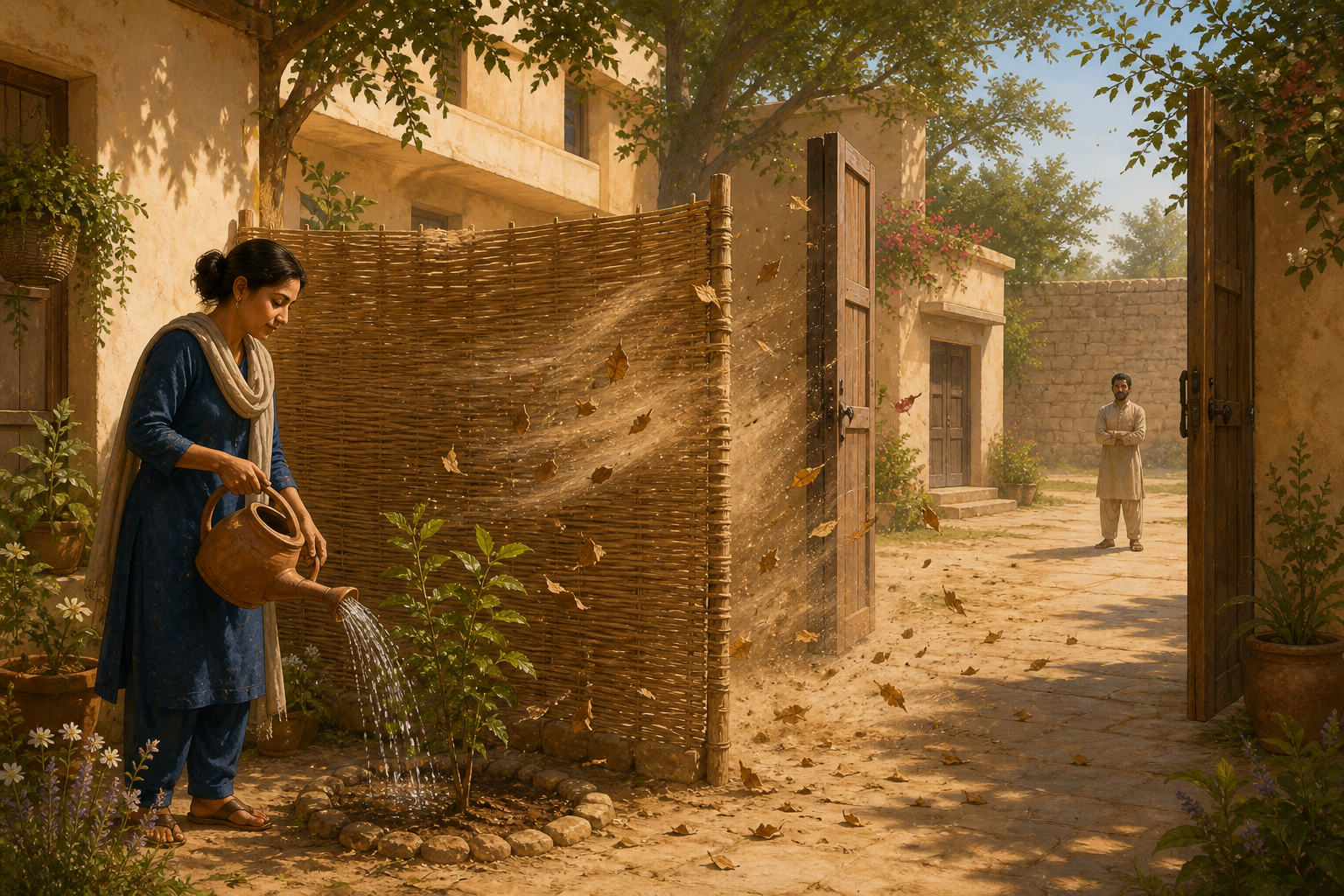
Mahakapala is not among the Ramayana’s extensively developed personalities. He appears briefly in the epic’s wider narrative landscape, with details varying among traditional retellings and regional recensions. The limited emphasis matters. It calls for a careful moral reading, not an elaborate biography built from gaps.
Three elements carry the spiritual weight of the account:
- Mahakapala’s position: he is a loyal asura commander aligned with a misguided sovereign and an adharmic cause.
- Mahakapala’s moral problem: a genuine virtue, loyalty, has become destructive because it is no longer governed by truth.
- Mahakapala’s final possibility: his encounter with Sri Rama places him before righteousness, allowing his end to be contemplated as release rather than mere annihilation.
His inner process and the precise mechanics of liberation remain unstated. We should therefore resist two opposite exaggerations. One dismisses his fate as nothing more than the death of an enemy. The other turns it into a universal formula in which anyone killed in battle automatically attains moksha. Neither reading respects the account’s moral focus.
The sounder conclusion is narrower and more useful: even a person deeply entangled in adharma is not necessarily beyond a sincere recognition of truth. That possibility preserves hope without turning speculation into doctrine.
Grace does not turn adharma into dharma

Divine grace is sometimes misunderstood as indulgence. On that reading, sincerity at the end cancels the moral meaning of everything that came before it. Mahakapala’s confrontation with Rama points in a more demanding direction. The adharmic aggression is stopped. The warrior faces the consequence of the cause he defended. Grace appears within that judgment, not as a device for avoiding it.
Justice stops the harm; grace refuses to reduce the person to the harm
Sri Rama embodies maryada, the discipline of right conduct. Power is bounded by purpose, restraint, and responsibility. In that frame, defeating an opponent is not permission to delight in humiliation. Dharma-yuddha must halt adharma while preserving moral clarity about the dignity of the soul.
This distinction applies beyond a battlefield. When you discover that you have defended a harmful position, served an unworthy authority, or injured another person through blind allegiance, asking for grace should produce a visible change:
- Stop participating in the conduct you now recognize as wrong.
- Name the wrong plainly, without disguising it as loyalty, duty, necessity, or tradition.
- Accept that spiritual forgiveness does not automatically remove practical consequences.
- Repair what can honestly be repaired, without demanding that the injured person validate your transformation.
- Make your next decision answerable to dharma rather than to the authority that previously claimed your obedience.
These actions do not purchase divine grace. They show that repentance is more than a wish to escape discomfort. Grace and responsibility are not rivals: responsibility is one way a genuine turning becomes visible.
Moksha is not a religious synonym for death
Mahakapala’s end is called sacred because of its relation to truth and divine presence, not because violence itself is spiritually liberating. Death and moksha are not interchangeable. Death marks the end of a particular embodied life; moksha means freedom from bondage. Treating every death as liberation empties moksha of its meaning.
A violent death is therefore not a spiritual method. Nothing in Mahakapala’s fate justifies seeking physical destruction, sanctifying vengeance, or assuming that death at the hands of a righteous person mechanically grants liberation. The living lesson is surrender of falsehood, not pursuit of death.
The distinction also prevents a subtler error. You cannot infer someone’s ultimate spiritual state merely from outward defeat. Mahakapala’s significance lies in the possibility of recognition at the threshold of death. The emphasis belongs on the soul’s encounter with truth and grace, not on the weapon or the spectacle of battle.
Shared liberation does not mean identical doctrine
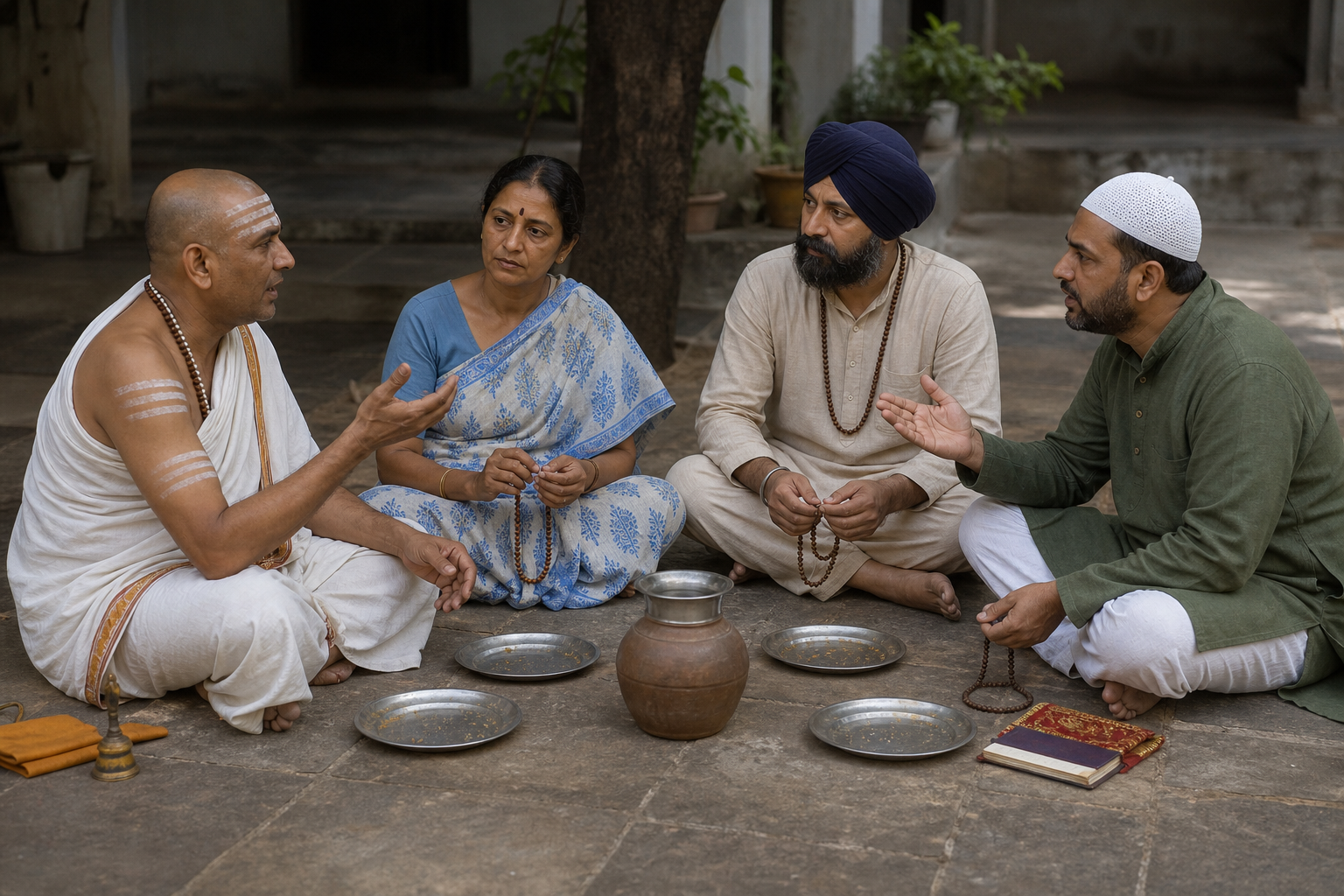
Dharmic traditions give ultimate freedom different names and place it within different accounts of bondage, knowledge, conduct, and spiritual realization. Hindu traditions speak of moksha; Buddhism of nirvana; Jainism of kevala jnana; and Sikhism of mukti. Each directs attention beyond ordinary bondage toward truth and freedom, but the terms should not be treated as interchangeable labels for one undifferentiated doctrine.
Mahakapala belongs within a Ramayana-centered Hindu frame in which Sri Rama’s presence, righteousness, and grace are decisive. In a conversation across Dharmic traditions, begin with the shared aspiration for liberation. Then allow each tradition to explain its own path and vocabulary. Unity is strengthened by accurate distinctions, not by erasing them.
Use Mahakapala’s loyalty as a test for your own allegiances
Mahakapala’s defining strength is also his danger. Loyalty can express courage, gratitude, steadiness, and willingness to sacrifice. Yet loyalty is not self-validating. Once separated from truth, it lends admirable discipline to an unworthy purpose.
This is why saying that someone was only obeying a leader or fulfilling a role does not settle the Dharmic question. Duty must remain answerable to dharma. A commander can be brave and still serve adharma. A devoted follower can be sincere and still defend what should be opposed.
Use the following audit whenever you feel compelled to defend a leader, institution, family, sect, political movement, community, or inherited narrative:
- Name the object of loyalty. Are you serving a principle, a person, a group, a reputation, or your own need to belong?
- State the boundary. What specific act would make you refuse cooperation? If you can imagine no boundary, your loyalty has become absolute.
- Separate truth from affiliation. Would you judge the same conduct differently if an opponent committed it?
- Identify who pays. Does your loyalty preserve your comfort by transferring harm, dishonesty, or humiliation to someone with less power?
- Test your openness to correction. What evidence would cause you to reconsider? Refusing every possible correction is attachment, not discernment.
- Choose the next Dharmic act. Decide what you must stop, acknowledge, correct, or refuse before debating your motives further.
If no fact, principle, or consequence could ever alter your allegiance, loyalty is no longer governed by dharma. It has become an idol. The same test applies even when the person or institution carries a Hindu identity. A pro-Hindu outlook cannot require calling an adharmic act Dharmic merely because a Hindu committed it. Dharma must judge affiliation; affiliation cannot be allowed to redefine dharma.
Correcting such loyalty does not require self-hatred. Humiliation keeps the ego at the center by turning moral change into a drama about one’s ruined self-image. Humility does something cleaner: it admits that the loyalty may have been sincere while its direction was wrong. You can retain courage and steadfastness while giving them a worthier object.
Turn toward truth before the last moment arrives

The possibility of recognition at death can be spiritually reassuring, but it makes a poor plan for life. You cannot schedule your final moment, guarantee clarity within it, or decide in advance that future remorse will be sincere. Habits of evasion practiced for years do not become wisdom merely because time has grown short.
Mahakapala’s fate protects hope for the person who believes it is already too late. It does not turn delay into a virtue. If grace can meet a person at the threshold, that is reason to turn now, not permission to continue knowingly in adharma.
A short practice at the end of the day, or before a consequential decision, can make this teaching concrete:
- Recall one decision. Choose an actual word, action, omission, or defense rather than evaluating yourself in general terms.
- Name the attachment. Identify the loyalty, fear, pride, resentment, or desire that influenced it.
- Apply the reversal test. Ask whether you would call the same act righteous if it came from someone you opposed.
- State the truth without decoration. Avoid explaining your intention until you have named the effect and the principle involved.
- Select a correction. Refuse the next harmful request, withdraw a false claim, apologize where appropriate, restore what can be restored, or seek wiser counsel.
- Place the result before the Divine. A devotee of Sri Rama can ask for the clarity to recognize dharma and the courage to follow it without bargaining for a preferred outcome.
This discipline does not compel grace or guarantee moksha. It addresses the immediate obstacle revealed by Mahakapala: the human capacity to make loyalty stronger than discernment. Repeated honestly, it weakens the excuses by which adharma presents itself as duty.
Key takeaways
- Mahakapala’s limited place in the wider Ramayana tradition supports a focused moral reading, not a detailed or uniform biography.
- Divine grace does not declare adharma harmless. Mahakapala is stopped before his end is contemplated as release.
- Moksha is liberation from bondage, not a synonym for dying or being killed in battle.
- Loyalty remains virtuous only while it is answerable to truth and dharma.
- A final turning preserves hope for every soul, but it gives you no reason to postpone correction.
- Hindu moksha, Buddhist nirvana, Jain kevala jnana, and Sikh mukti share a liberating horizon without becoming identical doctrines.
The next time loyalty asks you to call an adharmic act Dharmic, treat the discomfort as a summons. Pause, name the truth, refuse further harm, make the correction available to you, and then ask for grace. Mahakapala matters not because his last moment licenses delay, but because your next moment does not have to remain captive to the first part of your story.
References
