-
Kanya Rashi 2026 Auspicious Days: Practical, Evidence-Based Guide to Favorable Nakshatras and Tithis

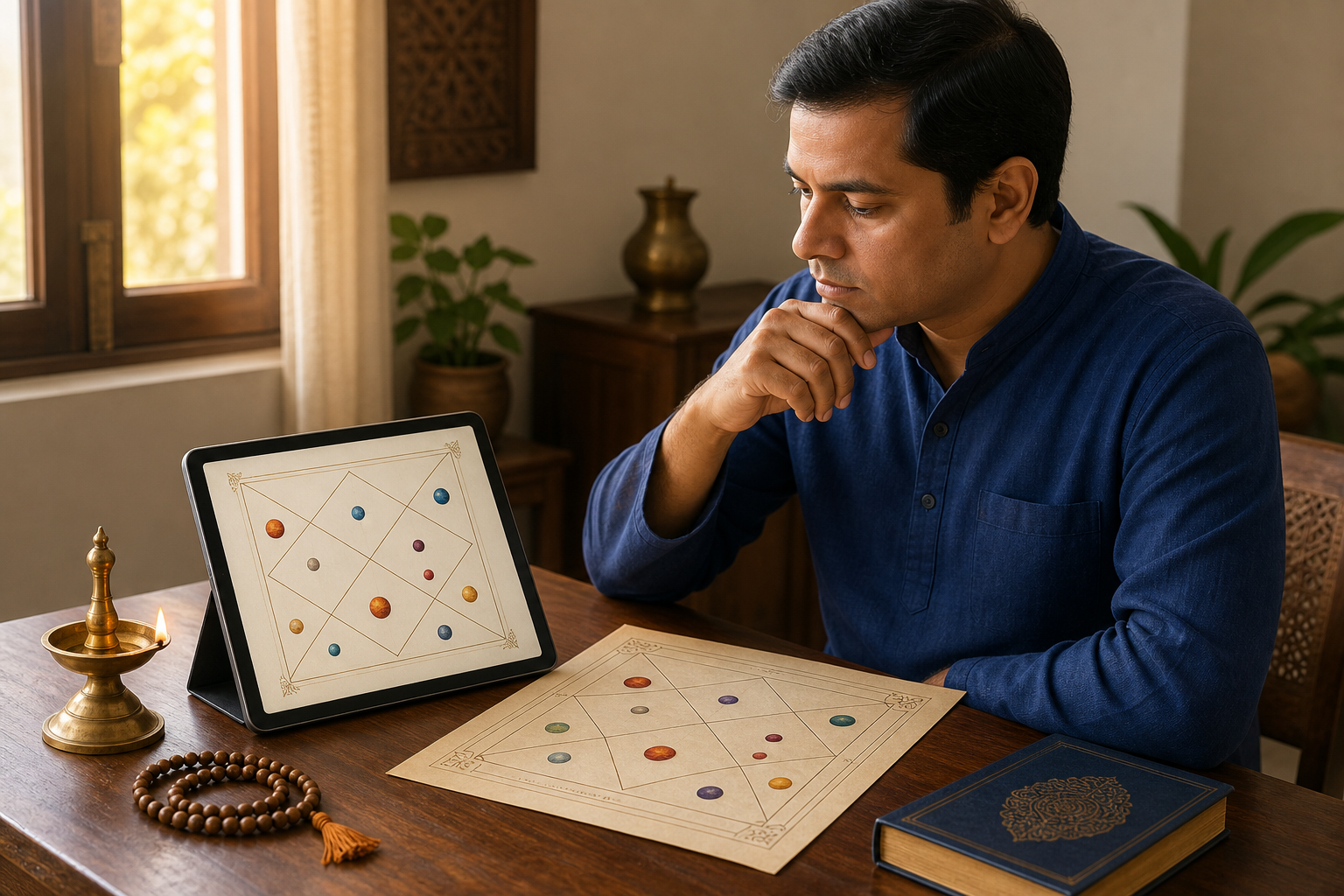
This academically grounded guide clarifies how to identify auspicious days for Kanya Rashi in 2026 using Panchang essentials—tithi, nakshatra, weekday, and muhurta. It explains Kanya Rashi’s nakshatra composition (Uttara 2–4, Hasta 1–4, Chitra 1–2) and why Moon-transit days in these padas are naturally resonant. Readers learn to distinguish Western Sun-sign Virgo from Vedic Moon-based Kanya…
-
Finding Calm in High‑Risk Pregnancy: Surrender, Hypnobirthing, and Type 1 Resilience

A sudden diagnosis of type 1 diabetes at twenty-five weeks turned a routine pregnancy into a high-risk pregnancy overnight. By shifting from rigid control to informed surrender, calm returned: insulin therapy, carbohydrate counting, and glycemic targets were balanced with hypnobirthing, relaxation, and mindful self-talk. The result was steadier decision-making, less reactivity, and renewed confidence in…
-
Dharma with Compassion: When Truth Yields to Welfare and Self-Preservation in Hinduism

Hindu ethics treats dharma as a living intelligence: truthfulness is vital, yet it must be guided by compassion and non-harm. When literal truth risks grave injury or endangers life, flexibility aligns satya with ahimsa and the welfare of dependents. Practical guidance emerges through intention, consequence, and alternative analysis, ensuring truth heals rather than harms. Classical…
-
Shiva’s Invisible Justice: Subtle Cycles of Cosmic Destruction in the Skanda Purana

This analysis reframes Shiva’s role in “divine destruction” as subtle dissolution guided by time and karma, echoing insights hinted in the Skanda Purana. Instead of catastrophic spectacle, the process appears as an ethical and metaphysical recalibration—an unseen justice restoring balance. Readers gain a practical lens to interpret endings in personal and social life as compassionate…
-
Masik Shivaratri 2026 Guide: Monthly Dates, Sacred Krishna Paksha Meaning, and Fasting Tips

Masik Shivaratri falls each month on Krishna Paksha Chaturdashi, the lunar day before Amavasya, making it a powerful time for Shiva Puja, fasting, and meditation. This guide explains how to plan the 2026 monthly observances with attention to regional calendar nuances and location-based timing. It highlights why Maha Shivaratri is observed on the Magh-month Masa…
-
Masik Vinayak Chaturthi 2026: Siddhivinayak Vrat Guide, Tithi Method, and Puja Insights

Masik Vinayak Chaturthi is observed monthly on Shukla Paksha Chaturthi, while Sankashtahara (Sankashti) occurs on Krishna Paksha Chaturthi. This guide clarifies the difference and explains how to determine 2026 observance dates accurately using a regional Panchang. It outlines a step-by-step tithi method, emphasizing the sunrise rule and local time-zone variations. Readers gain practical insights into…
-
Murugan Unveiled: Tamil Hero, Spiritual Harmony, and the Transformative Power of Thaipusam

This exploration presents Murugan as a timeless Tamil icon whose youthful vigor, compassion, and discernment inspire communities across the Dharmic world. It clarifies why reducing him to a mere “God of War” overlooks deeper theological meanings centered on wisdom and restoration. Readers discover how classical texts, especially the Tolkappiyam, ground his identity in the mountain…
-
Narada Pancharatra: Timeless Vaishnava Wisdom and Inclusive Paths to Devotion

The Narada Pancharatra is a key Vaishnava Agama that blends rigorous theology with accessible devotion to Lord Vishnu. It guides temple worship and household puja through detailed procedures such as archana, prāṇa-pratiṣṭhā, and mantra practice. Readers benefit from a clear bridge between Hindu philosophy and daily spiritual discipline. The text affirms bhakti as a path…
-
Daivatha Linga: Unveiling Shiva’s Sacred Emblem and the Universe’s Return to Source

This article explores the Daivatha Linga as the consecrated heart of Shiva temples and a profound symbol of the Supreme Power—summarized by “liyate asmin iti lingah.” It clarifies the difference between chala (movable) and achala (immovable) lingas and explains how prana-pratishtha and abhisheka shape temple worship. Readers gain a clear view of the linga’s philosophical…
-
Honoring Sri Ramacandra Kaviraja: Timeless Bhakti, Acharyas’ Mercy, and Sacred Sanga

This tribute to Sri Ramacandra Kaviraja frames disappearance day as a living invitation to deepen devotion and humility within the Bhakti Tradition. Drawing on the cherished verse of Srila Narottama dasa Thakura, it highlights acharyas’ mercy and the transforming power of sacred association (sanga). The article situates these ideals within a broader dharmic context, connecting…
-
Hinduism’s Fearless Quest for Truth: Rational Inquiry, Pluralism, and Dharmic Unity

Hinduism champions a fearless quest for truth grounded in rational inquiry, from the Upanishads’ probing dialogues to the darshanas’ robust epistemology. Its knowledge systems assess claims through perception, inference, and reliable testimony, integrating rigorous method with experiential practice in yoga and meditation. The tradition’s shastrartha debates exemplify intellectual humility and accountability. In unity with Buddhism,…
-
Beyond Classroom Walls: Unleashing Creative Minds with Dharmic Wisdom and Modern Innovation

Many creative students feel constrained by slow pacing, narrow syllabi, and memory-focused exams. Drawing on Dharmic wisdom from Hinduism, Buddhism, Jainism, and Sikhism, this piece outlines how experiential, project-based learning transforms curiosity into real-world impact. It highlights the power of the guru–shishya tradition, Anekantavada, seva, mindfulness, and Karma Yoga to unify ethics and innovation. It…
-
Eshanatraya Unveiled: Mastering Putraishana, Vittaishana, Lokaishana for Inner Freedom

Eshanatraya (एषणात्रय) explains how three desires—Putraishana, Vittaishana, and Lokaishana—bind individuals to samsara when driven by attachment rather than dharma. This post clarifies their original meaning and presents a modern, ethical reading that supports balanced family life, responsible wealth, and humility around recognition. It links Hindu philosophy with parallel insights from Buddhism, Jainism, and Sikhism, highlighting…
-
Beyond Binary: Shiva–Shakti Wisdom on Gender Harmony for Wholeness in Hindu Thought

Hindu philosophy portrays masculine and feminine energies as complementary, not oppositional, using Shiva and Shakti to symbolize the unity beneath apparent differences. The image of Ardhanarishvara embodies this synthesis, while Sāṅkhya, Advaita, and Tantra offer converging metaphysical accounts of wholeness. Scriptural sources such as the Bhagavad Gita and Devi Mahatmyam affirm an inclusive theology where…
-
From Trishul to Pinaka: Unveiling Shiva’s Supreme Weapon and Its Sacred Evolution
This essay explores the sacred relationship between Shiva’s Trishul and Pinaka as complementary symbols of transformation and protection. It shows how the Trishul dissolves ignorance and disorder, while Pinaka channels disciplined force to safeguard dharma. Drawing on Puranic and epic references, including the famed episode of the Śiva Dhanush in the Rāmāyaṇa, it highlights how…
-
Nine Pathways of Bhakti: A Powerful Guide to Personal Service and Dharmic Harmony

This exploration clarifies the nine processes of bhakti-yoga as presented by Prahlada Maharaja in the Srimad-Bhagavatam, showing how hearing, chanting, remembrance, worship, service, prayer, friendship, and surrender form a holistic path of devotion. It explains how knowledge is measured by lived practice, not mere abstraction. Practical insights show how simple daily disciplines can cultivate resilience,…
-
Honoring Atithi: The Transformative Power of Guest Reception in Dharmic Traditions

The Sanskrit term atithi—“not scheduled”—anchors a dharmic ethic that elevates hospitality into seva. In Vaishnava practice, receiving unexpected guests as representatives of the Supreme Lord aligns guest care with devotion. This principle resonates across Hinduism, Buddhism, Jainism, and Sikhism, echoing through langar, dana, and ahimsa-centered welcome. In practice, effective guest reception in temples involves clear…
-
No Newspapers in Hell? A Sheffield Parable on Context, Culture, and Compassionate Dialogue

A classic Sheffield anecdote often retold by Srila Prabhupada demonstrates how spiritual messages resonate only when they meet people where they are. The coal miners were unmoved by descriptions of hell as dark and damp, because that mirrored their daily work; the threat of “no newspapers,” however, struck home. The story models context-aware, culturally sensitive…