-
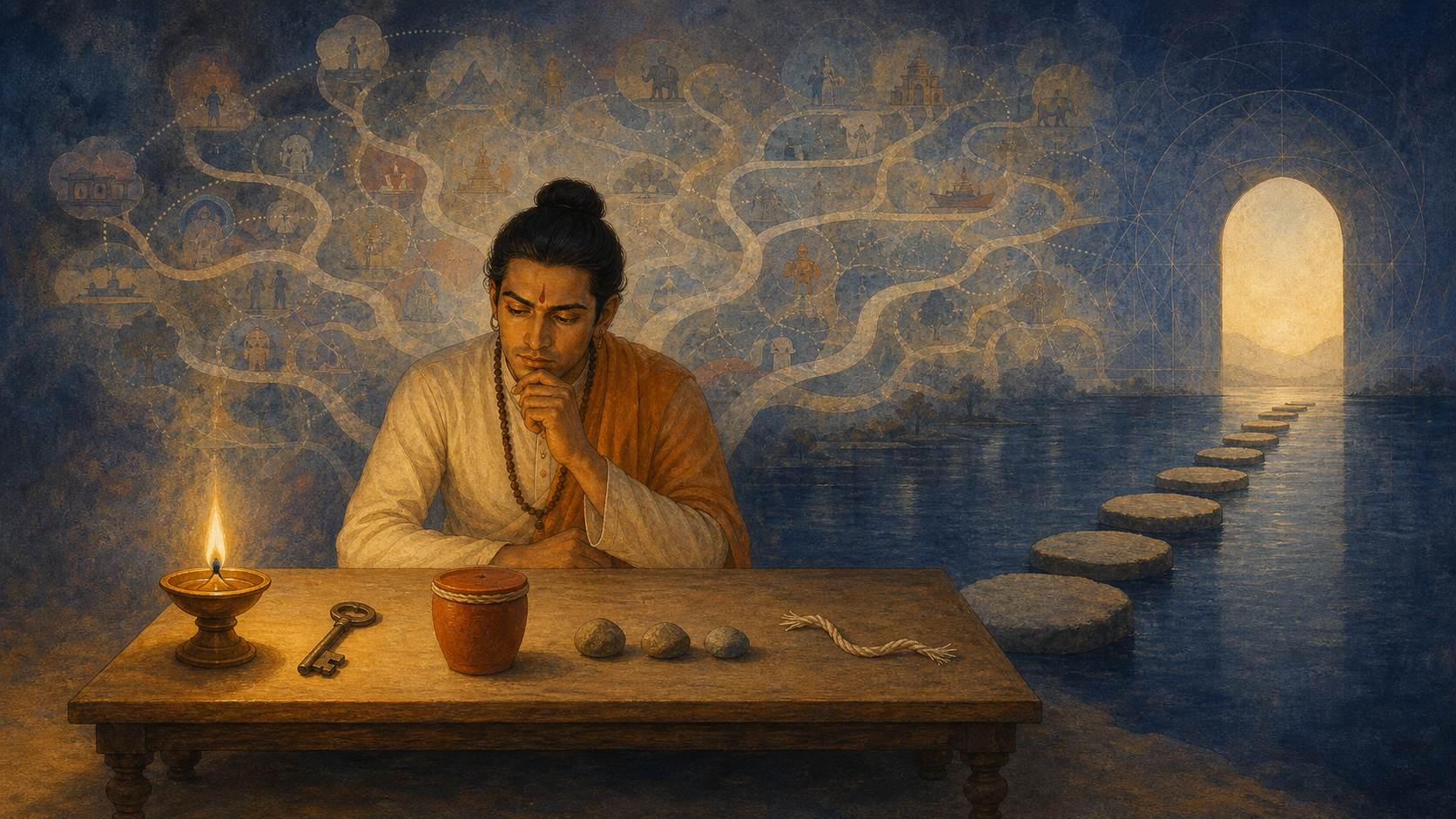
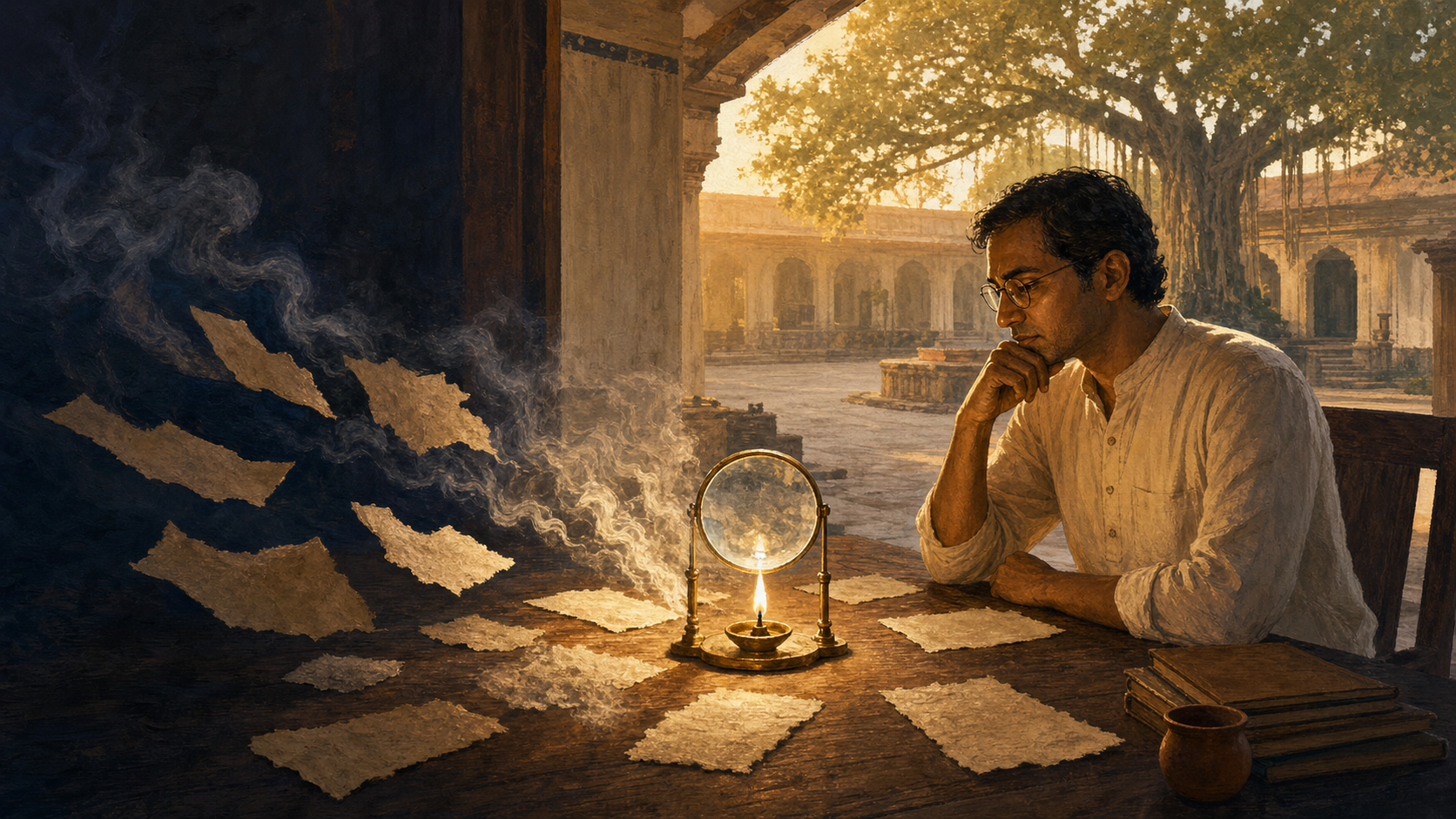
Transcending Tapa-traya: Śrīmad Bhāgavatam 4.29.32 on Time, Karma, and Lasting Relief

This article presents an academically grounded reading of Śrīmad Bhāgavatam 4.29.32, showing how time, karma, and forgetfulness of the Supreme Lord sustain the threefold miseries of material life (tapa-traya). Readers gain a clear framework to recognize internal, social, and environmental forms of suffering without fatalism. The discussion highlights unity among Dharmic traditions—linking Buddhist dukkha, Jain…
-
Begin Early: The Transformative Power of Youthful Spiritual Practice in Hindu Wisdom

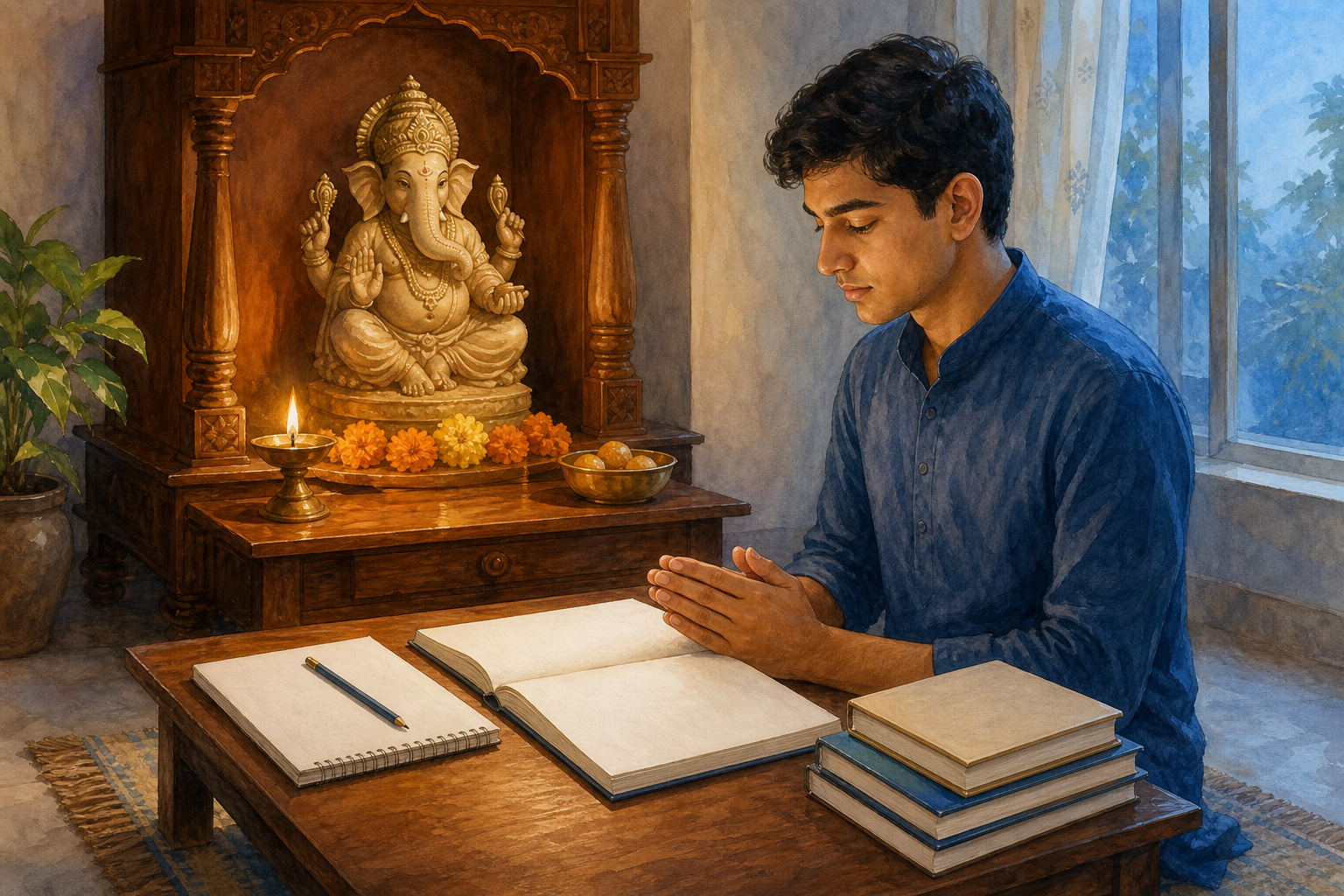
Hindu wisdom encourages beginning spiritual practice in youth, when body and mind are most receptive. Early routines in meditation, yoga, and study establish habits of attention, resilience, and ethical clarity that support lifelong growth. The Upanishads and Bhagavad Gita highlight abhyasa, vairagya, and brahmacharya as practical tools for self-realization. This guidance aligns with the broader…
-
Beyond Status and Titles: Hindu Wisdom on Power, Ego, and the Difference Between Fans and Love

Modern culture often confuses admiration for status with genuine love. Hindu philosophy, supported by the Bhagavad Gita, Upanishads, Vidura-niti, Panchatantra, and the Mahabharata, clarifies that bonds rooted in utility fade when advantage fades. Dharmic traditions agree: love grounded in dharma, maitri, aparigraha, and seva sees the person beyond the pedestal. Readers gain practical indicators to…
-
January 14, 2026 Panchang: Krishna Paksha Ekadashi to Dwadashi Timing, Tithi & Guidance

Wednesday, January 14, 2026 features Krishna Paksha Ekadashi until 5:59 PM, transitioning to Krishna Paksha Dwadashi thereafter. This precise Tithi timing helps devotees plan Ekadashi fasting and Dwadashi Parana in accordance with local Panchang guidance. Because sunrise and Parana muhurat vary by region, consulting a trusted, region-specific calendar is advised. The day’s observance highlights simplicity…
-
Sacred River Bathing: Timeless Rituals, Inner Renewal, and Shared Dharmic Heritage

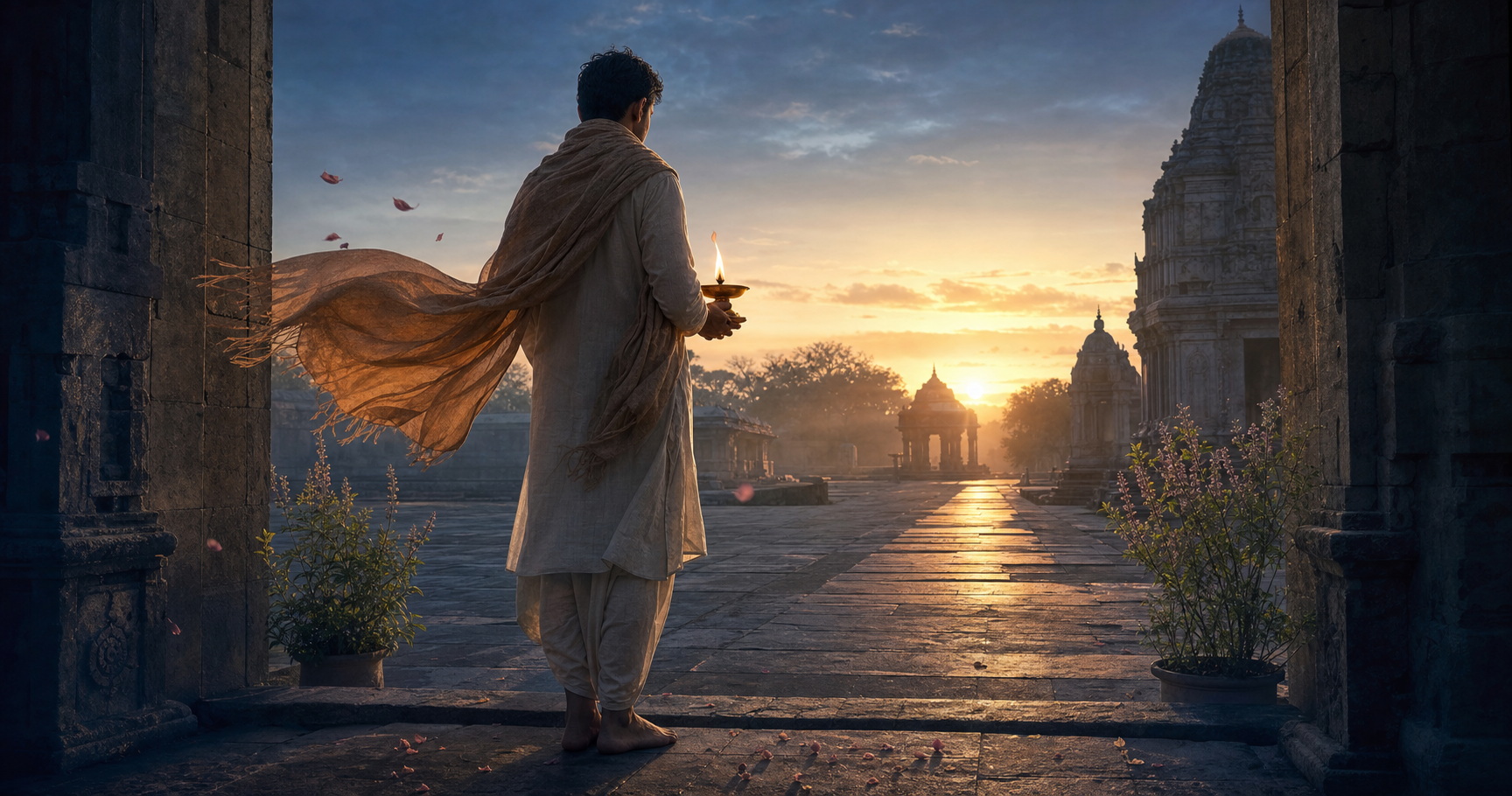
Taking a dip in sacred rivers like the Ganga, Yamuna, Godavari, Narmada, and Cauvery continues to unite spiritual practice with daily life across India. Rooted in tirtha snana and observed during cycles such as Magh Snan and Karthika Masam, the ritual offers emotional renewal, mindfulness, and a sense of belonging. Scenes at dawn—quiet mantras, cool…
-
The One Question That Reclaimed Time, Energy, and Presence: A Lean Life Approach

This article examines a simple, repeatable method for reclaiming time and energy through values-based decisions and mindful living. It traces a shift from reflexive busyness to intentional presence, beginning with one clarifying question: “Does this bring me value?” A practical audit separates what nourishes from what drains, and small, gentle adjustments replace wasteful patterns. A…
-
Mastering the Warrior Within: Self-Control in Hindu Philosophy for Courage and Clarity

The adage that true warriors first conquer themselves captures a core insight of Hindu philosophy. Self-control anchors dharma, allowing action to be guided by clarity, courage, and compassion. Drawing on the Bhagavad Gita and the disciplines of Yoga—Pranayama, Pratyahara, and Dhyana—this exploration shows how inner mastery transforms reactions into thoughtful responses. The principle resonates across…
-
Kshara and Akshara in Hindu Philosophy: Embrace Impermanence, Realize the Eternal

Kshara and akshara illuminate a central insight of Hindu philosophy: the world of change and the reality of the changeless. Drawing on the Bhagavad Gita, Vedanta, and the Upanishads, this exploration shows how recognizing impermanence fosters resilience, clarity, and compassion. It connects Hindu thought with related insights in Buddhism, Jainism, and Sikhism, emphasizing unity among…
-
Avasthatraya Viveka Demystified: A Profound Guide to Vedanta’s Three States of Consciousness

Avasthatraya Viveka offers a clear Vedantic method to understand consciousness across waking (Jagrat), dream (Svapna), and deep sleep (Sushupti). By observing how experiences arise and pass, the inquiry reveals the unchanging witness (Sakshi) present in all states. This insight, central to the Mandukya Upanishad and Advaita Vedanta, refines emotional balance, deepens ethical living, and strengthens…
-
Misheard ‘Crishne’, Found Krishna: How Music Sparked a Transformative Dharmic Quest

A simple misspelling—“Crishne” instead of Krishna—sparked a thoughtful journey from music to meaning. Guided by the sounds of Ravi Shankar and George Harrison, curiosity evolved into an informed exploration of Krishna, bhakti, and Hindu philosophy. A chance search led to credible resources, including krishna.com, turning cultural interest into structured learning. The narrative shows how modern…
-
From Self-Interest to Selfless Seva: Bhakti’s Path to Serving the Divine and Boundless Joy

A common critique of devotion argues that serving the Divine for happiness is inherently self-interested. This reflection addresses that concern by showing how dharmic traditions teach a transformative arc: service may begin with personal motives but gradually matures into selfless love. Through consistent seva, intention is refined, and the heart shifts from seeking comfort to…
-
From Stage to Side: Mastering Humble, Authentic Guidance in Dharmic Guru–Shishya Paths

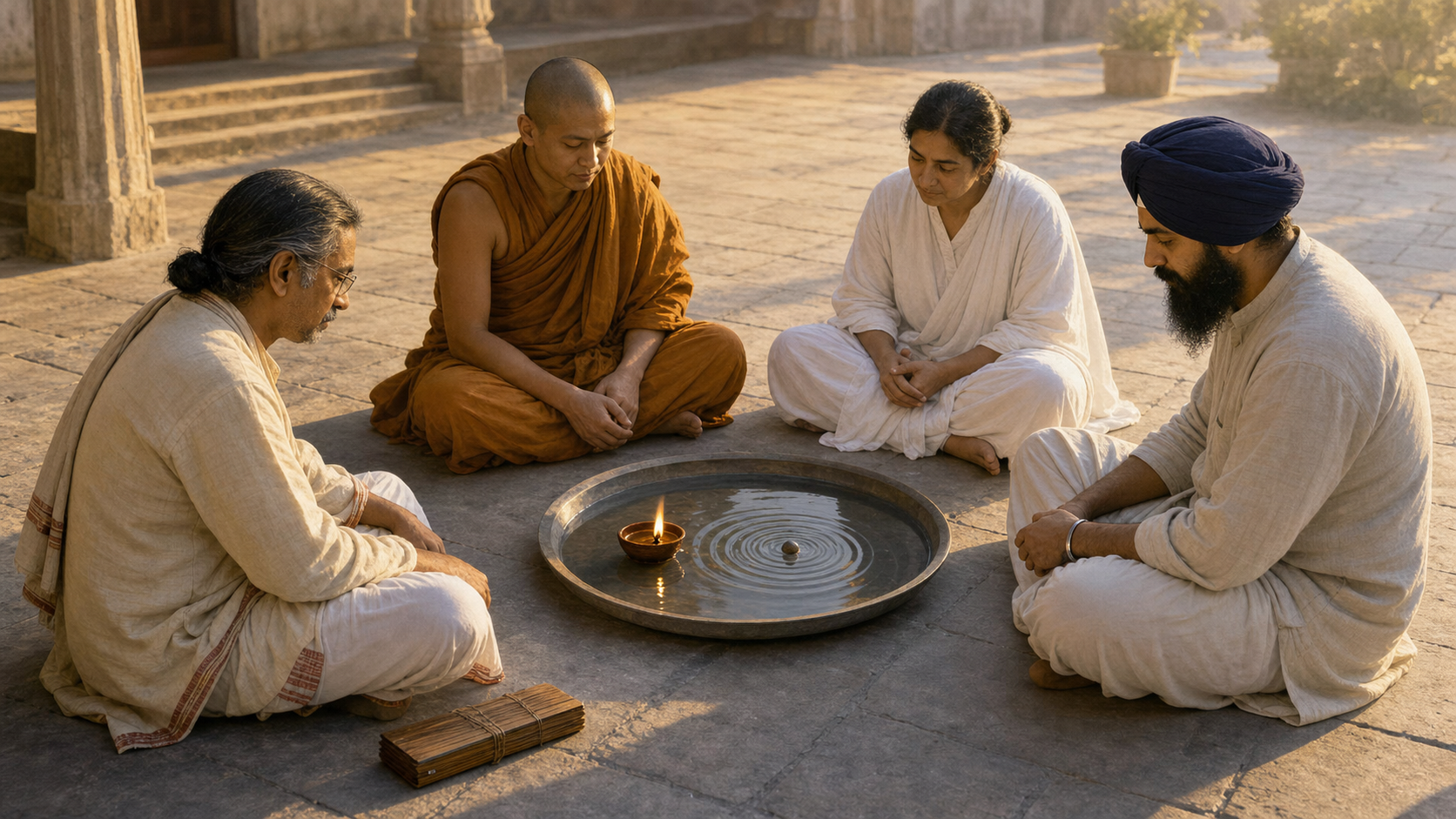
This reflection examines why spiritual leaders across Hinduism, Buddhism, Jainism, and Sikhism sometimes default to a performative “sage on the stage” stance and how a “guide by the side” approach better aligns with dharmic values. It explains how juniors may surpass seniors due to previous lifetime advancement and sincere practice, and how this can trigger…
-
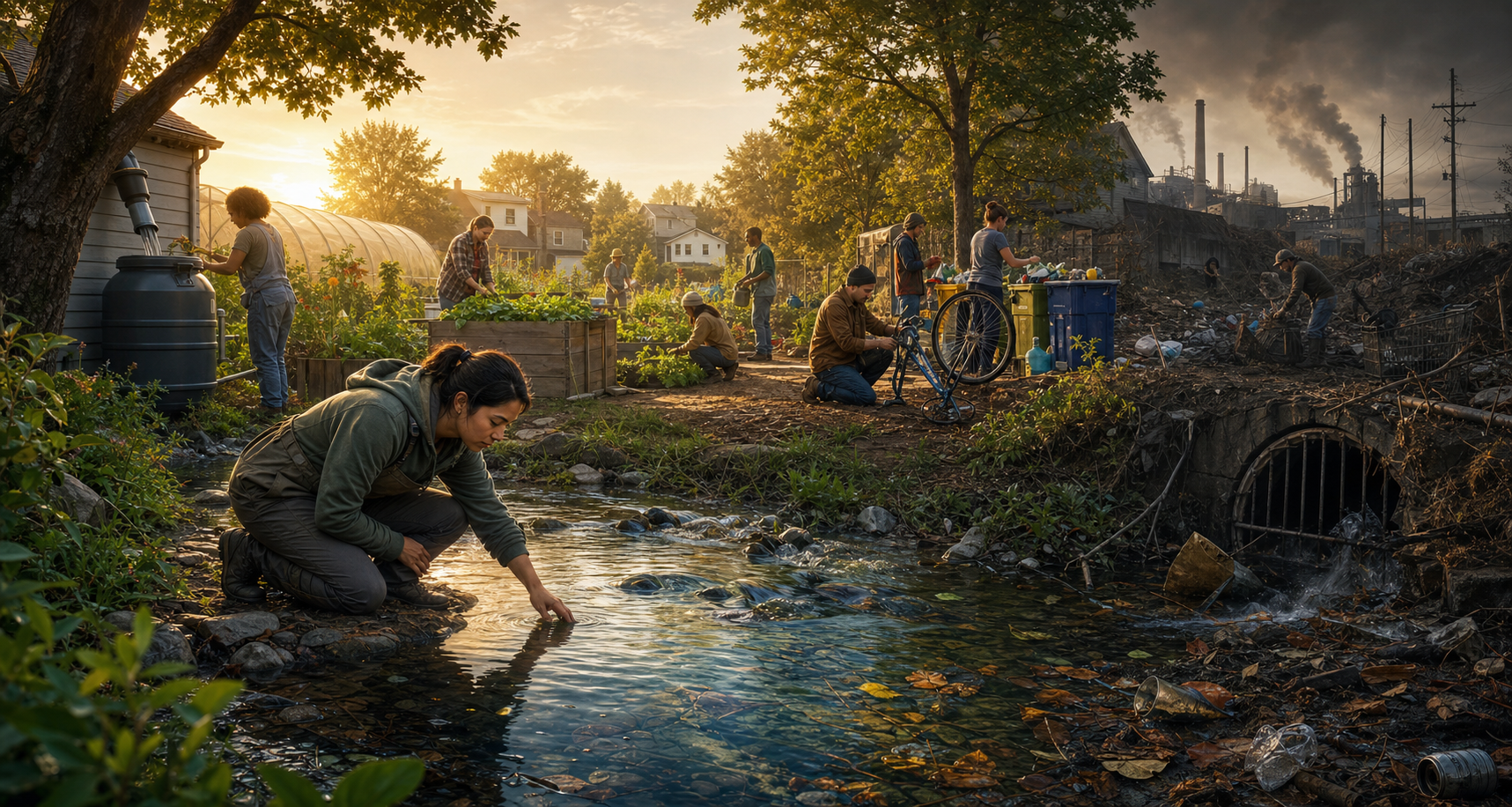
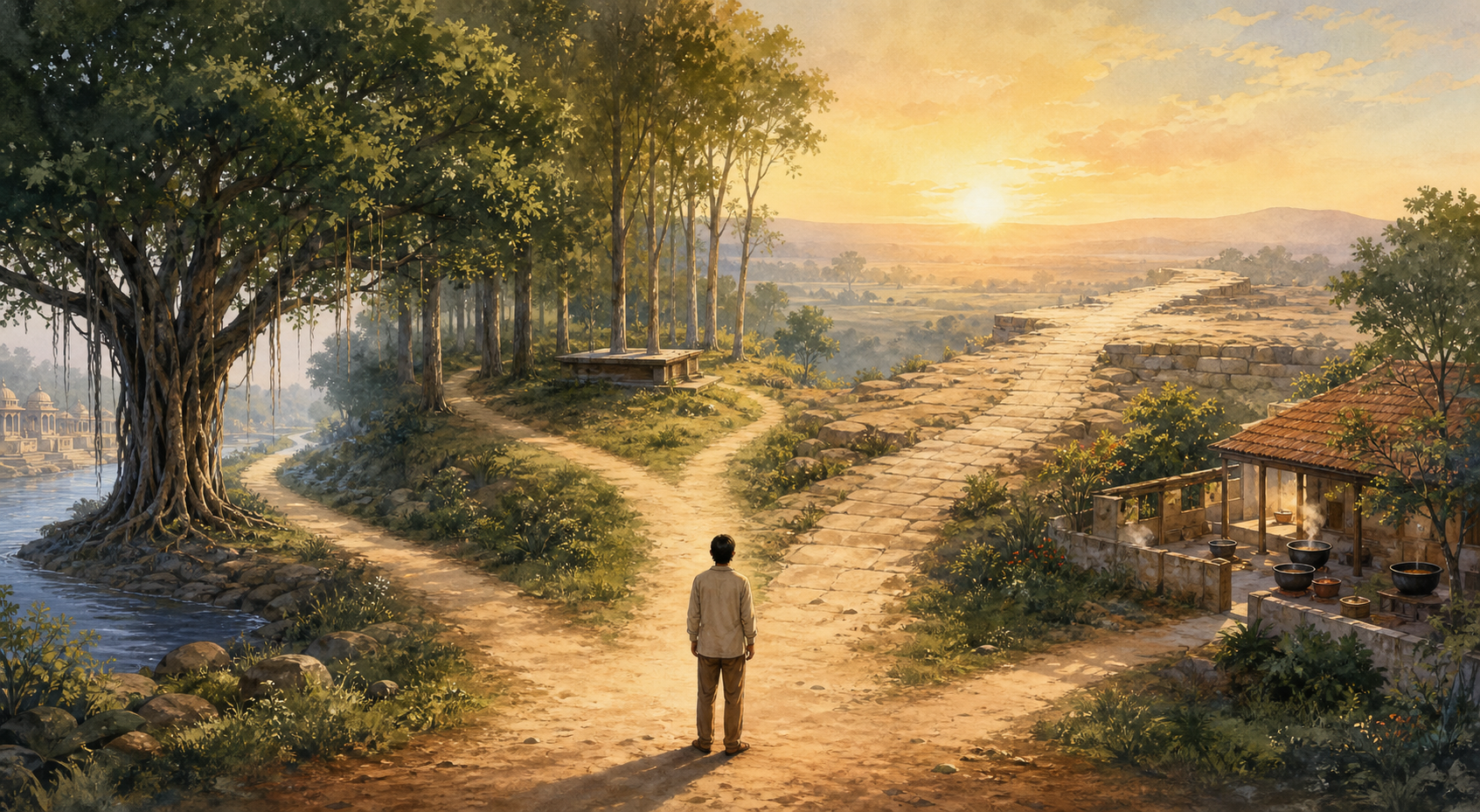
Rta and the Rhythm of Nature: A Dharmic Blueprint to Avert Humanity’s Collapse

Humanity stands at a civilizational crossroads: either realign with nature’s rhythm or accelerate ecological collapse. Hindu thought expresses this alignment as Rta—the cosmic order that sustains balance—manifested practically as Dharma. A dharmic ethic reframes sustainability as disciplined reciprocity with nature, not a slogan. Unity among Hinduism, Buddhism, Jainism, and Sikhism offers a coherent ecological blueprint…
-
Forged in Dharma’s Fire: Hindu Sacred Texts on Turning Adversity into Inner Strength

Hindu sacred texts teach that adversity can be transformed into durable inner strength through dharma, tapas, and equanimity. Episodes from the Ramayana, Mahabharata, and Puranas show how trials refine character and deepen compassion without glorifying harm. The Bhagavad Gita reframes crisis as an opening to karmayoga, bhakti, and jnana, aligning action with wisdom. Figures like…
-
Prajnajyoti: A Timeless Beacon for Atman Realization across Dharmic Traditions

Prajnajyoti—“the light of wisdom”—names a mature state of Hindu spiritual realization where Atman is known as the innermost reality. It integrates Jnana, Bhakti, Karma, and Raja Yoga, grounded in ethical practice and guided by a guru. The state manifests as clarity, compassion, and equanimity rather than abstract belief. Parallels across Buddhism, Jainism, and Sikhism underscore…
-
Looking Back with Purpose: Transformative Lessons from a Dharmic Journey toward Unity

Purposeful retrospection, grounded in dharma, transforms memory into a tool for growth rather than self-critique. Drawing on Ahimsa, Anekantavada, and Karma Yoga, this reflection-centered approach fosters inner clarity, ethical action, and resilience. Practical methods—mindfulness, meditation, and a five-step weekly framework—translate insight into consistent habits. Community support through satsang, sangha, and the Guru–Shishya Tradition amplifies learning…
-
January 13, 2026 Panchang: Krishna Paksha Dashami to Ekadashi, Good Time, Nakshatra, Rashi

Tuesday, January 13, 2026 features Krishna Paksha Dashami tithi until 3:51 PM, followed by Krishna Paksha Ekadashi for the remainder of the day. This Dashami-to-Ekadashi transition supports disciplined routines, fasting, and reflective practices. Good Time (shubh muhurat) should be confirmed through a local Panchang, since auspicious periods vary by location and depend on Nakshatra, Yoga,…
-
Simha Rashi 2026 Auspicious Days: Powerful Muhurta Guide with Nakshatra Insights

This academic yet accessible guide explains how to identify auspicious days for Simha Rashi in 2026 using Panchang-based criteria. It clarifies the role of Moon sign versus Sun sign, highlights supportive Nakshatras (Magha, Purva Phalguni, Uttara Phalguni), and outlines the importance of tithi, weekday, and muhurta selection. Readers learn to favor Abhijit Muhurta and Brahma…