-
Awaken the Silent Witness: Master the Mind with Dharmic Wisdom for Calm and Clarity

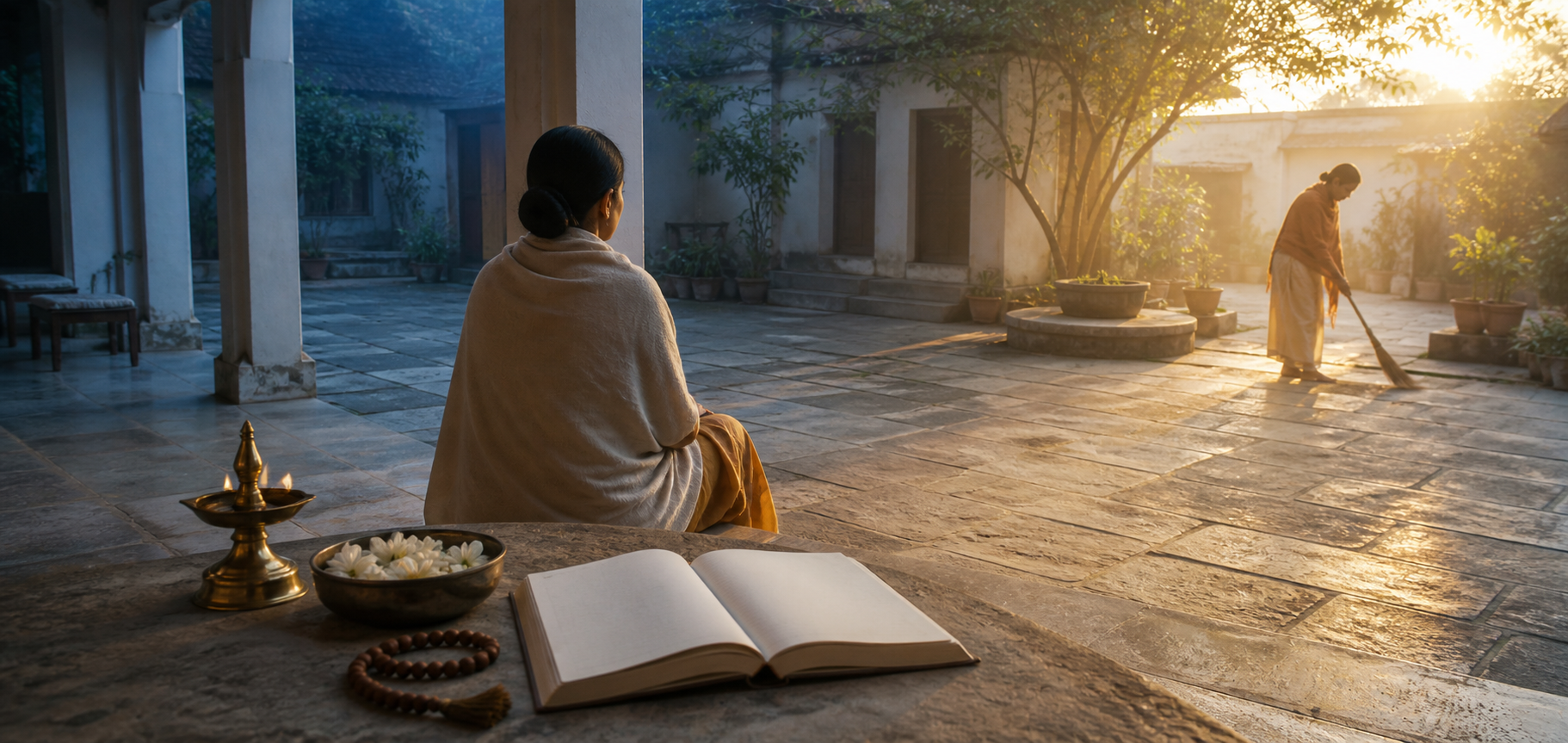
Sakshi-bhava—the unaffected witness—offers a practical, dharmic way to master the mind without suppressing emotions or withdrawing from life. Rooted in the Upanishads, the Bhagavad Gita, and Yoga philosophy, it cultivates equanimity (samatva), ethical clarity (viveka), and compassionate action through Karma Yoga. Breath-centered pranayama, daily dhyana, steady japa, and informal mindfulness build this capacity in realistic,…
-
From Exile to Action: How the Viradha Encounter Forged Rama’s Righteous Resolve

The Viradha encounter in Aranyakanda marks the first decisive turn in Shri Rama’s exile, shifting it from passive endurance to an active guardianship of dharma. In confronting a foe shielded by a boon, Rama and Lakshmana demonstrate principled strength, restraint, and strategic clarity. The episode grounds kshatra dharma in protection, proportionate response, and the restoration…
-
Unlock Shubh Muhurat: Auspicious Days for Vrishabha Rashi in 2026 (Krittika–Rohini–Mrigashirsha)

Vrishabha Rashi auspicious days in 2026 can be recognized by combining Panchang principles with the Moon’s monthly transit through Krittika (2–4), Rohini (1–4), and Mrigashirsha (1–2). This guide explains how to use Tithi, Vāra, Nakshatra, Yoga, and Karana to refine Shubh Muhurat windows without relying on guesswork. Readers gain a clear, practical method to plan…
-
Thai Amavasya 2026 (January 18): Auspicious Utharayanam New Moon for Ancestor Rites

Thai Amavasya (Thai Amavasai) in 2026 falls on January 18, marking the first Amavasya of Utharayanam and an especially auspicious time for Tharpanam (Pitru Tarpanam). Rooted in the Tamil calendar and closely following Pongal and Makara Sankranti, this new moon day blends seasonal transition with spiritual focus. Families honor ancestors with simple, accurate, and locally…
-
Legendary New Vrindaban Prasadam: Devotional Sweet Rice and Ice Cream from Krishna’s Cows

New Vrindaban’s early prasadam culture is remembered through two legendary offerings: Amburish Dasa’s sweet rice and Pitambar Dasi’s ice cream, both made with fresh milk from Krishna’s cows. Without prior culinary or cow-care experience, they learned through seva, transforming simple dairy into much-loved treats. Amburish’s journey began with a 1971 visit, initiation by Srila Prabhupada,…
-
Purification and Transcendent Elevation: Sincere Chanting, Bhakti Practice, and Dharmic Unity

This reflection presents a Gaudiya Vaishnava perspective on how sincere chanting of the holy name of Krishna, supported by worship, listening, and service, cultivates purification and transcendent elevation. It explains that intention and humility, rather than mere repetition, unlock the practice’s transformative power. The discussion connects these insights with shared dharmic values across Hinduism, Buddhism,…
-
Serving the Divine Through Tulasi: Gaudiya Insights on Bhakti, Wonder, and Sacred Growth

Gaudiya Vaishnava teachings present Tulasi as a sacred manifestation of the Lord’s internal potency, inviting devotion grounded in humility and wonder. This article explains how serving Tulasi functions as direct service to Krishna through daily care, offerings, and the Hare Krishna chant. It highlights Srila Jiva Gosvami’s insight on the Divine’s inconceivable nature and shows…
-
Why ‘Name and Form’ Create Suffering: A Powerful Dharmic Lens on Oneness and Freedom

Hindu philosophy traces suffering to separateness born of nāma (name) and rūpa (form), a misidentification that obscures underlying unity. Upanishadic and Advaita perspectives treat names and forms as provisional, while the Bhagavad Gita offers practices—jñāna, bhakti, and karma yoga—to reorient attention toward what endures. Everyday experiences show how labels intensify anxiety and craving; loosening identification…
-
Infinite Paths, One Truth: How Hinduism Empowers Personal Realization and Sacred Unity

Hinduism (Sanatana Dharma) teaches that no two individuals experience the Divine in the same way—and turns that insight into a strength. Drawing on the Upanishads and the Bhagavad Gita, it validates personal realization through concepts like Ishta and multiple yogic paths. This pluralism resonates across Dharmic traditions through Anekantavada in Jainism, upaya in Buddhism, and…
-
Pracinavita Revealed: Why the Sacred Thread Shifts Right in Hindu Śrāddha Rites

This article explains Pracinavita—the right-shoulder orientation of the sacred thread—within Hindu Shraddha rites. It clarifies how the yajnopavita changes from upavita to pracinavita to signal a shift in ritual intention toward the ancestors (Pitrs). Readers learn the doctrinal basis in Vedic traditions, the symbolism of the thread as a tactile mnemonic, and the practical sequence…
-
Meena Rashi Chandrashtama 2026: How to Find Accurate Dates, Timings, and Plan Calmly

Meena rasi (Pisces Moon) natives—those under Purvabhadra Nakshatra 4th pada, Uttarabhadra, and Revati—experience Chandrashtama when the Moon transits the eighth house (Ashtama Sthana). In 2026, this occurs each month as the Moon moves through Tula (Libra), typically spanning about two to two-and-a-half days. Exact dates and timings depend on location and are best found by…
-
When Control Collapses: A Practical Path to Peace with Uncertainty, Change, and Letting Go

This reflective narrative traces a shift from over-control to acceptance during a season marked by relationship loss and job uncertainty. It demonstrates how surrender, mindfulness, and presence can reduce anxiety and cultivate inner calm. Through simple practices—breath awareness, attentive walking, and allowing questions to remain open—peace emerges without perfect plans. A volunteer teaching role reveals…
-
Narasimha and the Yogini Shaktis: Unveiling the Four Vyuhashaktis and Their Sacred Power

This article examines the narrative of Narasimha creating the Yogini Shaktis as a sophisticated expression of divine reciprocity. It situates the account within tantric traditions, including references to the Kamakoti Mandali, and explains how the four Vyuhas and their Vyuhashaktis become experientially present through Yogini manifestations. Readers gain a clear, academic overview of key concepts…
-
Srila Prabhupada Night in Phoenix, South Africa: Honoring a 1965 Voyage that Changed Faith

Srila Prabhupada Night at NJP dham, Phoenix, South Africa, honored the historic 1965 arrival of A.C. Bhaktivedanta Swami Srila Prabhupada in New York and the global impact of his Vedic teachings. Presented in an academic tone, the program highlighted the Bhakti Tradition’s core values of compassion, service, and disciplined practice. The reflections situated ISKCON’s growth…
-
Why Only Universal Truths Stay Fresh: Dharmic Wisdom to Beat Information Fatigue

Modern life delivers endless information yet little renewal. Dharmic wisdom explains why: knowledge not grounded in universal truth quickly grows stale, while insights rooted in satya, ṛta, and dharma remain evergreen. Drawing on Hinduism alongside Buddhism, Jainism, and Sikhism, this reflection highlights how compassion, non-violence, and service keep knowledge alive and transformative. It offers practical…
-
Mesha Rashi Chandrashtama 2026 Explained: Ashtama Chandra Timing, Effects, and Calm Remedies
This guide clarifies what Chandrashtama (Ashtama Chandra) means for Mesha Rasi in 2026 and explains how to identify the timing when the Moon transits the eighth house from the natal Moon. It notes the composition of Mesha Rasi—Ashwini Nakshatra, Bharani Nakshatram, and Krittika Nakshatra 1st pada—and situates the practice within Hindu astrology. A clear, Panchang-based…
-
Magha Masam 2026 (Telugu Calendar): Auspicious Dates, Shiva Worship, and Sacred Practices

Magha Masam 2026 in the Telugu calendar spans 19 January to 17 February, a period widely honored for intensified Shiva worship and disciplined practice. The month’s core observances include Magh Snan, Mauni Amavasya, and Maghi Purnima, with devotees emphasizing prayer, japa, and dana. Families often consult the Telugu Panchangam to align vrata and temple visits…
-
Shubh Muhurat January 2026: Auspicious Days and Timings for Confident, Harmonious Starts

This guide presents general Shubh Muhurat guidance for January 2026, highlighting auspicious days and timings for everyday tasks. It explains how to use the Hindu calendar (Panchang) and why local sunrise-based calculations matter for accuracy. Readers learn practical cues: favor Abhijit Muhurat for concise starts and avoid Rahu Kalam, Yamaganda, and Gulika Kalam. The approach…