

You may leave a Vedānta reading with a clear conviction that you are not merely the body and mind, then lose that clarity at the first insult, disappointment, or anxious thought. The philosophy made sense, but it did not become your natural standpoint.
If that gap is familiar, vidyānanda gives you a practical diagnosis. You do not need to manufacture a more extraordinary spiritual state. You need to let Self-knowledge pass through reflection, contemplation, and conduct until changing experience no longer overrules it.
Place vidyānanda on the right map
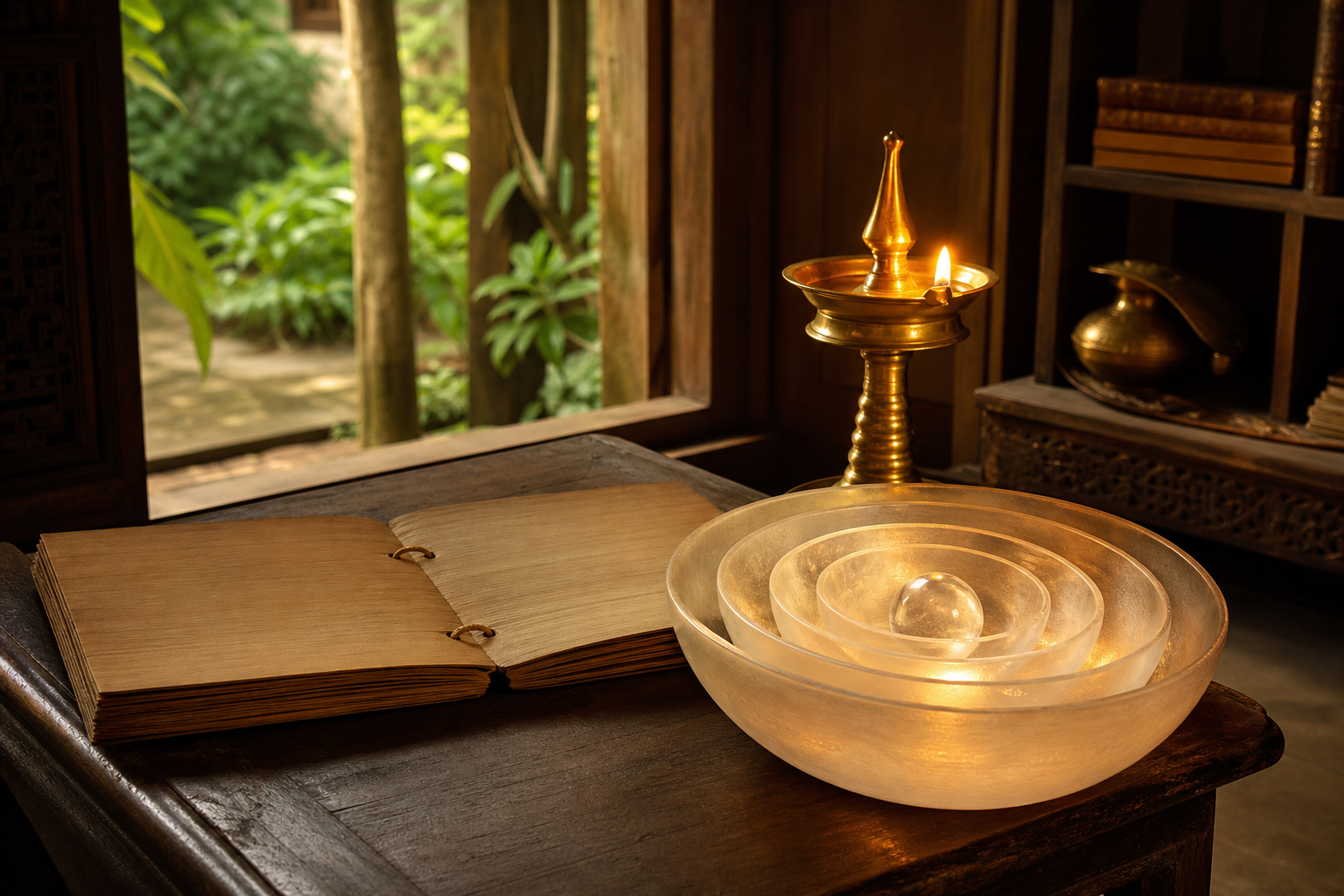
You encounter this analysis in the fourteenth chapter of Panchadasi, traditionally attributed to the 14th-century sage Vidyāraṇya of the Sringeri Sharada Peetham. Three five-part movements give Panchadasi its architecture: Viveka concerns discrimination, Dīpa concerns illumination, and Ānanda concerns bliss. Chapter 14 belongs to the five chapters on bliss.
That location matters. Bliss is approached only after discrimination and illumination because pleasant experience is easy to misread. A quiet mind can feel expansive without removing ignorance, while clear knowledge can remain valid even when the mind is temporarily disturbed.
| Term | Where the joy is encountered | What you should notice |
|---|---|---|
| Viṣayānanda | Enjoyment connected with an object or sensory experience | It is limited by the object, the occasion, and your dependence on favorable conditions. |
| Vidyānanda | The refined joy accompanying Self-knowledge and contemplation | It becomes steadier as doubt, misidentification, and habitual tendencies lose their force. |
| Brahmānanda | The limitless bliss of non-dual realization | It is not produced by an object or mental exercise. It is uncovered as the nature of the Self, where the division between experiencer and experienced no longer stands. |
Do not treat these as three quantities of the same pleasant feeling. Vidyānanda is not brahmānanda with the volume turned down. It is the joy associated with knowledge becoming firm, and it leads the seeker away from dependence on objects toward recognition of what is unconditioned.
Use this distinction after your next peaceful meditation. Do not conclude that calm itself was realization. Calm began, remained for a while, and changed. Ask instead: what became clear about the Self, and does that clarity survive when the pleasant condition passes?
Use śravaṇa, manana, and nididhyāsana as one cycle
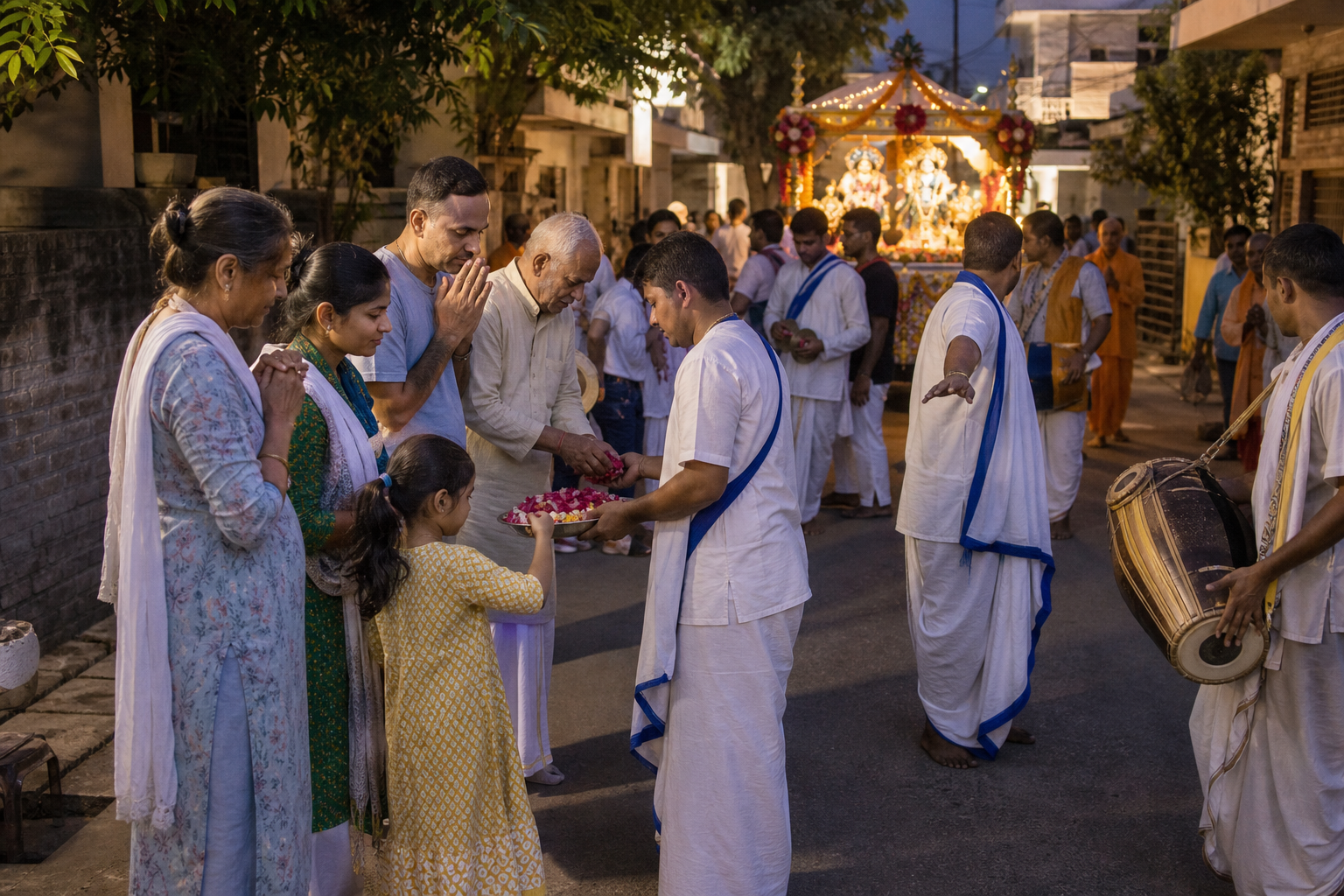
Many seekers keep these disciplines in separate compartments: reading on one day, reasoning when a doubt becomes troublesome, and meditation when they want relief. Vidyānanda matures when all three serve one inquiry. Each round should begin with a precise teaching and end in an actual situation where that teaching could be forgotten.
- Śravaṇa: receive the teaching accurately. Study systematically rather than collecting inspiring sentences. Extract one proposition you can examine. For this inquiry, a suitable proposition is that awareness is self-evident and does not fluctuate with the passing conditions of the body and mind.
- Manana: expose the exact doubt. Replace a vague feeling of uncertainty with a question. If awareness truly disappeared during anger, what knew the anger and later recognized its disappearance? If an unpleasant thought is present, does that alter awareness or only the condition being witnessed? Reasoned reflection removes contradictions that repetition alone can conceal.
- Nididhyāsana: assimilate what reasoning has clarified. During a recurring reaction, turn attention from the story toward the fact that the reaction is known. Do not suppress its content or pretend that the mind is already serene. Recognize the body-mind event as an appearance in awareness, then respond in a way consistent with that recognition.
Keep the cycle auditable with a simple three-part record: the teaching, the doubt, and the conduct test. A useful entry might be: The witness does not fluctuate with thought; agitation seems to contract awareness; when agitation returns, can I recognize contraction as known and still answer the person before me with care?
This prevents study from becoming accumulation. You are not measuring how many Vedānta passages you can recall or how many serene sittings you have had. You are identifying whether a recurring doubt can still overthrow what you understand.
Residual vāsanās, or habitual tendencies, explain why clear intellectual understanding may not immediately govern every reaction. Their persistence does not make further inquiry pointless. It tells you where contemplation must become more exact. Return to the same teaching with the specific doubt revealed by your conduct, rather than abandoning it in search of a novel experience.
Separate the sākṣin from the changing mind

The distinction between pure consciousness and chidābhāsa, reflected consciousness, protects you from one of the most common mistakes in contemplative practice. The sākṣin, or witness-consciousness, is self-revealing and changeless. Reflected consciousness is associated with the mind through which particular thoughts, emotions, memories, and perceptions become manifest.
A reflection offers a helpful analogy. When a reflecting surface trembles, the reflected image seems to tremble. That movement does not belong to the original. In the same way, mental brightness, dullness, calm, and agitation vary. Their variation should not be transferred to consciousness itself. The analogy is diagnostic rather than literal: it helps you stop assigning the mind’s conditions to the Self.
- Name the event precisely: a memory has appeared, the chest feels tense, an argument is forming, or the mind has become quiet.
- Add the recognition that the event is known. Do not replace it with a preferred thought.
- Notice that the witness is not another visible object hiding behind the event. Whatever you can observe is itself within the known field.
- When the event changes, recognize that its arrival, alteration, and departure were all known.
You do not have to wait for thoughtlessness to perform this inquiry. If mental noise is known, awareness has not been displaced by noise. If silence is known, awareness did not arrive with silence. Vidyānanda therefore does not depend on maintaining the absence of particular thoughts; it accompanies a stable recognition that is no longer confused with the mind’s weather.
This also corrects the temptation to use the witness as a strategy of emotional withdrawal. Calling a reaction unreal while remaining governed by it is not assimilation. The reaction can be acknowledged as a body-mind event without being treated as the definition of the Self, and your practical duties still require an intelligent response.
Let conduct reveal where knowledge is still fragile
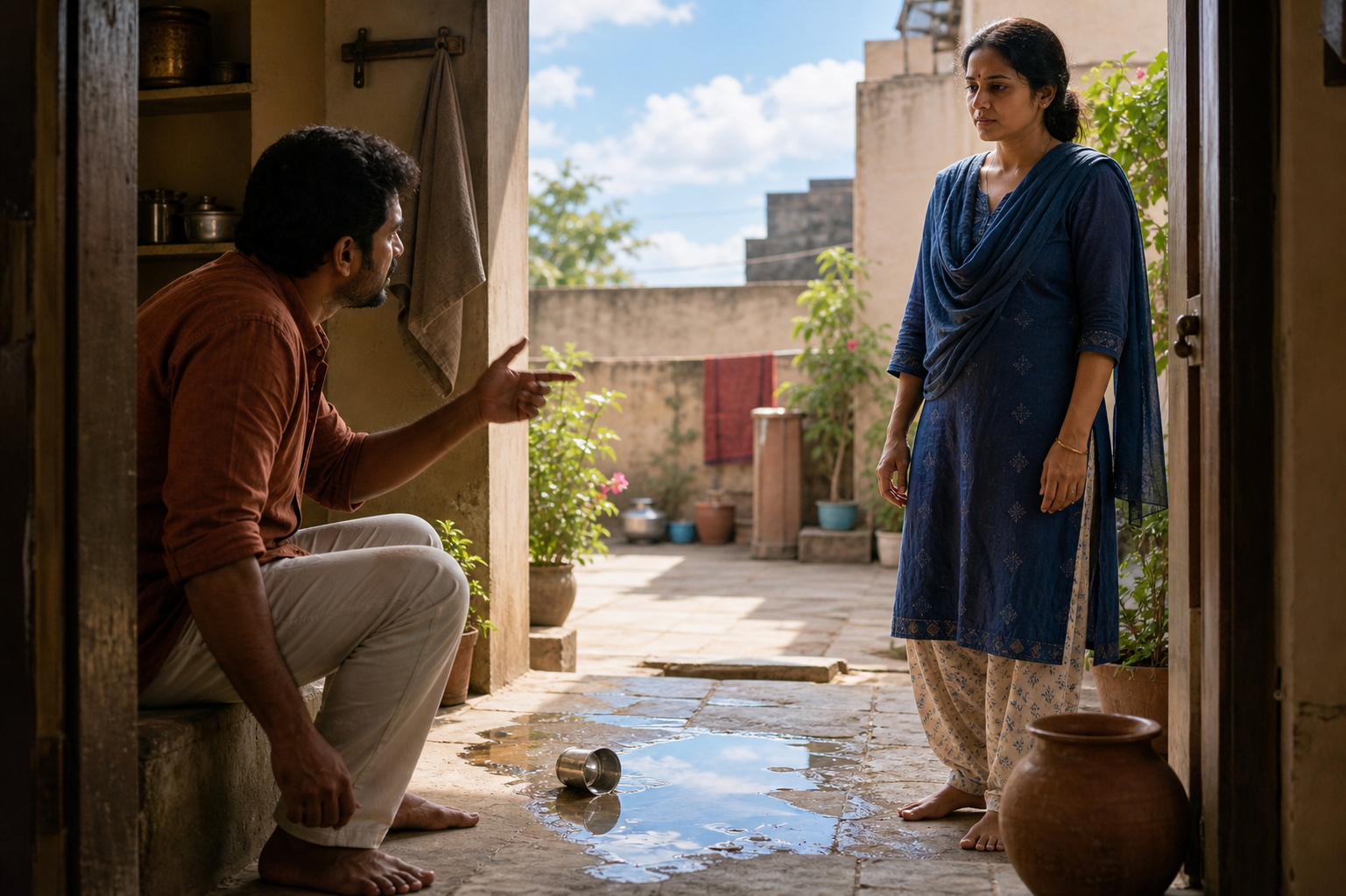
Compassion, simplicity, forbearance, and ethical clarity are practical signs that non-dual understanding is settling. They are not decorative virtues added after realization. If the same consciousness is recognized through every experience, other people cannot be reduced to props in your private spiritual drama.
- Test compassion under friction. When another person is difficult, notice the impulse to reduce them to your judgment. Recognize the reaction as known, then choose a response that does not deny their dignity.
- Test simplicity in spiritual conversation. Do you need to display an elevated state, or can you speak plainly and leave your status unadvertised?
- Test forbearance when discomfort appears. Let discomfort be fully known without turning it immediately into retaliation, blame, or a verdict that awareness has been lost.
- Test responsibility through ordinary duties. Do not use the language of an unreal world to evade an apology, commitment, or obligation. Stable knowledge should make responsible action clearer, not less relevant.
A failed conduct test is useful information. It does not require theatrical self-condemnation, nor does it automatically disprove the teaching. It identifies the exact place where misidentification or a vāsanā still carries more practical authority than your understanding. Bring that point back into manana and nididhyāsana.
If your principal practice is Buddhist, Jain, or Sikh rather than Advaita, carry over the disciplined pattern without pretending that the metaphysics are identical. Buddhist freedom from clinging, Jain emphasis on knowledge and equanimity, and Sikh anand grounded in remembrance of the One resonate with the movement from reactivity toward insight and ethical steadiness. Advaita’s recognition of Ātman as non-different from Brahman remains its own distinctive claim. Shared discipline can deepen Dharmic conversation without erasing genuine doctrinal differences.
Key takeaways
- Vidyānanda is the refined joy accompanying Self-knowledge and contemplation, not pleasure supplied by a sensory object.
- It should not be confused with brahmānanda, the limitless bliss that is uncovered rather than manufactured.
- Śravaṇa gives you an accurate teaching, manana removes a specific contradiction, and nididhyāsana carries the clarified knowledge into your habitual standpoint.
- Mental calm is not a sufficient test of realization. Calm and agitation both change; witness-consciousness is that by which their changes are known.
- Compassion, simplicity, forbearance, and responsible action show whether non-dual understanding is becoming lived knowledge.
At your next study session, do not begin by asking whether you feel blissful. Take one precise proposition about the Self, name the doubt that resists it, and carry the inquiry into one real relationship or duty. When the mind changes, examine what knew the change. Let that recognition guide the response you make. This is how Vedāntic understanding moves from a convincing idea toward abidance.
References
