-
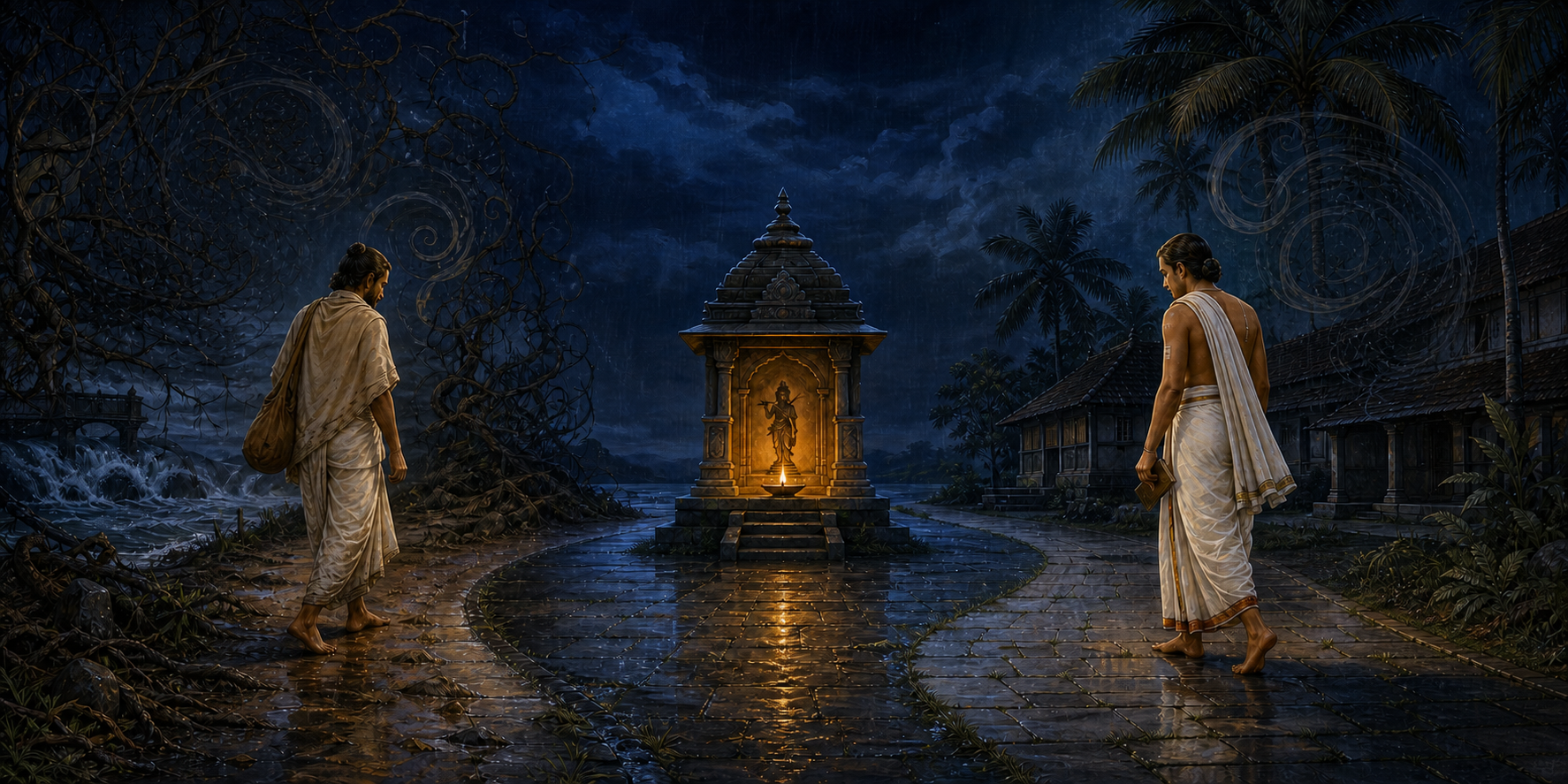
Bhagavan Alone Is Real: Timeless Vedanta, Living Bhakti, and the Joy of Dharmic Unity

This article unpacks the aphorism “Know that Bhagavan alone is real. Nothing else matters” through the lenses of the Upanishads, Bhagavad Gita, and major Vedanta schools (Advaita, Vishishtadvaita, Dvaita). It clarifies Bhagavan as the sat-chit-ananda ground of being and explains why the phrase does not deny ethical life but re-centers it in the Real. Readers…
-
May 7, 2026 Panchang: Exact Tithi Shift, Nakshatra, Rashi and Shubh Muhurat Guide

May 7, 2026 (Thursday) begins with Krishna Paksha Panchami and shifts to Krishna Paksha Sashti at 6:51 AM in most regions. This guide explains what a tithi is, why timings vary by location, and how to plan auspicious actions using Abhijit Muhurat while avoiding Rahu Kalam, Yamaganda, and Gulika. It outlines how Nakshatra, Yoga, Karana,…
-
Kumbhakarna’s Vision of Oneness: Ramayana’s Battlefield as a Revelation of Non-Dual Truth

Kumbhakarna’s encounter with Rama in the Ramayana is more than a dramatic duel; it is a philosophical disclosure that reframes war as a revelation of oneness. Grounded in Yuddha Kanda and illuminated by Vaishnava doctrine on Jaya–Vijaya, the episode supports a Vedantic reading in which multiplicity is undergirded by a single reality. Advaita, Vishishtadvaita, and…
-
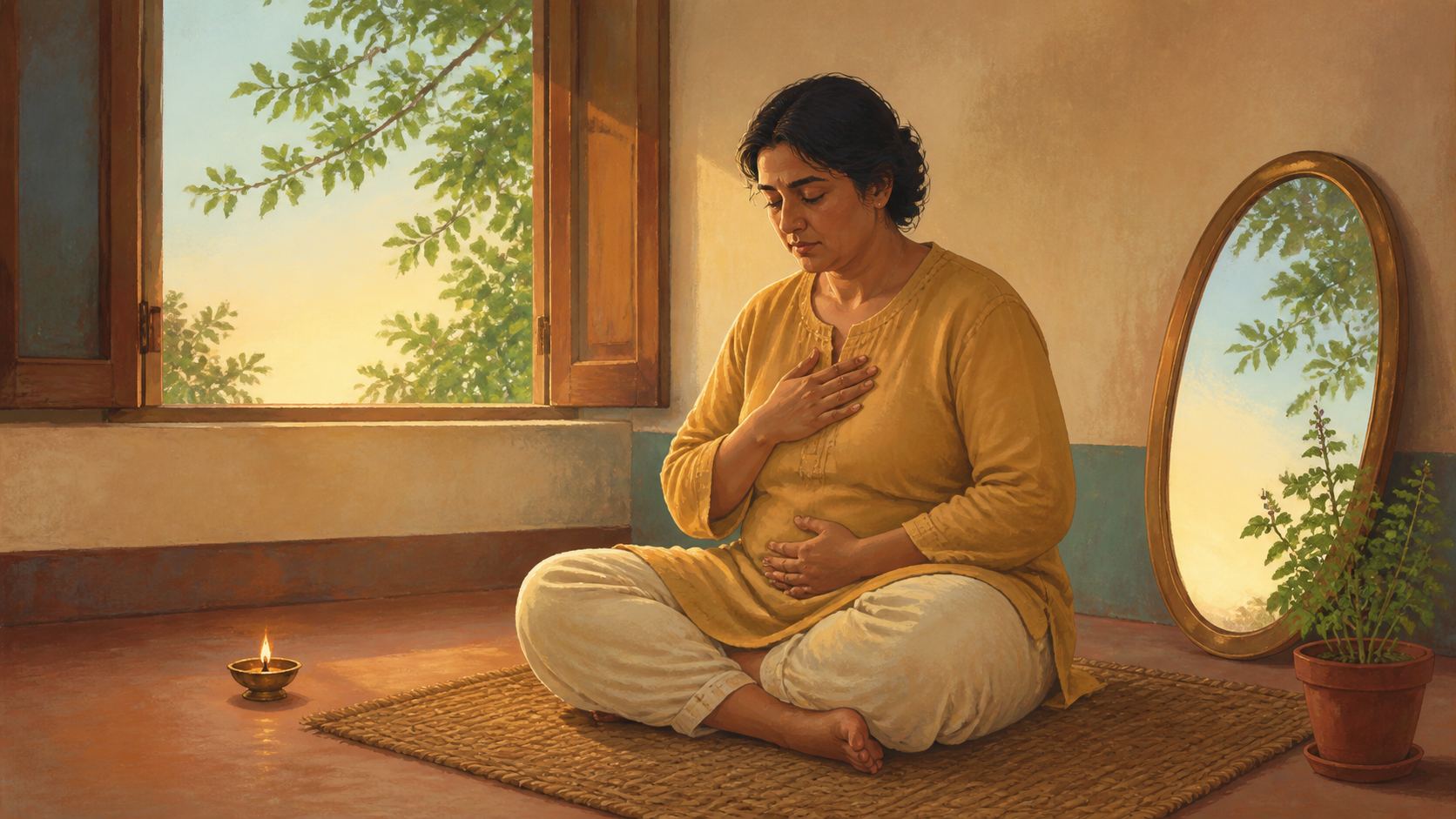
When Panic Feels Dangerous: Retrain the Nervous System with Breathwork, Science, and Dharma

Panic feels dangerous because the body’s alarm system is loud, not because the body is failing. This long-form, research-informed guide explains how the autonomic nervous system creates the fight-or-flight surge and how understanding this physiology breaks the fear-of-fear loop. Readers learn a practical breathing protocol (four-six breathing), sensory grounding, and gentle exposure skills that retrain…
-
Finding Shelter in True Identity: A Transformative Dharmic Path for Diaspora Unity and Service

Lord Chaitanya’s call—realize life and serve the world—offers a rigorous, universal ethic for the Indian diaspora and beyond. This analysis defines “true identity” through Vedanta’s ātman, deepens it with Gaudiya Vaishnava notions of āśraya and sharaṇāgati, and shows how bhakti stabilizes a service-first life. It highlights natural harmony among Hinduism, Buddhism, Jainism, and Sikhism, emphasizing…
-
Krsna Consciousness Handbook: A Timeless, Authoritative Guide to Parampara, Practice, and Unity

Commissioned by ISKCON’s GBC and grounded in Srila Prabhupada’s teachings, this handbook and curriculum present a rigorous, parampara-aligned pathway to Krsna consciousness. It integrates scriptural literacy in Bhagavad-Gita and Srimad-Bhagavatam with disciplined sadhana, community service, and ethical conduct. Learners gain doctrinal clarity in achintya-bheda-abheda, practical guidance in japa and kirtan, and training in the Guru-Shishya…
-
In Loving Remembrance of HG Agnideva Prabhu: His Kirtan Legacy and Graceful Final Journey

HG Agnideva Prabhu departed at 8:34 PM Mountain Time in Salt Lake City, surrounded by devotees in person and joined by 99 more over Zoom in continuous kirtan. This account situates the moment within Gaudiya Vaishnava theology, where antima-smriti—remembrance of the Divine at life’s end—is central, and where congregational chanting serves as both pastoral care…
-
Master One-Pointed Attention: Dharmic Science to Transform Every Action into Sacred Power

Modern life fractures attention, but Dharmic traditions teach a precise science of wholeness through one-pointed engagement. Drawing on the Bhagavad Gita, Yoga Sutra, Buddhist Satipatthana, Jain Samayik, and Sikh simran, this article explains how complete presence elevates everyday action. It integrates cognitive science on task switching, attentional residue, and flow with practices like pratyahara, dharana,…
-
No Destination, Only Awakening: Timeless Hindu Wisdom on the Transformative Spiritual Journey

Hindu wisdom reframes the spiritual path as unveiling rather than arrival: there is nowhere to go, nothing to acquire, and everything to recognize. Drawing on the Upanishads, the Bhagavad Gita, Advaita (advait), and the Yoga Sutra, this exploration clarifies the paradox of “no destination” as a disciplined return to presence. It outlines core methods—Jnana, Bhakti,…
-
May 6, 2026 Panchang: Chaturthi to Panchami Transition, Key Muhurats, and Vedic Timing Guide

On Wednesday, May 6, 2026, the Hindu calendar (Panchang) records Krishna Paksha Chaturthi until 5:01 AM, after which Krishna Paksha Panchami prevails. This summary explains how tithi timing works, why the early-morning transition matters, and how to select Shubh Muhurat through local computation rather than fixed clock values. It outlines method-based guidance for Abhijit Muhurat…
-
How Controlling Friendships Erode Self‑Trust: Recognize Subtle Manipulation, Reclaim Autonomy

Controlling friendships seldom announce themselves; they evolve through small, reasonable-seeming concessions that erode self-trust. This long-form analysis maps the mechanics of subtle manipulation—gaslighting, emotional accounting, intermittent reinforcement—and explains why intensity and loyalty can masquerade as intimacy. It offers a clear diagnostic question to assess relational health and outlines practical steps to set boundaries without escalation.…
-
Purva Linga and Achala Shivlings: Uncreated Symbols of Shiva’s Eternal Presence

This article explains why the Purva Linga is counted among the Achala Shivlings in Shaivism and how it epitomizes an uncreated, immovable presence of Shiva. It clarifies the philology of “pūrva” and the aniconic meaning of the Shivalinga, linking these ideas to Lingodbhava and Maha Shivaratri. Readers learn how temple architecture, Abhishekam, and daily puja…
-
From Flower to Faith: Uncovering Puja’s Roots, Vedic Evolution, and Sacred Simplicity

This essay explores the timeless essence of puja by tracing its etymology, ritual history, and lived practice, from the Dravidian echo of ‘pu’ (flower) to Sanskrit notions of honor and reverence. It clarifies how Vedic, Purāṇic, and Agamic sources shaped today’s home and temple worship, including pañcopacāra and śoḍaśopacāra frameworks. Readers gain practical guidance for…
-
Facing Life’s Final Examination: Gita 8.6 on Consciousness at Death — ISKCON Insights

This in-depth analysis distills HH Guru Prasad Swami’s “final examination” metaphor for Bhagavad-gita 8.6, showing how consciousness at death reflects a lifetime of formation, not a last-minute tactic. It explains key Sanskrit terms and situates the verse within Gita 8.5–8.14 to emphasize abhyāsa (practice) integrated with bhakti (devotion). Practical guidance translates classical Hindu philosophy into…
-
People Over Power: HG Amogh Lila Prabhu’s Dharmic, Research-Backed Guide to Healing Relationships

This analysis distills HG Amogh Lila Prabhu’s core message—people are the true strength of any company, organization, or family—and translates it into a research-aligned, dharmic framework for sustaining healthy relationships. It integrates insights from Hindu Dharma, Buddhism, Jainism, and Sikhism with concepts such as psychological safety and self-determination theory. Readers gain practical methods for dignified…
-
Kalachakra in Hindu Tantra: Decoding the Wheel of Time, Consciousness, and Dharmic Unity

Kalachakra in Hindu Tantra presents time as a living cycle that unifies microcosm and macrocosm, offering a precise path to the timeless ground of awareness. Drawing on the Maitri Upanishad and the Bhagavad Gita, it treats time as both measurable rhythm and doorway to the Akāla, the unconditioned. The framework integrates Vedic cosmology, pañcāṅga timing,…
-
The Eternal Joy Within: Dharmic Wisdom on True Happiness, Ananda, and Freedom from Suffering

Modern culture often ties happiness to external milestones, yet Hindu wisdom distinguishes this conditional pleasure from intrinsic ananda—the steady joy of awareness. Drawing on the Upanishads, the Bhagavad Gita, and Yoga philosophy, this essay maps how attention becomes entangled in craving and how disciplined living restores clarity. It outlines four complementary yogas—karma, bhakti, jñāna, and…
-
Reviving Sacred Questioning: Vedic, Buddhist, Jain, and Sikh Paths to Intellectual Freedom

Sacred questioning sits at the heart of the dharmic heritage. This long-form analysis traces how Vedic dialogues, Nyāya–Mīmāṃsā logic, Buddhist pramāṇa theory, Jain anekāntavāda, and Sikh vichar cultivated disciplined inquiry as a path to truth and social harmony. It explains the technical tools of reasoning—pramāṇas, syllogisms, hermeneutic canons, and fallacy-detection—and shows how classical śāstrārtha fostered…
-
Piercing the Veil of Avidya: How Ignorance Blocks Spiritual Growth—and How to End It

Avidya—misapprehension rather than mere lack of information—sits at the root of suffering and obstructs spiritual progress. This analysis synthesizes Hindu philosophy with allied insights from Buddhism, Jainism, and Sikhism to show how ethics, meditation, devotion, and knowledge converge to dispel ignorance. Drawing on the Upanishads, the Bhagavad Gita, Vedanta, and the Yoga Sutra, it clarifies…