-
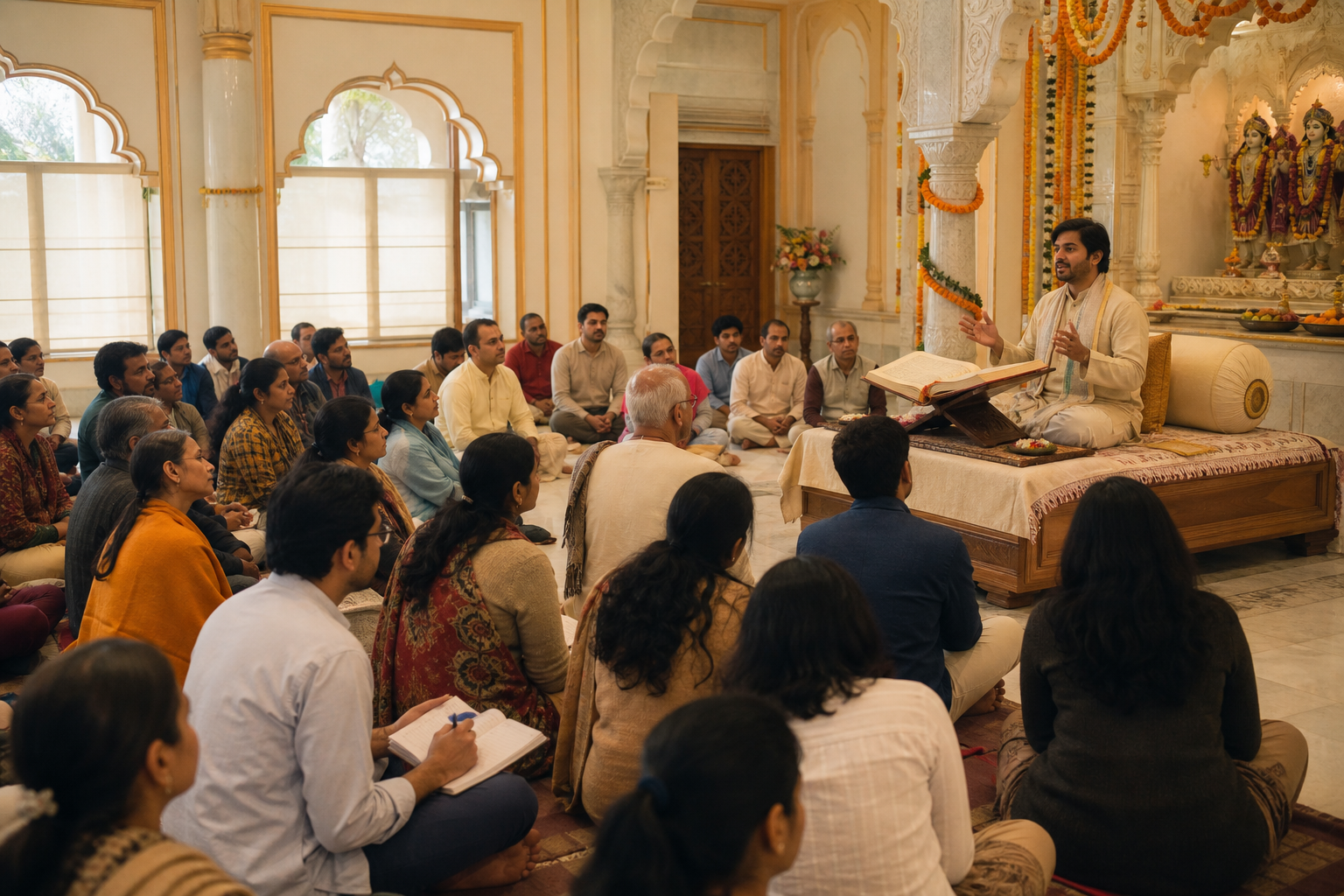
Harnessing Austerity as a Stepping Stone: Build Sattva, Fortify Bhakti, Realize Transcendence

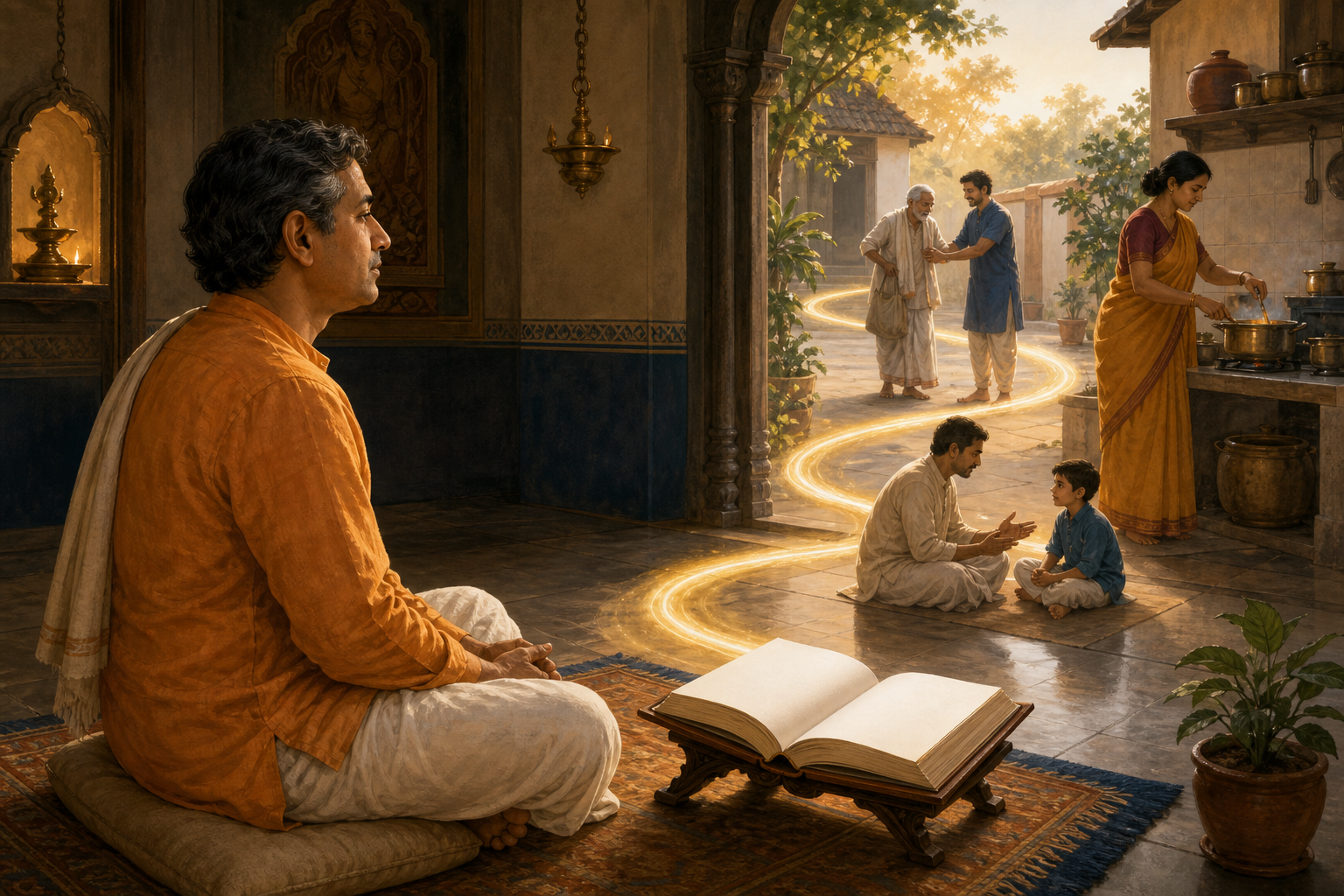
Dharmic scriptures praise austerity (tapas), yet Gaudiya Vaishnava theology clarifies that it is not itself a limb of bhakti. Instead, austerity serves as a preparatory discipline that cultivates sattva and strengthens determination for the sixty-four devotional practices that directly generate love of the Divine. Drawing on Srimad Bhagavatam 5.5.1 and the Bhagavad Gita, this analysis…
-
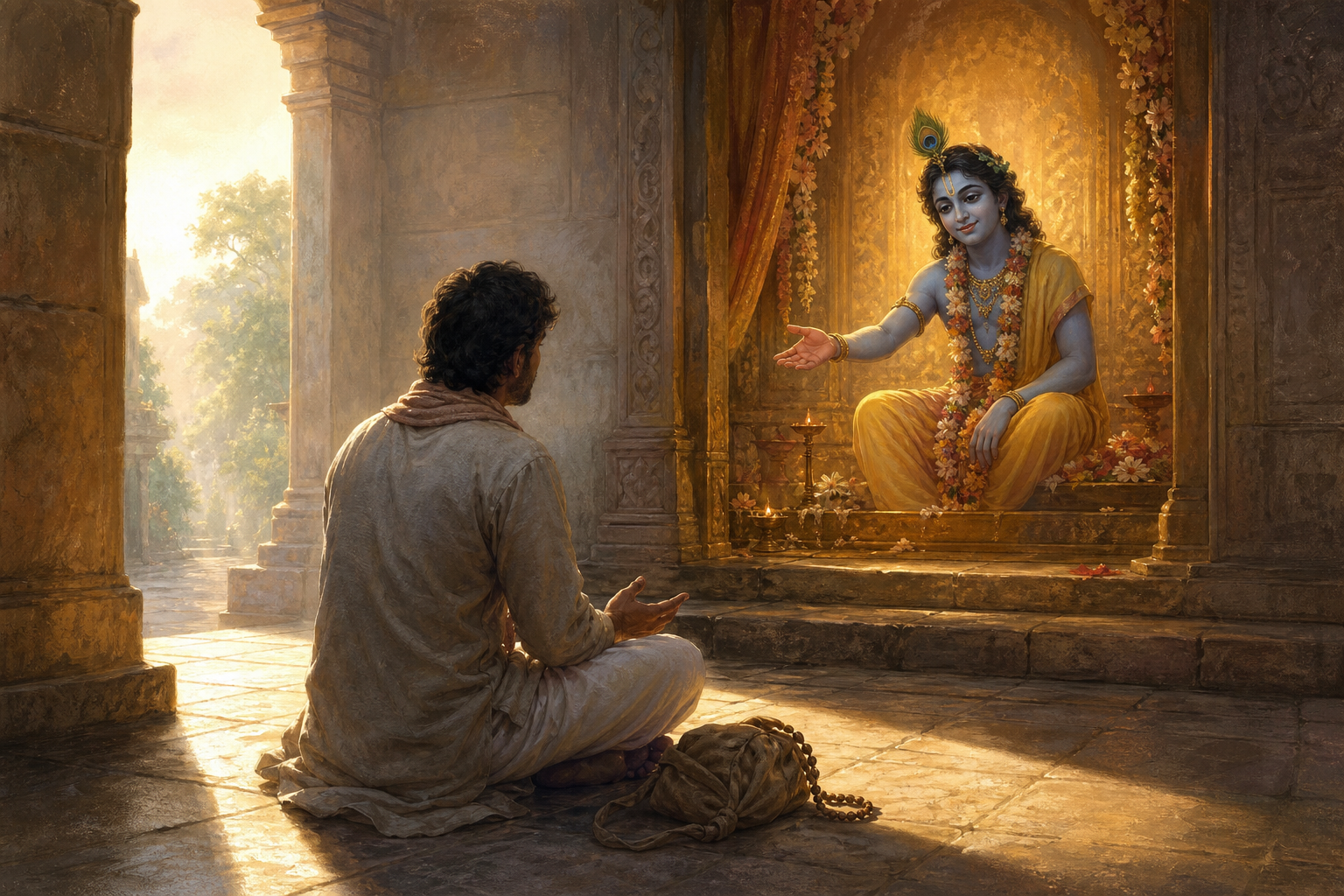
Transform Craving into Ruci: Mastering Taste, Seva-Anxiety, and Detachment in Krsna Bhakti

Is it wrong to desire a taste (ruci) in Krsna consciousness? Not at all. This analysis distinguishes spiritual taste from sense gratification by clarifying motive: serving Krsna versus serving the senses. It explains why “anxiety for Krsna” is a healthy, service-centered concern and how taste develops after purification (anartha-nivrtti) to become the engine of steady…
-
Earth-born Sita Devi: A Scholarly, Soul-Stirring Portrait of Dharma in the Valmiki Ramayana

Sita Devi’s Earth-born manifestation, celebrated in Valmiki’s “Sita-ayah Charitam Mahat,” anchors the Ramayana’s ethical vision around truth, compassion, and the Sacred Feminine. Drawing on King Janaka’s testimony, the narrative affirms Sita as āyonijā—discovered in a furrow while preparing a yajna—thereby linking her to Bhumi Devi and an ecological ethic of reverence for the Earth. Her…
-
Unlocking Moksha with Mantra: The Transformative Science of Sound Across Dharmic Paths

This essay examines mantra within Hindu wisdom as a disciplined contemplative technology aimed at moksha, clarifying the classical sense of mananat trayate mantrah—“that which liberates through contemplation.” It situates mantra in the metaphysics of sound (vak, shabda-brahman), explains Vedic precision in phonetics and meter, and contrasts Vedic, Tantric, and devotional forms, including bija, nama-japa, and…
-
Panchamrita Abhisheka Explained: The Sacred Science of Milk, Curd, Honey, Jaggery, and Ghee

Panchamrita Abhisheka—using milk, curd, ghee, honey, and jaggery/sugar—stands on a foundation of scriptural sanction, symbolic depth, and practical wisdom. Puranas and Agamas prescribe these edible, sattvika substances because they nourish, purify, and sweeten both the murti and the devotee’s inner state. Ayurveda further clarifies their properties: milk soothes, curd transforms, ghee illumines, honey harmonizes, and…
-
Narada Jayanti 2026: Auspicious Date, Rituals, and the Timeless Legacy of Devarshi Narada

Narada Jayanti 2026 (Devarshi Narad Jayanti) falls on May 2, corresponding to Vaishakha bahula Pratipada in South Indian calendars and Krishna Paksha Pratipada of Jyeshta in North Indian reckonings. The festival honors Sage Narada—Brahma Manasa Putra and Devarshi—whose legacy in the Srimad Bhagavatham, Mahabharata, Narada Bhakti Sutra, and Nāradasmṛti spans devotion, ethics, and jurisprudence. Observances…
-
18 Research-Backed Insights on Ganesha: Timeless Symbols, Mantras, and Global Legacy

Ganesha (Vinayaka, Vighneshwara, Ganapati) is first invoked in Hindu ritual as the remover of obstacles and guardian of auspicious beginnings. This long-form, research-informed overview presents 18 key facts that cover scripture (Ganapati Atharvashirsha, Mudgala Purana), iconography (elephant head, Ekadanta, Mushika vahana), ritual elements (durva grass, modaka), festivals (Ganesh Chaturthi, Masik Sankashti), and mantras such as…
-
Basava Purana Unveiled: Palkuriki Somanatha’s Epic of Basavanna, Ishtalinga, and Equality

Basava Purana is a 13th-century Telugu epic by Palkuriki Somanatha that celebrates Basavanna (Basaveshwara) and codifies Lingayat principles through the Ishtalinga, Kayaka (work as worship), and Dasoha (sharing and service). Set against the vibrant bhakti milieu of medieval Deccan, it blends hagiography with social ethics and community dialogue through the Anubhava Mantapa. The poem’s dvipada…
-
May 3, 2026 Panchang: Auspicious Guide to Krishna Paksha Dwitiya, Good Times, Nakshatra, Rashi

On Sunday, May 3, 2026, most regional Hindu Panchangs mark Krishna Paksha Dwitiya tithi for the entire day, ending at 12:57 AM on May 4, when Krishna Paksha Tritiya begins. The guide explains how to read the day through Tithi, Nakshatra, and the Moon’s Rashi, and how to select Good Time (Shubh Muhurat) using Choghadiya.…
-
Majestic Kala Sastha of Ayyappa: Elephant-Mounted Guardian of Dharma and Living Tradition

Kala Sastha—also known as Gajaruda Sastha or Maha Sastha—reveals Ayyappa’s regal, protective dimension as the Elephant-Mounted Guardian of Dharma. The icon harmonizes Shaiva–Vaishnava theology (Hariharaputra) with the elephant’s symbolism of strength, memory, and auspicious sovereignty. Drawing on Agamic templates and Kerala Tantra (Tantrasamuchaya), temples install and celebrate this form through daily puja and festival processions,…
-
Beyond Starships: Vedic and Dharmic Pathways for Safe, Effortless Journeys to Other Worlds

Modern fascination with interplanetary travel reflects a timeless philosophical impulse to understand creation and its inhabitants. Vedic literature, supported by Srimad-Bhagavatam, Sri Isopanisad, and the Bhagavad-gita, offers a complementary research program to empirical science via testimony and disciplined practice. Rather than relying on fragile material instruments, the Vedic model proposes bhakti-yoga as a safe, replicable…
-
Facing Cancer as Krishna’s Embrace: Evidence‑Based Care, Dharmic Resilience, and Hope

A recent diagnosis of secondary cancer in a cervical lymph node is reframed as “Krishna’s Embrace,” integrating evidence‑based oncology with steadiness drawn from Dharma, Meditation, Yoga, and Bhakti. The narrative explains what “secondary cancer” means, outlines why PET‑CT, endoscopy, and pathology are pivotal, and clarifies how biomarkers like p16 and EBV guide therapy. It emphasizes…
-
Punya and Paap Unveiled: The Moral Physics of Karma in Hindu Dharma and Dharmic Unity

Punya and Paap are presented here as the moral physics of Hindu Dharma, explaining how intention, means, and consequence shape character, community, and future conditions. Readers gain a clear, text-grounded understanding of karma, including sañcita, prārabdha, and āgāmi, with practical guidance on cultivating Punya and attenuating Paap through yamas, niyamas, dāna, prāyaścitta, and daily mindfulness.…
-
Modern Love, Ancient Bhakti: How Krishna’s Wisdom Transforms Youthful Desire into Dharma

This article reframes the turbulence of modern romance through Krishna-centered bhakti, showing how desire (kāma) matures into expansive love (prema) when guided by dharma. Drawing on the Bhagavad Gita and Srimad Bhagavata Purana, it explains the cognitive arc of attachment and offers a practical sequence—śravaṇa, kīrtana, smaraṇa, and sevā—to steady attention, study, and relationships. Yoga’s…
-
Transfer the Burden: Gita–Bhagavatam Principles for Dharma-Led, Resilient Infrastructure

India’s rapid infrastructure expansion brings both promise and pressure, especially across urban corridors in the National Capital Region. Drawing on the Bhagavad Gita and Srimad-Bhagavatam, this analysis frames “transfer the burden” as a dual principle: allocate project risks to the parties best equipped to manage them, and relieve paralyzing outcome-anxiety through disciplined action and spiritual…
-
Ananya Sharan Bhaava: Mastering Unshakeable Devotion and Inner Surrender in Dharmic Life

Ananya Sharan Bhaava, or single-minded devotion, is best understood as something uncovered rather than acquired. Dharmic traditions—Hinduism, Buddhism, Jainism, and Sikhism—converge on a shared architecture: ethical grounding, attentional training, and devotion that matures into surrender. Practical methods include clarifying a chosen refuge (Ishta or central ideal), adopting regular sadhana (japa, Naam Simran, dhyana), and aligning…
-
Krishna as the Highest Pleasure: Evidence-Based Insights and Dharmic Practices for Joy

The name Krishna is traditionally associated with paramānanda—the highest pleasure—linking sacred sound to a complete philosophy of enduring happiness. Drawing on the Upaniṣads, the Bhagavad Gita, and the Bhagavata Purana, this analysis explains how fleeting, sense-based sukha differs from stable spiritual joy, and why cultivating a “higher taste” transforms desire rather than suppresses it. Navadha-bhakti,…
-
Beyond the Frame: Why Hindu Deity Images Seem Incomplete—Revealing Infinity and Dharmic Unity

Many observers assume Hindu deity images are incomplete because they appear stylized, aniconic, or schematic. In classical Hindu thought, however, every sacred image is complete in essence (tattva) and intentionally incomplete in form (rupa), a design that honors the Upanishadic insight that the infinite cannot be fully pictured. Shilpa Shastras, temple architecture, and ritual consecration…
-
Eighteen Parvas of the Mahabharata: Sacred Architecture, Dharma, and Timeless Symbolism

The Mahabharata’s division into eighteen Parvas is a sacred architecture that encodes as much meaning as the verses themselves. Eighteen recurs across the tradition—Parvas, war days, akshauhinis, and the Gita’s chapters—signaling a deliberate design that integrates nature and human faculties under dharma. Organized in arcs from origins and diplomacy (Udyoga Parva) to war (Bhishma to…
-
May 2, 2026 Panchang: Accurate Tithi Change, Shubh Muhurats, Nakshatra & Rashi Insights

Saturday, May 2, 2026, features Krishna Paksha Pratipada tithi until 11:03 PM in most regions, after which Krishna Paksha Dwitiya begins. This guide explains the exact tithi change and the astronomy behind tithi calculation, clarifying why transitions occur at specific times. It outlines how to compute and use Shubh Muhurats (including Abhijit) and how to…