
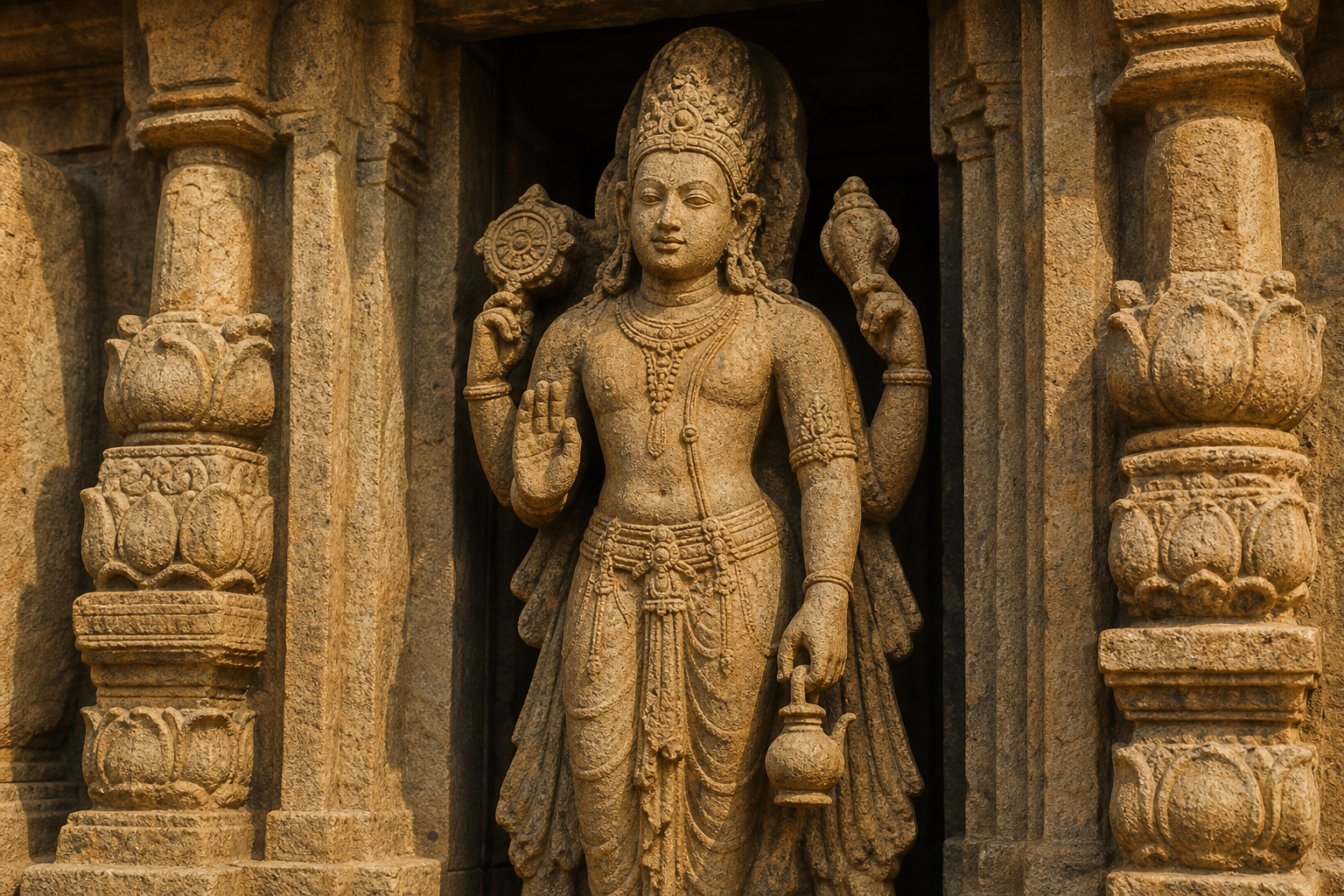
A kundika can occupy only a small portion of a sacred image while carrying an unusually broad range of meanings. Read in context, the ritual water vessel connects a figure with purification, consecration, disciplined conduct, sacred service, and the life-giving potential of water.
The key is not to treat the vessel as an isolated symbol with one fixed translation. The account supplied by DharmaRenaissance Blog shows that its significance emerges from several elements working together: the vessel’s form, the identity of its bearer, the surrounding ritual setting, and the implied movement of water from containment to offering.
A vessel that makes ritual action visible
DharmaRenaissance Blog describes the kundika as a small water vessel, often distinguished by a neck, spout, or other pouring arrangement. In religious practice, vessels of this kind are associated with handling purified water for acts such as achamana, arghya, tarpana, and abhishekam. Sculpture converts that practical function into an enduring iconographic statement.
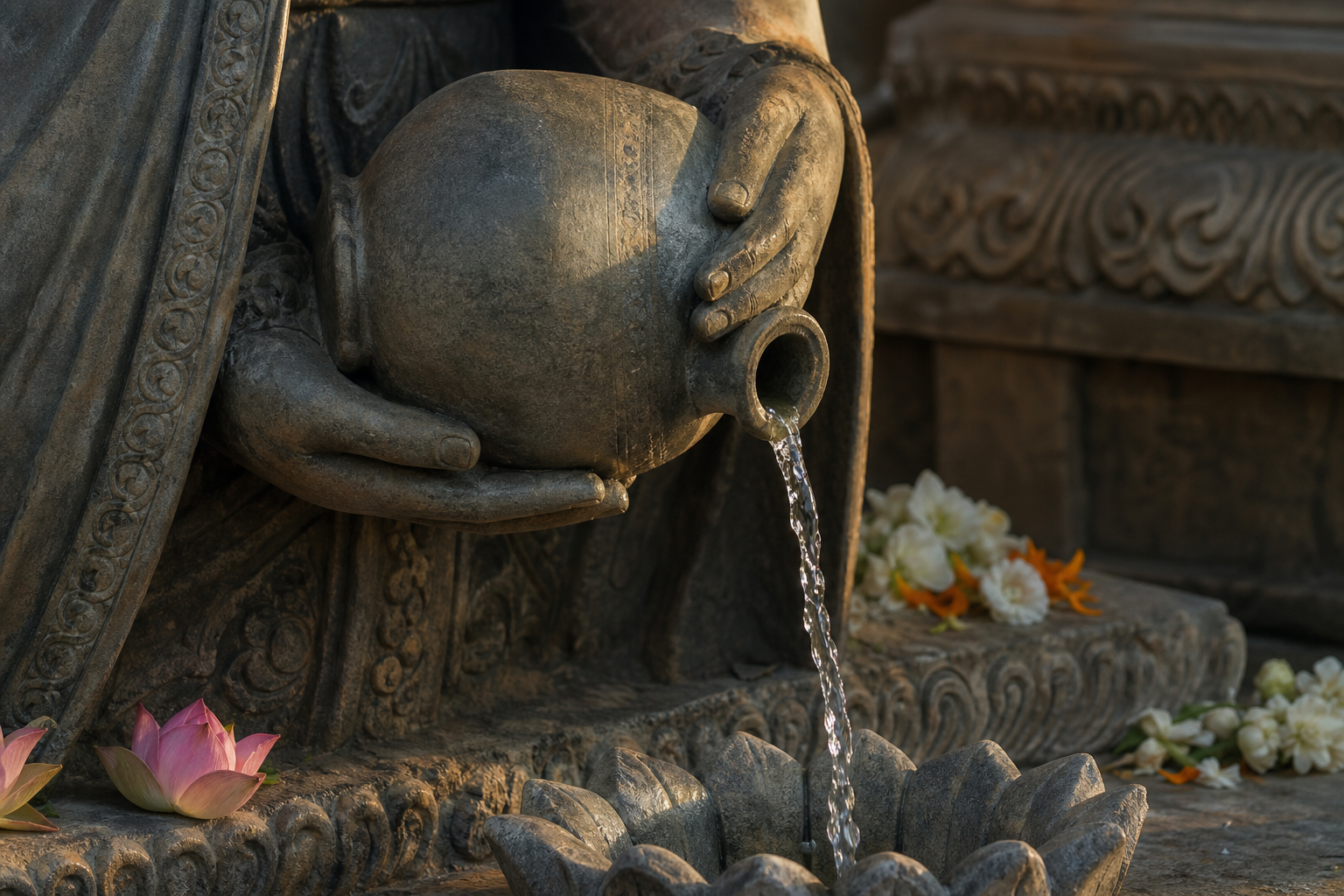
This conversion from implement to symbol is central to understanding the kundika. The object does not merely indicate that water is nearby. It implies that the person holding it is prepared to purify, offer, consecrate, initiate, bless, or sustain. A static image can therefore preserve the intention of a ritual action even though no liquid is physically being poured.
The vessel also gives visual form to a particular conception of sacred power. Unlike a weapon or another imposing divine attribute, it works through containment, care, and controlled release. Its modest scale is part of its meaning: spiritual authority can be expressed through ritual competence and service as readily as through force or spectacle.
Identification depends on form, bearer, and setting
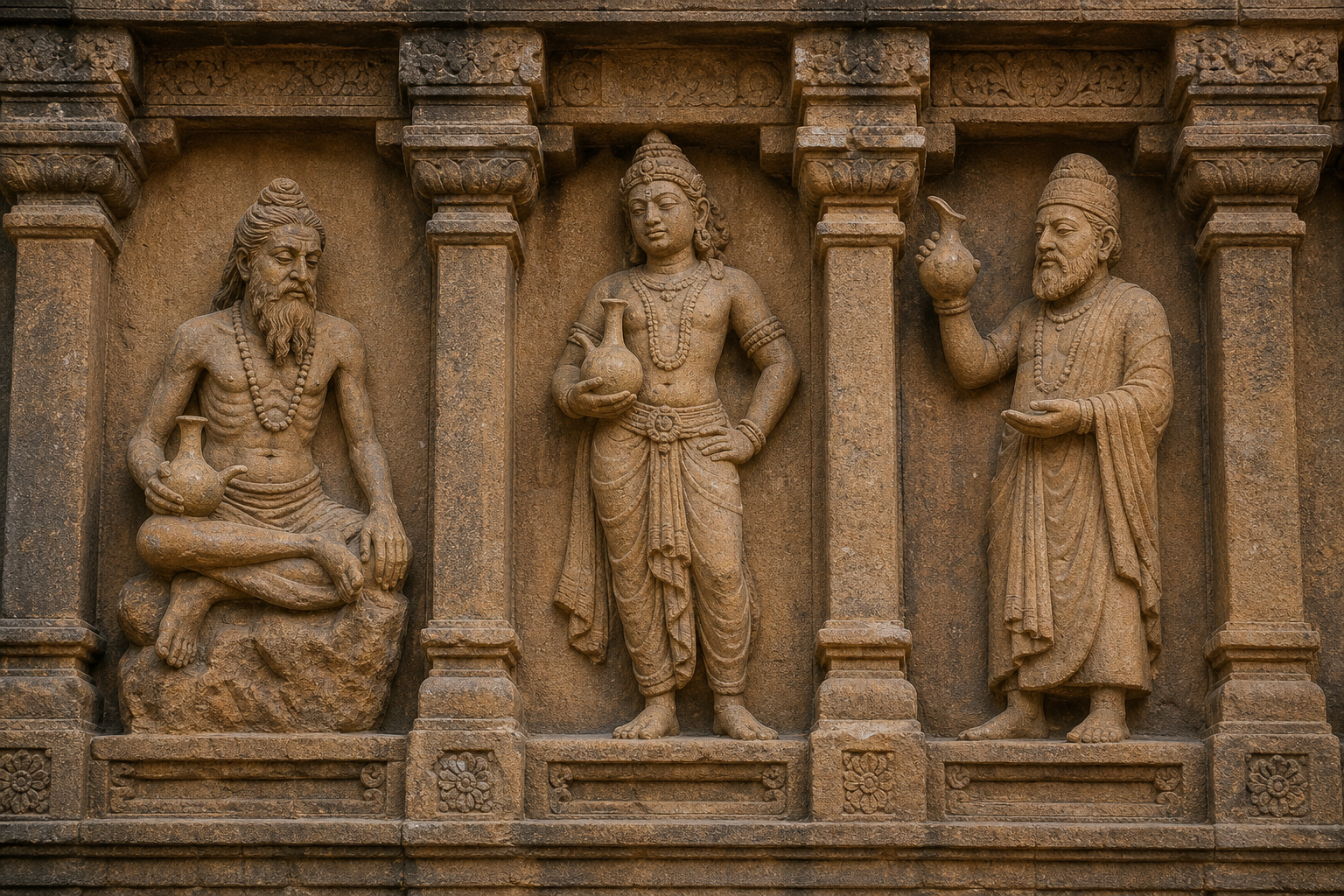
The kundika and kamandalu should not be separated by a rigid visual rule. As the source notes, both are water vessels, both can accompany ascetics or sacred rites, and their appearances may overlap. The kamandalu is commonly understood as the portable water pot of a rishi or renunciant, often with a rounded body. The kundika more strongly emphasizes directed ritual pouring and may have a more articulated neck or spout.
That distinction is best treated as an interpretive tendency rather than an automatic identification. A small pot should be examined alongside the figure’s posture, other attributes, and narrative or architectural setting. A pouring profile may support identification as a kundika, but the ritual role suggested by the whole image is more informative than silhouette alone.
This contextual method guards against two opposite errors. Calling every sacred water pot a kundika erases meaningful differences among vessels; demanding one universal shape overlooks the variation possible in stone, bronze, and painted representations. Iconographic reading proceeds most securely when morphology and context confirm one another.
How the vessel’s meaning changes with its bearer
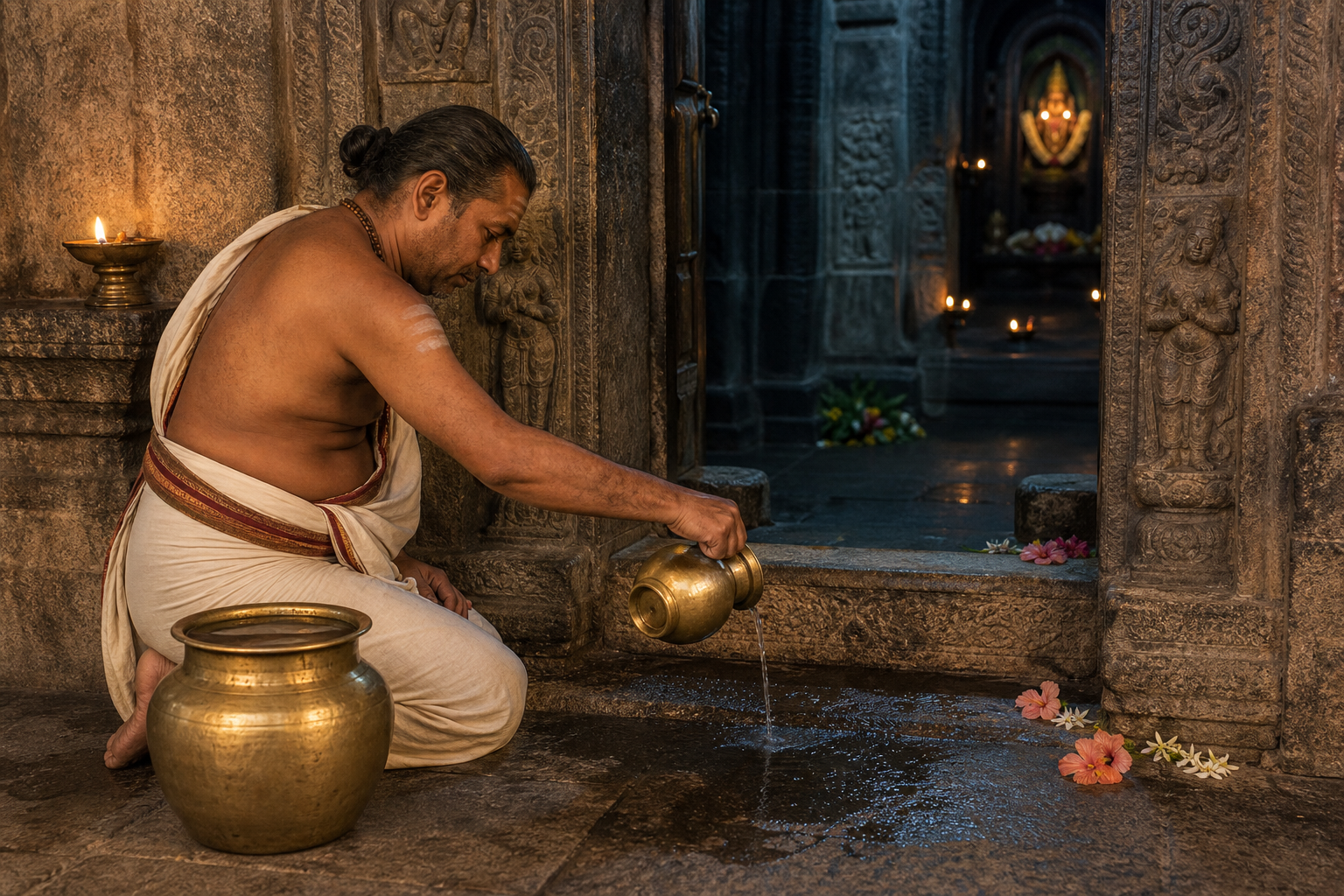
The source associates water vessels with Brahma, sages and ascetics, Shaiva settings, Vaishnava ritual environments, river goddesses, attendants, and ritual specialists. These appearances share a foundation in sacred water, but they do not all make the same theological claim.
| Figure or setting | Primary emphasis reported by the source | Contextual reading |
|---|---|---|
| Brahma | Creation, emergence, and order | The contained water suggests generative potential from which an ordered world may unfold. |
| Sage or ascetic | Restraint, purity, and self-sufficiency | A small portable vessel suits a life organized around tapas, study, mantra, and disciplined practice. |
| Shaiva imagery | Purification, renunciation, and abhishekam | Water tempers spiritual intensity and recalls the devotional bathing of Shiva’s forms. |
| Vaishnava ritual setting | Service, purity, and loving care | The vessel belongs to the ceremonial hospitality through which devotion is enacted. |
| Attendant, river goddess, or ritual specialist | Sacred presence and ceremonial readiness | The attribute helps present the temple as a place sustained by continuing ritual life. |
The comparison reveals why the kundika cannot be reduced to a generic sign of purity. With Brahma, its contained water can point toward creation. With a sage, the same modest object communicates disciplined sufficiency. Within Shaiva or Vaishnava settings, emphasis shifts toward bathing, offering, hospitality, or devotional service. The common object acquires precision through relationship.
Still water, directed flow, and the threshold of the sacred
The DharmaRenaissance account places the kundika within a broader Hindu understanding of water as cleansing, nourishing, cooling, and capable of carrying offerings. It also connects the vessel with the idea of tirtha, understood here not only as a pilgrimage place but as a crossing between ordinary and sacred conditions.
Seen through that lens, the kundika expresses a sequence rather than a substance alone. Water is gathered and protected; ritual discipline gives it purpose; pouring directs it toward a deity, person, or offering; contact makes blessing or consecration tangible. The form of the vessel holds these stages together.
This sequence also explains the importance of the hand that carries the object. The bearer is not simply possessing water but assuming responsibility for its right use. In temple imagery, the attribute can consequently mark readiness, competence, and service. It turns the represented body into a participant in sacred action and the sculpted scene into more than a decorative arrangement.
The symbolism is especially resonant in worship that treats the divine presence through embodied hospitality: water may be offered for washing, bathing, and other acts of reverent care. The kundika condenses that devotional relationship into a durable image of generosity governed by ritual order.
Key takeaways
- A kundika is best read as both a water vessel and a sign of purposeful ritual action.
- Its neck, spout, or pouring arrangement may aid identification, but bearer and setting remain essential.
- The kundika and kamandalu overlap; their distinction is contextual rather than mechanically determined by one feature.
- Its emphasis can shift from creation to ascetic discipline, purification, devotional service, or ceremonial readiness.
- The movement from contained water to directed offering connects the object with consecration and passage into sacred relation.
Future study of a kundika in any particular image should therefore record more than the pot itself. Attention to the holding hand, posture, neighboring attributes, divine identity, and architectural location can recover the ritual grammar that the small vessel helps preserve.