-
Harnessing Divine Strength: How a Vaishnava Visionary Married Bhakti with Modern Science

This essay examines how Abhay unified uncompromising fidelity to the Bhakti Tradition with practical adaptation to a world led by science and technology. It explains why accepting sannyasa under Kesava Maharaj functioned as a disciplined, operational commitment rather than mere withdrawal. Readers gain a clear view of how Guru–Shishya guidance, yukta-vairagya, and Bhagavad Gita principles…
-
Rgvidhana of Śaunaka: Unlocking Rigvedic Mantras for Healing, Prosperity, and Dharma

The Rgvidhana of Śaunaka is a seminal Hindu scripture that adapts Rigvedic mantras for everyday healing, protection, prosperity, and inner steadiness. Often dated to the late Vedic period, it exemplifies how sacred sound moved from public sacrifice into household and civic life. The manual’s method is exacting—clear intention, careful pronunciation, appropriate timing, and ethical restraint—yet…
-
Unveiling Nigada: The Hidden Vedic Mantras Orchestrating Yajña with Sacred Precision

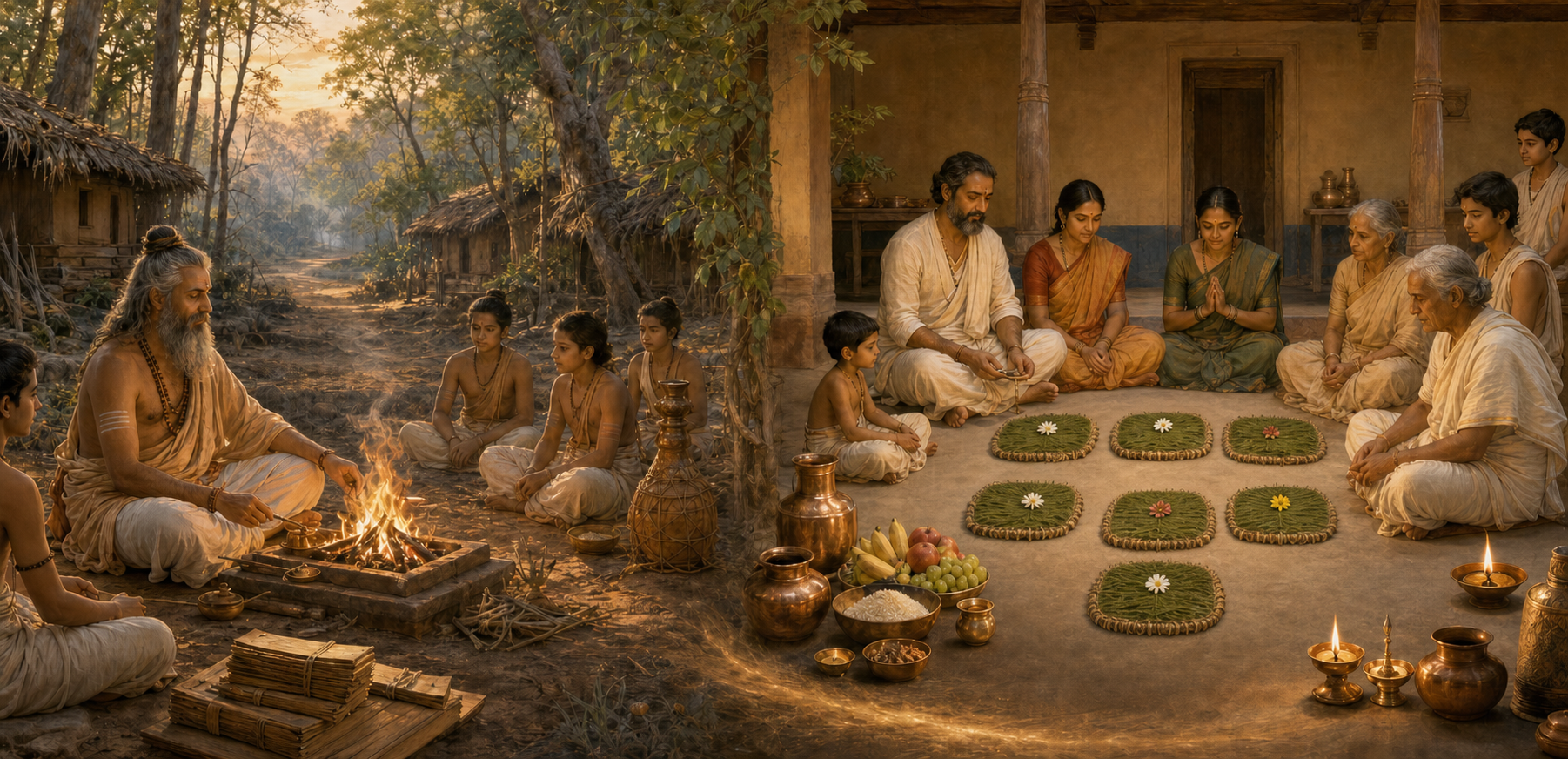
Nigada designates a specialized class of Vedic utterances that coordinate action, timing, and intention within yajña. Set apart from rik, yajus, and saman, nigada acts like a subtle conductor—softly voiced cues that synchronize priests, offerings, and chants. The piece clarifies how nigada differs from related forms like nivid and praīṣa, and why śikṣā (phonetics) and…
-
Ripples on the Cosmic Ocean: Turn Life’s Fleeting Moments into Dharma, Wisdom, Oneness

Hinduism likens each life to a ripple on a boundless ocean, a metaphor that dignifies impermanence and intensifies responsibility. Read how Advaita Vedānta, Sāṅkhya-Yoga, and the Bhagavad Gita converge on ethical action, contemplation, and realization of unity. Discover parallel insights in Buddhism’s anicca and dependent arising, Jainism’s anekāntavāda, and Sikhism’s Ik Onkār—diverse paths that affirm…
-
May 8, 2026 Panchang Guide: Sacred Timings, Krishna Paksha Sashti–Saptami, Nakshatra & Rashi

May 8, 2026, is a Krishna Paksha day with Sashti tithi prevailing until 8:24 AM, after which Saptami begins in most regions. This guide explains how to select shubh muhurat by combining tithi–weekday context with Abhijit Muhurta, Choghadiya, and the avoidance of Rahu Kalam, Yamaganda, and Gulika Kalam. It clarifies how to compute Friday’s avoidance…
-
29 Scholar-Verified Facts on Venkateshwara Swamy at Tirumala to Deepen Darshan

Sri Venkateshwara Swamy of Tirumala—also known as Srinivasa, Balaji, Venkatachalapati, and Govinda—is presented here through 29 scholar-verified facts that unite theology, ritual practice, architecture, and living tradition. Readers discover how Vaikhanasa Agama worship structures daily sevas, why the Laddu prasadam holds a GI tag, how Brahmotsavam and Vaikuntha Ekadashi shape the festival calendar, and what…
-
From Burnout to Balance: A London Surgeon’s Evidence-Based Blueprint for Energy, Sleep, and Calm

A London-trained surgeon transitioned from heroic overwork to evidence-based self-care by treating fatigue as physiological data, not a moral failing. The narrative explains how subtle autonomic imbalance, circadian disruption, and mitochondrial stress can produce “tired but wired” states even with normal lab results. Practical changes—sleep regularity, morning light, 30 minutes of daily walking, Mediterranean-style nutrition,…
-
Grace in Stone: Decoding Shiva’s Anugrahamurtis to Deepen Temple Darshan

Anugrahamurtis—the grace-bestowing forms of Shiva—translate the Shaiva doctrine of anugraha into a precise, readable visual language. Grounded in Agamas and Śilpaśāstra canons, they employ gestures such as abhaya and varada, gentle asanas, and familial ensembles to stage compassion, assurance, and liberation. Representative types include Ravananugraha, Kalāntaka/Mṛtyuñjaya, Kirātārjuna, Gaṅgādhara, Candeśānugraha, Somāskanda, and Kalyāṇasundara, each encoding a…
-
Rishi in Hinduism: Unveiling the Vedic Seer’s Meaning, Power, and Living Relevance

This article clarifies what “rishi” means in Hinduism and why the term remains central to Vedic and Upanishadic thought. It explains the rishi as a mantradraṣṭā—seer of the mantra—within the apauruṣeya doctrine of the Vedas, and shows how the rishi–devatā–chandas triad anchors ritual practice. Readers gain a structured understanding of classical classifications (Brahmarṣi, Devarṣi, Rājarṣi,…
-
Śrīmad Bhāgavatam 3.22.28 and Nṛsiṁha Caturdaśī: Timeless Dharma, Protective Grace, and Bhakti Power

Śrīmad Bhāgavatam 3.22.28 situates household vows within a God-centered ethic, showing how domestic life becomes a disciplined path of bhakti-yoga. Read alongside the devotional mood of Nṛsiṁha Caturdaśī, the verse underscores a unified principle: sincere vows invite protective grace. The Prahlāda–Nṛsiṁha narrative exemplifies devotion under trial and the Lord’s compassionate precision in safeguarding truth. Practical…
-
Mercy Beyond Boundaries: How Lord Narasimha’s Mayapur Grace Answers Prayers Through Nama

This article explores a widely shared testimony of Lord Nrisimhadeva’s mercy at ISKCON Mayapur, showing how, within Vaishnava theology, grace is believed to extend even beyond formal devotional identity. It situates the couple’s experience—pilgrimage, vrata, and heartfelt surrender on Nrisimha Caturdasi—in the broader bhakti framework that emphasizes the transformative power of nama. It explains how…
-
When the Deity Answers: An Offering, a Prayer, and the Astonishing Grace of Lord Narasimha

A devotee couple offered a crystal necklace to Lord Nrsimhadev and, after a simple prayer for guidance, found the Deity adorned with the same ornament the very next day. This account—situated within Vaishnava temple practice and the Bhakti Tradition—illustrates how ritual protocol, theological principles of reciprocity, and lived devotion intersect. The piece explains why offered…
-
On Narasimha Jayanti: Lord Nrsimhadeva’s Fierce Compassion, Iconography, and Dharma’s Triumph

Narasimha Jayanti honors Lord Nrsimhadeva as fierce compassion in action—protection deployed solely to restore Dharma. This article grounds the observance in the Bhagavata Purana (7.8.30–31), unpacks the lion–elephant imagery as a classical sign of moral restoration, and explains how the avatara’s liminal form answers absolutist violence without becoming absolutist. It surveys major iconographic forms (Ugra,…
-
When Devotion Meets Divinity: How Lord Nrsimhadeva’s Grace Manifests in Real Time

Across Sanatana Dharma, testimonies surrounding Lord Nrsimhadeva in Mayapur suggest that sincere petitions often meet with remarkable immediacy. This piece situates such “lilas” within a careful academic framework that distinguishes the authority of sastras from the experiential value of testimony. It explains how Bhakti Tradition principles—intention (sankalpa), remembrance, and mantra—shape perceptions of instant reciprocation, anchored…
-
Fierce Compassion on Narasimha Caturdashi: Dharma’s Triumph, Prahlada’s Faith, Rituals and Meaning

Narasimha Caturdashi (Narasimha Jayanti) commemorates the man-lion avatara of Vishnu who restores dharma while protecting steadfast devotees, as outlined in the Bhagavad-gita’s verses on divine intervention. The Prahlada narrative from the Bhagavata Purana illustrates unwavering bhakti in the face of authoritarian suppression, framed not as sectarian conflict but as a timeless lesson in ethical resilience.…
-
Shaligram, Shankha, and Tulsi: Unlocking Vishnu’s Living Presence and Timeless Grace

This comprehensive exploration presents the sacred triad of Shaligram, Shankha, and Tulsi as a living, scripturally grounded pathway to Vishnu worship. It clarifies the Shaligram’s geological identity as a natural ammonite fossil from the Kali Gandaki near Muktinath, honored as a svayambhū form of Vishnu requiring no prāṇa-pratiṣṭhā. It explains how the Shankha (Turbinella pyrum)…
-
Lakshmi Ghot in Bengal: Sacred Clay-Pot Worship for Prosperity, Harmony, and Eco-Devotion

Bengal’s Lakshmi Ghot tradition consecrates an earthen pot as the living locus of Goddess Lakshmi, offering a compact yet theologically complete home ritual. This long-form guide decodes the symbolism of the kalasha—clay, water, leaves, grains, and coconut—as a microcosm of abundance governed by dharma. It situates the practice within Kojagari Lakshmi Puja on Sharad Purnima…
-
Hindu Wisdom Beyond Pride: Shattering Ego’s Illusion to Reveal the Sacred in All Creation

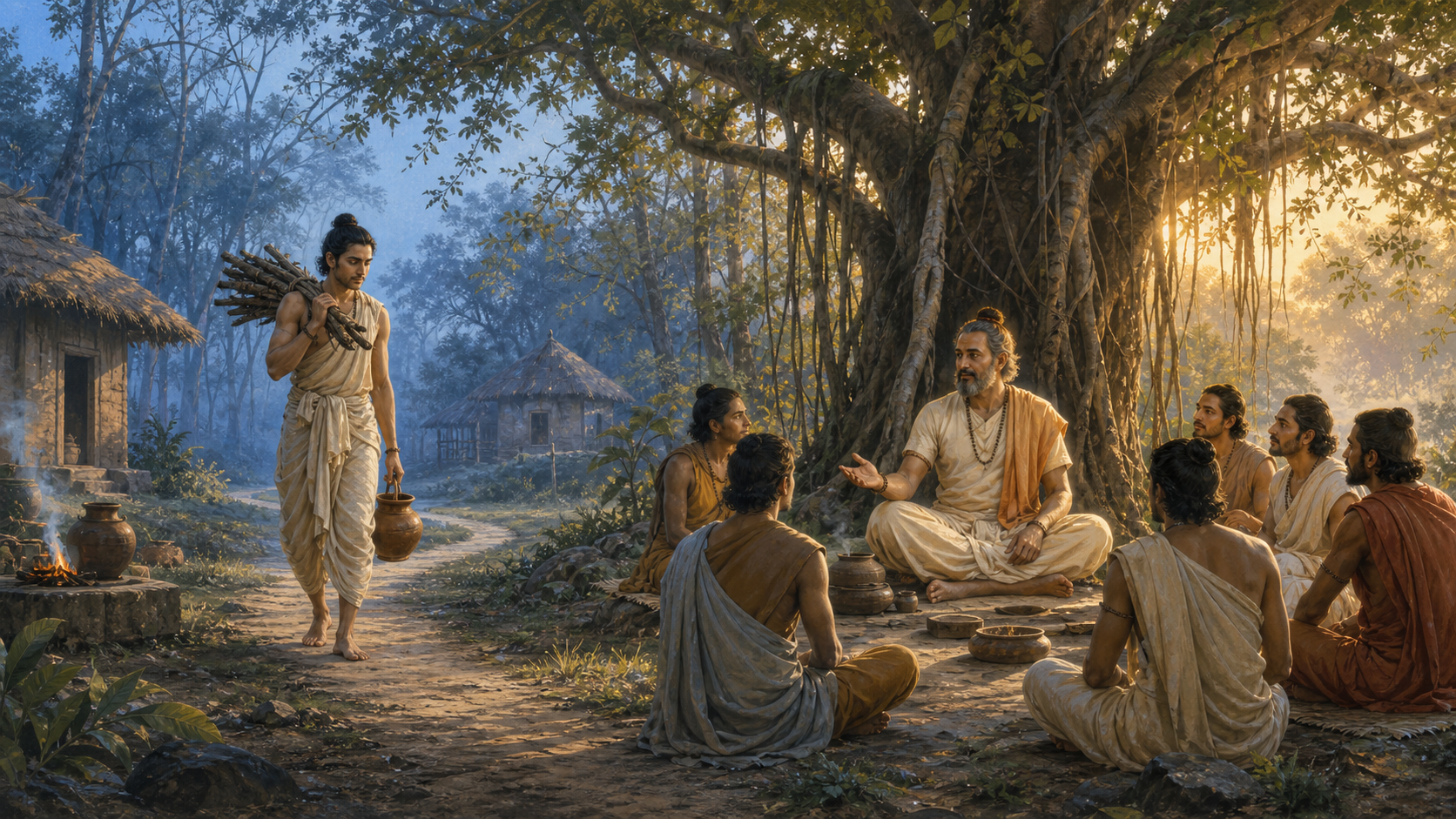
This essay examines the illusion of worthlessness through Hindu philosophy and a classic teaching tale, The Search for the Void. It explains how ahaṃkāra (ego) and avidyā (misapprehension) distort judgment, while the Upaniṣadic vision—īśāvāsyam idaṁ sarvam and sarvaṁ khalvidaṁ brahma—reveals intrinsic, relational value. A detailed retelling of the Guru–Śiṣya narrative shows how “void” becomes a…