-
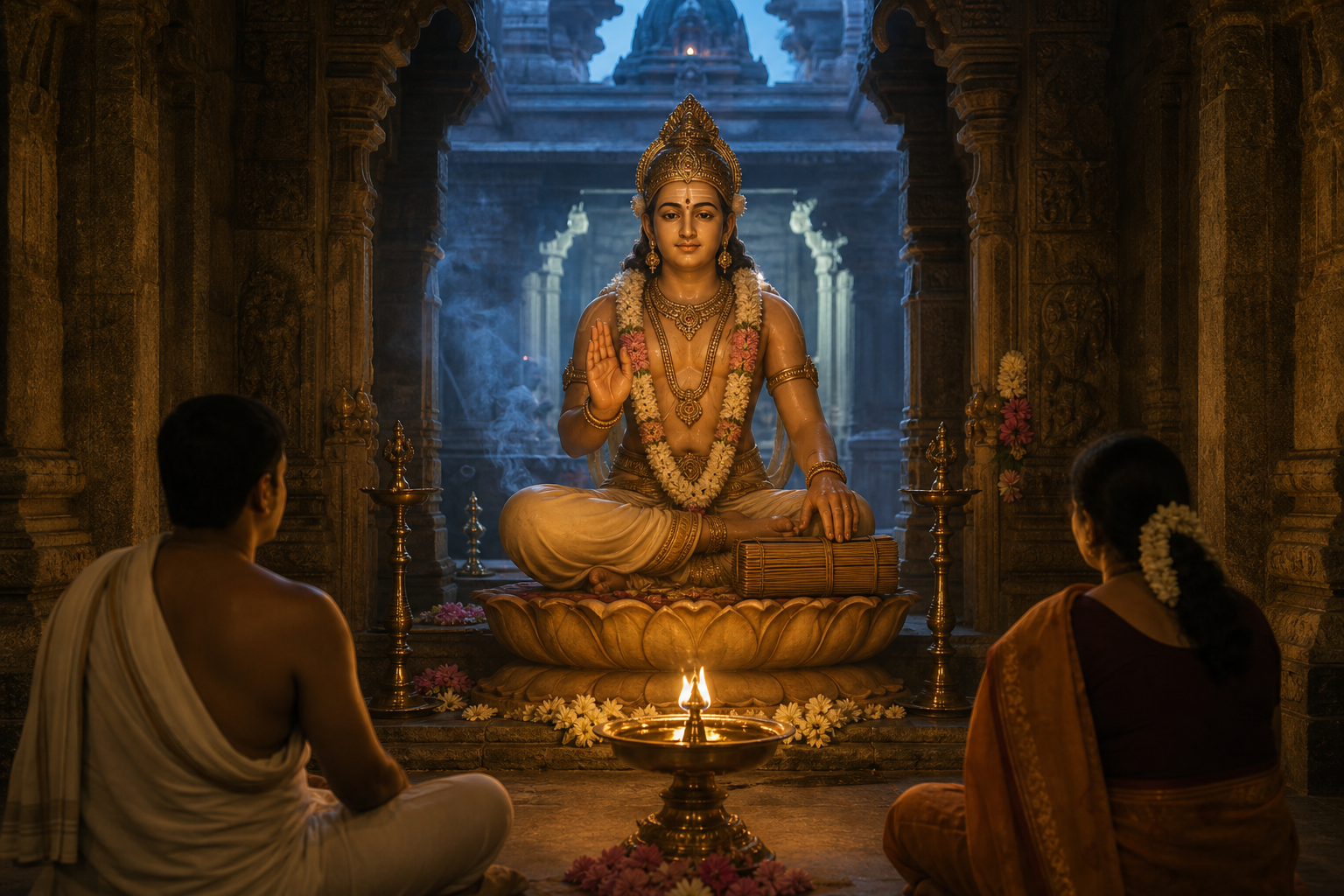
Jatukarnya: Unveiling an Ancient Dharmashastra Luminary Shaping Dharma and Society

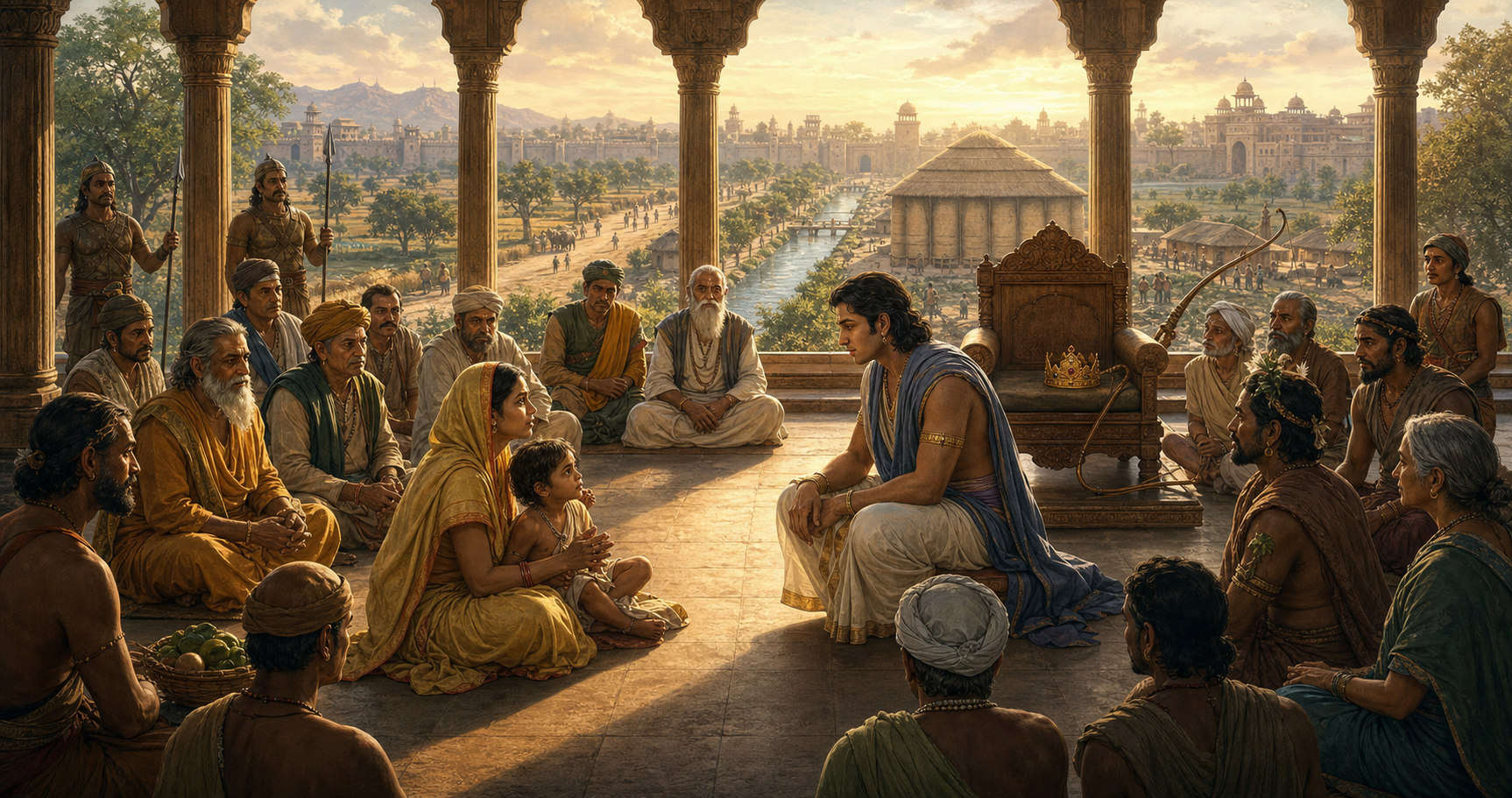
Jatukarnya (Jatukarni/Jatukarna) emerges from the Dharmashastra tradition as an early voice in Hindu legal history, likely predating the 3rd century CE. Even without a fully preserved standalone text, later references attest to his participation in formative debates on law, ethics, and social norms in Ancient India. His remembered contributions exemplify how the Dharmashastras blend jurisprudence,…
-
Experience the Divine Everywhere: Applying Bhagavad Gita Wisdom in Everyday Life
Bhagavad Gita teaches that the Divine pervades all, and this can be experienced through a disciplined union of Bodha (insight) and Vyavahara (lived practice). A simple, relatable analogy—the house of wooden objects—shows how shared essence and distinct functions coexist. Practical methods such as mindful breathing, silent japa, and small acts of seva make awareness tangible…
-
Tara Devi Mahatmyam: Fear-Dispelling Power and Cross-Traditional Significance of Tara Mahavidya
Tara Devi, one of the Dasamahavidyas and a manifestation of Durga Devi, is honored for fear-dispelling power and liberating wisdom. The Adbhuta Ramayana recalls Tara within the Goddess’s cosmic play, celebrated after Kali’s defeat of a powerful asura. Shakta Tantra presents Tara as both fierce and compassionate, associated with insight (jnana), transcendent speech (vak), and…
-
Rama’s Darbha Sayana: Sacred Patience and Yoga Nidra Before Crossing the Ocean

This post explores Darbha Sayana Murthy, the Ramayana moment when Sri Rama, seeking to cross the ocean to Lanka, prays to Varuna and rests in Yoga Nidra on a bed of darbha grass. Readers learn the ritual significance of darbha (kusa) in Vedic practice and how Yoga Nidra symbolizes restful awareness and ethical clarity. The…
-
Vritrasura Samhara Murthy: Indra’s Vajrayudha, Dharma, and the Defeat of Obstruction

Vritrasura Samhara Murthy honors Indra’s decisive victory over Vritrasura with the Vajrayudha and the restoration of dharma. The narrative portrays Vritra as a symbol of obstruction and Indra as a restorer of cosmic order. Read through a dharmic lens, this tale aligns with Buddhist, Jain, and Sikh teachings on overcoming inner afflictions and ego. The…
-
From Flight to Fortitude: Prince Uttara’s Mahabharata Lesson on Pride, Guidance, and Courage

Prince Uttara’s story in the Mahabharata reveals how fear can yield to courage when guided by humility and mentorship. Set during the Virata Parva, the episode exposes the brittleness of pride built on bravado and the strength that comes from accepting instruction. Brihannala (Arjuna in disguise) reframes crisis as training, modeling the guru–shishya ethos. The…
-
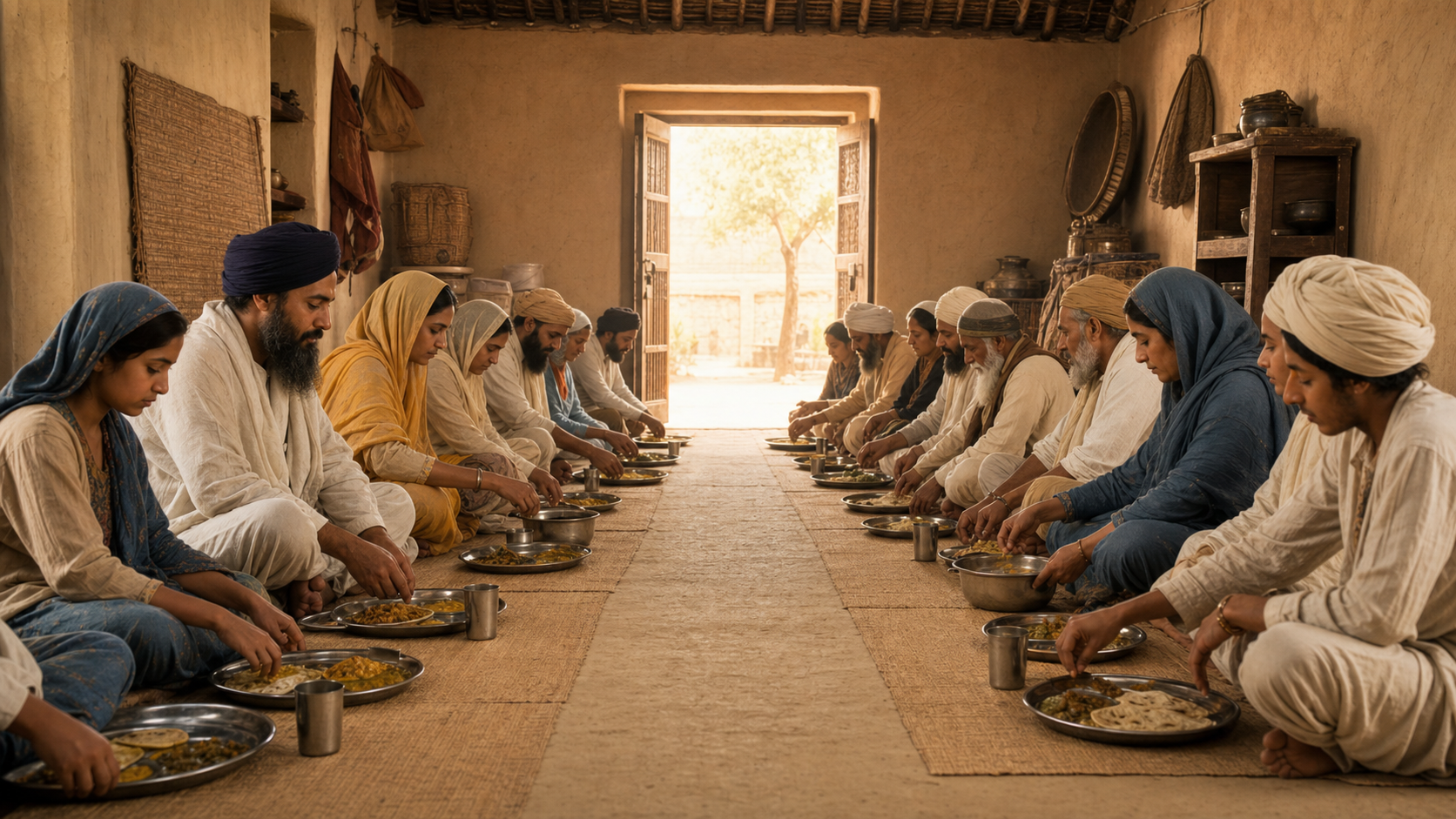
Paryavartanakam Explained: Hinduism’s Warning Against Denying Food and the Power of Compassion

Paryavartanakam, described within Hindu ethical thought, warns against the grave act of denying food to the hungry and elevates anna-dāna as sacred duty. Purāṇic narratives such as those in the Garuḍa Purāṇa frame Naraka as a mirror of karmic consequence, not mere punishment. This teaching aligns with a wider dharmic consensus: Buddhist dāna, Jain ahiṃsā…
-
Ramabhadra, Not King of Ayodhya: Sri Rama’s Humility in Bhavabhuti’s Uttara Rāma

This article explores why classical sources such as Bhavabhuti’s Uttara Rāma emphasize the intimate name “Ramabhadra” for Sri Rama over the formal title “King of Ayodhya.” It shows how the choice reflects a deliberate centering of dharma, humility, and ethical proximity rather than hierarchical distance. Readers gain insight into Rama’s model of kingship, where restraint,…
-
Sat Sanga Deep Dive: Unveiling 64 Elements of Pure Devotional Service, Mayapur 2025

This Sat Sanga in Mayapur (December 6, 2025) presented a clear, practice-focused review of the 64 Elements of Pure Devotional Service with HH Krishna Kshetra Swami. Using a Show and Tell format, the session translated scriptural insights into daily disciplines like japa, kirtan, study, humility, and seva. A devotional interlude from Janma-lila (verses 75–80) in…
-
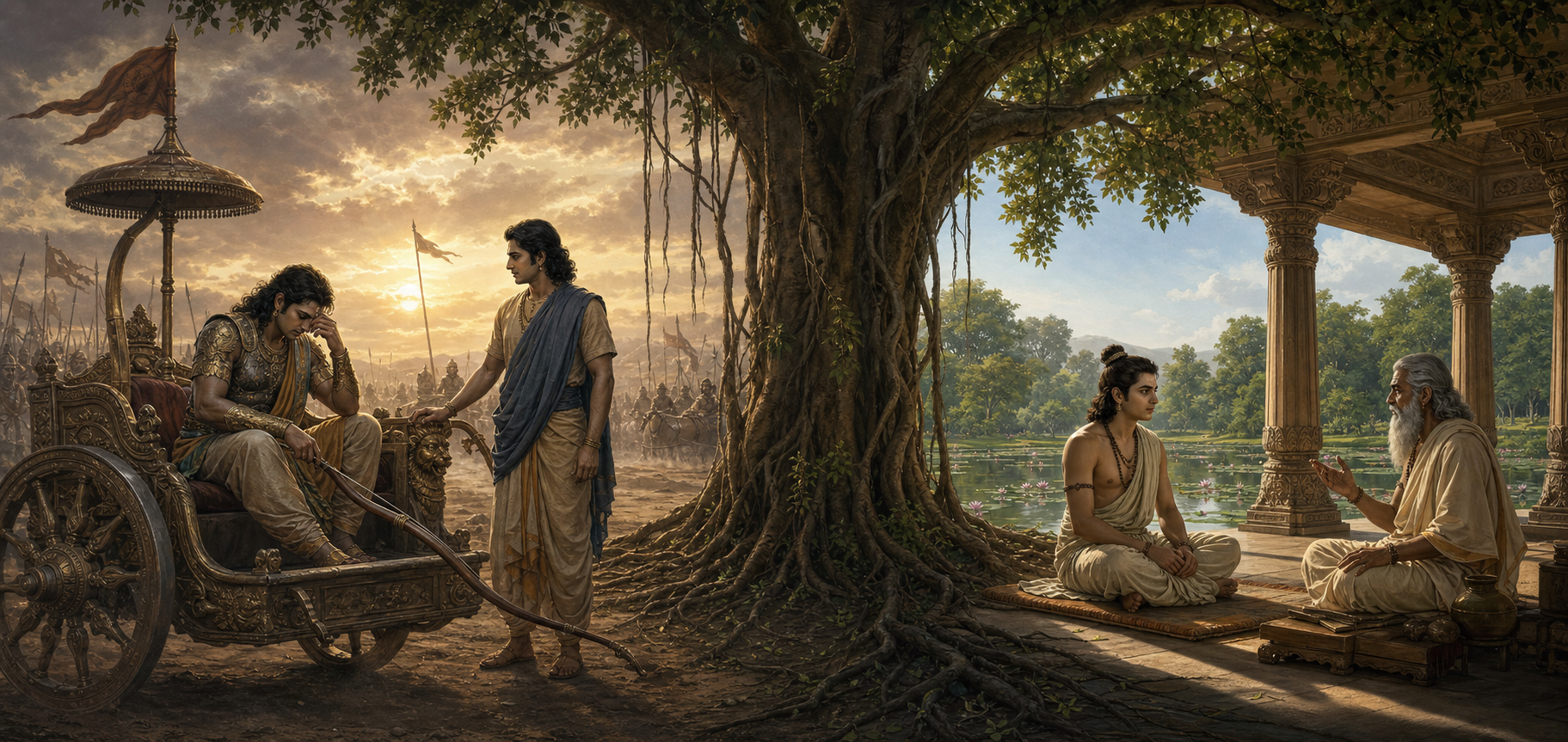
Arjuna’s Misplaced Compassion: How the Gita Transforms Confusion into Dharmic Clarity

Arjuna’s crisis on the Kurukshetra battlefield shows how compassion, when clouded by attachment, can become confusion. The Bhagavad Gita reframes his hesitation as a failure of clarity (viveka), not a triumph of sensitivity. Krishna’s counsel aligns compassion with duty through equanimity and non-attached action, preserving justice and social welfare (loka-sangraha). The analysis highlights a unifying…
-
Why Shiva Rejected Ravana After Sita’s Abduction: Dharma, Bhakti, and Divine Justice

This analysis explores why Shiva is portrayed as withdrawing protective grace from Ravana after the abduction of Sita, drawing on the Valmiki Ramayana and regional traditions like Kamba and Krittivasi Ramayanas. It shows that divine boons operate within the moral framework of dharma and cannot shield adharma. The piece highlights how Ravana’s sacred deception—misusing the…
-
Why Parashurama Stood Alone: The Profound Dharma Behind Vishnu’s Consortless Avatar

Parashurama’s consortless form is a purposeful feature of Vaishnava theology rather than an omission. Scriptural narratives emphasize his ascetic mission, where tapas, mobility, and disciplined detachment were essential to restoring kshatra-dharma. The diversity of Vishnu’s avatars reflects role-specific embodiments: Rama models household righteousness, Krishna social and relational dharma, and Parashurama corrective austerity. His status as…
-
Indra’s Triumph over Vritrasura: Awe-Inspiring Symbolism, Dharma, and Unity Across Traditions

Vritrasura Samhara Murthy honors Indra’s victory over Vritrasura with the Vajrayudha, a decisive act that restores cosmic balance in Hindu mythology. The story, rooted in Vedic and Puranic traditions, symbolizes removing obstacles and renewing life. Its imagery maps to inner ethics: Indra as discerning courage, Vritrasura as obstruction, and the Vajrayudha as unshakable clarity. Read…
-
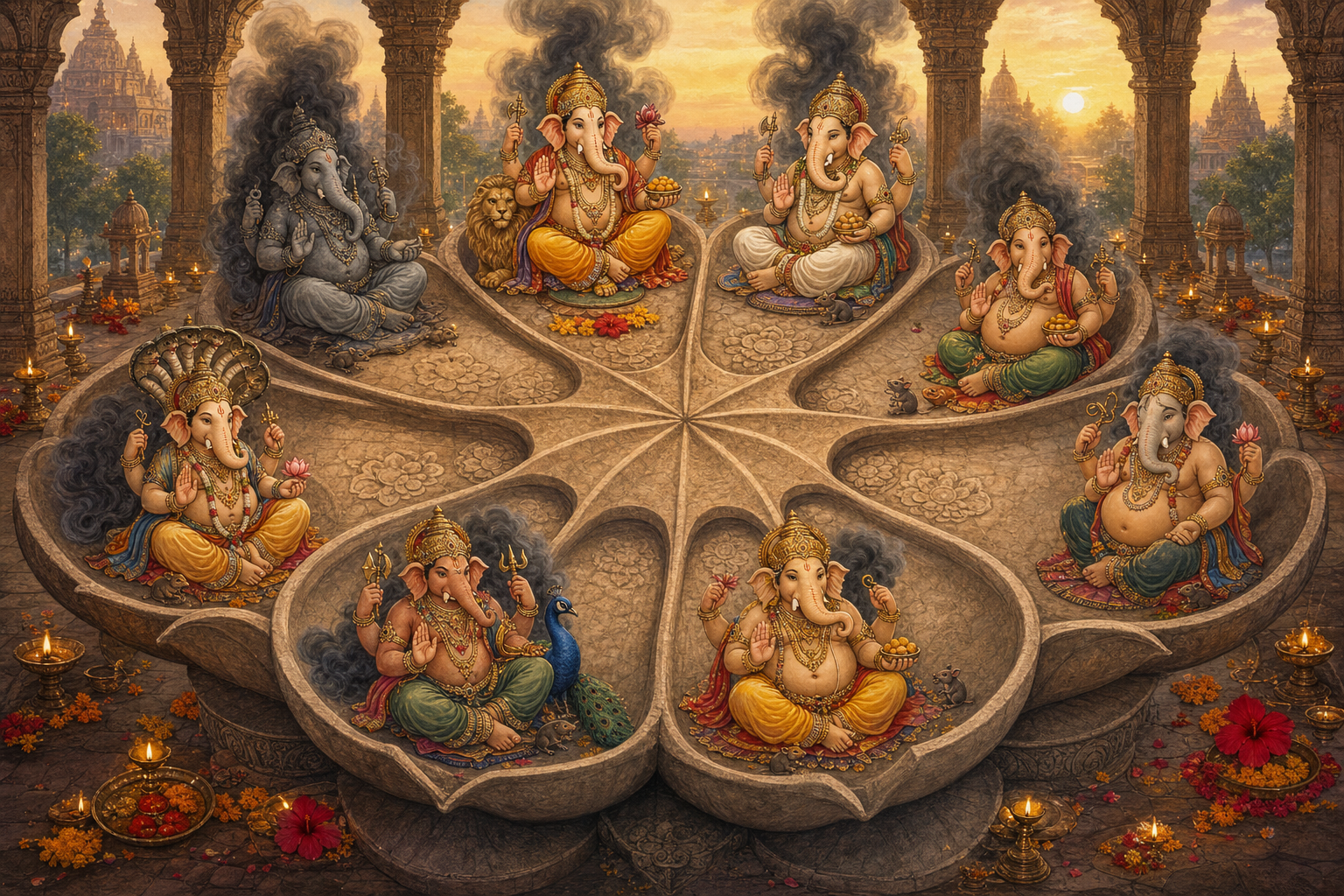
Chamunda Devi’s Skull Cup (Kapala): Fierce Symbolism of Protection, Purification, and Grace

Chamunda Devi’s skull cup (kapala) encapsulates a powerful teaching from the Devi Mahatmya and Tantric scriptures: transform fear and impurity into wisdom and compassionate strength. The blood within the kapala symbolizes prana and ego, consciously purified in the goddess’s grasp to protect and uplift. Read through a dharmic lens, this fierce icon harmonizes with Vajrayana…
-
Experience the Divine Everywhere: Bhagavad Gita’s Practical Path from Bodha to Vyavahara

The post explores how the Bhagavad Gita’s insight — the Divine is everywhere — becomes transformative when knowledge (Bodha) is practiced as daily conduct (Vyavahara). Using the wood-and-furniture analogy, it clarifies how one essence appears through many forms, guiding a balanced response to life’s roles. Practical methods — mindful pauses, breath awareness, japa or simran,…
-
Tara Devi Mahatmyam: Unveiling the Compassionate Power of Tara Mahavidya for Courage and Unity

Tara Devi, honored as one of the Mahavidyas and a form of Durga Devi, is celebrated for protective compassion and transformative guidance. The Adbhuta Ramayana and Buddhist texts both acknowledge her presence, reflecting a shared dharmic reverence that fosters interfaith harmony. In Shakta traditions, Tara’s Mahatmyam emphasizes the courage to “cross” life’s difficulties through wisdom…
-
Darbha Sayana Murthy: Sri Rama’s Yoga Nidra Before Lanka—Symbolism, Strength, and Serenity

Darbha Sayana Murthy recalls the moment Sri Rama, poised to reach Lanka, prays to Lord Varuna and enters Yoga Nidra upon a bed of Darbha grass. The scene blends disciplined patience with strategic resolve, presenting leadership as calm strength before decisive action. Darbha symbolizes purity and protection, turning the earth into a sacred altar that…
-
Unmasking the Golden Deer: The Ramayana’s Allegory of Desire, Maya, and Dharma

The golden deer episode in the Ramayana functions as a refined allegory of human desire, maya (cosmic illusion), and ethical vigilance. By tracing Sita’s captivation, Rama’s pursuit, and Ravana’s exploitation, the narrative shows how alluring appearances disperse attention and compromise dharma. Read symbolically, the deer represents desire’s shimmer—radiant yet elusive—while the episode models the need…
-
From Celebrity Tattoos to Sacred Texts: How a Closed Gita Sparked Bhakti and Unity

A contemporary symbol—like a celebrity tattoo—can become a threshold to timeless wisdom. This reflection examines how the Bhagavad-Gita functions as a living conduit for guidance in the bhakti tradition while resonating with the reverence offered to sacred texts in Sikhism, Buddhism, and Jainism. It explains why the saying, “Give someone one of Srila Prabhupada’s books,…