-
Shakti and Sacred Balance: What Hindu Scriptures Teach About True Gender Equality

Hindu scriptures present gender equality as a sacred metaphysical truth grounded in the unity of Shiva and Shakti, not as a modern concession. Vedic and Puranic sources—from the Devi Sukta to the image of Ardhanarishvara—affirm complementarity rather than hierarchy. Everyday practices like Navaratri and Saraswati puja translate these ideals into lived culture that honors women’s…
-
When Gods Disagree: The Cosmic Wisdom in Shiva–Parvati’s Sacred Debates Guiding Everyday Harmony

The sacred disagreements between Lord Shiva and Goddess Parvati, preserved in Hindu scriptures, function as philosophical dialogues rather than domestic quarrels. Their dynamic reveals how consciousness (Shiva) and energy (Shakti) integrate apparent opposites into a higher harmony. Narrative episodes—such as the restoration of Ganesha and the renewal following Daksha’s yajña—model reconciliation, ethical boundaries, and compassionate…
-
Alchemical Foundations of Bhakti: Guru, Diksa, and the Soul’s Transformative Journey

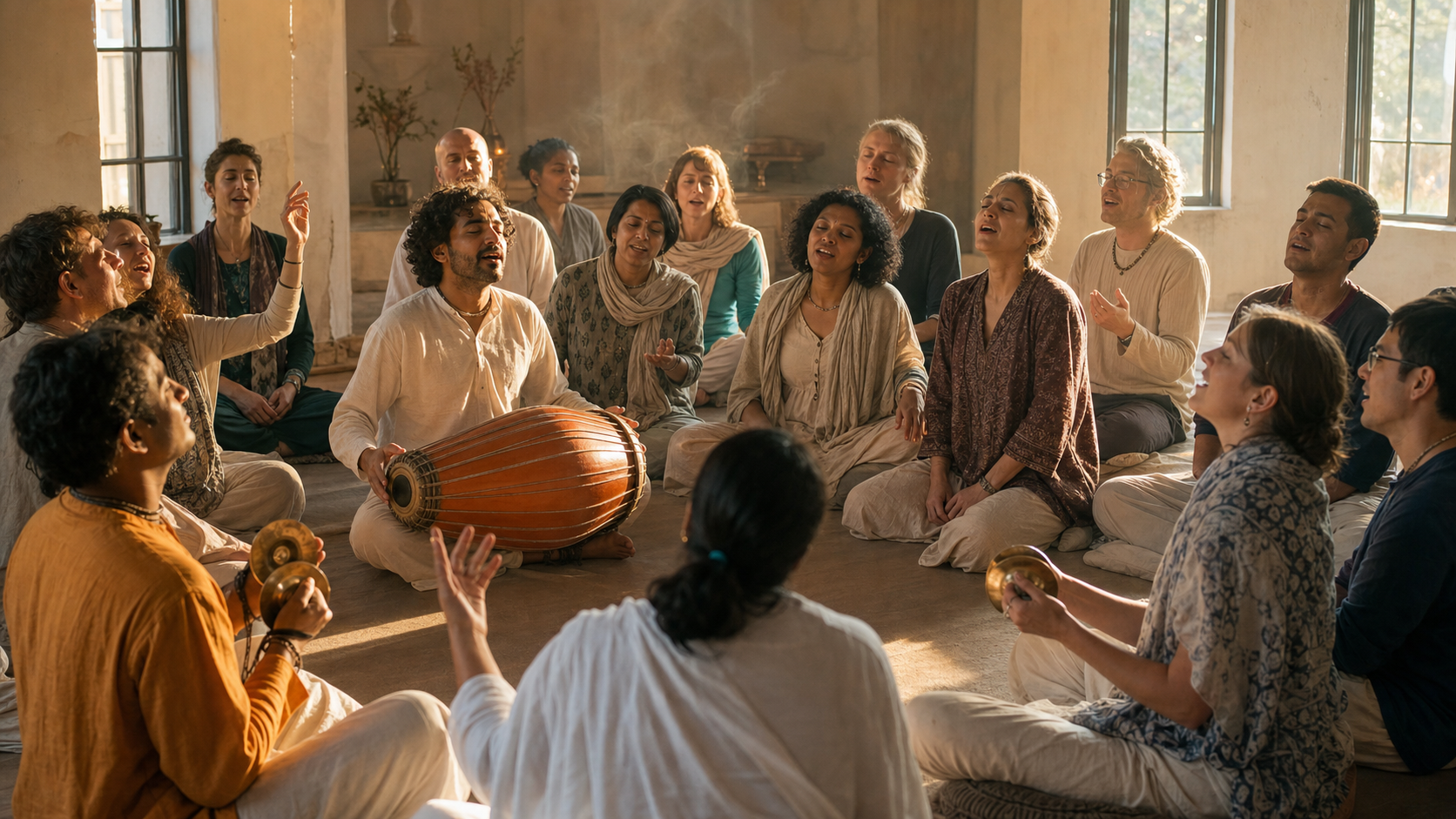
Presented at Go-druma Bhavan, Mayapur, this Sat Sanga with HH Krishna Kshetra Swami explored how guru-guided practice and diksa form the “alchemical” pathway of Bhakti. The talk showed how disciplined devotion, ethical vows, and community association catalyze inner transformation. Drawing on Janma-lila (verses 65–74) from Srila Locana Dasa Thakura’s Sri Caitanya Mangala, it highlighted how…
-
Lakshmi’s Quiet Power: How the Divine Feminine Guides Vishnu’s Avatars and Upholds Dharma

This essay explores how Lakshmi’s quiet power shapes the ethical core of Vishnu’s avataric decisions, balancing courage with compassion. Drawing on narratives of Rama, Krishna, Narasimha, Vamana, and Mohini, it shows how Lakshmi’s qualities guide choices toward reconciliation, dignity, and social welfare. The analysis highlights Sri-Vaishnava insights into the inseparability of Sri and Vishnu, revealing…
-
Aruna’s Incomplete Form: Hindu Symbolism of Patience and Dharma in Surya’s Charioteer

Aruna, the charioteer of Surya, is portrayed with an incomplete lower body to convey a precise ethical message: impatience deforms outcomes, while patience enables wholeness. Rooted in Ancient Hindu Texts and the Mahabharata, the narrative of Vinata’s premature act and Aruna’s emergence becomes a timeless lesson in timing, restraint, and service. As the personification of…
-
SB 10.87.03 Unveiled by HH Bhakti Anugraha Janardan Swami: Paramparā and Inner Freedom

This reflection on Srimad-Bhagavatam 10.87.03, presented at ISKCON Vrindavan on 03.12.2025 by HH Bhakti Anugraha Janardan Swami, explains why knowledge of the Absolute Truth is trustworthy when received through authentic paramparā. It encourages disciplined reverence over fruitive ritualism and unanchored speculation, guiding practitioners to relinquish upādhis—false designations—and cultivate inner freedom. The analysis situates the teaching…
-
When Honor Is Misplaced: Skanda Purana’s Warning—Fear, Famine, and Death Follow

Skanda Purana, Kedara Khanda (3.45), links misplaced honor to societal breakdown symbolized as fear, famine, and death. The teaching, conveyed through Lord Vishnu, gains clarity when read alongside the narrative of Daksha’s transgression and the disruption of ritual order. Interpreted as a diagnostic model of dharma and adharma, it explains how fear rises when moral…
-
Tripada Trimurti Unveiled: The Profound Symbolism of Shiva’s Three-Footed Trinity

Tripada Trimurti presents the Trimurti—Brahma, Vishnu, and Shiva—through the striking motif of three feet, highlighting the unity of creation, preservation, and transformation. This interpretation clarifies how the visible legs of Vishnu and Shiva, with the third principle implied through Brahma or the composite form, teach oneness-in-diversity. Readers gain a clear understanding of the term’s meaning,…
-
Br̥hatī (Brihati) Vedic Meter Explained: Structure, Rigvedic Usage, and Timeless Significance

Br̥hatī (Brihati) is a principal Vedic meter with thirty-six syllables arranged as four quarters of nine. Traditionally placed fourth in canonical lists of chandas, it bridges compact and expansive meters, balancing precision with breadth. Its cadence shapes the sound and emphasis of Vedic hymns, especially in the Rigveda, and remains audible in contemporary recitation and…
-
Rama, Jatayu, and Dharma: Was Cremation a Transgression—or Compassionate Justice?

A northern Kerala folk question—was Rama wrong in cremating Jatayu?—opens a nuanced inquiry into dharma, ritual norms, and compassion in the Ramayana. The episode portrays Rama honoring Jatayu as a father-figure through antyeṣṭi, foregrounding intention and gratitude over rigid taxonomies. While some customs reserve cremation for humans, the epic frames Jatayu’s valor as ethically exceptional.…
-
How Shiva Turns the Inauspicious into the Sacred: Transformative Symbolism, Rituals, and Hope

Hindu tradition teaches that in Shiva’s presence, even the inauspicious becomes sacred—a principle grounded in scripture, ritual, and philosophy. The Nīlakaṇṭha narrative shows how poison transforms into protection, while cremation grounds, vibhūti, and serpents become powerful symbols of impermanence, mastery, and inner awakening. Practices such as Pradoṣa worship, Bilva offerings, and meditation on “Om Namaḥ…
-
Artabhakti Unveiled: The Transformative Power of Devotion in Distress and Dharmic Unity

Artabhakti—devotion in distress—stands as a potent form of bhakti in Hinduism, recognized in the Bhagavad Gita as a direct and transformative path to the Divine. Classic narratives like Gajendra Moksha and Draupadi’s appeal to Krishna reveal how sincere surrender in crisis invites grace, resilience, and ethical clarity. Psychologically, suffering can focus attention and open the…
-
Gita Jayanti Reflections: Timeless Guidance, Devotional Service, and Dharmic Unity
Gita Jayanti honors the revelation of the Bhagavad Gita and invites renewed attention to dharma, devotion, and ethical action. The featured assurance—cherishing those who share wisdom with compassion—underscores teaching as a form of service, not coercion. Observances such as recitation, study, meditation, and dialogue help practitioners apply karma yoga, bhakti, and jnana to daily decisions.…
-
Gita Jayanti: Timeless Lessons of Dharma and Bhakti for Clarity, Courage, and Unity

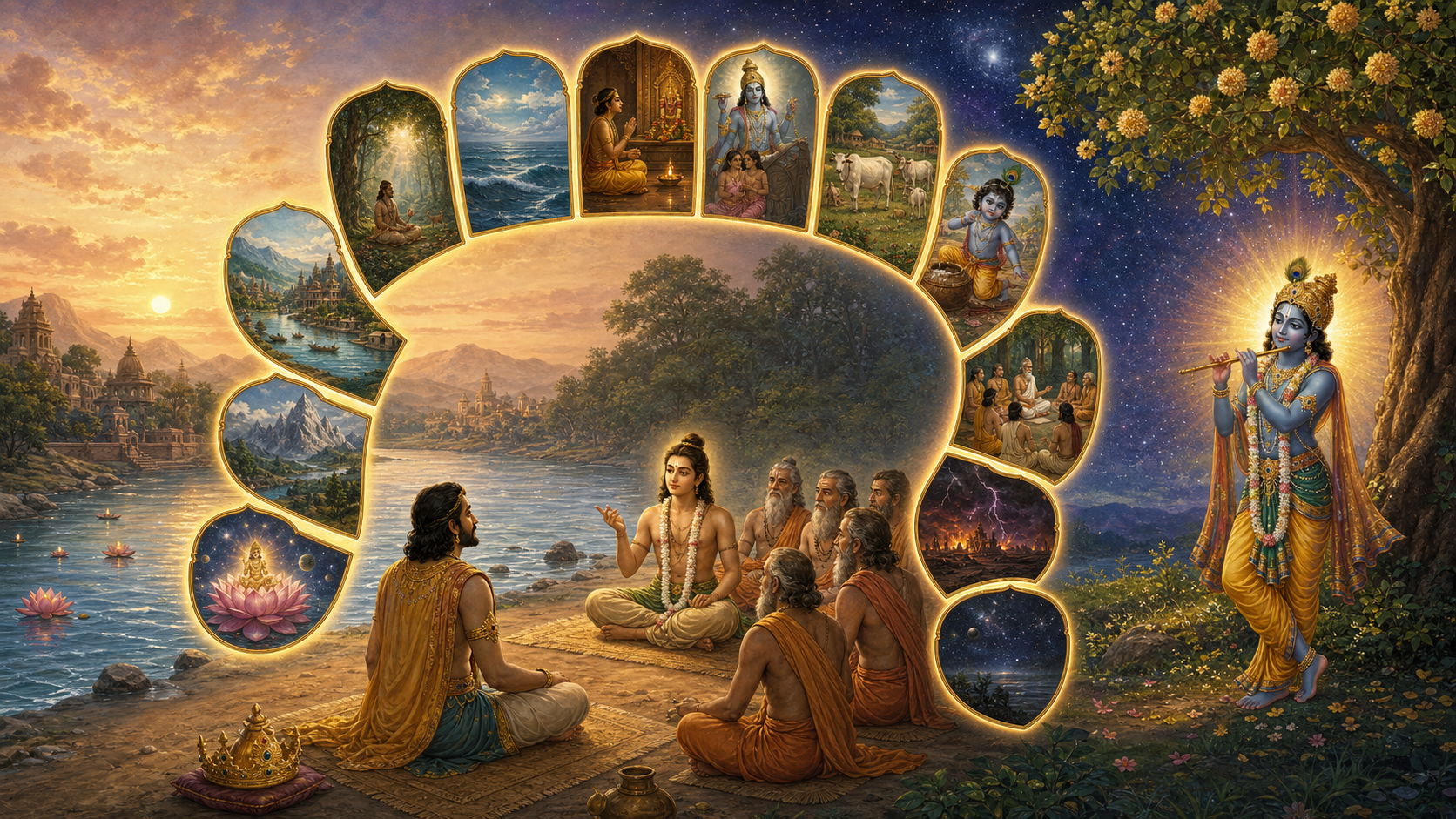
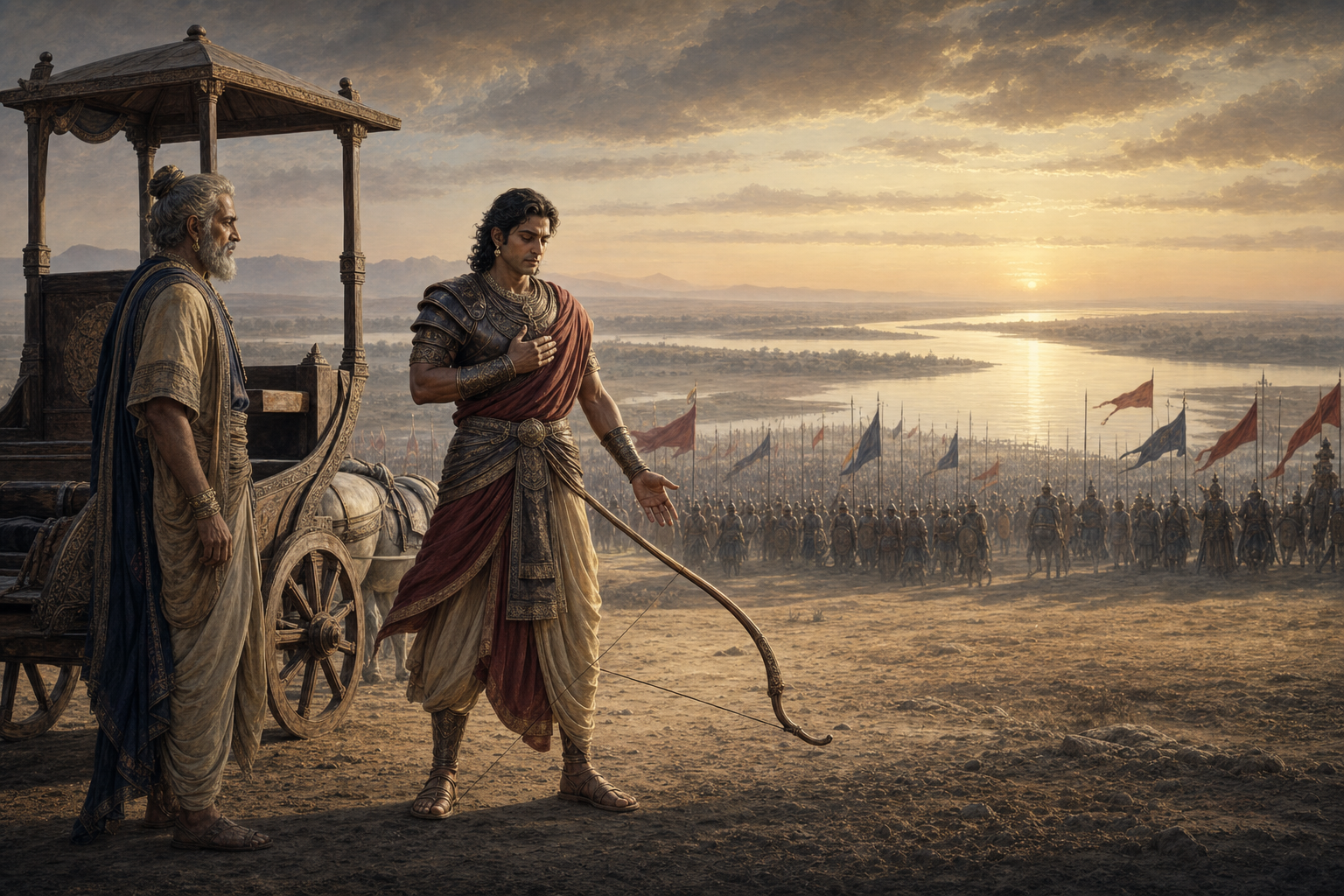
Gita Jayanti honors the moment Sri Krishna delivered the Bhagavad Gita to Arjuna at Kurukshetra. The observance highlights a movement from confusion to clarity and duty to devotion. Through recitation, yajnas, and study, communities translate scripture into daily practice. Core disciplines—karma-yoga, jnana-yoga, and bhakti-yoga—offer practical tools for mental clarity, equanimity, and compassionate action. The festival…
-
Riksharaja’s Astonishing Origin: The Dual-Gender Parent of Vali and Sugriva in Ramayana

Some Ramayana traditions portray Riksharaja as the dual-gender progenitor of Vali and Sugriva, a striking motif that expands the epic’s philosophical depth. Born from Brahma’s tear and associated with Indra and Surya, Riksharaja embodies both fatherhood and motherhood in one sacred figure. This narrative resonates with dharmic symbolism such as Ardhanarishvara, where complementarity and balance…
-
Bhagavad Gita Jayanti 2025 on December 1: Significance and Heartfelt Ways to Celebrate

Gita Jayanti 2025 will be observed on Monday, December 1, aligning with Shukla Paksha Ekadashi in Margashirsha, also known as Mokshada Ekadashi. The day commemorates Lord Krishna’s rendering of the Bhagavad Gita to Arjuna at Kurukshetra, revered as a living holy scripture. Observances include Gita parayan, collective recitation, satsang, Ekadashi fasting, and acts of seva…
-
Bhagavad-gita in Turkish: A Landmark Translation Advancing Cultural Exchange and Unity

A new Turkish-language edition of the Bhagavad-gita expands access to a seminal Sanskrit scripture for readers in Türkiye and the Turkish-speaking diaspora. The translation supports comparative religion and philosophy, helping students and seekers engage directly with the text. It advances unity in spiritual diversity by highlighting shared ethical themes across Hinduism, Buddhism, Jainism, and Sikhism.…