-
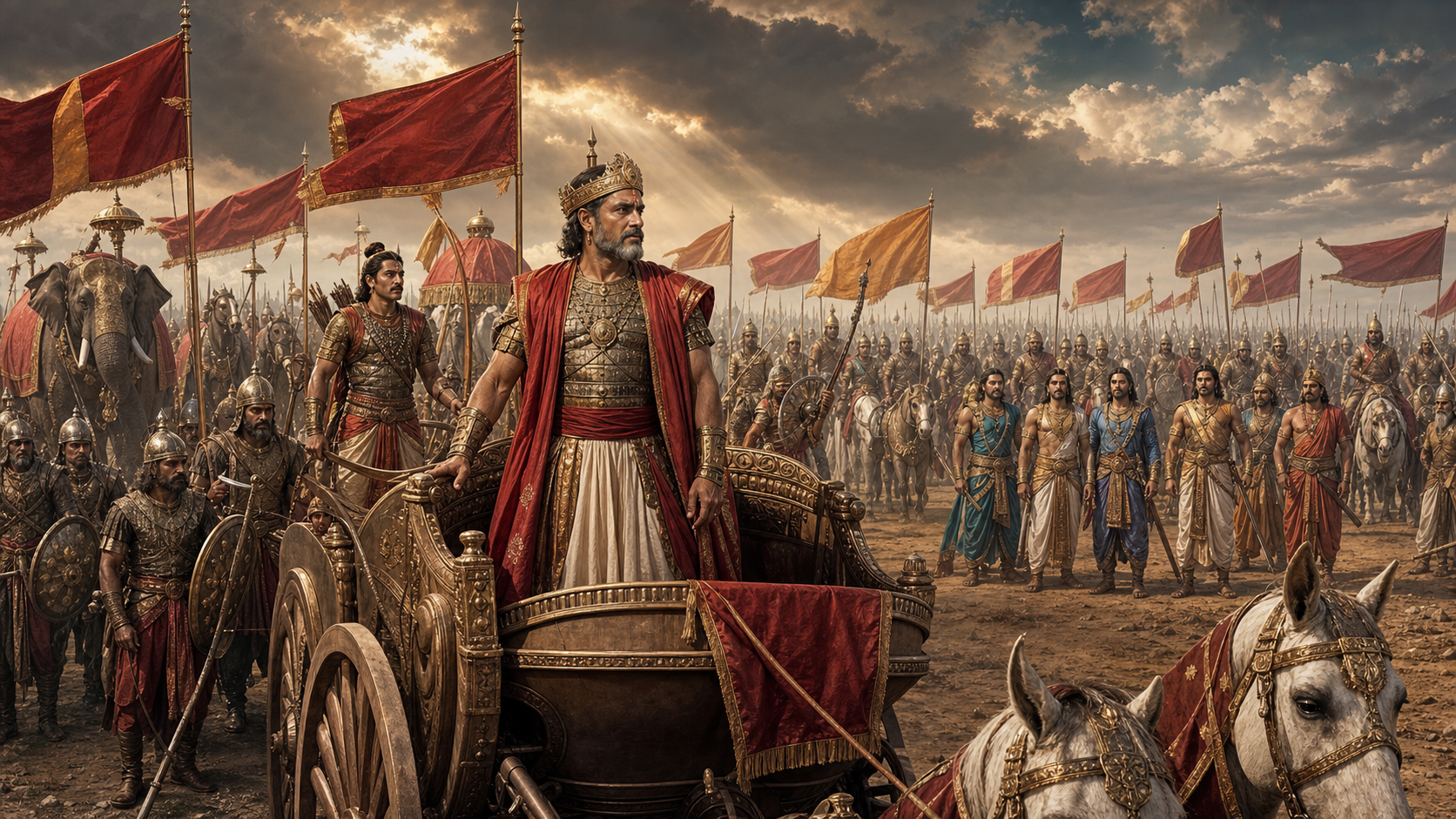
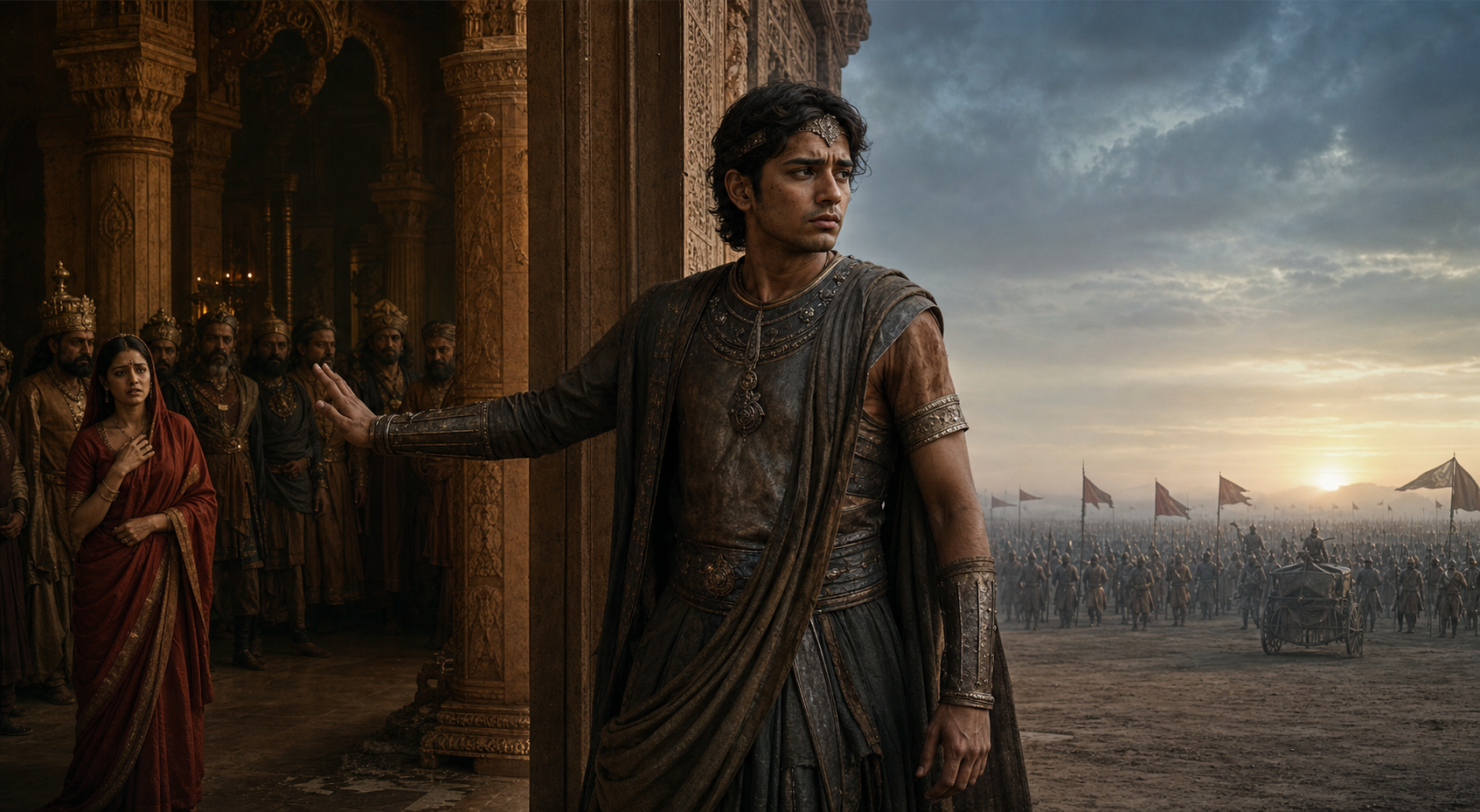
Krishna–Arjuna’s Sacred Friendship: Choosing Companions Who Challenge and Elevate the Soul

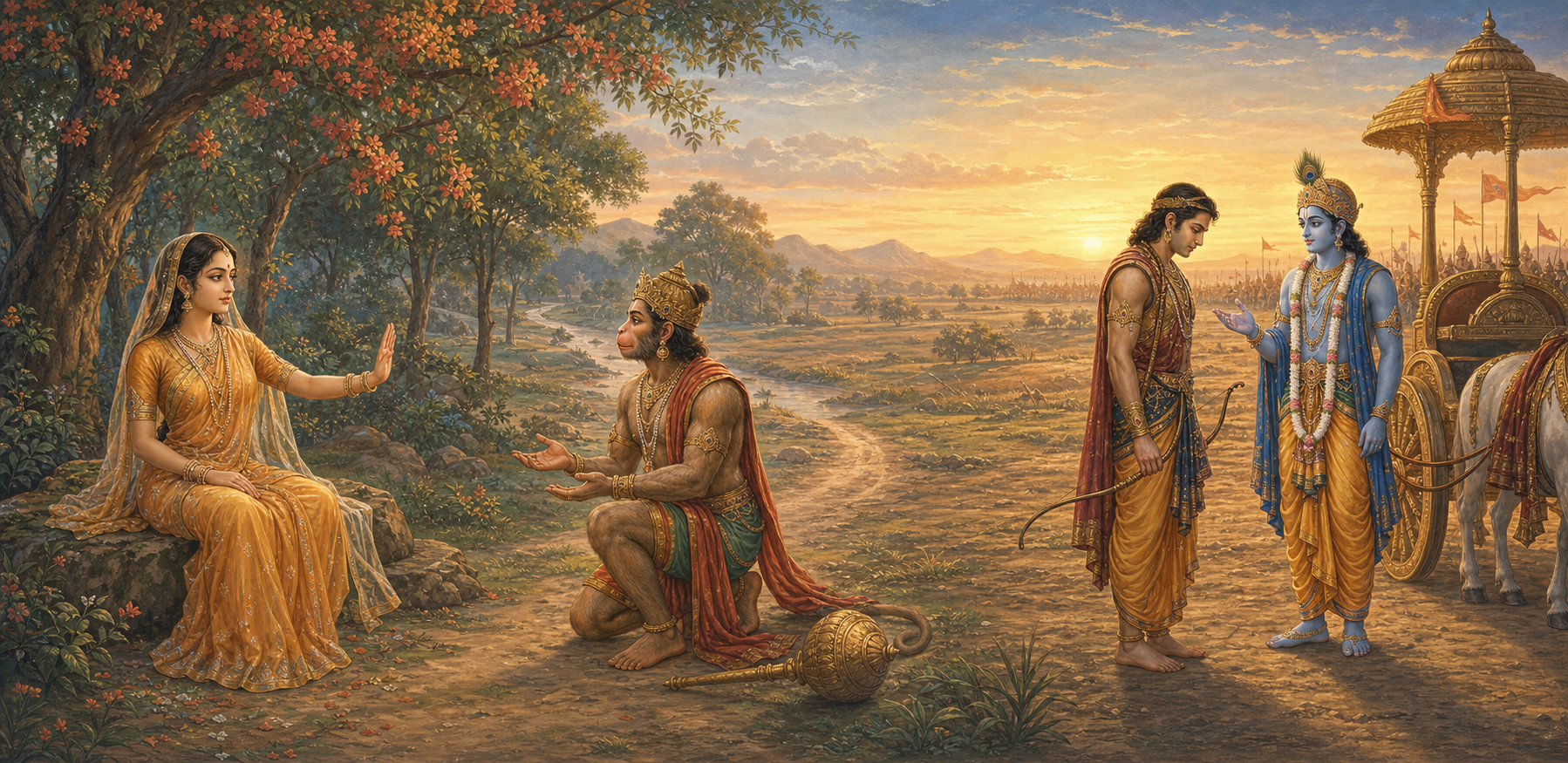
The Krishna–Arjuna friendship in the Mahabharata showcases how authentic companionship challenges, clarifies, and elevates. It models truth with empathy, accountability without humiliation, and steadfast alignment with dharma. The same ideal appears across dharmic traditions: kalyāṇa-mitra in Buddhism, sādhu-saṅgha in Jainism, and sangat in Sikhism, alongside Hinduism’s satsang and Bhakti Tradition. Readers gain practical criteria for…
-
Vayudeva Mahatmyam: Exploring the Wind God’s Power, Prana, and Dharma Across Traditions

Vayu Bhagavan, the wind god of Hindu tradition, is revered as the sustaining force behind prana, movement, and life. Classical narratives honor him as the divine father of Hanuman and Bhima, whose devotion to Lord Rama and loyalty to Lord Krishna exemplify courage and service. Philosophically, Vayu’s essence is experienced through pranayama and mindful breathing,…
-
Achyuta Unveiled: Meaning, Symbolism, and the Imperishable Grace of Vishnu

Achyuta—meaning “the unfallen”—is a profound Sanskrit name of Lord Vishnu and Sri Krishna that conveys imperishability and unwavering grace. Scriptural anchors such as Bhagavad Gita 1.21 and the Vishnu Sahasranama highlight its theological depth and devotional relevance. The name’s symbolism nurtures steadiness, moral clarity, and resilience, guiding practitioners through uncertainty. Its core intuition of a…
-
Vrindavan Wisdom with HG Gopinath Acharya Prabhu: How Remembrance Unlocks Nectar

This Vrindavan reflection, associated with HG Gopinath Acharya Prabhu, clarifies a core teaching of the Srimad-Bhagavatam: constant remembrance of Krishna leads to the same Supreme Truth that yogic disciplines seek. It highlights how unwavering focus—through bhakti or yoga—transforms consciousness and grants access to the ‘nectar’ of divine grace. The discussion draws parallels with Buddhist mindfulness,…
-
Nārada’s Grace and the Guru’s Gift: Insights from HH Guru Prasad Swami on SB 7.7.16

This morning reflection on Srimad Bhagavatam 7.7.16, guided by HH Guru Prasad Swami, explores how Nārada’s grace preserved Prahlāda’s remembrance of sacred teachings. The analysis reframes the verse to emphasize inclusive, dharmic values and the transformative power of a guru’s blessing. Listeners gain practical methods—daily reading, meditation, gratitude, and satsanga—to convert inspiration into long-term memory…
-
Vayudeva Mahatmyam: Unveiling the Power, Grace, and Living Legacy of Vayu Bhagavan

Vayu Bhagavan, the wind god of Hindu scriptures, embodies the cosmic prana that sustains life and guides conscious action. The Vayudeva Mahatmyam highlights his lineage from Rishi Kashyapa and Aditi, and his enduring legacy through Hanuman and Bhima, whose service to Lord Rama and Lord Krishna exemplifies strength, humility, and devotion. By linking Vayu’s power…
-
Chatus Sana in Hinduism: The Eternal Four Sages of Brahma and Their Timeless Wisdom

The Chatus Sana—Sanaka, Sanatkumara, Sanatsujata, and Sanandana—are revered in Hinduism as the eternal, mind-born sages of Brahma who embody purity, wisdom, and spiritual knowledge. Their presence across the Puranas, the Mahabharata, and the Upanishads highlights a shared commitment to contemplation, ethical clarity, and inner freedom. Sanatkumara’s Upanishadic teaching, Sanatsujata’s discourse on deathlessness, and Sanaka and…
-
Gadadhara Vishnu: The Awe-Inspiring Power of Kaumodaki and the Protection of Dharma

Gadadhara Vishnu, “He who holds the mace,” highlights Vishnu’s protective strength through the sacred Kaumodaki. In Hindu symbolism, the mace represents moral discipline, the power to dispel ignorance, and the guardianship of Dharma. Temple darshan and classical iconography communicate reassurance: strength aligned with compassion. This theme resonates across dharmic traditions—Hinduism, Buddhism, Jainism, and Sikhism—emphasizing ethical…
-
Srimad-Bhagavatam: The Living Book-Form of Sri Krsna Revealing Ten Transcendent Themes

Srimad-Bhagavatam is honored in Vaisnava tradition as the “book form” of Lord Sri Krsna, unfolding twelve cantos that mirror His bodily limbs and present ten transcendental topics. Lord Sri Caitanya Mahaprabhu praised it as pramanam amalam—“the spotless authority”—while Srila Rupa Gosvami highlighted hearing the Bhagavatam as a most potent limb of bhakti-yoga. Its narrative and…
-
Mushikasura Samhara Moorthy: Ganesha’s Powerful Lesson on Conquering Inner Obstacles

Mushikasura Samhara Moorthy presents Lord Vinayaka as the subduer of Mooshikasura, illuminating a Puranic lesson on conquering inner obstacles. The legend—preserved in ritual, iconography, and temple culture—teaches the ethical transformation of unruly forces into instruments of dharma. Read in tandem with broader dharmic insights from Buddhism, Jainism, and Sikh tradition, the story models how mindfulness,…
-
Rudra from Brahma’s Third Eye: Profound Symbolism and Cosmic Balance in the Devi Bhagavata Purana

This analysis explores the Devi Bhagavata Purana’s account of Rudra emerging from Brahma’s third eye, highlighting its profound symbolism for cosmic balance and inner transformation. It explains how the narrative frames creation, preservation, and transformation as a harmonious continuum within the Trimurti. Readers gain practical insights into the third eye as discernment, the pancha mahabhutas…
-
Kalabhairava Unveiled: Decoding Shiva’s Fierce Iconography of Time, Justice, and Protection
Kalabhairava, Shiva’s fierce manifestation, embodies time and its dissolution while upholding uncompromising truth and justice. This post decodes his iconography—trident, drum, sword, skull-bowl, and dog vahana—showing how each symbol guides ethical living and fearless clarity. Drawing on Agamas, Tantras, Shilpa traditions, and the Skanda Purana, it situates Kalabhairava as Kshetrapala, the guardian of sacred boundaries,…
-
Desire, Discipline, and Redemption: Vishwamitra’s Fall and Rise to Enlightened Self-Mastery

Sage Vishwamitra’s journey, preserved in the Ramayana and Puranas, reveals how desire, discipline, and humility shape authentic spiritual growth. The episodes of Menakā, Rambhā, and Trishanku illuminate why repression alone fails and how insight transforms both desire and anger. Read as a spiritual psychology, the narrative models tapas joined to compassion, equanimity, and surrender. The…
-
Thiruppavai PDF in Tamil, Telugu, Kannada, English: Authentic Text, Meaning, and Recitation Guide

Andal Thiruppavai is a cornerstone of Vaishnava devotion, comprising 30 ‘Pashuram’ that praise the mahatmya of Lord Vishnu. Composed by Sri Andal, the only female Alwar among the twelve, it remains central to dawn recitation during Margazhi and Pavai Nombu. Readers can find Thiruppavai PDF download options in Tamil, Telugu, Kannada, and English, with editions…
-
Gagan Mai Thaal: Guru Nanak’s Cosmic Aarti and the Living Unity of Dharmic Traditions

“Gagan Mai Thaal” portrays the cosmos as a living Aarti, aligning Sikh devotion with a universal reverence for creation. The hymn’s imagery—sky as platter, sun and moon as lamps—translates complex metaphysics into an accessible contemplative experience. It resonates with Vedic order, the Gita’s cosmic vision, Buddhist interdependence, and Jain ahiṃsā, affirming Religious Pluralism and Unity…