-
From Mind-Born Beings to Divine Touch: Linga Purana Insights on Hindu Creation

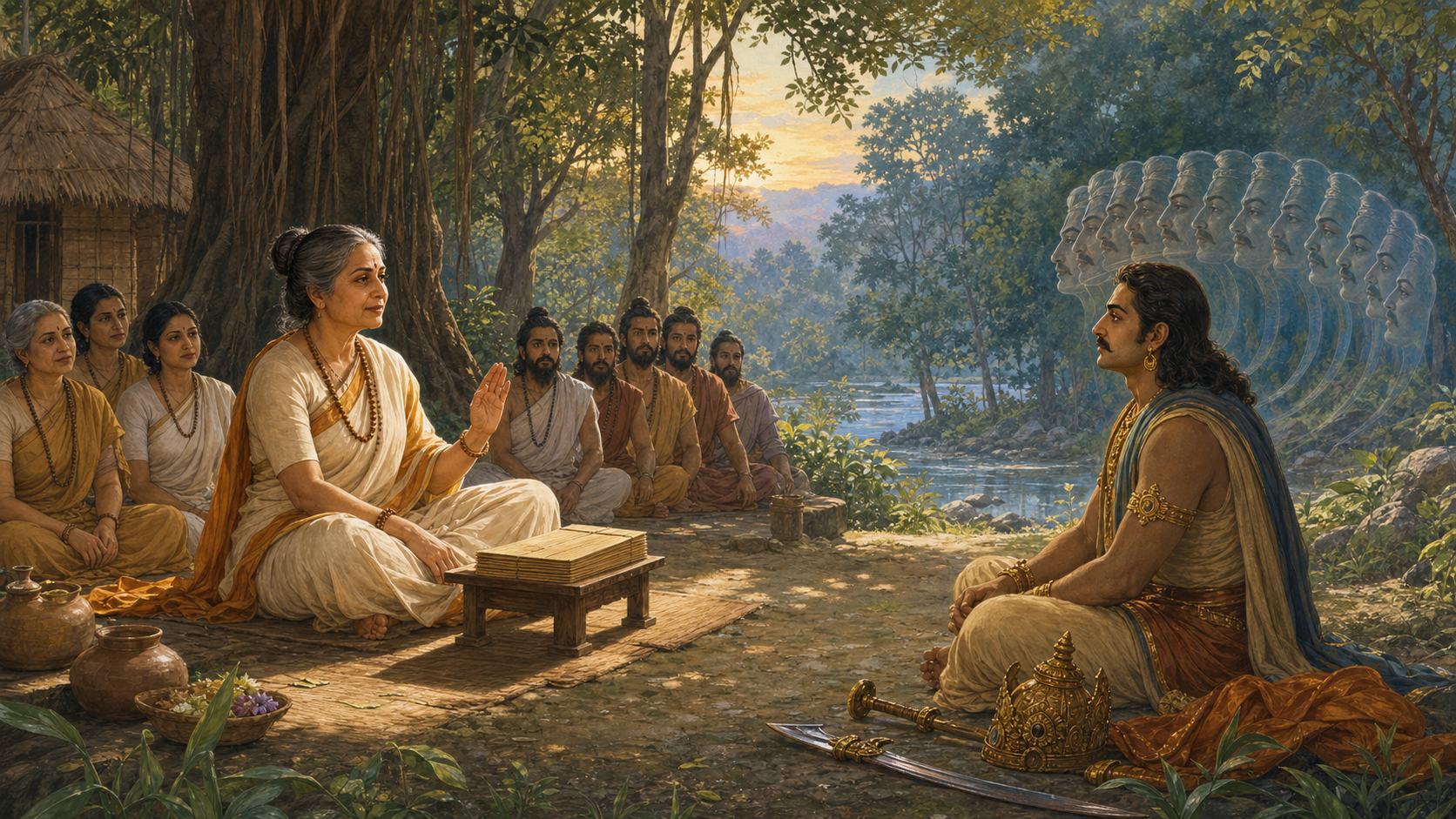
Hindu cosmology, especially as reflected in the Linga Purana, presents a spectrum of creation that begins with mental conception, extends through vision and touch, and culminates in physical procreation. This framework centers consciousness as a generative force—illustrated by Brahma’s manasa putra and by metaphors of darshana (vision) and sparsha (touch). Parallel classifications in Buddhism (opapātika)…
-
Timeless Dharmic Principles for an Ideal Husband: Lessons from Prahlada and Narada
This article distills dharmic principles that guide an ideal husband, drawing on Narada Muni’s counsel and the example of Prahlada Maharaja. It translates varnasrama-based insights into practical habits—ethical speech, dependable livelihood, and self-mastery—that strengthen family harmony. Readers gain actionable steps such as shared sadhana, weekly dialogues, and community seva to cultivate trust and resilience. The…
-
Timeless Guidance: The Guru–Shishya Tradition and the Quest for Everlasting Happiness

The quest for lasting happiness across dharmic traditions highlights the enduring value of authentic guidance. Srimad Bhagavatam recommends seeking a bona fide spiritual master through initiation, signaling a mature commitment to study, practice, and service. The Guru–Shishya Tradition finds parallel expressions in Buddhism, Jainism, and Sikhism, emphasizing integrity and accountability. ISKCON exemplifies modern continuity, with…
-
Beyond Illusion: Discover the Deathless Self in the Bhagavad Gita’s Transformative Wisdom

This article explores how the Bhagavad Gita addresses spiritual confusion through the insight that misapprehension arises from non-apprehension. It clarifies the distinction between the changing body-mind and the changeless atman, showing how this perspective reduces fear and grief. Drawing parallels with Buddhism, Jainism, and Sikhism, it highlights a Dharmic consensus on overcoming ignorance—avidya, avijja, mithyatva,…
-
Beyond Time and Space: Bhusundi Ramayana and the Immortal Crow’s Countless Ramayanas

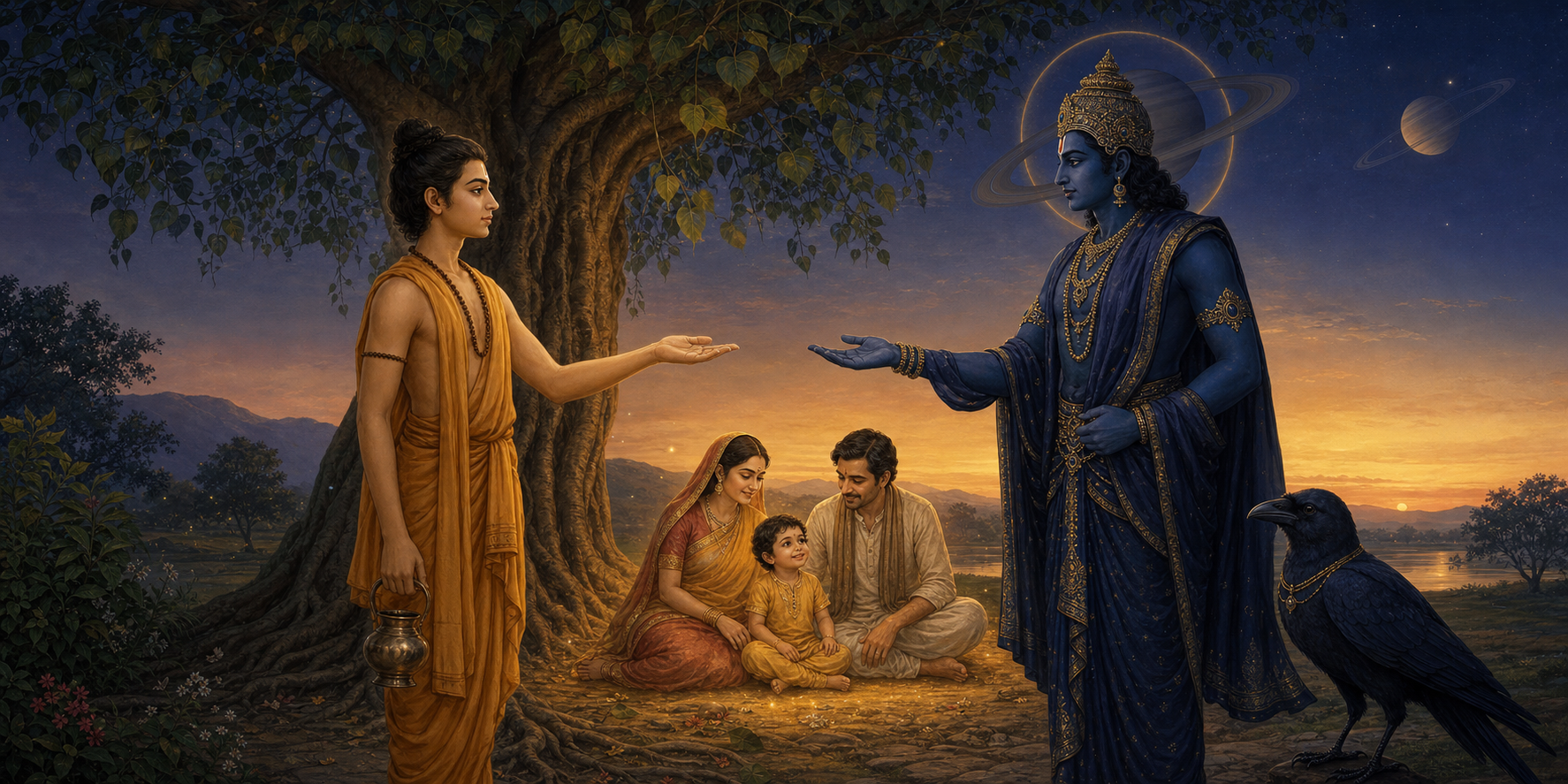
Bhusundi (Kākabhūśuṇḍi), the immortal crow sage, embodies the Hindu vision of cyclical time by witnessing Ramayana’s unfolding across infinite kalpas. The Bhusundi Ramayana asserts that there are countless Ramayanas—contextual, complementary, and united by dharma’s essence. This plurality aligns with Jain anekāntavāda, Buddhist dependent origination, and Sikh remembrance of the Divine, underscoring unity across dharmic traditions.…
-
Lord Śiva on the Wounds of Words: SB 4.3.19 and the Power of Compassionate Speech

SB 4.3.19 presents Lord Śiva’s profound teaching that unkind words from relatives wound more deeply than physical harm. The verse clarifies why familial speech carries lasting emotional effects and how mindful communication can prevent subtle violence. Set against Satī’s dilemma with Dakṣa, it illuminates the ethics of duty, dignity, and restraint. The insight resonates across…
-
Shiva Needs Shakti: Devi Upanishad’s Powerful Lesson on Consciousness and Energy

The Devi Upanishad teaches that Shiva (pure consciousness) and Shakti (dynamic energy) are inseparable, revealing that true power arises from their sacred union. This insight reframes metaphysical power as integrative, not hierarchical: awareness without energy remains inert, and energy without awareness lacks direction. Everyday experience reflects this balance, where clarity must meet purposeful action to…
-
Ucchista Ganapati Revisited: Beyond Stereotypes, the Inclusive Tantric Wisdom of Ganesha

Ucchista Ganapati, the eighth of Ganesha’s 32 forms, is often miscast as merely an “unclean” Tantric deity. Drawing on the ancient “Ucchista Ganapathi Puja Vidhanam,” this analysis clarifies that the practice is scripturally grounded, disciplined, and transformative. The term ucchista—“that which remains”—signals a theology of sanctifying remainders, not endorsing impurity. Framed by mantra, nyasa, and…
-
When Duty Meets Divine Will: Arjuna’s Tapas to Shiva and the Blessing of Astras

Arjuna’s tapas at Mount Indrakeel reveals how inner discipline aligns human duty with divine will in the Mahabharata. Guided by Veda Vyasa, Arjuna seeks Shiva’s grace and receives the Pashupatastra, exemplifying power entrusted only to ethical hands. The episode illustrates Kshatra Dharma as measured protection rather than aggression, echoing cross-dharmic ideals from Hinduism, Buddhism, Jainism,…
-
Four Faces of Varuna: Unveiling Vedic Symbolism for Cosmic Order and Inner Harmony

This article decodes the “Four Faces of Varuna” as a Vedic metaphor for omniscient care, moral order, and compassionate accountability. It clarifies how Rita (ṛta) structures both the cosmos and ethical life, linking Varuna’s symbols—such as the pāśa and waters—to practical integrity and social trust. Readers gain a clear framework that integrates the four Vedas,…
-
Andal’s Tiruppavai: Four Transformative Steps to Attain the Divine Presence of Vishnu
Andal’s Tiruppavai, revered across the Sri Vaishnava tradition, presents a clear four-step path to the divine presence of Lord Vishnu: shared discipline (Pavai Nombu), daily remembrance through song, surrender to grace, and compassionate service. These steps reinforce one another, enabling seekers to balance devotion, study, and ethical living. Observances during Margazhi create a supportive communal…
-
Paryagnikarana Explained: Sacred Ghee Purification That Elevates Vedic Yajna and Devotion

Paryagnikarana, the Vedic rite of purifying ajya (ghee) before offering it into the sacred fire, shows how material preparation and mental intention unite to elevate yajna. The procedure integrates clarity of substance, mantra recitation, and reverence for Agni to transform an ordinary ingredient into a consecrated medium. Beyond technical steps, the rite embodies an inner…
-
Sacred Parenting Mastery: Shiva–Parvati’s Timeless Lessons for Raising Wise, Compassionate Children

Hindu scriptures present the divine family of Lord Shiva, Mata Parvati (Pārvatī), Lord Ganesha, and Lord Kartikeya as a practical model of sacred parenting. Their narratives teach restorative accountability, healthy sibling dynamics, and the harmony of discipline with compassion. The Ganesha guardianship episode highlights firm boundaries coupled with reconciliation, while the brothers’ contest affirms diverse…
-
When Brahma Created Termites: Vishnu’s Decapitation and the Awe-Inspiring Rise of Hayagriva

This article explores the Purāṇic narrative in which Brahma creates termites to awaken Vishnu, leading to the unexpected decapitation that culminates in Vishnu’s horse-headed form, Hayagriva. It clarifies major variations found in Hindu scriptures, highlighting how yajna, vigilance, and knowledge restore cosmic order. Readers gain a nuanced, academic account that remains emotionally resonant: small causes…
-
Why Ravana Took Sita to Lanka: Exploring a Protective Motive Across Dharmic Perspectives

This article examines why Ravana took Sita to Lanka by engaging both the Valmiki Ramayana and alternative interpretations that emphasize restraint and honor. It highlights how Sita’s inviolable dignity becomes the ethical fulcrum of the narrative across Hindu, Buddhist, Jain, and Sikh perspectives. Readers gain a nuanced understanding of motive, vow, and dharma without displacing…
-
Jati in Nyaya Philosophy: Exposing False Analogies to Elevate Dharmic Dialogue and Truth

Jati in Nyaya philosophy identifies fallacious rebuttals that rely on superficial comparisons rather than addressing the core claim. By naming these errors, Nyaya helps readers detect false analogies, category mistakes, and shifting grounds in everyday debate. The approach supports rigorous, fair, and focused discussion. Practical examples show how irrelevant similarities can mislead, while simple tests…
-
Who Created Brahma? Unveiling Devi, the Supreme Mother and Cosmic Source of All

Hindu cosmology addresses the classic question—who created Brahma?—by pointing to Devi, the Divine Mother, as the primordial creative potency (Shakti) behind all manifestation. Purāṇic narratives and Vedic philosophy converge on a hierarchy of emanation rather than a simplistic creator-of-creator chain. Symbols like the lotus and the Śri Yantra, and texts such as the Devi Mahatmya…