-
Divine Responsibility and the Yadus: Transformative Lessons from Srimad Bhagavatam 11.1.4

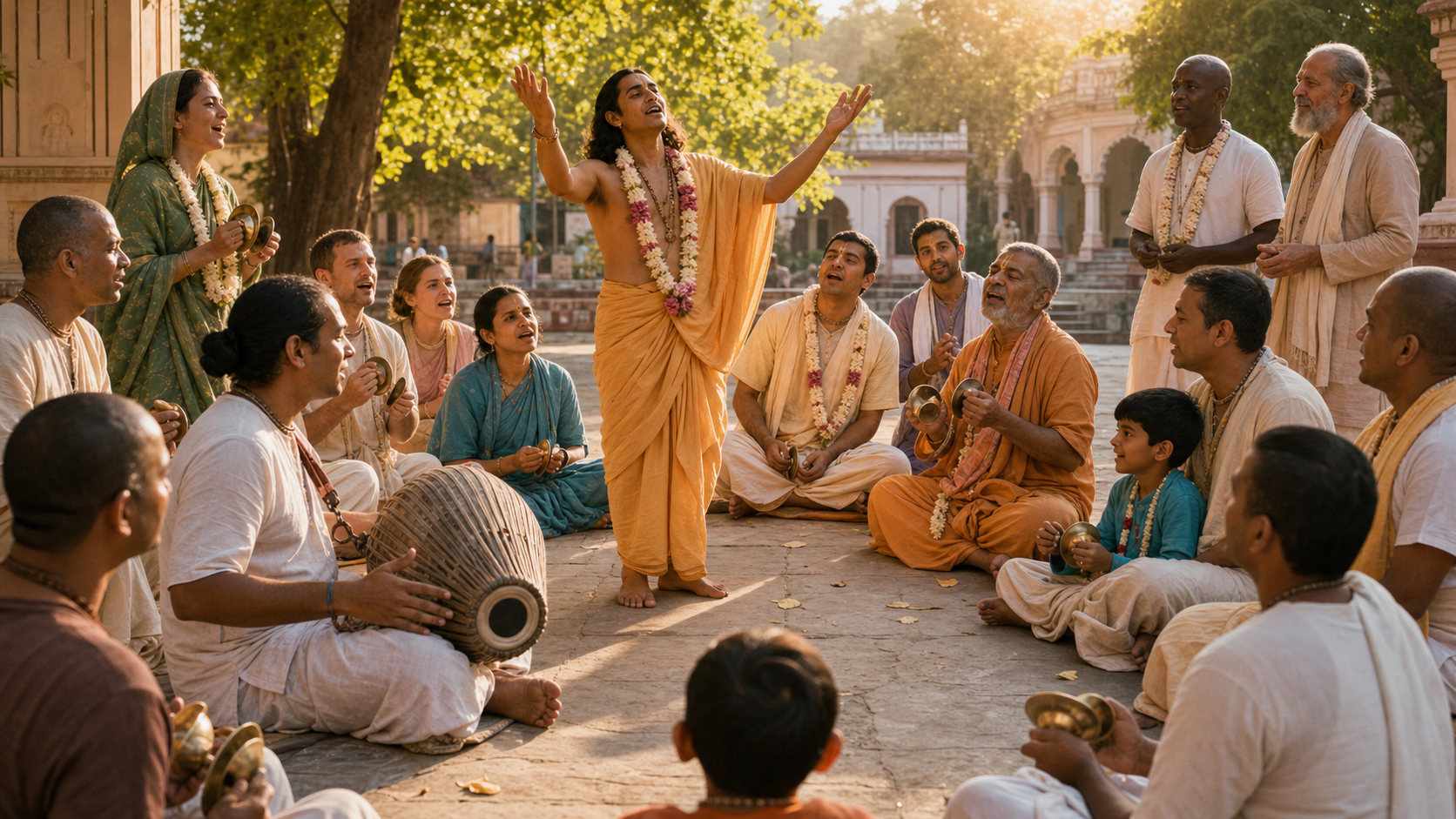
This reflection on Srimad Bhagavatam 11.1.4, presented at ISKCON Juhu by H.H Bhakti Brihad Bhagavat Swami, explains why Lord Krishna did not allow others to end the Yadu dynasty. As His own family, the Yadus could not be destroyed by any being in the universe, not even the demigods, ensuring that no external party accrued…
-
Murugan’s Many Faces: Skanda Purana vs. Tamil Sangam—Hidden Harmonies and Truths

This essay explores Murugan’s dual portrayal in the Skanda Purana and Tamil Sangam literature, revealing complementarities rather than contradictions. It shows how the cosmic commander of the devas and the intimate hill-god of the kurinji landscape express a single spiritual essence. Readers gain clear historical and textual context that links pan-Indian Puranic frameworks with local…
-
Tiruppavai in Hindi (तिरुप्पावै): Meaning, Practice, and Andal’s Divine Bhakti for Margazhi

Tiruppavai in Hindi (तिरुप्पावै) brings Āṇḍāḷ’s thirty Margazhi hymns into clear focus for Hindi readers, blending poetic beauty with scriptural depth. The preserved dhyānam honors गोदा as the awakener of Krishna and teacher of Vedic essence through loving surrender. Presented in an academic yet accessible style, the post explains key themes—grace, prapatti, communal vows, and…
-
Shiva Loka Unveiled: Mount Kailash and the Timeless Abode of Lord Shiva

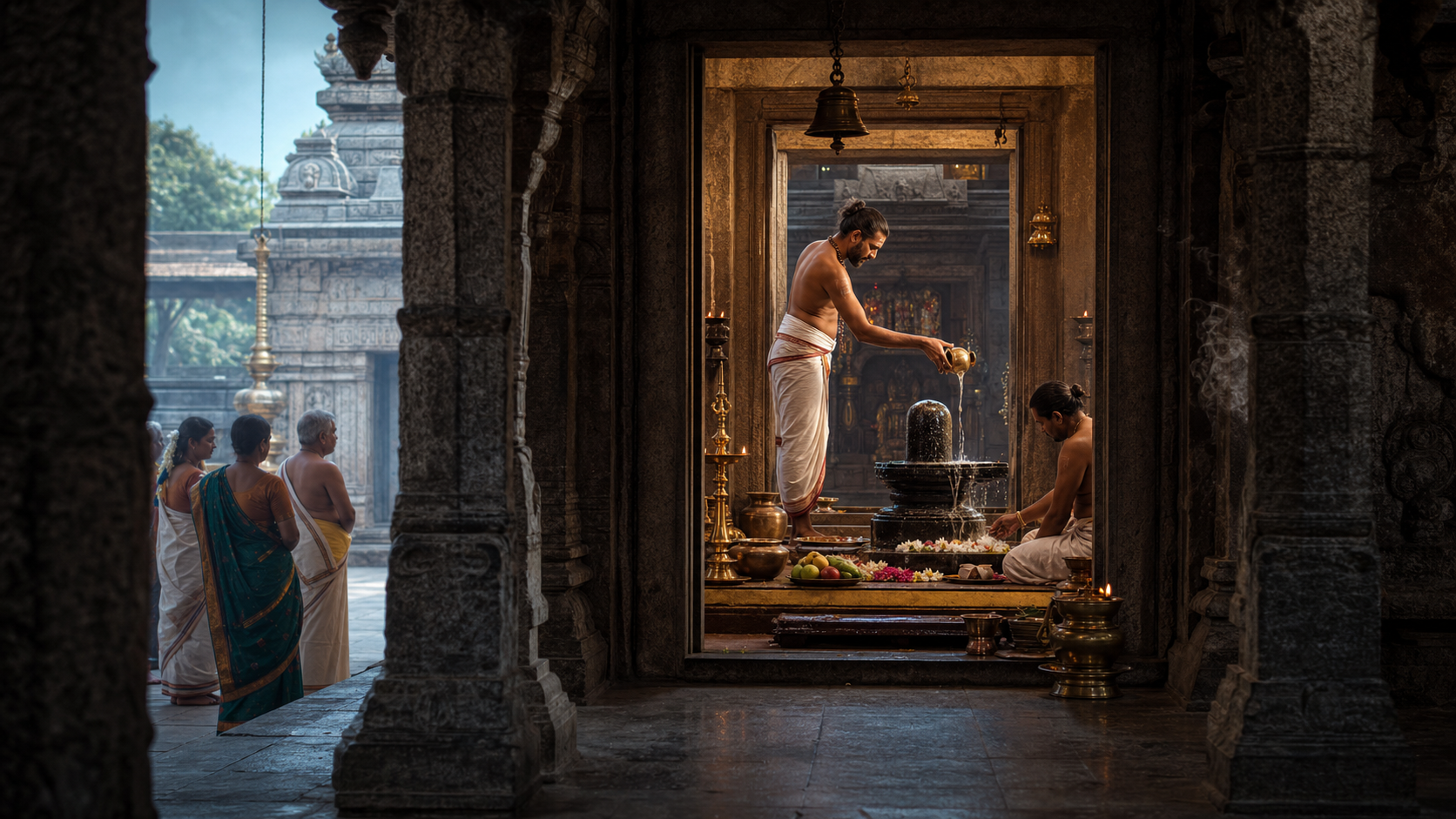
Shiva Loka is revered in Hinduism as the abode of Lord Shiva, reflected on earth by Mount Kailash. The Shiva Purana presents Shiva’s compassion and transformative power as ethical and contemplative guides for modern life. Pilgrims describe the Kailash parikrama as a humbling encounter with silence and awe, deepening bhakti beyond ritual. As Nataraja, Shiva’s…
-
Bhagavad Gita as a Living Guide: Chaitanya’s Moving Lesson on Devotion, Duty, and Unity

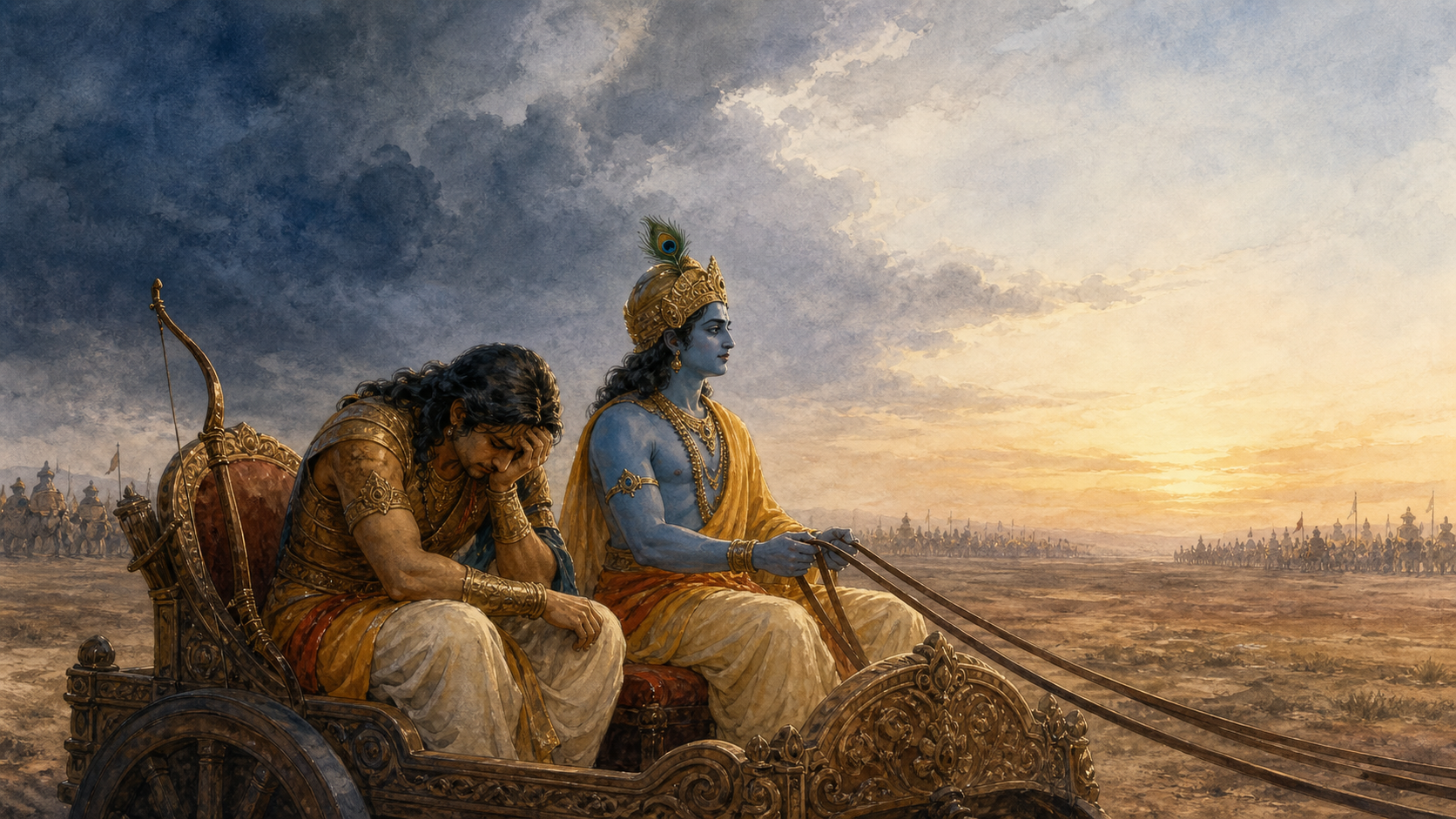
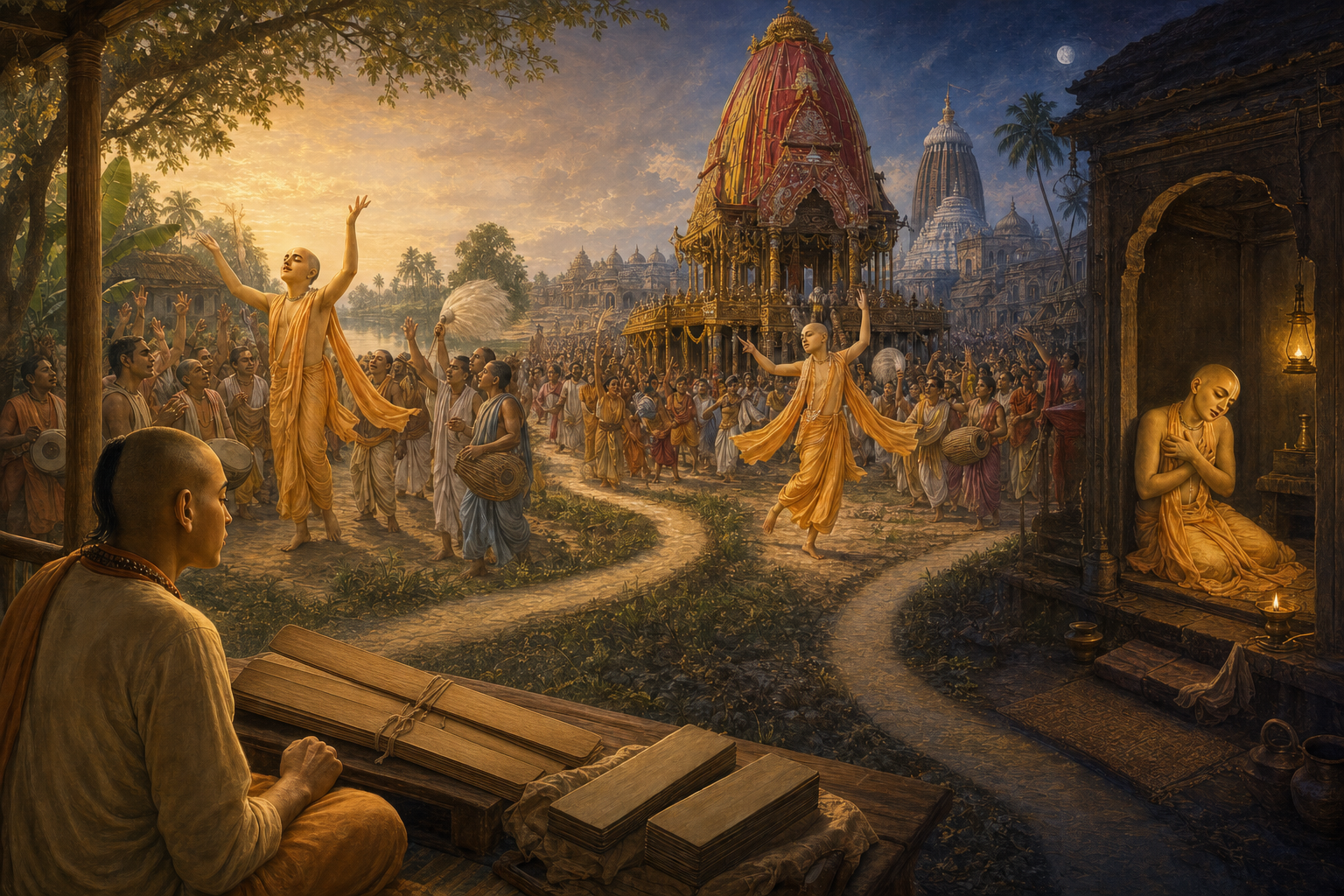
The Bhagavad Gita offers practical guidance for daily life through duty, selfless action, and devotion. A noted account from Chaitanya Mahaprabhu’s travels in South India highlights how a sincere heart can grasp the Gita’s essence beyond textual study. The image of Krishna guiding Arjuna’s chariot symbolizes trust, ethical action, and inner steadiness. These themes align…
-
Revealing Creation’s Design: HH Bhakti Prabhupada Vrata Damodara on SB 3.20.30–31 in Alachua

This class situates SB 3.20.30–31 within the Maitreya–Vidura dialogue to clarify how Vedic cosmology aligns material causality with transcendental purpose. It models a dharmic method of learning where attentive hearing and sincere questioning foster humility and clarity. The presentation translates philosophical nuance into practical devotion through remembrance, ethical self-discipline, and gratitude for guidance. Listeners found…
-
Goddess Nirrti Unveiled: Transformative Power and the Haunting Symbolism of Riding a Ghost

Goddess Nirrti (Nirṛti) is often misread as a force of misfortune, yet Hindu symbols and Purāṇic references present a more profound role: a guardian of thresholds who transforms fear and loss into clarity. The occasional motif of riding a “ghost” (preta) in certain traditions is symbolic, representing mastery over unassimilated fears and destructive impulses. As…
-
Hinkara in Vedic Sacrifices: The Transformative Power of ‘Him’ in Sama Veda Chanting
Hinkara, the intentional chanting of the syllable “Him,” serves as the invocation that inaugurates Sama Veda recitation during Vedic sacrifices. Located just before the Prastava and followed by the Udgitha, it marks the exact transition from silence to sacred sound. As a stobha syllable, Hinkara aligns breath, pitch, and attention, demonstrating the technical and contemplative…
-
Ravana’s Calculated Deception at Panchavati: Strategy, Dharma, and the Road to Lanka’s Fall

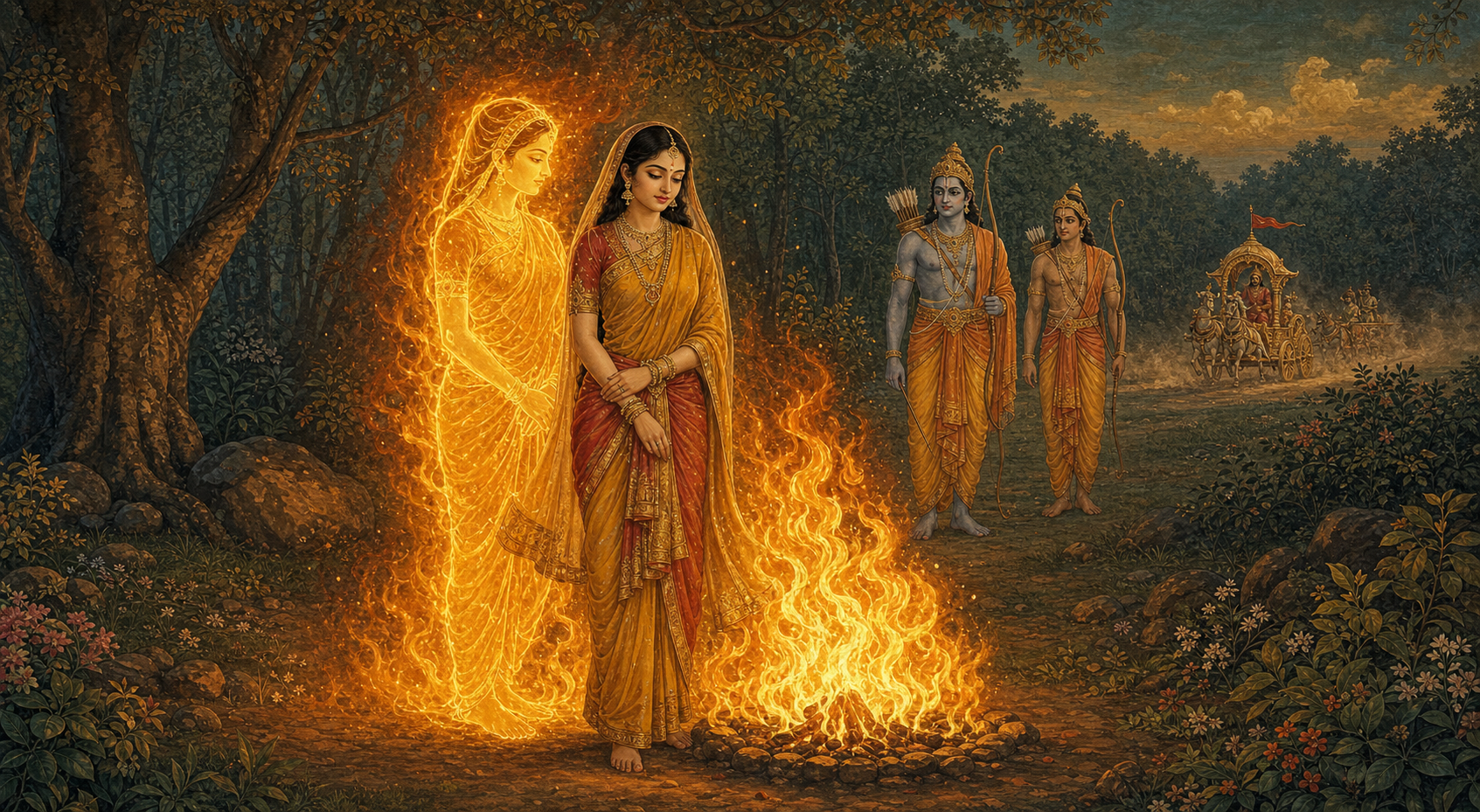
Ravana’s decision not to march with a large army to Panchavati reflects a strategic calculus grounded in recent battlefield evidence, logistical realities, and counsel from Maricha. After Rama’s defeat of Khara and Dushana’s Janasthana garrison, direct confrontation appeared perilous. Instead, Ravana adopted deception—the golden deer stratagem—to create psychological asymmetry and relocate the conflict toward Lanka.…
-
Shankhu Chakradhari Brahma: Decoding a Rare, Awe-Inspiring Icon of Sudarshana and Shankhu

This exploration decodes the rare icon of Shankhu Chakradhari Brahma, where Lord Brahma bears the Sudarshana Chakra and Shankhu. Readers gain a clear understanding of how this iconography aligns creation with preservation within Sanatana Dharma. The symbolism of the chakra (order, time, discernment) and conch (primordial sound, prāṇa) is explained in an accessible, academic style.…
-
Prithu Chakravarthi’s Legacy: How a Dharma-Raja Gave Earth Her Sacred Name, Prithvi

The name Prithvi for Earth is rooted in the Puranic account of Prithu Chakravarthi, a dharma-raja who restored balance between society and nature. Bhishma’s inquiry to Sage Pulastya introduces the genealogy from Swayambhuva Manu through Anga and Sunitha to Vena and Prithu. After reconciling with Earth—who had assumed a cow’s form—Prithu renewed agriculture and prosperity,…
-
Manifestation of Maa Lakshmi: A Timeless Brahma Purana Tale of Dharma and Prosperity

The Brahma Purana recounts how Maa Lakshmi manifested during the Samudra Manthan, when devas and asuras churned the Ocean of Milk under Lord Vishnu’s guidance. The story teaches that enduring prosperity rests on dharma, cooperation, and disciplined effort. Lakshmi’s lotus-seat symbolizes purity, while her choice of Vishnu signifies prosperity aligned with order and compassion. Readers…
-
Lakshmana’s Impossible Choice: Duty, Honor, and Dharma in Ramayana’s Golden Deer Episode

The Golden Deer episode in the Ramayana crystallizes Lakshmana’s ethical dilemma between explicit duty and perceived emergency. The narrative contrasts svadharma with maryada, asking how to act when a clear mandate collides with an uncertain cry for help. By highlighting discernment, foresight, and proportional response, it shows how intention and outcome must be balanced. The…
-
Sati and Daksha Yagya: A Timeless Puranic Lesson on Dharma, Dignity, and Unity

Sage Pulastya’s response to Bhishma situates Sati’s self-immolation within a clear ethical frame: Daksha’s grand yagya, conducted without inviting Shiva, exposed the dangers of pride and exclusion in ritual life. Sati’s choice, presented as solemn yogic resolve, protested the insult to devotion and the abuse of religious authority. Shiva’s subsequent intervention halted the disorder, yet…
-
Lakshmi’s Radiant Manifestation in Samudra Manthan: A Timeless Lesson in Hope and Dharma

The Brahma Purana recounts the Manifestation of Maa Lakshmi as a disciplined response to crisis, where devas heed Vishnu’s counsel and undertake the Samudra Manthan. The narrative situates prosperity within dharma, showing how collective effort and ethical intent invite auspicious outcomes. Lakshmi’s emergence from the Kshira Sagara symbolizes purity, resilience, and the union of abundance…