-
Dyutakrida in the Mahabharata: The Fateful Game of Dice That Shaped a Civilization

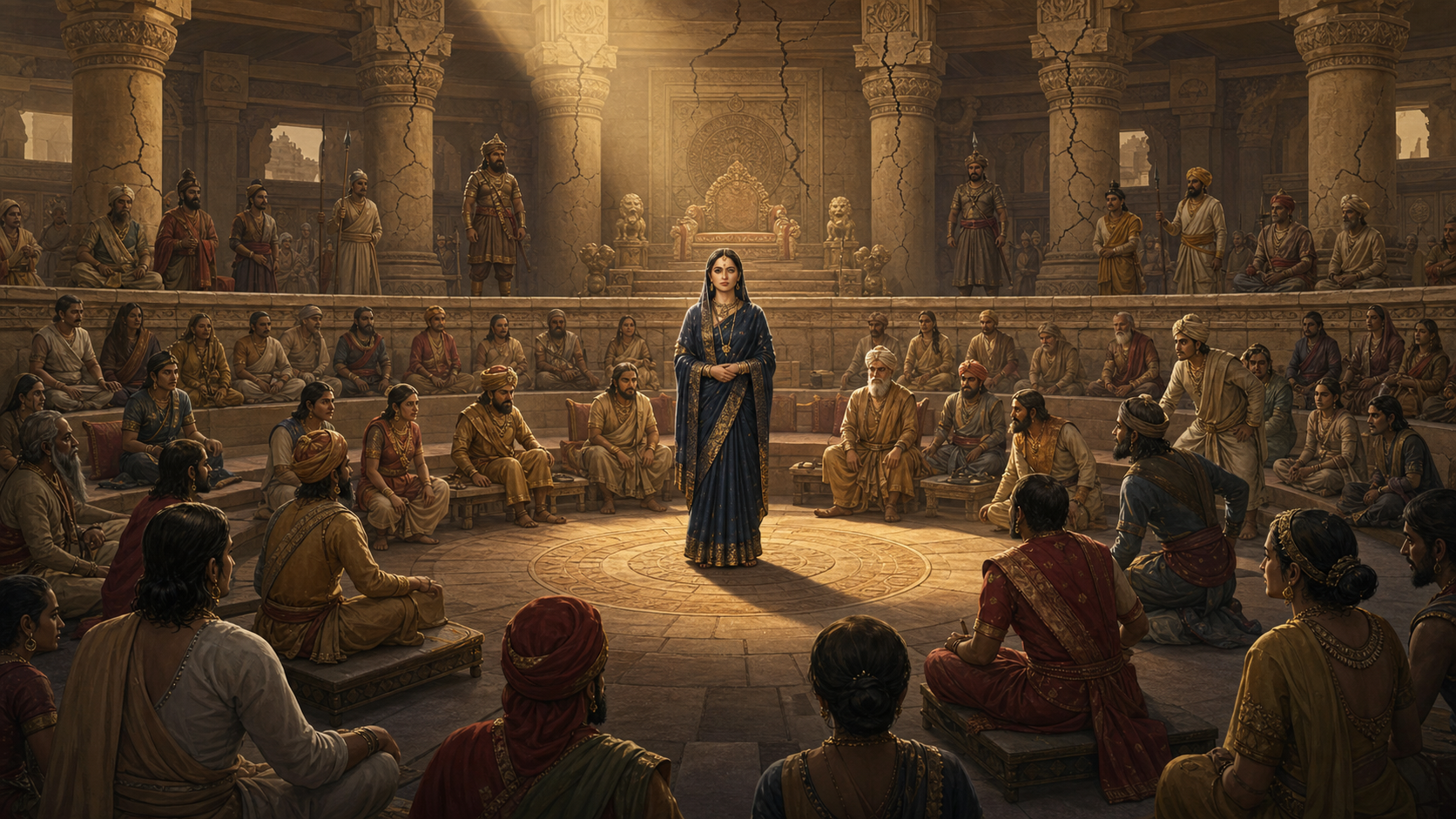
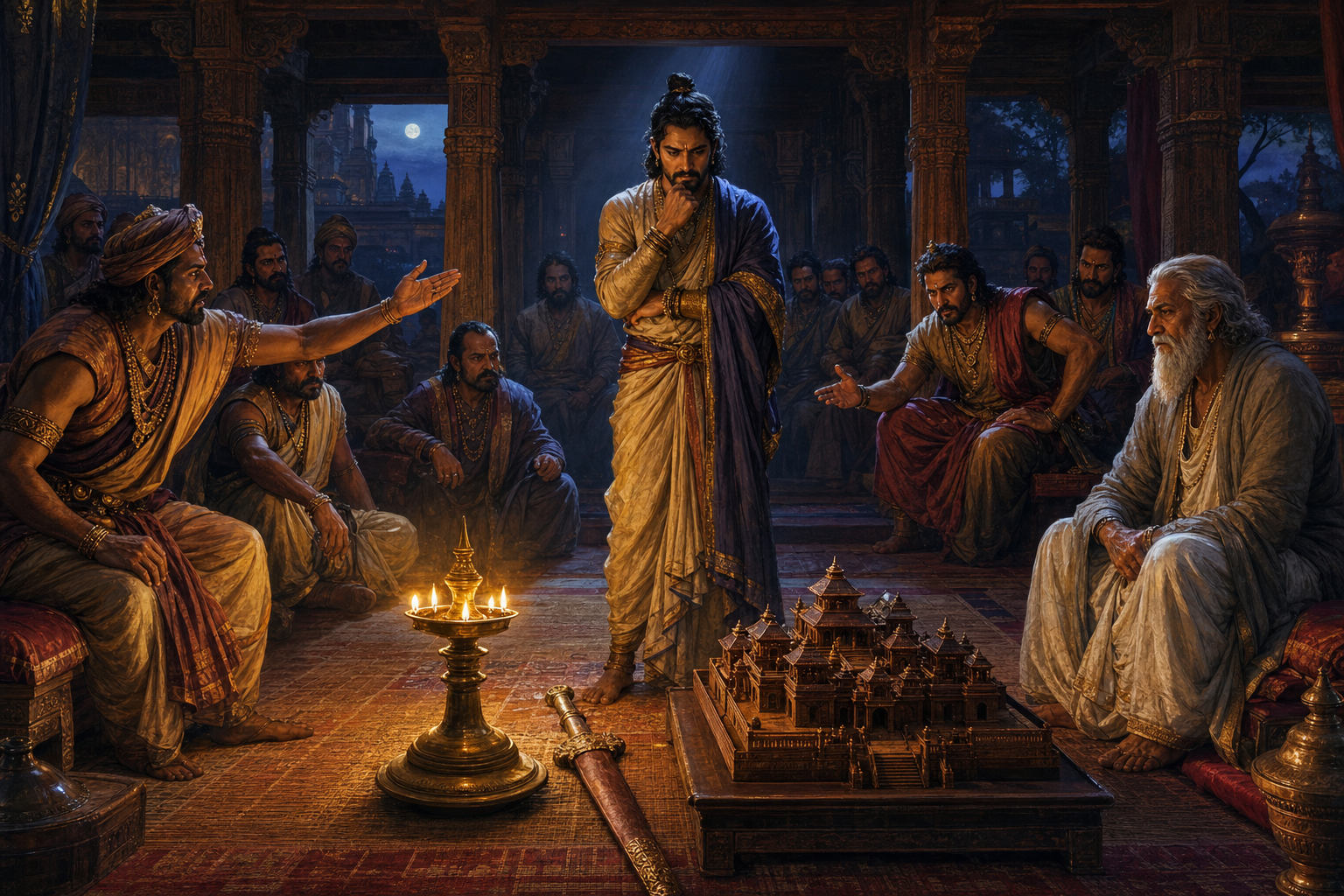
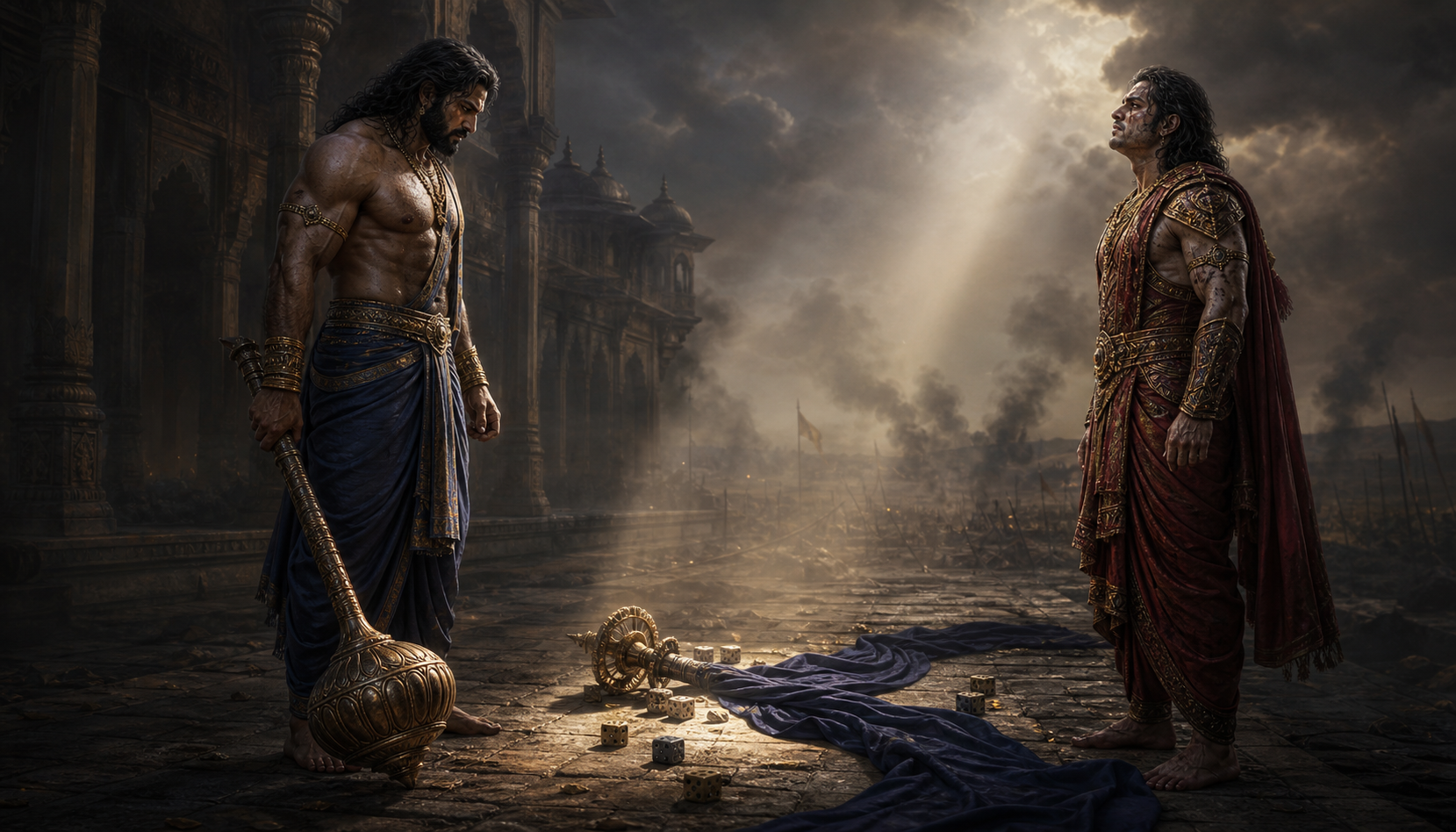
Dyutakrida—the Game of Dice in the Mahabharata—marks the epic’s moral and political turning point, revealing how desire and deception can erode dharma and destabilize institutions. This clear, academic retelling traces the invitation by Duryodhana, Shakuni’s manipulation, the catastrophic wagers by Yudhishthira, and Draupadi’s courageous challenge to an unjust order. Readers gain a concise sequence of…
-
Yudhishthira’s Half-Truth: Decoding a Heart-Rending Dharma Dilemma of the Mahabharata

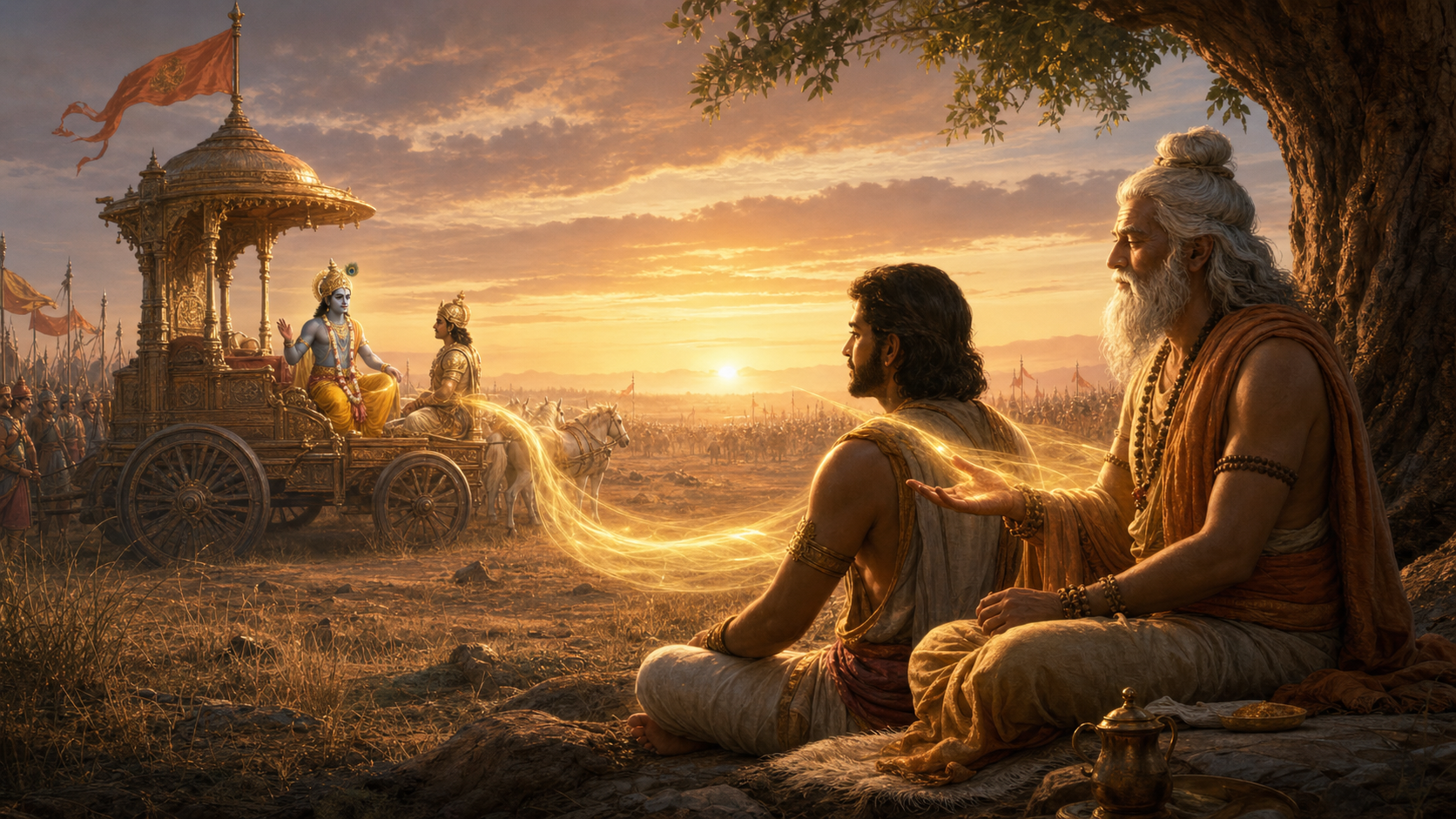
Yudhishthira’s half-truth in the Mahabharata presents a timeless ethical dilemma: when personal virtue conflicts with public duty in the midst of war, how should leaders act? The episode, centered on Drona’s disarmament after the ambiguous proclamation “Aśvatthāmā hataḥ,” highlights dharma-sankata and the costs of hard choices. Rather than offering easy answers, it encourages a method…
-
Kalpataru’s Wish-Fulfilling Wisdom: Amalananda on Bhamati and Advaita Vedanta

Kalpataru, the 13th-century Advaita Vedanta commentary by Amalananda, illuminates Bhamati’s nuanced exposition of Śaṅkara’s Brahma-sutra-bhashya with remarkable clarity. It models meticulous Sanskrit scholarship—dialectic, hermeneutics, and precise definitions—while guiding readers from scriptural sentences to non-dual insight. Set within a living chain of commentaries that includes Vacaspati Mishra and Appaya Dikshita, Kalpataru shows how Indian philosophy evolves…
-
Pavamana Suktam in the Rig Veda: Timeless Hymn of Soma, Purity, and Dharmic Unity

Pavamana Suktam (Rig Veda 9.1.1–10) opens the Soma Mandala with a powerful vision of purification, clarity, and renewal. Attributed to Madhucchanda and composed in the Gayatri meter, it functions as both liturgical chant and contemplative text. The imagery of Soma’s sacred flow symbolizes inner transformation, aligning with shared values across Hinduism, Buddhism, Jainism, and Sikhism.…
-
Narayana Mantra at Life’s Final Breath: How Last Thoughts Shape Destiny and Peace

This reflection explains why chanting the Narayana Mantra, Om Namo Narayanaya, is revered at life’s final breath in Hindu beliefs. It clarifies how the mind’s last impressions align with karma and reincarnation, echoing Bhagavad Gita teachings on the power of final consciousness. Practical, compassionate guidelines are offered for creating a calm environment, choosing suitable modes…
-
Dronacharya and Dhrishtadyumna: Destiny, Deception, and Dharma in the Kurukshetra War

This analysis traces the full arc of Dronacharya and Dhrishtadyumna, from Drupada’s humiliation to the prophetic birth of Dhrishtadyumna, the guru–shishya paradox, and the Kurukshetra stratagem involving Ashwatthama. It clarifies competing versions of Drona’s death and weighs the ethical dimensions of deception in warfare. Readers gain a clear timeline, context for motives on both sides,…
-
Mahabharat Stories: 10 Iconic Moments That Shaped Dharma, Destiny, and the Kurukshetra War

This academically grounded overview presents ten iconic moments from the Mahabharata that continue to shape ethical thought, leadership, and social harmony. It explores Dyutakrida and the dignity of justice, Bhishma’s vow and the cost of rigid duty, and Krishna’s Udyoga Parva diplomacy as a model of principled peace. The Bhagavad Gita reframes action through svadharma…
-
Beyond Liberation: Why Devotees Decline Moksha—Śrīmad-Bhāgavatam 9.4.67, CC Ādi 4.208

Śrīmad-Bhāgavatam 9.4.67, cited in CC Ādi-līlā 4.208, presents a profound principle of the Bhakti Tradition: genuine devotees do not seek liberation or time-bound pleasures because loving service to the Divine is itself complete fulfillment. Set against the narrative of Durvāsā Muni and Mahārāja Ambarīṣa, the verse clarifies why bhakti transcends both material enjoyment and even…
-
Upanishadic Wisdom and the Profound Oneness of Life: A Call to Spiritual Solidarity

The Upanishads present a clear and compelling teaching: all life is fundamentally one. By illuminating the non-dual relationship between ātman and Brahman, these scriptures ground ethics in spiritual unity and inspire compassion in action. Their inclusive approach honors multiple paths—jñāna, bhakti, karma, and dhyana—supporting religious pluralism and interfaith harmony. Resonating with Buddhism, Jainism, and Sikhism,…
-
Manthanabhairavatantra: Unveiling Kubjika’s Shakti and the Western Kaula’s Living Wisdom

The Manthanabhairavatantra is a monumental Shakta scripture centered on Goddess Kubjika and Bhairava, anchoring the Western Kaula tradition. It presents a unified vision of energy and awareness, integrating mantra, ritual, and meditation with a nuanced map of consciousness and kundalini awakening. The churning metaphor makes complex metaphysics vivid and emotionally resonant, offering readers an accessible…
-
Mastering the Senses in Bhakti: Narayani Devi Dasi on Srimad Bhagavatam 4.29.11

On December 19, 2025, ISKCON Brisbane hosted a thoughtful class by HG Narayani Devi Dasi on Srimad Bhagavatam 4.29.11, focusing on sense gratification and the purposeful engagement of the senses in Krishna Consciousness. The session clarified that sense control is not suppression but skillful redirection toward seva. Practical methods—śravaṇa, kīrtana, association, and regulated habits—were presented…
-
Padmanabha Unveiled: The Lotus-Naveled Vishnu and the Cosmic Source of Creation

Padmanabha—“He whose navel is the source of the lotus”—encapsulates Vishnu’s role as the serene ground of creation in Hindu symbolism and Puranic cosmology. This post explains how the lotus and navel together express purity, origin, and balance, linking iconography with philosophy and practice. It explores scriptural foundations in the Bhagavata Purana and Padma Purana, and…
-
Ananta Shayana Kshetra Mahatmya: Timeless History and Symbolism of Padmanabhaswamy Temple

Ananta Shayana Kshetra Mahatmya preserves the sacred identity of the Padmanabhaswamy Temple in Thiruvananthapuram while situating it within the broader kshetra mahatmya tradition of Hindu scriptures. The chronicle, believed to predate the fourteenth century, illuminates the symbolism of Vishnu in Ananta Shayana and the theological ideas that shape ritual practice and daily darshan. Readers gain…
-
Dharmaskandha in Chandogya Upanishad: Three Pillars of Vedic Life for Timeless Ethical Living

Dharmaskandha in the Chandogya Upanishad (2.23.1) presents three complementary pillars of Vedic life: the Vedic student, the householder, and the forest-dweller. Together they integrate disciplined learning, social responsibility, and contemplative depth into a unified ethic. This triad offers a relatable blueprint for modern living—continuous education, family and civic stewardship, and mindful simplicity. The framework resonates…
-
Bhadra of Ayodhya: Unveiling a Quiet Witness in the Ramayana Who Shaped Dharma

Bhadra, a lesser-known figure in the Ramayana, embodies the link between Ayodhya’s public voice and royal duty. Remembered as both “the amuser” and an attentive informer, his brief presence helps explain how rajadharma listens to everyday concerns. Through Bhadra, the epic captures realistic social textures while sustaining its moral vision of dharma. Readers gain insight…