-
ŚB 10.8.17 Explained: Divine Protection, Ethical Power and the Courage to Flourish

Śrīmad-Bhāgavatam 10.8.17 explains how Kṛṣṇa protects upright people when effective government and social order have broken down. This verse-by-verse study examines important Sanskrit terms such as sādhavaḥ, arājake, rakṣyamāṇāḥ and samedhitāḥ. It shows that divine protection does not eliminate human agency but creates the conditions in which responsible people can prevail and flourish. The discussion…
-
Anandapaksha Ekadashi: The Powerful Calendar Rule Behind a Sacred Fast

Anandapaksha Ekadashi, also known as Anandapaksham, is a technical Vedic calendar condition related to the timing of Ekadashi and Dwadashi around sunrise. It explains why Ekadashi observance cannot be reduced to a simple civil calendar date and must be understood through the Panchang, Tithi, and local sunrise. The concept highlights the relationship between fasting on…
-
Sundararaja Swamy Avatarotsavams 2026: Sacred Tiruchanoor Rituals Explained

Sri Sundararaja Swamy Avatarotsavams will be celebrated at Tiruchanoor from July 5 to July 7, 2026. The festival honors Sri Sundararaja Swamy within the Sri Padmavathi Ammavari Temple complex and includes daily Suprabhatham, Sahasranamarchana, Nityarchana, and abhishekam. The worship of Sri Sundararaja Swamy with Sridevi and Bhudevi reflects the Vaishnava theology of grace, abundance, and…
-
Daivishakti Mataji’s 55-Year Sacred Mission of Book Distribution and Bhakti

This featured reflection explores Her Grace Daivishakti Mataji’s 55-year dedication to Srila Prabhupada’s instruction on book distribution. The discussion frames book distribution as a disciplined form of seva, spiritual education, and cultural preservation within the Hare Krishna Movement. It explains why sacred literature remains essential in the digital age, especially for transmitting Bhagavad Gita, Srimad…
-
Alvars and the Sacred Power of Tamil Bhakti: Vishnu’s Immersed Saint Poets

The Alvars, also known as Azhwars, were the twelve Tamil Vaishnava saint poets whose hymns transformed South Indian devotional culture. Their works, later compiled as the Naalayira Divya Prabandham, gave Tamil a central place in temple worship, theology, and sacred literature. This tradition shaped Sri Vaishnavism, strengthened the network of Divya Desams, and prepared the…
-
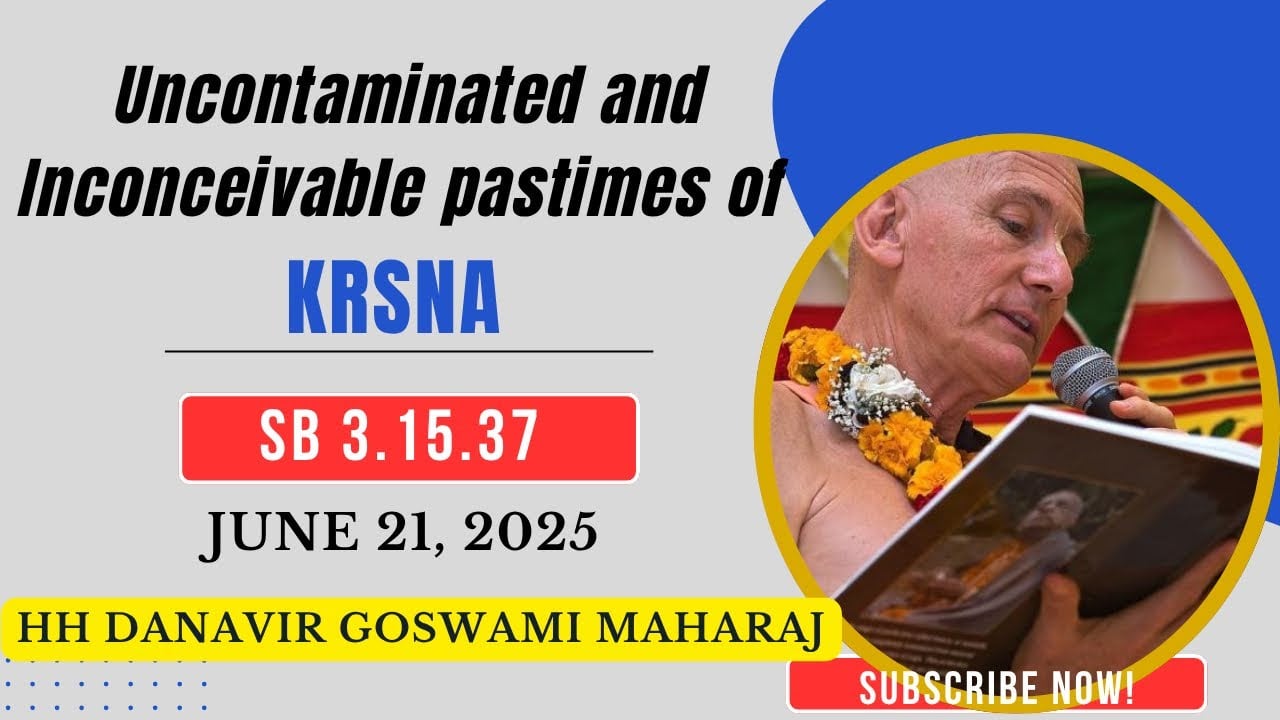
Powerful Lessons from Śrīmad-Bhāgavatam 11.3.7 on Karma, Time, and Freedom

This reflection on His Grace Sarvabhauma Prabhu’s discourse on Śrīmad-Bhāgavatam 11.3.7 explains the verse’s teaching on karma, birth, death, māyā, and cosmic time. It presents the Bhāgavata’s view that action shapes consciousness and that unconscious desire can bind the living being to repeated suffering. The discussion also clarifies that karma is not fatalism, because human…
-
Dhamlej’s Forgotten Sun Temple: Powerful Evidence from the 1380 CE Inscription

Dhamlej in Gujarat, once remembered as MŪla-Gayā, was associated with a significant Surya Kshetra near Sri Somanatha Kshetra. The 1380 CE Dhamleja Inscription records the restoration of a ruined Surya Mandira, the rejuvenation of Vishnu Gaya Kunda, and the public works of Karma Simha, a devout Porwal Jaina minister serving Raja Bharma. This history reveals…
-
Why Karma Still Leaves Room for Freedom: Powerful Lessons from SB 11.3.6

Śrīmad-Bhāgavatam 11.3.6 offers a compact but powerful explanation of karma, embodiment, desire, and human responsibility. The verse teaches that the embodied being acts through the senses, receives the results of those actions, and wanders through worldly happiness and distress. This article explains why the teaching is not fatalistic, but instead preserves meaningful free will within…
-
Powerful Temple Fund Reform: Tamil Nadu Shields ₹246 Crore for Sacred Use

The Tamil Nadu government led by Chief Minister C. Joseph Vijay has cancelled 46 temple-related projects worth about ₹246 crore that were approved during the previous DMK government. The decision is framed as an effort to ensure that temple funds are used only for religious, sacred, and directly temple-related purposes. This article examines the governance,…
-
Pune Insurance Harassment Case Exposes an Urgent Corporate Jihad Debate

A Pune-based Hindu woman employee has reportedly accused a senior manager at a Union Bank-linked insurance company of harassment and misconduct, reviving public debate around the phrase “Corporate Jihad.” The case raises serious questions about workplace safety, POSH Act 2013 compliance, corporate governance, and the responsibility of regulated financial institutions. This analysis treats the allegation…
-
Madurai Meenakshi Temple Sthala Puranam: Powerful Legends, History and Grace

The Madurai Meenakshi Temple Sthala Puranam explains how Kadambavanam became one of Tamil Nadu’s most sacred temple cities. It traces the legends of Indra’s purification, the birth of Meenakshi as Thadaathagai, her encounter with Shiva, and the celestial wedding with Sundareswarar. The article also explores the Chithirai Thiruvizha, the 64 Thiruvilaiyaadal legends, and the spiritual…
-
Visvesvaraya on Malaviya: A Stirring Study in Leadership, Education, and Nation‑Building

Sir M. Visvesvaraya’s longhand essay on Pandit Madan Mohan Malaviya is both tribute and primary source, mapping the ethical foundations of Indian public life through the prism of leadership, education, and policy. It traces Malaviya’s constitutional politicsfrom the 1910 Allahabad Congress to the 1921 deputation and beyondand his willingness to embrace sacrifice when the nation…
-
Sixteen Sacred Names of Subrahmanya in the Kumara Tantra: Meanings, Mantra, and Worship

The Shaiva Agamas, including the Kumara Tantra, preserve a profound Shodasha-nama (sixteen-name) sequence for Lord Subrahmanya that unites theology, meditation, and ritual into an accessible daily sadhana. This long-form study explains each nameSubrahmanya, Skanda, Kumara, Guha, Shanmukha, Shadanana, Saravanabhava, Swaminatha, Devasenapati, Kartikeya, Vishakha, Velayudha, Tarakari, Mayuravahana, Dandayudhapani, and Guruguhashowing how they encode wisdom, courage, and…
-
Bhutappa in Karnataka: The Fierce Threshold Guardian Powering Folk Justice and Sacred Ecology

Bhutappa in Karnataka stands at the village threshold as a fierce kshetrapala and sentinel of the goddess, where sacred geography flows beyond the sanctum into lived community life. The shrine’s placement under a jackfruit canopy reflects an intentional blend of ritual efficacy, social order, and ecological care. Historically a keeper of folk justice, Bhutappa supports…
-
Ancient Solar Alignment Unearthed Near Stonehenge: A 5,000-Year-Old Prototype of Cosmic Engineering

A newly reported discovery near Bulford, Wiltshire, reveals the earliest known solstitial alignment in the Stonehenge landscape, radiocarbon dated to around 2950 BCEfive centuries before the iconic sarsen stones were raised. Excavated by Wessex Archaeology under the Ministry of Defence’s Army Basing Programme, the site consisted of two timber posts set 120 metres apart, creating…
-
Unveiling Adi Sesha’s Sacred Spine: Tirupati, Ahobilam, SrisailamHistory, Geography, Pilgrimage

Adi Sesha’s “sacred spine” is traditionally mapped onto three South Indian templesTirupati (Tirumala), Ahobilam, and Srisailamcreating a coherent triangle of sacred geography across the Seshachalam and Nallamala ranges. This long-form exploration combines Puranic sources, architectural history, ecology, and lived pilgrimage to explain how terrain, theology, and ritual interlock. Readers discover how Tirumala’s seven hills evoke…
-
June 23, 2026 Panchang: Accurate Shukla Navami–Dashami, Good Times, Nakshatra, Rashi

June 23, 2026 begins with Shukla Paksha Navami and transitions to Shukla Paksha Dashami after 7:30 PM, a shift that meaningfully guides spiritual focus and practical scheduling. This guide explains how tithis are computed astronomically, why times vary by location, and how to align daily actions with Panchang principles. It outlines when to lean into…
-
Sanskrit Across Millennia: Unraveling Vedic vs Classical, Hidden Variants, and Lineages

Sanskrit’s evolution from Vedic to Classical illuminates how a single language sustained multiple dharmic traditions while accommodating regional identities and scholarly innovation. The article explains, in technical yet readable terms, the core differences between Vedic and Classical Sanskrit in accent, morphology, and style. It then maps internal variation within bothacross śākhās, genres, and historical periodsso…
-
Feast Without Price: What Hare Krishna Prasadam Teaches About Seva, Community, and Unity

The Hare Krishna Sunday Feast once regularly featured up to fifteen sattvic preparationsrice with cashews, paneer delicacies, dals, sabjis, and sweetsserved freely as prasadam. Grounded in Gaudiya Vaishnavism’s ethic of bhakti and seva, the feast removes transactional barriers and welcomes all with dignity. Established in the late 1960s as a public invitation to kirtan, philosophy,…