

If you invoke Bhairava for protection but ignore how cattle are fed, housed, handled, and cared for, the devotion has stopped at the shrine door. Gavyapataye Bhairava gives you a practical test: does your worship make you more vigilant about the lives behind your milk, ghee, offerings, and donations?
You don’t need to own cattle or live in an agrarian village to answer that question. Your household purchases, temple participation, charitable giving, and treatment of animal carers already place you inside this ecology. The task is to make those choices express rakṣaṇa, disciplined protection, rather than reverence in name alone.
What Gavyapataye actually asks you to protect
Gavyapataye is the dative form of gavyapati. Its elements are go, cow; gavya, that which pertains to or comes from cattle; and pati, lord, guardian, or protector. In the namāvali expression Gavyapataye namaḥ, reverence is directed to the protector of cattle and cattle-related sustenance. The grammar and ritual field of the name therefore point beyond possession. They place responsibility upon the worshipper.
That distinction matters. Lordship in a dharmic setting is not permission to extract without limit. It is custodianship. If cattle provide milk, curd, ghee, manure, labor, or ritual materials, human beings acquire duties toward their food, water, health, safety, and humane treatment. Receiving a benefit without sustaining its living origin breaks the reciprocity contained in the name.
Gavya also widens the field of care. You are not protecting an isolated animal while neglecting the conditions that keep it alive. Fodder depends on land. Herd health depends on clean water, competent care, and secure movement. Dairy depends on the labor of herders and other workers. Manure returns fertility to soil only when the whole system is managed responsibly. Gavyapataye thus joins four concerns that are too often separated: the animal, the habitat, the human carer, and the materials entering worship and household life.
In sahasranāma practice, a divine name is not merely a label to pronounce. Japa, dhyāna, sankalpa, and, where prescribed, nyāsa make the attribute something the devotee is expected to internalize. You can therefore hear Gavyapataye namaḥ as both salutation and examination: where has protection been entrusted to you, and what condition is that trust in?
Bhairava’s fierceness means vigilance, not uncontrolled aggression

Bhairava is kṣetrapāla, the guardian of a field, settlement, temple boundary, or sacred perimeter. His familiar attributes, including the triśūla, ḍamaru, kapāla, serpents, and alert canine vāhana, communicate readiness at places where order can break down. The cremation ground, city gate, village edge, cattle pen, grazing route, and water point differ in appearance, but each is a threshold where neglect can become harm.
This makes fierceness a form of disciplined attention. Bhairava notices the open gate, the missing animal, the depleted water point, the dishonest custodian, and the danger approaching a vulnerable being. His force is meaningful because it is governed by dharma. Anger without restraint, cruelty toward people, collective punishment, or self-appointed violence cannot be sanctified merely by attaching the language of cattle protection to it.
A sound protective act should pass three tests. It should reduce actual suffering rather than stage outrage. It should remain accountable to dharma and lawful community order. It should leave animals safer after the immediate confrontation has passed. If there is no plan for fodder, water, shelter, veterinary attention, and responsible custody, rescue has been reduced to a moment rather than completed as protection.
Local practice has long placed Bhairava near the everyday boundaries of community life. Shrines appear near routes to fields, markets, village perimeters, and temple precincts; regionally varied vows connect him with the protection or recovery of livestock. Kāla Bhairava’s role as the kotwāl of Kāśī expresses the same principle at the scale of a city: guardianship means watching the whole moral perimeter, not defending one valued object while abandoning everything around it.
The dog beside Bhairava also prevents an overly narrow reading. A deity associated with cattle protection appears with another animal as his sentinel. Paśupati, Śiva as Lord of beings, supplies the wider frame: care for cattle trains the devotee in responsibility toward life more broadly. Cow protection becomes a concentrated discipline within universal care, not an excuse to treat other animals as disposable.
Vajrabhairava in Vajrayāna Buddhism belongs to a distinct theology and iconographic world, so the forms should not be collapsed into one. Yet the comparison clarifies a shared dharmic intuition: a fierce form can embody compassion when force is restrained, purposeful, and directed toward stopping harm. The fierceness protects the path; it does not abolish ethical limits.
Sacred ecology begins where ritual materials come from
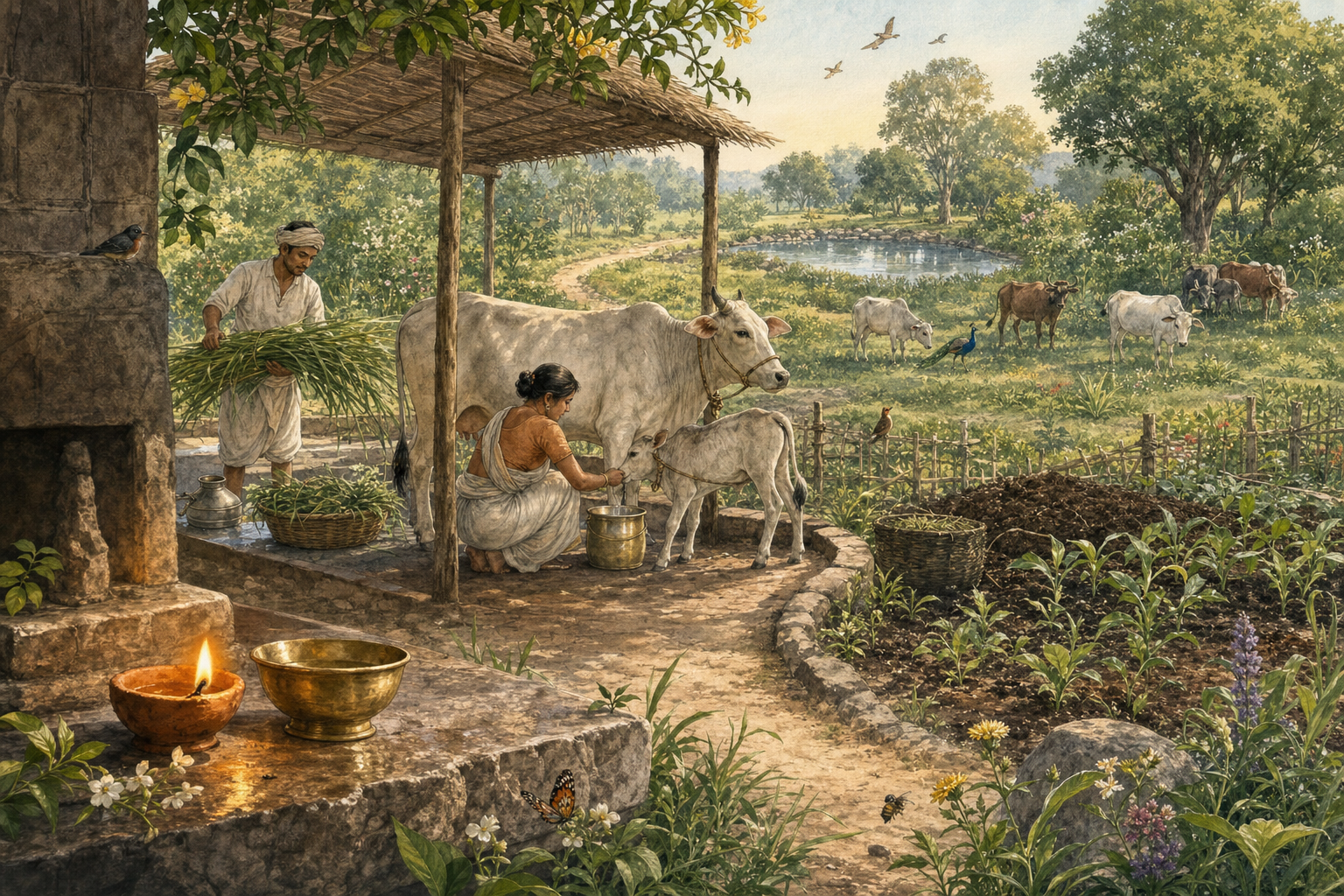
Milk, curd, and ghee are intimate parts of Hindu domestic and temple practice. Ghee feeds agnihotra and homa. Dairy substances appear in naivedya and abhiṣeka. Milk, curd, ghee, dung, and urine form pañcagavya, which has historically served in particular smārta and temple procedures of śodhana and prayāścitta. These uses are not identical in every sampradāya, region, or temple, and ritual use should not be inflated into a universal medical claim.
The more important implication is ethical. A substance does not become disconnected from its production merely because it crosses a temple threshold. If an offering symbolizes nourishment while its supply depends on avoidable animal suffering, the outward ritual and its moral foundation pull in opposite directions. Gavyapataye asks you to examine the chain before the vessel reaches the altar.
This is why sacred ecology is more demanding than sentimental affection for cows. It includes the calf whose needs cannot be ignored, the aging or injured animal that no longer yields an economic return, the herder whose skilled labor deserves dignity, the grazing ground that must remain viable, the water shared across a community, and the soil replenished through organic matter. Care that lasts only while an animal is productive is an exchange, not guardianship.
The wider meanings associated with go in Sanskrit poetry reinforce this ecological reach. Go can evoke cattle, radiance, perception, speech, or the fecund earth in different registers. These are not interchangeable dictionary substitutions to force into every recitation. They are a contemplative reminder that cattle stand within a larger network of light, nourishment, land, knowledge, and life. Protecting one part while exhausting the others cannot sustain dharma.
The same moral direction can be recognized without erasing the differences among dharmic paths. Hindu ahiṃsā, Buddhist karuṇā, Jain commitments to non-harm and support for gośālās, and Sikh sevā directed toward sarbat da bhala all turn spiritual conviction toward the welfare of living beings. Gavyapataye contributes a specifically Śaiva and Bhairava-centered form of that responsibility: compassion must be alert enough to organize protection.
Turn devotion into a verifiable practice of care
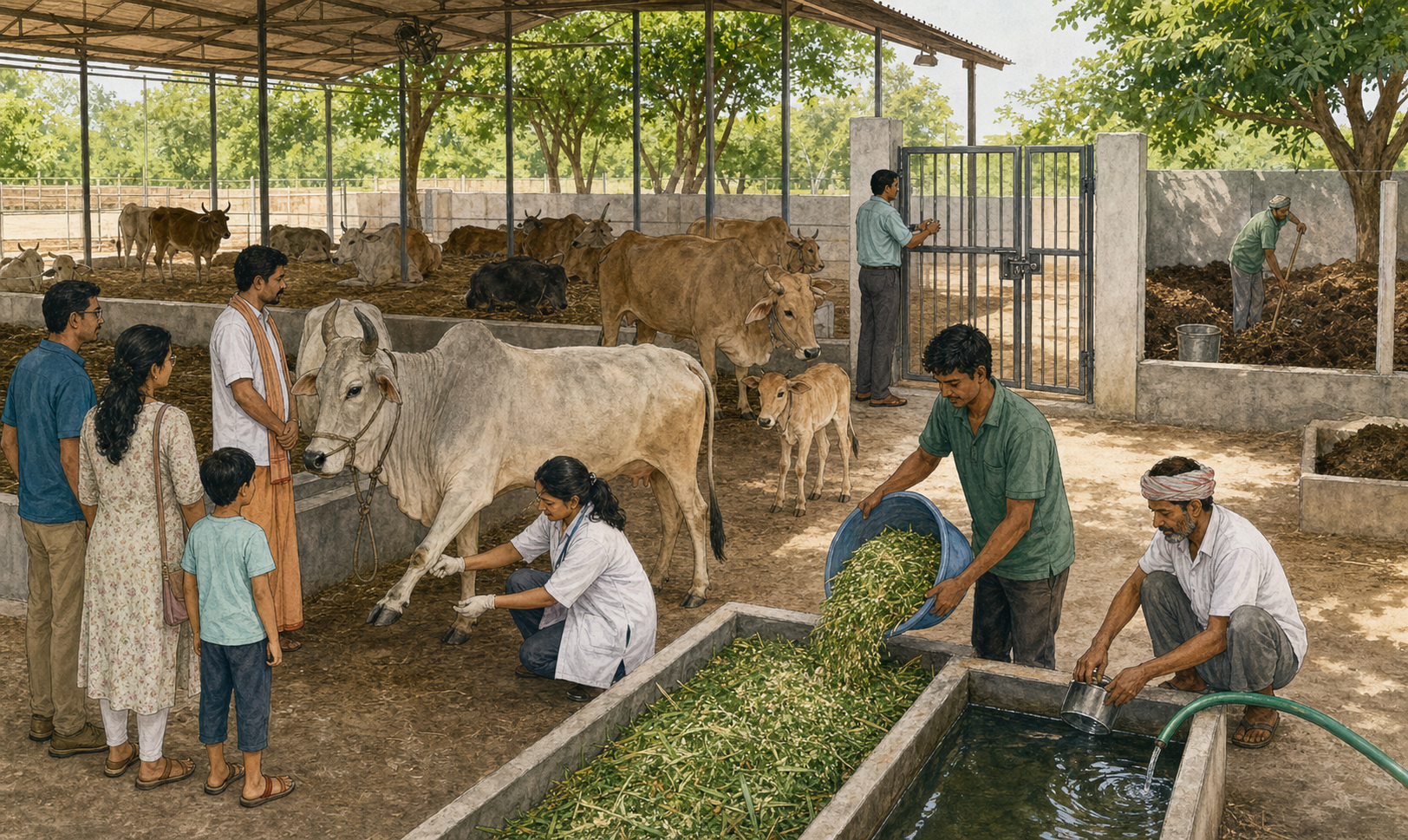
You can begin with a small practice, but it should be concrete enough to inspect. The following sequence works for a household devotee, a temple volunteer, or anyone deciding where to direct cattle-welfare support.
- Make the sankalpa specific. Before japa or worship, name the duty you intend to support: reliable fodder, clean water, treatment for an injured animal, responsible shelter, or honest sourcing of ritual materials. A broad prayer for welfare is valuable, but a named commitment is easier to carry beyond the pūjā.
- Trace your offering back one step. When buying milk, curd, or ghee for naivedya, abhiṣeka, or homa, ask what you can genuinely verify about its production. Don’t treat a devotional label as proof of humane care. If you cannot establish a satisfactory source, speak with the priest or tradition-bearer about a permitted alternative rather than independently altering an inherited rite.
- Put the animal before the symbolism. A locally observed custom may dedicate the first milk after calving to Bhairava in gratitude for herd health. Such gratitude cannot justify depriving the calf or compromising the mother’s welfare. Ritual honor becomes credible only when the living relationship comes first.
- Evaluate a gośālā by care, not appearance. Before donating, ask whether fodder and water are dependable, veterinary needs are handled, intake matches capacity, and aging, injured, or non-lactating cattle receive continuing care. Ask how funds are used. A modest institution with clear responsibilities may serve dharma better than a photogenic one with no visible plan for long-term welfare.
- Fund maintenance as willingly as rescue. Emergency intervention is memorable; daily feeding, water management, enclosure repair, record-keeping, and veterinary work are repetitive. Bhairava’s guardianship is precisely this unglamorous vigilance. If your support is recurring, direct it toward the recurring duties that prevent the next emergency.
- Protect the surrounding threshold. A temple or community group can identify the actual points where care fails: a damaged enclosure, an unsafe grazing route, a neglected water place, unreliable fodder, or an overburdened animal shelter. Choose one defined problem, assign responsibility, and review whether the condition improved.
- Use observance days as accountability dates. Kālābhairava Aṣṭamī and Gopāṣṭamī can complement one another as occasions for vigilance and compassionate care, although calendars and customs vary by region. Follow your local tradition, and use the next observance to check a commitment already underway rather than making welfare a one-day display.
Temple committees can go further by treating cattle welfare as part of sacred administration. Historically, temple institutions and village assemblies coordinated resources such as grazing access, water, land assignments, fodder, and animal care. The modern form will vary, but the governing principle remains useful: responsibility must be assigned, resourced, and reviewed. Good intentions without custody arrangements merely move vulnerable animals from one uncertain condition to another.
This approach also protects the dignity of people doing the work. Herders, shelter workers, veterinarians, farmers, donors, priests, and local administrators each hold a different part of the system. Sacred ecology fails when devotional rhetoric makes their practical knowledge invisible. Listen to the people responsible for daily feeding and care before announcing a solution on their behalf.
If your only connection to cattle is through purchased food or temple offerings, begin there. If you manage land, a shrine, or a shelter, your perimeter is larger and so is your duty. Gavyapataye does not demand the same task from every person. It demands honesty about the task already within reach.
Key takeaways
- Gavyapataye names Bhairava as protector of cattle and the cattle-related forms of sustenance that support household, agrarian, and ritual life.
- Bhairava’s fierceness is vigilant, restrained guardianship. It cannot justify cruelty, spectacle, or unaccountable aggression.
- Cattle protection includes animals, fodder, water, land, health care, human labor, and responsible custody after an intervention.
- Milk, curd, ghee, and other gavya used in worship carry an obligation to examine how they were produced.
- Paśupati supplies the wider ethic: concentrated care for cattle should deepen concern for other beings rather than narrow it.
- The most credible offering is a continuing act of care whose effect you can verify.
Before your next Bhairava recitation or aṣṭamī observance, choose the nearest unattended threshold. Verify the ghee you offer, support a defined veterinary or fodder need, or help a local institution correct one persistent failure in care. Then return after the festival and see whether the condition actually changed. That return is the vigilance Gavyapataye asks of you.