-
Shiva as Shava Beneath Kali’s Feet: Decoding the Cosmic Union of Consciousness and Shakti

This essay decodes the renowned icon of Mother Kali standing upon Lord Shiva as a precise visual theology of consciousness and energy. It integrates insights from Shaktism, Shaivism, Tantra, Advaita Vedanta, and Kashmir Shaivism to clarify why the image symbolizes complementarity, not domination. Readers gain a technical understanding of the śava–śiva pun, the role of…
-
Kaudi Mata of Varanasi: The Sacred Sister South Indians Visit to Complete the Kashi Yatra

Kaudi Mata of Varanasi is venerated in living tradition as a compassionate “divine sister” whose modest shrine teaches universal equality in Kashi. Many South Indian pilgrims include her darshan to feel their Kashi Yatra is truly complete, complementing visits to Kashi Vishvanath, Annapurna, Vishalakshi, and Kalabhairava. The shrine’s simplicity — a brief archana with kumkum,…
-
Beyond Crisis Prayers: Kabir’s Smaraṇa and the Dharmic Science of Constant Remembrance

Kabir’s doha captures a universal tendency: many remember the Divine only in hardship. This article presents smaraṇa as a rigorous, unbroken discipline that stabilizes attention and ethics across both adversity and prosperity. Drawing from Hindu bhakti, Buddhist mindfulness, Jain samayik and pratikraman, and Sikh simran, it outlines a shared dharmic science of remembrance. It explains…
-
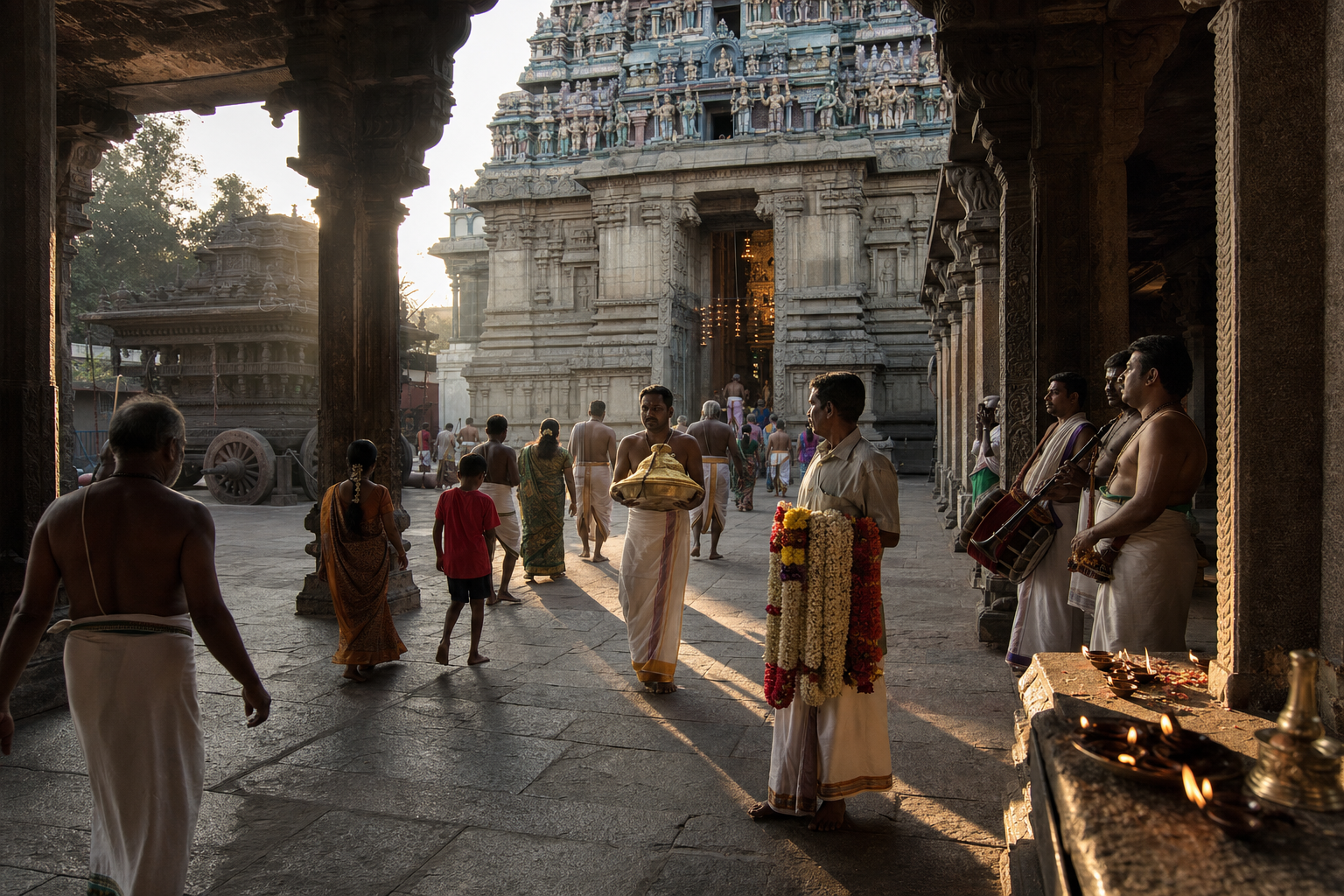
Kuravi Veerabhadra Swamy Temple Festivals: Sankranti Pallaki Processions and Devotional Unity

Kuravi Veerabhadra Swamy Temple in Mahabubabad, Telangana, observes a rich festival calendar centered on Bhadrakali Sametha Sri Veerabhadra Swamy, with Makara Sankranti as a major highlight. The festival’s special poojas and the Pallaki Procession (Grama Seva) unite cosmic timekeeping with community devotion. This overview explains the astronomical significance of Sankranti, unpacks the role of upacharas…
-
Govinda Dwadashi 2026: Sacred Date, Tithi, Puja Vidhi, and Tirumala–Puri Highlights

Govinda Dwadashi in 2026 falls on 28 February, corresponding to Falgun Shukla Dwadashi, the twelfth lunar day of the bright fortnight. The observance emphasizes devotion to Vishnu as Govinda through precise tithi-based worship, completion of the Ekadashi fast (parana), Tulasi archana, and Vishnu Sahasranama recitation. Major temples—including Tirumala Tirupati Balaji, Dwaraka Tirumala (Chinna Tirupati), and…
-
Buragamanda Sri Prasanna Venkateswara Balalayam: Sacred Dates, Rituals, and Timeless Significance

Sri Prasanna Venkateswara Swamy Temple at Buragamanda (Sadum mandal, Chittoor district, Andhra Pradesh) will observe Balalayam from February 23–26, 2026, with Acharya Ritvik Varanam at 9:00 AM on February 23. This comprehensive overview explains the meaning and purpose of Balalayam and how it preserves unbroken worship during conservation. It outlines the Agama-based sequence—Punyahavachanam, Ankurarpanam, Yagasala…
-
March 1, 2026 Panchang Guide: Auspicious Timings, Ravi Pradosh, Nakshatra and Rashi

Sunday, 1 March 2026 (IST) features Shukla Paksha Trayodashi until about 18:30, after which Shukla Paksha Chaturdashi continues through the night. The day likely hosts Ravi Pradosh where Trayodashi overlaps the local Pradosh Kaal, guiding Shiva puja and evening observances. This guide explains how to compute Rahu Kaal, Gulika Kaal, Yamaganda, and Abhijit Muhurta using…
-
Wrath to Wisdom: Parashurama and Rama’s Timeless Ethics for Power, Justice, and Dharma

This long-form analysis interprets Parashurama and Rama as complementary modalities of Dharma: emergency correction and constitutional restraint. Drawing on the Ramayana, Puranas, and classical ideas of Dharma-Yuddha, it shows how the “axe” symbolizes decisive action against entrenched injustice while the “arrow” symbolizes calibrated governance under maryada. Readers gain a practical framework for leadership—when to act…
-
Maharashtra urged to pass anti-conversion safeguards: HJS leads 75-site drive for consent and faith

Hindu Janajagruti Samiti (HJS) and allied organisations have submitted memorandums at more than 75 locations in Maharashtra urging immediate anti-conversion safeguards. The analysis situates this demand within India’s constitutional framework—Articles 25–28, Article 21, and privacy—while highlighting Supreme Court guardrails from Rev. Stanislaus (1977) and Shafin Jahan/Hadiya (2018). It maps the national patchwork of state laws…
-
Beyond Self-Help: Ashtavakra Gita’s Radical Path to Effortless Freedom and Peace

In a culture obsessed with optimization, the Ashtavakra Gita advances a precise Advaita Vedanta insight: liberation is recognition, not improvement. The text dismantles the self-help treadmill by distinguishing instrumental refinement of the mind from Self-realization, which rests on witness-consciousness and non-doership. Practical contemplations—neti neti, seer-seen discernment, resting as awareness—integrate easily into daily life without breeding…
-
Shankhnad Mahotsav grant: constitutional tests, political critique, and dharmic unity

A ₹63 lakh Union grant to the Sanatan Rashtra Shankhnad Mahotsav sparked charges of unconstitutionality and hate speech risks. This analysis clarifies the constitutional position under Articles 14, 25–27, and 282, explains Indian hate speech jurisprudence, and sets out administrative safeguards under the General Financial Rules. Readers gain a standards-based checklist to assess whether cultural…
-
Yogic Vision of Narayana: A Transformative Guide to Dhyana, Unity, and Srimad Bhagvatam 3.15.45

The exposition on Srimad Bhagvatam 3.15.45 at ISKCON Indore presents the divine form of Narayana as a real and transformative focus for meditation. It frames true yoga as disciplined mental absorption—dharana and dhyana—upon the Supreme dwelling in the heart. The narrative of Vaikuntha and Narayana’s four-armed iconography provides a precise meditative support, aligning with classical…
-
Unshakable Equanimity in Srimad Bhagavatam 11.2.49: Suffering, Divine Memory, and Practice

Śrīmad-Bhāgavatam 11.2.49 offers a precise map of suffering across body, prāṇa, mind, intelligence, and senses, and pairs it with a single remedy: steady remembrance of the Divine. This analysis explains how that remembrance stabilizes attention, recalibrates desire, and transforms reactivity into equanimity. Practical guidance shows how to translate the verse into daily anchors—japa, prāṇāyāma, curated…
-
Joshimath Namaz Row: Using Law, Transparency, and Dialogue to Protect Communal Harmony

Reports from Joshimath allege that a government sports building was used for namaz, prompting local objections and widespread debate. This analysis clarifies how India’s constitutional guarantees (Article 25–28), municipal permissions, and safety norms jointly govern religious use of public facilities. It explains what constitutes illegal use, how to verify claims through transparent records, and why…
-
Pune’s Saswad Bhairavnath Mandir: Timeless Shaiva Heritage, Warrior Ethos, and Sacred Rituals

Saswad Bhairavnath Mandir near Pune—revered as Kalbhairavnath Mandir—embodies Maharashtra’s living Shaiva and Nath Panth heritage. Dedicated to Kal Bhairav, the shrine preserves a protective, ethical ethos (kshetrapāla) that serves both household devotion and civic life. The article situates the temple within the historic Pune–Saswad corridor, explains Bhairava’s iconography and role in daily and annual rituals…
-
Unveiling Dharma Sastha: Profound Yogic Symbolism in Ayyappa’s Idol for Deep Meditation

Dharma Sastha, the yogic manifestation of Ayyappa, functions as a complete visual pedagogy of dharma and meditation. The yogapatta—binding the knees in yogapattasana—symbolizes ethical restraint and embodied stability, enabling pratyahara, dharana, and dhyana. Mudras such as jnana-mudra and varada-mudra communicate the union of self with the Absolute and the compassionate bestowal of knowledge. Read through…
-
Ashtanga vs Panchanga Namaskara: Decode the Sacred Bows for Devotion, Alignment, and Safety

This in-depth guide distinguishes Ashtanga Namaskara (eight-limbed) from Panchanga Namaskara (five-limbed) with precise technique, symbolism, and practical guidance for temple and home worship. Readers learn safe alignment grounded in yogic anatomy, step-by-step instructions, and breath cues that integrate devotion with mindful movement. The article clarifies regional variations and etiquette, including when temples prefer Panchanga for…
-
Unshakable Calm in Life’s Storms: Vedantic Truth and Dharmic Resilience Across Traditions

This essay examines the adage, “Storms will be ever present in life, and the best anchor is knowledge of Supreme Truth,” through Hindu philosophy and related dharmic traditions. It clarifies how Advaita Vedanta, the Upanishads, the Bhagavad Gita, Buddhism, Jainism, and Sikhism converge on a practical, verifiable path from instability to resilience. Readers gain a…
-
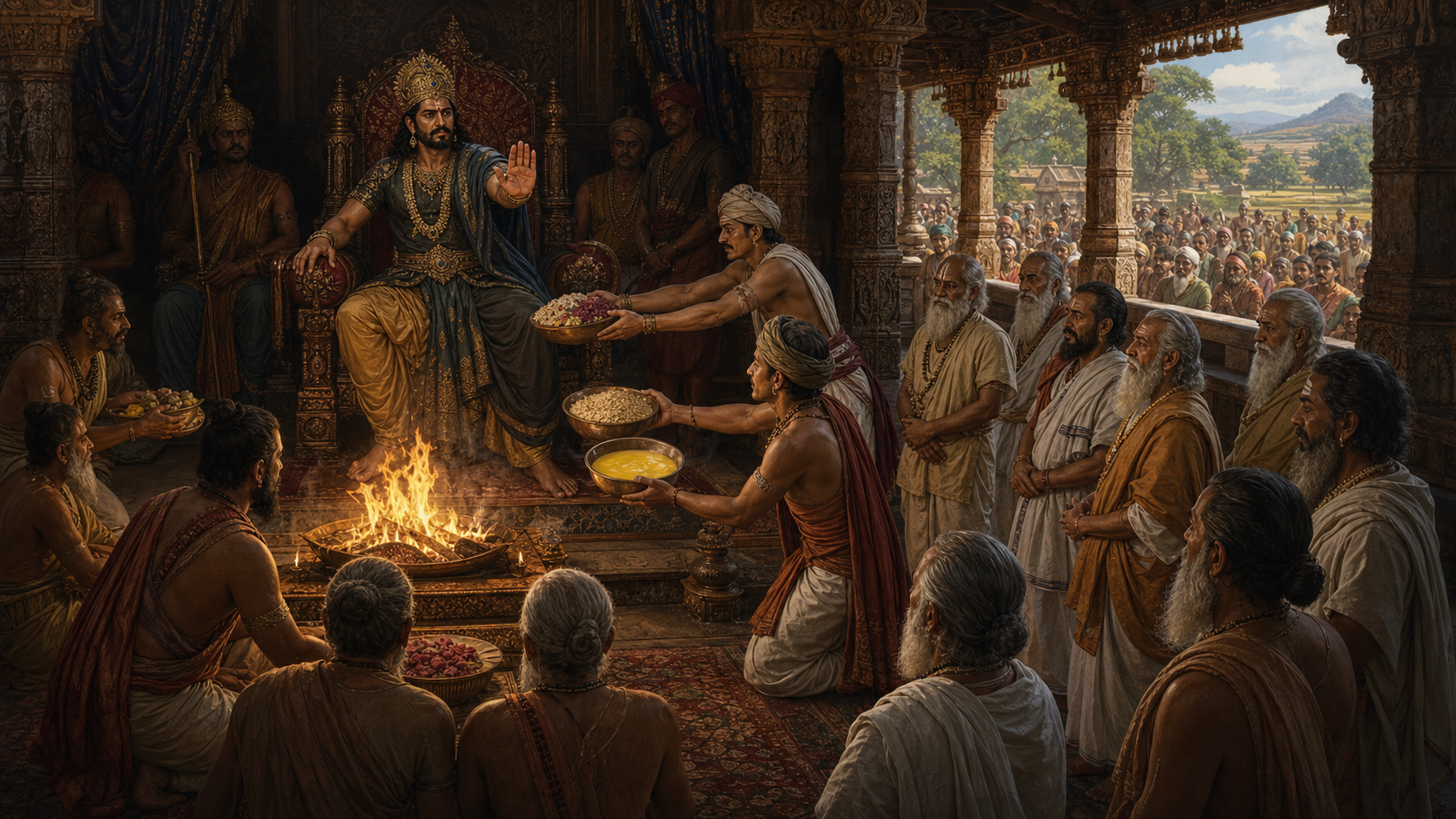
Karma and Karmaphala in the Ramayana and Mahabharata: Dharma, Consequence, and Liberation

This essay reads the Ramayana and Mahabharata as precise ethical maps of karma (action) and karmaphala (consequence), showing how intention, duty, and context shape outcomes. It explains sañchita, prārabdha, and āgāmi karma, and situates them within dharma and the puruṣārthas. Through case studies—Daśaratha’s unintended harm, Rāvaṇa’s hubris, the dice hall’s complicity, Karna’s complexity, and Bhīṣma’s…