-
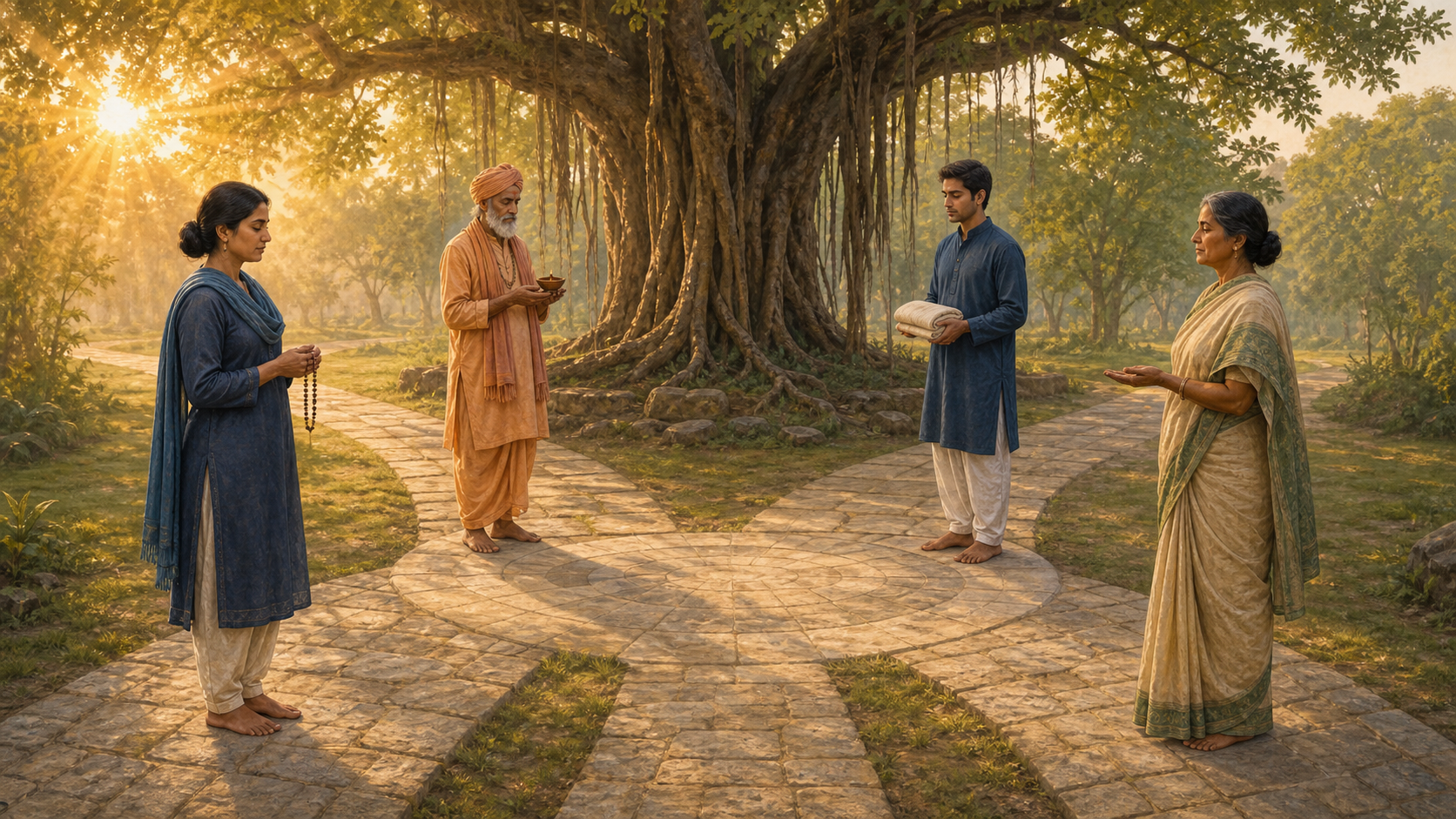
Prevent the Ripple: Dharmic Wisdom on Mindful Action, Karma, Ahimsa, and Non‑Emergence

This essay explores a unifying Dharmic insight: what has not yet emerged is easiest to prevent. Drawing on Hindu philosophy and the Bhagavad Gita, it explains how mindful intention, disciplined attention, and skillful action avert harm at its source. The discussion highlights parallel teachings in Buddhism (Right Effort and Mindfulness), Jainism (ahimsa and pratikraman with…
-
Vidya Ganapati: A Scholarly Guide to Knowledge, Memory, and the Joy of Learning

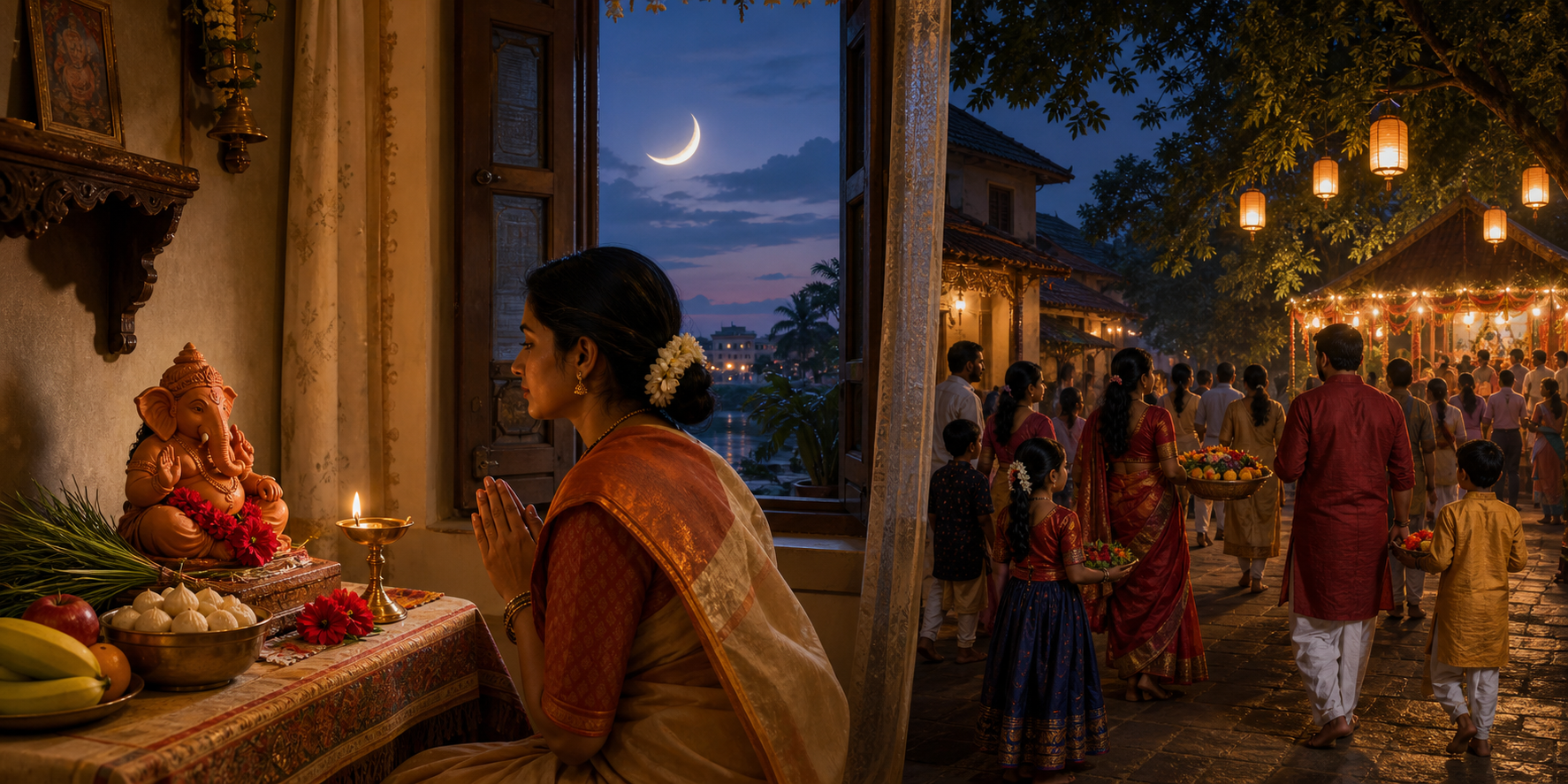
Vidya Ganapati symbolizes knowledge, wisdom, memory, and disciplined learning, guiding students and scholars toward clarity, focus, and ethical study. The iconography—book, rosary, lotus, and mouse—invites humility, contemplation, and purity of intent. Across homes and classrooms, simple practices like mindful breathing and mantra help calm anxiety and steady memory without replacing hard work. The ethos resonates…
-
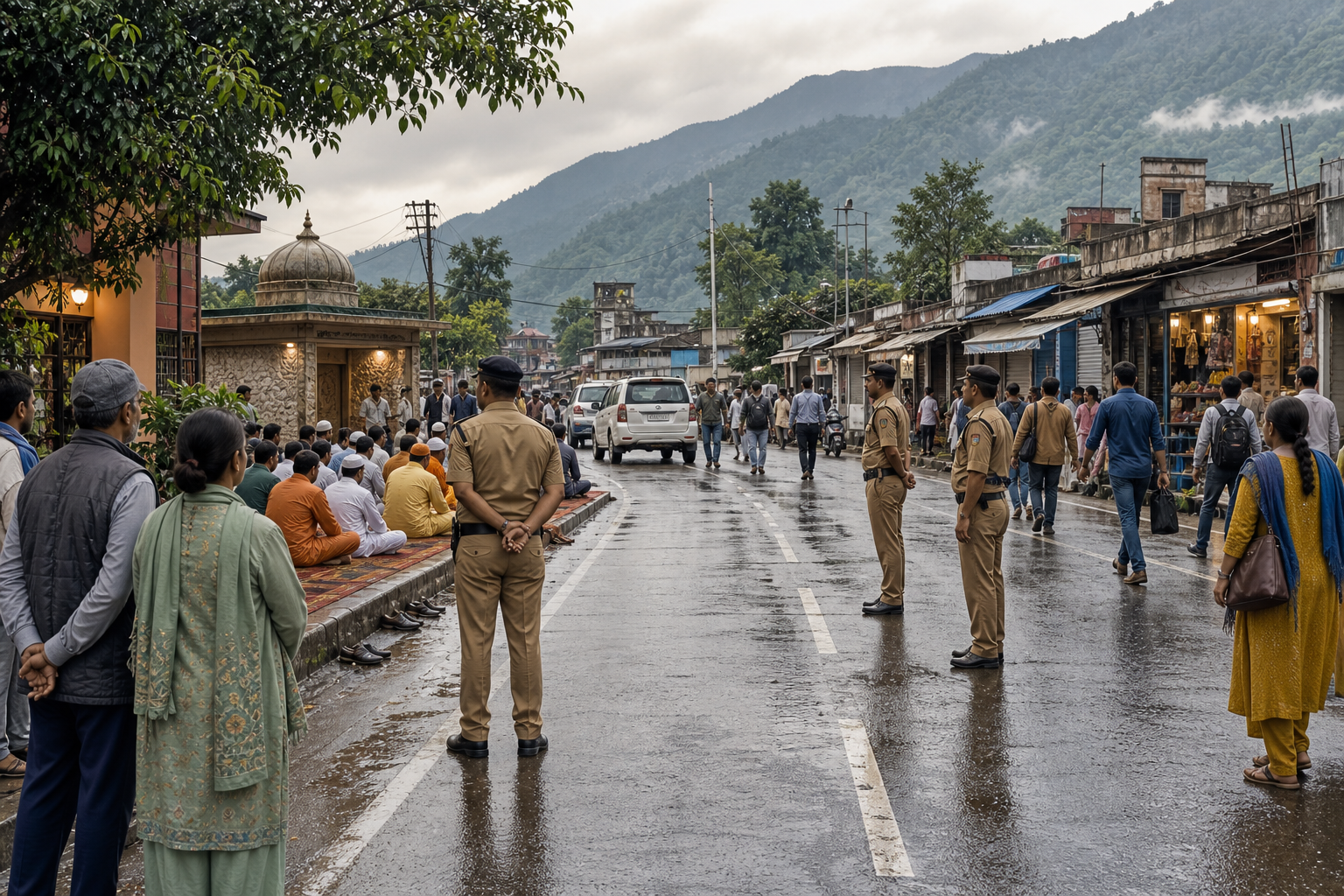
Justice in Murshidabad: 13 get life for father–son murder amid waqf protest violence

A court in West Bengal has sentenced 13 individuals to life imprisonment for the murder of a Hindu father and son during violence linked to protests over waqf regulations in Murshidabad. The ruling underscores the primacy of the rule of law and individual accountability in cases of Communal Violence. It highlights the human cost of…
-
Kalpanalaghava: Harnessing Elegant Simplicity to Clarify Thought and Unite Dharmic Traditions

Kalpanalaghava, meaning “economy of supposition,” is a Hindu philosophical principle that favors the simplest adequate explanation. Grounded in Indian reasoning (tarka) and resonant with Nyaya, it parallels Occam’s razor while retaining a distinct dharmic context. The approach is subtle and rational, reducing speculative excess and clarifying argumentation. It also aligns with Jain Anekantavada, Buddhist restraint…
-
Sacred Pavitra in Hindu Rituals: Purity, Protection, and a Living Bridge to the Divine

The pavitra, or kusha ring, is a sacred implement in Hindu rituals that signals purification, focus, and spiritual readiness. Traditionally made from kusha (darbha) grass, Desmostachya bipinnata, it supports puja, homa, Sandhyavandanam, mantra-japa, vratas, samskaras, and pitṛ-karmas with an emphasis on śuddhi and steadiness. Lineages prescribe how and when it is worn, commonly on the…
-
Two Energies, One Choice: Transforming Daily Life through Krsna’s Material and Spiritual Power

Krsna’s two energies—material and spiritual—can be engaged through intention, much like electricity directed to different purposes. The living entity, as marginal potency, continually chooses between self-centered exploitation and selfless service. This framework aligns with Buddhist, Jain, Sikh, and Hindu teachings, highlighting a shared dharmic path from craving to compassion. Practical disciplines such as study of…
-
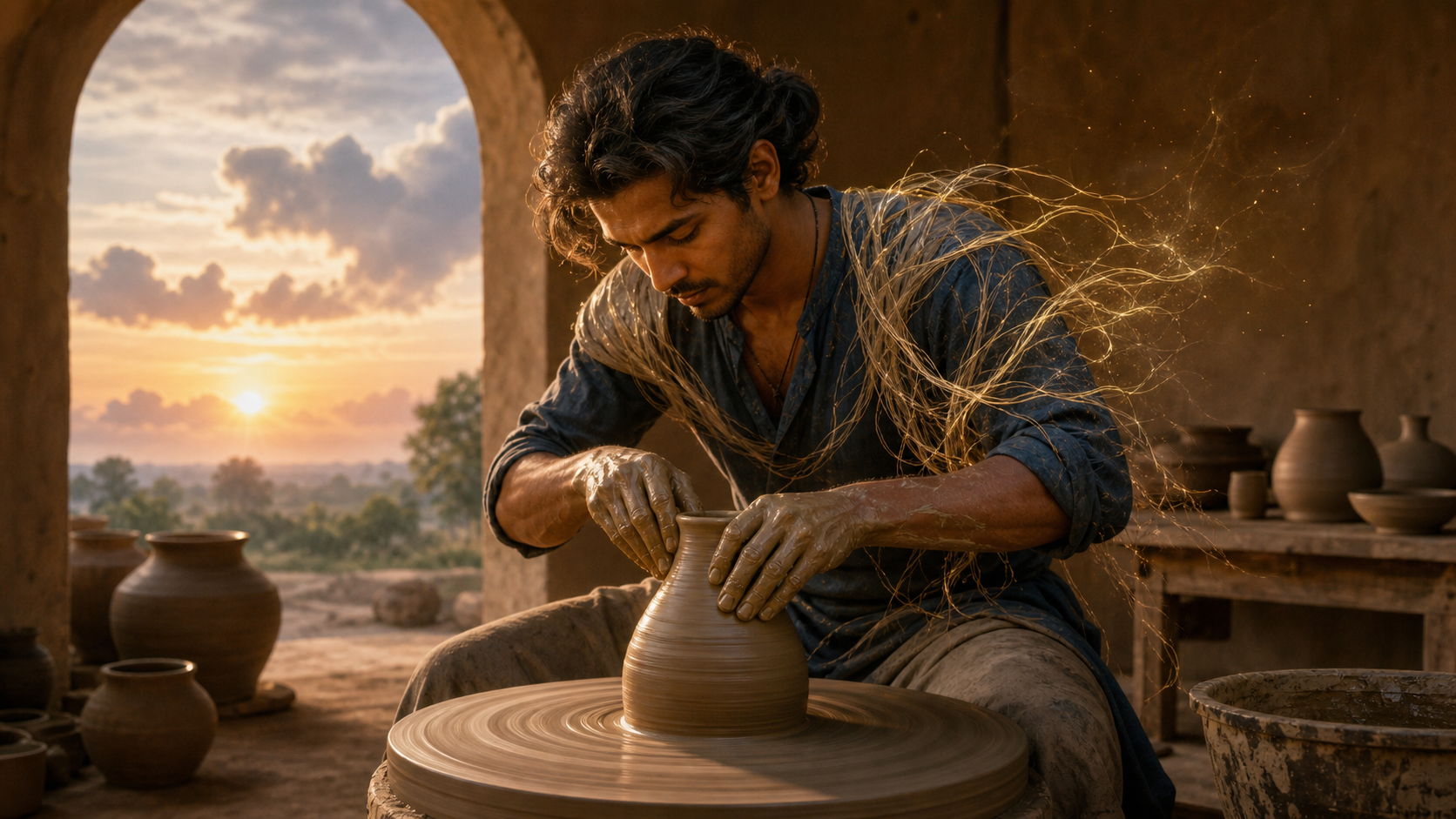
Free Will, Samskara, and Karma: Choose Compassion over Passion to Transform Life

Free will can guide samskara and vasana, allowing individuals to act by choice rather than impulse. Across Hinduism, Buddhism, Jainism, and Sikhism, this aligns with disciplined living, ahimsa, and seva. Karma is not punishment but pedagogy, teaching responsibility through experience. Suffering signals the need to replace passion with compassion and self-service with service to others.…
-
Transforming Global Environmental Management: Vedic Triguna Wisdom for Sattvic Stewardship

Global environmental decline is widely acknowledged, yet its root causes and solutions remain contested. A Vedic Triguna lens—sattva, rajas, and tamas—clarifies how mindsets shape ecological behavior, policy, and sustainability outcomes. A research initiative at the University of Tasmania applied this framework to examine the quality of consciousness among environmental scientists, bridging modern science with Vedic…
-
Andhra Pradesh Orders Probe into Alleged Forced Circumcision, Pledges Consent and Harmony

The Andhra Pradesh government has ordered an investigation into allegations of non-consensual circumcision of non-Muslims, following a representation reportedly made by former CBI Director M Nageswar Rao. The case engages core principles of bodily autonomy, informed consent, and medical ethics, requiring a transparent, evidence-based, and time-bound probe. By relying on constitutional protections and due process,…
-
Massive Delhi Vigil Demands Justice for Dipu Chandra Das at Bangladesh Mission

Hundreds gathered outside the Bangladesh High Commission in New Delhi on 23 December 2025 to demand justice for the reported lynching of Dipu Chandra Das. The vigil-style protest emphasized human rights, the rule of law, and the protection of Hindu minorities in Bangladesh. Participants urged transparent investigations, credible prosecutions, and preventive measures against mob violence.…
-
Beyond Sattva, Rajas, Tamas: A Transformative Path to the Pure Self and Dharmic Unity

This essay explores how the three gunas—sattva, rajas, and tamas—bind experience and how dharmic traditions point beyond them to a liberating awareness. It clarifies Hindu perspectives on Atman and moksha while drawing resonant parallels with nirvana in Buddhism, kevala jñāna in Jainism, and Naam-centered living in Sikhism. Readers gain a clear, practical map grounded in…
-
Beyond Opinions: A Dharmic Guide to Truth, Clarity, and Compassion in the Social Media Era

Opinion overload in the social media era often obscures truth. Drawing on Hindu philosophy, Buddhist mindfulness, Jain Anekantavada, and Sikh humility, this piece outlines a Dharmic path that loosens attachment to opinions while strengthening discernment and compassion. It presents practical steps—pause, validate, widen perspectives, speak with ahimsa, and allow silence—to transform debate into inquiry. Readers…
-
Pavamana Suktam in the Rig Veda: Timeless Hymn of Soma, Purity, and Dharmic Unity

Pavamana Suktam (Rig Veda 9.1.1–10) opens the Soma Mandala with a powerful vision of purification, clarity, and renewal. Attributed to Madhucchanda and composed in the Gayatri meter, it functions as both liturgical chant and contemplative text. The imagery of Soma’s sacred flow symbolizes inner transformation, aligning with shared values across Hinduism, Buddhism, Jainism, and Sikhism.…
-
Delhi’s Deadly Air: A Wake-Up Call on Policy Inaction, Public Health, and Shared Duty

Delhi’s recurring smog crisis reflects a structural policy gap, not just seasonal bad luck. This analysis outlines how vehicular emissions, construction dust, coal power, and crop-residue smoke combine with weather conditions to create hazardous AQI and PM2.5 levels. It highlights documented public health harms for children, elders, and outdoor workers, and explains why ad‑hoc bans…
-
Margazhi’s Quiet Power: Art, Nature, and Hindu Devotion Across Continents

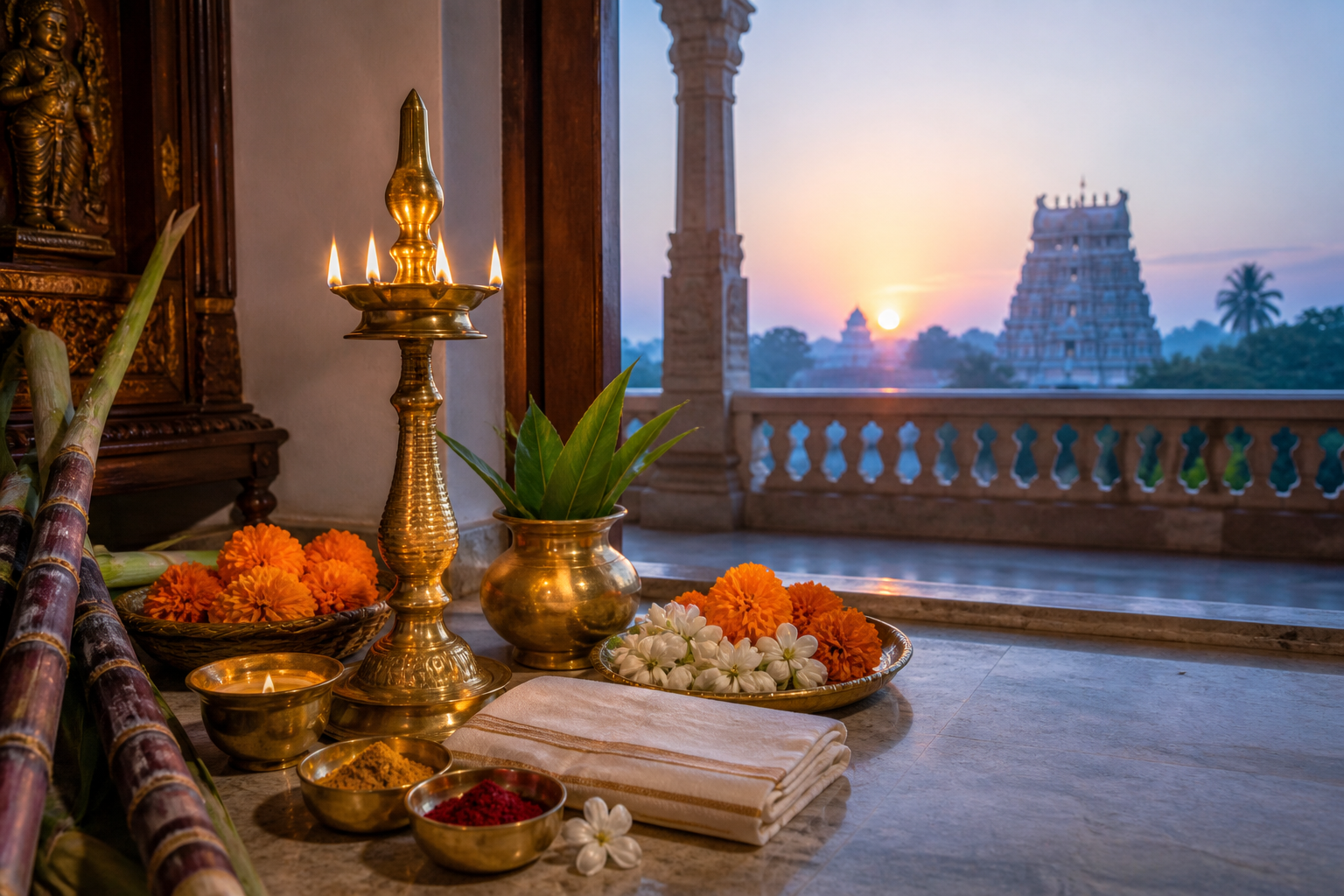
Margazhi (Mārgaśīrṣa) offers a contemplative counterpart to global year-end festivities by centering sadhana, beauty, and ecological reverence. This academically grounded reflection traces how Shaiva and Vaishnava practices, Tiruppavai, Andal’s devotion, and festivals like Vaikunth Ekadasi, Arudra Darshanam, and Pongal converge in Tamil culture and the diaspora. It also explores how Margazhi’s artistic spirit comes alive…
-
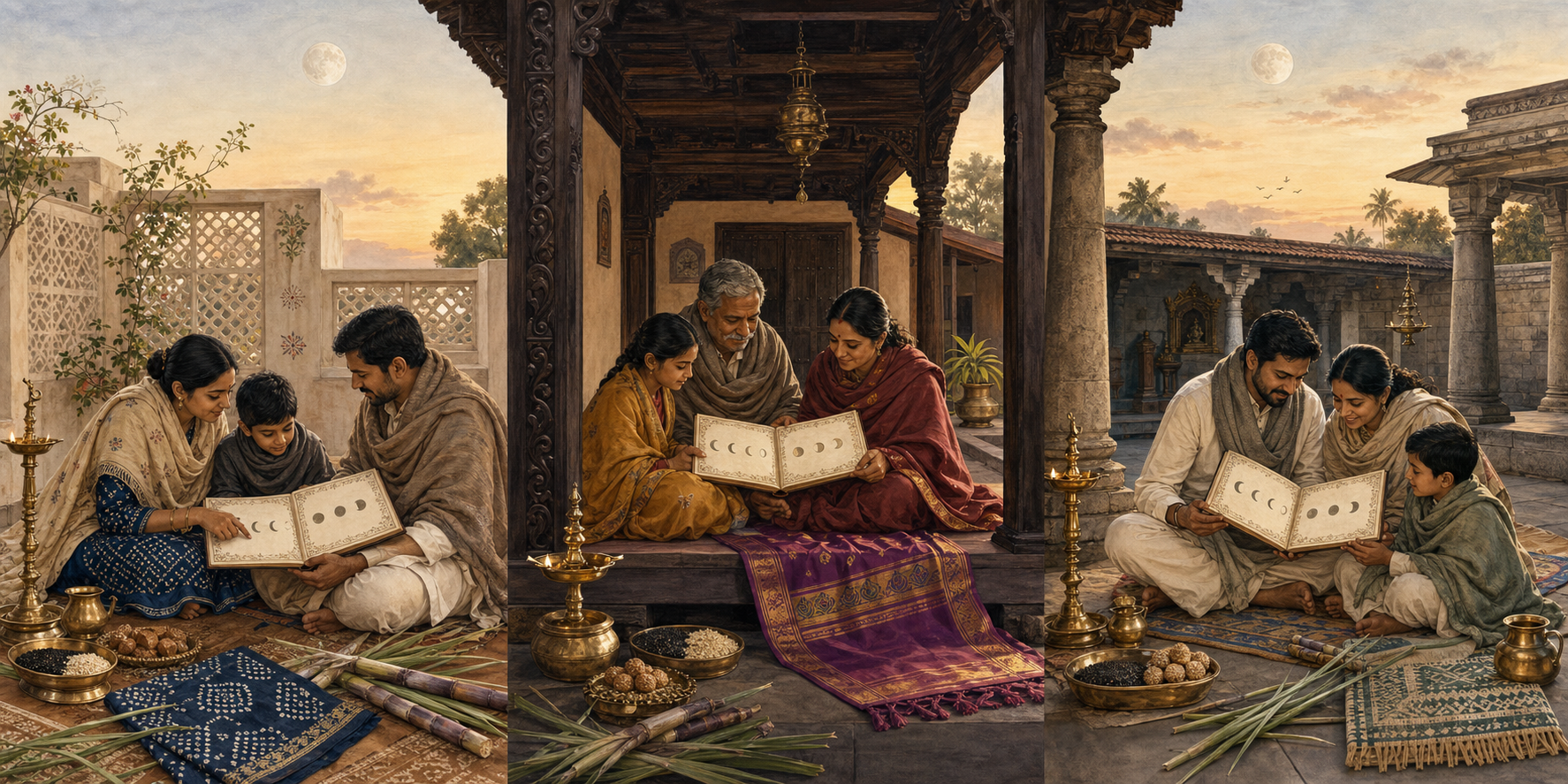
December 30, 2025 Panchang: Shukla Paksha Ekadashi Tithi, Timing, and Dharmic Guidance

Tuesday, December 30, 2025 features a shift in the Hindu calendar from Shukla Paksha Dashami (until 3:27 AM) to Shukla Paksha Ekadashi for the remainder of the day. The Panchang notes this as part of the waxing lunar phase, widely observed across regions. Ekadashi’s contemplative ethos—discipline, compassion, and mindfulness—supports a unifying dharmic spirit shared across…
-
Sashti 2026: Skanda Sashti Viratham Dates Explained, Fasting Rites, and Devotional Insights

Sashti 2026 brings two monthly observances—after Purnima and after Amavasya—rooted in the Hindu calendar’s precise tithi system. This guide explains how to identify locality-specific dates using a regional Panchang, why Skanda Sashti in Aippasi is especially significant, and how Shashti fasting (vratham) can be adapted responsibly. It outlines core practices—puja to Lord Subramanya (Murugan), hymns…
-
Bhogi 2026 on 13 January: Sacred Bonfires, Renewal Rituals, and Sankranti Harvest Joy

Bhogi 2026 is on 13 January and opens the four-day Sankranti/Pongal season in Andhra Pradesh. The day centers on Bhogi Mantalu, a sacred bonfire symbolizing the removal of negativity and the welcoming of auspicious beginnings. According to regional Panchang traditions, this Bhogi aligns with Krishna Paksha Dashami in Pushya masam (Poush Month) in 2025 and…
-
Decoding the Legendary Chakravyuha: The Circular Formation that Shaped Kurukshetra
Chakravyuha, the circular battle formation described in the Mahabharata, shaped a decisive phase of the Kurukshetra War through disciplined rotation, dynamic encirclement, and strategic deception. Its layered design illustrates how command, communication, and training determine battlefield outcomes, as seen in Abhimanyu’s valiant ingress and the risks of incomplete procedural knowledge. The formation’s vulnerabilities—especially at coordinated…