

If you are arranging family ceremonies, temple visits, or a personal vrata around Pushya Masam, settle two questions first: which dates define the month, and which observances depend on your local Panchang. That distinction keeps a useful spiritual discipline from turning into calendar confusion.
For the Telugu calendar followed in Andhra Pradesh and Telangana, Pushya Masam begins on 21 December 2025 and ends on 18 January 2026. Mark those as the outer boundaries. Confirm the Tithi and timing of any particular observance locally before acting on it.
Mark the month, then verify each observance locally
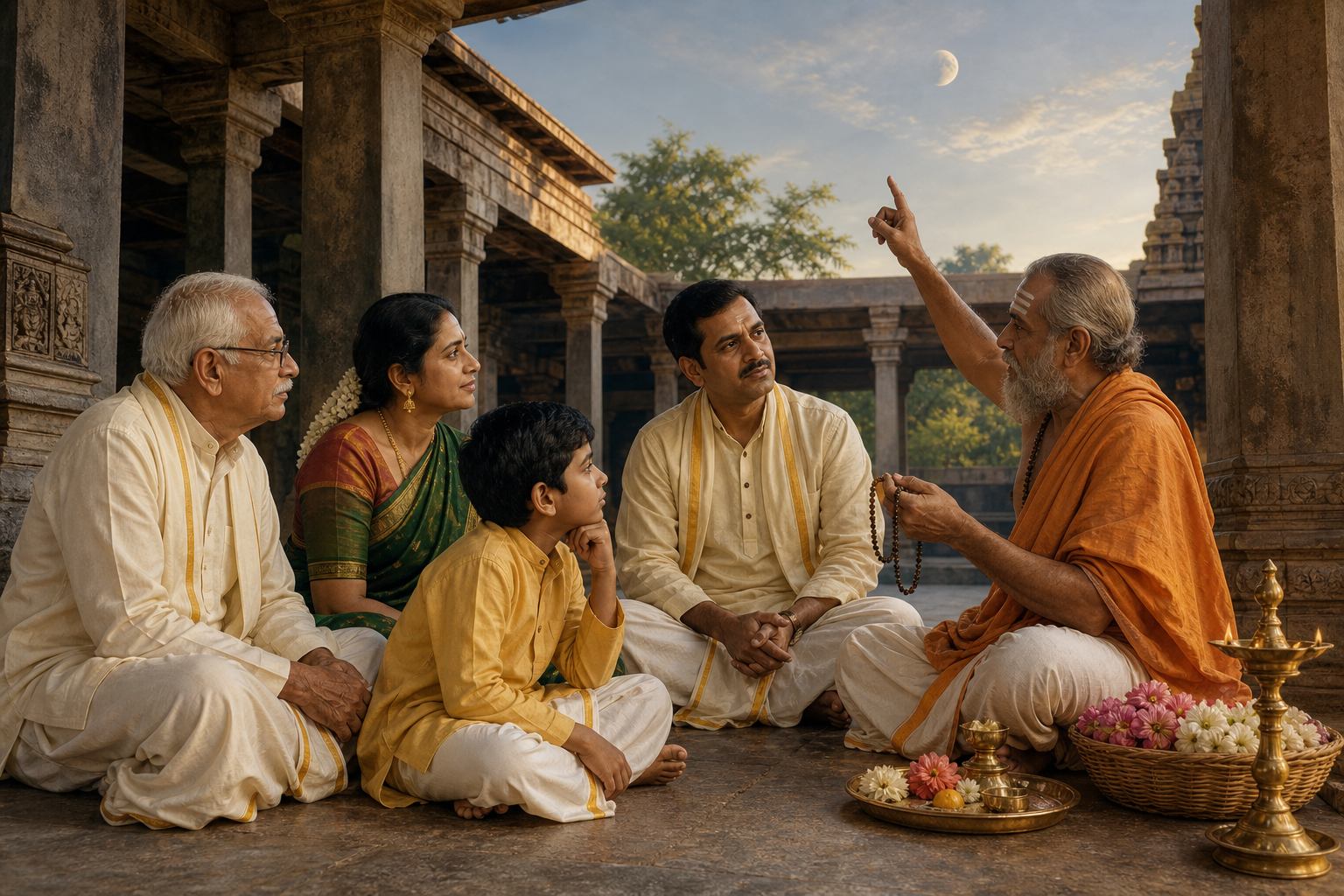
Pushya Masam is the tenth month of the traditional Telugu calendar. Its dates are broadly aligned in the related lunisolar calendars used in Karnataka, Maharashtra, Goa, and Gujarat, but regional practice is not perfectly uniform. Your relatives in another state may therefore observe a Tithi or festival at a slightly different time without either household being mistaken.
A Tithi is a lunisolar division rather than an ordinary midnight-to-midnight date. Its relationship to the civil calendar can change around local sunrise. That is why a month-level date range is enough for planning your overall routine but not always enough for fixing a puja, vrata, or temple visit.
- Enter 21 December 2025 and 18 January 2026 in your family calendar as the beginning and end of Pushya Masam.
- Use a trusted Panchang calculated for your locality rather than copying timings from a different city.
- For a date-sensitive observance, check the Tithi, Paksha, and applicable sunrise-based timing.
- If your household follows a particular sampradaya, temple, or family tradition, verify the choice with that authority before making firm arrangements.
- Share the confirmed date and time with the family in one message so that different calendars do not produce parallel plans.
This method also prevents a common planning error: treating the whole month as though every observance has one universal civil date. The month is shared; the precise application can remain local.
Distinguish spiritual observance from social celebration
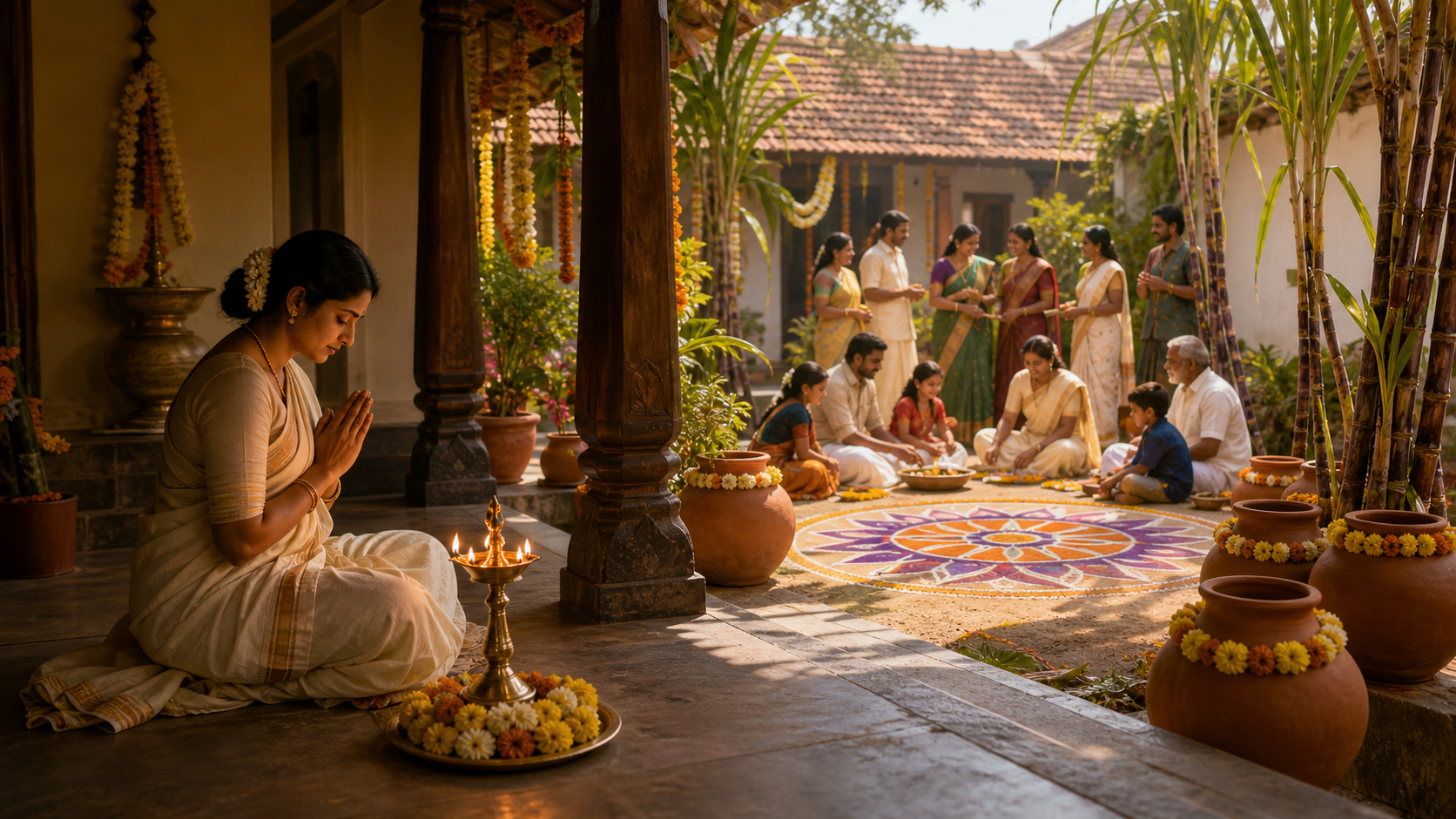
Pushya Masam has a restrained and devotional character. Restraint does not mean suspending religious life. It means giving greater attention to worship, study, dana, and inner discipline while handling major social functions with care.
Practices to deepen
- Begin the day with worship before ordinary distractions take over.
- Read or recite from a sacred text already honoured in your household.
- Maintain regular puja at home or attend your temple according to its schedule.
- Undertake a familiar vrata with steadiness and a clear devotional purpose.
- Set aside something for dana or choose a recurring act of service.
- Make gratitude visible through prayer, sharing, and considerate conduct at home.
Plans to check before confirming
Certain life-cycle ceremonies and socially celebratory functions are traditionally deferred during Pushya Masam. The important word is “certain.” Which functions fall into that category can depend on family custom, regional practice, and the Panchang being followed.
Do not convert a selective custom into a sweeping claim that every auspicious act is forbidden. Instead, use a simple decision rule: continue inward-facing devotional practices, but ask for tradition-specific guidance before fixing a major life-cycle or celebratory event. If the event depends on a muhurta, obtain that guidance before paying deposits, printing invitations, or asking relatives to travel.
This is also the right way to handle differing opinions within an extended family. Ask which Panchang, locality, and family convention each person is using. A disagreement that sounds theological may turn out to be a difference in calendrical calculation or inherited custom.
Build a Pushya routine that survives ordinary life
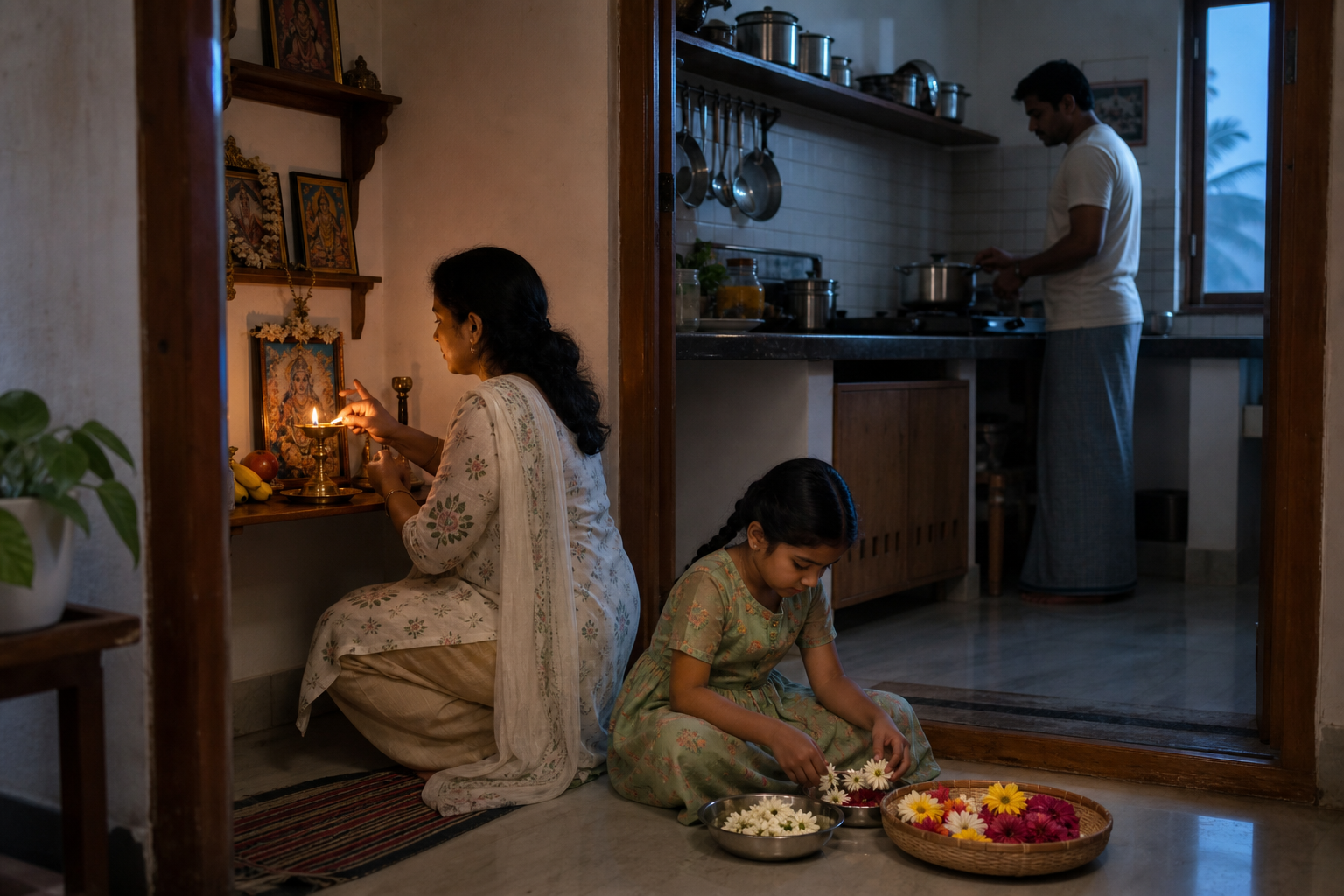
A month of sadhana works best when it has a few dependable anchors. An elaborate opening-day resolution that disappears after several mornings does less for you than a modest practice repeated throughout the month.
- Choose a morning anchor. Keep one act of worship at the beginning of the day, whether that is your established puja, prayer, recitation, or aarti.
- Choose one field of study. Continue with one sacred text or teaching rather than collecting unrelated readings. The purpose is attentive study, not volume.
- Define your vrata clearly. Write down what you are observing and when. Follow the vrata recognized by your tradition instead of improvising rules merely to make it severe.
- Schedule dana in advance. Decide what you will give, whom it should serve, and when you will do it. A defined act is less likely to remain a good intention.
- Keep temple plans realistic. Check the temple’s own calendar and select visits you can actually make without abandoning daily responsibilities.
- Resume after a missed day. Do not let one interruption become an excuse to discard the rest of the month.
A workable household rhythm might place short worship and sacred reading in the early morning, keep regular home puja, reserve selected days for temple attendance, and connect dana with a concrete need. The details can vary; the continuity is what turns isolated religious acts into abhyasa, or sustained practice.
The ethical direction of the month also reaches beyond the ritual calendar. Self-discipline, compassion, ethical conduct, and community harmony are shared Dharmic concerns across Hindu, Buddhist, Jain, and Sikh traditions, even though their calendars and forms of worship remain distinct. You can honour that kinship through service and respectful conduct without flattening the traditions into one set of rituals.
Plan Makara Sankranti within the month’s quieter discipline

Makara Sankranti falls within Pushya Masam in this 2025-2026 cycle. It brings a seasonal turning point into a month otherwise marked by inward discipline. Offerings, family or community gatherings, and acts of sharing can all carry that meaning.
Plan it in three layers. First, confirm the applicable date and observance time in your local Panchang. Second, identify the worship or offering followed by your household. Third, decide how the gathering will include sharing or dana rather than becoming only a social occasion.
You do not need to force a choice between festivity and reflection. Let the seasonal celebration express gratitude and generosity, while the rest of your Pushya routine continues. If your temple publishes its own Sankranti program, use that schedule for the temple visit rather than assuming the household timing and temple timing will be identical.
Key questions before Pushya Masam begins
When is Pushya Masam in the 2025-2026 Telugu calendar?
It begins on 21 December 2025 and concludes on 18 January 2026. These dates give you the planning window; local Panchang calculations still govern the detailed timing of Tithis and individual observances.
Should every auspicious event be cancelled during the month?
No blanket rule is supported by the month’s traditional emphasis. Certain life-cycle and socially celebratory functions are deferred, while worship, vrata, study, dana, and personal sadhana are encouraged. Ask which rule your own family and sampradaya follow before changing an important plan.
Can families in different states follow different timings?
Yes. The calendars used in Andhra Pradesh, Telangana, Karnataka, Maharashtra, Goa, and Gujarat are broadly aligned, but local and regional variations remain possible. Use a Panchang appropriate to the place where the observance will occur.
What is the simplest meaningful way to observe the month?
Keep a consistent early-morning act of worship, continue with one sacred text, maintain regular puja, and complete a defined act of dana or service. Confirm date-sensitive observances locally, but do not allow the search for perfect timing to displace the daily practice itself.
Before 21 December, mark the outer dates, choose the Panchang you will follow, settle any ceremony questions, and write down a sustainable daily observance. Then Pushya Masam can begin with clarity rather than last-minute negotiation.
References
