
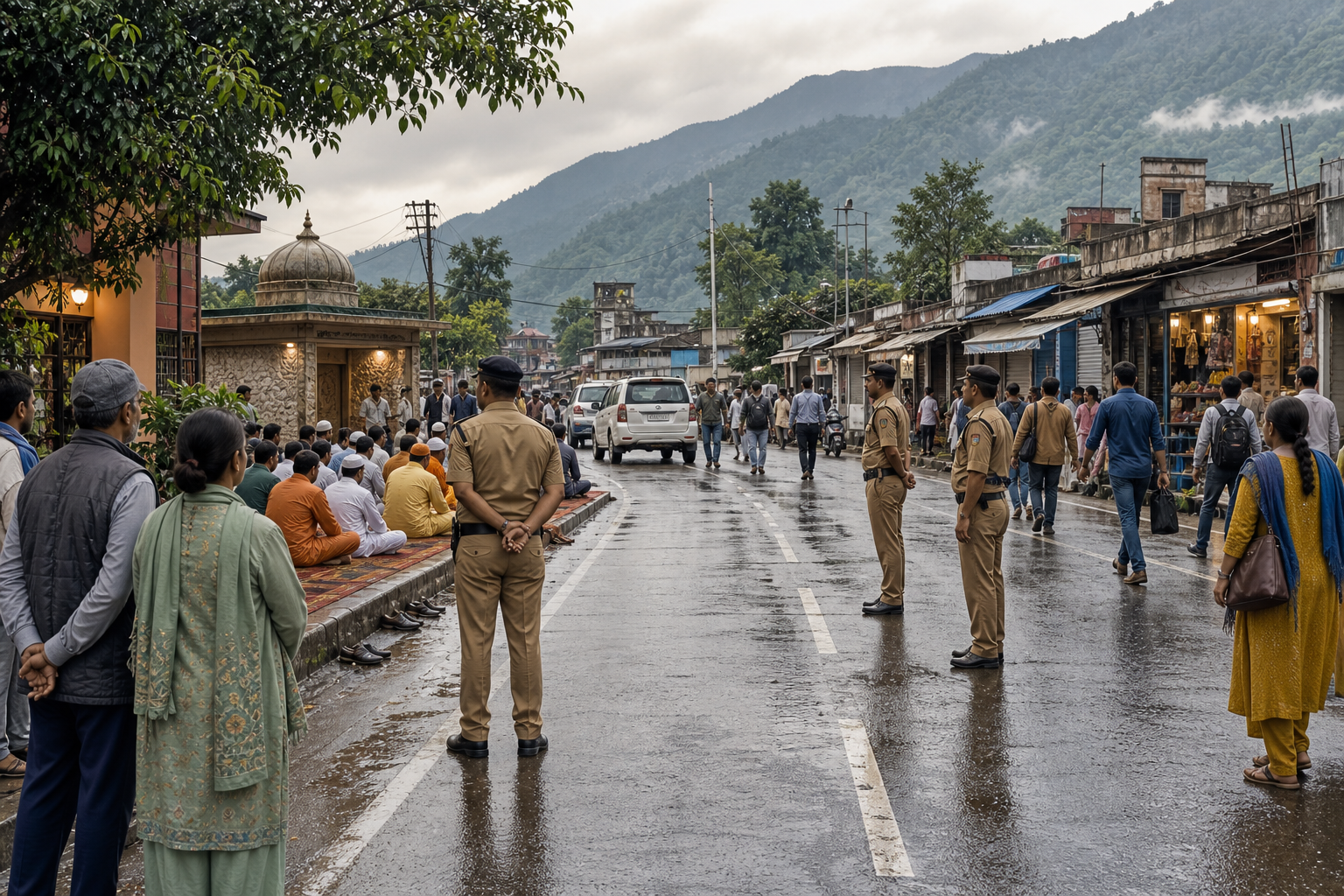
If you are deciding what a principled Hindu response to the Dehradun prayer dispute should look like, begin with the distinction that a tense crowd quickly erases: defending access to a public road is a legitimate civic demand, but trying to enforce that demand through another crowd creates a second public-order problem.
Your goal should be a rule that protects worshippers, commuters, pedestrians, shopkeepers and emergency access without granting any community a private veto over shared space. That requires accurate complaints, official enforcement and a workable plan for religious overflow before people arrive.
Keep the dispute about conduct, access and authority
On 17 December 2025, a tense standoff in Dehradun formed around objections to Friday Namaz using a public roadway. Accounts differed, but the central conflict was clear: congregational overflow met demands that a shared thoroughfare remain open.
Do not inflate that concrete dispute into a verdict on an entire religion. Once the question becomes whether Muslims should be allowed to worship, or whether Hindus are entitled to oppose Muslims as a community, the road itself disappears from the argument. Neighbours are pushed into defending identities when officials should be managing space.
Freedom of worship deserves protection. So does safe and predictable access to a public road. Limited capacity at a nearby prayer facility may explain why a congregation spills outside, but it does not by itself settle how a roadway may be used. In the same way, a sincere objection to obstruction does not make a private crowd the lawful or competent manager of traffic.
Before supporting a claim, ask questions that can be answered with observable facts:
- Which road, junction, lane or footpath was affected?
- Was passage completely blocked, partly restricted or redirected by officials?
- Were pedestrians, residents, businesses or emergency vehicles still able to pass?
- What arrangement, notice or direction had the municipality or police issued?
- When did the disruption begin, and when was ordinary movement restored?
- Did organizers have a plan for overflow beyond the prayer facility’s capacity?
- Did protesters add another obstruction or prevent officials from managing the site?
Separate four things in your own account: what you observed, what you inferred, what remedy you want and what broader political meaning you attach to it. If you saw a lane become inaccessible, say that. If you do not know who authorized an arrangement, say that too. Do not turn an assumption about authorization into an accusation against a whole community.
What to do while a standoff is developing
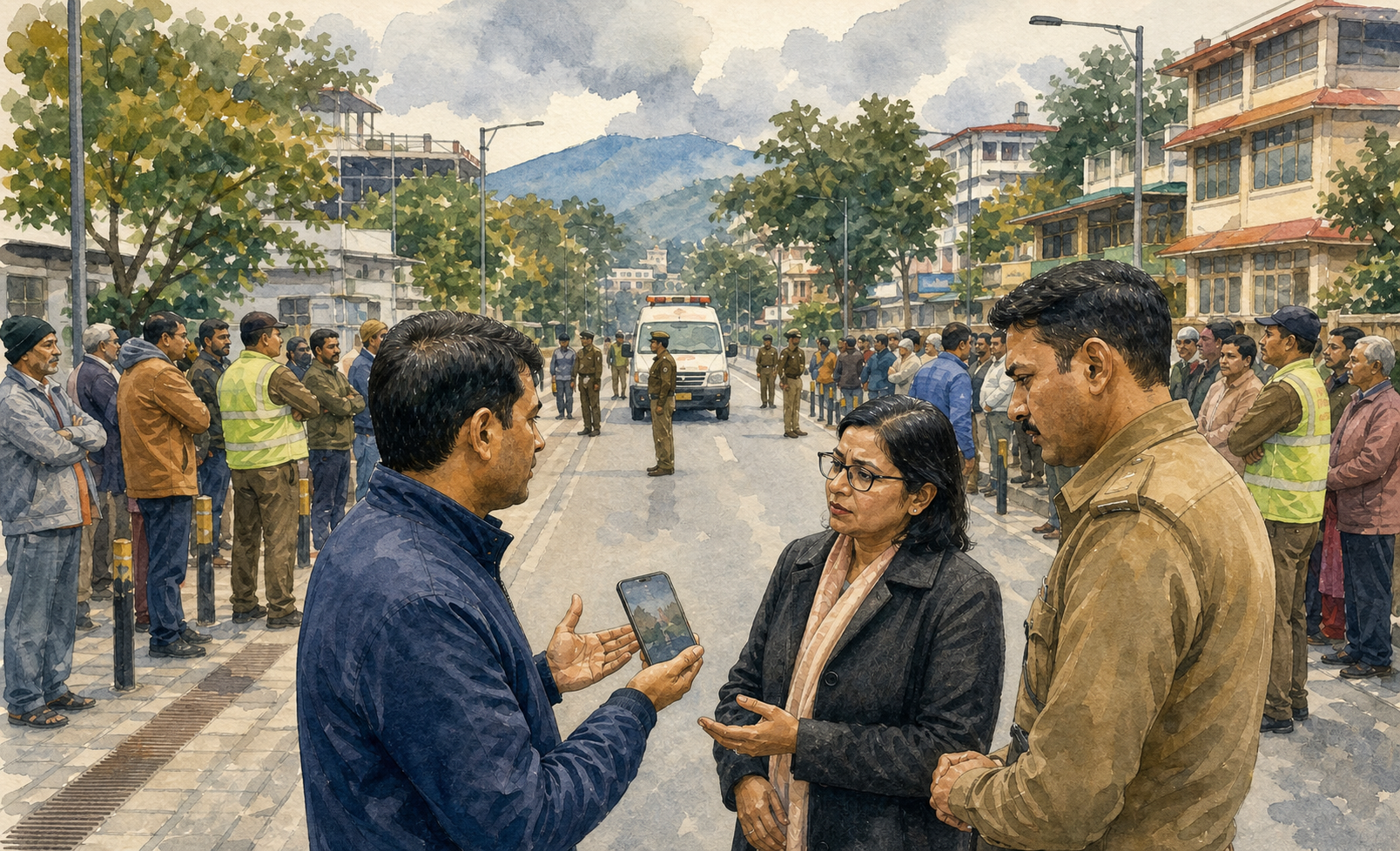
A live confrontation is not the moment to settle constitutional principles or historical grievances. Your immediate task is to reduce the chance of injury, preserve reliable information and get responsible officials to the exact location.
- Move children, older people and anyone needing assistance away from the crowd. Do not remain at the edge of a confrontation merely to record it.
- If an emergency route or building access is obstructed, tell police or emergency services the exact location, direction of travel and nature of the obstruction. A useful report says what cannot pass; a communal slogan does not.
- Do not touch worshippers, prayer materials, protest signs, barricades or vehicles. Physical intervention can cause injury, destroy evidence and create legal exposure. Ask officials to restore access.
- Record only from a safe position. Capture the junction, affected lane, traffic condition and any audible official directions. Preserve the original file instead of circulating only a clipped extract.
- Do not forward claims about weapons, outside agitators, insults or official permission unless you can verify them. A dramatic clip may show the confrontation without showing what preceded it.
- Residents and shopkeepers should choose a clear contact person to relay facts. Several contradictory calls make it harder for officials to understand the immediate problem.
- Ask the responding authority what temporary measure is being used: reopening a lane, creating a pedestrian corridor, redirecting overflow, diverting traffic or dispersing an unlawful counter-crowd.
Parents reportedly hurried to collect children and shopkeepers worried about disruption during the Dehradun incident. Those consequences are a reminder that public order is not an ideological trophy. It is the ordinary ability to reach home, operate a business, walk safely and obtain help when needed.
A recurring gathering needs a written operating plan
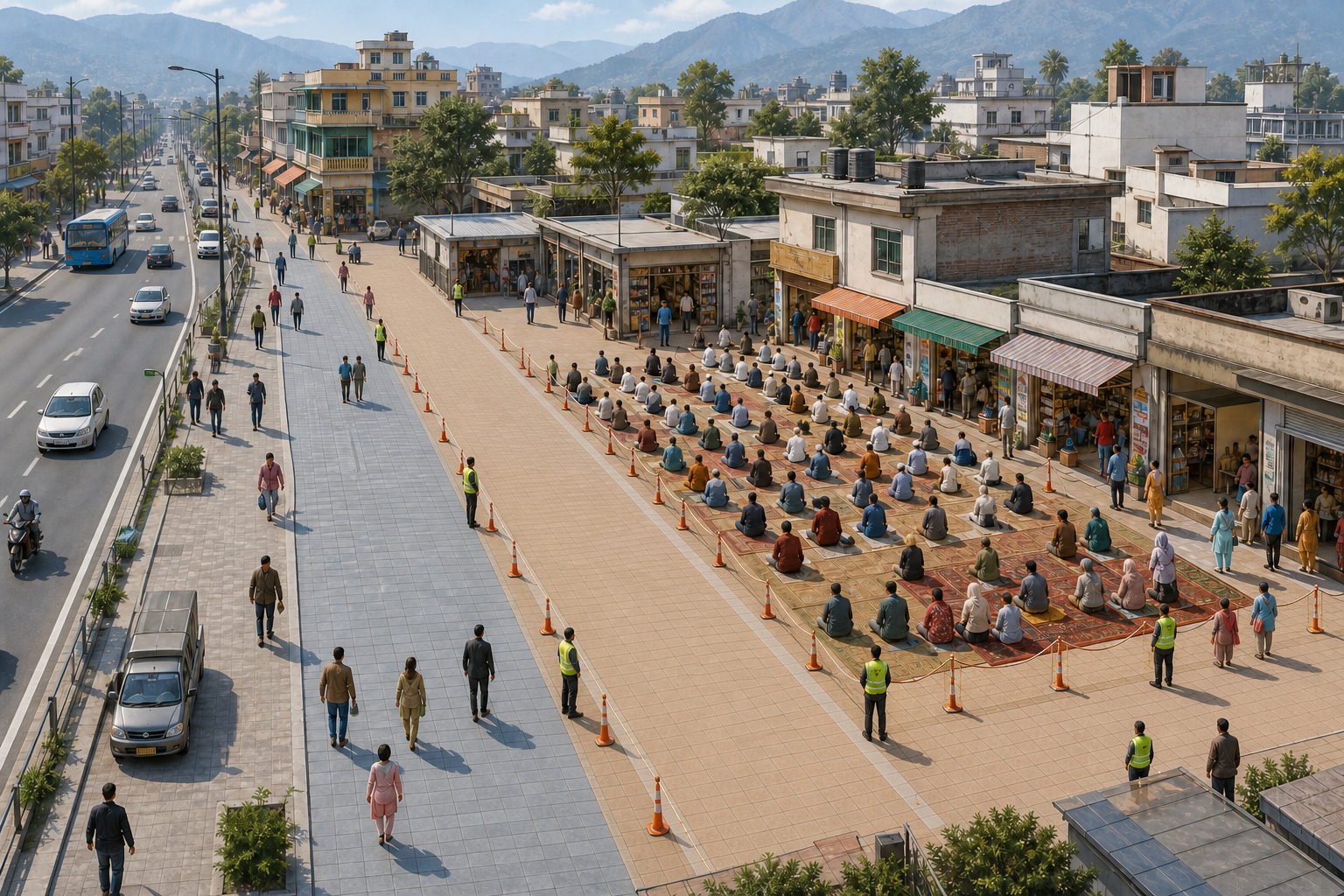
If officials know that a religious gathering may exceed the capacity of its building, waiting for people and protesters to meet on the road is administrative failure. Pre-notified arrangements, designated alternatives, temporary traffic measures and direct coordination are practical tools for preventing that encounter.
For any recurring gathering that could affect a road, the municipality, police and organizers should publish or communicate these elements in advance:
- A named organizer responsible for compliance and a named official who can be contacted when conditions change.
- The location, operating window and intended footprint of the gathering, including any use of a lane or footpath.
- Clear information about the applicable permission or notification process, so rumours about authorization do not drive the dispute.
- An unobstructed route for emergency vehicles, pedestrians, residents and nearby businesses.
- A capacity limit for the planned space and a fallback location for overflow. Once that limit is reached, new arrivals should be directed to the fallback rather than accommodated through an improvised expansion.
- Any temporary traffic diversion, with signs and personnel positioned before the gathering starts.
- Recognizable marshals who can communicate with congregants without substituting themselves for police.
- A dispersal plan that restores ordinary use promptly after the observance ends.
The standard must be neutral. Apply it to Friday prayers, Hindu processions, Sikh observances, Jain events, political marches and commercial gatherings according to their actual effect on shared space. A public-order rule loses credibility when obstruction is condemned only when another community causes it.
Neutrality does not mean every activity must receive an identical arrangement. A small gathering and an event that redirects traffic may require different controls. It means the decision should turn on capacity, duration, safety and access rather than on which religion is present.
Officials must also retain responsibility for enforcement. Religious organizers should manage their participants, and civic representatives may communicate concerns, but neither worshippers nor protesters should decide road access by force of numbers. No congregation should acquire a permanent entitlement through repetition, and no opposing group should acquire a veto through intimidation.
Dharmic firmness governs the means as well as the goal
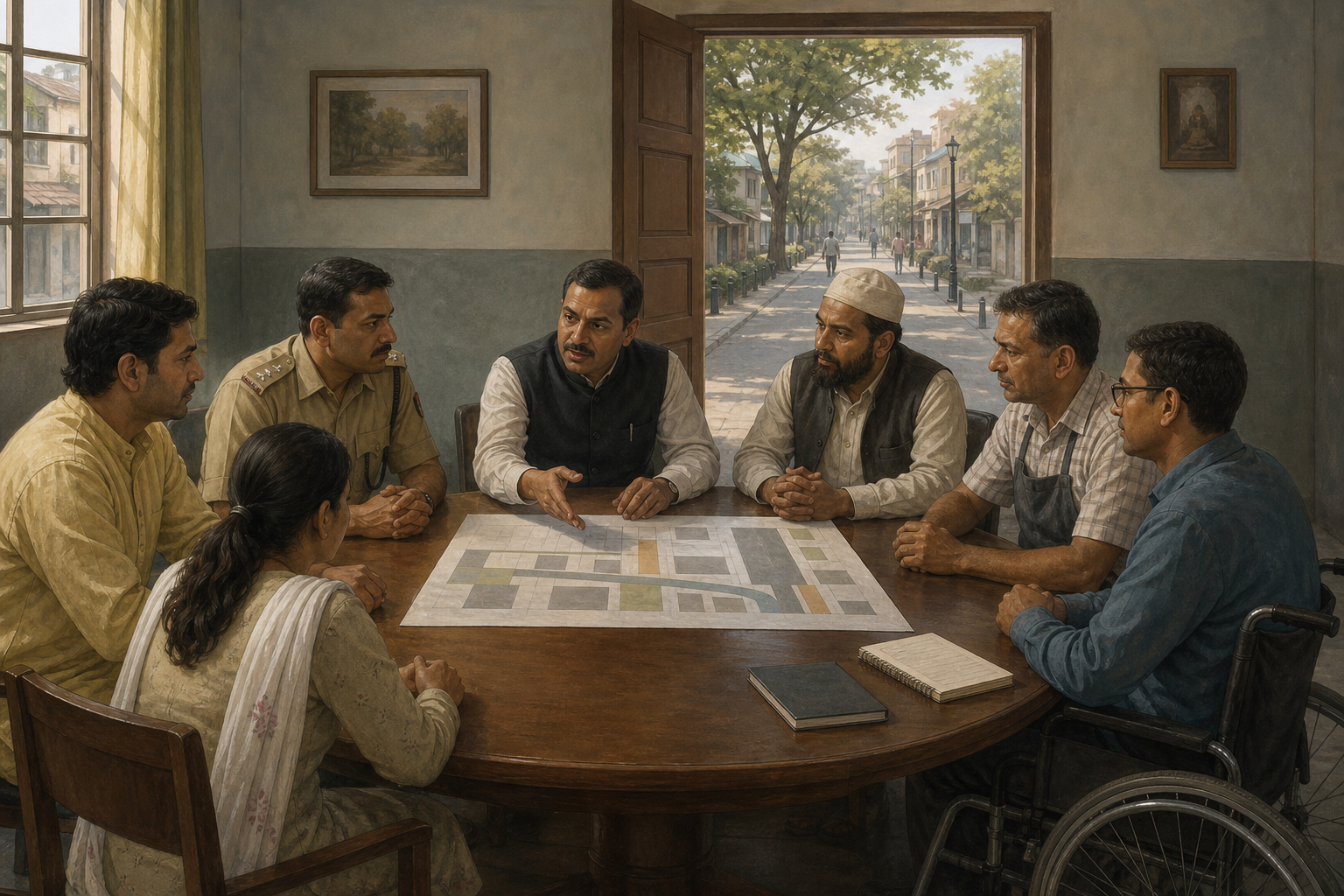
Ahimsa does not require you to remain silent about an obstruction. It requires discipline in how you oppose it: no threats, humiliation, collective blame or provocation. Seva widens the field of concern. The commuter, vendor, resident, police officer and worshipper are all part of the public whose welfare matters.
A credible Hindu civic position has four characteristics:
- It is consistent. You are willing to accept the same access and safety rule when your own community organizes a procession or festival.
- It is specific. You object to a blocked lane, unsafe crowd size or missing official plan rather than treating Muslim neighbours as the problem.
- It is proportionate. You seek restored access and a future arrangement, not humiliation, retaliation or collective punishment.
- It is institution-facing. You demand accountable action from organizers, police and municipal officers instead of treating street confrontation as governance.
This is firmness with moral control, not passivity. A road belongs to the public, so you can insist that its use be regulated transparently. The same principle obliges you to reject harassment of people engaged in worship and to refuse slogans that turn a solvable municipal problem into hostility against a population.
Interfaith dialogue becomes useful when it is operational rather than ceremonial. Hindu, Muslim, Sikh and Jain representatives should know whom to call before a recurring event, what capacity or traffic problem has arisen, and which official can approve or change the plan. The channel should function before rumours summon crowds, not merely after peace has already broken down.
Key takeaways and the next civic action
- Defend both worship and public access by demanding a clear rule for the use of shared roads.
- Describe the obstruction precisely; do not convert an observed traffic problem into a claim about an entire community.
- During a standoff, protect people, preserve original evidence and let responsible authorities manage the site.
- Require a published plan covering capacity, overflow, emergency access, traffic control, responsible contacts and dispersal.
- Apply the same standard to every religious, political and commercial gathering.
- Use Ahimsa to govern the method of protest and Seva to keep the whole public in view.
Turn concern into a usable complaint
A short factual complaint is more useful than a long political denunciation. Give it a subject such as Request for written public-space plan at [location], then include:
- The exact road, junction and affected direction.
- The access problem you personally observed, with the observed start and end if known.
- The effect on pedestrians, residences, businesses, traffic or emergency movement.
- Any official instructions you heard or received.
- Original photographs or video, clearly separated from forwarded material.
- The remedy requested: restore access, clarify authorization, identify an overflow site, publish a traffic plan and name a responsible contact.
- A request that the same public-space standard be applied to comparable gatherings of every community.
Send the same factual account to the relevant municipal and police offices, and retain their acknowledgement. Remove personal information and unverified allegations before publishing it. If you face an immediate safety risk or a specific legal dispute, follow official safety directions and consult a qualified local lawyer rather than testing the issue through confrontation at the site.
Dehradun should not have to improvise at the next crowded observance. Ask for the written operating plan now: who may use which space, how ordinary passage will continue, where overflow will go and who will act when the plan is breached.
References
