
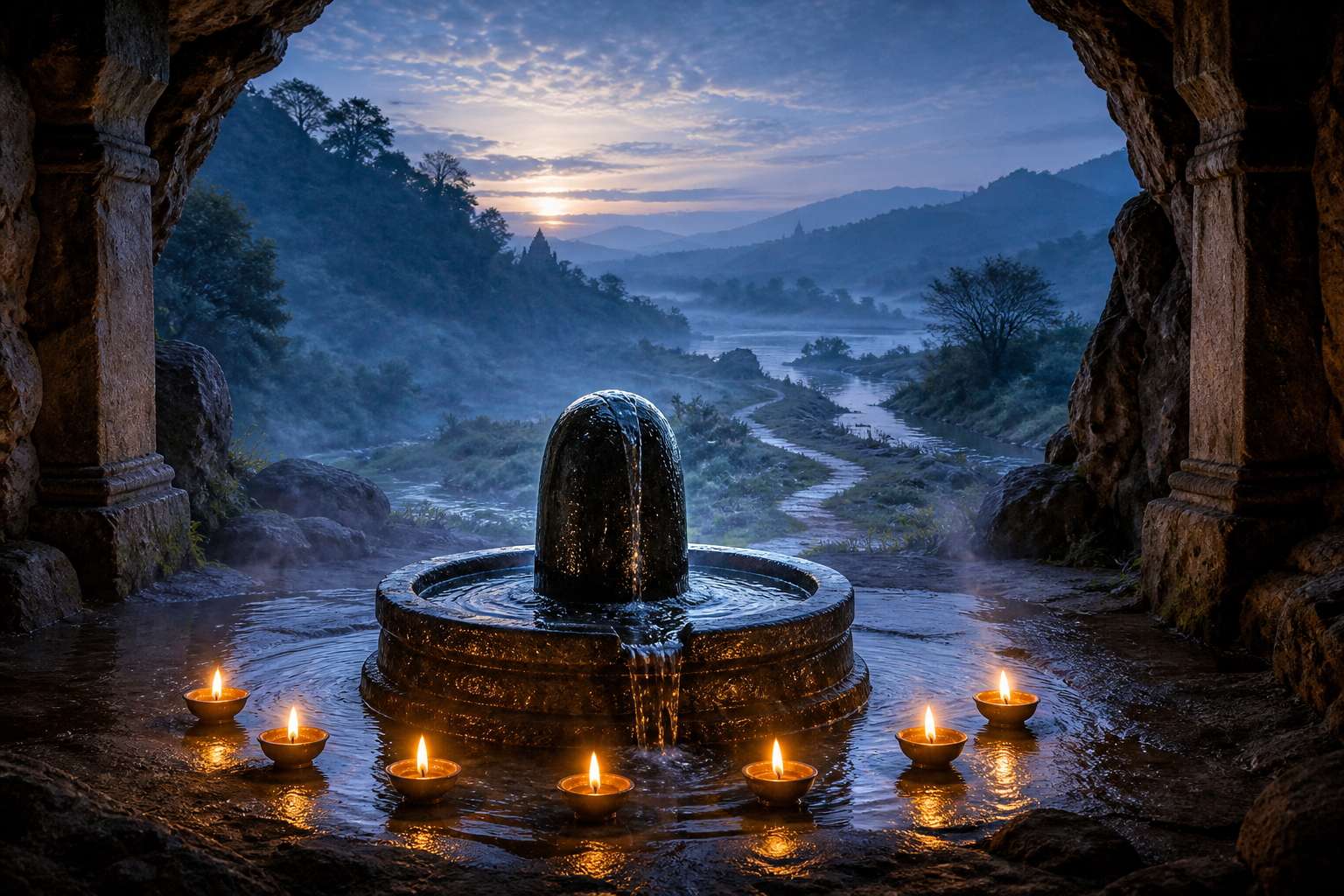
You may know several names of Shiva and may also hope to visit a self-manifested linga in Bharat, yet still wonder how these forms of devotion fit together. Is one simply a home practice while the other is a pilgrimage destination?
The practical distinction is simple: a sacred name gives your attention a direction, while a Swayambhulinga gives that attention a place. When sound, sacred geography, and ethical conduct reinforce one another, Shiva-bhakti becomes a discipline you can live rather than an idea you merely admire.
Key takeaways before you begin
- The eight names – Bhava, Sharva, Rudra, Pashupati, Ugra, Mahadeva, Bhima, and Ishana – are distinct contemplative doors. Each directs you toward a particular quality of awareness and conduct.
- Swayambhu means self-manifested or self-existent. A Swayambhulinga is therefore revered as a presence of Shiva that arose without human intervention, not merely as an object fashioned to resemble another linga.
- The 68 Swayambhulingas belong to Bharat’s sacred geography, carried through temples, pilgrimage traditions, regional memory, and local sthala-puranas. A bare list of names cannot convey that full context.
- For daily japa, use a quiet place, calm breathing, clear pronunciation, and a count such as 8, 16, or 108 repetitions. Silent repetition and a soft voice are both valid.
- A pilgrimage is incomplete if it produces only photographs or a completed itinerary. Darshan should deepen humility, disciplined action, seva, and care for the shrine and its surroundings.
Name and Swayambhulinga: two scales of one devotion
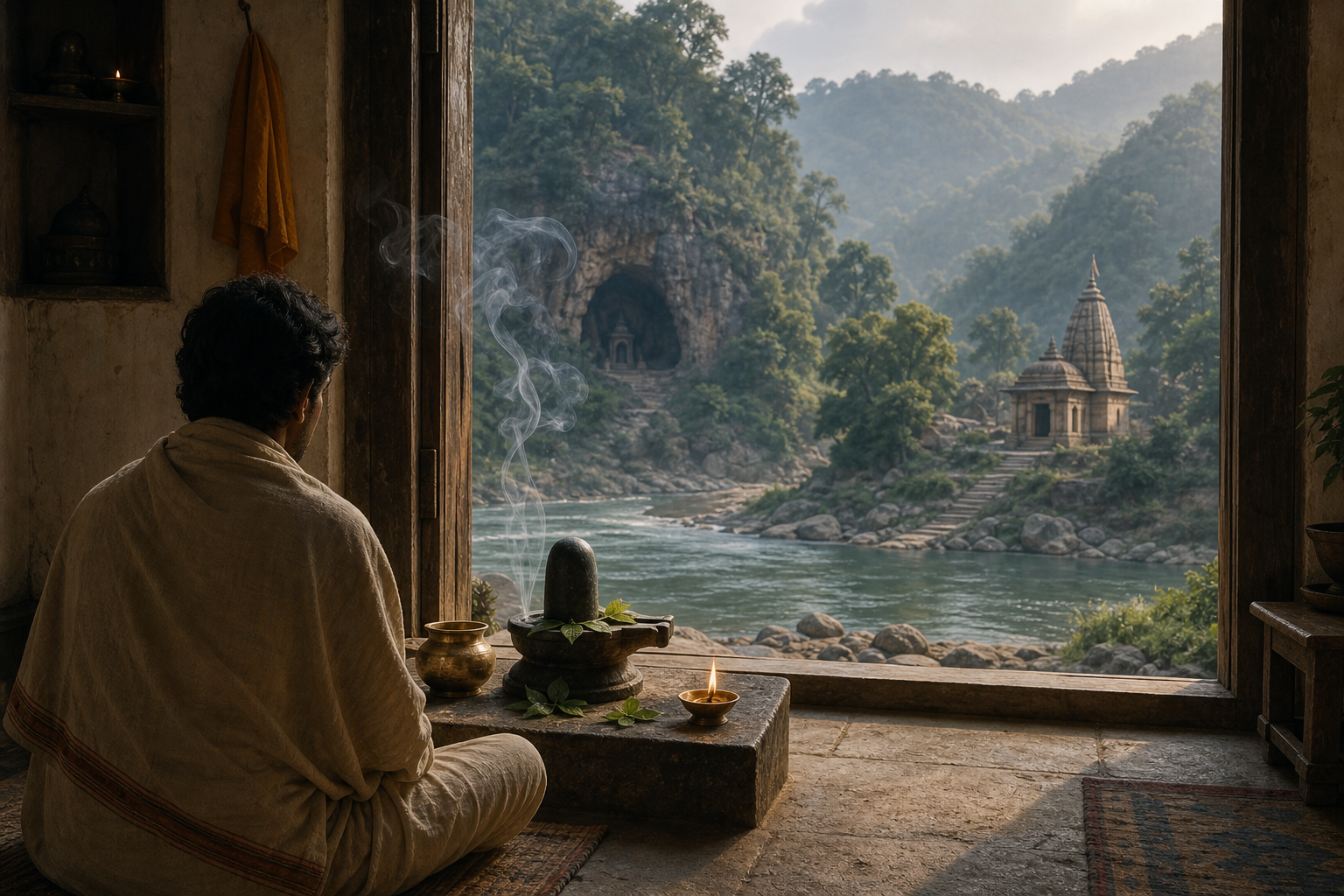
A name of Shiva is more than a label. In nama-japa, repetition gathers a mind that has been dispersed among worries, memories, and unfinished tasks. The meaning of the chosen name then gives that gathered attention a direction. Bhima calls for steadiness, for example, while Pashupati calls for compassionate guardianship. The practice becomes useful when the name changes how you meet the next duty, person, or difficulty.
This is why the Ashtanama Shiva practice should not be reduced to the mechanical completion of a number. Counting supports continuity, but the deeper work is remembrance. You are training attention to return to Shiva and training conduct to reflect what the name reveals.
A Swayambhulinga works at another scale. The linga is an aniconic sign of Shiva: it does not attempt to confine the Divine to a human likeness. It points toward limitless being and consciousness while still giving the devotee a tangible center for darshan, abhisheka, and pradakshina. Aniconic does not mean empty or impersonal. It means that the visible form directs awareness beyond the limits of visible form.
The Swayambhu adds a further theological claim. Shiva’s presence at that place is remembered as self-arisen rather than produced by human effort. The shrine consequently binds transcendence to a particular landscape and a living community. Rivers, forests, mountains, temples, local narratives, ritual rhythms, and generations of pilgrims become part of the encounter.
The traditional grouping of 68 such manifestations should therefore be approached as a network of sanctity across Bharat, not as a collection of interchangeable objects. Regional traditions and sthala-puranas preserve the identity and meaning of particular sites. Before repeating a claim about a shrine, learn how the temple’s own tradition remembers it.
Other Dharmic paths also use disciplined remembrance to steady attention and shape conduct. Buddhist mantra recitation, the Jain Namokar Mantra, and Sikh Naam Simran are not theologically identical to Shiva nama-japa, but they reflect a shared confidence that repeated sacred remembrance can cultivate restraint, clarity, and an orientation beyond the restless ego. Recognizing that affinity need not erase the distinct character of any tradition.
Let each of Shiva’s eight names change one action
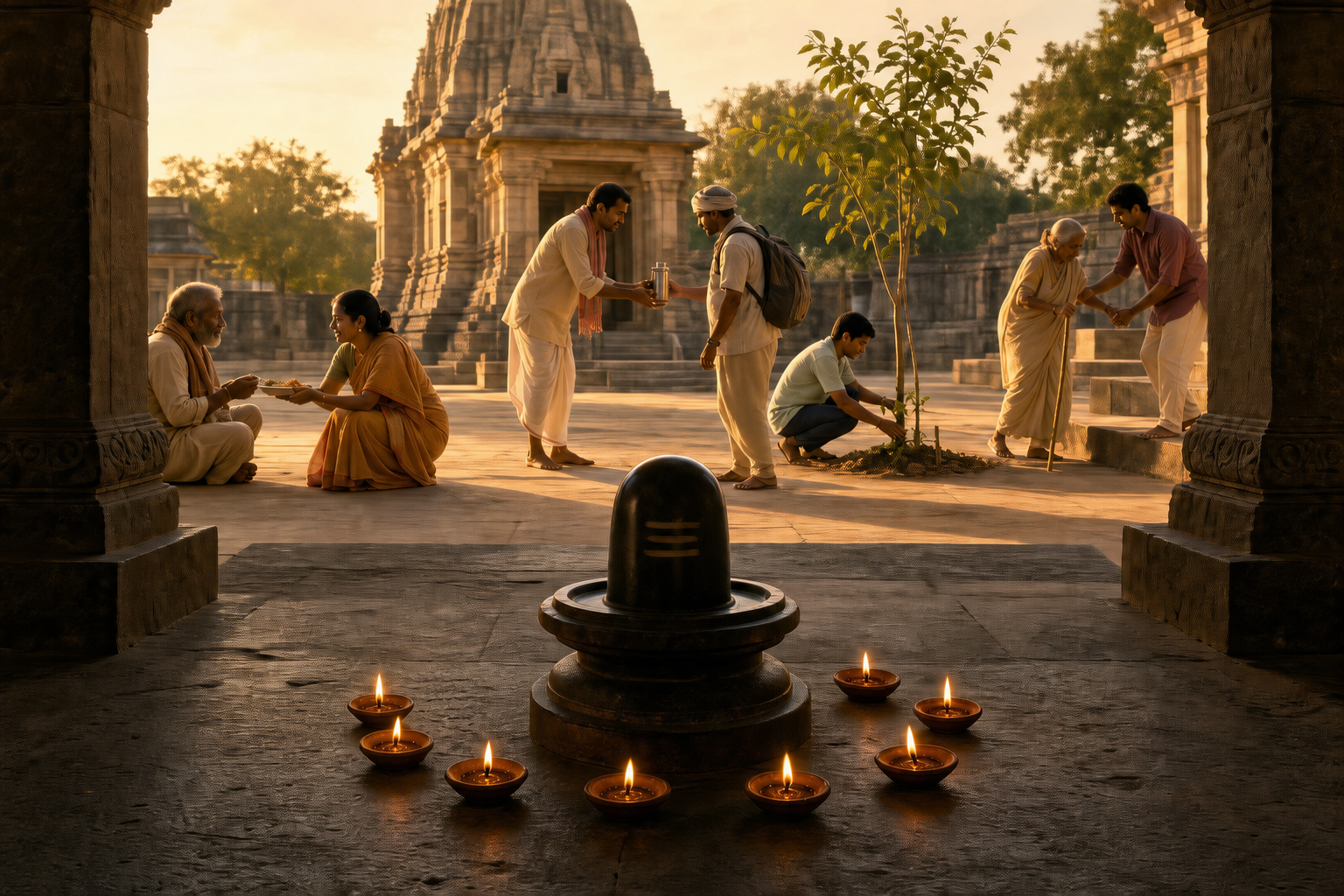
The eight names become easier to practice when you connect each one to something you can notice and do. Use the final column as a prompt, not as a rigid rule or a claim that every devotee must interpret the name in exactly the same way.
| Sacred name | Contemplative focus | A practical response |
|---|---|---|
| Bhava | Existence and becoming | Notice what is arising now instead of demanding that life remain as it was. Begin the next necessary task from the simple ground of being present. |
| Sharva | The archer who pierces ignorance and releases tension | Name the assumption, attachment, or burden obscuring your judgment. Release one thing that no longer serves dharma. |
| Rudra | The remover of sorrow and the force of transformation | Give grief, fear, or agitation honest attention, then direct its energy into one disciplined and constructive step. |
| Pashupati | Lord of all beings, expressing compassion and guardianship | Restrain a harmful impulse and take responsibility for a person, animal, community, or living environment within your reach. |
| Ugra | Formidable courage and moral resolve | Do the ethically necessary thing you have delayed because it is uncomfortable. |
| Mahadeva | The great and all-pervading, associated with magnanimity and grace | Widen your view before responding. Refuse the petty reaction when a more generous one is possible. |
| Bhima | The tremendous and unshakable | Remain with one chosen duty instead of switching tasks whenever discomfort or distraction appears. |
| Ishana | The sovereign and auspicious guide toward higher aspiration | Choose the course that serves wisdom and long-term dharma, not merely the quickest relief. |
Do not turn these names into a personality test. You do not need to decide that you are a Bhima person or a Rudra person. The same practitioner may need Pashupati’s gentleness in one situation and Ugra’s courage in another. The name is a lens for practice, not a permanent label for the ego.
A repeatable sequence for daily japa
- Choose a clean, quiet place where you are unlikely to be interrupted. Sit in a stable posture with the spine comfortably aligned.
- Take a few rounds of calm, even breathing. The purpose is not to create an extraordinary state; it is to stop carrying the previous activity into the recitation.
- Recite the complete sequence once: Bhava, Sharva, Rudra, Pashupati, Ugra, Mahadeva, Bhima, Ishana. Keep the pace slow enough that each name remains distinct.
- Choose your pattern before continuing. You may repeat the full sequence or remain with one name that addresses the quality you need to cultivate. Use 8, 16, or 108 repetitions rather than changing the count impulsively during the practice.
- Chant softly or repeat the name silently. A mala can preserve the count, especially during a longer cycle, but it should free your attention rather than become a spiritual scoreboard.
- When attention wanders, return to the sound and meaning without turning the interruption into a second struggle. That return is part of the practice.
- Close by identifying one action through which the chosen name will enter your day. Keep it concrete: complete a duty, make a restrained response, care for a living being, or face a difficult decision honestly.
Morning and evening are natural times for this practice, but a brief interval during the day can also restore direction. If 108 rushed repetitions make the names indistinct, use 8 or 16 attentive repetitions. Consistency, sincerity, and clear pronunciation matter more than displaying endurance.
Two mistakes are especially easy to make. The first is chasing emotional intensity through names such as Rudra or Ugra. Their force should strengthen responsibility, not aggression. The second is using japa to avoid the problem named by the practice. Repeating Bhima while continuing to abandon every difficult duty misses the point. Let the sound steady you, then act.
Approach the 68 as sacred geography, not a checklist

The number 68 can tempt a pilgrim to think in terms of completion: collect the names, visit the sites, and mark each one as finished. That approach reverses the purpose of a tirtha-yatra. Sacred geography is meant to reshape the pilgrim’s relationship with place, memory, community, and the Divine.
At a Swayambhulinga shrine, the physical form is revered within a living account of self-manifestation. Its importance cannot be judged by size, sculptural polish, or how dramatic it appears in a photograph. The relevant question is how Shiva’s presence is remembered, worshipped, and protected there.
- Learn the shrine’s own name and local sthala-purana. Do not substitute a detached online label for the community’s transmitted memory.
- Verify current access and worship arrangements with the temple before travelling. Ritual permissions and practical conditions belong to the living shrine, not to a generic pilgrimage formula.
- Ask before offering abhisheka, touching a sacred form, taking photographs, or beginning pradakshina. Participate through the temple’s established order rather than assuming that every Shiva shrine follows identical customs.
- Notice the whole sacred setting. The temple may be only one part of a landscape that includes water, trees, pathways, nearby communities, and older structures.
- Treat inscriptions and historic surfaces as heritage, not props. Do not mark, rub, climb on, or handle them. Follow photography restrictions and support responsible documentation where it is permitted.
- Leave the surroundings cleaner and less disturbed than you found them. Ecological care is not separate from reverence when the landscape itself carries sacred memory.
Devotion and historical inquiry can strengthen one another when they are not confused. A devotional question asks how the community encounters Shiva at the site. A historical question asks what inscriptions, architecture, and other evidence can establish. A conservation question asks what must be protected so worship and memory can continue. Historical care does not require contempt for faith, and faith does not require invented historical certainty.
You may experience unusual stillness at a shrine, but do not grade your darshan by whether a dramatic sensation occurs. Quiet attention, respect for the local tradition, and the conduct you carry away are more reliable measures of pilgrimage than an emotion you cannot command.
Join the sacred name, the shrine, and your conduct
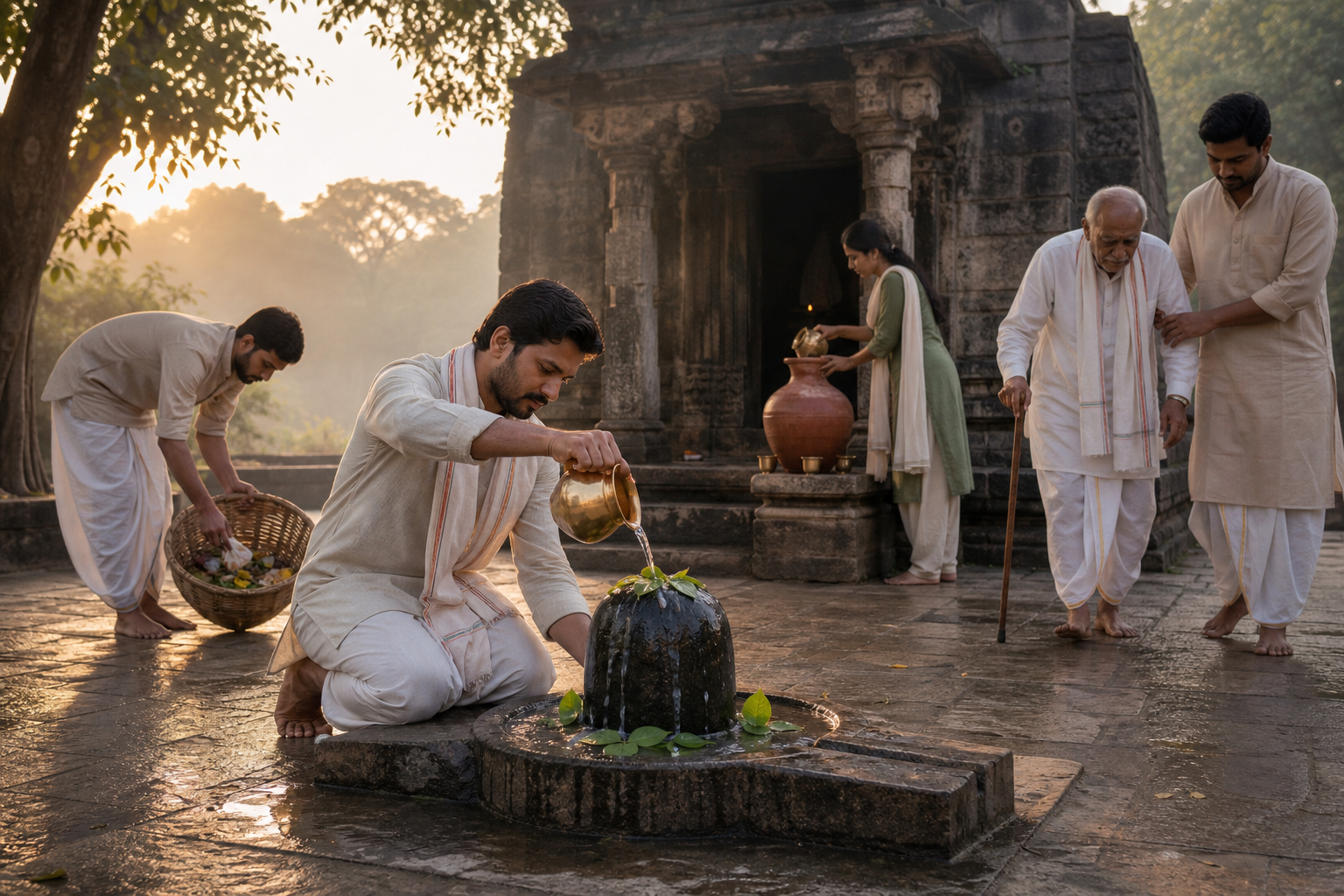
The strongest practice links three moments: preparation, presence, and return. Before a pilgrimage, choose the name that exposes what you need to correct. Rudra may accompany grief or agitation; Ugra may address avoidance; Bhima may steady a neglected duty; Pashupati may deepen care; Ishana may clarify a difficult choice.
At the shrine, simplify. Receive darshan, follow the temple’s ritual order, and repeat the chosen name silently or softly. You do not need to fill every moment with requests. Let the linga hold attention where the name has directed it.
After returning, complete one act that expresses the name. If you invoked Pashupati, undertake a real act of guardianship. If you invoked Ugra, face the moral duty you had postponed. If you invoked Bhima, finish the work that distraction kept breaking apart. This is how pilgrimage becomes more than movement across a map.
If travel is not available to you, the relationship can still be cultivated through nama-japa, study of a shrine’s living tradition, and support for responsible cultural or ecological preservation. Home practice is not a claim that every place is interchangeable. It is a way of preparing your attention to recognize and honor sacred presence.
At your next quiet sitting, recite all eight names once and then choose one for 8 or 16 attentive repetitions. Carry that name into one decision before the day ends. If you are preparing for a Swayambhulinga pilgrimage, begin by learning the temple’s local tradition and deciding how your visit will support, rather than merely consume, its sacred inheritance.
References
- DharmaRenaissance Blog – Chant Shiva’s Eight Sacred Names for Inner Peace, Focused Mind, and Spiritual Awakening
- DharmaRenaissance Blog – Discover the 68 Swayambhulingas: Self-Manifested Shiva Forms and Bharat’s Sacred Geography
