
-
Why Only Universal Truths Stay Fresh: Dharmic Wisdom to Beat Information Fatigue

Modern life delivers endless information yet little renewal. Dharmic wisdom explains why: knowledge not grounded in universal truth quickly grows stale, while insights rooted in satya, ṛta, and dharma remain evergreen. Drawing on Hinduism alongside Buddhism, Jainism, and Sikhism, this reflection highlights how compassion, non-violence, and service keep knowledge alive and transformative. It offers practical…
-
Why the Upanishads Endure: A Fearless Quest for Truth and Unity Across Dharmic Paths

The Upanishads endure because they transform truth into a fearless, lifelong quest rooted in rigorous inquiry and contemplative depth. Unbound by dogma, they cultivate clarity through dialogue, discernment, and lived insight. Their openness to multiple paths aligns with unity across Dharmic traditions—Hinduism, Buddhism, Jainism, and Sikhism—without erasing distinct perspectives. Readers often find emotional resonance alongside…
-
Beyond the Fleeting: Sanatan Dharma’s Timeless Path to Inner Freedom and Untold Riches

Modern life amplifies distraction, yet Sanatan Dharma teaches how to see beyond the fleeting and rediscover what truly endures. By cultivating viveka and vairāgya, seekers learn to distinguish the permanent from the impermanent. The Bhagavad Gītā and Upanishads frame this insight with clarity, while Yoga practices translate it into daily stability. The puruṣārthas align ethical…
-
Kundika Upanishad: Powerful Lessons on Sannyasa, Inner Freedom, and Dharmic Unity

The Kundika Upanishad, a Sannyasa Upanishad linked with the Sama Veda, presents renunciation as the culmination of a dharmic life aimed at moksha. Across 34 verses, it unites ethical restraint, contemplative practice, and radical simplicity into a coherent path for inner freedom. Its symbolism—centered on the kundika (water pot)—speaks to purity, service, and sustainability. The…
-
Unveiling Creation in the Mundaka Upanishad: Powerful Symbols That Reveal Brahman

This article explores how the Mundaka Upanishad presents a symbolic, contemplative theory of creation that links the universe to Brahman, the imperishable reality. It explains the twofold knowledge framework (apara and para) and shows how cosmology serves the pursuit of liberation rather than literal cosmogony. Readers encounter the Upanishad’s powerful metaphors—spider and web, plants from…
-
Timeless Vedic Discipline: Living Below Your Means for True Wealth and Inner Freedom

Living below one’s means is presented as a disciplined, dharmic path to true wealth, rooted in Vedic wisdom and reinforced across Buddhism, Jainism, and Sikhism. The post explains how artha flourishes under dharma, reframing wealth as stewardship rather than accumulation. It outlines practical steps—ethical earning, mindful spending, consistent saving, and regular giving—that build both financial…
-
Why Sanatana Dharma Endures: The Self-Correcting Wisdom Unifying Dharmic Traditions
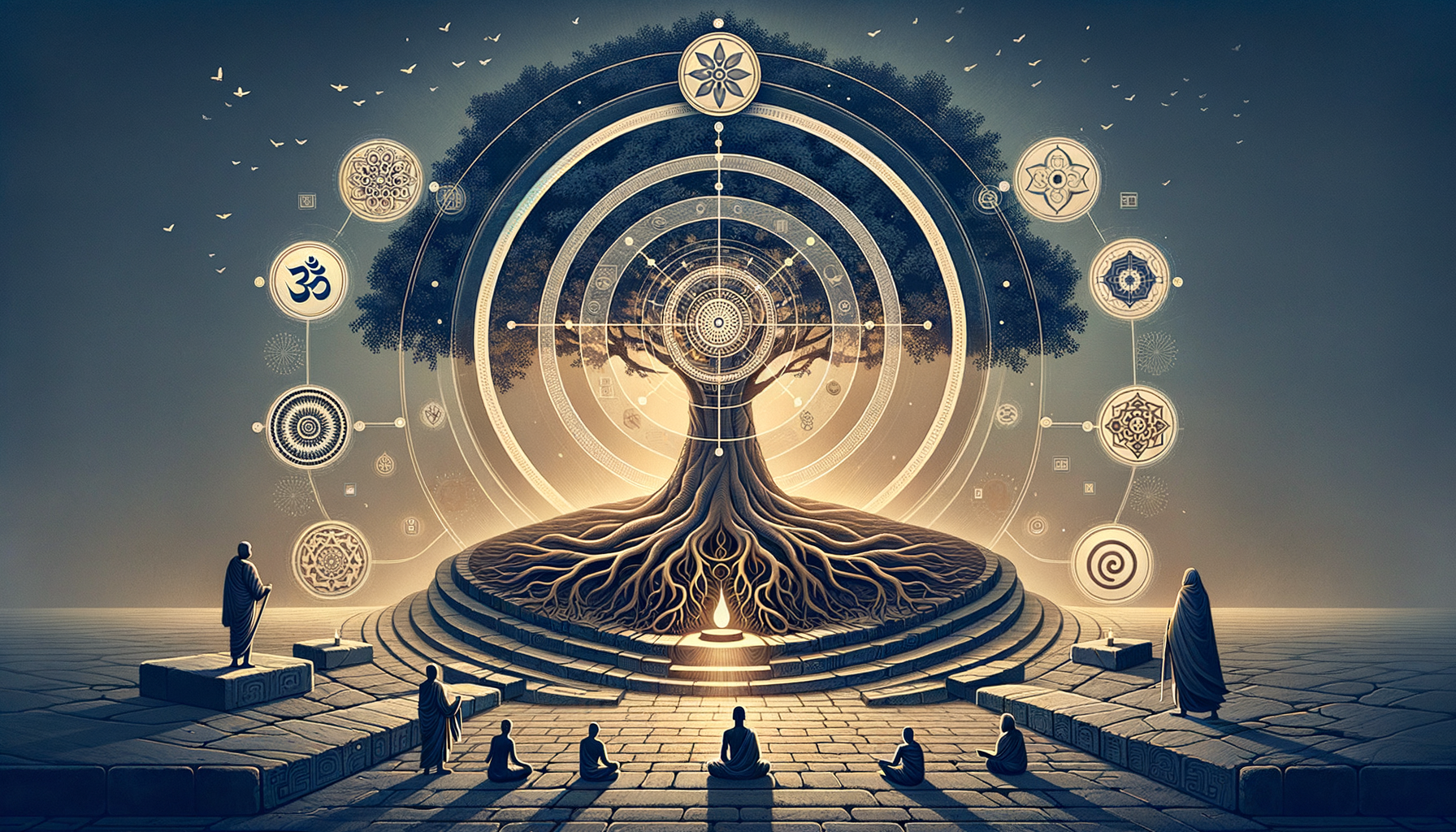
Sanatana Dharma endures because it carries a built-in, self-corrective system that updates practice without losing core principles. Hinduism’s framework of shruti, smriti, ācāra, and yukti enables context-aware refinement guided by reason and community debate. Buddhism, Jainism, and Sikhism share this ethos through councils, Anekantavada, and collective deliberation, demonstrating a broader dharmic commitment to internal reform.…
-
Beyond Sattva, Rajas, Tamas: A Transformative Path to the Pure Self and Dharmic Unity

This essay explores how the three gunas—sattva, rajas, and tamas—bind experience and how dharmic traditions point beyond them to a liberating awareness. It clarifies Hindu perspectives on Atman and moksha while drawing resonant parallels with nirvana in Buddhism, kevala jñāna in Jainism, and Naam-centered living in Sikhism. Readers gain a clear, practical map grounded in…
-
Upanishadic Wisdom and the Profound Oneness of Life: A Call to Spiritual Solidarity

The Upanishads present a clear and compelling teaching: all life is fundamentally one. By illuminating the non-dual relationship between ātman and Brahman, these scriptures ground ethics in spiritual unity and inspire compassion in action. Their inclusive approach honors multiple paths—jñāna, bhakti, karma, and dhyana—supporting religious pluralism and interfaith harmony. Resonating with Buddhism, Jainism, and Sikhism,…
-
Dharmaskandha in Chandogya Upanishad: Three Pillars of Vedic Life for Timeless Ethical Living
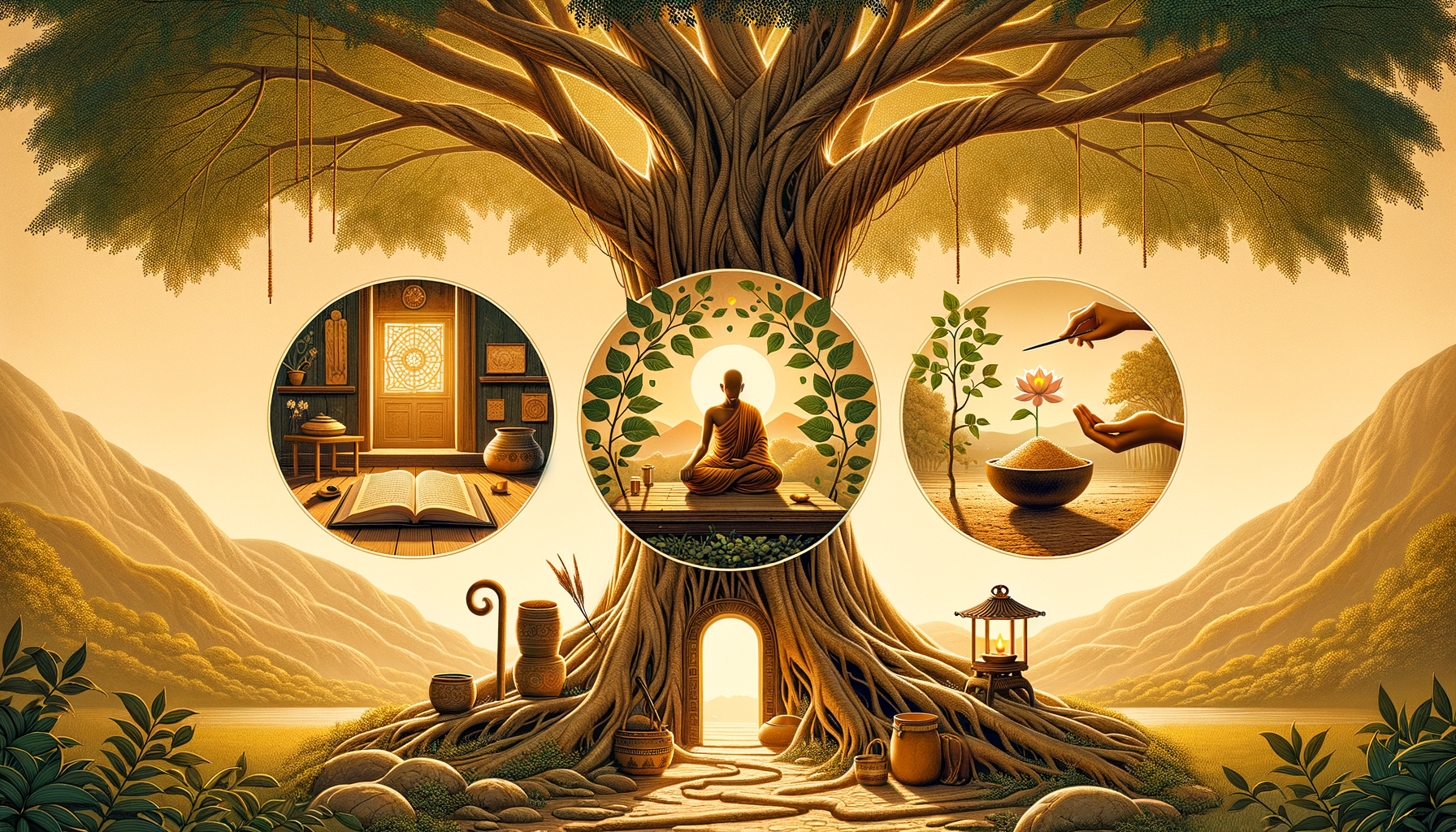
Dharmaskandha in the Chandogya Upanishad (2.23.1) presents three complementary pillars of Vedic life: the Vedic student, the householder, and the forest-dweller. Together they integrate disciplined learning, social responsibility, and contemplative depth into a unified ethic. This triad offers a relatable blueprint for modern living—continuous education, family and civic stewardship, and mindful simplicity. The framework resonates…
-
Cultivating an Unwavering Mind: Timeless Yogic Wisdom to Embrace the Whole of Life

Hindu philosophy teaches that a stable and unwavering mind is essential for perceiving the interconnected whole of life. Drawing on the Upanishads, the Bhagavad Gita, and Patanjali’s Yoga Sutras, this reflection explains how steady awareness emerges through disciplined practice and ethical living. It outlines practical steps—mindful breathing, mantra japa, and the yamas–niyamas—that reduce agitation and…
-
Plato in Dialogue with Dharmic Wisdom: Insights from a Three-Day Symposium at SKUAST-Kashmir

A three-day international symposium at SKUAST-Kashmir brought Plato into conversation with Dharmic traditions, emphasizing unity in spiritual diversity. Scholars and students explored ethics, political philosophy, and the Socratic method alongside the Upanishads, Buddhist dialectics, Jain Anekantavada, and Sikh ethical reflection. The program modeled rigorous comparative studies and civil discourse, strengthening critical thinking and textual analysis.…
-
Living Liberation Now: Hindu Moksha (Jivanmukti) and Parallels in Buddhism, Jainism, Sikhism
Hindu thought presents moksha as jivanmukti—liberation achievable in this lifetime—grounded in the Upanishads and the Bhagavad Gita. This living freedom is described as a state beyond pleasure and pain, where equanimity and compassion guide daily action. Multiple pathways—jnana, bhakti, karma, and raja yoga—offer complementary means to stabilize insight. The vision aligns with dharmic parallels: Buddhist…
-
Shiva Needs Shakti: Devi Upanishad’s Powerful Lesson on Consciousness and Energy
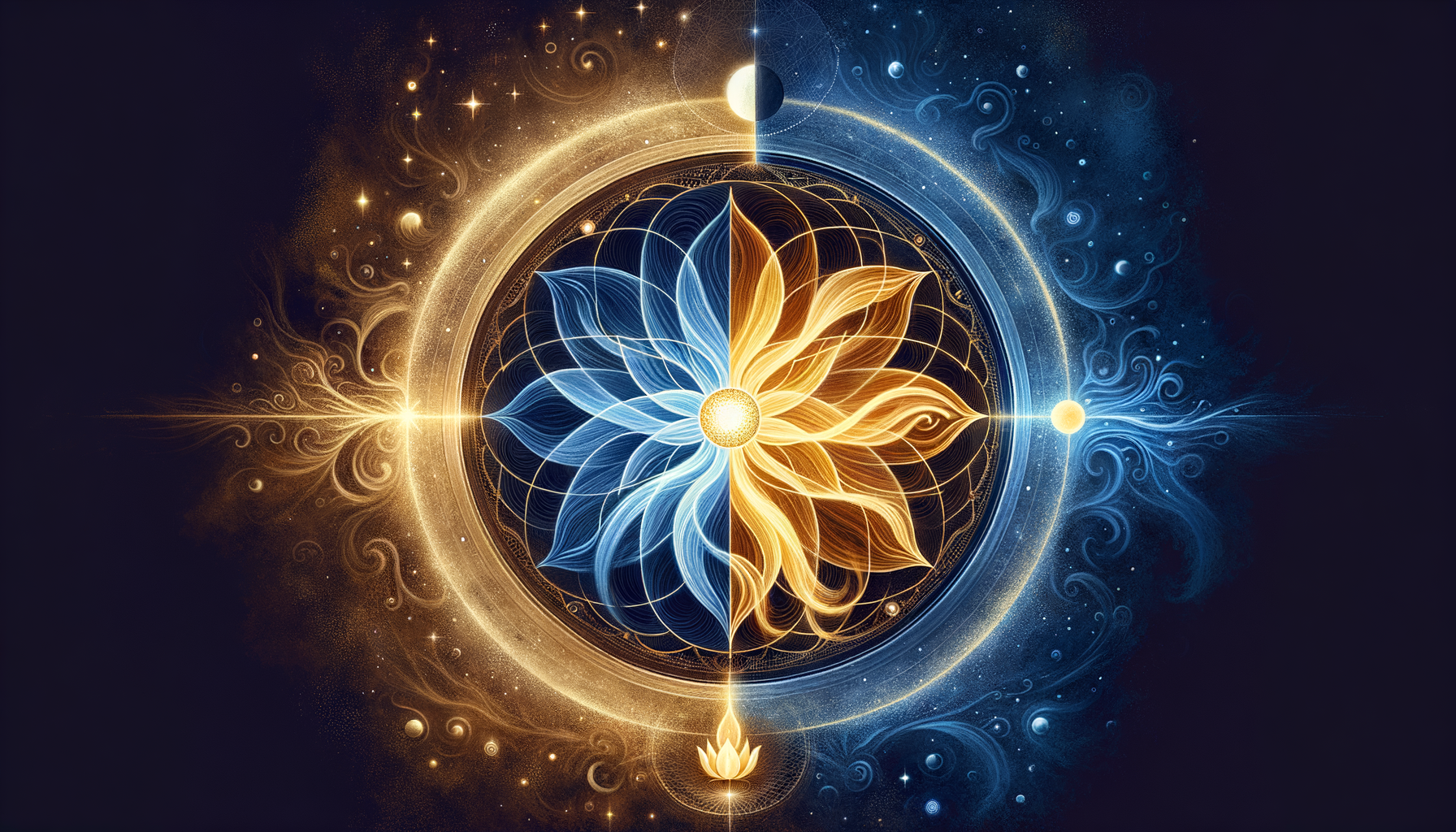
The Devi Upanishad teaches that Shiva (pure consciousness) and Shakti (dynamic energy) are inseparable, revealing that true power arises from their sacred union. This insight reframes metaphysical power as integrative, not hierarchical: awareness without energy remains inert, and energy without awareness lacks direction. Everyday experience reflects this balance, where clarity must meet purposeful action to…
-
When Silence Speaks: Hindu, Buddhist, Jain, and Sikh Wisdom for Social Media Calm

Social media rewards speed and outrage, yet dharmic traditions teach that silence is disciplined strength. Hindu philosophy frames silence (mauna), meditation (dhyana), and sensory restraint (pratyahara) as ethical practices that refine speech and preserve clarity. Parallel insights in Buddhism, Jainism, and Sikhism elevate non-reactivity, compassionate truth, and inner equipoise. Applied today, choosing “no response” can…
-
Awaken the Dashavatara Within: Transformative Practices to Embody Vishnu’s Ten Archetypes
This article reframes the Dashavatara of Vishnu as ten inner states of consciousness that anyone can cultivate for ethical clarity, resilience, and compassion. Each avatar is paired with practical ways to invoke it—such as breath awareness, mindfulness, micro-habits, service, and values-based action. The approach aligns with Vedic wisdom, the Upanishads, and the Bhagavad Gita while…
-
Why Indiscriminate Advice Backfires: Viveka, Anekantavada, and Dharmic Wisdom

The maxim “Indiscriminate advice often backfires” is clarified through Hindu philosophy’s viveka (discernment) and adhikāri-bheda (readiness). Foundational texts such as the Bhagavad Gita, the Upanishads, Vidura-niti, Panchatantra, and Hitopadesha affirm that counsel should be tailored to the person, time, and circumstance. A cross-dharmic view—drawing on Buddhism’s upaya, Jainism’s Anekantavada, and Sikh traditions—promotes plural-sensitive guidance rather…
-
Quieting the Overthinking Mind: Ashtavakra’s Advaita Wisdom for Modern Mental Clarity

Information overload and constant notifications have intensified overthinking and anxiety. Ashtavakra’s Advaita insight—one is not the mind—offers a clear, practical antidote by shifting identity from mental turbulence to steady awareness. The article explains sakshi (witness) consciousness, links it to Pancha Kosha discernment, and shows how breath awareness, pratyahara, dhyana, and inquiry (vichara) reduce reactivity. It…
-
Ishvara in Advaita Vedanta: Unveiling the Compassionate Face of Non-Dual Reality

Advaita Vedanta explains Ishvara as Brahman perceived through Maya, reconciling devotion to a personal deity with the non-dual insight of Nirguna Brahman. This two-level approach—ultimate and empirical—anchors ethical life, ritual, and meditation without sacrificing philosophical rigor. Many practitioners find that devotion to Ishvara offers emotional solace and moral orientation, while inquiry reveals the one Reality.…
-
Beyond Religious Rigidity: Dharmic Paths Realize the Divine Through Personal Freedom

This article examines how Hinduism, Buddhism, Jainism, and Sikhism converge on a core principle: authentic divine realization emerges through personal freedom rather than religious rigidity. Drawing on the Upanishads, the Bhagavad Gita, Ishta philosophy, Anekantavada, and Sikh devotion to Naam, it shows how discipline functions as a tool for liberation, not coercion. The discussion clarifies…