
-
Master Inner Upheaval: The Essential Dharmic Guide to Self-Governance and Peace
The phrase “When your mind creates upheaval, practice self-governance” distills a shared dharmic insight: calm the mind first, then act wisely. Drawing on Hindu Dharma, Raja Yoga, the Upanishads, and the Bhagavad Gita—alongside convergent practices in Buddhism (sati), Jainism (Samayik), and Sikhism (Simran)—it frames self-governance as practical, learnable discipline. A simple sequence—pause, breathe with Pranayama,…
-
Master Free Expression with Satya: Essential Dharmic Wisdom to Walk Away Gracefully

This article presents a Dharmic framework for ethical expression grounded in Satya (truth) and Ahimsa (non-harm). Drawing from the Bhagavad Gita, Upanishads, Buddhist Right Speech, Jain Anekantavada, and Sikh emphasis on Sach, it outlines when to speak and when to step away. Readers learn a practical test—kāla, deśa, pātra—to judge timing, setting, and audience before…
-
Ekayana Unveiled: The Complete Path to Brahman and Dharma—Discover a Unifying Vision

Ekayana, a Sanskrit term meaning “the only path,” “one support,” or “the only refuge,” clarifies how Hindu philosophy unifies diverse practices around Brahman and Dharma. It integrates metaphysics and ethics, showing that jñana, bhakti, karma, and dhyana can form one coherent journey. Rooted in the Vedic and Upanishadic tradition and elaborated in Vedanta, Ekayana promotes…
-
Beyond Boundaries: Proven Dharmic Insights to Master and Transform Human Limitations

Human life is shaped by real constraints, yet dharmic wisdom shows how to transform them into strengths. This reflection integrates Hindu, Buddhist, Jain, and Sikh insights to illuminate why transcending limitations matters and how to do it. Readers learn practical methods—Karma Yoga, mindfulness, simran–seva, ahimsa, svadhyaya, and dhyana—that stabilize attention and deepen resilience. The approach…
-
Discover Rebirth in the Bhagavad Gita: A Complete Guide to Epistemology, Ontology, and Ethics
This analysis presents a clear, three-part framework for understanding rebirth in the Bhagavad gītā: epistemology that privileges insight-oriented knowledge, ontology that secures the continuity of the ātman, and ethics that transform insight into equanimity and enlightened action. Readers gain conceptual clarity on how knowledge shapes worldview and why rebirth coherently follows from the soul’s imperishability.…
-
Born Bad or Made Bad? Discover a Complete, Evidence‑Based Guide to Evil in Dharmic Thought

The everyday debate—born bad or made bad—finds a nuanced resolution in Dharmic thought. Hindu philosophy integrates guṇas, karma, and saṁskāras with the formative power of culture and community. Buddhism explains harmful actions through dependent origination, making transformation possible via ethics, meditation, and wisdom. Jain Anekantavada reframes blame by recognizing many-sided causes while prioritizing ahimsa and…
-
The Complete Vrātya-stōma Guide: How Schopenhauer, Emerson, Elst, Frawley Embraced Sanatana Dharma
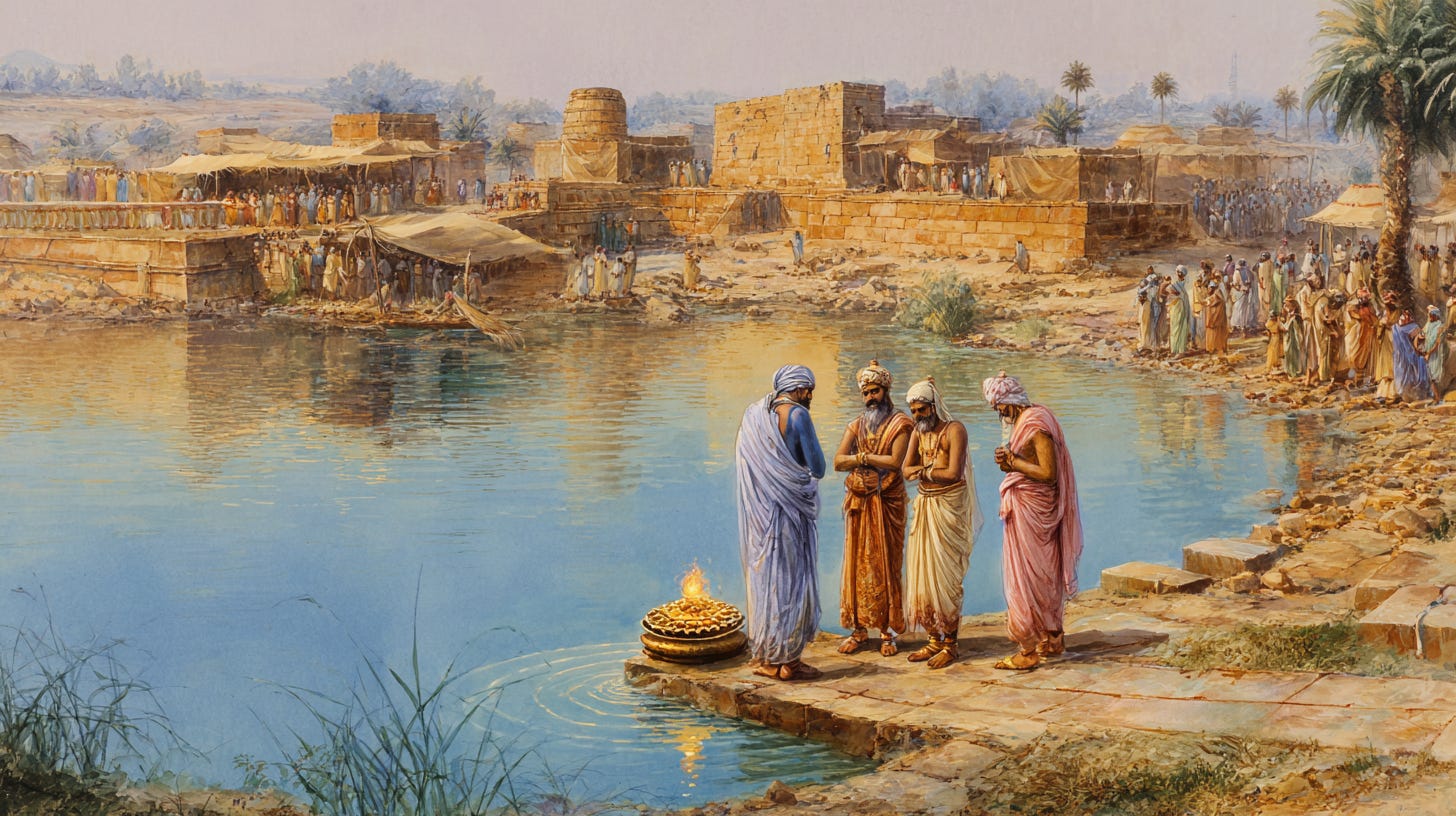
Vrātya-stōma, a Vedic rite of reintegration, serves as a compelling symbol of Sanatana Dharma’s inclusive ethos. This article traces how Western thinkers—Schopenhauer, Emerson, Elst, and Frawley—engaged the Upanishads, the Bhagavad Gita, and Vedanta to enrich global philosophical discourse. Readers will discover how dharmic principles such as ahimsa, yoga, and meditation support unity across Hinduism, Buddhism,…
-
Discover the Proven Roots of Learning: Chandogya Upanishad’s Complete Education Blueprint

The Chandogya Upanishad illuminates an ancient yet enduring model of holistic education. It presents dialogic, inquiry-based learning that blends ethics, contemplation, and the arts with conceptual rigor. Through concrete demonstrations—clay, salt, and the banyan seed—it turns philosophical ideas into lived insight. The narrative of Satyakāma Jābāla highlights inclusivity grounded in truthfulness, echoing shared dharmic values…
-
Discover the Rig Veda’s Complete Creation Wisdom: Upanishadic Insights to Transform Understanding
Hinduism’s creation vision, grounded in the Rig Veda and clarified by the Upanishads, presents a cyclical, ever-unfolding cosmos sustained by Brahman. Rig Vedic humility, especially in the Nasadiya Sukta, invites inquiry rather than dogma. Upanishadic insights like “tat tvam asi” and “satyam jnanam anantam brahma” align the inner Self with the Absolute, framing multiplicity as…
-
The Ultimate Dharmic Guide to Life’s Inevitables: Discover Calm, Clarity, and Freedom

A clear, dharmic approach can transform anxiety about life’s inevitables into calm, purpose, and inner freedom. Hinduism emphasizes Dharma, Karma, and Moksha through the Bhagavad Gita and Upanishads, guiding non-attachment and ethical action. Buddhism’s focus on Anicca and Anatta cultivates mindfulness and compassionate presence amid change. Jainism’s Anekantavada and Aparigraha reduce attachment and foster equanimity…
-
Discover the Proven Secret of Bliss in the Senses: Panchadasi’s Fifteenth Chapter, Vishayananda
Panchadasi’s fifteenth chapter, Vishayananda, explains how everyday pleasures reflect the same ananda that shines as Brahman. By analyzing the role of the senses and the mind, it shows that pleasure arises when agitation pauses and awareness becomes momentarily still. This insight reframes ordinary enjoyment as a contemplative cue rather than an invitation to craving. The…
-
Complete Guide to Advaitananda: Discover the Bliss of Non-Dual Realization in Panchadasi 13
Advaitananda Prakarana, the thirteenth chapter of Panchadasi by Vidyaranya, explains how the bliss of non-dual realization is not produced by the mind but recognized as the true nature of self. It distinguishes fleeting sense-pleasure from brahmananda, the unconditioned bliss revealed through knowledge. Rooted in the Upanishads, the chapter maps a practical progression—sravana, manana, and nididhyasana—toward…
-
Hans Gita Explained: Discover Vishnu’s Proven Path to Knowledge, Enlightenment, and Unity

Hans Gita, attributed to Lord Vishnu and framed as a dialogue with a hamsa (swan), offers a concise yet profound exploration of knowledge, discernment, and dharma within Hindu philosophy. Readers discover how the swan symbolizes viveka—the wisdom to distinguish the enduring from the ephemeral. The text’s verses encourage realization over mere theory, aligning with Upanishadic…
-
Complete Guide to Chit and Achit in Ramanuja’s Vishishtadvaita: Discover Unity and Insight

This academically grounded guide explains Chit (conscious selves) and Achit (insentient reality) in Ramanujacharya’s Vishishtadvaita, showing how both exist in inseparable unity with Brahman. Readers gain clear definitions, core doctrines like the body–soul relation, and the devotional path of bhakti and prapatti that preserves individuality in liberation. Practical applications highlight ecological responsibility, compassionate ethics, and…
-
Complete Guide to Panchadasi’s Twelfth Chapter: Discover and Master Atmananda

Panchadasi’s twelfth chapter, attributed to Vidyaranya of the Sringeri Sharada Peetham, guides readers to distinguish the bliss of the Self (Atmananda) from changing mental states. It explains how sat–chit–ananda is recognized through shravana, manana, and nididhyasana, not acquired from external objects. The chapter clarifies the difference between pure consciousness and reflected consciousness, enabling a stable…
-
Ultimate Guide to Upanishadic Planes of Consciousness: Master the Secrets of Akasha

This article offers a clear, complete guide to the Upanishadic planes of consciousness, explaining Akasha as both physical space and the subtle field of awareness. It unpacks the Mandukya Upanishad’s four states—waking, dreaming, deep sleep, and Turīya—as a practical map for inner exploration. It also presents the Taittirīya Upanishad’s Pancha Kosha model to show how…
-
Discover Yogananda in Panchadasi: The Complete Guide to Bliss of Consciousness in Advaita Vedanta
This article presents a clear, practice-oriented guide to the Yogananda (eleventh) chapter of Vidyaranya’s Panchadasi, a classic of Advaita Vedanta. It explains how the text situates bliss (ānanda) within the nondual identity of Atman and Brahman, and why calming mental activity reveals intrinsic joy. Readers learn the distinctions between sense-based pleasure, the relief that follows…
-
Master the Inner Science of Prakriti: A Complete Path to Infinite Consciousness
This article explains how Hindu philosophy approaches infinite consciousness through Prakriti, the dynamic field of nature and experience. It clarifies how indriyas and tanmatras emerge from Prakriti and how the journey proceeds from the gross (sthula) to the subtle (sukshma). The discussion draws on the Upanishads, Pancha Kosha Viveka, and the disciplines of pratyahara, Yoga,…
-
Discover Nātakadīpa: The Complete Guide to Witness Consciousness in Vidyāraṇya’s Panchadaśī

This guide presents the tenth chapter of Panchadaśī—Nātakadīpa—as a clear, practice-ready map of Witness Consciousness (Sākṣī). Readers discover how Vidyāraṇya’s theater metaphor translates nondual philosophy into lived insight: the changeless Self as the steady light, and thoughts and roles as passing scenes. The chapter explains Kūṭastha versus cidābhāsa, examines waking–dream–deep sleep to reveal the invariant…
-
Master Kutasthadipa: The Complete Guide to Panchadasi’s Eighth Chapter and Witness Consciousness
Kutasthadipa, the eighth chapter of Vidyaranya’s Panchadasi, offers a complete and accessible exposition of the eternal Witness (Kutastha) at the core of Advaita Vedanta. It explains how pure consciousness remains unchanged amid the three states—waking, dream, and deep sleep—while mind and body fluctuate. Readers gain practical tools such as neti-neti, sakshi-bhava, and the distinction between…