
-
Sikhi Through Story: Evidence‑Based, Gurmat‑Aligned Narratives for a Dharmic Unity Vision
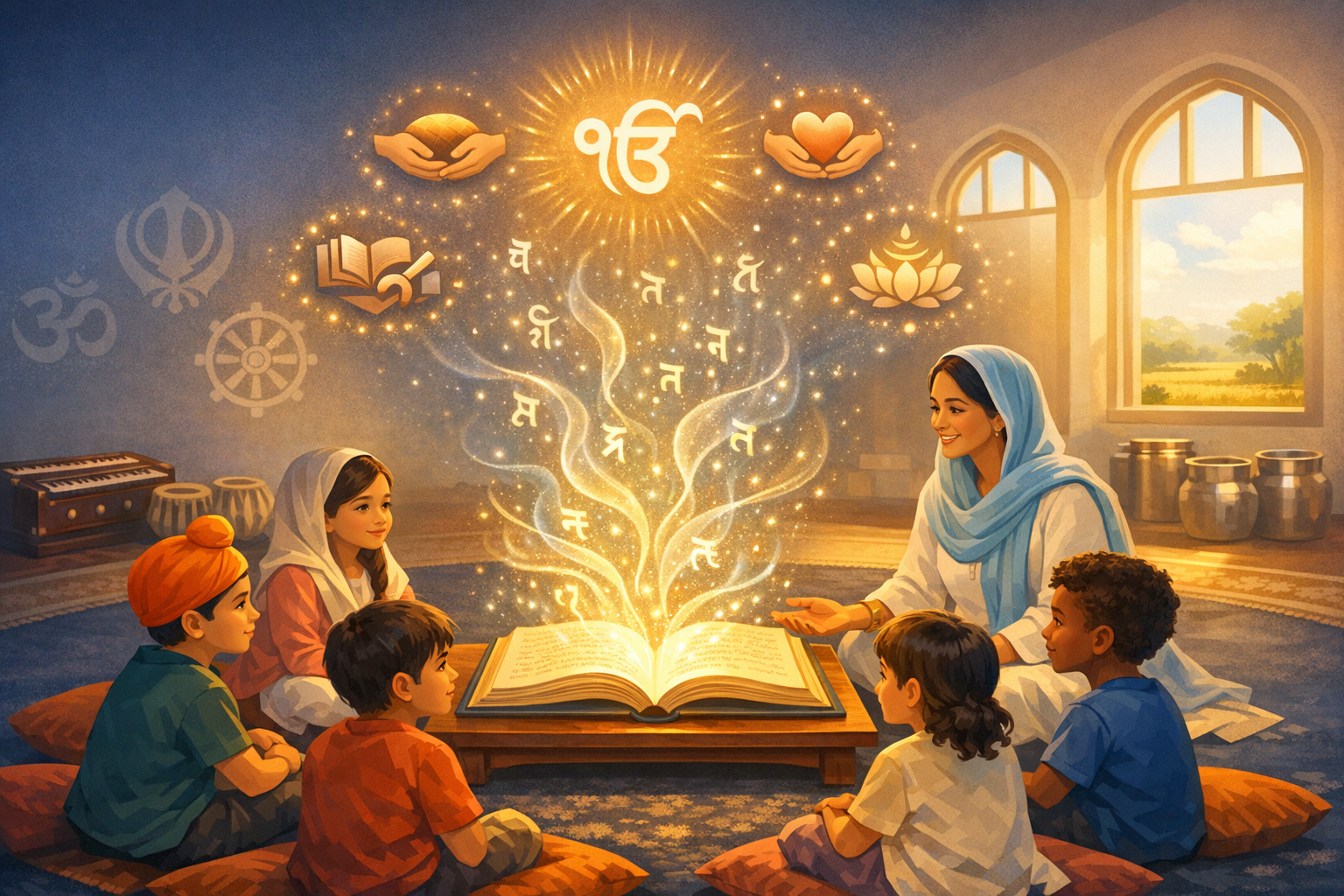
This message articulates how SikhNet Stories approaches children’s narratives as rigorous, Gurmat-aligned pedagogy. It roots storytelling in the Guru Granth Sahib’s inclusive vision while honoring Sikh maryada and the lived practices of Naam, Seva, and Sangat. Drawing on research in educational psychology, it explains why narrative transportation, dual-coding, and social learning improve attention, retention, and…
-
Bringing Sikh Stories to Screen: Authentic Representation, Dharmic Unity, and Cultural Power
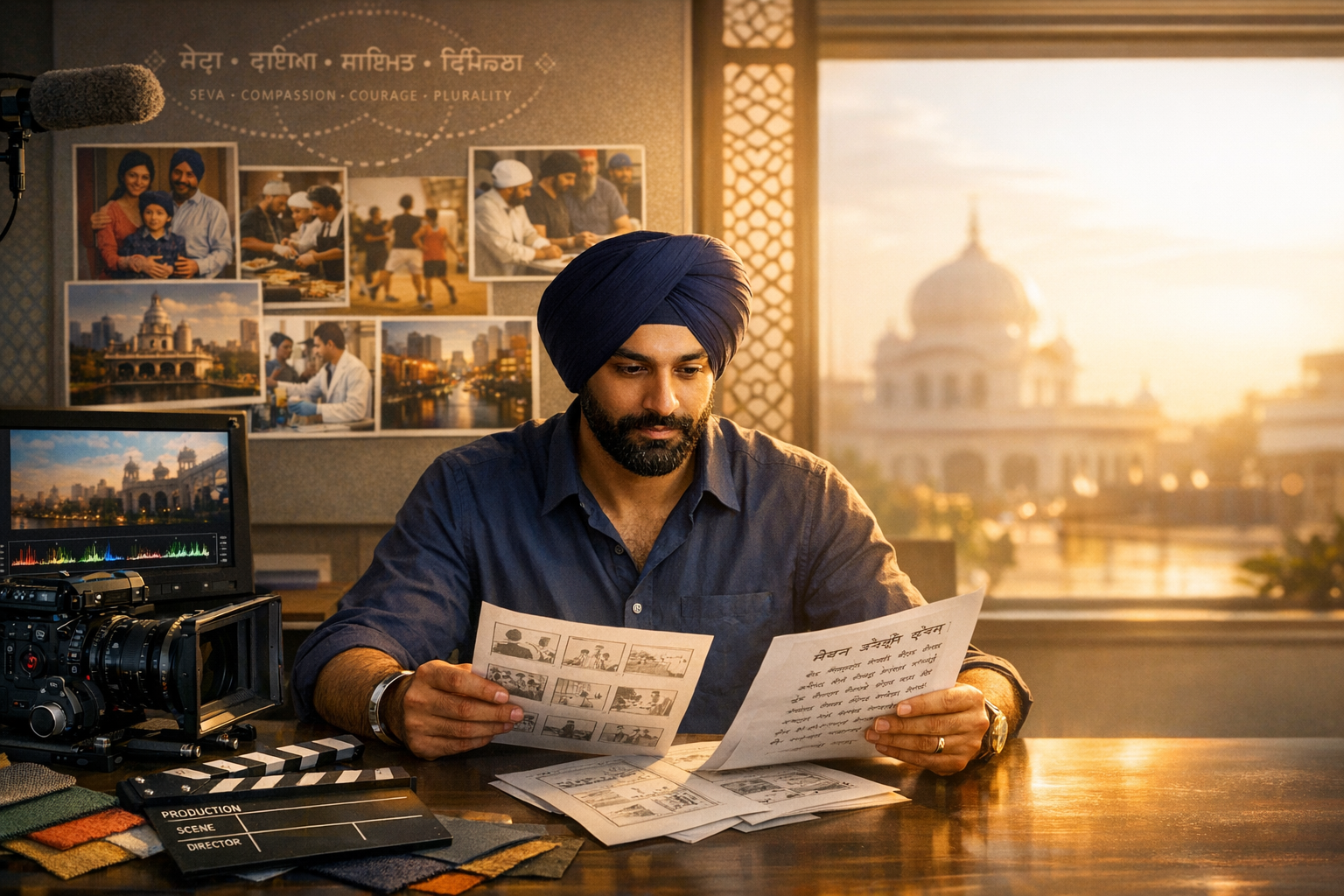
This article outlines a research-led, production-ready framework for bringing nuanced Sikh stories to screen while advancing unity across dharmic traditions. It details how respectful depiction of articles of faith, language authenticity, and community consultation improve cinematic representation and trust. Practical guidance covers writing-room research, casting and wardrobe, sound and music ethics, location protocols in gurdwaras,…
-
Beloved Utah Krishna leader Christopher ‘Caru’ Warden, 79, dies after Springville crash
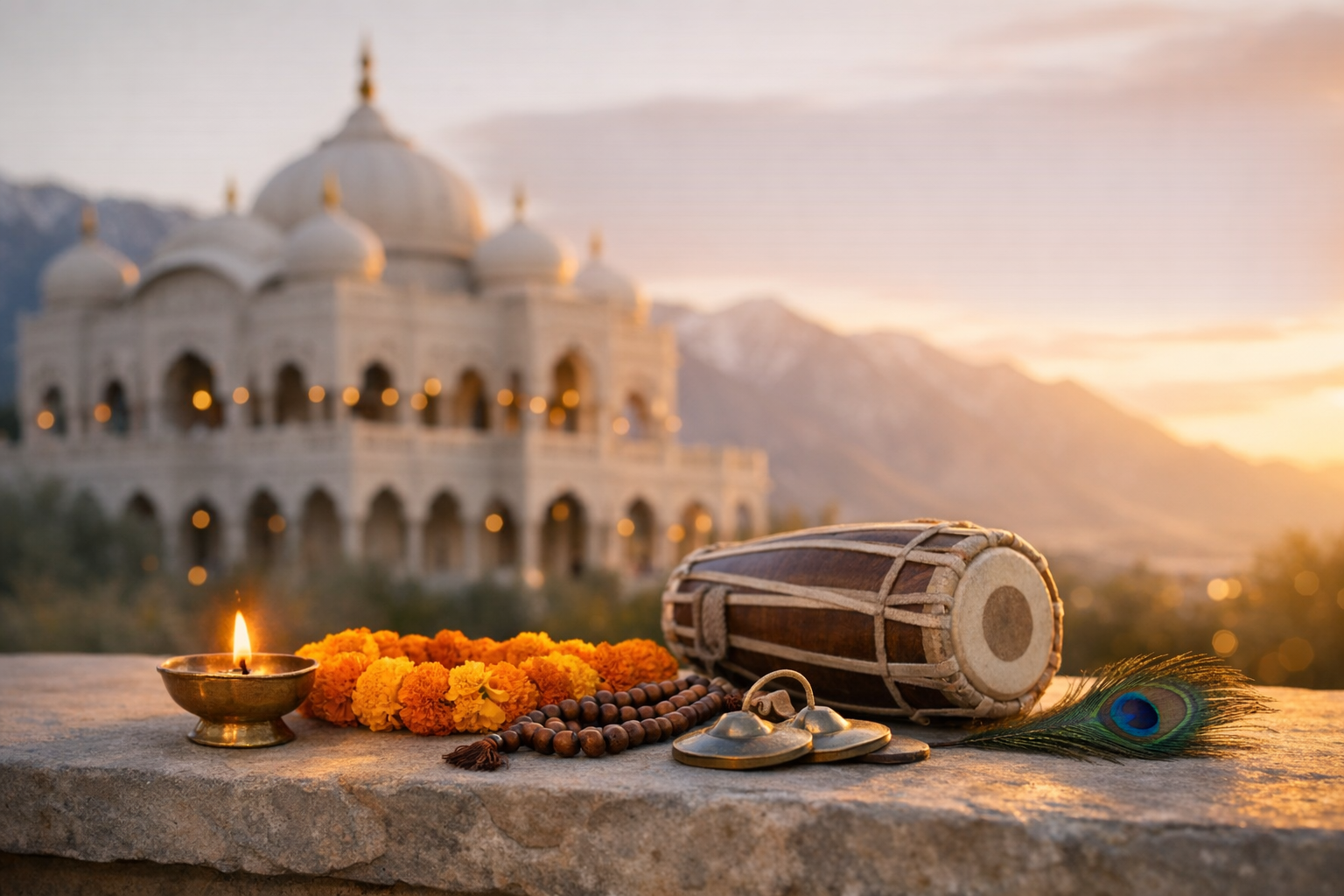
Springville Police reported that Christopher Caru Warden, 79widely known as Caru Dasdied after a collision in Springville, Utah, in which others sustained non-life-threatening injuries. The preliminary account indicates his vehicle moved into oncoming traffic near 1400 North on Main Street; the investigation is ongoing. This article provides clear, respectful reporting of the known facts while…
-
The Eloquence of Silence: Sant Kabir’s Science of Inner Stillness and Dharmic Unity

This essay examines Sant Kabir’s teaching that inner stillness is the highest eloquence, situating his insight within the shared dharmic heritage of Hinduism, Buddhism, Jainism, Sikhism, and Sufism. It explains how silence functions not as withdrawal but as a precise method for clarifying perception, aligning ethics, and deepening compassion. Readers learn a stepwise contemplative progressionfrom…
-
Beyond Caste: A Powerful Call for Dharmic Unity at Navi Sangvi’s Virat Hindu Sammelan
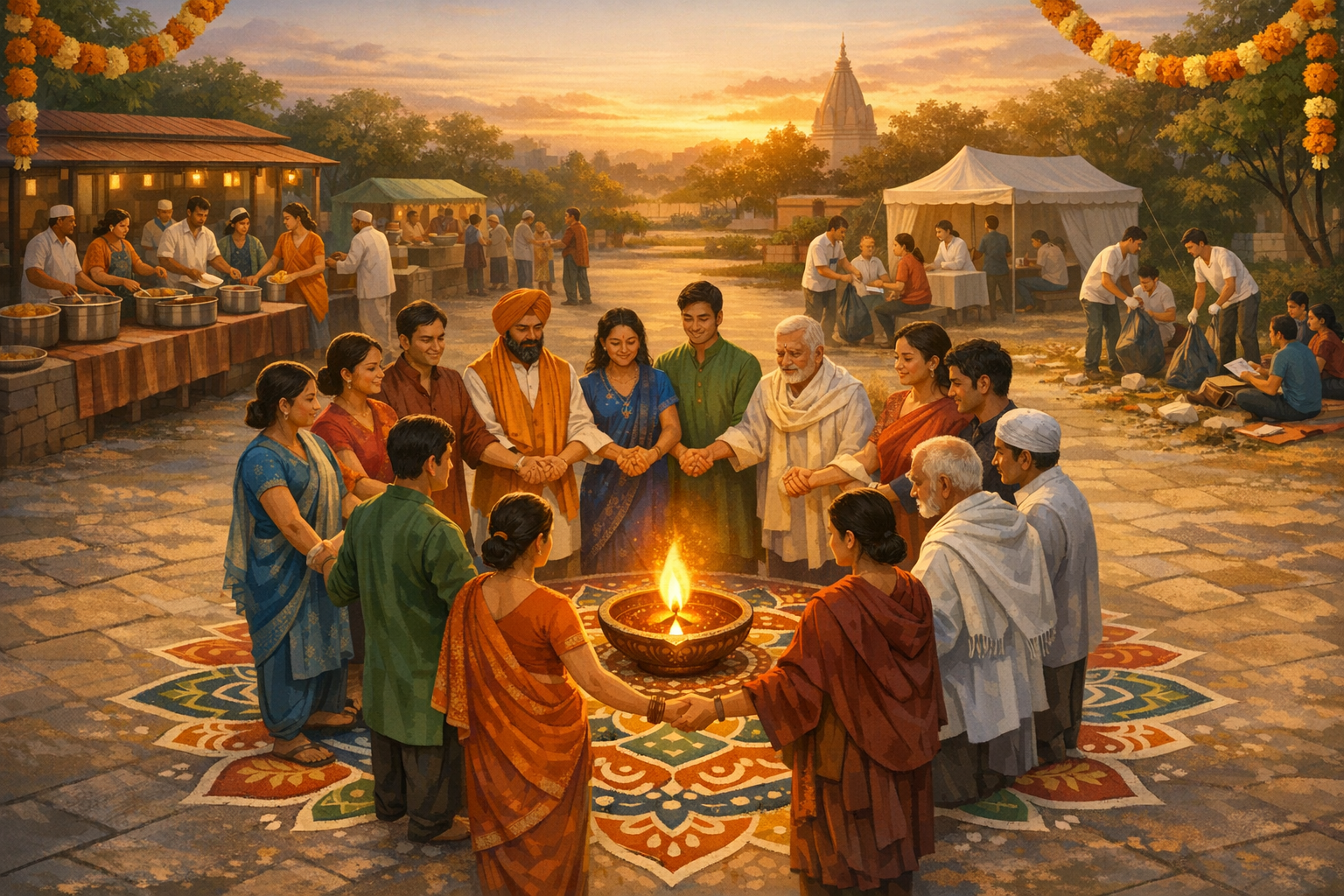
The Virat Hindu Sammelan in Navi Sangvi spotlighted a disciplined call by Shri. Sunil Ghanwat to transcend caste-based divisions and build community cohesion rooted in dharmic ethics. Framed inclusively across Hinduism, Buddhism, Jainism, and Sikhism, the message emphasized unity in diversity as both a moral imperative and a practical necessity. The analysis outlines actionable stepsmixed-team…
-
Shaheedi of Guru Tegh Bahadur: 350 Years of Courage that Secured Freedom of Conscience
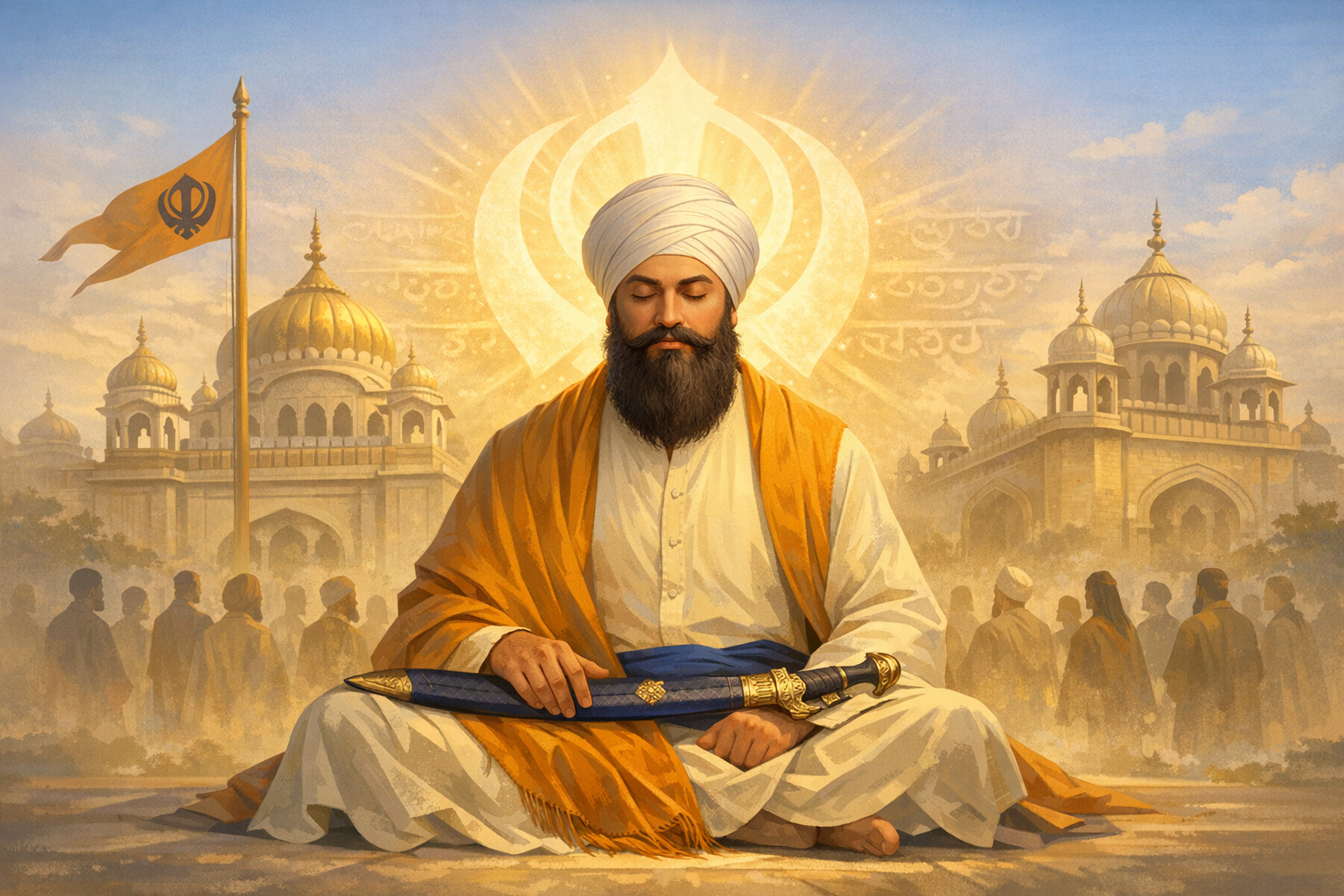
This long-form essay marks 350 years since the Shaheedi of Guru Tegh Bahadur Sahib Ji and examines the event’s historical context, ethical significance, and enduring legacy. It synthesizes Sikh, Persian, and European accounts while noting interpretive variations to present a rigorous, balanced narrative. Readers gain a concise timeline, a survey of key sites of memory…
-
Love Conquers All: Bhakti’s transforming power, Gita-guided compassion, Dharmic unity
This essay examines the proposition “Love conquers all” through the lens of bhakti, situating Virgil’s maxim alongside Bhagavad-gita teachings on equal vision and empathy. It clarifies how Sri Krishna and Srimati Radharani are interpreted in Gaudiya Vaishnava theology as complementary expressions of the Divinelove’s object and love’s essencewithout imposing exclusivist claims. It explains Puranic cosmology’s…
-
Ramanuja Jayanthi 2026: Date, Rituals, and Vishishtadvaita Legacy of Sri Ramanujacharya

Ramanuja Jayanthi 2026 falls on 22 April, aligning with Chaitra Shukla Panchami and, in several traditions, the Tiruvadirai (Ardra) Nakshatra. The observance honors Sri Ramanujacharya’s Vishishtadvaita Vedanta and his inclusive Sri Vaishnava legacy that unites devotion, knowledge, and service. Temples at Srirangam, Sriperumbudur, Melkote, and Tirumala typically conduct parayanam, special alankara, and annadanam, while households…
-
Rama Rajyam Reimagined: Timeless Dharmic Statecraft for Just, Compassionate Governance

Rama RajyamRama Rajyaoffers a rigorous, values-based model of good governance that unites Dharma with modern constitutional practice. This long-form analysis clarifies its textual roots, unpacks its ethical and administrative pillars, and demonstrates how justice, welfare, decentralization, and environmental stewardship align with contemporary policy design. It synthesizes kindred ideals from Buddhism, Jainism, and SikhismDasa Raja Dharma,…
-
Pratyaksha in Mimamsa Darsana: Unlocking the Power of Direct Perception in Dharma and Reason

Pratyaksha in Mimamsa Darsana presents a rigorous, experience-centered account of how direct perception functions as a trustworthy pramana. It clarifies the two-phase structure of perception (from indeterminate to determinate), the role of the mind in perceiving inner states, and the conditions that distinguish valid perception from illusion. The article explains how Mimamsa integrates perception with…
-
A Vision for Bharat: Shivamogga Sammelan Calls for Dharmic, Constitutional, Unifying Governance

At a provincial Hindu Rashtra Sammelan in Shivamogga on April 6, 2026, the Hindu Janajagruti Samiti (HJS) called for “Hindu Ideology-Based Governance” in Bharat. Read through a constitutional and inclusive lens, this can be translated into a broader, dharmic governance model that upholds pluralism, compassion, and rule of law for Hindus, Buddhists, Jains, Sikhs, and…
-
Shobha Karandlaje’s Kerala claims of ‘Love, Land, Business’: evidence, law, and dharmic unity

Reports attributing to Union Minister Shobha Karandlaje claims of “Love, Land, and Business Jihad” in Kerala have ignited debate. This analysis replaces rhetoric with a rigorous, law-and-data framework that separates allegations into three testable domains: intimate-partner coercion, property intimidation or illegality, and unfair or illicit business practices. It outlines applicable statutes, proposes investigation protocols, and…
-
Ego’s Illusion of Difference: Dharmic Wisdom on Avidya, Unity in Diversity, and Healing
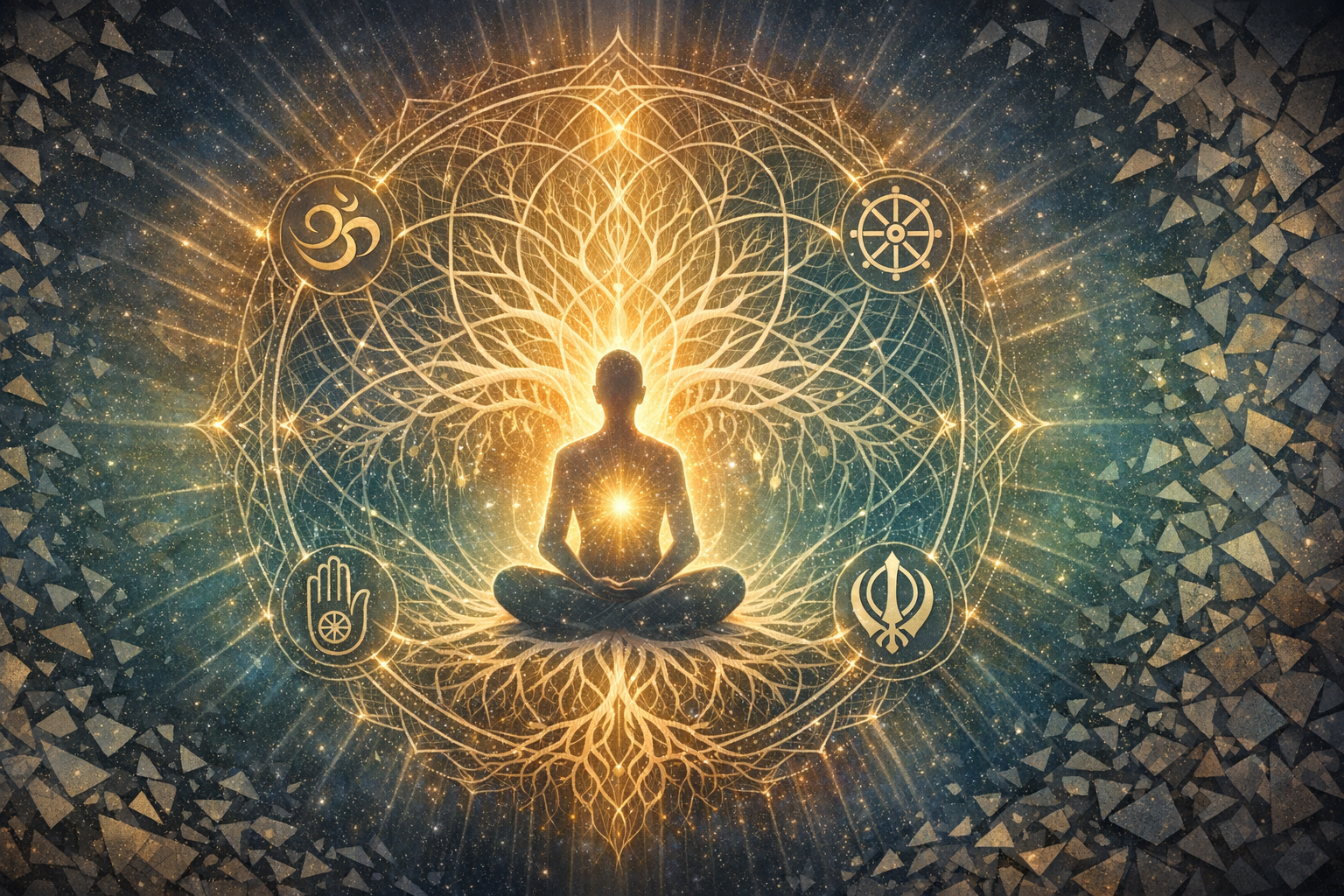
This essay examines why humans manufacture differences where none ultimately exist, using a dharmic framework drawn from the Upanishads, the Bhagavad Gita, Yoga Sutra, Anekantavada, Buddhist anatta, and Sikh teachings on Ik Onkar. It explains how avidya and ahankara harden provisional distinctions into identity, and how sama-darshana resists that process. It integrates classical Indian logic…
-
Varanasi’s Shri Ram Navami Procession Pledges Ram Rajya, Seva, and Dharmic Unity
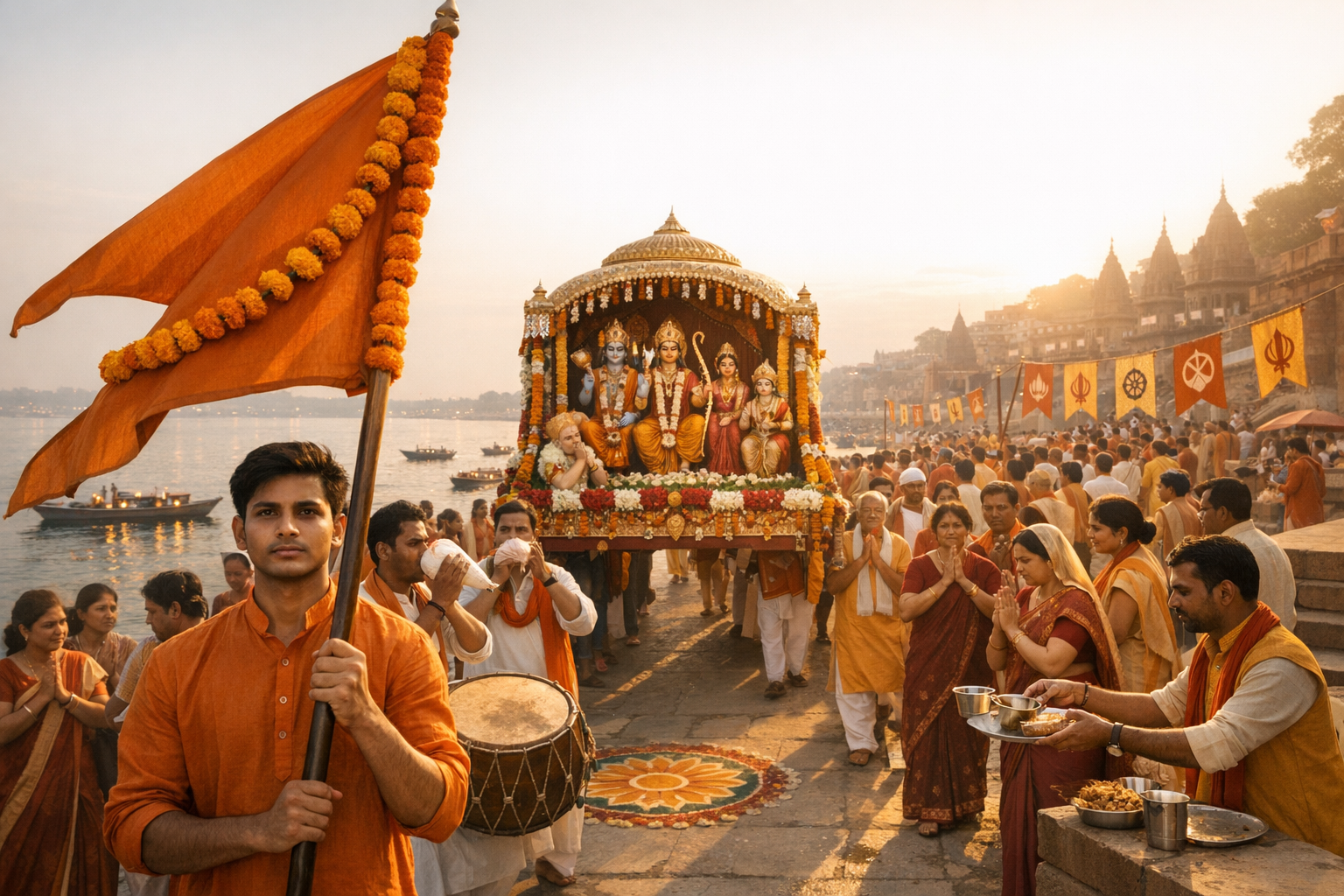
In Varanasi, hundreds of devotees marked Shri Ram Navami with a serene, well-organized procession and a collective pledge to work for Ramrajya and broad-based dharmic unity. The event framed Hindu unity as a bridge to wider solidarity with Buddhism, Jainism, and Sikhism, emphasizing shared values such as seva, nyaya, ahimsa, and sarbat da bhala. Rather…
-
From Atheism to Bhakti: How Srila Prabhupada Guided Visakha Devi Dasi Toward Lasting Fulfillment
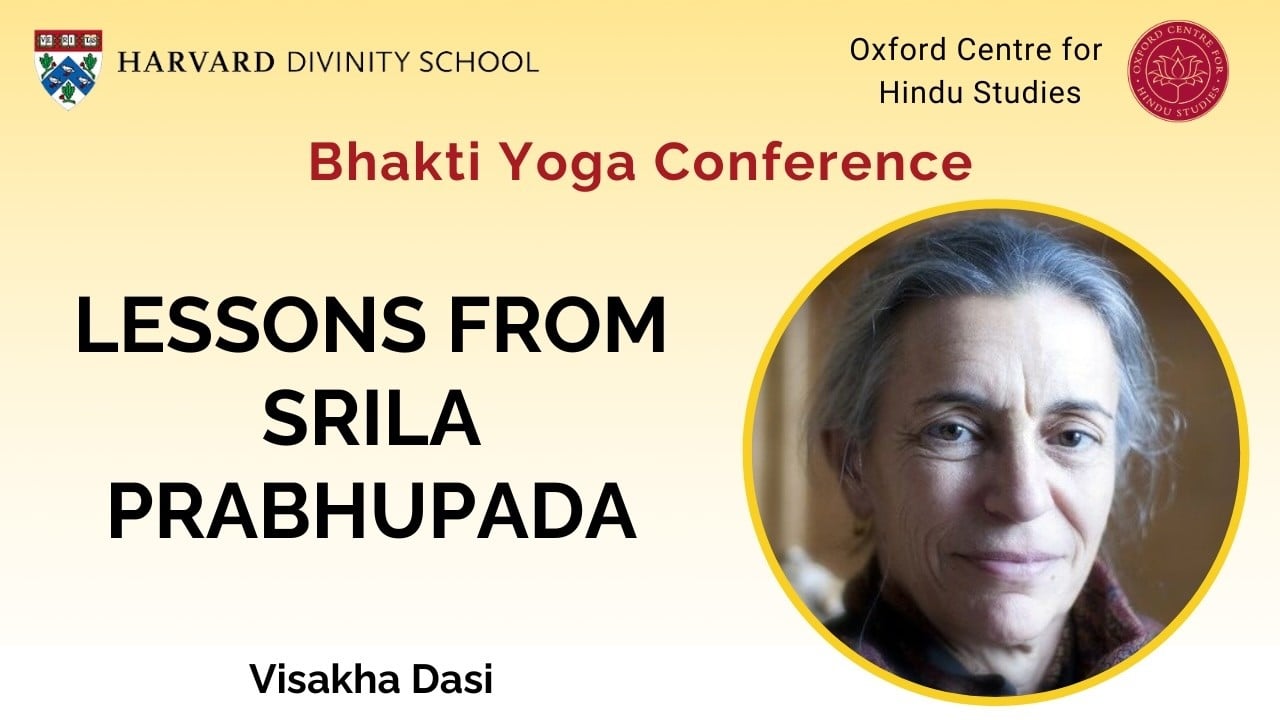
This long-form analysis traces Visakha Devi Dasi’s movement from atheism to Bhakti Yoga through Srila Prabhupada’s guidance, situating her experience within Vedic philosophy and contemporary inquiry. It explains how structured practiceschanting, study, seva, and communityoffer a replicable methodology for lasting fulfillment. The discussion clarifies the ninefold processes of bhakti, the epistemic role of the Guru-Shishya…
-
Dhurandhar: The Revenge ignites propaganda warsand a chance to bridge India’s cultural divide
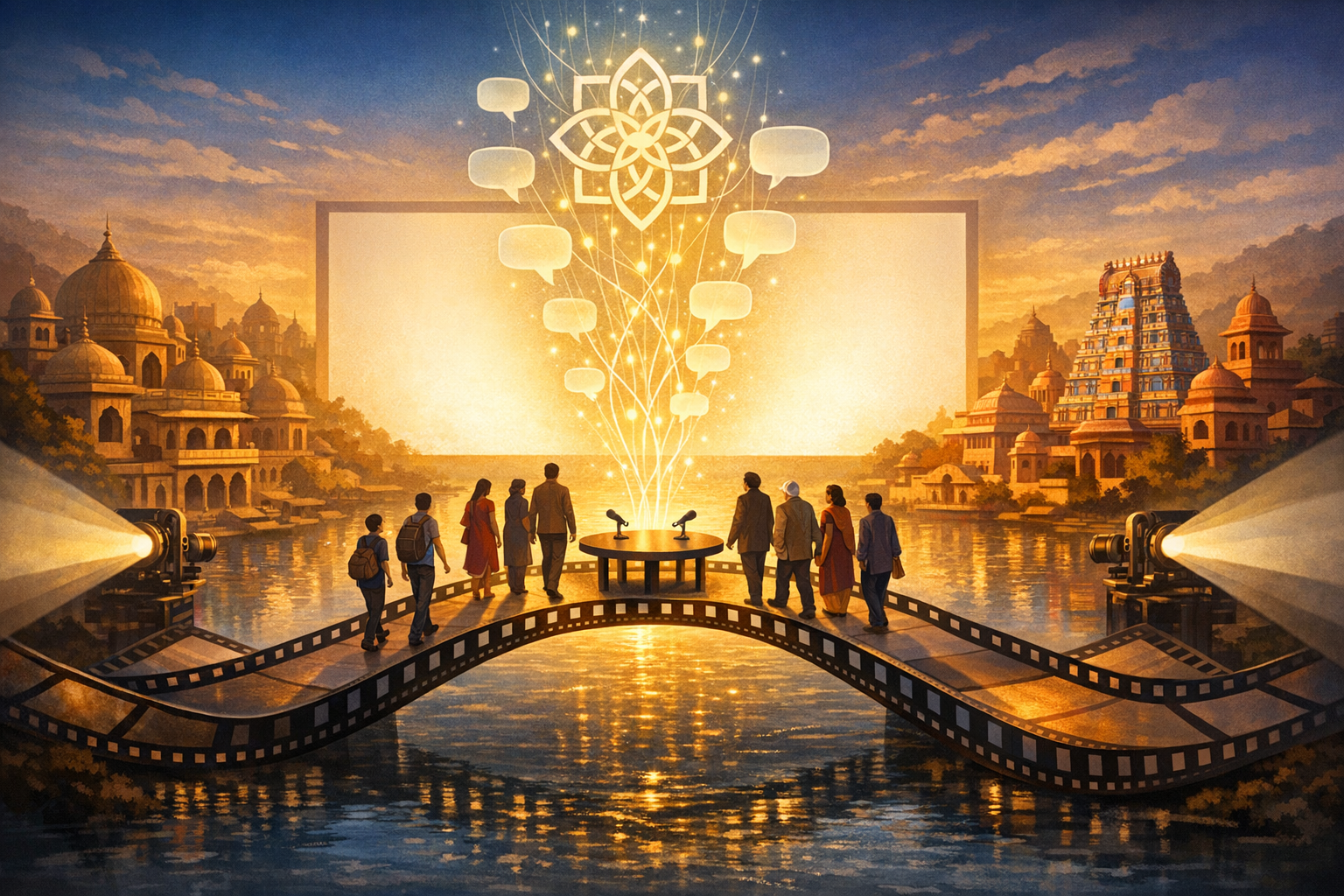
Dhurandhar: The Revenge has become a box-office phenomenon and a flashpoint in India’s ongoing debate about propaganda, artistic freedom, and public ethics. This analysis situates the controversy within research on framing, agenda-setting, and audience reception to explain why sincere viewers reach sharply different conclusions. It outlines a practical checklist for evaluating films responsiblyseparating historical claims…
-
Beyond Ritual and Dogma: Hindu Wisdom on Moving from Religion to Transformative Spirituality

This article clarifies the often-misunderstood difference between a religious person and a spiritual person through the lens of Hindu thought and its dharmic siblings. It explains how Hindu scriptures integrate dharma (form, ethics, and ritual) with adhyatma (direct realization) to support an inner transformation culminating in moksha. The discussion highlights Bhagavad Gita harmonies of karma,…
-
Bihar cleric’s arrest after remarks on Yogi Adityanath’s mother: law, free speech, and civility
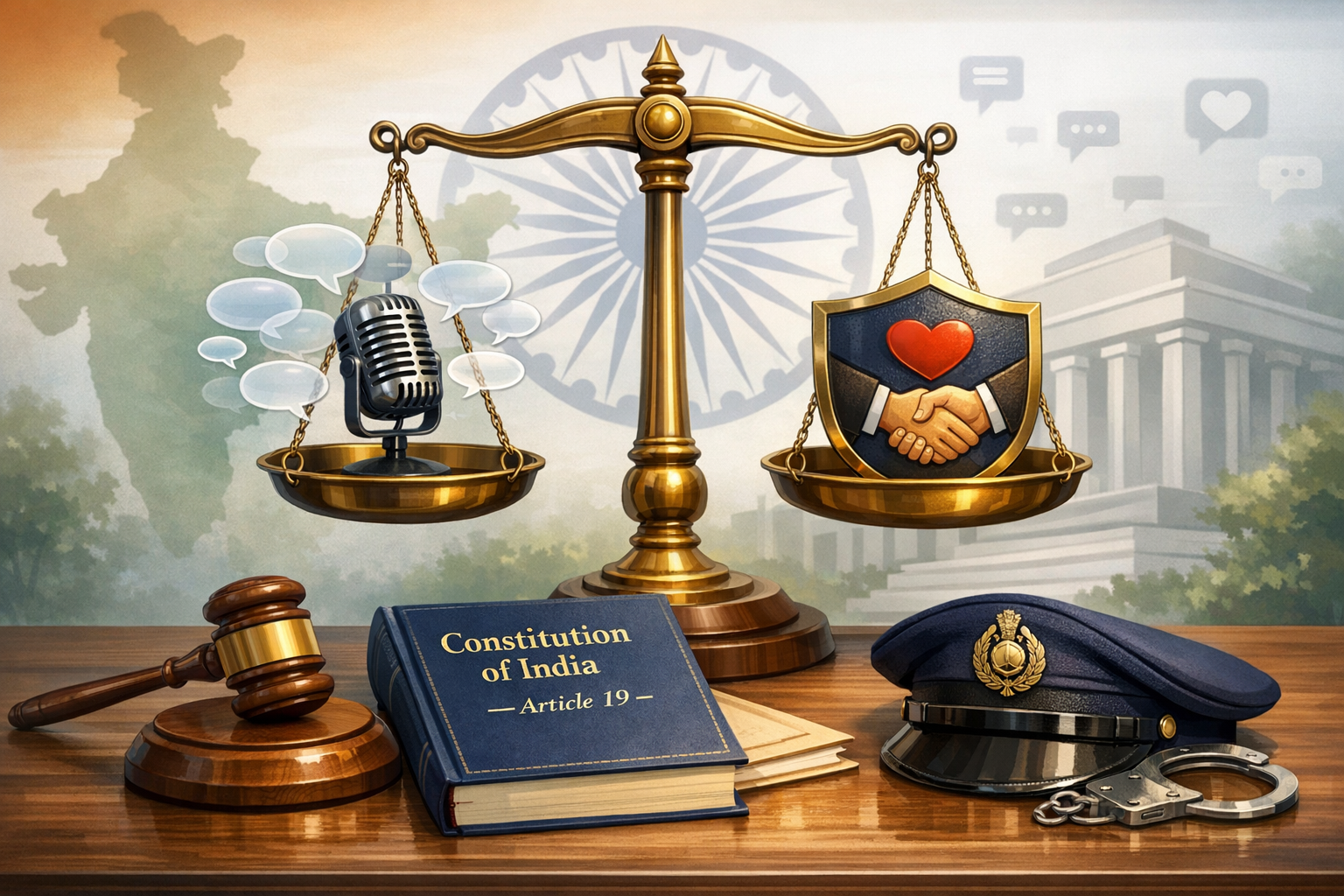
A Bihar-based cleric’s arrest after remarks targeting the mother of Uttar Pradesh Chief Minister Yogi Adityanath, followed by a public apology, has reignited India’s debate over free speech, dignity, and public order. This analysis explains how Articles 19(1)(a) and 19(2) of the Constitution frame the balance between expression and legal limits. It outlines common penal…
-
Pichandavar Shiva: The Divine Mendicant Who Unmasks Ego and Teaches Aparigraha
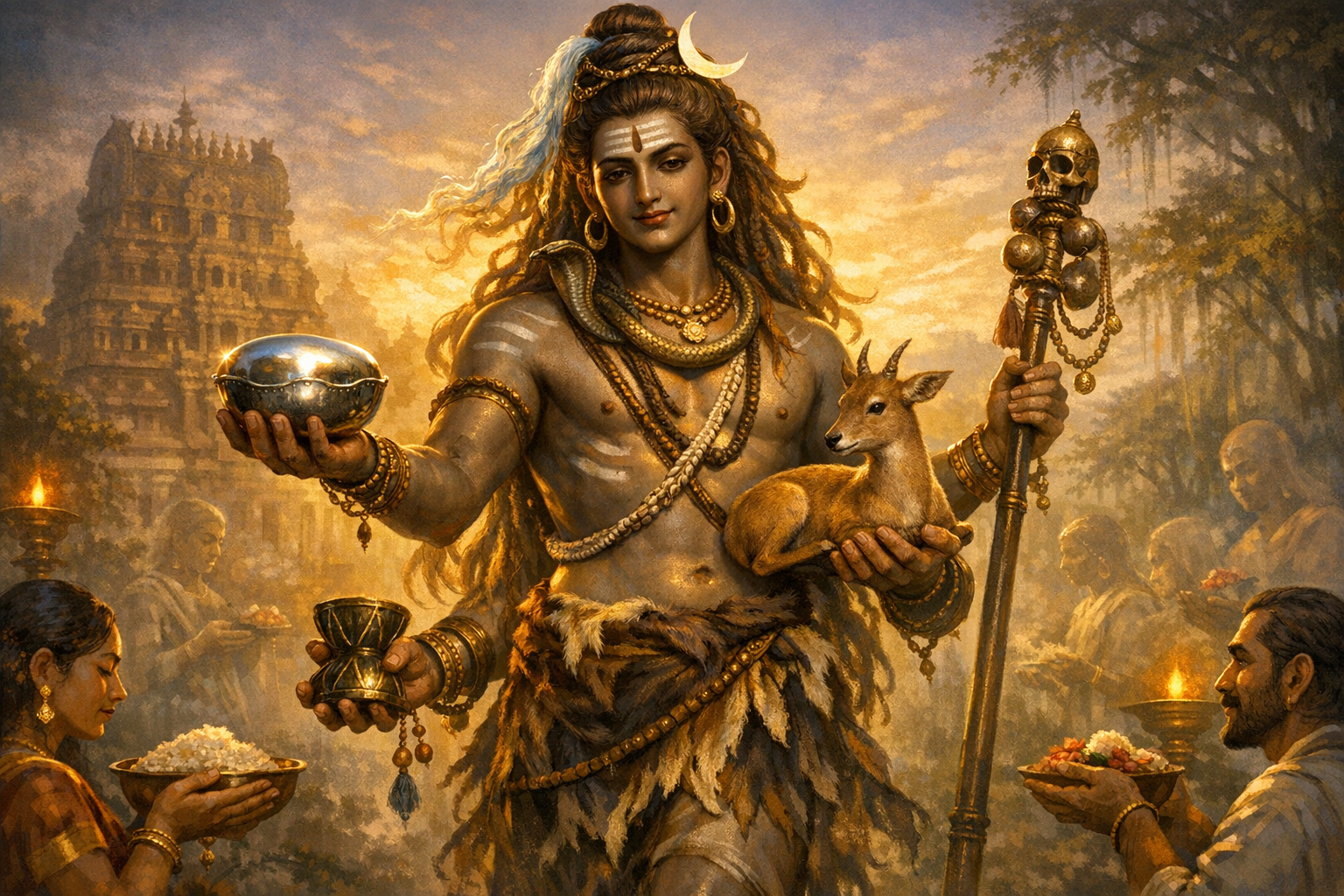
Pichandavar Shivaknown in Sanskrit sources as Bhikshatanapresents the Supreme Lord as a wandering ascetic whose skull-bowl and gentle stride teach non-possession, humility, and compassion. Grounded in Puranic lore and Shaiva Agamas, this South Indian form flourished in Chola bronzes and continues to animate temple processions where symbolic alms become a mirror for inner transformation. The…
-
Vishukkani Vili of North Malabar: Children’s Calls, Community Joy, and Vishu’s Living Heritage
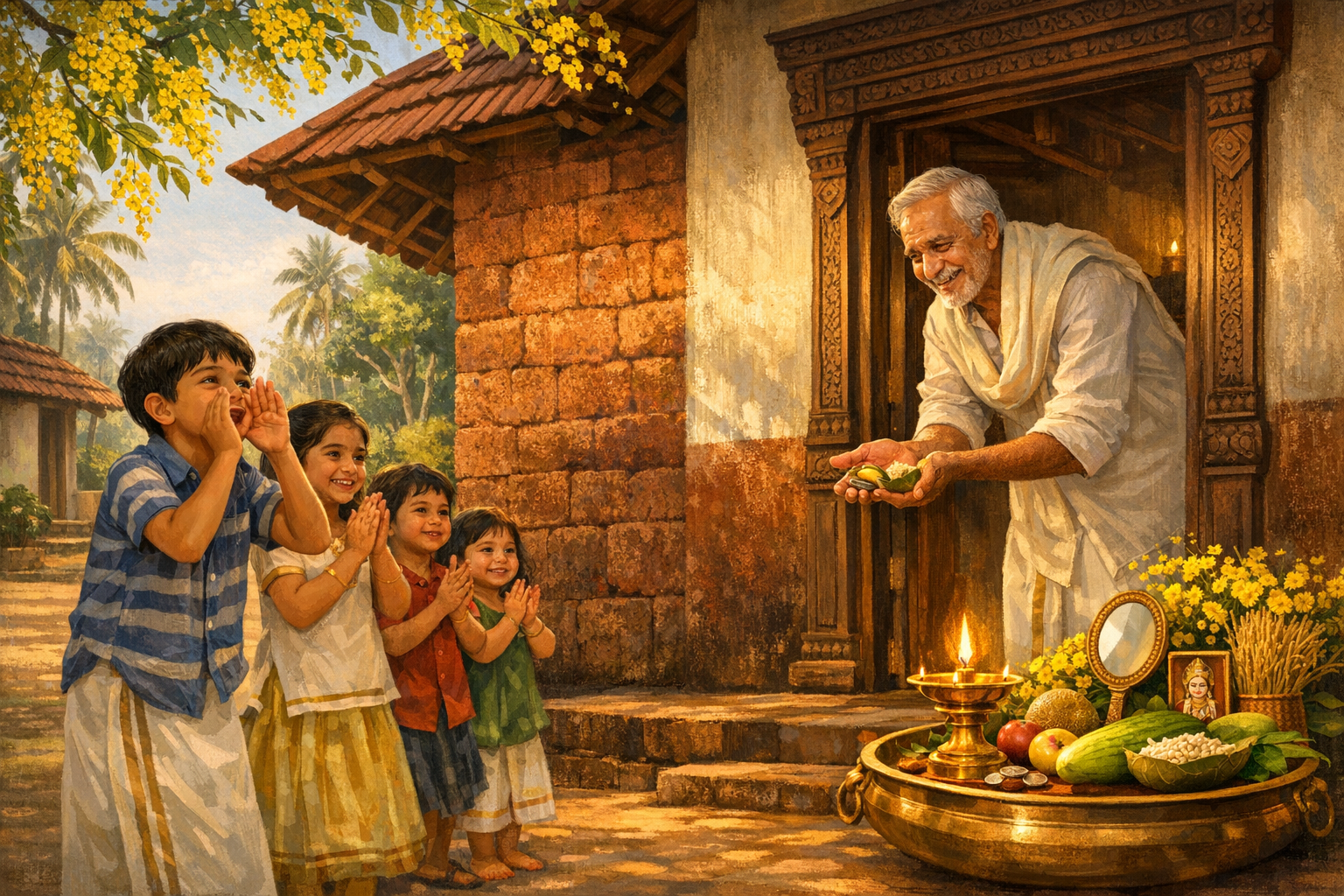
Vishukkani Vili is a living North Malabar custom in Kerala that brings the spirit of Vishuthe Malayalam New Yearout of the home and into the village street. At dawn, groups of children move house to house calling ‘vishukaniye, vishukaniye.’, receiving modest tokens that formalize generosity and goodwill. This article explains the astronomical and cultural logic…