
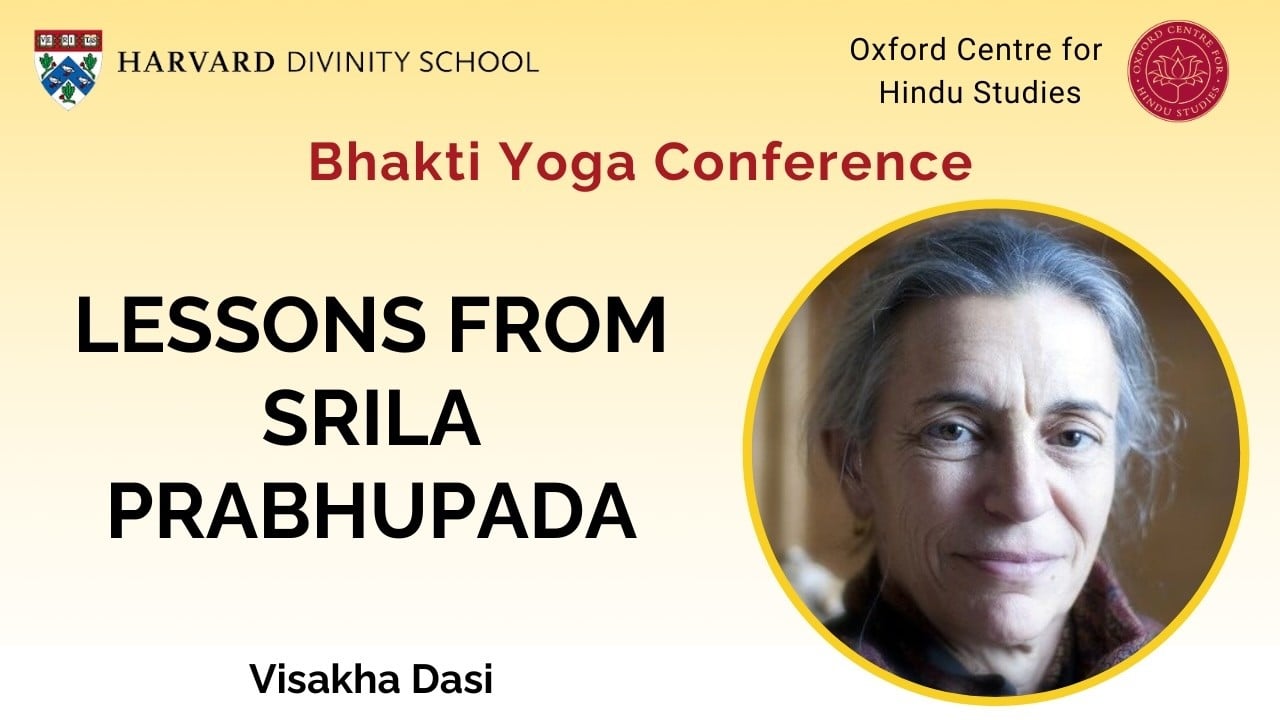
At the Bhakti Yoga Conference, Visakha Devi Dasi offered a clear and reflective account of a transition from convinced atheism to Bhakti Yoga under the guidance of Srila Prabhupada. Framed through the lens of contemporary inquiry and Vedic philosophy, the narrative distills practical lessons for seekers confronting disillusionment amid outward achievement and social acclaim.
Raised by parents who had rejected religion, she formed strong atheistic convictions early on. Professional work as a photographer brought prolonged proximity to wealth, status, and cultural influence; yet the consistent absence of deep contentment among many subjects sharpened a critical question: what constitutes a dependable and durable form of fulfillment?
Behavioral research observes that increases in status and income deliver diminishing returns to well-being, a pattern often described as hedonic adaptation. Observing this pattern firsthand encouraged an evidence-minded search beyond material markers toward a more stable experience of meaning. That inquiry prepared the ground for serious engagement with Bhakti Yoga as a replicable discipline rather than a mere belief system.
Encountering Srila Prabhupada introduced a pedagogy that honored rational scrutiny while inviting experiential practice. Study of foundational texts such as the Bhagavad-gita, association with a dedicated sangha, and simple, testable disciplinesmantra meditation, kirtan, seva, and mindful dietcreated a structured pathway from skepticism to insight. The approach was neither sentimental nor anti-intellectual; it asked for careful observation of effects across time.
Technically, Bhakti Yoga is a rigorously articulated path within Hindu spirituality. Classical sources outline core practices that develop cognition, emotion, and conduct in an integrated manner: hearing about the Divine, chanting, remembrance, service, worship, offering prayers, cultivating servitorship, friendship, and full self-offering. These methods engage attention, regulate affect, and reorder priorities in ways observable in daily routines, making the Bhakti Tradition accessible yet profound.
Chanting and mantra meditation align with emerging findings on breath, rhythm, and autonomic regulation, supporting parasympathetic balance and reducing perseverative thought patterns. Far from bypassing reason, such practices invite disciplined trial, where outcomesclarity, steadiness, and prosocial orientationare evaluated longitudinally. This bridges inner experience with responsible, evidence-aware reflection.
The Guru-Shishya Tradition provides an epistemic and ethical framework for such evaluation. In Vedic philosophy, sabda pramanaauthoritative testimony transmitted through an accountable lineageoffers a vetted interpretive guide. Under Srila Prabhupada’s mentorship, inquiry was not suppressed but refined, moving from speculative doubt toward discriminating understanding grounded in consistent practice and character formation.
Visakha Devi Dasi’s formation as a photographer remained a crucial thread in this transformation. Aesthetics in the Bhakti Tradition is not ornamental but transformative through the language of rasa. Where the camera once recorded surfaces, darshan reoriented perception toward reciprocityseeing and being seen by the Divinethus transfiguring observation into relational awareness and devotional intimacy.
Community made the insights livable. ISKCON (International Society For Krishna Consciousness) operationalized daily disciplines into a living ecologysatsang, seva, study, and kirtanwhere personal growth is supported by shared intention and mutual accountability. Emphasis on humility, compassion, and responsible conduct reflects a moral psychology congruent with classical dharma and oriented toward Love and tolerance.
Importantly, the narrative advances Religious Pluralism and Unity in Diversity across dharmic traditions. The contemplative heart of Hinduism, Buddhism, Jainism, and Sikhism converges on nonviolence, ethical discipline, and remembrance of the sacred. Practices such as kirtan and japa resonate with Sikh kirtan and Naam Simran; mindfulness and metta in Buddhist lineages echo Bhakti’s attentive remembrance; Jain aparigraha parallels devotional restraint. This shared ethos strengthens social harmony without erasing distinct identities, affirming Spiritual diversity in Hinduism within a broader dharmic kinship.
From Srila Prabhupada’s teachings, several durable lessons emerge for contemporary seekers. First, epistemic humility is a strength. Approaching spirituality as a disciplined experimentobserve, practice, reflectreduces dogmatism and invites genuine learning anchored in lived outcomes.
Second, consistency outperforms intensity. Short, daily periods of mantra meditation, study of core texts, and practical service accumulate measurable change in attention, mood stability, and values alignment. The Bhakti path privileges steady sadhana over sporadic highs.
Third, relationship transforms aspiration into habit. Association with a constructive community and a trustworthy guide normalizes virtue, provides timely feedback, and offers shelter during inevitable setbacks, translating ideals into resilient character.
Fourth, service clarifies purpose. Seva repositions the self from consumer to contributor, reconfiguring identity around responsibility and care. This shift not only benefits others but also resolves the search for personal significance.
Fifth, art and devotion belong together. Music, image, and ritual create affective conditions for insight; they are catalysts that align cognition, emotion, and will toward the good, nurturing both understanding and belonging.
Finally, reverence and reason can co-exist without compromise. Bhakti Yoga does not demand abandonment of intellect; it asks that intellect be situated within a larger horizon of meaning, tested through practice, and expressed through ethical regard for all lives.
Within this frame, Visakha Devi Dasi’s movement from atheism to devotion appears not as a retreat from critical thought but as its maturation. The original observationworldly success without fulfillmentbecame the empirical question that Bhakti Yoga answered by offering a replicable methodology and a community of practice oriented to sustained well-being.
In a distracted age, these lessons are actionable. Begin with a modest daily practice of attentive chanting, reflective study anchored in the Bhakti Tradition, and one concrete act of seva. Seek satsang that honors Spiritual diversity in Hinduism and cultivates friendship across dharmic paths. Over time, such commitments stabilize attention, deepen compassion, and translate ideals into a credible way of life.
This synthesis aligns with Vasudhaiva Kutumbakamthe recognition of a shared human family. By integrating Srila Prabhupada’s guidance with an inclusive ethos, the narrative illustrates how Bhakti Yoga can heal fragmentationwithin individuals and between communitieswhile honoring plurality.
Lessons from Srila Prabhupada, as reflected in Visakha Devi Dasi’s journey, thus offer a practical architecture of meaning: disciplined practice, enlightened guidance, communal support, aesthetic nourishment, ethical clarity, and inter-traditional respect. Together, these elements articulate a credible path to lasting fulfillment for seekers across the dharmic spectrum.
Inspired by this post on Dandavats.
