
Dhurandhar: The Revenge has emerged as a rare box-office phenomenon, sustaining strong momentum into its second week and, by many accounts, setting records across multiple territories. Its commercial endurance has coincided with an intensified debate in Indian cinema about propaganda, artistic freedom, and the ethical responsibilities of storytellers.
Sections of Bollywood and segments of the Tamil film industry have framed the film as ‘propaganda,’ while many viewers have celebrated it as bold, resonant storytelling. The resulting polarization reflects broader structural tensions in India’s cultural discourse rather than a controversy confined to a single title.
Heated labelsranging from ‘dinosaurs’ for older industry figures to pejoratives like ‘Dravidawood’may deliver momentary catharsis but ultimately erode the possibility of reasoned dialogue and shared cultural purpose. A dharmic approach resists such rhetoric and instead seeks clarity, compassion, and principled critique in the service of cultural cohesion.
In communication studies, propaganda denotes systematic persuasion that privileges a single, often political objective while selectively emphasizing or omitting facts and affect to narrow an audience’s interpretive horizon. Political or issue-based cinema, by contrast, can foreground strong convictions yet still invite multivocal interpretation and critical distance.
Audience reception theoryespecially the encoding/decoding paradigmhelps explain why sincere viewers can reach divergent conclusions about the same film. Preferred, negotiated, and oppositional readings frequently coexist, each shaped by social context, moral intuitions, and cultural memory.
Accusations of propaganda typically intensify when three factors align: high cultural salience, moralized narratives, and visible commercial success. Dhurandhar: The Revenge appears to intersect all three, which helps explain both the fervor of its admirers and the intensity of its critics.
From a market perspective, sustained second-week performance commonly signals robust word-of-mouth, efficient showtime allocation, and cross-segment appeal across multiplexes and single screens. Strong retention also implies narrative ‘stickiness,’ a property correlated with repeat viewing and social contagion effects in viewer networks.
Reception further depends on audience segmentation: urban versus small-town circuits, language communities, generational cohorts, and diaspora networks. The same storyline can signify affirmation for one cohort, provocation for another, and catharsis for a third.
Media framing and agenda-setting dynamics amplify these splits. Headlines that foreground the word ‘propaganda’ can prime audiences to evaluate intent before plot and craft, while social feeds tend to reward moral outrage more than nuance, compressing complex artistic judgments into binary verdicts.
Indian cinema has long engaged political, civilizational, and ethical themesfrom social-reform dramas to freedom-struggle narratives and contemporary issue films. Rather than pathologize any one language industry, a comparative lens recognizes a shared tradition of debate about history, nationhood, and public ethics.
Within Hindu culture and the broader dharmic family of Hinduism, Buddhism, Jainism, and Sikhism, artistic plurality has historically coexisted with strong convictions. That heritage remains a resource for navigating today’s disputes without sacrificing rigor or empathy.
Anecdotal accounts describe families discussing the film at dinner tables, college groups debating its historical framing on commutes, and theatre staff noting clusters of repeat viewers who return with friends. Such scenes reveal cinema’s civic function: it catalyzes conversation in ways that policy papers or panel shows rarely achieve.
For some viewers the film elicits pride and catharsis; for others, discomfort and doubt. Both responses are psychologically intelligible and culturally valuable when processed through dialogue rather than derision.
A practical, nonpartisan checklist can elevate the debate: What claims does the film make about history, and are those claims signposted as artistic license or asserted as fact? Does it represent communities with dignity and allow for interiority rather than stereotype? Do aesthetic choices (music, montage, color) invite independent judgment or close off interpretation? Could any scene plausibly incite real-world harm, and how might that risk be mitigated by responsible discourse? Are dissenting critiques engaged on their merits rather than their presumed motives? Do defenders welcome scrutiny proportional to the film’s cultural impact?
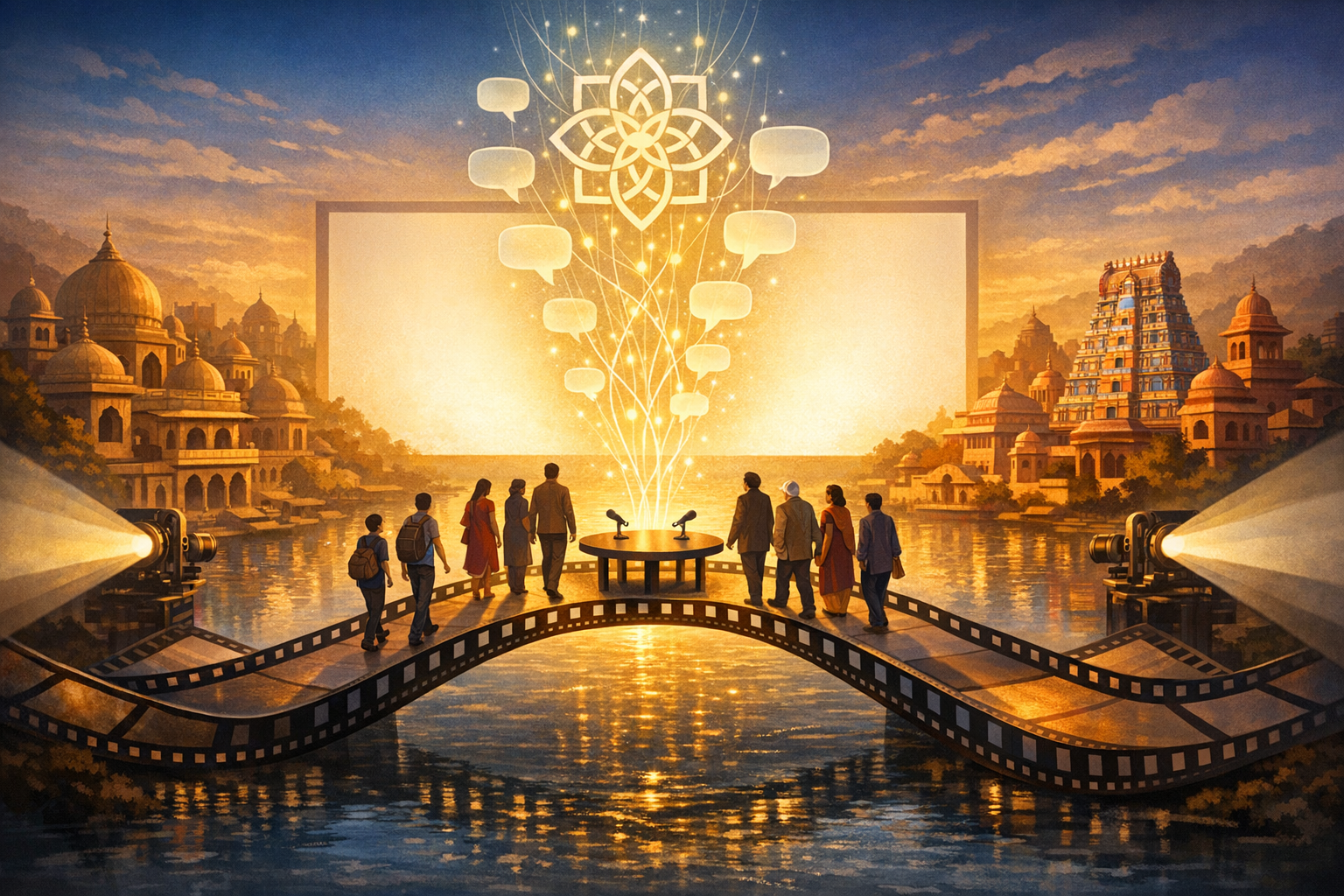
Constructive next steps are available: cross-industry screenings with post-show samvada, panels that include filmmakers and ethicists alongside historians and sociologists, and media guidelines that disincentivize ad hominem attack. When dialogue is institutionalized, volume gives way to verifiable substance.
Critics serve the public best by interrogating evidence and craft rather than imputing hidden conspiracies; creators serve the public best by acknowledging blind spots and engaging good-faith criticism. Both roles are strengthened, not weakened, by a dharmic commitment to Sanatana Dharma’s ethos of open inquiry.
Binary framesBollywood versus so-called ‘Dravidawood,’ North versus Southflatten a rich, interdependent ecosystem. Artistic cross-pollination is the living reality of Indian cinema; unity in diversity is not a slogan but a production fact.
Narrative humility accepts that no single film can carry a nation’s total meaning. The test of cultural health is not unanimity, but whether disagreement produces wiser questions and better art.
Religious pluralism in India thrives when critique distinguishes people from ideas and when creators and audiences alike seek samvada over victory. That ethos turns cinema into a forum for shared learning rather than a battlefield for permanent enemies.
If Dhurandhar: The Revenge has indeed broken records, its most important legacy could be neither numbers nor notoriety but the quality of conversation it leaves behind. Measured critique, empathetic listening, and a renewed commitment to pluralism can transform a divisive moment into a bridge for India’s cultural commons.
Inspired by this post on Dharma Dispatch.
