
-
Beyond Guru Worship: Living Sanatana Dharma through Practice, Pluralism, and Service
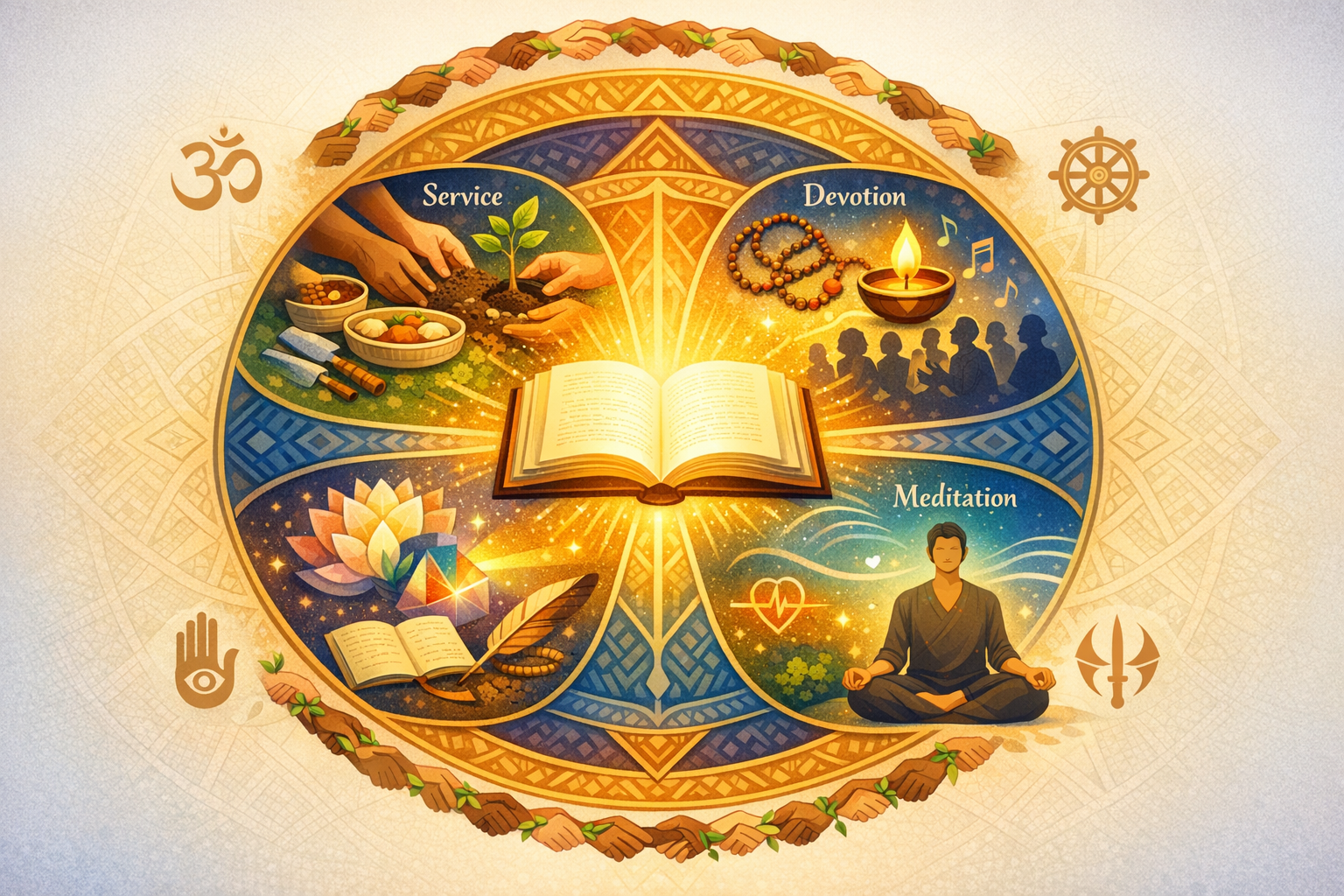
Public celebrations of guru anniversaries have grown spectacular, but the risk of drifting from teachings to personality worship is real. This essay reframes devotion through a Dharmic lens shared by Hinduism, Buddhism, Jainism, and Sikhism: live the message, not the messenger. It maps classical yardsticks of authentic progressyamas and niyamas, lokasangraha, simran and seva, sīla…
-
Krishna’s Omnipotence Explained: Why Name, Mantra, and Scripture Offer Direct, Daily Companionship

This article explains, in clear Vedic and Bhakti terms, why Krishna’s omnipotence means His words, names, and teachings are non-different from Him, offering direct companionship at any moment. It shows how the concept of shabda as an efficacious, self-revealing medium makes scriptural hearing and mantra recitation a living encounter rather than mere symbolism. Drawing on…
-
Do Our Words Convey Our Heart? HG Caitanya Charan Das on Dharmic Speech at ISKCON Adelaide

At ISKCON Adelaide on 01.05.26, HG Caitanya Charan Das explored how speech reflects inner consciousness and why language, refined through sādhana, is central to bhakti and community harmony. Grounded in Bhagavad Gita 17.15, the essay outlines a composite ethic for speechtruthful, kind, beneficial, and non-agitatingthat resonates across Hinduism, Buddhism, Jainism, and Sikhism. It translates classical…
-
Inside Mumbai’s ‘corporate jihad’ debate: actionable safeguards, unity, and policy reforms

An awareness programme in Mumbai on ‘corporate jihad’ was reframed into a practical, rights-respecting agenda to prevent the misuse of corporate structures by any coercive or extremist network. The discussion emphasized due process, interfaith harmony, and unity among dharmic traditions while focusing on measurable corporate safeguards. Key takeaways include actionable AML/KYC and third-party controls, stronger…
-
Goa Police arrest of Hindu activist Gautam Khattar: nationwide outrage and constitutional scrutiny

Goa Police arrested Hindu activist Gautam Khattar for alleged hate speech, triggering nationwide condemnation and a renewed debate on free speech, hate speech, and due process. This analysis explains the constitutional framework under Articles 19(1)(a) and 19(2), the statutory thresholds in IPC Sections 153A, 295A, and 505(2), and key Supreme Court guardrails like the advocacy–incitement…
-
Matak Hulāre Unveiled: The Swaying Rhythms of Punjabi Grace and Sacred Dharmic Unity

Matak Hulāre distills the Punjabi ideal of graceful sway and jubilant lift into a recognizable movement-music dialect spoken across Giddha, Bhangra, and festival gatherings. The piece unpacks its biomechanics, showing how pelvic sway, spinal curves, and shoulder release create the matak, while rhythmic accents and chest lift generate the hulāre. It maps the form’s rhythmic…
-
Yuga Dharma of Unity: How Collective Chanting Heals Divisions Across Dharmic Paths

This article examines Yuga Dharma as a unifying principle for the present age and explores why collective chanting and shared service provide an academically credible, historically grounded path to dharmic unity. Drawing on Gaudiya Vaishnavism’s emphasis on sankirtana and parallel practices in Sikhism, Jainism, and Buddhism, it shows how sacred sound strengthens cohesion without erasing…
-
Prasadam’s Transformative Grace: Gaudiya Insights on CC Madhya 14.36 for Daily Life and Unity
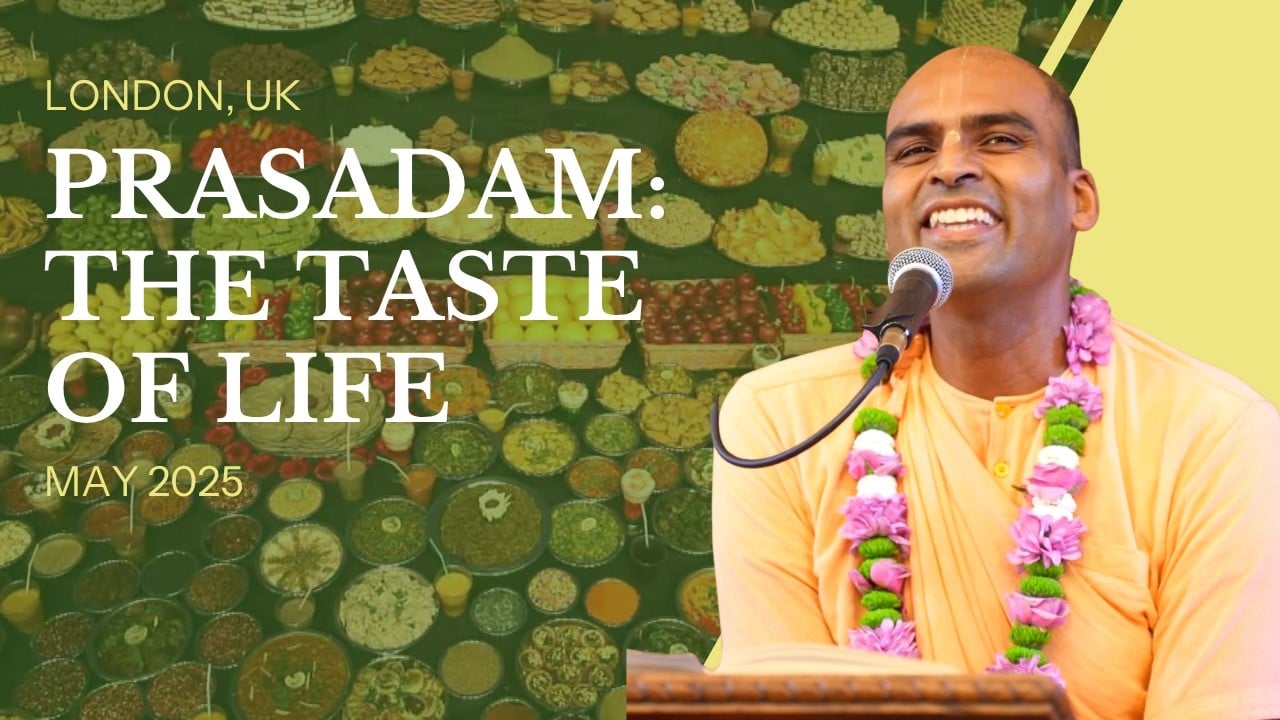
This in-depth exploration of prasadam situates sanctified food within Gaudiya Vaishnava theology, anchored in CC Madhya 14.36 and the example of King Prataparudra. Readers gain a clear understanding of how offering transforms nourishment into a daily practice of grace, supported by Bhagavad Gita principles and Gaudiya ritual steps. The piece outlines a practical five-step home…
-
18 Timeless Dr A.P.J. Abdul Kalam Quotes to Ignite Purpose, Learning, and Dharmic Unity

Dr A.P.J. Abdul Kalam’s 18 most resonant quotes, presented with context and analysis, reveal a rigorous, values-centric roadmap for students, educators, innovators, and policymakers. Each quotation is paired with research-informed insights on learning, resilience, and excellence, while remaining grounded in India’s civilizational ethos of Unity in Diversity and Vasudhaiva Kutumbakam. The curation highlights Kalam’s synthesis…
-
Chhattisgarh forms ‘Hindu Rashtra Samanvay Samiti’ to protect Hindus, fortify dharmic unity

Chhattisgarh has formed the ‘Hindu Rashtra Samanvay Samiti’ to coordinate lawful, community-led responses to reported attacks on Hindus and to strengthen social cohesion. Framed as a cultural–civilizational initiative consistent with the Constitution of India, it emphasizes Ahimsa, Anekantavada, seva, and Vasudhaiva Kutumbakam. The analysis outlines a practical architecture: incident reporting, helplines, volunteer training, festival safety…
-
Unity in Diversity: Harmonizing Distinct Personalities in Dharmic Service and Devotion

This article presents an academic yet accessible exploration of unity in diversity across Dharmic traditions. It clarifies Srila Prabhupada’s insight”Variety is the mother of enjoyment”and shows how distinct talents become seva that strengthens cohesion. Drawing on Srila Rupa Goswami’s Bhaktirasamrita- sindhu, it highlights Krishna’s identities as dhirodatta and dhiralalita to validate diverse human temperaments in…
-
Adi Shankaracharya’s Advaita: Timeless Oneness Uniting All Beings, Minds, and Matter

Adi Shankaracharya’s Advaita Vedanta articulates a rigorous, compassionate thesis: all animate and inanimate forms are appearances in one Reality, Brahman. The doctrine’s precision rests on Upanishadic mahavakyas, Shankara’s Adhyasa analysis, and methods like adhyaropa–apavada and neti neti that guide the mind beyond conceptual limits. Practical sadhanasadhana-chatushtaya, shravana–manana–nididhyasana, Karma Yoga, and Bhaktiintegrates inner freedom with ethical…
-
Kerala Vishu Poster Furor: Chicken Mandi Before Shri Krishna Spurs Arrest, Harmony Lessons

A Vishu greeting poster from a Kerala restaurant that placed chicken mandi before an image of Shri Krishna triggered public outcry and a police arrest, spotlighting the high sensitivity of sacred symbols in India. The analysis explains why Vishukkani Darshan, vegetarian naivedya, and South Asian visual grammar made the imagery read as an offering, not…
-
Divine Justice and Fallen Kings: How Hindu Scriptures Enshrine Honor for Women

Ancient Hindu scriptures deliver a consistent warning: mistreating women is adharma that invites downfallof men, dynasties, and entire realms. Drawing on the Mahabharata, Ramayana, Bhagavata Purana, and Dharmashastra, this analysis shows how narratives like Draupadi’s humiliation, Ravana’s abduction of Sita, Amba’s denial of agency, and Ahalya’s deception culminate in moral and political collapse. Legal traditions…
-
Ratha Yatra 2026 in Brisbane: Soul-Stirring Procession, Heritage Insights, and Photo Reflections

On 18 April 2026, ISKCON Brisbane’s Ratha Yatra carried the deities of Lord Jagannath, Balabhadra, and Subhadra through the city in a profound celebration of devotion, culture, and community. The procession balanced scriptural fidelity with contemporary best practices in safety, sustainability, and accessibility. A photo album from the day documents marigold-draped chariots, resonant kirtan, and…
-
Viral Kerala Video Ignites Outrage: Why Consent and Dietary Respect Must Rule Film Sets

A viral Kerala video allegedly showing Shiyas Kareem urging a Hindu co-actor to eat beef has sparked a larger discussion on consent, cultural sensitivity, and interfaith respect on Indian film sets. This analysis separates allegation from verification while mapping the issue to India’s constitutional protections and relevant IPC provisions. It outlines practical, production-ready safeguardsno food…
-
Preserving Raag and Reverence: International Seminar on Bhai Avtar Singh Ragi’s Legacy

This in-depth overview of the International Seminar on Bhai Avtar Singh Ragi’s legacy explains how his disciplined, raag-based approach to Sikh kirtan shaped modern Gurmat Sangeet. Readers gain a clear view of the musicological building blocksraag, taal, rahao, ghar, and partaaland how they serve the semantic and spiritual heart of the shabad. The summary outlines…
-
Rama Navami at Bhaktivedanta Manor: Devotion, Diversity, and Civic Leadership

Bhaktivedanta Manor’s Rama Navami festival showcased how devotion and diversity can reinforce each other in public life. With three local Mayors and Miatta Fahnbulleh MP in attendance, the celebration affirmed the temple’s role as a civic partner and interfaith convener. The event’s bhakti-centered programkirtan, Ramayana readings, and abhishekamtranslated timeless Hindu values into inclusive, relatable experiences…
-
Washington’s Moral Authority in 2026: The Constitution as a Dharmic, Pluralist Compass

Washington’s moral authority in 2026 should be anchored in the U.S. Constitution understood as a moral covenant rooted in popular sovereignty, natural law, and inalienable rights. Treating separation of powers, checks and balances, and federalism as ethical constraints on power safeguards liberty while enabling responsive governance. The piece offers a practical constitutional impact protocolrights risk…
-
Re-reading Guru Tegh Bahadur: A Fearless Beacon of Religious Freedom and Dharmic Unity

This interdisciplinary re-reading of Guru Tegh Bahadur situates his life and bani within history, music, philosophy, and public ethics. It explains how his teachings on detachment, compassion, and fearlessness formed a coherent ethic of conscience, culminating in a martyrdom for the protection of others’ faith. The narrative highlights how Sikhism’s sarbat da bhala converges with…