
-
Sacred Splendor at Siddalingapura: Subramanya Shashti Jathra 2026 on the Mysuru–Bengaluru Highway
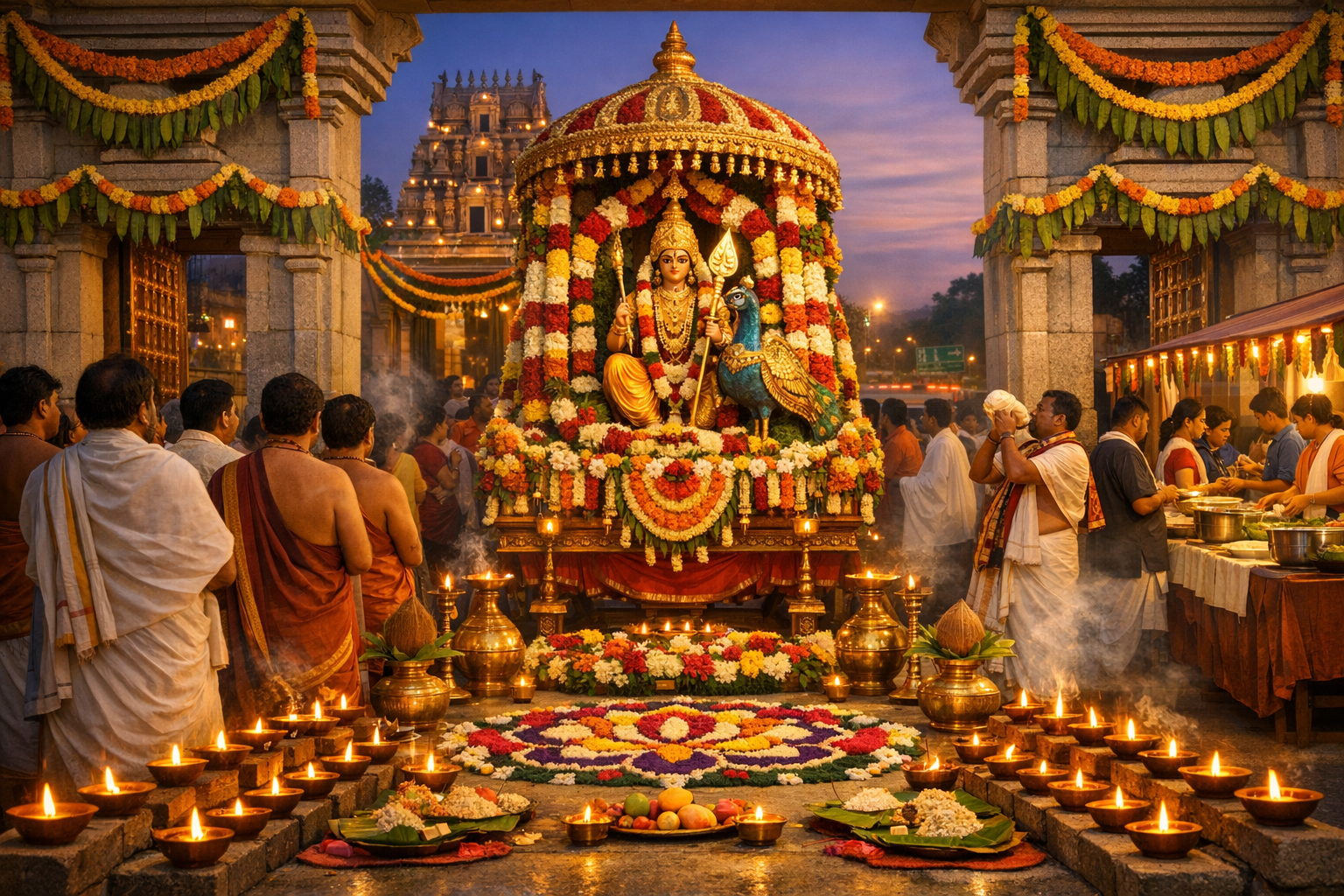
The Subramanya Shashti Jathra 2026 at Sri Subramanyeswara Swamy Temple, Siddalingapura, brought together devotees from Mysuru, Mandya, and Chamarajanagar in a disciplined, high-footfall celebration along the Mysuru–Bengaluru Highway. Held on Margashirsha Shukla Paksha Sashti, the event balanced liturgical rigorabhishekam, alankara, and stotra recitationwith inclusive darshan and efficient prasada distribution. The article explains the calendrical logic…
-
Kalantaka Shiva Unveiled: Tantric Iconography and the Fearless Conquest of Death and Time
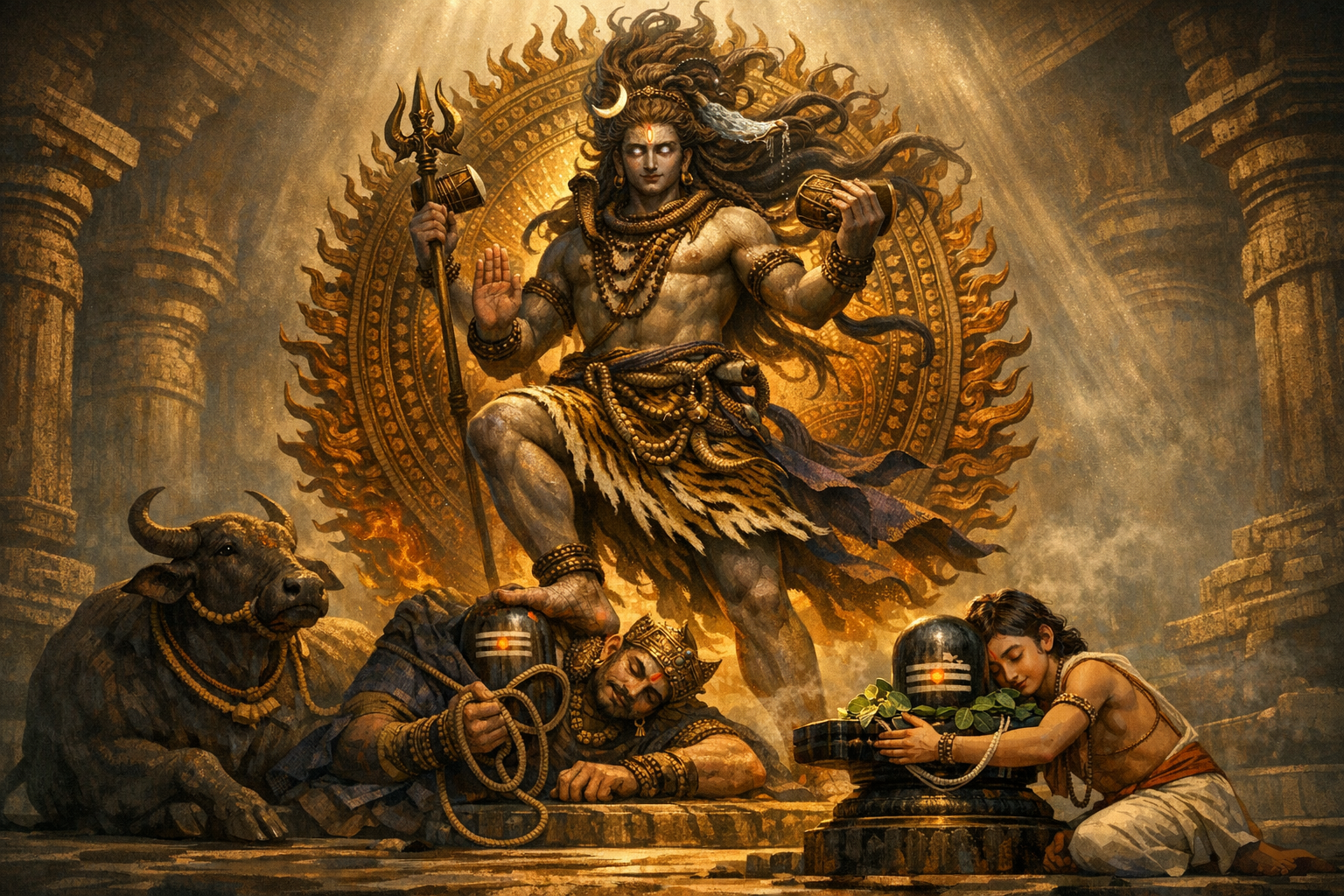
Kalantaka Shiva embodies Lord Shiva’s sovereignty over death and time, uniting narrative, ritual, and art into a coherent path of fearlessness. Drawing on Puranic sourcesespecially the Markandeya episodethis study unpacks the icon’s ugra yet compassionate character and explains how the trishula, damaru, and noose operate as precise Tantric symbols. Readers gain a field guide to…
-
Swaswas Bhairava: Fierce Protector of Dharma, Lord of Time, and the Sacred Bond with Dogs
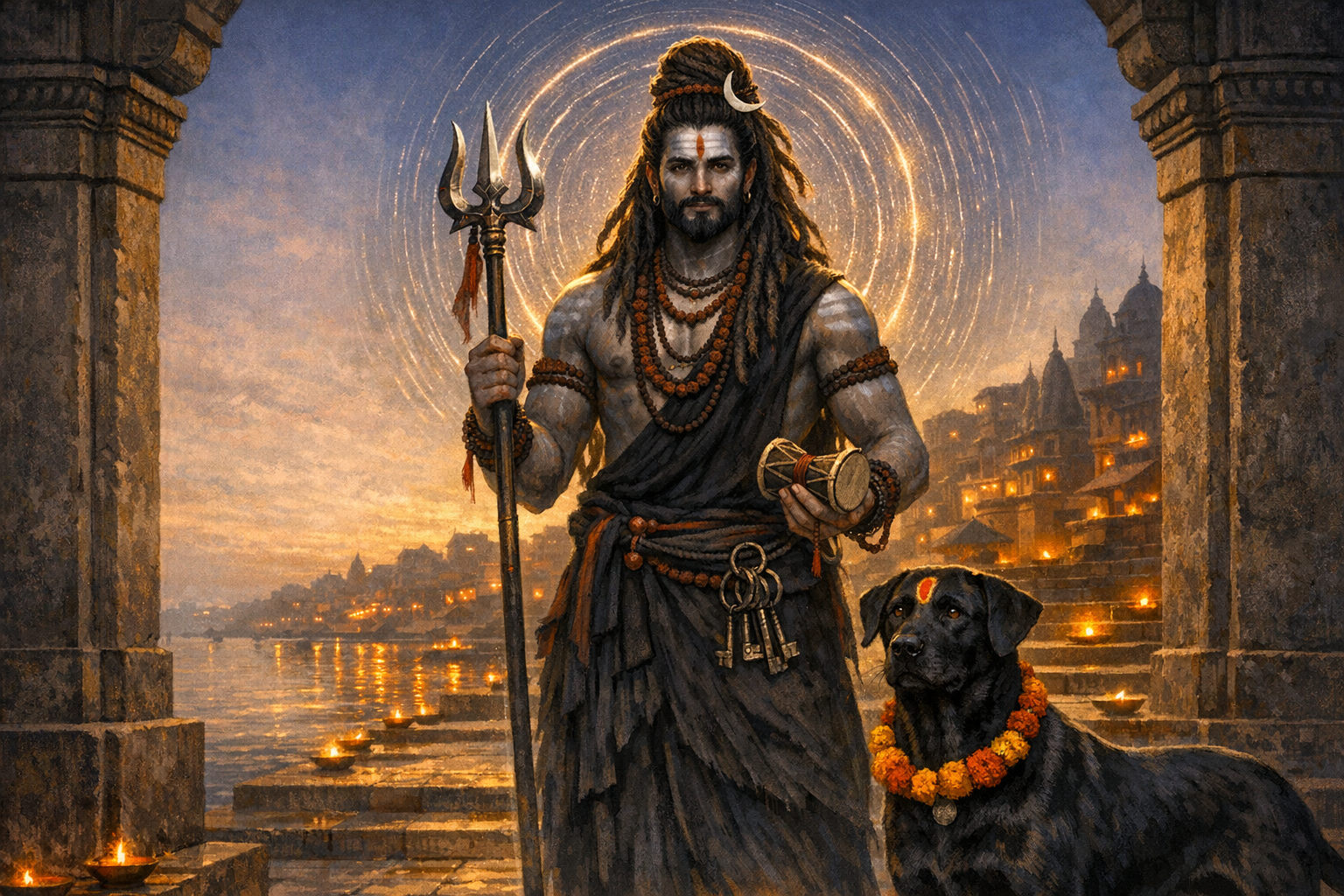
Bhairava’s Swaswas form illuminates a profound synthesis of guardianship, time, and compassion through the sacred bond with dogsespecially black dogs. As kṣetrapāla, Bhairava protects thresholds while the dog symbolizes fidelity, vigilance, and the courage to dwell at liminal edges. Vedic memory of Yama’s four‑eyed dogs and Puranic narratives from the Skanda Purana reinforce the dog’s…
-
Kokamukha Unveiled: The Jackal-Faced Mahakali in Texts, Temple Inscriptions, and Tantra

Kokamukha, remembered as the jackal-faced manifestation of Mahakali, emerges in the Shakta landscape at the intersection of Hindu scriptures, temple traditions, and Tantric iconography. The article clarifies the name’s philological roots and situates the form within cremation-ground theology, where fierce imagery communicates protection, fearlessness, and ethical clarity. It connects Kokamukha with Yogini traditions and early-medieval…
-
Kashi’s Tilbhandeshwar Mahadev: The Shivling Said to Grow a Sesame Each Year and Its Meaning

In Varanasi’s Tilbhandeshwar Mahadev Temple, devotion, memory, and material processes meet around a unique tradition: the Shivalinga is said to grow by a sesame seed each year. The temple’s name, lore, and ritual life together illustrate how communities preserve sacred knowledge through practice. Technical factorsmineral accretion from abhishekam and subtle structural shiftsoffer plausible mechanisms for…
-
Nagabharana of Venkateswara Swamy: Adisesha’s Golden Embrace on Tirumala’s Divine Shoulders

The Nagabharana of Venkateswara Swamytwin golden serpents resting on the Lord’s shouldersembodies Adisesha’s protective presence in Tirumala’s Vaishnava tradition. This in-depth exploration explains its theological meaning, Agamic grounding, and South Indian craftsmanship, while showing how ornament becomes lived theology in darshan. It connects naga symbolism to Puranic narratives and to broader Dharmic motifs found in…
-
Indra, Ravana, and the Divine Peacock: A Ramayana Tale of Protection, Boons, and Dharmic Unity

This long-form exploration traces the Ramayana episode in which a peacock aids Indra during his confrontation with Ravana and receives enduring boons that sacralize its radiant, eye-studded plumage. Drawing on the Uttara Kanda and later Purāṇic and regional retellings, it explains how the bird becomes a cross-cultural emblem of guardianship, gratitude, and auspiciousness. The analysis…
-
Forgotten Guardian: Riksharajas, the Androgynous Vanara Who Shaped Kings Bali and Sugriva

This long-form exploration brings to light Riksharajasalso known as Riksharaja and sometimes rendered as Vriksharajasthe often-overlooked guardian in the Ramayana who raised Bali (Vali) and Sugriva. Drawing on Valmiki’s Kishkindha Kanda, Kamba Ramayanam, Krittivasi traditions, and Puranic echoes (Skanda Purana, Padma Purana), it explains how and why different recensions describe divine paternity while preserving Riksharajas’s…
-
Ashta Sastha Revealed: Eight Transformative Forms of Lord Ayyappa and Their Spiritual Power
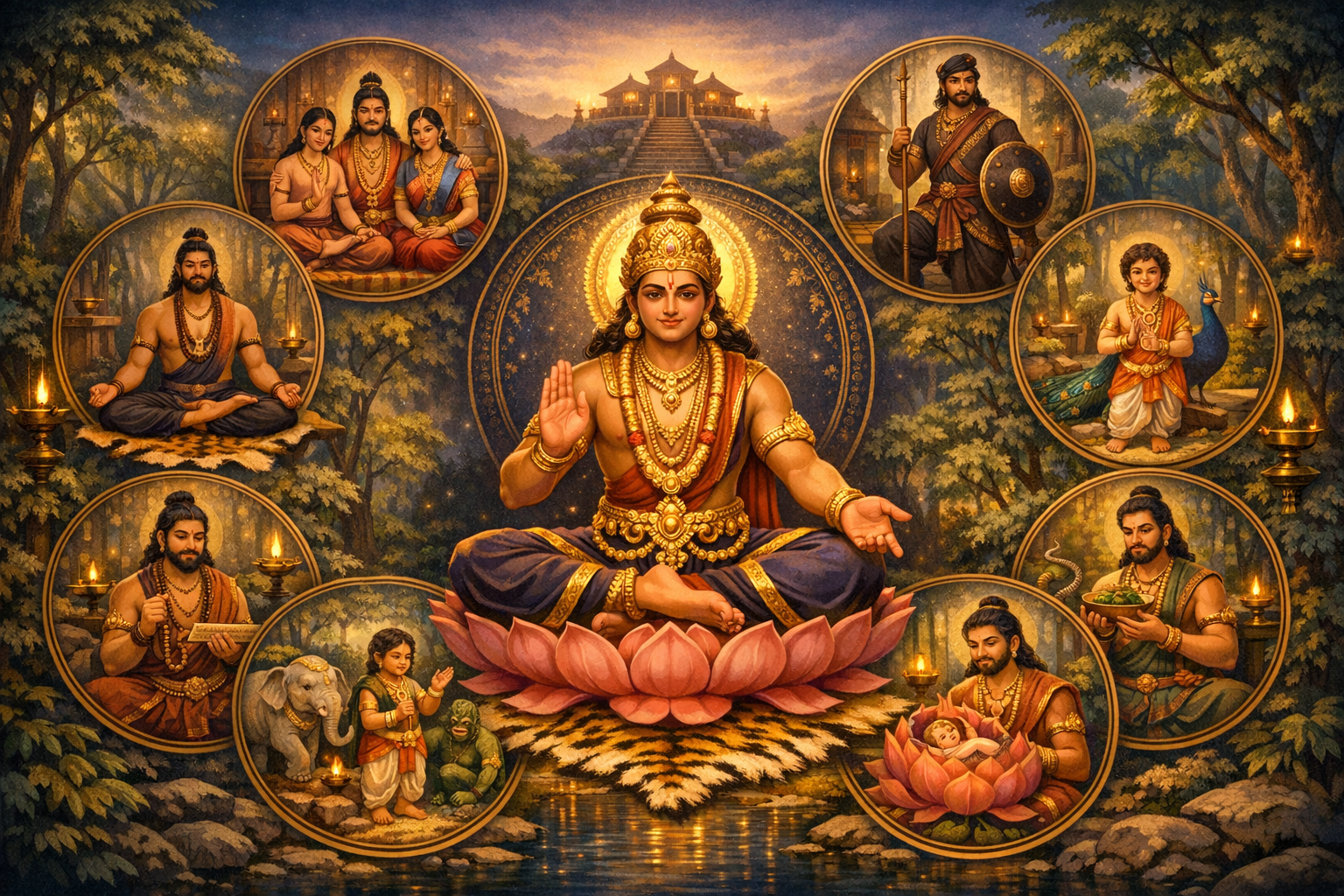
Ashta Sastha presents eight sacred modes of Lord Ayyappa (Dharma Śāstā) that together form a complete pedagogy of spiritual growth. Drawing on Puranic memory, regional sthala-purāṇas, and agamic iconography, the eight forms range from Yoga Śāstā’s meditative stillness to Gṛhastha Śāstā’s family ethics and Vīra Śāstā’s righteous guardianship. The account highlights living practices at Sabarimala,…
-
Sharabha Jayanti 2026 (May 1): Sharabheshwara Swamy Jayanti Puja, Timings, and Vaishakh Purnima Meaning

Sharabha Jayanti (Sharabheshwara Swamy Jayanti) in 2026 falls on May 1, coinciding with Vaishakh Purnima, the Full Moon that emphasizes balance, compassion, and protective grace. This comprehensive guide explains the date, calendrical nuances (including references to Vaigasi Masam and Edava Masam per regional almanacs), and the spiritual meaning of honoring Lord Sharabha. It outlines practical…
-
Kuravi Veerabhadra Swamy Temple: Fierce Shaivite Power, Kakatiya Heritage, Rituals & Guide
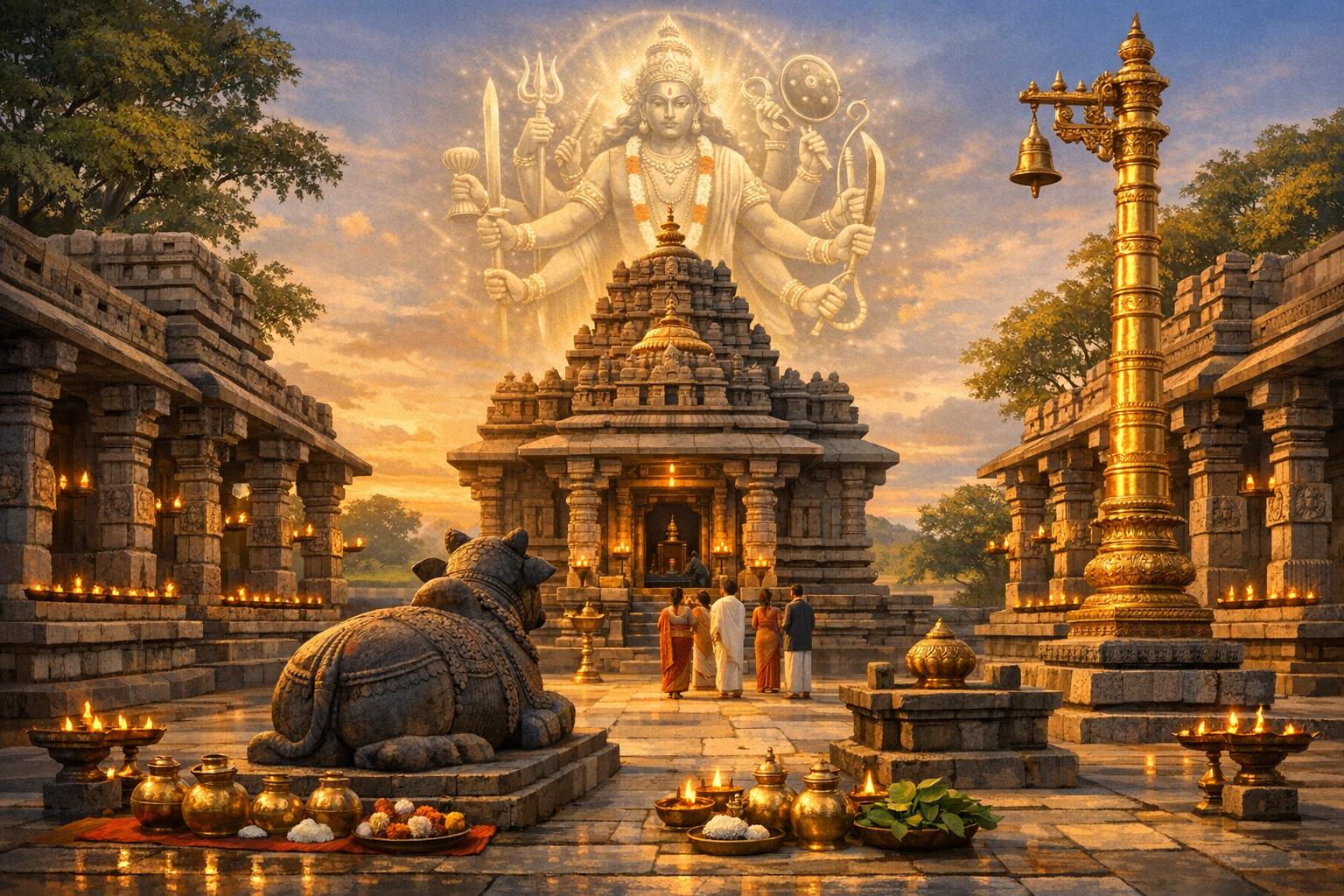
Kuravi Veerabhadra Swamy Temple in Mahabubabad, Telangana, is a living Shaivite kshetra where Veerabhadra’s fierce compassion is honored through precise daily rites and major festivals like Maha Shivaratri and Karthika masam. The shrine’s iconography, ritual cycle, and Dravida architectural grammar offer a clear, research-informed window into Telangana’s sacred heritage. Visitors gain practical guidance on access,…
-
Ravana’s Abduction of Sita Revisited: Dharma, Curses, and a Deliberate Path to Moksha

Did Ravana kidnap Sita to be slain by Sri Rama and attain moksha? A careful, text-sensitive study shows that while Valmiki’s Ramayana emphasizes Ravana’s pride and desire, later Puranic and bhakti traditions interpret his fall within a cosmic design of grace. The Jaya–Vijaya doctrine, vaira-bhakti (absorption through enmity), karmic curses, and the Maya Sita motif…
-
Conquering the Restless Mind: Markandeya’s Counsel to Lakshmana in Skanda Purana

This article examines a Skanda Purana dialogue in the Nagara Kanda where Sage Markandeya counsels Lakshmana on the restless mind, the genesis of sin, and the restoration of dharma. It outlines a classical Hindu psychological frameworkantahkarana and the guṇasand explains why intention (saṅkalpa) is ethically decisive. Readers receive a practical sādhanā protocol that includes breath…
-
Shiva–Parvati Kalyanam on Maha Shivaratri: Ritual Steps, Timings, and Sacred Symbolism

Shiva Parvati Kalyanamritually enacted around Maha Shivaratricelebrates the sacred marriage of Shiva and Shakti as a living synthesis of ascetic insight and householder dharma. Readers gain clarity on timing (Shivaratri’s midnight worship followed by a next-day Kalyanotsavam in many traditions), detailed ritual steps (from Kanya Daanam and Panigrahana to Saptapadi), and the theological sources in…
-
Shiva–Parvati Kalyanam at Maha Shivaratri: Complete Guide to Rituals, Legends, and Meaning
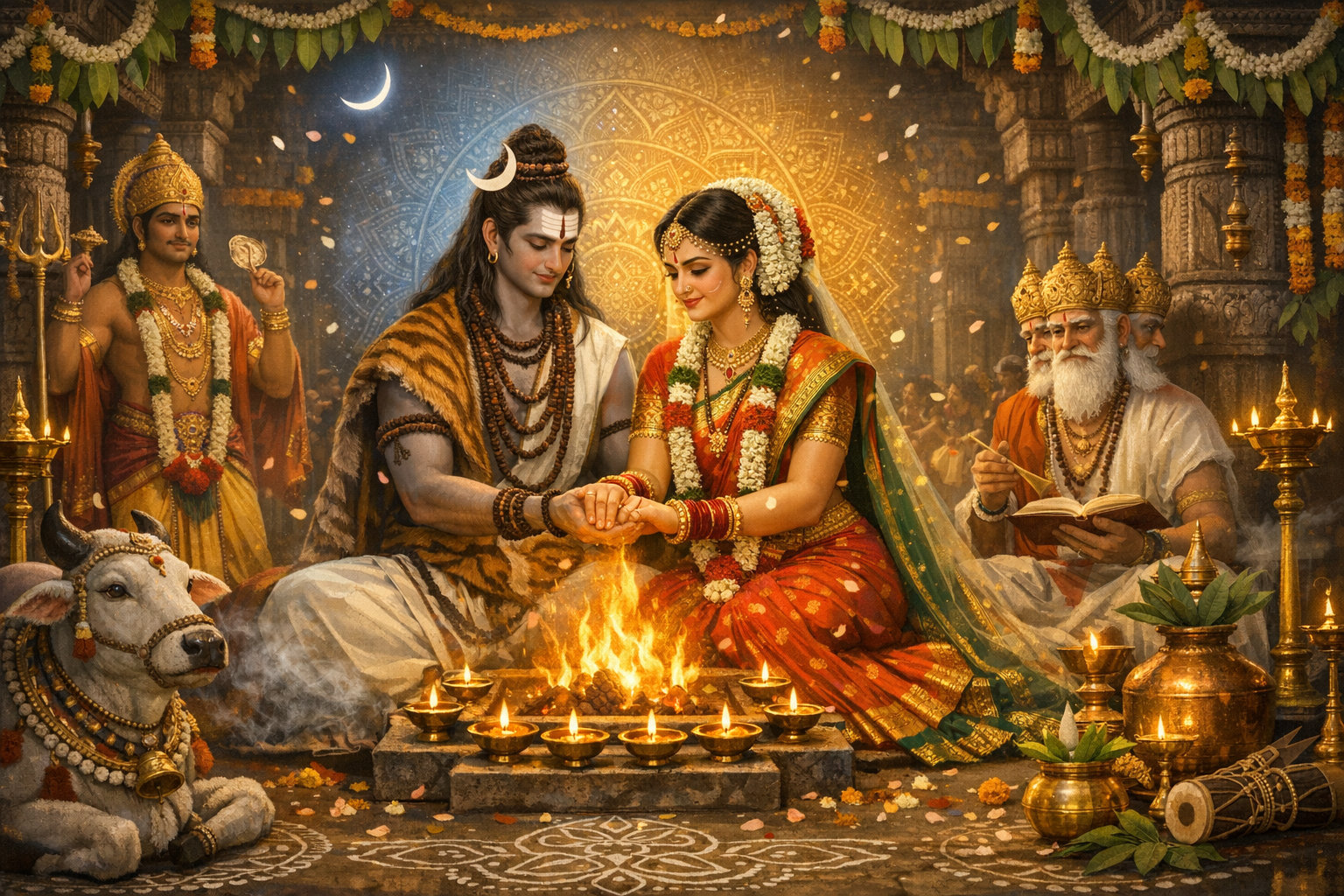
Shiva Parvati Kalyanam, often celebrated the day after Maha Shivaratri, unites Puranic narrative, Vedic samskāra, and Śaiva Āgamic practice in a single, transformative rite. The ceremony venerates Lord Vishnu as Kanya Daanam kartā and Lord Brahma as yajña-ācārya in many traditions, while honoring regional variations across India and Nepal. This comprehensive guide clarifies timing, key…
-
Beyond the Battle: Lord Muruga’s Compassion, Marriages, and Living Legacy after Surapadman

Many accounts of Lord Muruga end with the defeat of Surapadman, but the tradition continues with a profound vision of compassion and unity. The asura’s transformation into the peacock vahana and rooster emblem reframes victory as ethical conversion rather than annihilation. The dual marriages to Ma Valli and Ma Devasena embody harmony between earth-rooted devotion…
-
Skandagiri Temple Pujas in February 2026: Auspicious Days, Ritual Highlights, Devotee Guide

Skandagiri Subramanya Swamy Temple in Hyderabad will mark February 2026 with pujas centered on Ekadashi, Pournami, Amavasya, and Ashtami in Thai Masam and Masi Masam. These observances typically include abhishekam, alankaram, and archana, nurturing a serene atmosphere that regular visitors find both contemplative and uplifting. The temple’s practices embody shared dharmic valuesdiscipline, ahimsa, and sevaencouraging…
-
Honoring Parampara: The Sastric Case for Advaita Acarya’s Beardless Deity and Dharmic Unity
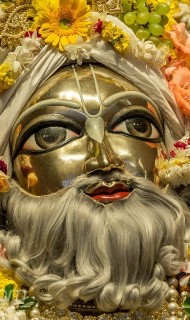
This analysis explores the sastric reasoning behind depicting Sri Advaita Acarya’s deityparticularly the beardless formthrough the lens of parampara and the Guru-Shishya Tradition. Drawing on Srila Prabhupada’s guidance (SB 5.1.20 purport) and the Skanda Purana (as cited in NOD Ch. 7), it shows why following past acaryas preserves devotional integrity and prevents confusion. The discussion…
-
Adhi Maha Sastha with Purna and Pushkala: Timeless Guardian of Dharma in South India
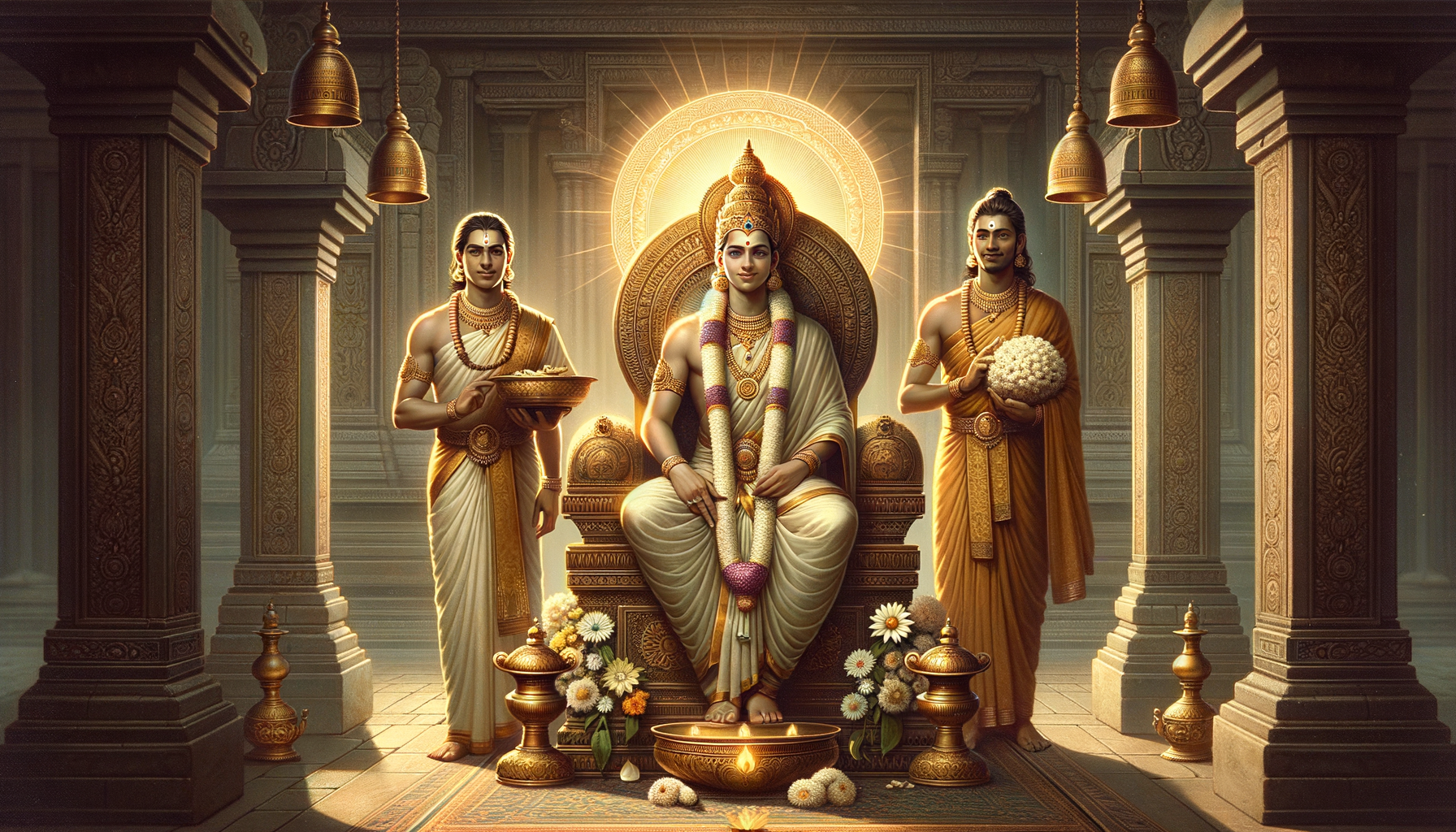
Adhi Maha Sastha with Purna and Pushkala is revered in South Indian temple worship as a guardian-teacher who unites benevolent authority with compassionate guidance. The names themselvesAdhi (primordial), Maha (great), and Sastha (ruler/teacher)signal a deity aligned with justice, wisdom, and care. Purna and Pushkala embody wholeness and auspicious abundance, affirming harmony in the householder path.…
-
Valli Reclaimed: A Feminist Dharmic Reading of Lord Murugan’s LoveConsent, Agency, Unity

This essay reframes the Murugan–Valli love story through Valli’s perspective, highlighting her agency, consent, and discernment. It shows how the narrative affirms the dignity of indigenous communities and upholds a dharmic ethic of mutual respect. Symbolism such as the vel, the peacock, and Ganesha’s elephant presence is read as a guide to inner clarity and…