
-
18 Research-Backed Facts about Ganesha: Iconography, Mantras, Festivals, and Global Legacy

This comprehensive, research-grounded guide presents 18 essential facts about Ganeshahis Puranic origins, rich iconography, mantras, and threshold role as Prathama Pujya. Readers will learn how symbols such as the goad, noose, modaka, and the mouse vahana communicate psychological discipline and ethical intent. The overview explains the eight incarnations (Mudgala Purana), monthly observances like Sankatahara Chaturthi,…
-
Shoola vs Trishul: Decoding Sacred Weapons, Iconography, and the Timeless Power of Dharma
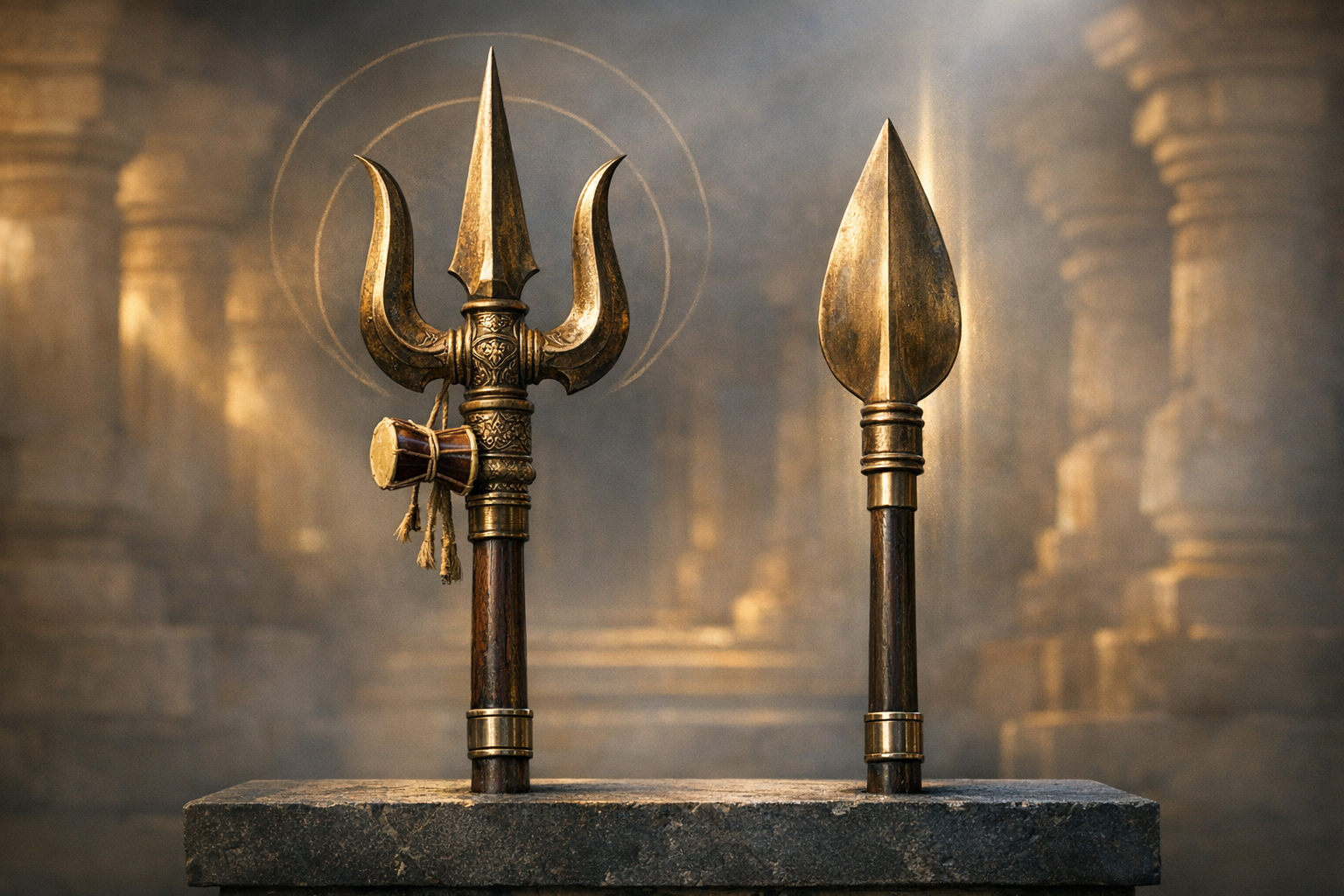
Shoola (single-pointed spear) and Trishul (three-pronged trident) are often confused, yet they carry distinct forms and meanings in Hindu iconography. This article clarifies how a spear encodes one-pointed discernment while a trident integrates triadic powersiccha, jnana, kriya; the gunas; and the three dimensions of time. Readers learn to identify each implement swiftly at temples and…
-
Divine Dwarapalakas of Lord Murugan: Sumukha & SudehaVeerabahu’s Fearless Gatekeepers of Dharma

This in-depth exploration examines Sumukha and Sudehathe revered sons of Lord Veerabahuwho serve as the Dwarapalakas (divine gatekeepers) of Lord Murugan. It situates their roles within the wider narrative arcs of the Skanda Purana and Tamil traditions, linking their valor in the Surapadman campaign to their enduring presence at the temple threshold. Readers gain a…
-
Timeless Gautama Maharshi: Rig Veda Seer, Dharmasutra Sage, and a Unifying Dharmic Beacon
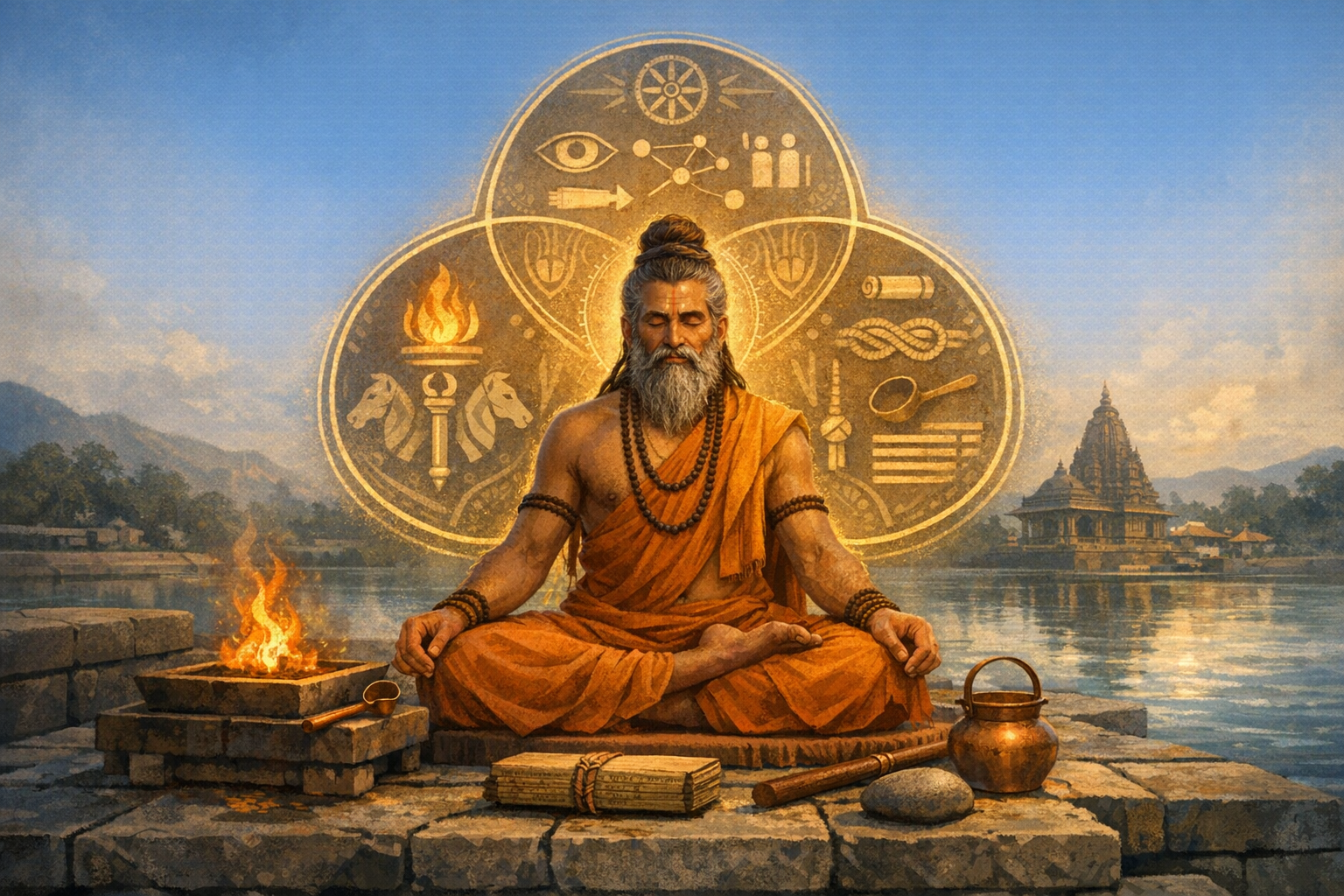
Gautama Maharshi emerges as a multidimensional sage whose legacy spans the Rig Veda, the early Dharmasutra tradition, classical Indian logic, and the living sacred geography of the Godavari. This article clarifies how the shared name “Gautama” applies to multiple luminariesVedic seers, the Dharmasutra authority, Akṣapāda Gautama of the Nyāya-sūtra, and revered figures in Jain and…
-
Bilva Tree and Goddess Lakshmi: Timeless Symbolism, Prosperity Rituals, and Sacred Ecology
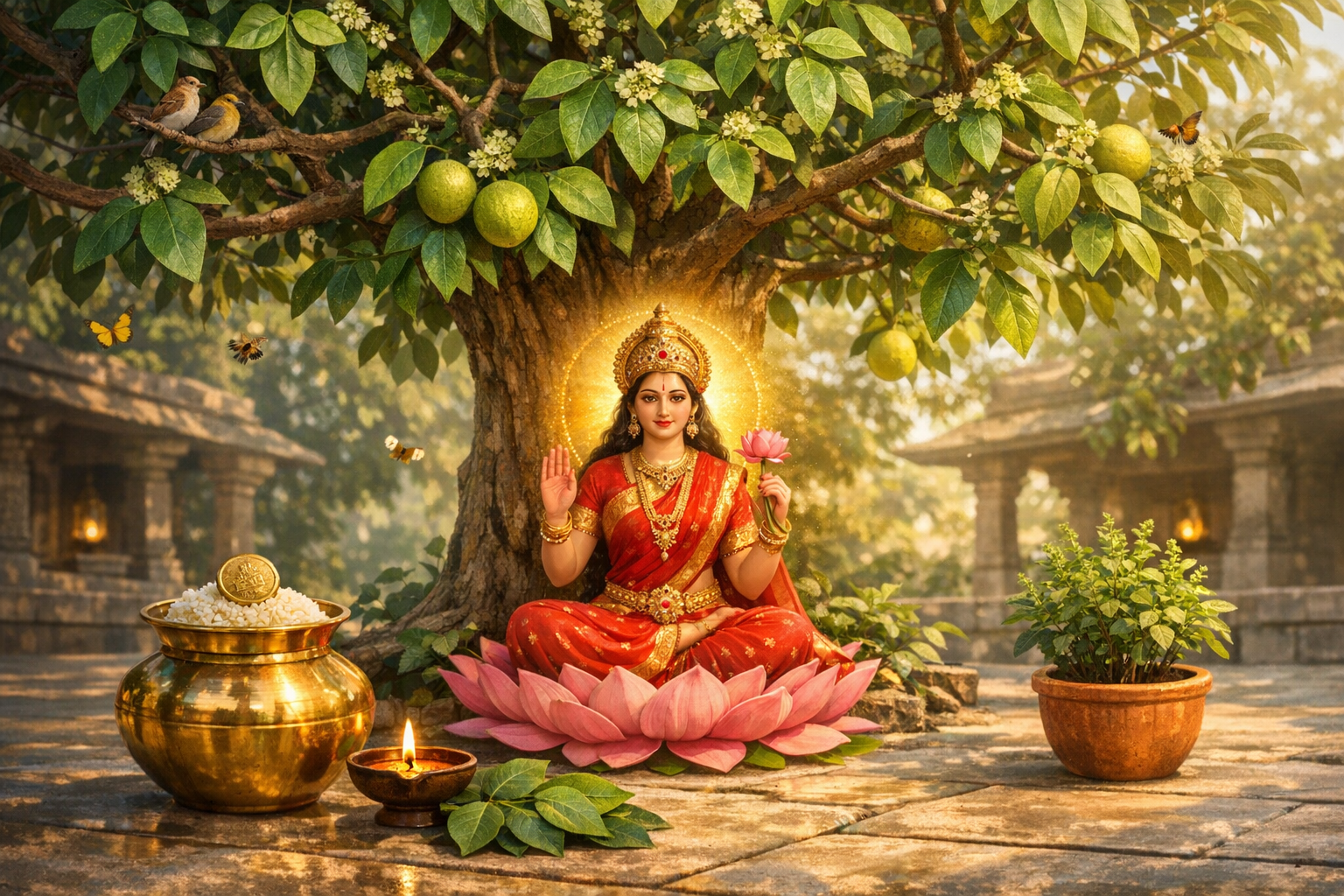
The Bilva tree (Aegle marmelos) is venerated in Hinduism not only as dear to Shiva but also as a sacred abode of Goddess Lakshmi, embodying durable, dharmic prosperity. This long-form exploration synthesizes scripture, ritual practice, Ayurveda, and temple ecology to show how Bilva bridges Śaiva and Vaiṣṇava devotion while nurturing household well-being. It explains the…
-
Hargauri Durga in Bengal: Uma’s Tender Homecoming and Her Sacred Union with Shiva
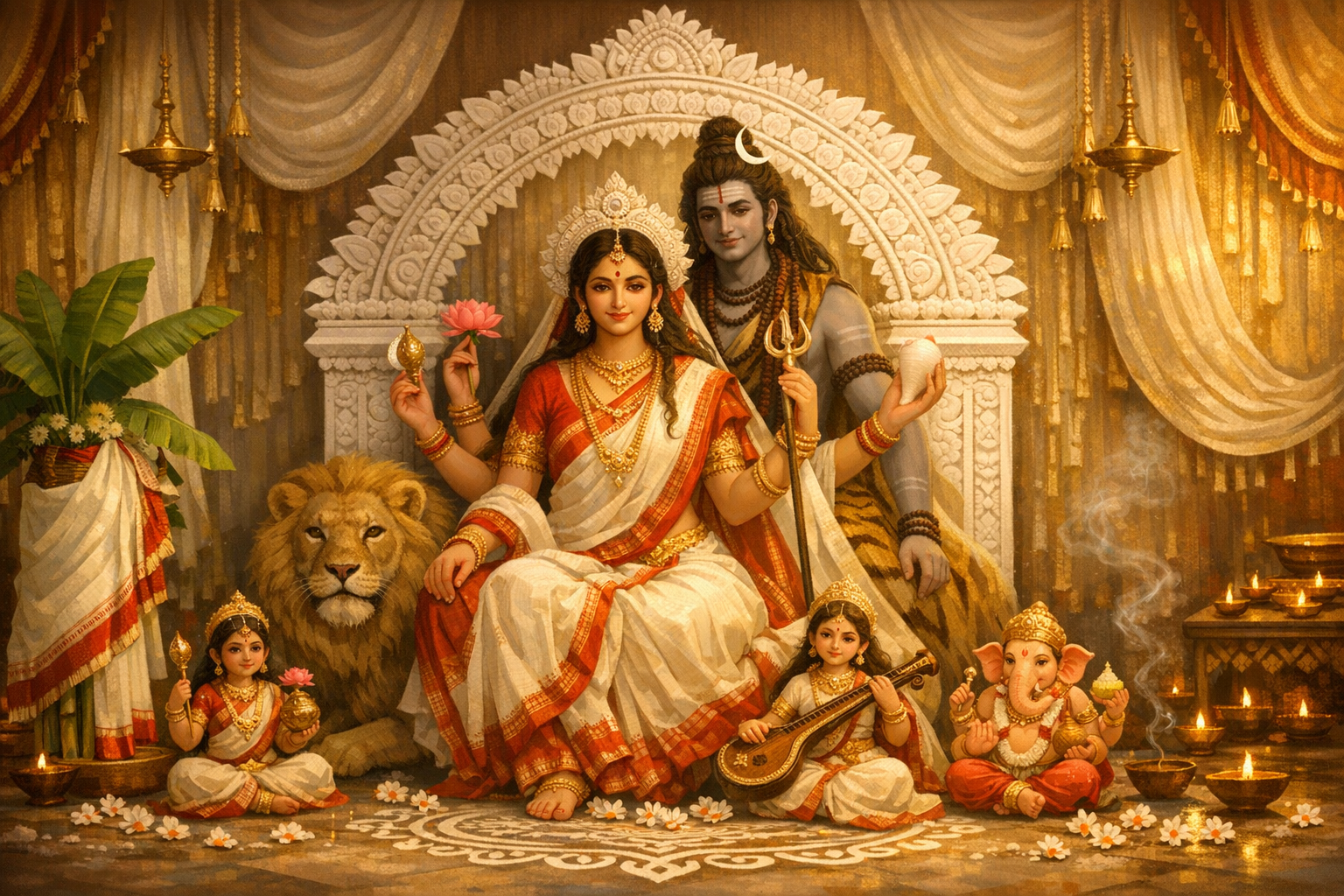
Hargauri Durga reframes Bengal’s Sharadiya devotion as Uma’s tender homecoming, with Shiva’s serene presence completing the sacred tableau. The piece decodes the Hara–Gauri archetype, clarifies its relationship to Mahishasura Mardini, and situates the tradition within Devi Paksha, from Mahalaya to Vijayadashami. It explains core ritesbodhana, nabapatrika, Sandhi Puja, Kumari Puja, and visarjanwhile interpreting how they…
-
Thirunangur’s Eleven Divya Desams: How Shiva–Vishnu Harmony Shaped Tamil Nadu’s Sacred Landscape

Thirunangur near Sirkazhi hosts eleven closely clustered Divya Desams uniquely linked to a single sacred event in which Shiva’s Rudra Tāṇḍava leads Vishnu to manifest in eleven forms. This long-form guide situates the temples within Tamil Nadu’s Kaveri delta, clarifies the puranic and Āḻvār foundations of the tradition, and shows how Shaiva–Vaishnava harmony is lived…
-
Unveiling Shiva’s Samharamurtis: Fierce, Compassionate Forms of Cosmic Transformation

This in-depth exploration clarifies why Shiva’s Samharamurtis are not emblems of destruction but precise instruments of compassionate transformation. Grounded in the Panchakritya doctrine and classical sources like the Puranas and Agamas, it decodes how Kamantakamurti, Gajasura Samhara Murti, and Kalari Murti model the sublimation of desire, the mastery of force, and the transcendence of fear…
-
Unveiling Brahma’s Wedding at Pushkar: Cosmic Timing, Gayatri’s Grace, and Yajna Power

Brahma’s marriage to Gayatri at Pushkar weaves together sacred geography, śrauta ritual law, and cosmic timing to explain why the Jagatpita Brahma Mandir and Pushkar Lake command exceptional sanctity. Drawing on Padma Purāṇa, Skanda Purāṇa, and regional memory, the narrative shows how the patnī-samyāja completes yajña, why muhūrta matters, and how Gayatri embodies both mantra-śakti…
-
Unveiling Nāga Kanyā: A Research-Backed Guide to Hinduism’s Boundless Serpent Guardian

Nāga Kanyā“the virgin serpent”is a pan-Indic guardian archetype whose maidenly autonomy and serpentine potency protect thresholds, waters, and life. This research-grounded overview situates Nāga Kanyā in Hindu scriptures and art (Jaratkaru, Ulūpī, Hoysala and Chola sculptures) while clarifying that “virgin” signifies self-sovereignty, not social status. It explains how nāga-kanyā symbolism converges with festivals such as…
-
Shanmukha Unveiled: The Sacred Six Faces of MuruganNames, Symbolism, and Practice
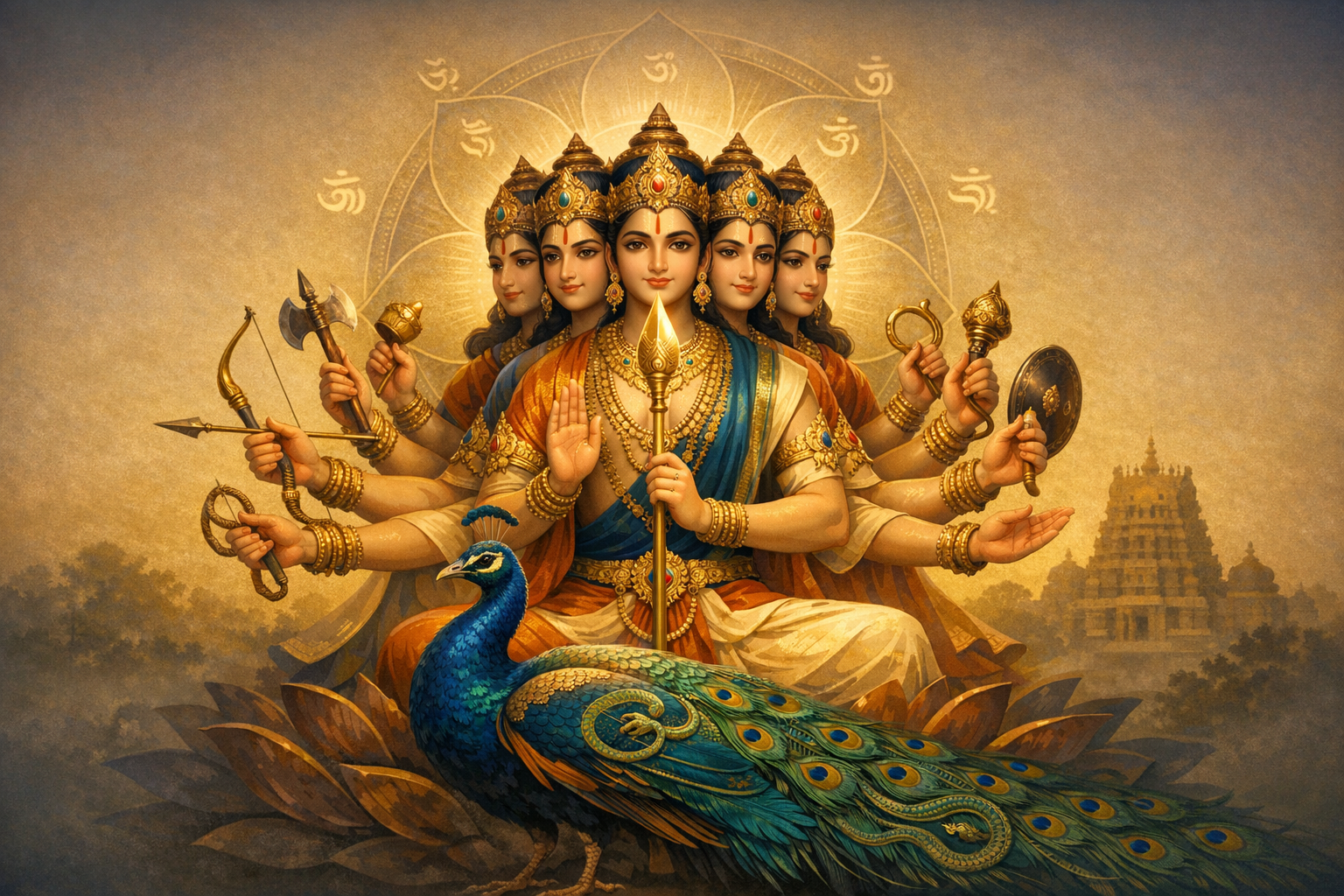
This comprehensive exploration of Shanmukha (Shanmugam) clarifies how traditions name and understand the six sacred faces of Lord Murugan. It presents the most common devotional mappingSkanda, Subrahmanya, Kārtikeya, Kumāra, Guha, and Saravanawhile explaining why no single, universal list prevails across all lineages. Readers learn how the six syllables Sa-Ra-Va-Na-Bha-Va and frameworks like the six directions,…
-
Viralimalai Murugan Temple & Arunagirinathar: Hunter-Lord Legend, Art, Rituals, and Peacocks
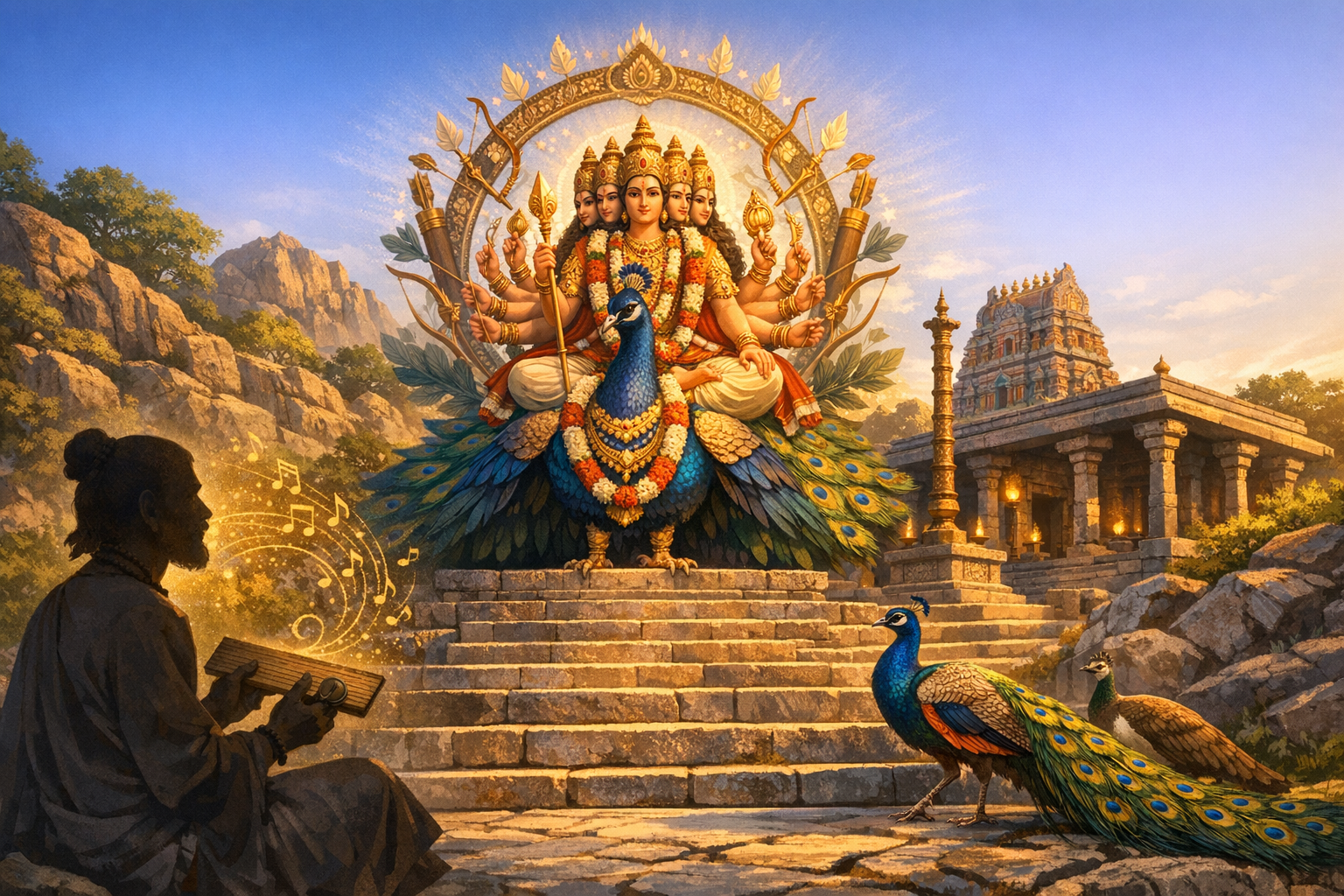
Viralimalai’s Shanmuganathar Temple presents a rare seated-on-peacock icon of Lord Murugan, uniting legend, music, and sacred ecology in a single hilltop experience. The site’s historical layers and South Indian hill-temple architecture encode a living Kaumāra tradition guided by Śaiva āgamas and Śilpa-Śāstra canons. Local memory of “When the Lord became the Hunter” situates Viralimalai within…
-
Beyond ‘God of War’: Murugan’s origins, Vel symbolism, and Thaipusam’s transformative devotion

Murugan, revered across Hindu, Buddhist, Jain, and Sikh milieus as a symbol of disciplined compassion, emerges in Tamil sources as the mountain-born “Beautiful One” whose power is guided by wisdom. Classical narratives from the Tolkappiyam and Puranic traditions explain his sixfold awareness, the gift of the Vel, and the transformation of Surapadman from pride into…
-
When Agastya Drank the Ocean: The Cosmic Reset Behind Bhagiratha’s Ganga Avatara

This long-form exploration situates the startling image of Sage Agastya drinking the ocean within the Vedic–Puranic principle of rta (cosmic order) and reads it as the hidden prologue to Bhagiratha’s Ganga avatara. Drawing on references across the Ramayana, the Mahabharata, and Puranas such as the Skanda Purana, it explains how yogic containment (Agastya) and compassionate…
-
Divine Touch and Sacred Grace: What Bhakti Teaches About Service, Liberation, and Unity

Divine touch in Hindu spiritualityanugraha or gracesignifies a transformative contact that sanctifies life and aligns it with dharma. Drawing on Upanishadic insight and Purāṇic narratives, this exploration analyzes how devotion, humility, and service dispose seekers to receive grace. Case studies of Sage Bhrigu, Markandeya, Periyalvar, Malayathvaja Pandiyan, and Akaasaraja show how sacred touch operates in…
-
Shakti Peeth vs Siddha Peeth: Origins, Rituals, and the Power of India’s Sacred Seats

Shakti Peeth and Siddha Peeth occupy central yet distinct roles in Hindu sacred geography. Shakti Peeth are mythically anchored in the Sati narrative and emphasize Devi–Bhairava worship, major festivals like Navaratri, and communal pilgrimage. Siddha Peeth are experientially anchored in the attainments of siddhas and in anushthanas that reliably catalyze inner transformation. Many renowned shrines,…
-
Akshaya Tritiya Unveiled: Definitive Mantras, Stotras, Puja Vidhi & Sacred Dāna for Prosperity

Akshaya Tritiya, observed on Vaishakh Shukla Tritiya, is extolled in the Skanda Purana and Padma Purana as a uniquely auspicious day when the fruits of worship, charity, and discipline become imperishable. This comprehensive guide details accurate, tradition-rooted mantras and stotras for Lakshmi Puja, Gauri Puja, Parashurama Jayanti, and Chandan Puja to Lord Krishna. It includes…
-
Akshaya Tritiya Dāna: The Definitive Guide to Inexhaustible Blessings and Scriptural Merits

Akshaya Tritiya, the sarva-siddhi day of Vaishakh, is celebrated across Dharmic traditions as an auspicious time for dāna (charitable giving) that yields inexhaustible merit. This guide explains the day’s scriptural footing in the Puranas and Dharmaśāstra, unifies perspectives from Hinduism, Jainism, Buddhism, and Sikhism, and details practical, ethical ways to give. It highlights Jala Daanam…
-
Lambakarna Bhairava: Long-Eared Guardian of Avanti Shakti Peetha and Ujjain’s Sacred Power

Lambakarna Bhairava, the long-eared guardian of Ujjain’s Avanti Shakti Peetha, embodies a pan-dharmic symbolism of deep listening and compassionate protection. The name‘Lamba’ (long) and ‘Karna’ (ears)encodes a pedagogy of attentive hearing central to Hindu, Buddhist, Jain, and Sikh paths. Situated within Ujjain’s sacred network of Mahakaleshwar, Harsiddhi Mata, and Bhairava shrines, Lambakarna functions as kṣetrapāla,…
-
Kukke Subramanya Sthala Purana: Timeless Serpent-Lord Legends, Ritual Science, and Sacred Landscape

Anchored at the foot of Kumara Parvatha and on the banks of the sacred Kumara Dhara, the Kukke Subramanya Swamy Temple preserves a powerful sthala purana that unites myth, ritual, and landscape. The narrative recounts Subrahmanya’s victory over Tarakasura, his marriage to Devasena, and a lasting covenant of protection extended to Vasuki and the Nagas.…