
-
Adhika Jyeshta Masam 2026 (Telugu Calendar): Sacred Dates, Rituals & Purushottama Vrata Guide

Adhika Jyeshta Masam 2026 in the Telugu Chandramana Panchangam runs from 17 May to 15 June during Parabhava Nama Samvatsaram. This intercalary month appears when no solar saṅkrānti occurs within a lunar cycle, ensuring long-term alignment of the lunisolar calendar. Revered as Purushottama Maas and dedicated to Lord Krishna, it emphasizes bhakti, ethical living, and…
-
Virabhadra vs Bhairava: Decoding Shiva’s Fierce TwinsOrigins, Iconography, Tantra, Temple Worship
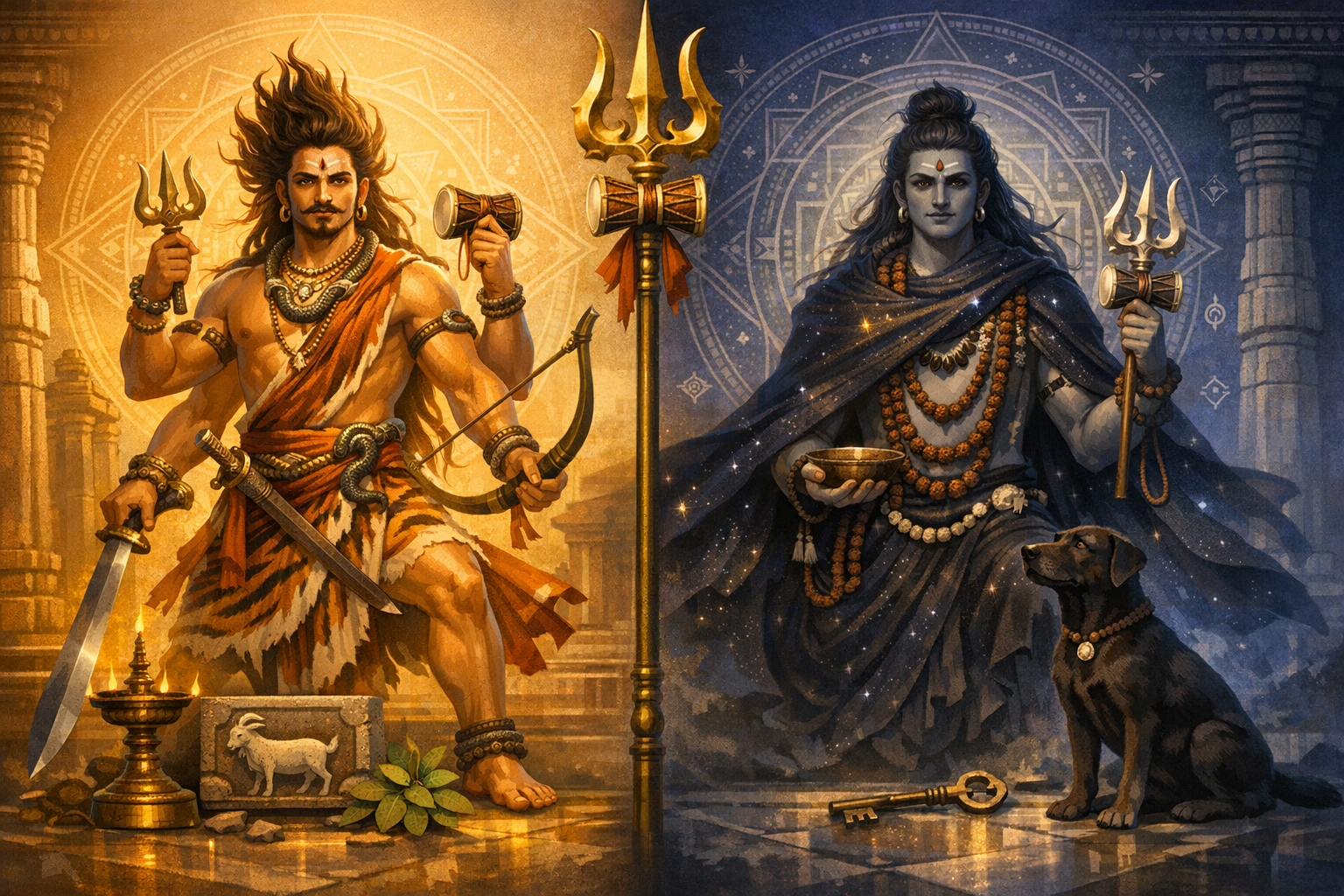
Virabhadra and Bhairava are Shiva’s fiercest yet compassionate forms, distinguished by purpose, scope, and soteriology. Virabhadra embodies event-specific dharmic correction in the Daksha Yajna narrative, while Bhairava serves as perennial guardian of thresholds and time. Their iconographies differVirabhadra as heroic warrior and Bhairava as digambara sentinel with skull-bowl and dog vahanayet both enact restorative justice.…
-
Tripura Tandava of Shiva: Decoding the Sixteen-Armed Dance of Cosmic Dissolution
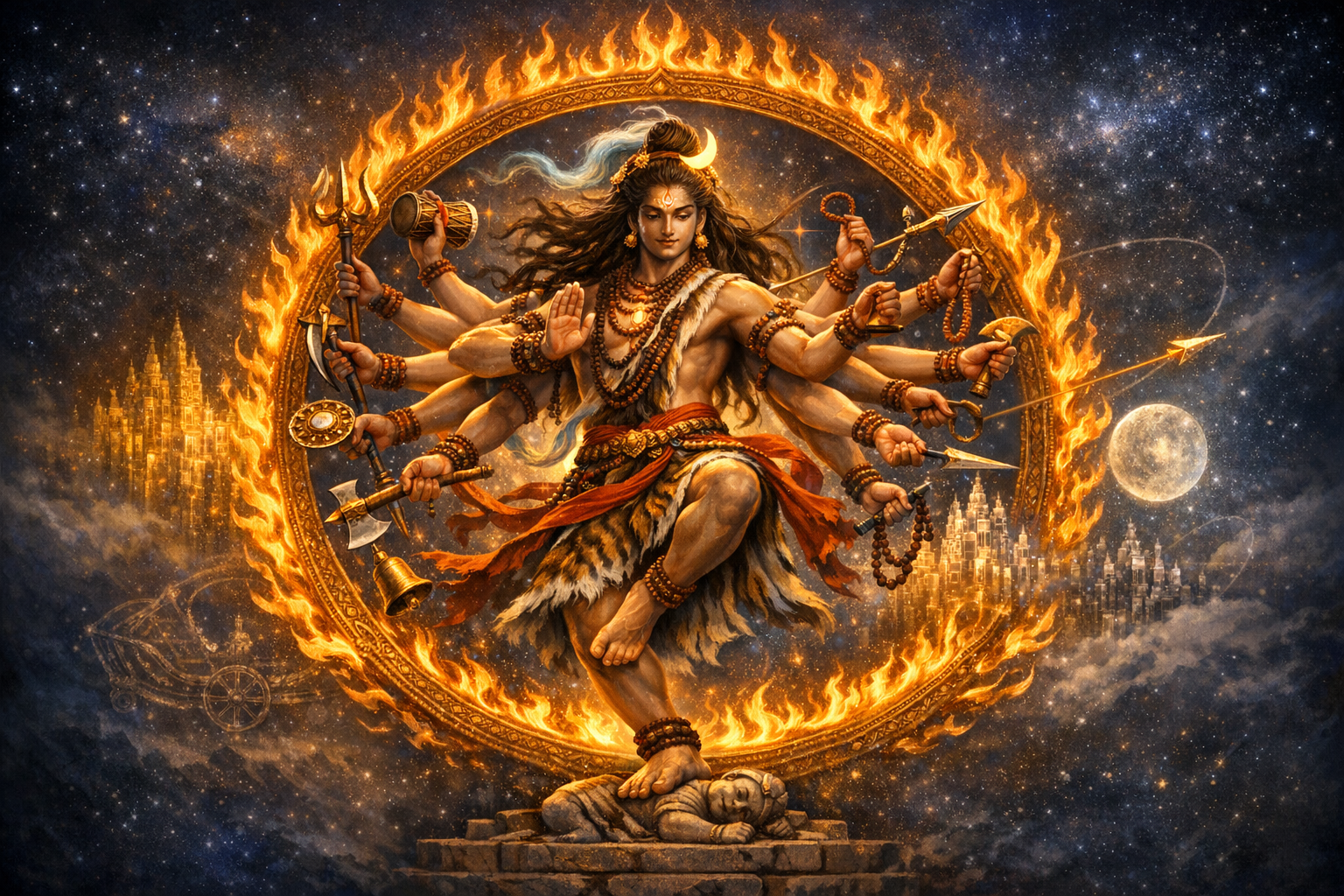
Tripura Tandava, often aligned with Shiva’s role as Tripurāntaka, encapsulates the precise instant of cosmic dissolution where triadic structures resolve into pure awareness. Grounded in the pañcakṛtya framework, it brings together saṁhāra (dissolution) and tirodhāna (concealment) to culminate in laya (absorption). The post examines Purāṇic narratives, āgamic iconographyincluding the striking sixteen-armed conventionand the dance grammar…
-
Bhairava as Bhudhara Atma: The Unshakable Ground of Kalika, Earth, and All Worlds

This long-form exploration clarifies Bhudharatmajaya Bhairava as the atma of Bhudharathe conscious support of Earth and mountainsand the Adhara, the unmoving ground of charachar prakriti. It decodes the Sanskrit terms, situates Bhairava and Kalika within Tantric and Purana frameworks, and maps their complementarity across the panchabhuta and Shaiva tattvas. Temple architecture, kshetrapala guardianship, and contemplative…
-
Phalashruti in Hindu Scriptures: Timeless Promise, Mimamsa Logic, and Transformative Practice
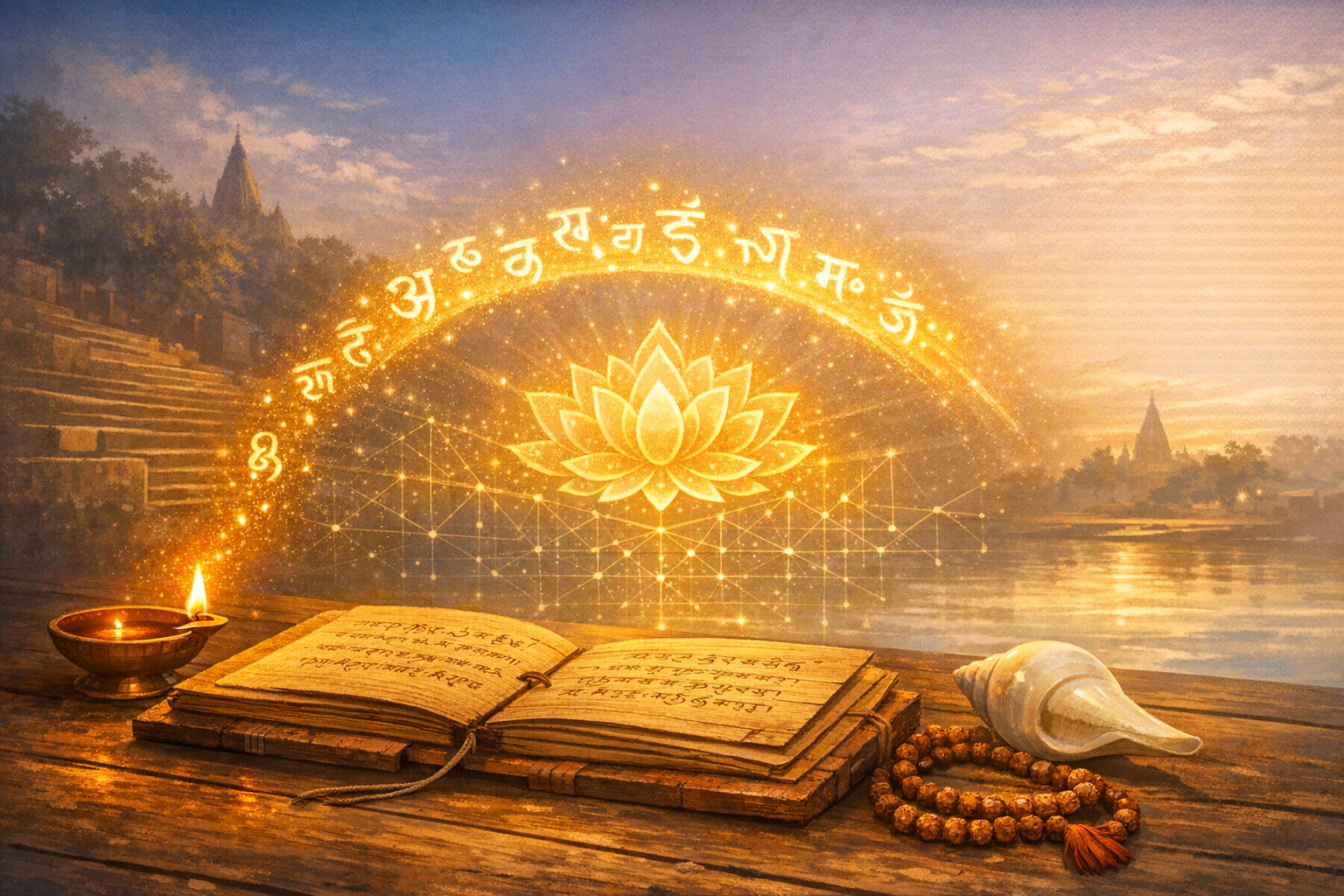
Phalashruti, the fruit of hearing or recitation, is a core feature of Hindu scriptures that links practice to purpose. It functions within Mimamsa hermeneutics as arthavada, motivating ethical discipline and clarifying the benefits of mantra, vrata, pilgrimage, and study. Found across Puranas, sahasranamas, and tirtha-mahatmyas, it maps outcomes from mental clarity and peace to devotion,…
-
Bhudharaya Bhairava: The Unmoving Ground of Being for Stability, Courage, and Clarity
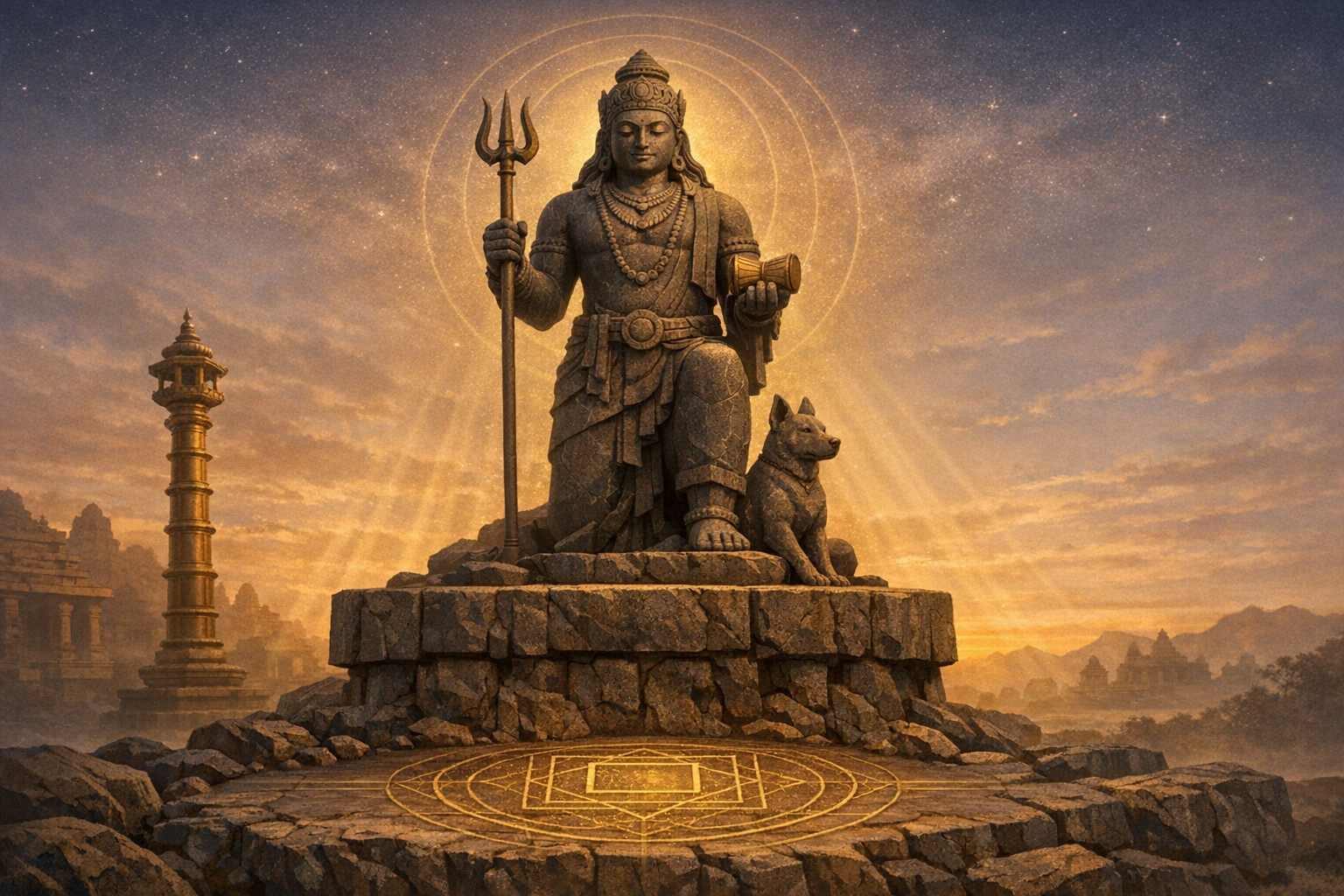
Bhudharaya, a revered name in the Bhairava sahasranama, proclaims Bhairava as the immovable ground of existence the adhara that sustains all. This essay clarifies the term’s etymology and scriptural roots, linking Skanda Purana narratives and stotra traditions to a coherent Shaiva metaphysics. It explores how prithvi-tattva, Mūlādhāra, and tantric practices like bhūta-śuddhi translate the idea…
-
Krishna’s Heart in Kali Yuga: How Jagannath Puri Safeguards Compassion and Unity
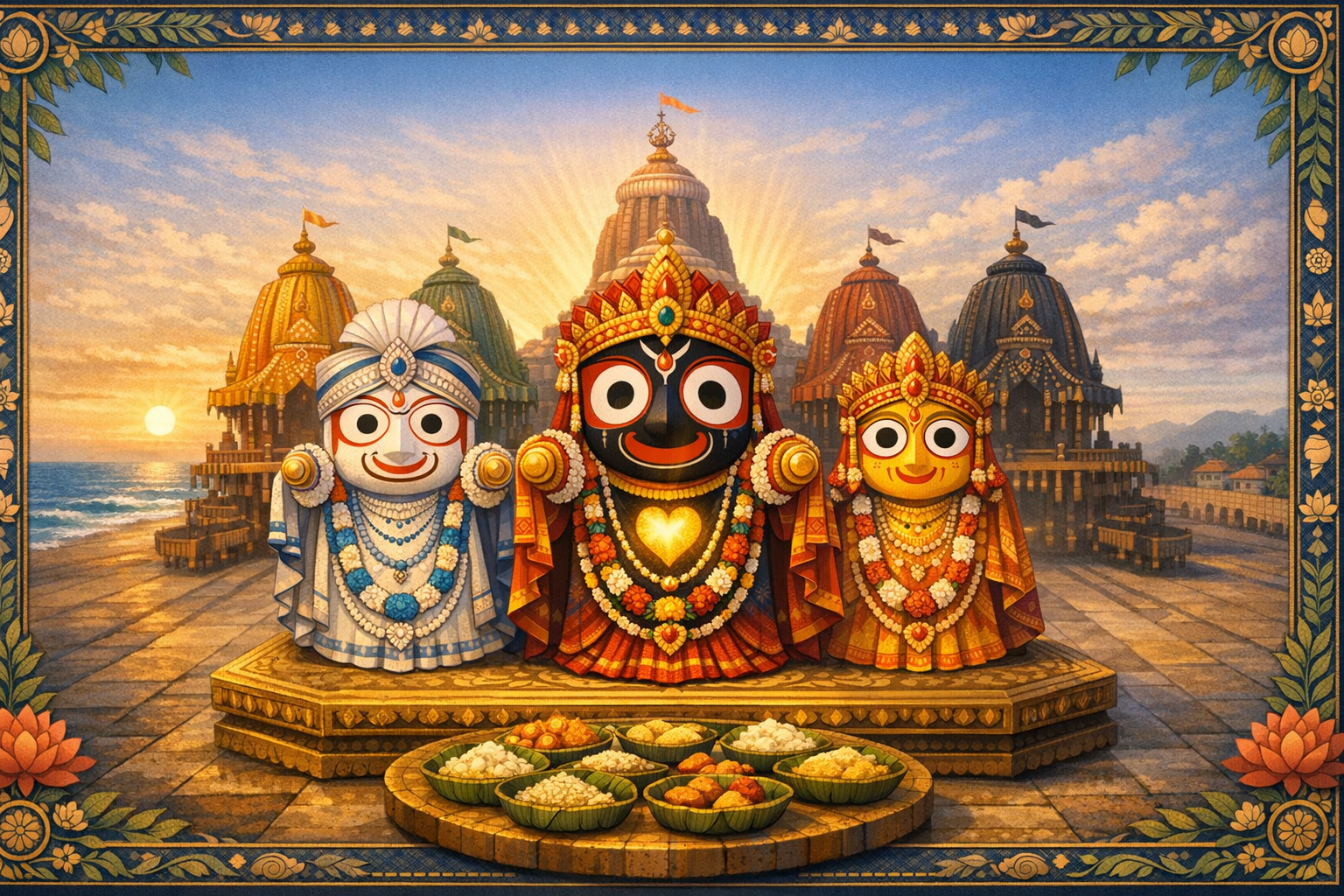
This article explores the Jagannath tradition at Puri as the living repository of Bhagavan Sri Krishna’s heart, identified in temple lore as the Brahma Padartha. Drawing on the Skanda Purana (Purushottama-khanda), it explains how Purushottama-kshetra was destined to anchor compassion and accessibility in Kali Yuga. Readers will learn the technical contours of Nabakalebara, the secret…
-
Sri Varahaswami Temple, Tirumala: Timeless Legends, Sacred Routes, and Ritual Significance
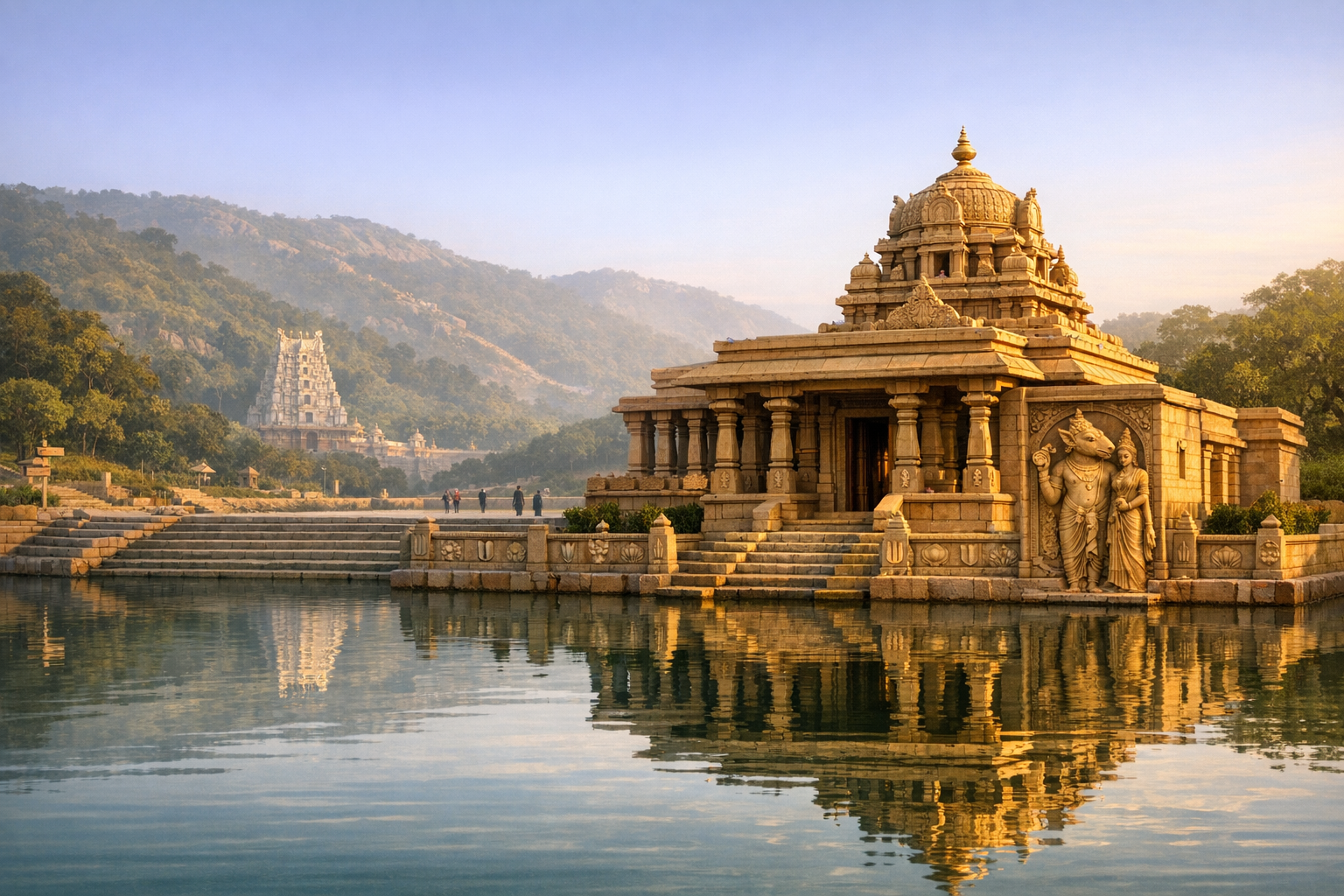
Sri Varahaswami Temple in Tirumala stands on the northern bank of Swami Pushkarini and preserves the hill’s identity as Adi Varaha Kshetra. Drawing on the Venkatachala Mahatmya traditions of the Varaha Purana and Padma Purana, it explains why many pilgrims first worship Varaha before proceeding to Sri Venkateswara Temple. The guide clarifies iconography, ritual order,…
-
Thiruporur Kandaswamy Temple: Legends, Ritual Science, Darshan Timings, and Festival Guide
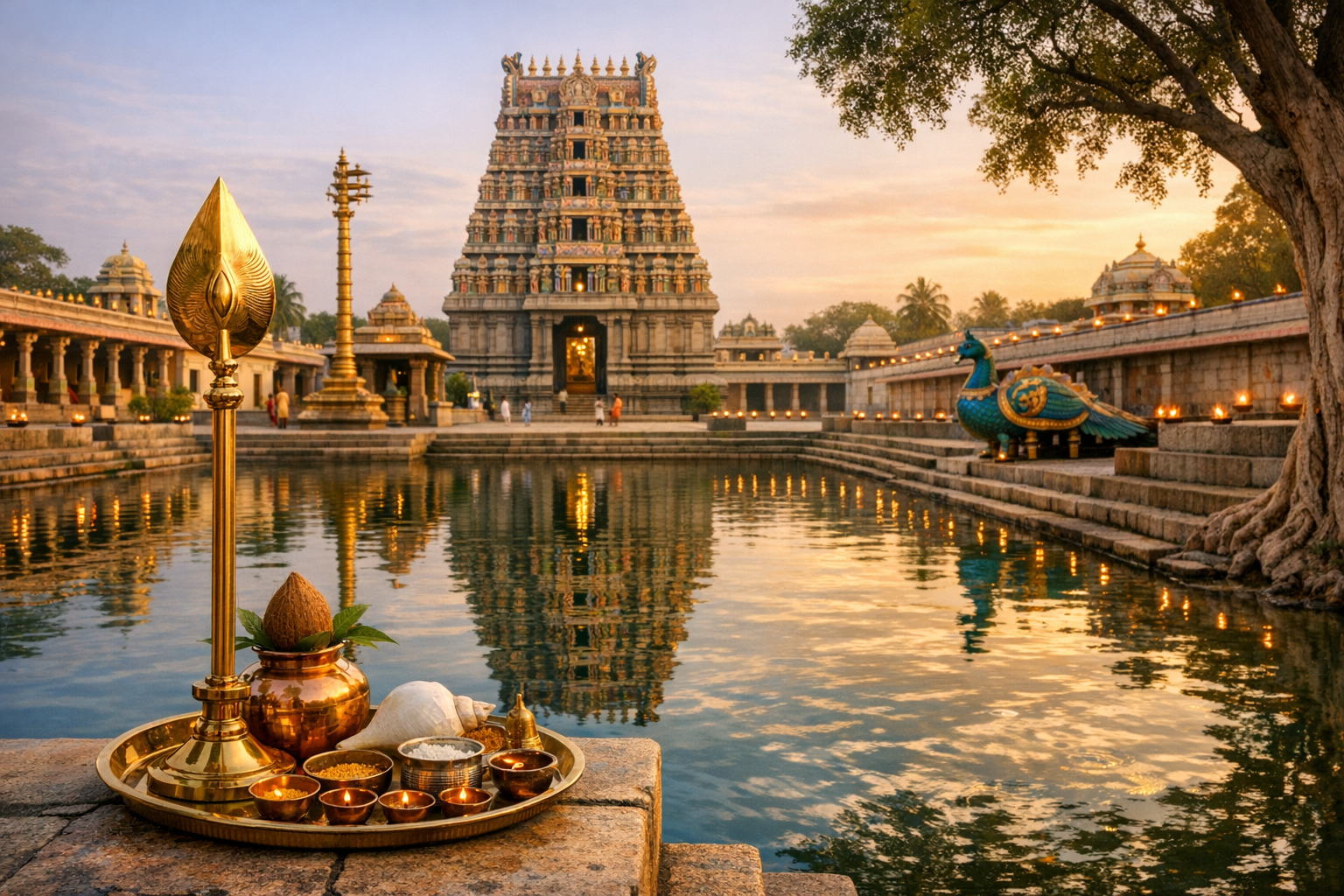
Thiruporur Kandaswamy temple (Thiruporur Murugan Temple) in Chengalpattu, Tamil Nadu, is a living center of Murugan worship renowned for Dravidian architecture, precise Agamic ritual, and a vibrant festival calendar. Visitors can plan around clear darshan timings (6:30 am–12:30 pm; 3:30 pm–8:00 pm) and four daily pujas that culminate in abhishekam and deepa aradhana. The temple’s…
-
Bhurishaya Bhairava: Unveiling the All‑Abundant Essence and Infinite Support of Existence

Bhurishaya Bhairavaone of the sacred 1008 names of Bhairavaencapsulates a Śaiva vision of existence as plenitude and support. Etymologically derived from bhūri (abundance) and śaya (resting/abiding), the epithet signals an inexhaustible ground of being in which the many both arise and find repose. Read through Kashmir Shaivism’s Bhairava triad (bha–ra–va), it highlights the sustaining rest…
-
Gifting the Shaligram Stone: Profound Punya and the Sacred Dharma Ban on Selling

Dānasacred givingis celebrated across the dharmic traditions, and nowhere is its meaning more vivid than in gifting the Shaligram stone, the Śāligrāma-śilā revered as a svayambhū form of Viṣṇu. Puranic literature associates this act with boundless puṇya while insisting that a Shaligram must never be sold. The prohibition is not mere formality; it preserves the…
-
Why Hindu Gods Ride Animals: The Profound Symbolism Behind Ganesha’s Mouse and Skanda’s Peacock

Why do Hindu gods ride animals such as Ganesha’s mouse and Skanda’s peacock? In Hindu iconography, vāhanas are a precise symbolic language codified in Purāṇas, Āgamas, and śilpa-śāstra that maps each deity’s ethical and cosmological function. Animals personify instincts and forces that the deity harmonizes, teaching that spiritual mastery begins with taming subtle habits. Case…
-
Shanmukha’s Six Heads: Mythic Origins, Deep Symbolism, and Dharmic Philosophical Unity

Why does Shanmukha (Kartikeya) have six heads? This in-depth exploration traces the six-faced form across Purana narratives, Agamic iconography, and philosophical interpretations. It explains how the motif honors the six Krittikas, maps the six directions, and invites a mature reading through the Shad Darshanas. Psychological and yogic lenses show how the image addresses the six…
-
Bhairava Unveiled: Symbolism, Meaning, Kala-Time Mastery, and Fearless Liberation

Bhairava Roopayanamed first in the Bhairava Sahasranamapresents Bhairava as the omnipresent intelligence of Shiva that creates, sustains, dissolves, conceals, and liberates. This long-form exploration decodes the name’s etymology (bhaya + rava and Bha–Ra–Va), connects it to the Shaiva pañcakṛtya, and situates it within Kashmir Shaivism’s non-dual vision and Vijnana Bhairava Tantra’s contemplative methods. Readers gain…
-
Why Karthikeya Has Six Heads: Puranic Origins, Iconographic Meaning, and Dharmic Unity
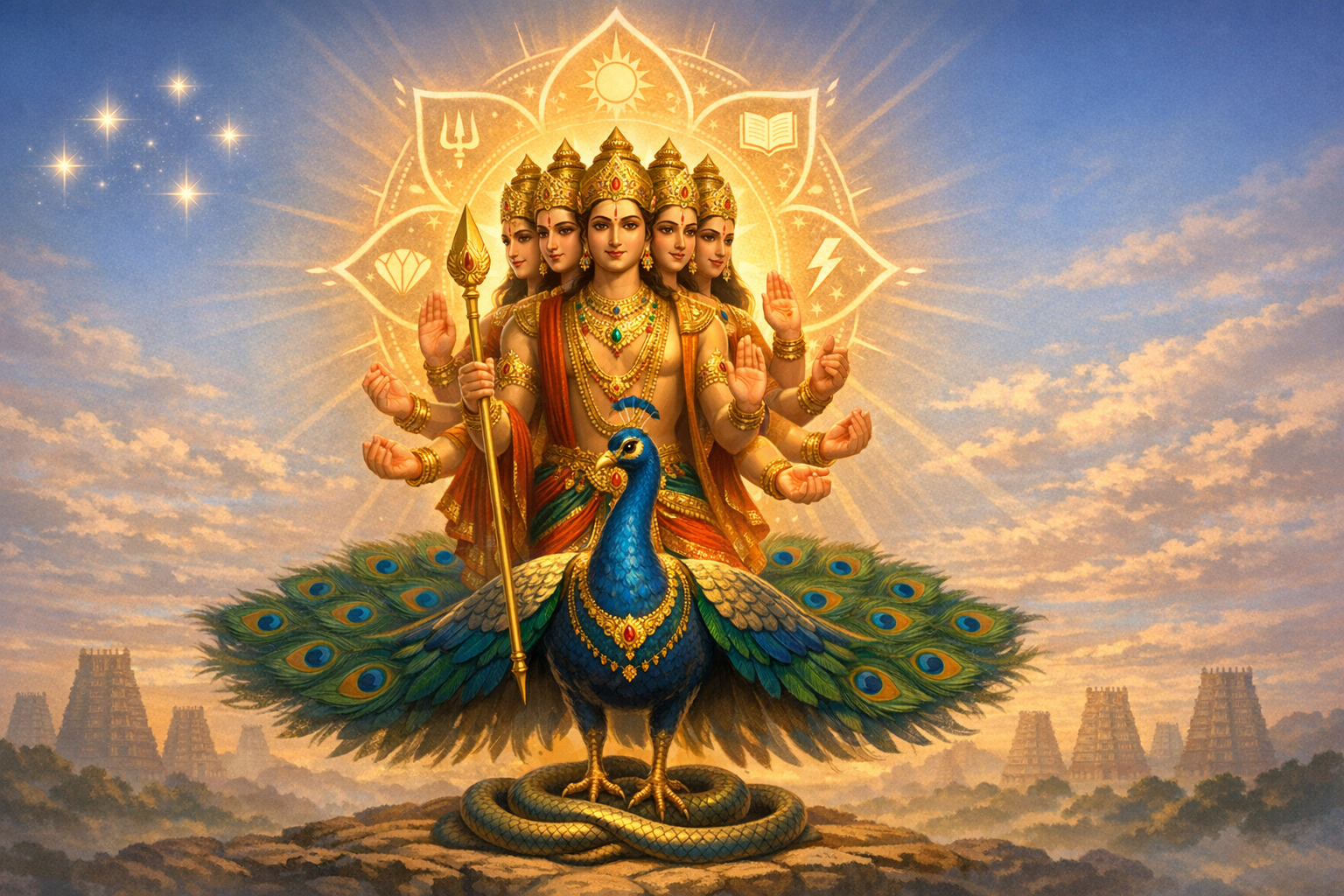
Karthikeya’s six headsShanmukhaare not an artistic flourish but a layered pedagogy rooted in scripture, philosophy, yoga, and living festival practice. Puranic narratives explain the six-faced form through the Krittikas and Parvati’s embrace, while martial symbolism emphasizes omnidirectional awareness for a divine commander. Liturgical traditions map the six faces to the Saravana-bhava mantra; philosophers read them…
-
‘Gavyapataye’ Bhairava: Tantric Guardian of Cows, Compassion, and Sacred Ecology
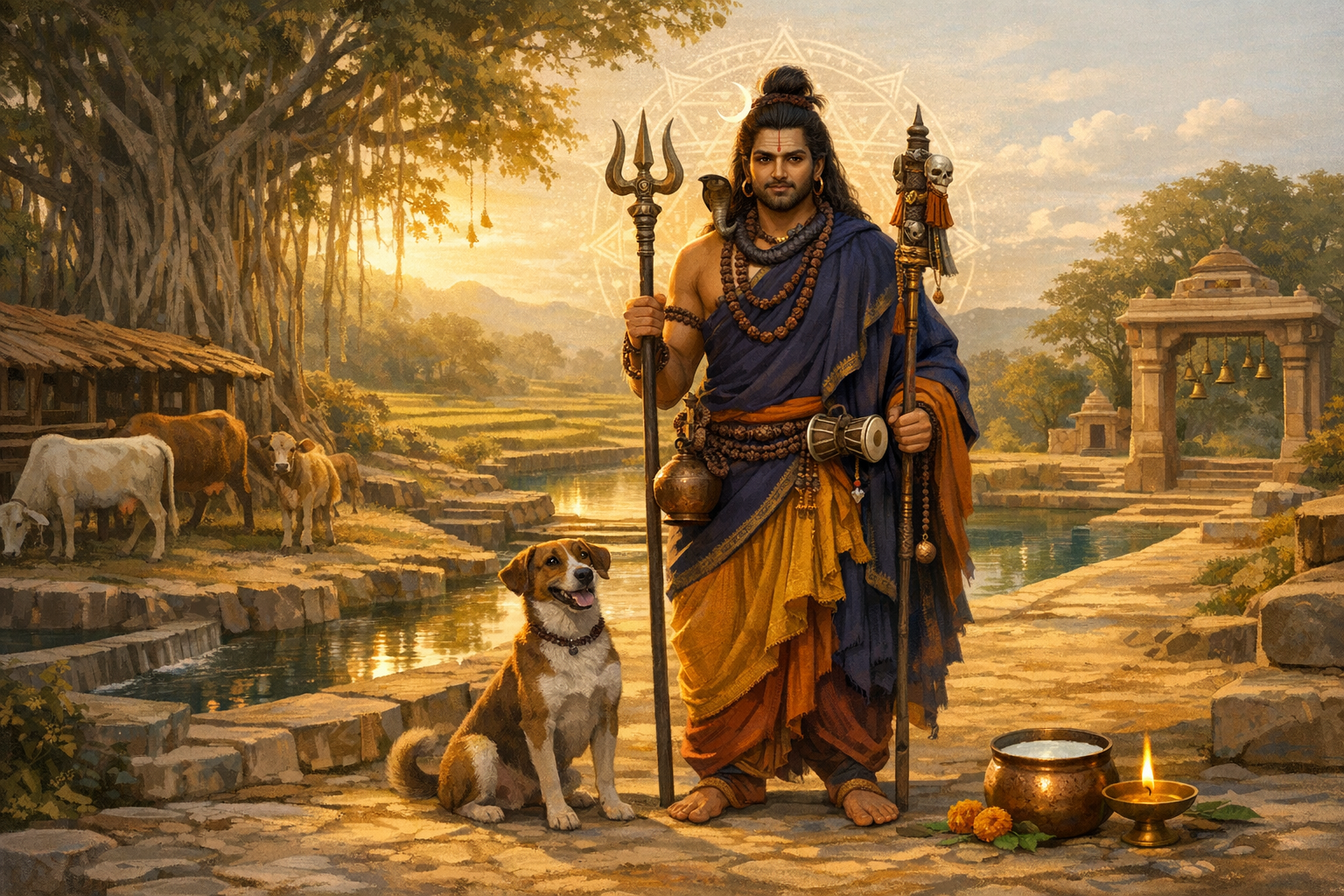
Gavyapataye Bhairava reveals Bhairava’s Tantric role as guardian of cattle, food purity, and sacred ecology. The epithet’s Sanskrit morphology (gavya + pati) ties devotion directly to agrarian life and ritual substrates like pañcagavya. Set within Bhairava-sahasranāma practice, it unites vigilant protection with compassionate stewardship. Textual, iconographic, and ethnographic threadsspanning Skanda Purāṇa references, temple sub-shrines, and…
-
Shaligram, Shankha, and Tulsi: Unlocking Vishnu’s Living Presence and Timeless Grace

This comprehensive exploration presents the sacred triad of Shaligram, Shankha, and Tulsi as a living, scripturally grounded pathway to Vishnu worship. It clarifies the Shaligram’s geological identity as a natural ammonite fossil from the Kali Gandaki near Muktinath, honored as a svayambhū form of Vishnu requiring no prāṇa-pratiṣṭhā. It explains how the Shankha (Turbinella pyrum)…
-
Shivling Beyond Form: Debunking Phallic Myths with Scriptural and Iconographic Evidence

The Shivling is widely mischaracterized as a purely phallic symbol, yet Sanskrit philology, Purāṇic and Āgamic theology, Shilpa Shastra geometry, and the archaeological record point to a more expansive meaning: liṅga as a sign, axis, and cosmogram of the formless. This analysis explains how Lingodbhava and Jyotirliṅga narratives foreground an infinite column of light rather…
-
Ravana, Ganesha, and Shiva’s Atmalinga: Decoding the Gokarna Legend, Symbolism, and Dharma

The legend of Shiva’s Atmalinga and Ravanacentral to the Gokarna Mahabaleshwar Temple traditionexplains how Ganesha redirected immense power to uphold dharma without violating Shiva’s boon. It frames the Atmalinga as Shiva’s undivided essence and shows that vows ethically constrain even divinely granted power. Ravana’s devotion is honored, yet the narrative cautions against concentrating absolute power…
-
Kirata Sastha of Ayyappa: The Divine Hunter-Guardian of Dharma in Kerala’s Living Traditions

Kirata Sastharevered in northern Kerala as Vettakkoru Makanoffers a dynamic, guardian dimension to the Ayyappa (Dharma Sastha) tradition. This analysis traces the kirata (hunter) motif from the Mahabharata to Kerala’s living practices, showing how regional ritual, iconography, and ecology inform a distinctive protector-deity. It explains why Kirata Sastha complements Sabarimala’s Yoga Sastha, uniting inner discipline…