
-
Channa Vira Unveiled: The Cross‑Body Ornament of Valor, Protection, and Dharma in Hindu Art
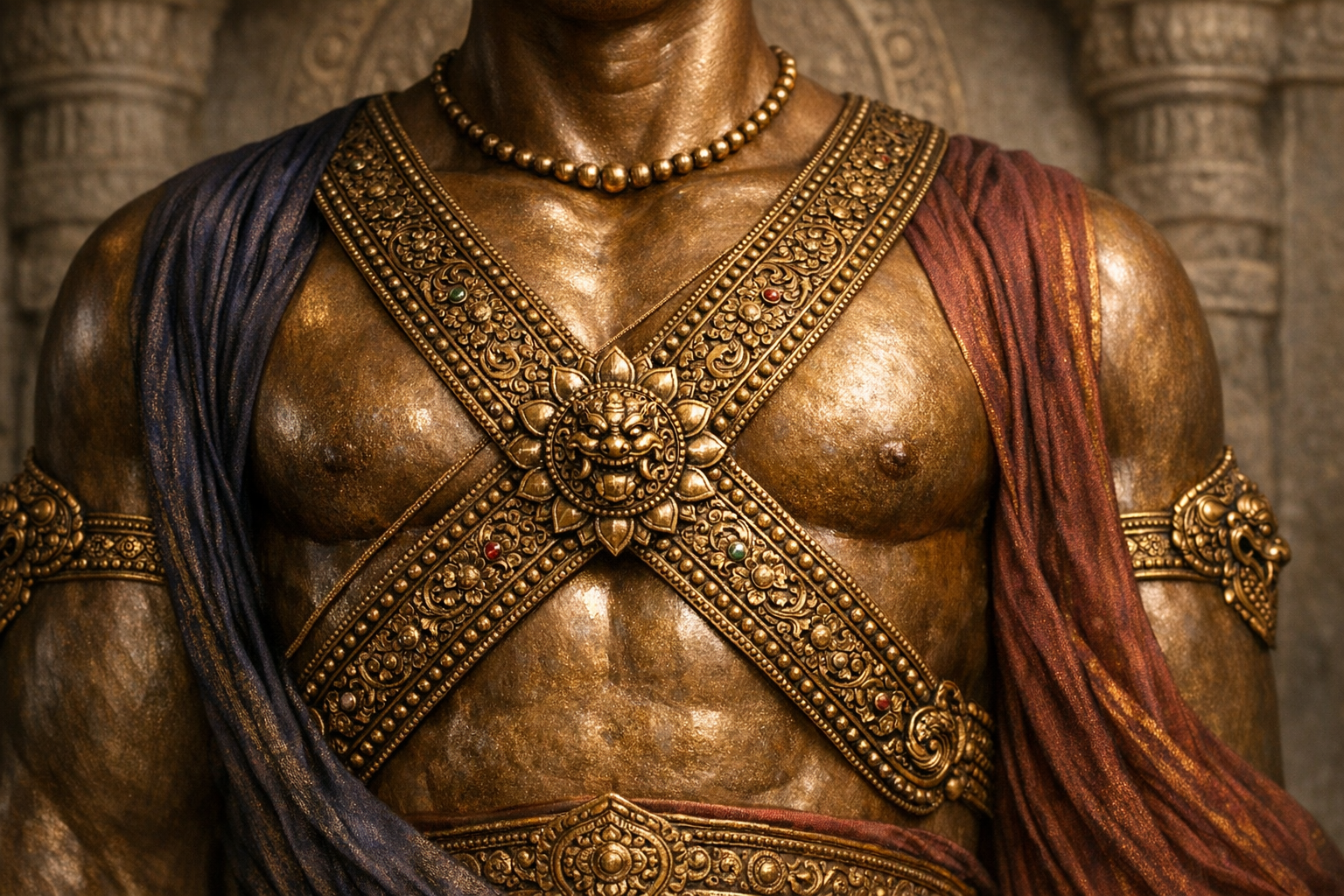
Channa Vira is a defining vaksha-ābharaṇaa cross-body chest ornamentin Hindu iconography that signals protection, valor, and sacred duty. Unlike the yajnopavita, it forms an X-shaped harness across the torso, often centered by a jewel or rosette. Appearing on Śaiva, Vaiṣṇava, and Śākta imagesand on guardians such as dvārapālasit evolved across Pallava, Chola, Hoysala, and Vijayanagara…
-
Grace in Stone: Decoding Shiva’s Anugrahamurtis to Deepen Temple Darshan
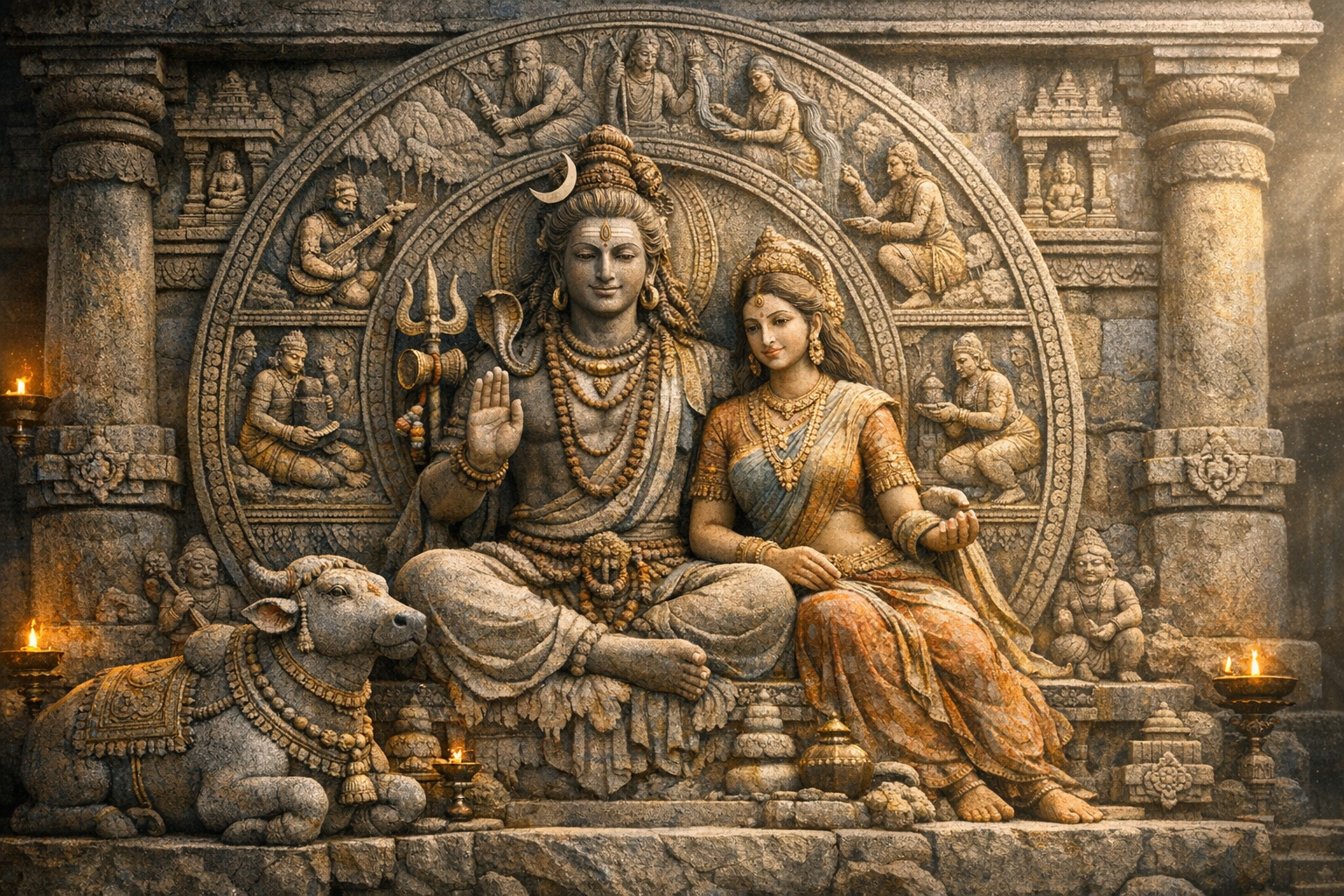
Anugrahamurtisthe grace-bestowing forms of Shivatranslate the Shaiva doctrine of anugraha into a precise, readable visual language. Grounded in Agamas and Śilpaśāstra canons, they employ gestures such as abhaya and varada, gentle asanas, and familial ensembles to stage compassion, assurance, and liberation. Representative types include Ravananugraha, Kalāntaka/Mṛtyuñjaya, Kirātārjuna, Gaṅgādhara, Candeśānugraha, Somāskanda, and Kalyāṇasundara, each encoding a…
-
Kalachakra in Hindu Tantra: Decoding the Wheel of Time, Consciousness, and Dharmic Unity
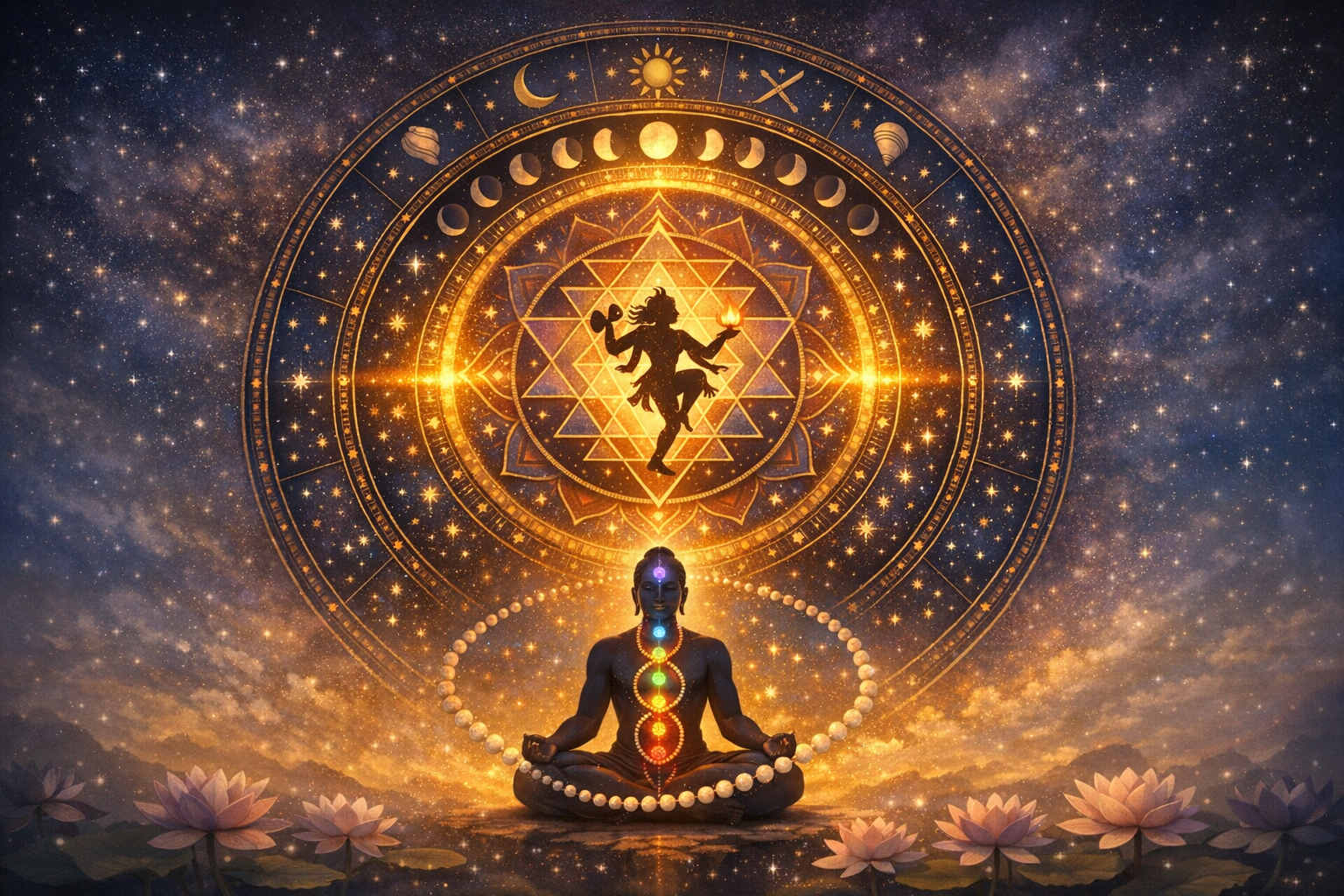
Kalachakra in Hindu Tantra presents time as a living cycle that unifies microcosm and macrocosm, offering a precise path to the timeless ground of awareness. Drawing on the Maitri Upanishad and the Bhagavad Gita, it treats time as both measurable rhythm and doorway to the Akāla, the unconditioned. The framework integrates Vedic cosmology, pañcāṅga timing,…
-
Awe-Inspiring Nataraja: The Timeless Cosmic Dance, Bharatanatyam Roots, and Dharmic Unity
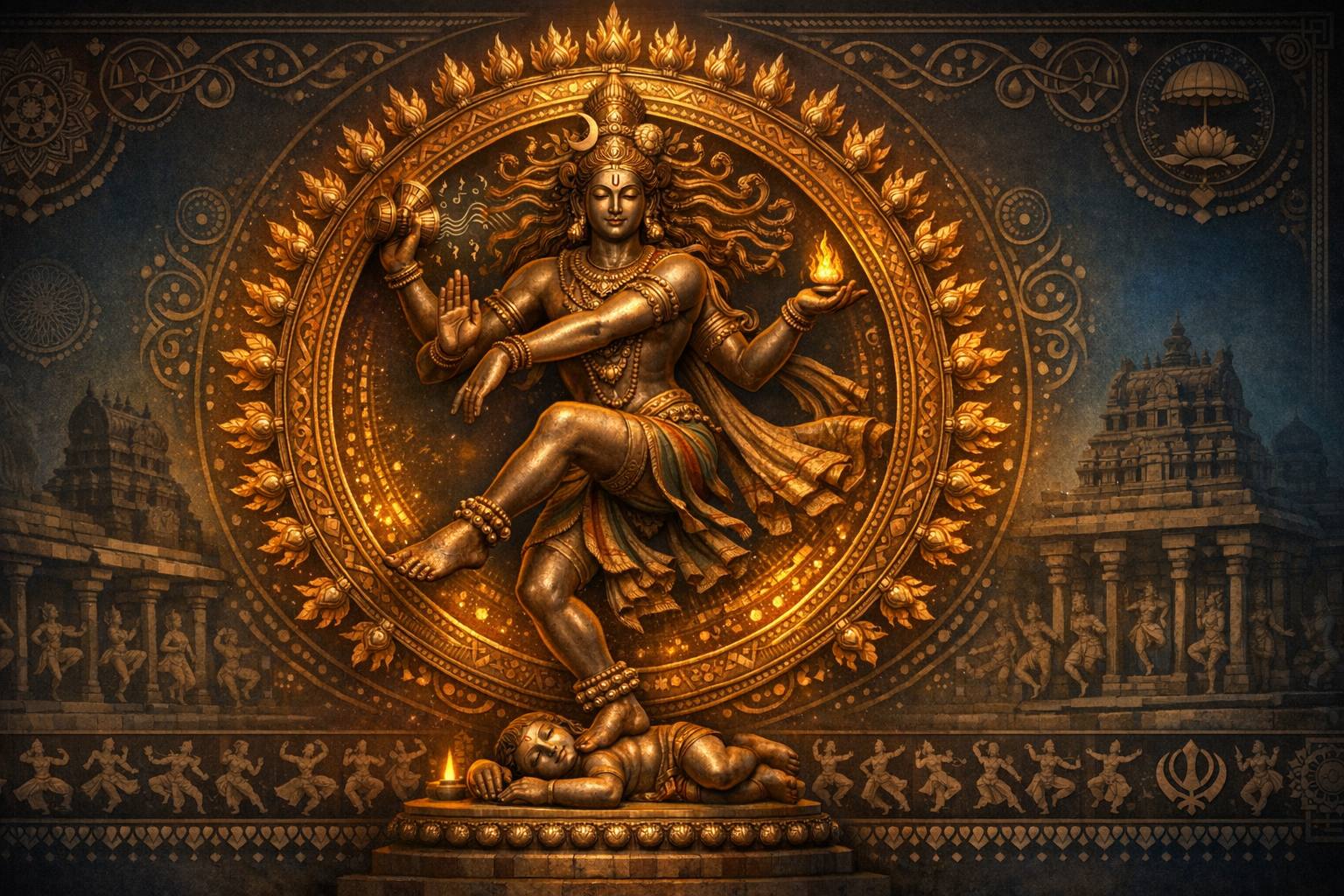
This long-form exploration decodes Shiva as NatarajaLord of Dancethrough the lenses of iconography, scripture, and performance. Readers discover how the damaru, flame, mudras, and the raised foot together express the fivefold divine operations of creation, preservation, dissolution, concealment, and grace. The article traces Bharatanatyam’s textual grammar (Natya Shastra, Abhinaya Darpana) and the 108 karanas, linking…
-
From Nataraja to Raas Leela: The Awe-Inspiring Science, Symbolism, and Legacy of Divine Dance
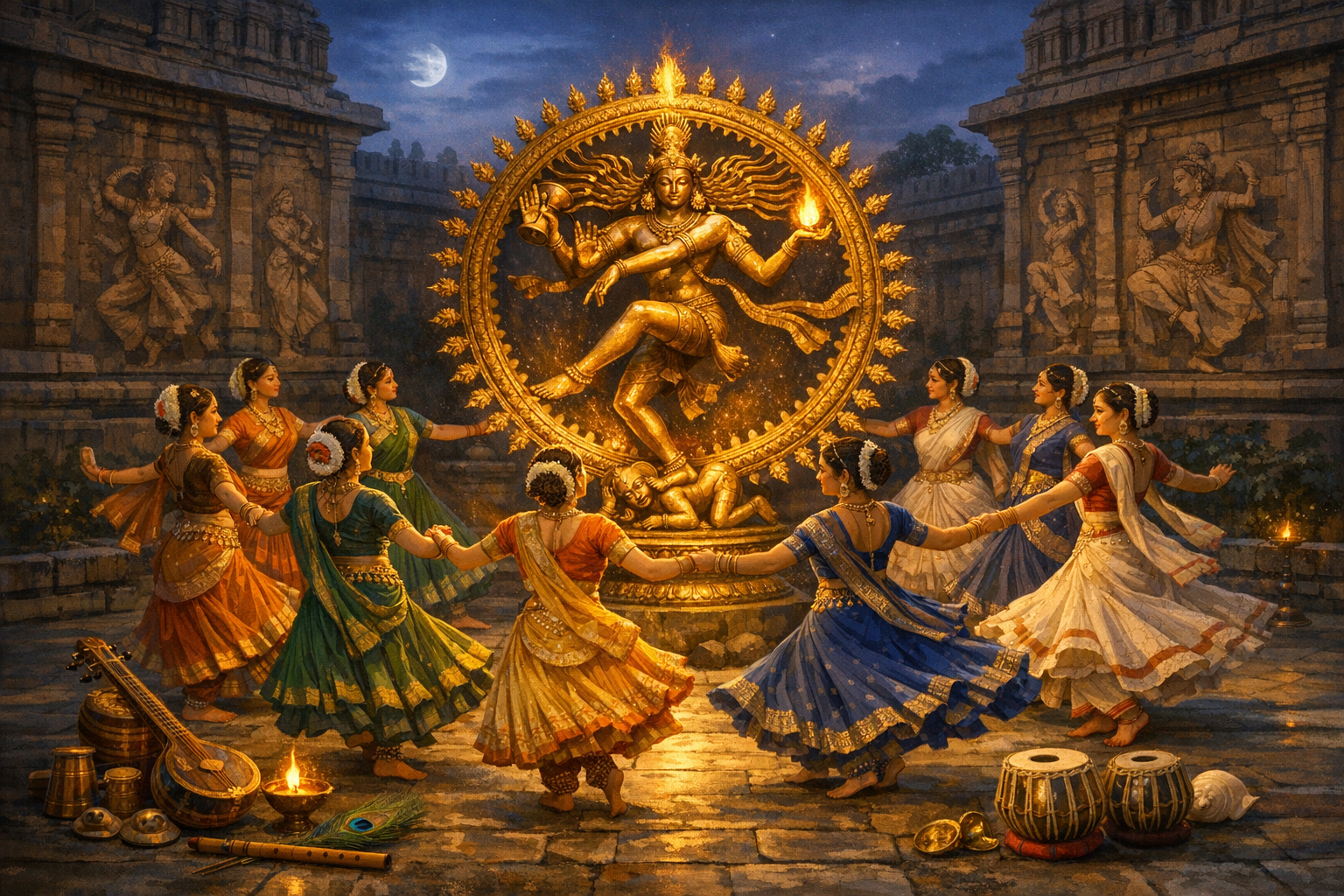
Divine dance in the dharmic traditions is a precise language of cosmology and devotion. This article explains Shiva as Nataraja with technical iconography (damaru, agni, abhaya, Apasmara) and maps his pañcha-kṛtya to movement, clarifying how sound (nada) and rhythm underpin Sanskrit and ritual. It situates Bharatanatyam, Odissi, Kuchipudi, Kathak, Mohiniyattam, Sattriya, Chhau, Yakshagana, Chakyar Koothu,…
-
Ardhoruka in Hindu Bronzes: Decoding the Warrior’s Drape and Ascetic Power in Iconography
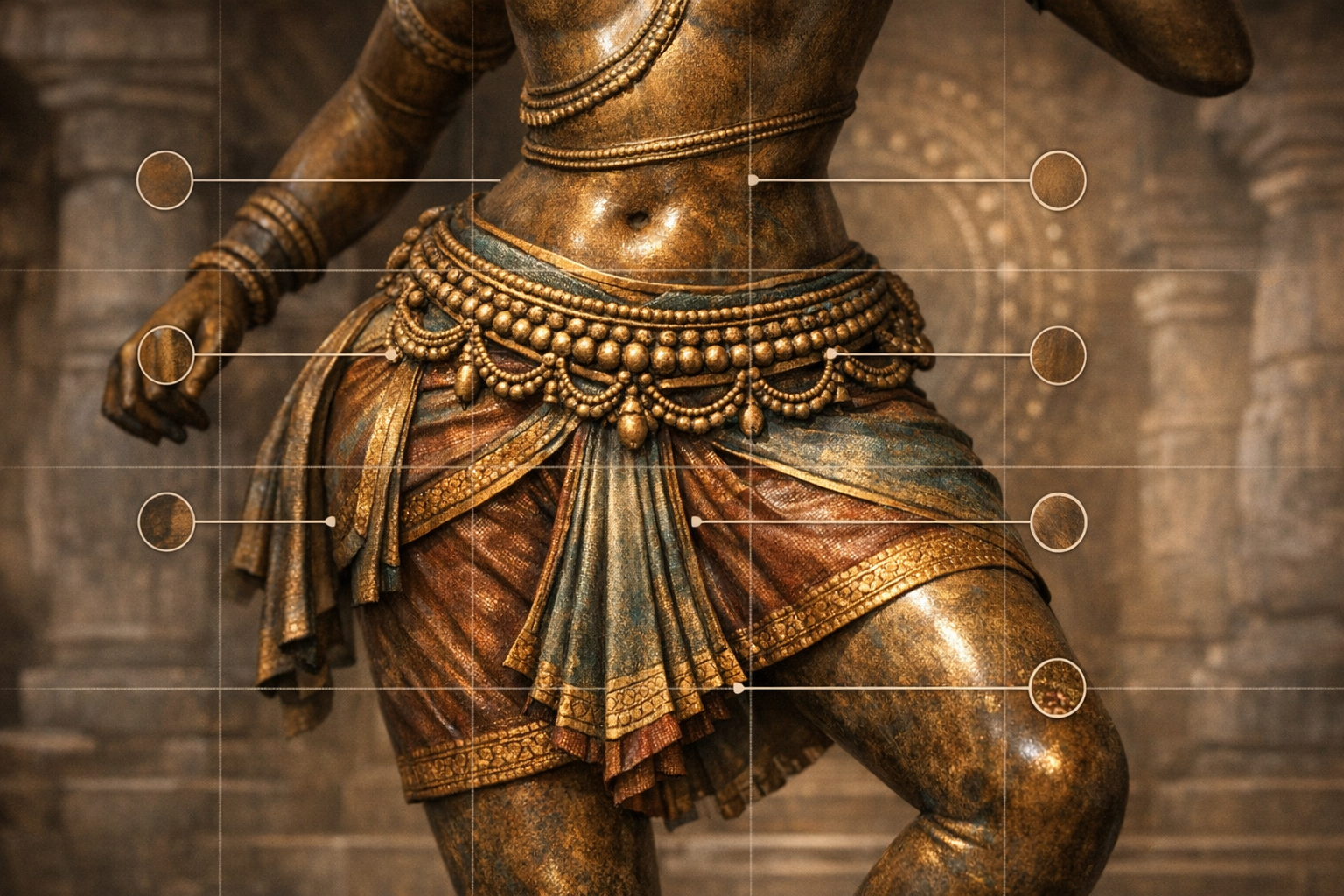
The ardhorukaa short, tightly wrapped lower garmentplays a central role in Hindu bronze iconography, especially in South Indian masterpieces. By exposing the thighs and condensing the silhouette, it signals martial vigor, dance, and ascetic discipline, contrasting with the longer antariya. Canonical texts in the Shilpa Shastras prescribe this form for specific deities, while the lost-wax…
-
Unveiling Shiva’s Samharamurtis: Fierce, Compassionate Forms of Cosmic Transformation

This in-depth exploration clarifies why Shiva’s Samharamurtis are not emblems of destruction but precise instruments of compassionate transformation. Grounded in the Panchakritya doctrine and classical sources like the Puranas and Agamas, it decodes how Kamantakamurti, Gajasura Samhara Murti, and Kalari Murti model the sublimation of desire, the mastery of force, and the transcendence of fear…
-
Beyond Pralaya and Kalpa: How Hinduism Envisions the Universe Folding Back into Itself

Hindu cosmology describes an immense, cyclical universe in which worlds arise, endure, and dissolve through patterned phases of creation and reabsorption. This article clarifies key termspralaya and kalpadetails their fourfold typology, and lays out precise time scales from yugas to Brahmā’s lifetime. It integrates Purāṇic, Vedāntic, Vaiṣṇava, Śaiva, and Śākta views, and relates them to…
-
Shiva at the Margins: Why Mahadeva Reigns Over Ghosts, Outcasts, and Sacred Transgression
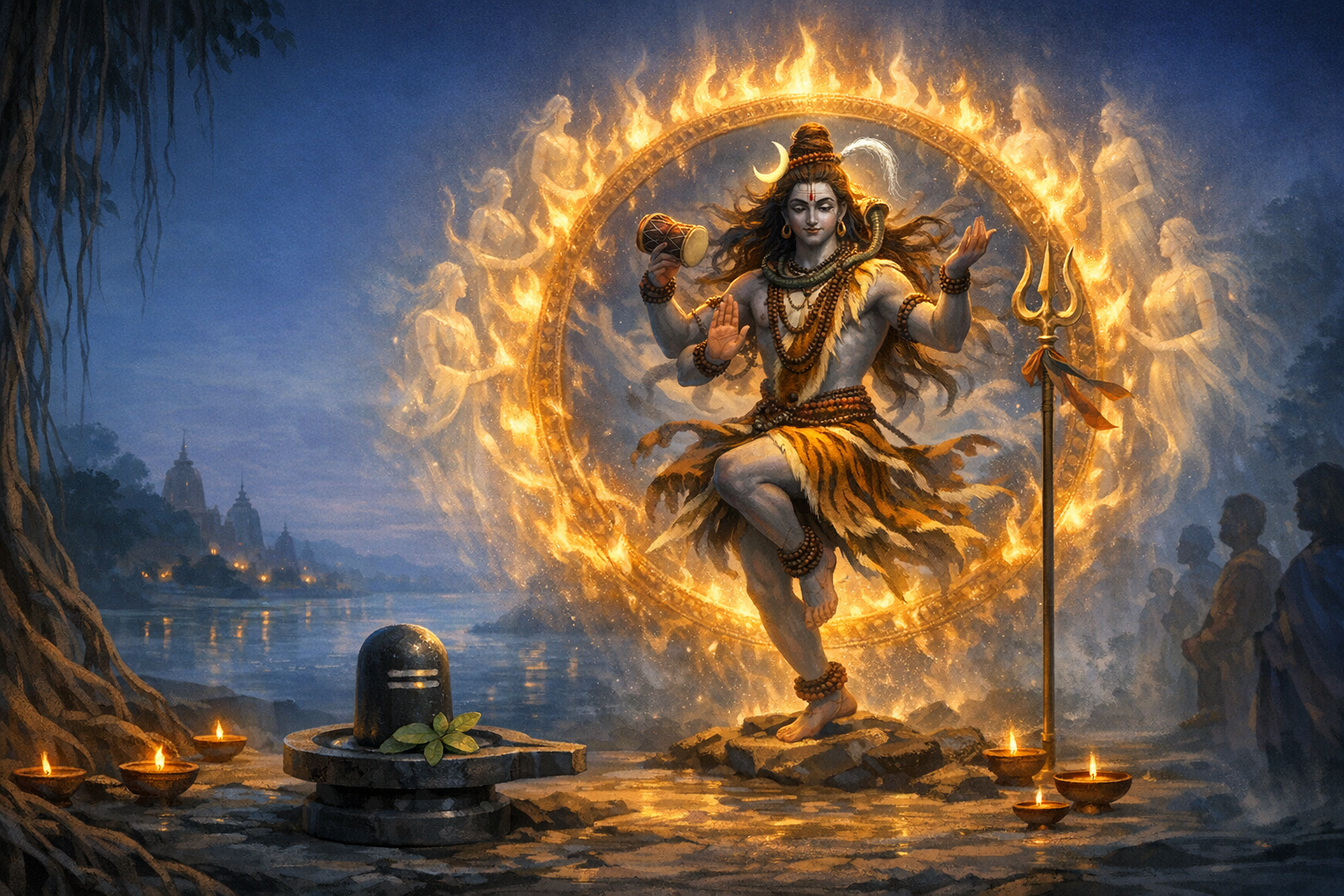
Shiva’s dwelling in cremation grounds and sovereignty over bhuta-ganas present a theology of fearless inclusion that dignifies what societies often cast aside. By tracing the arc from Vedic Rudra to Puranic Shiva, the discussion shows how ashes, serpents, and the smashana encode teachings on impermanence and compassion. Bhairava’s guardianship of thresholds clarifies why time, change,…
-
Shiva’s Playful Forms (lilamurtis): Deep Symbolism, Agamic Iconography, Living Tradition

This essay decodes Shiva’s lilamurtisplayful sacred forms that translate the formless into transformative encounterthrough the lenses of Agamic iconography, Purāṇic narrative, and living ritual. It explains the aniconic meaning of the Linga and shows how iconic forms like Nataraja, Ardhanarishvara, and Dakshinamurti encode philosophy as gesture and posture. Readers learn how temple architecture and ritual…
-
Eternal Paradox of Being: Nothing Is Lost, Yet Everything Changes in Hindu-Dharmic Thought
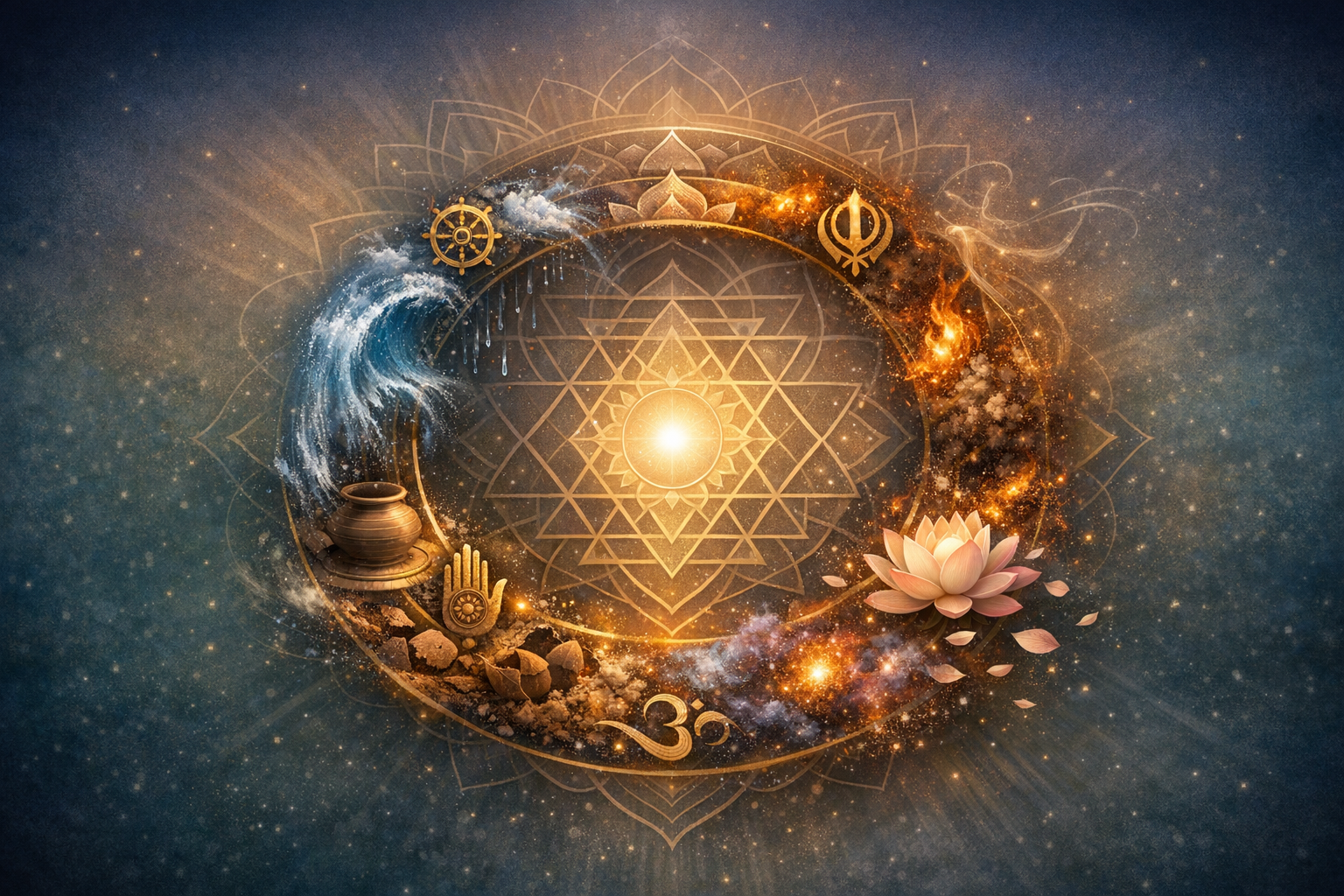
This essay decodes the paradox “Nothing can be wiped out; but nothing remains same” through the lens of Hindu philosophy and the wider dharmic traditions. It shows how the Upanishads, the Bhagavad Gita, Advaita, Samkhya, Nyaya-Vaisheshika, Buddhism, Jainism, and Sikhism converge on a coherent view: being persists while forms transform. Readers gain clear definitions (sat,…
-
When the Formless Takes Form: Skanda Purana on Parvati’s Awe‑Inspiring Union with Shiva
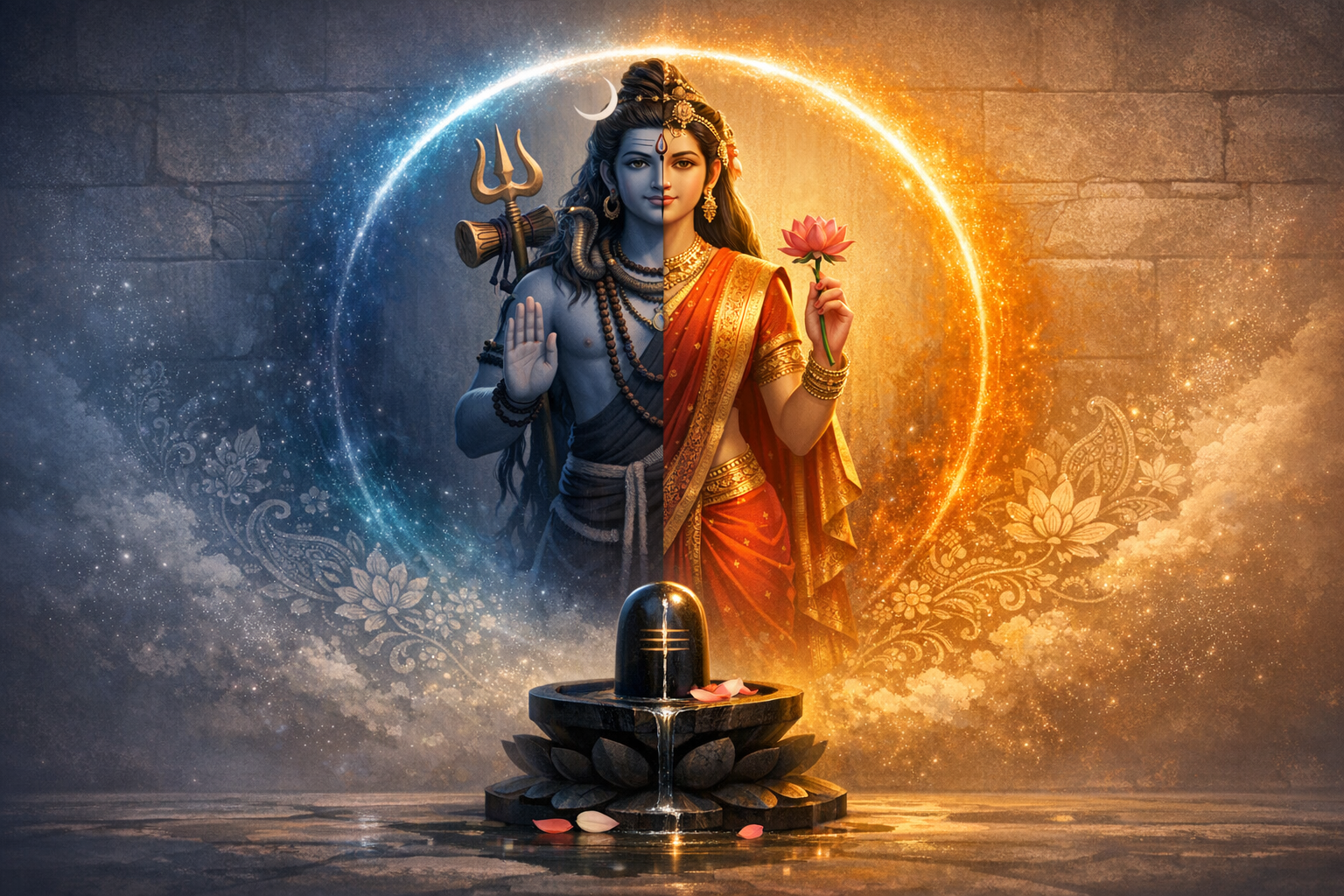
This in-depth exploration of the Skanda Purana’s teaching on Goddess Parvati and Lord Shiva presents their union as a precise account of how formless consciousness and living form are inseparably one. Readers will learn how the nirguna–saguna dialectic, familiar from the Upanishads, is rendered experiential through Shaiva iconography such as Ardhanarishvara, the Shivalinga, and Shiva…
-
Shiva–Shakti Raasa Leela: Unveiling the Cosmic Dance of Love, Consciousness, and Creation
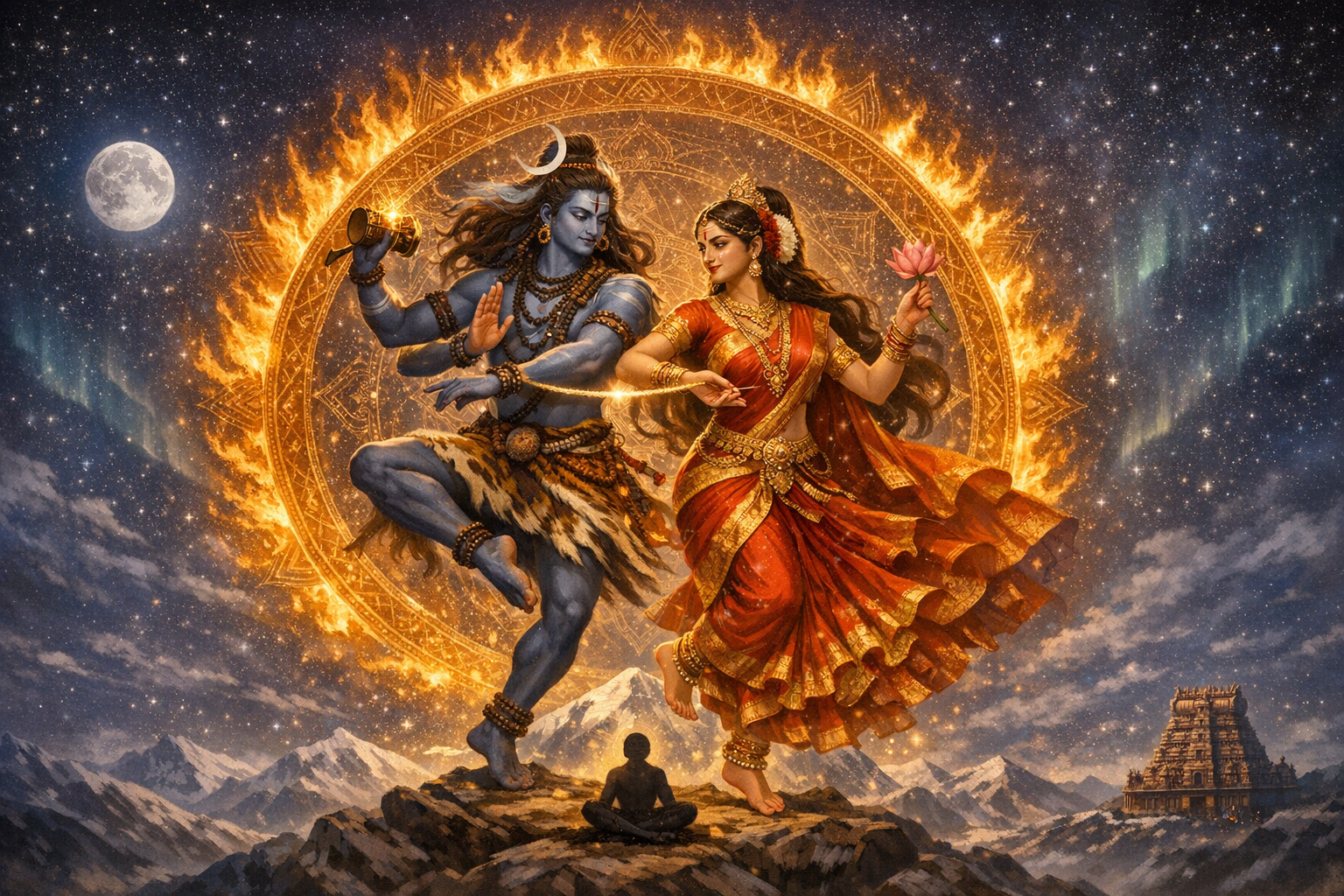
Shivashakti Raasa Leelaalso known as Sri ShivShakti Rasalilapresents the union of Śiva and Śakti as a continuous dance and embrace that render Shaiva metaphysics visible and livable. Anchored in Natyashastra aesthetics, Shaiva Āgamas, and Kashmir Shaivism’s rasa theory, it interprets creation as spanda (vibration) and devotion as aesthetic savoring (rasa). Iconography of Śiva Naṭarāja, Somāskanda,…
-
Jagath Samhara Moorthy: How Shiva’s Cosmic Dissolution Fuels Renewal and Liberation

Jagath Samhara MoorthyShiva as the cosmic dissolverexpresses a lawlike rhythm in Hindu cosmology where endings prepare the ground for renewal. Drawing on the Puranas, Upanishads, and Shaiva philosophy, the article clarifies how samhara operates within the five divine acts: creation, maintenance, dissolution, concealment, and grace. It explains the four types of pralaya and situates them…
-
Symbolism of Kalachakra’s Five Wheels: Timeless Hindu Cosmology, Panchakritya, and Unity
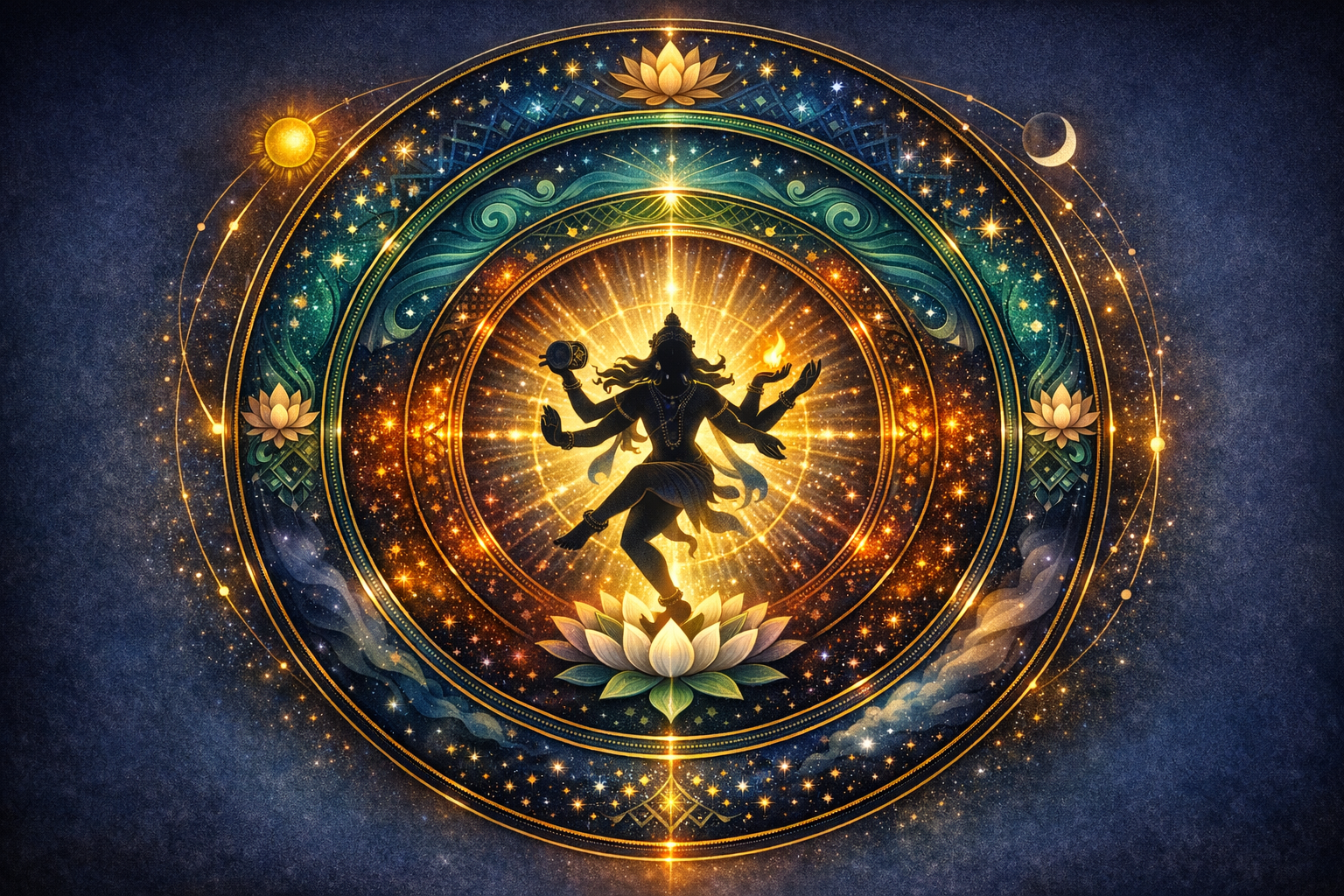
Kalachakra, the wheel of time, reveals a fivefold grammar of creation, preservation, dissolution, veiling, and grace that unites Hindu cosmology, ritual, and yogic practice. This article explains how the five wheels, grounded in the classical doctrine of Pañcakṛtya, operate across cosmic cycles, daily rhythms, and inner transformation. Readers gain a technical yet accessible framework that…
-
Timeless Lila: Exploring the Divine Play of Being and Becoming Across Dharmic Paths
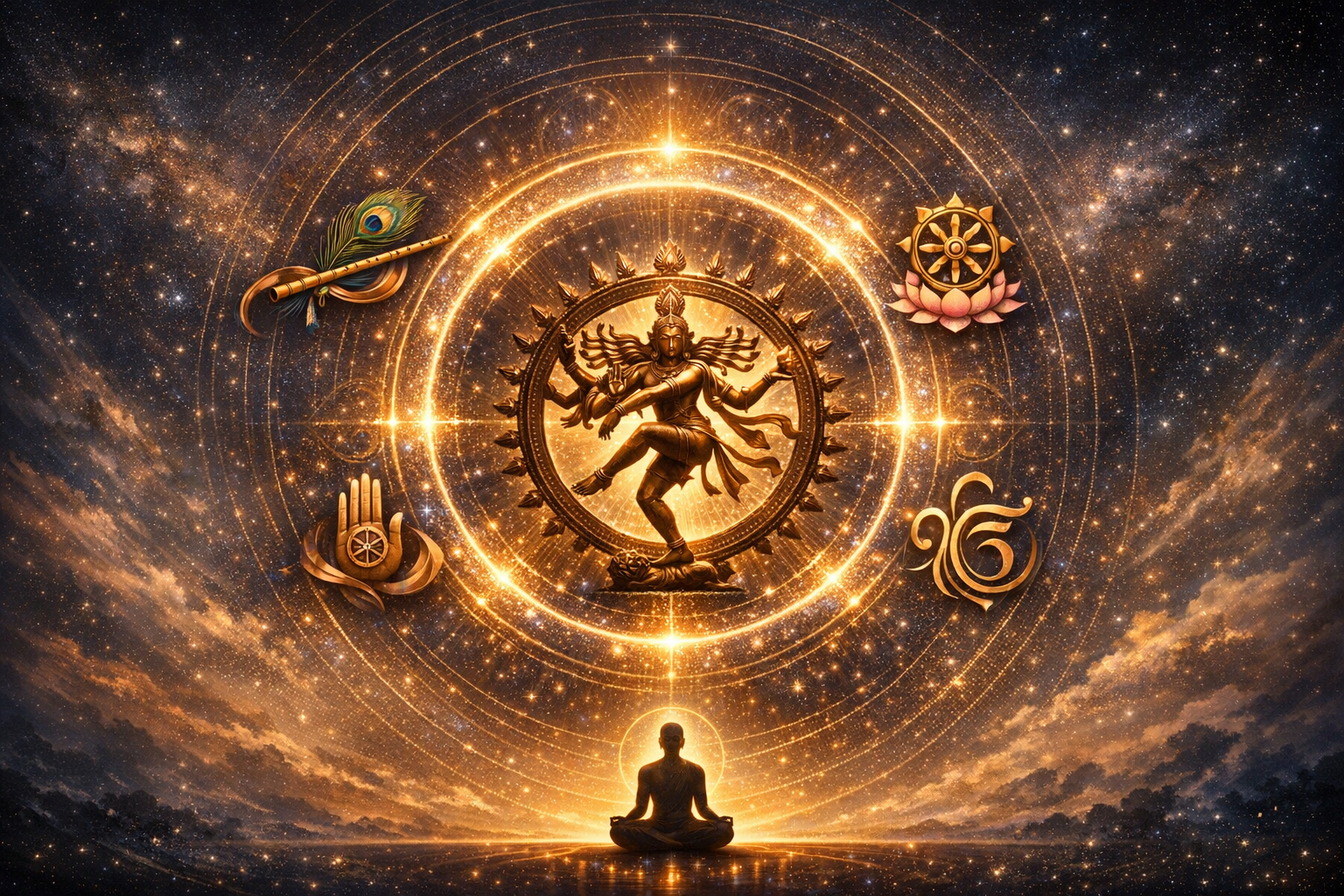
This long-form exploration presents Lilathe eternal divine playas a framework for understanding how being and becoming interrelate across Hinduism, Buddhism, Jainism, and Sikhism. Drawing on the Upanishads, Vedanta (Advaita, Vishishtadvaita, Dvaita), the Bhagavad Gita, and Shaiva–Shakta thought, it clarifies how creation, preservation, and dissolution express a living unity. It maps key concepts like dharma, karma,…
-
Alidha Stance in Hindu Iconography: Embodied Power, Dharma Readiness, and Sacred Motion
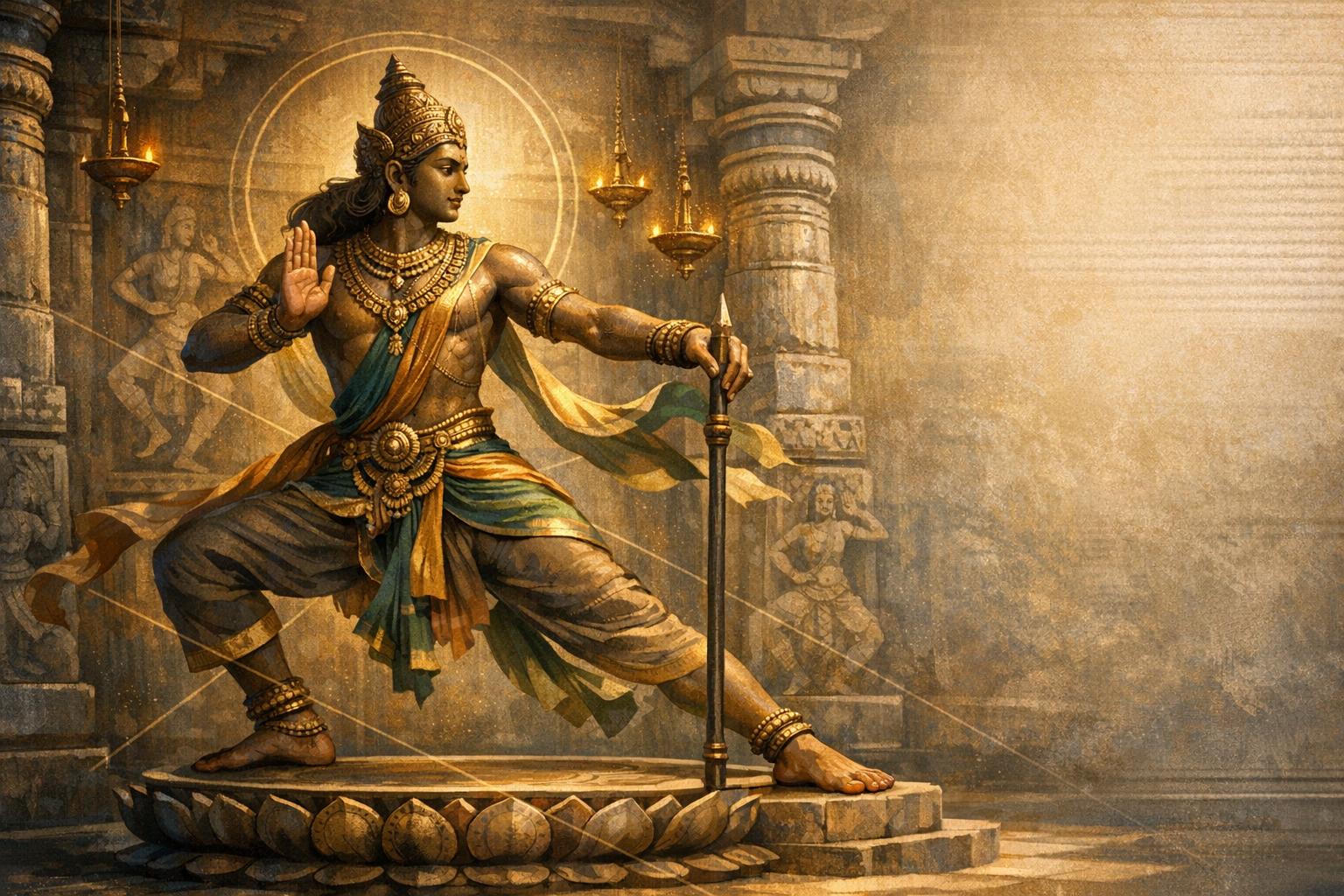
Alidha (ālīḍha) is the forward-striding stance in Hindu iconography where the right leg advances and the left draws back, fusing motion with stability to signal dharma-ready power. Rooted in the Nāṭyaśāstra and Dhanurveda and codified in Śilpa-śāstra, it recurs across Shaiva, Shakta, and Vaishnava imagery and in classical dance such as Bharatanatyam. The stance animates…
-
Decoding Hindu Iconography: Beyond Idolatry to MetaphysicsBridging Dharmic–Abrahamic Insight
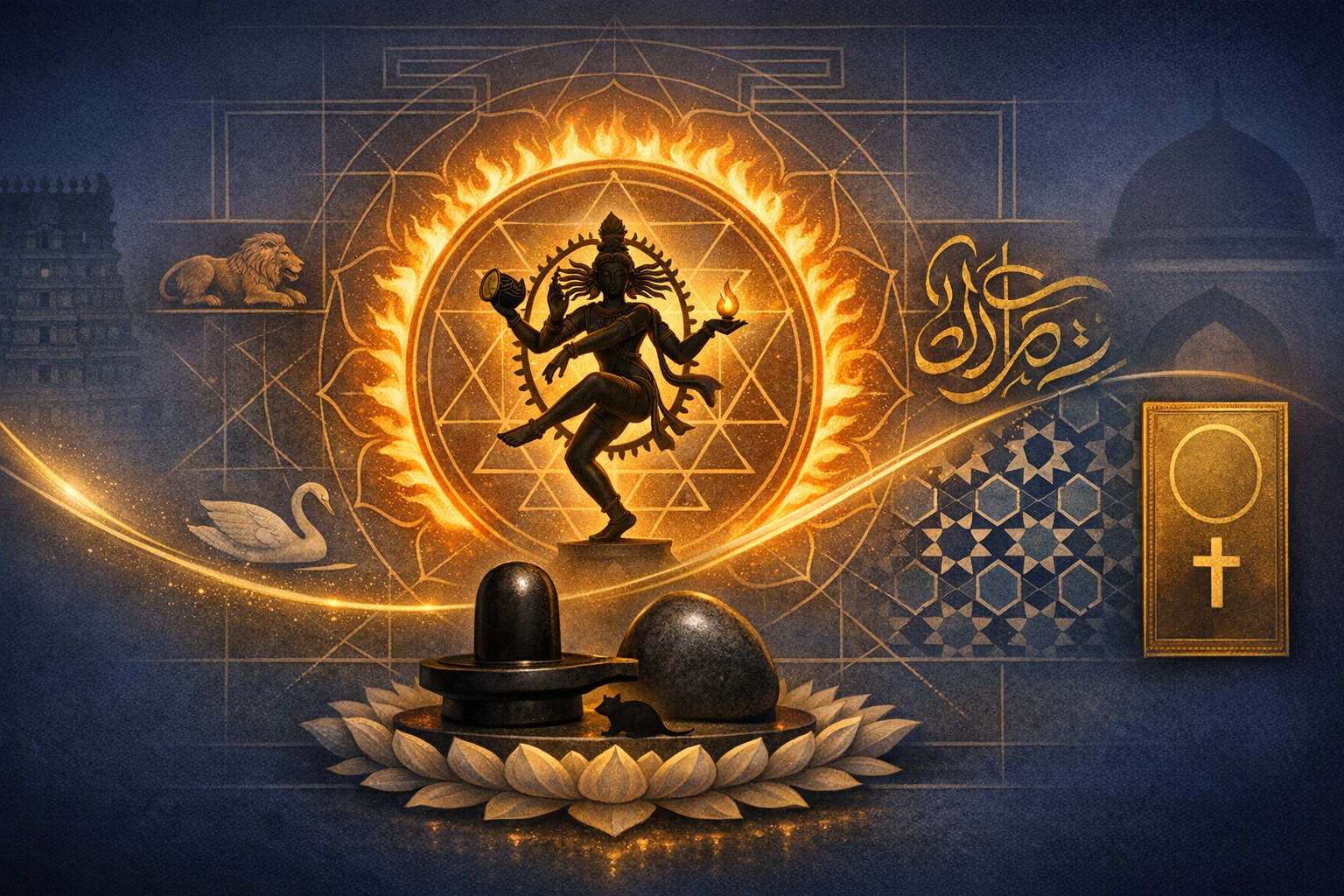
This article decodes Hindu iconography as a rigorous symbolic language that encodes metaphysics, ethics, and contemplative practice, rather than mere ‘idolatry’. It situates medieval misunderstandings within Abrahamic aniconism and outlines how mūrti, prāṇa-pratiṣṭhā, mudrā, and vāhana together form a coherent semiotic system. Readers gain a comparative framework linking Hindu saguṇa–nirguṇa practice to apophatic and cataphatic…
-
Prabhavali or Prabhamandala: The Sacred Arch of Light, Protection, and Cosmic Order in Temples
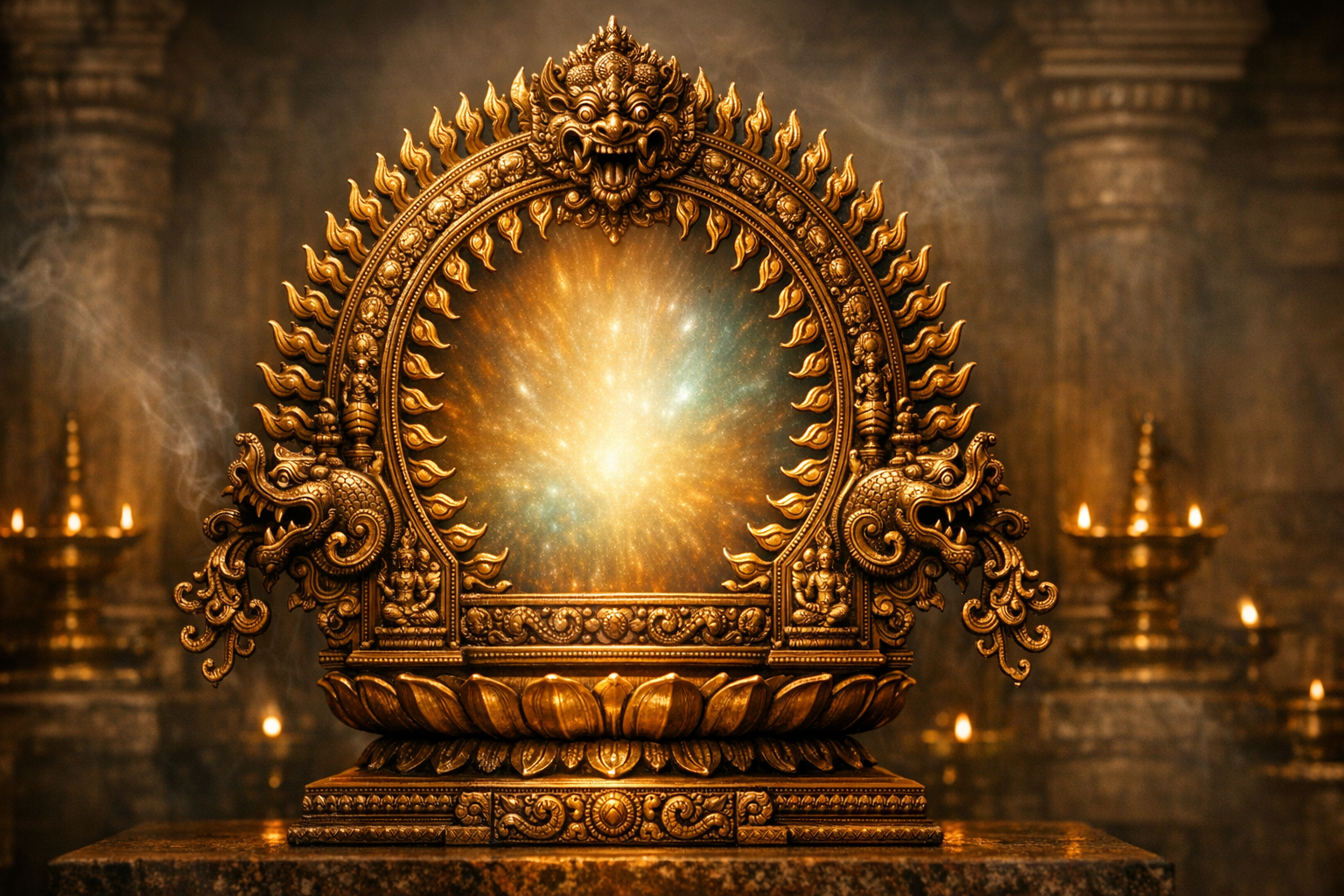
The prabhavali, or prabhamandala, is the luminous arch that frames deities in Hindu temple sanctums, uniting aesthetics, ritual function, and metaphysical meaning. Emerging prominently in classical and medieval India and perfected in traditions such as the Chola bronzes, it encodes protection, radiance, and cosmic order through motifs like kirtimukha, makara, and jvala flames. Stone, metal,…
-
Shiva as Shava Beneath Kali’s Feet: Decoding the Cosmic Union of Consciousness and Shakti
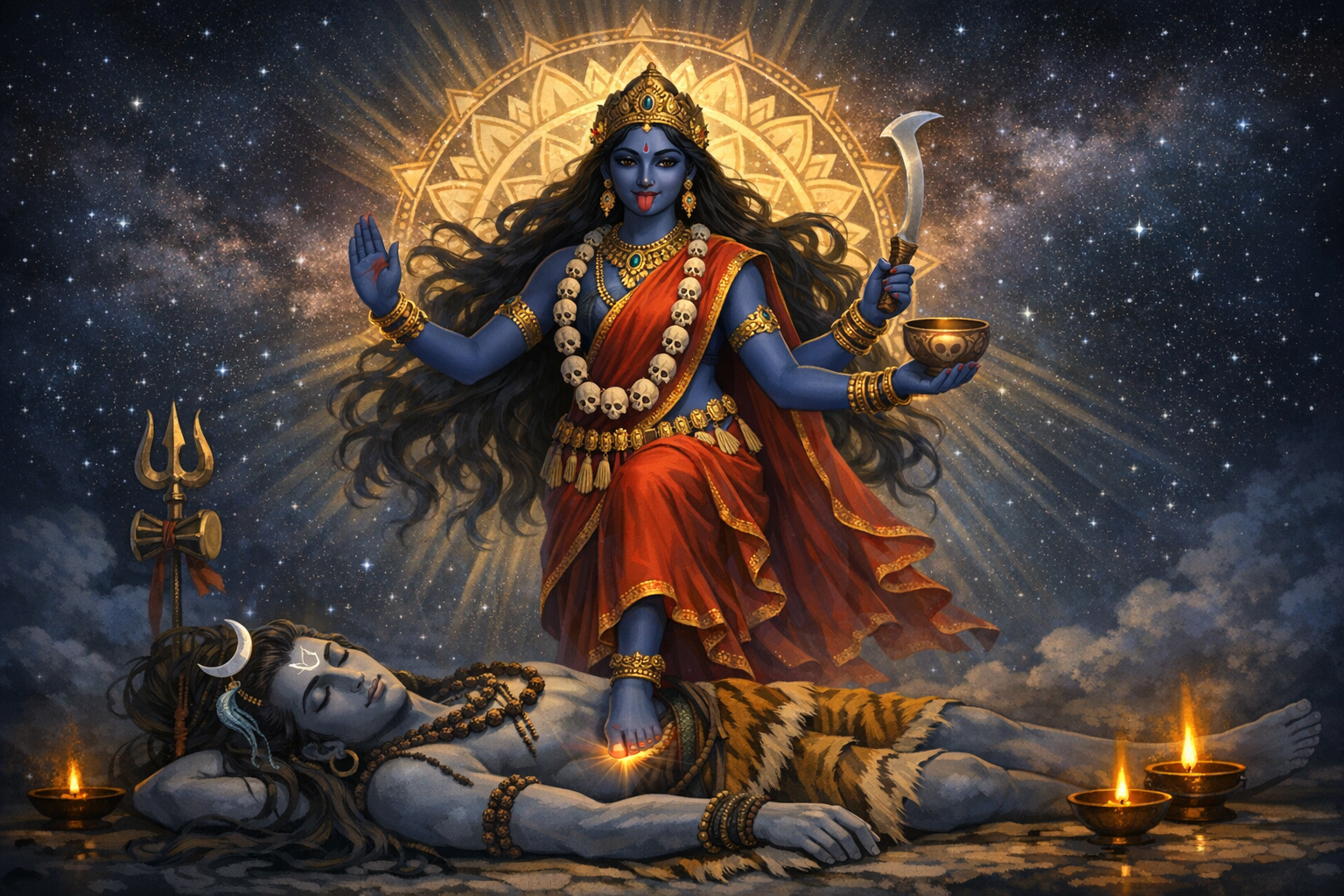
This essay decodes the renowned icon of Mother Kali standing upon Lord Shiva as a precise visual theology of consciousness and energy. It integrates insights from Shaktism, Shaivism, Tantra, Advaita Vedanta, and Kashmir Shaivism to clarify why the image symbolizes complementarity, not domination. Readers gain a technical understanding of the śava–śiva pun, the role of…