
-
Decoding Nakshatras: A Timeless Vedic Star Map Uniting Dharmic Traditions and Skywatchers
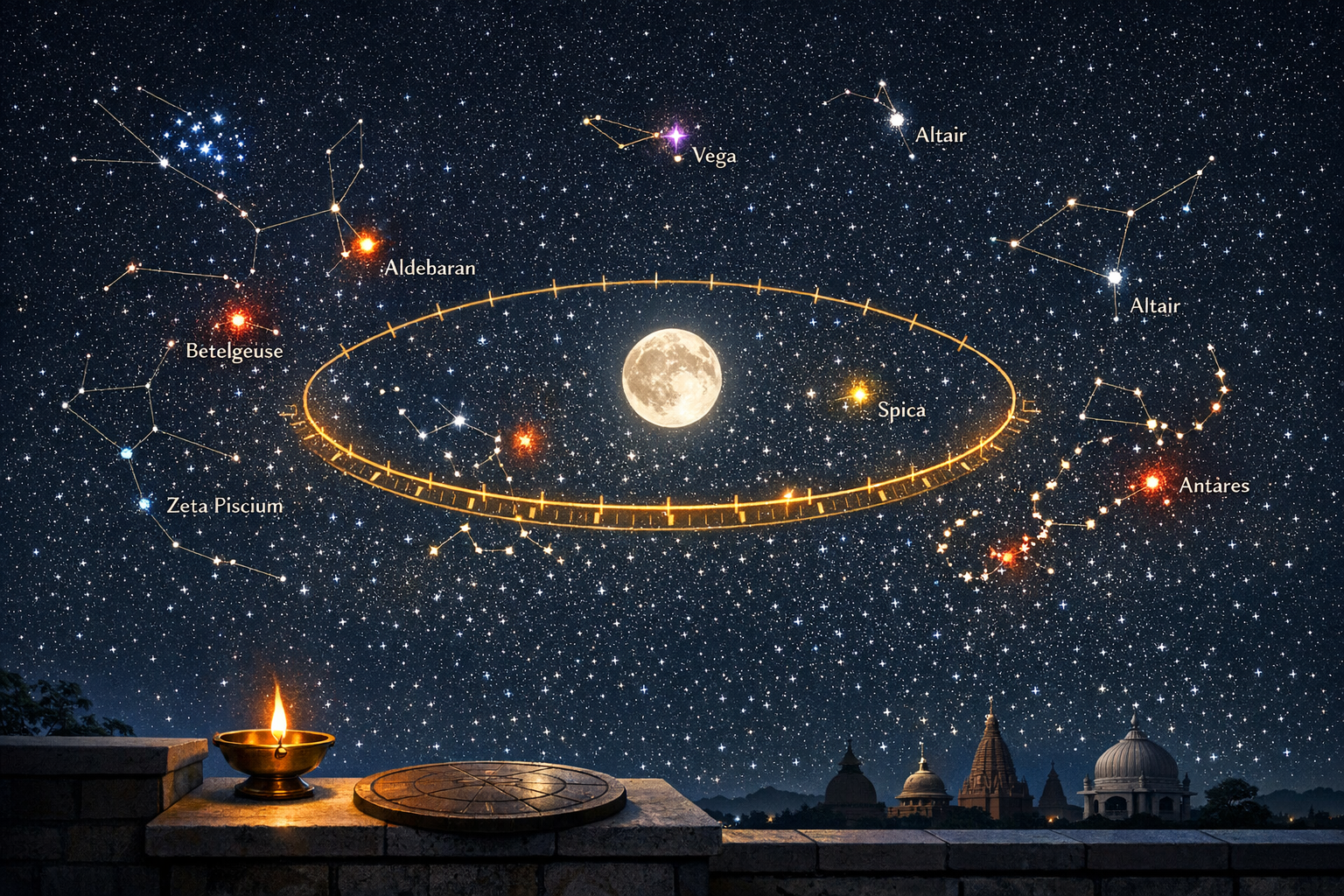
Nakshatras, the 27 lunar mansions of Vedic astronomy, form a precise star map that has guided Hindu Dharma and related dharmic traditions for millennia. Each mansion spans 13°20′ along the Moon’s path and is anchored by recognizable stars such as the Pleiades (Krittika), Aldebaran (Rohini), Spica (Chitra), and Antares (Jyeshtha). Classical sourcesfrom the Rigveda and…
-
Unveiling the Serpent Divine: Rigorous Comparison of Hindu Nagas and Ancient Greece’s Glycon

Serpent deities crystallize a universal human intuition about healing, protection, and moral order. This rigorous, evidence-based comparison places Hindu Nagasplural, ecologically integrated, and cosmologically centralalongside the Greco-Roman Glycon, a historically bounded healing and oracular cult. Drawing on the Mahabharata, Puranas, and living festivals such as Naga Panchami and Nagula Chavithi, it shows how Nagas unify…
-
Sita’s Agni Pravesha and Exile: Understanding Sri Rama’s Dharma, Duty, and Moral Dilemma
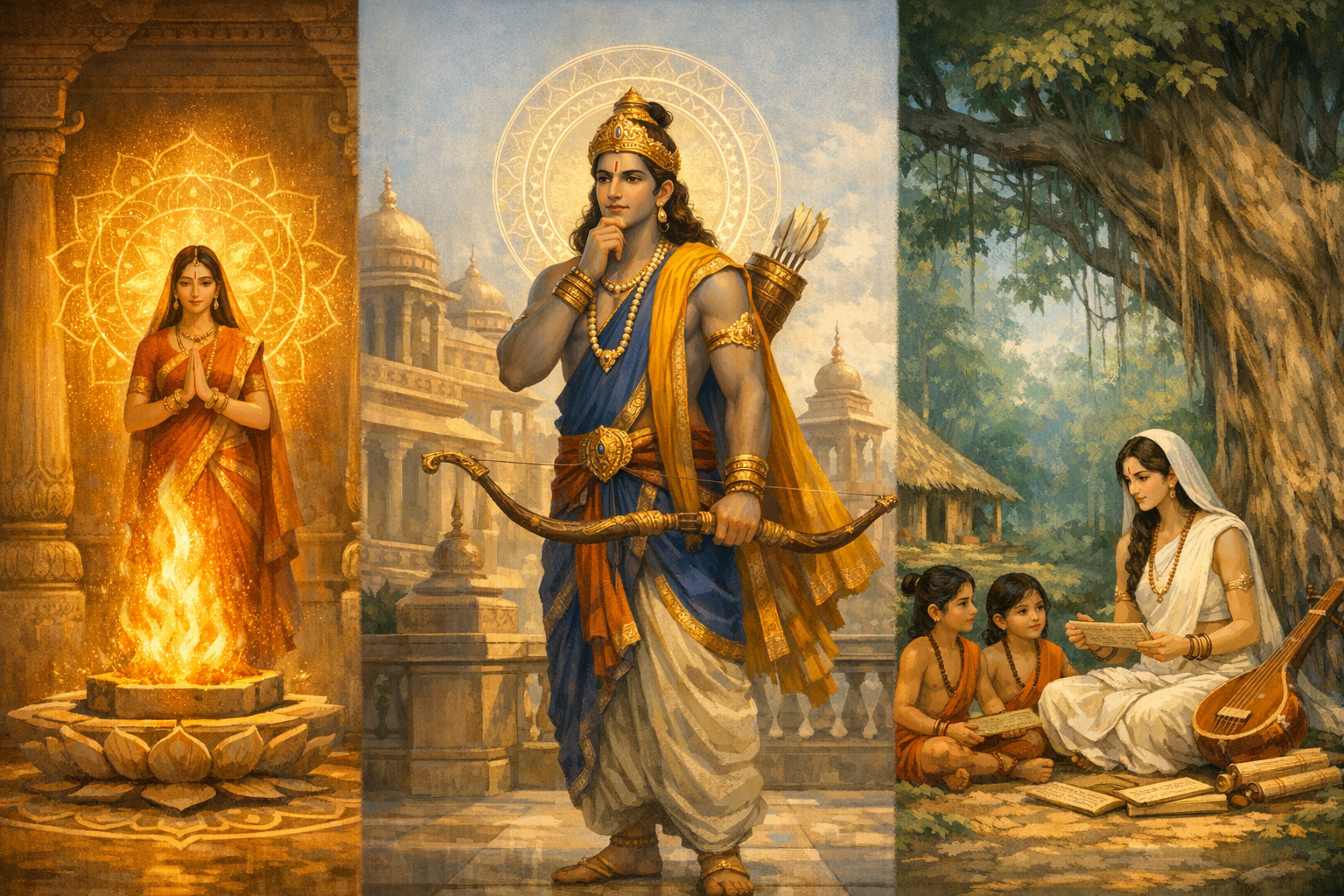
This in-depth analysis clarifies why Sri Rama sent Devi Sita to exile despite knowing her purity by separating two often-confused episodes: Sita’s Agni Pravesha in the Yuddha Kanda and her later exile in the Uttara Kanda. It explains Agni Pravesha as a theological attestation within Vedic ritual logic and highlights puranic teachings (such as the…
-
Divine Justice and Fallen Kings: How Hindu Scriptures Enshrine Honor for Women

Ancient Hindu scriptures deliver a consistent warning: mistreating women is adharma that invites downfallof men, dynasties, and entire realms. Drawing on the Mahabharata, Ramayana, Bhagavata Purana, and Dharmashastra, this analysis shows how narratives like Draupadi’s humiliation, Ravana’s abduction of Sita, Amba’s denial of agency, and Ahalya’s deception culminate in moral and political collapse. Legal traditions…
-
Garuda in the Vishnudharmottara Purana: Iconography, Weapons, and Living Symbolism
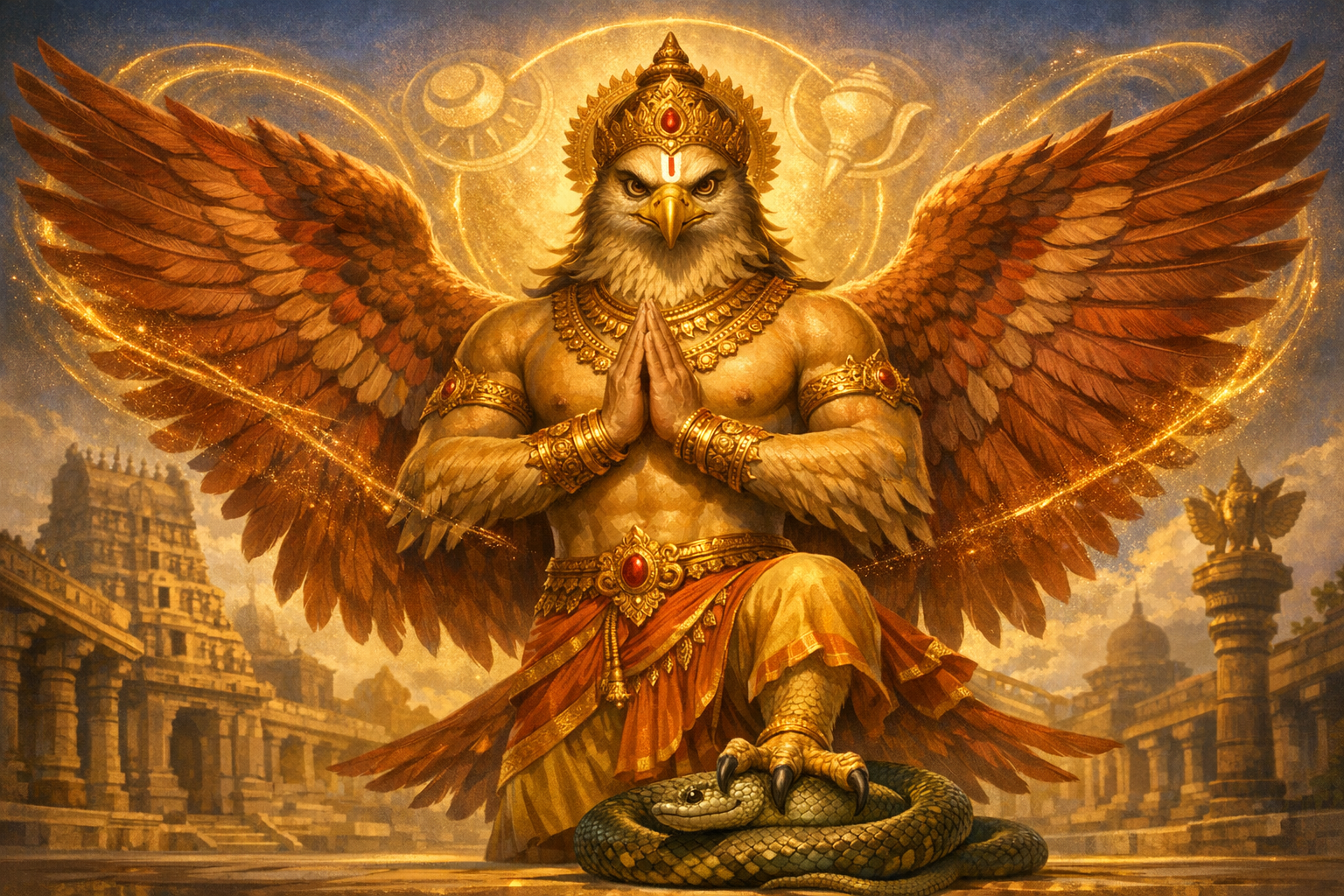
This in-depth study presents Garuda as codified in the Vishnudharmottara Purana, clarifying how precise iconography communicates theology in Hindu scriptures. Readers will learn the canonical features of Garuda’s form, the logic of his attributes and weapons, and why serpent-subjugation is central to his protective meaning. The essay situates Garuda within Vedic antecedents and Puranic narratives,…
-
Unveiling Shiva’s Samharamurtis: Fierce, Compassionate Forms of Cosmic Transformation

This in-depth exploration clarifies why Shiva’s Samharamurtis are not emblems of destruction but precise instruments of compassionate transformation. Grounded in the Panchakritya doctrine and classical sources like the Puranas and Agamas, it decodes how Kamantakamurti, Gajasura Samhara Murti, and Kalari Murti model the sublimation of desire, the mastery of force, and the transcendence of fear…
-
Unveiling Brahma’s Wedding at Pushkar: Cosmic Timing, Gayatri’s Grace, and Yajna Power

Brahma’s marriage to Gayatri at Pushkar weaves together sacred geography, śrauta ritual law, and cosmic timing to explain why the Jagatpita Brahma Mandir and Pushkar Lake command exceptional sanctity. Drawing on Padma Purāṇa, Skanda Purāṇa, and regional memory, the narrative shows how the patnī-samyāja completes yajña, why muhūrta matters, and how Gayatri embodies both mantra-śakti…
-
Why All Rivers of Bhakti Flow to Gokula: Insights on Brihad Bhagavatamrita 1.2.37–49

This study distills HH Niranjana Swami’s 2026 Lithuania exposition of Brihad Bhagavatamrita 1.2.37–49, showing how praise of Brahma, Indra, and other luminaries functions as a pedagogic ladder guiding readers toward the intimate devotion of Gokula and Goloka. It defines Gokula and Goloka with precision, contrasts aisvarya (majesty) and madhurya (sweetness), and explains why the text…
-
Indra Parameshwari, Lion-Seated Sovereign: Awe-Inspiring Shakta Theology and Iconography
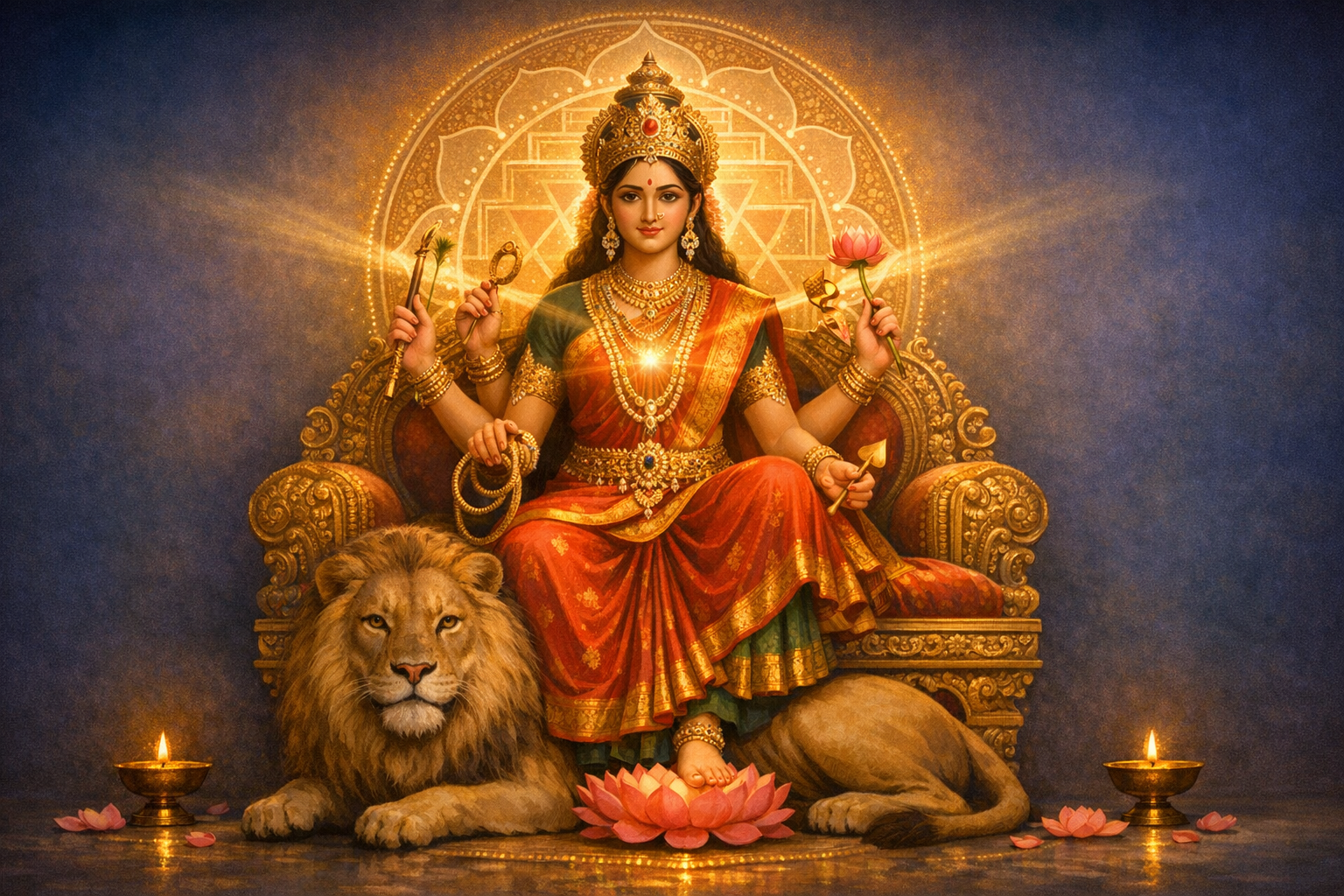
Indra Parameshwari identifies the Goddess as the supreme, lion-seated sovereign of Shakta theology, where indra functions as a superlative for lordship and Parameshwari declares the Supreme Lady. Grounded in Vedic and Upanishadic insights and elaborated by the Devi Mahatmya and Sri Vidya traditions, this study unpacks the title’s philology, metaphysics, and iconography. The lion-throne (simhasana)…
-
Unveiling Nāga Kanyā: A Research-Backed Guide to Hinduism’s Boundless Serpent Guardian

Nāga Kanyā“the virgin serpent”is a pan-Indic guardian archetype whose maidenly autonomy and serpentine potency protect thresholds, waters, and life. This research-grounded overview situates Nāga Kanyā in Hindu scriptures and art (Jaratkaru, Ulūpī, Hoysala and Chola sculptures) while clarifying that “virgin” signifies self-sovereignty, not social status. It explains how nāga-kanyā symbolism converges with festivals such as…
-
Upashruti: The Luminous Goddess of Night, Oracular Wisdom, and Vedic Revelation

Upashruti is presented as a nuanced personification of sacred listening the contemplative capacity to ‘hear’ wisdom in the stillness of night. Grounded in Vedic philosophy, Puranas, and the logic of śabda-pramāṇa, the essay situates her alongside Rātri, Vāk, and Yoganidrā. It outlines practical, night-centered sādhanā (mauna, japa, nādānusandhāna) and explains how disciplined listening refines ethical…
-
Balarama’s Wrath and Wisdom at Naimisharanya: Dharma, Humility, and Romaharshana’s End

At Naimisharanya, Balarama’s startling decision to end Romaharshana’s life with a blade of kuśa grass becomes a profound lesson in dharma, humility, and institutional accountability. Set within the Bhagavata Purana’s sacred milieu, the episode weighs an assembly’s vow against the demands of ethical conduct in public religious life. By empowering Ugraśrava Sauti to complete the…
-
From Gourd to Glory: King Sagara’s 60,000 Sons, Kapila’s Curse, and the Descent of Ganga
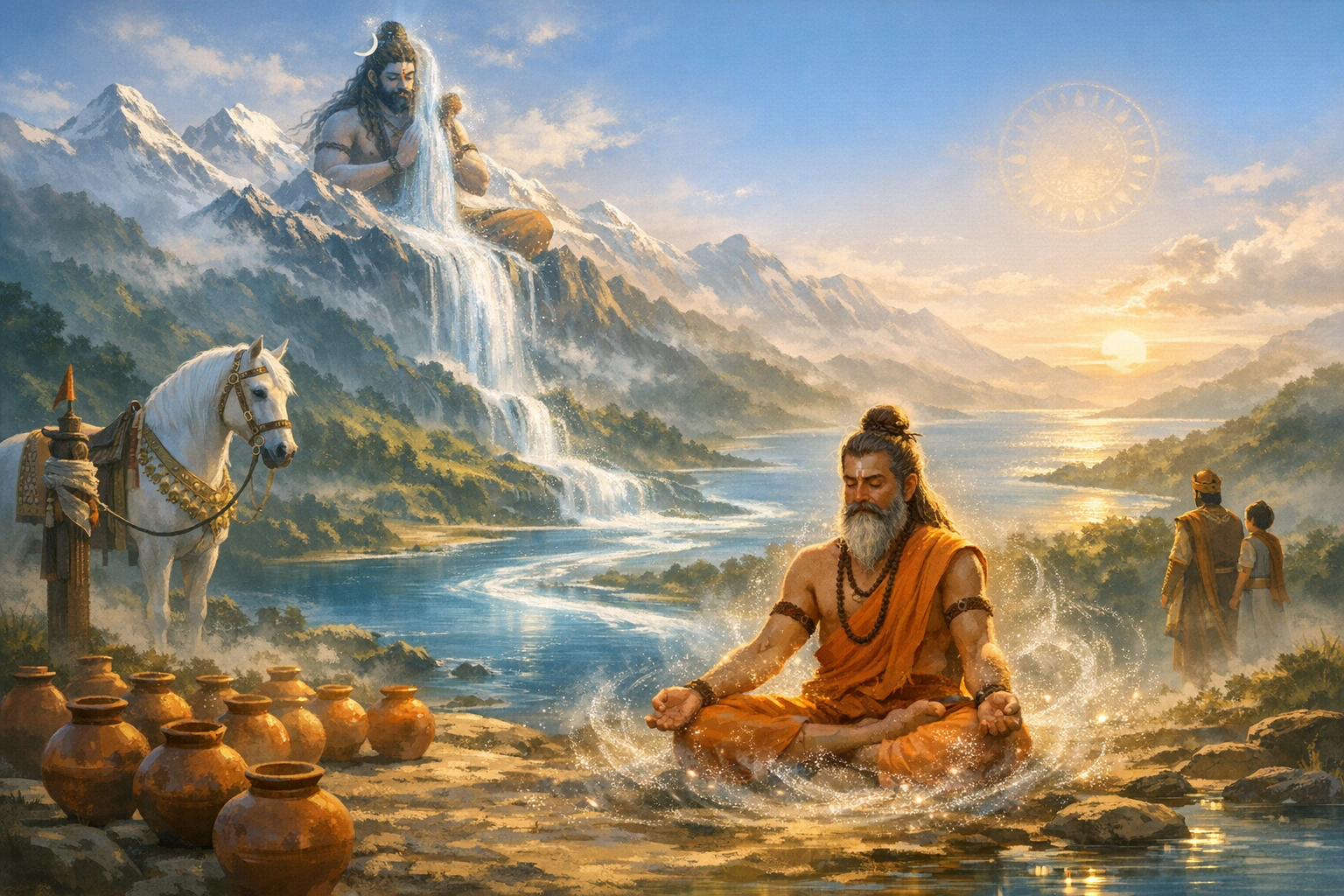
This essay recounts the sacred narrative of King Sagara of the Ikshvaku dynasty: a childless sovereign who, through tapas and grace, fathered sixty thousand sons in an extraordinary birth motif remembered as “from pumpkin to princes.” It traces the aśvamedha episode, Indra’s theft of the horse, the princes’ confrontation with Kapila Muni, and their cremation…
-
Beyond Pralaya and Kalpa: How Hinduism Envisions the Universe Folding Back into Itself

Hindu cosmology describes an immense, cyclical universe in which worlds arise, endure, and dissolve through patterned phases of creation and reabsorption. This article clarifies key termspralaya and kalpadetails their fourfold typology, and lays out precise time scales from yugas to Brahmā’s lifetime. It integrates Purāṇic, Vedāntic, Vaiṣṇava, Śaiva, and Śākta views, and relates them to…
-
When Agastya Drank the Ocean: The Cosmic Reset Behind Bhagiratha’s Ganga Avatara

This long-form exploration situates the startling image of Sage Agastya drinking the ocean within the Vedic–Puranic principle of rta (cosmic order) and reads it as the hidden prologue to Bhagiratha’s Ganga avatara. Drawing on references across the Ramayana, the Mahabharata, and Puranas such as the Skanda Purana, it explains how yogic containment (Agastya) and compassionate…
-
Is Space Also Relative? Dharmic Cosmology and Modern Physics on Time, Place, and Perception

Vedic cosmology asserts that one human year equals a deva-day and that 4.32 billion years comprise a single day of Brahmā, presenting a layered vision of time that scales across realms. Read alongside Einstein’s relativitywhere time and distance depend on gravity, motion, and metricthis framework invites a parallel question: is space also relative? Dharmic traditions…
-
Decoding the Four Yugas: Shastric Evidence, Deva-Year Calculations, and Our Place Today
Misunderstandings about the four yugas persist because many readers treat shastric deva years as ordinary human years. This article consolidates the Mahabharata (Shanti Parva), Vishnu Purana, Bhagavata Purana, and Surya Siddhanta to present a precise, reproducible method for calculating yuga durations. It explains the deva-year ratio (1 deva year = 360 human years), the role…
-
Divine Touch and Sacred Grace: What Bhakti Teaches About Service, Liberation, and Unity

Divine touch in Hindu spiritualityanugraha or gracesignifies a transformative contact that sanctifies life and aligns it with dharma. Drawing on Upanishadic insight and Purāṇic narratives, this exploration analyzes how devotion, humility, and service dispose seekers to receive grace. Case studies of Sage Bhrigu, Markandeya, Periyalvar, Malayathvaja Pandiyan, and Akaasaraja show how sacred touch operates in…
-
Shakti Peeth vs Siddha Peeth: Origins, Rituals, and the Power of India’s Sacred Seats

Shakti Peeth and Siddha Peeth occupy central yet distinct roles in Hindu sacred geography. Shakti Peeth are mythically anchored in the Sati narrative and emphasize Devi–Bhairava worship, major festivals like Navaratri, and communal pilgrimage. Siddha Peeth are experientially anchored in the attainments of siddhas and in anushthanas that reliably catalyze inner transformation. Many renowned shrines,…
-
Unveiling the Soul’s Journey: Life After Death in HinduismKarma, Yama, Moksha

Hinduism presents life after death as a just, compassionate, and educative journey governed by karma and oriented toward moksha. Foundational textsthe Upanishads, Bhagavad Gita, and Puranasaffirm that the immortal ātman continues through realms (lokas) or returns via reincarnation according to ethical causality. Lord Yama Dharma embodies impartial moral order, while rites such as antyeṣṭi, śrāddha,…