
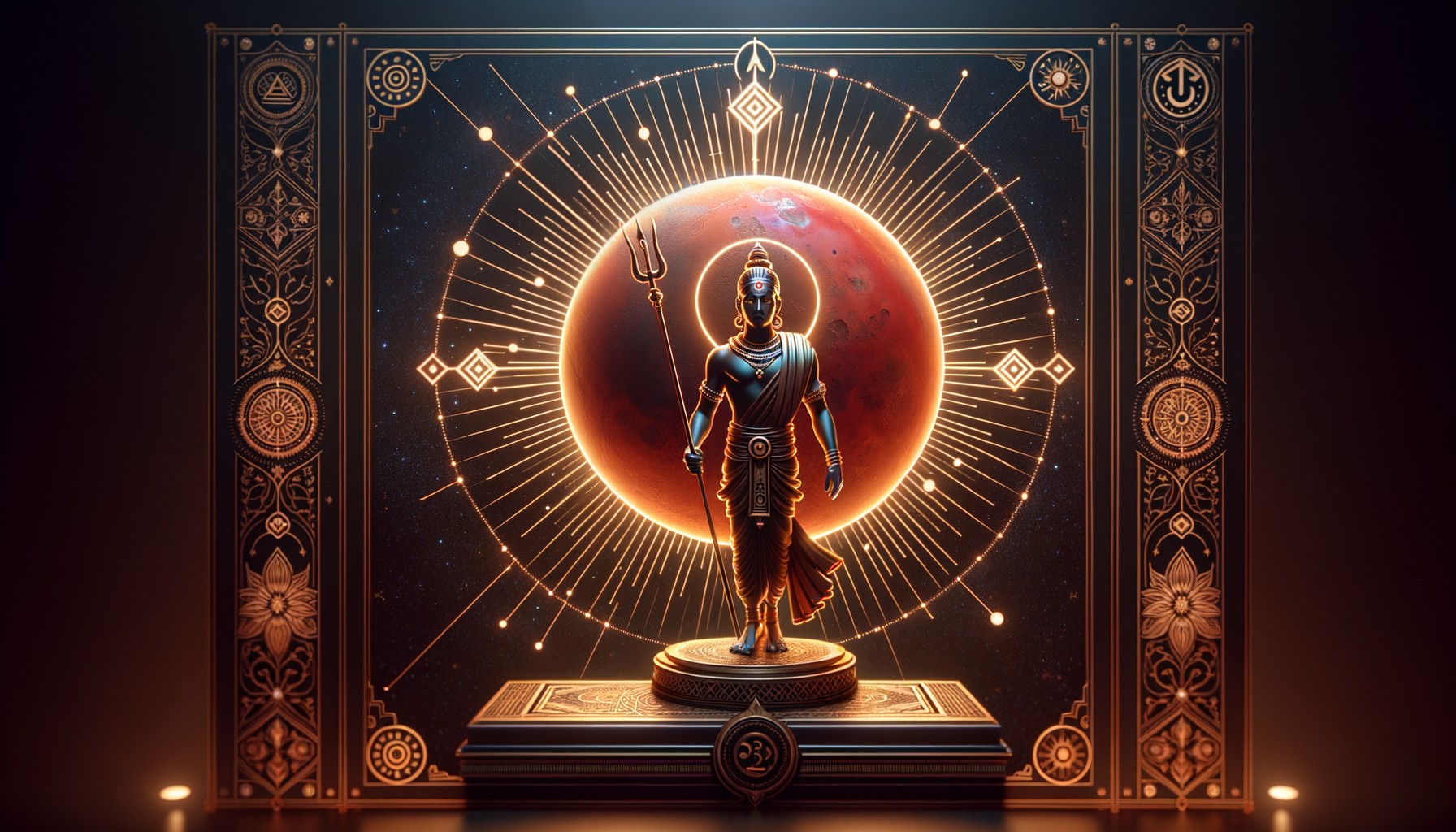
Angaraka, also known as Mangala and identified with the Red Planet Mars, occupies a pivotal position in Hindu cosmology and Vedic astrology. Revered as the graha associated with valor, discipline, and strategic action, Mangala is traditionally linked with Lord Muruga (Skanda), reflecting the ideal of courage guided by wisdom. Within this framework, Angaraka Loka is envisioned as the abode aligned with Mars, a sacred sphere that mirrors the planet’s fiery luminosity and its role in sustaining cosmic order.
Texts and temple traditions use multiple names for this deity, including Kuja and Bhauma, indicating a rich semantic field that connects earth-born vitality with righteous resolve. As the presiding force of Tuesday, Mangala is invoked for focused energy, ethical determination, and the capacity to meet challenges without cruelty. This association emphasizes dharma-yuddha, the idea that true strength serves justice and restraint rather than aggression.
Multiple legends illuminate Angaraka’s origins. One prominent account identifies him as the son of Lord Varaha and Ma Bhudevi, linking his essence to the stabilizing power of Vishnu’s boar incarnation and the nurturing steadfastness of Earth. Another respected narrative presents Angaraka as born of Bhudevi through the grace of Shiva, underscoring a synthesis of steadfast earth-energy and transformative divine will. These complementary threads portray Mangala as a guardian of courage anchored in compassion.
Angaraka Loka is described as the sacred realm corresponding to Mars, and in practice it is approached through iconography, mantra, and ritual within Navagraha temples and shrines. Devotional depictions often highlight a radiant red hue, a spear or trident emblem, and a poised stance that conveys directed power. Such imagery invites contemplation on the responsible use of strength in personal and social life.
Ancient astronomers, including Varahamihira, carefully observed Mars and recorded its motions, bridging empirical astronomy with sacred symbolism. The Red Planet’s visibility and distinctive color made it a natural touchstone for reflecting on courage, fortitude, and ethical action. In this way, Hindu cosmology integrates observation and meaning, allowing Angaraka to function as both celestial marker and moral compass.
Traditional observances related to Mangala include Tuesday vrata, focused prayer, and disciplined practices that cultivate clarity, perseverance, and respectful speech. In Vedic astrology, red coral is sometimes referenced in relation to Mangala, though contemporary readers often emphasize the underlying ethical intent over material remedies. The abiding lesson is to transmute impulsive force into steady resolve that protects, serves, and uplifts.
Across the dharmic family, there is a shared wisdom on channeling energy responsibly. In Buddhism, the principle of right effort refines vitality into mindful action; Jainism highlights self-restraint and non-harm as the highest expression of strength; Sikh teachings celebrate shaurya joined with seva. Read in this light, Angaraka symbolizes a unifying call found across these traditions: cultivate inner power as a servant of compassion, truth, and communal well-being.
For many devotees and readers, contemplating Angaraka Loka and the Red Planet becomes a reflective practice in aligning intent with action. The figure of Mangala encourages disciplined courage, while the luminous presence of Mars invites awe and humility. As mythic narrative and astronomical observation meet, Angaraka offers a timeless guide to harnessing strength with responsibility and to honoring unity in spiritual diversity.
Inspired by this post on Hindu Pad.
