-
Why the Mahabharata’s Grey Shades Matter: Navigating Dharma, Dilemma, and Duty Today

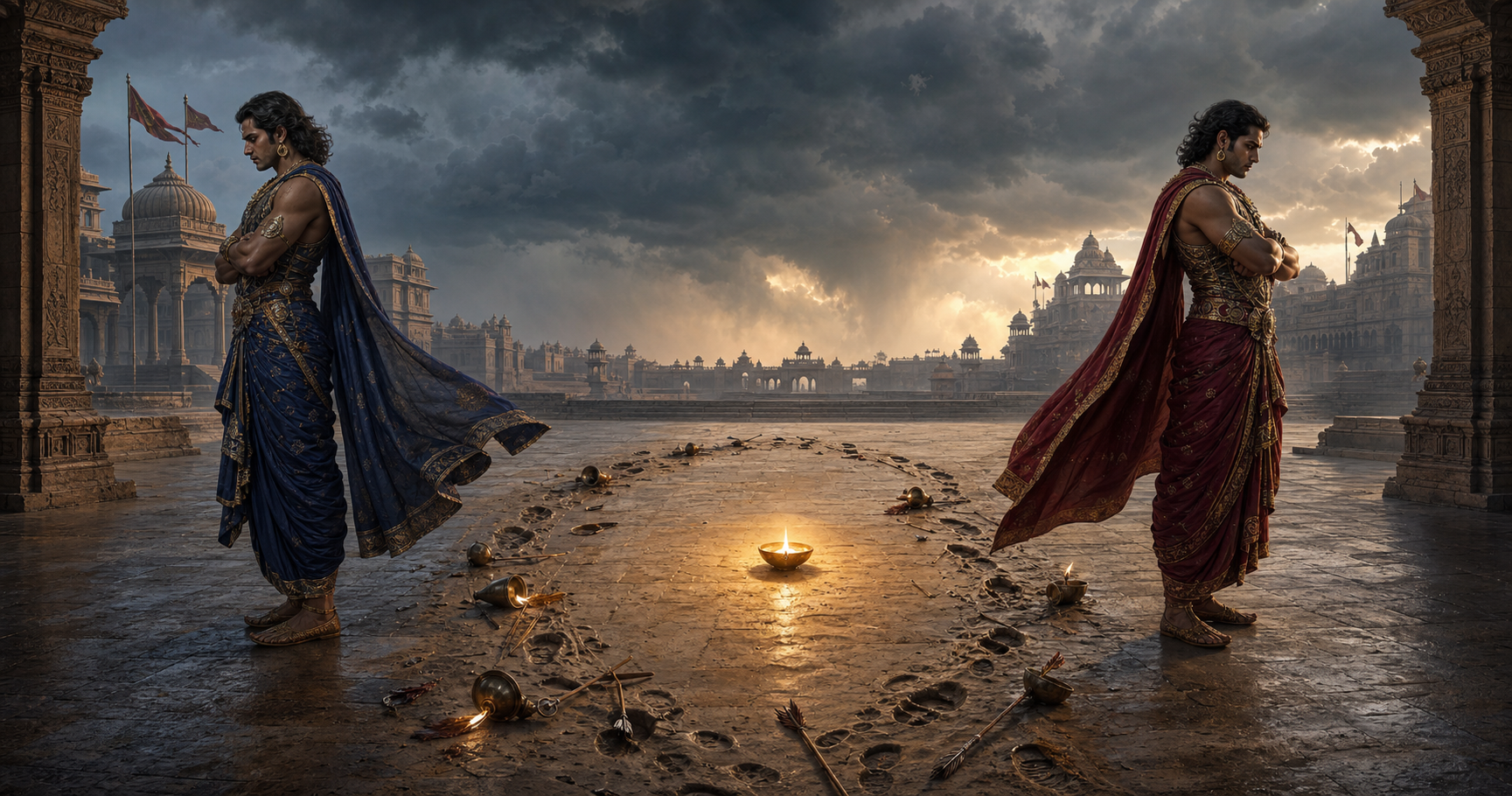
The Mahabharata remains vital because it refuses to flatten ethics into heroes and villains, instead mapping how real people make hard choices under pressure. Its layered model of dharma — from universal norms to role- and crisis-specific duties — explains why legendary figures display ‘grey shades’ without collapsing into relativism. Through case studies such as…
-
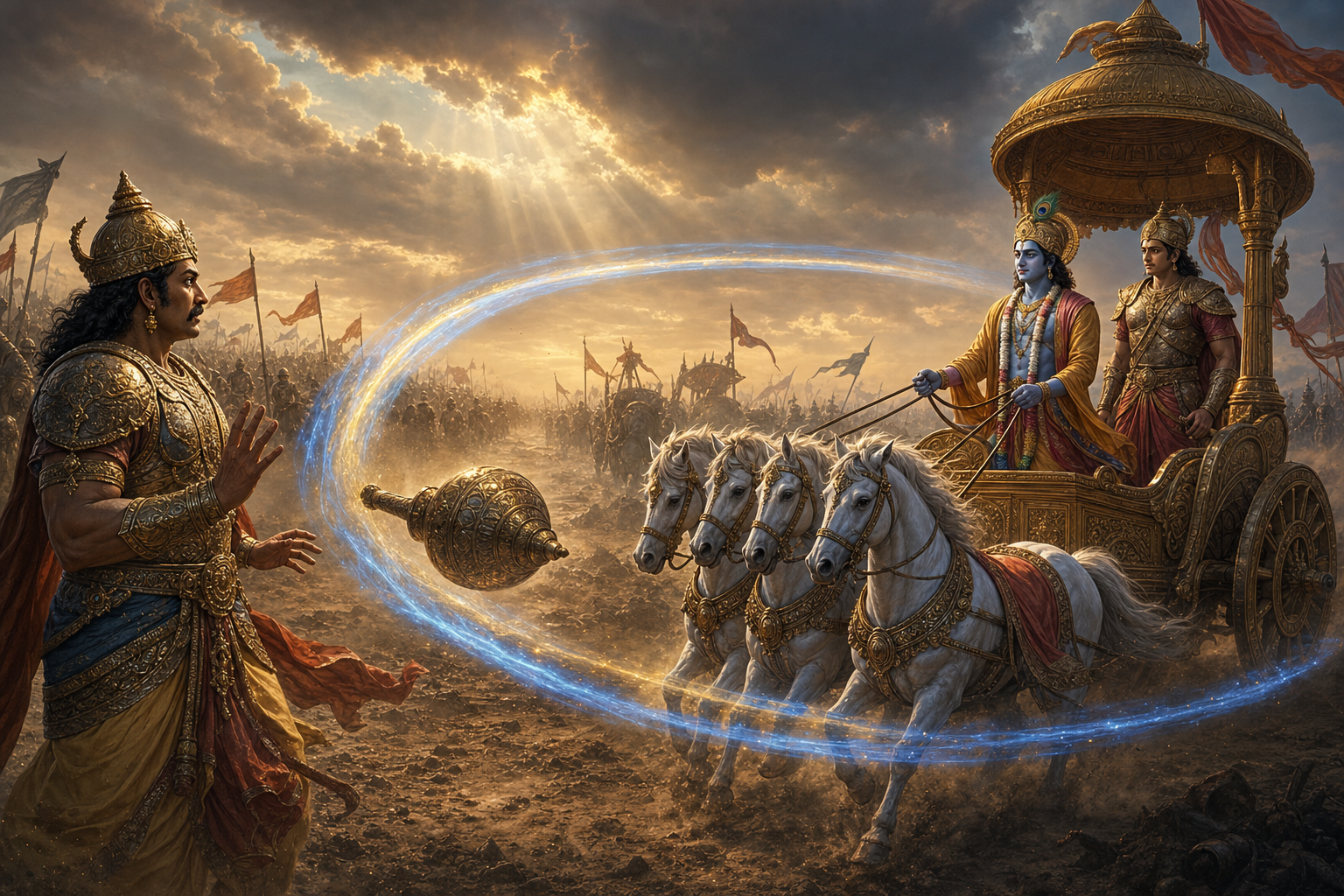
Decoding Gandharva Astra and Ratha Māyā: Strategic Illusion in the Mahabharata’s Dharma-Yuddha

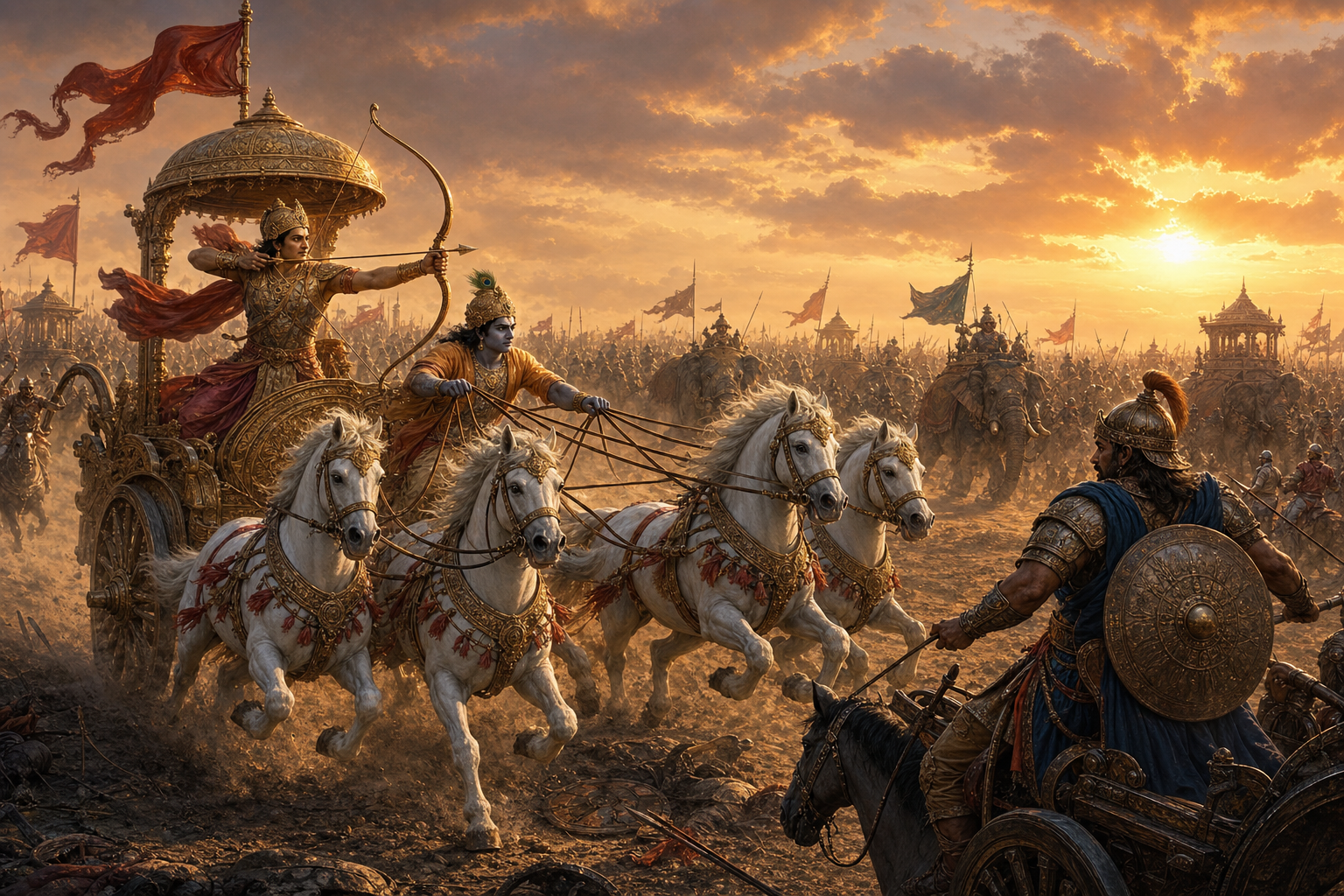
Gandharva Astra and Ratha Māyā reveal how the Mahabharata’s warfare valued perception, psychology, and ethics over brute force. Rather than destroy, these arts confound—multiplying phantom chariots, bending acoustics, and reshaping what enemies can trust. Grounded in dharma, they belong to a just-war ethos that prizes restraint and the principle of minimum violence. Case motifs from…
-
Nilakantha Chaturdhara’s Bharatabhavadipa: Illuminating Mahabharata’s Dharma and Depth

Nilakantha Chaturdhara’s Bhāratabhāvadīpa (Bharatabhavadipa) stands as one of the most trusted gateways into the Mahabharata’s narrative, ethics, and philosophy. Framed by rigorous Sanskrit exegesis, it clarifies complex episodes, reconciles apparent contradictions, and highlights the epic’s enduring guidance on rajadharma, dharma-yuddha, and moksha. Attentive to philology and textual variants, the commentary equips readers to engage the…
-
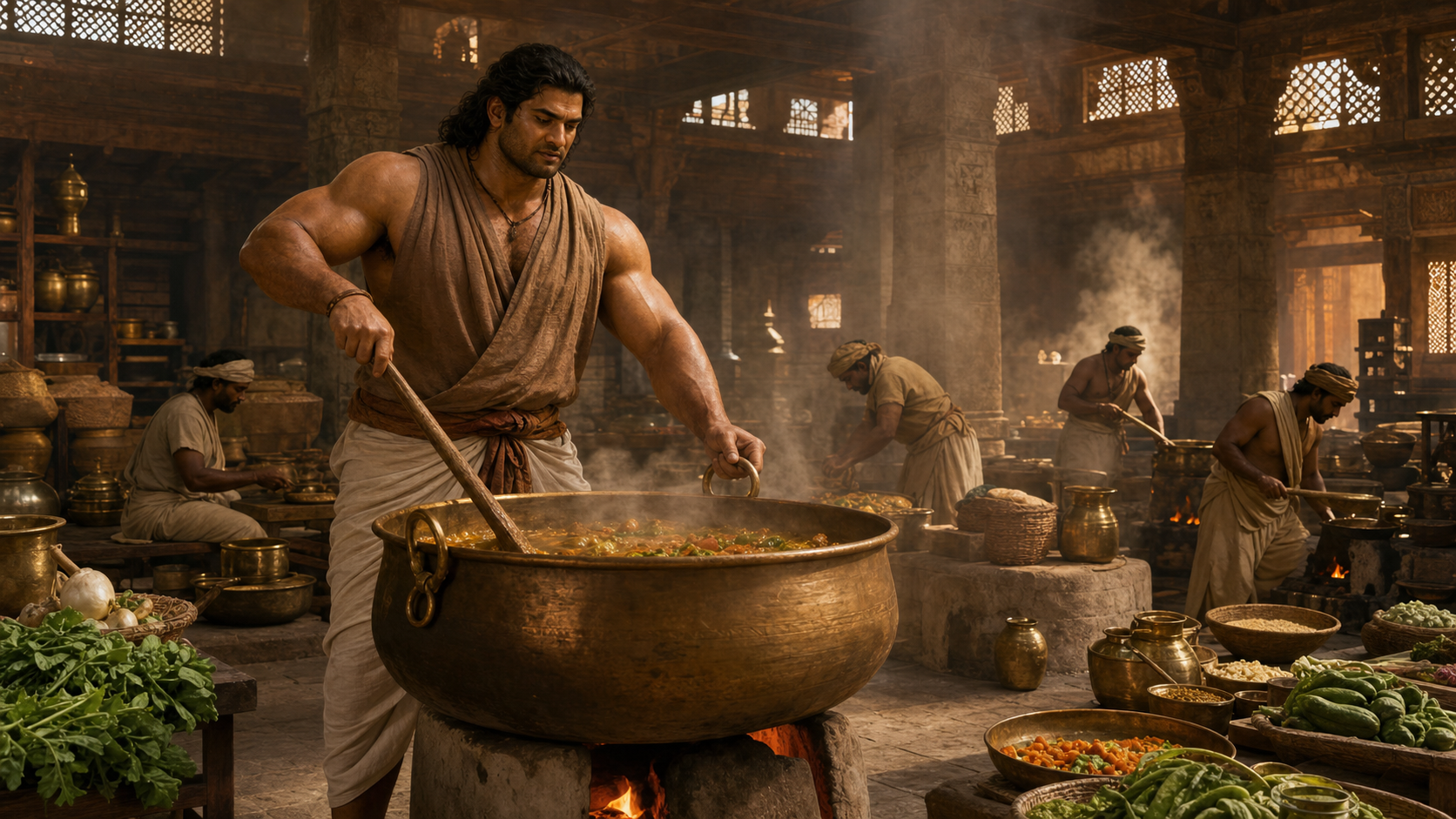
Duryodhana’s Poison Plot, Bhima’s Naglok Descent, and King Aryak’s Divine Empowerment

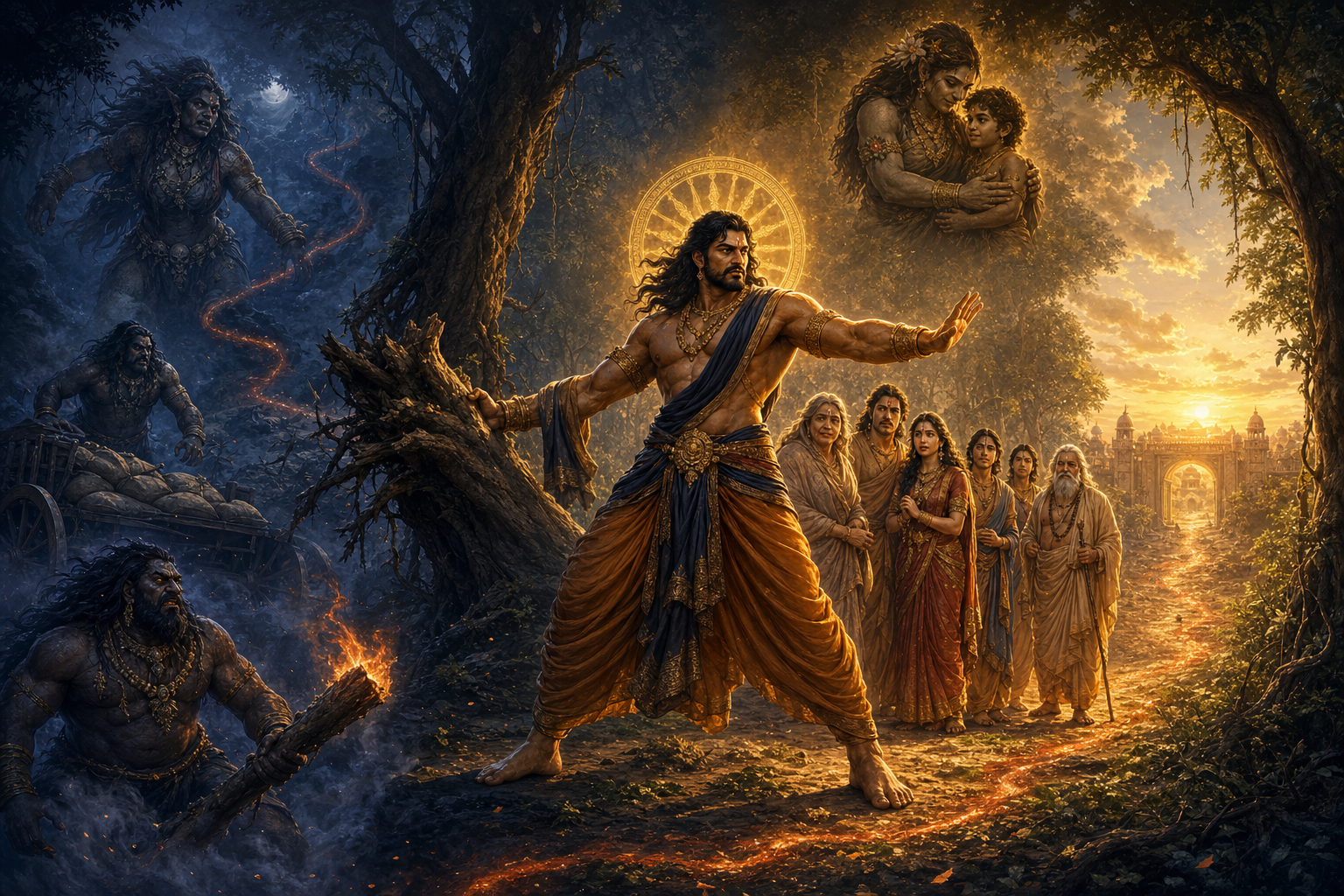
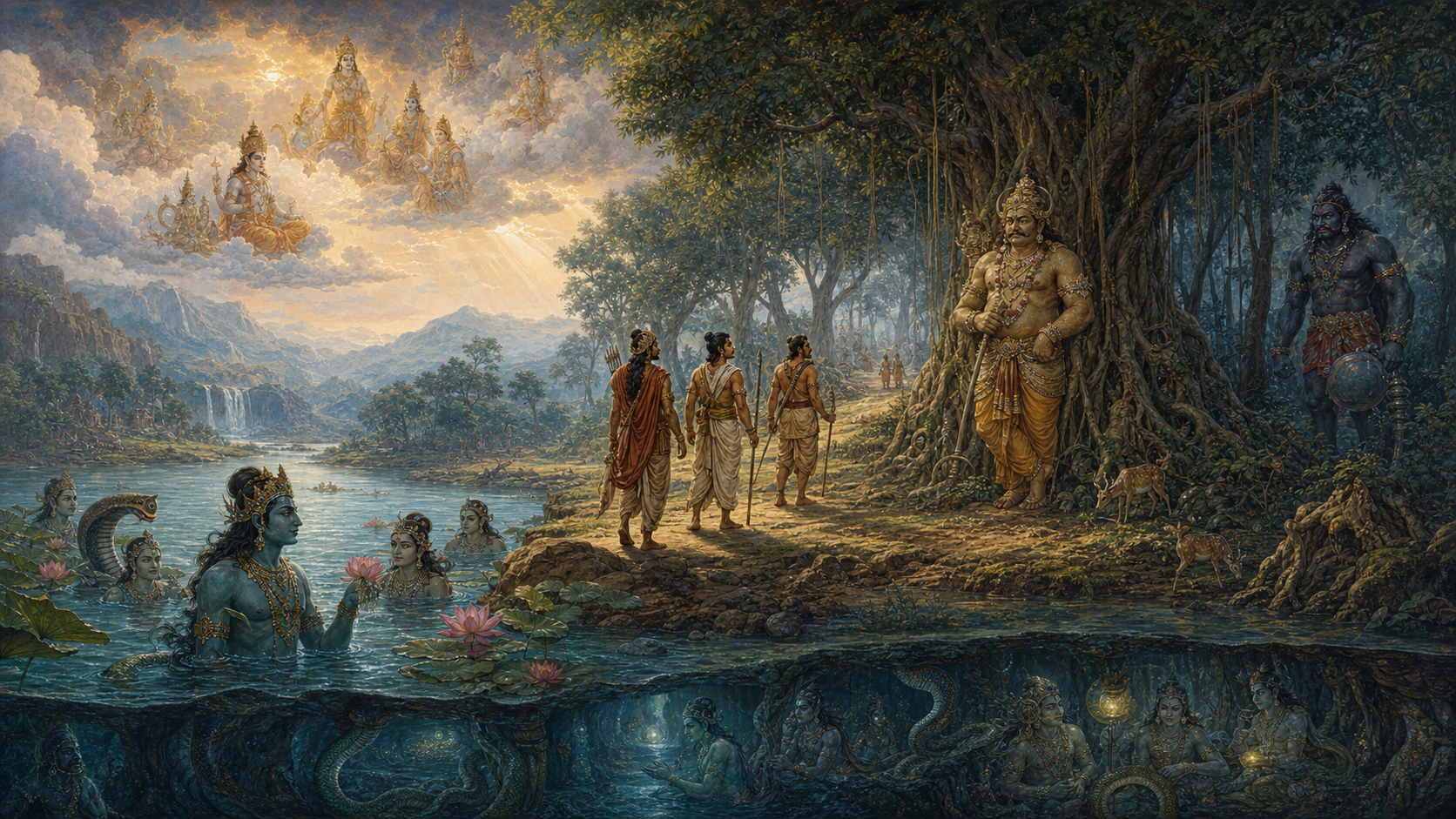
This long-form analysis explores the Mahabharata’s Naglok episode, where Duryodhana’s poison plot leads unexpectedly to Bhima’s empowerment under Naga King Aryak. It traces how treachery is transformed into destiny through kinship recognition, rasāyana-like rejuvenation, and Dharmic ethics. The essay situates Aryak within pan-Dharmic serpent symbolism—paralleling motifs in Hindu, Buddhist, and Jain traditions—highlighting unity through shared…
-
Dashavatara to Digital Screens: How Vishnu’s Avatars Shape Indian Politics and Pop Culture Today

Vishnu’s avatars are not relics of the past; they are an active ethical and cultural vocabulary shaping Indian politics, cinema, music, festivals, and civic life. Drawing on the Bhagavata Purana, Ramayana, and Mahabharata, this analysis shows how Rama and Krishna anchor debates on leadership, justice, and welfare without collapsing pluralism. It explains why Ayodhya’s contemporary…
-
Astika Mantra from the Mahabharata: Powerful Snake-Bite Protection, Meaning, and Safe Use

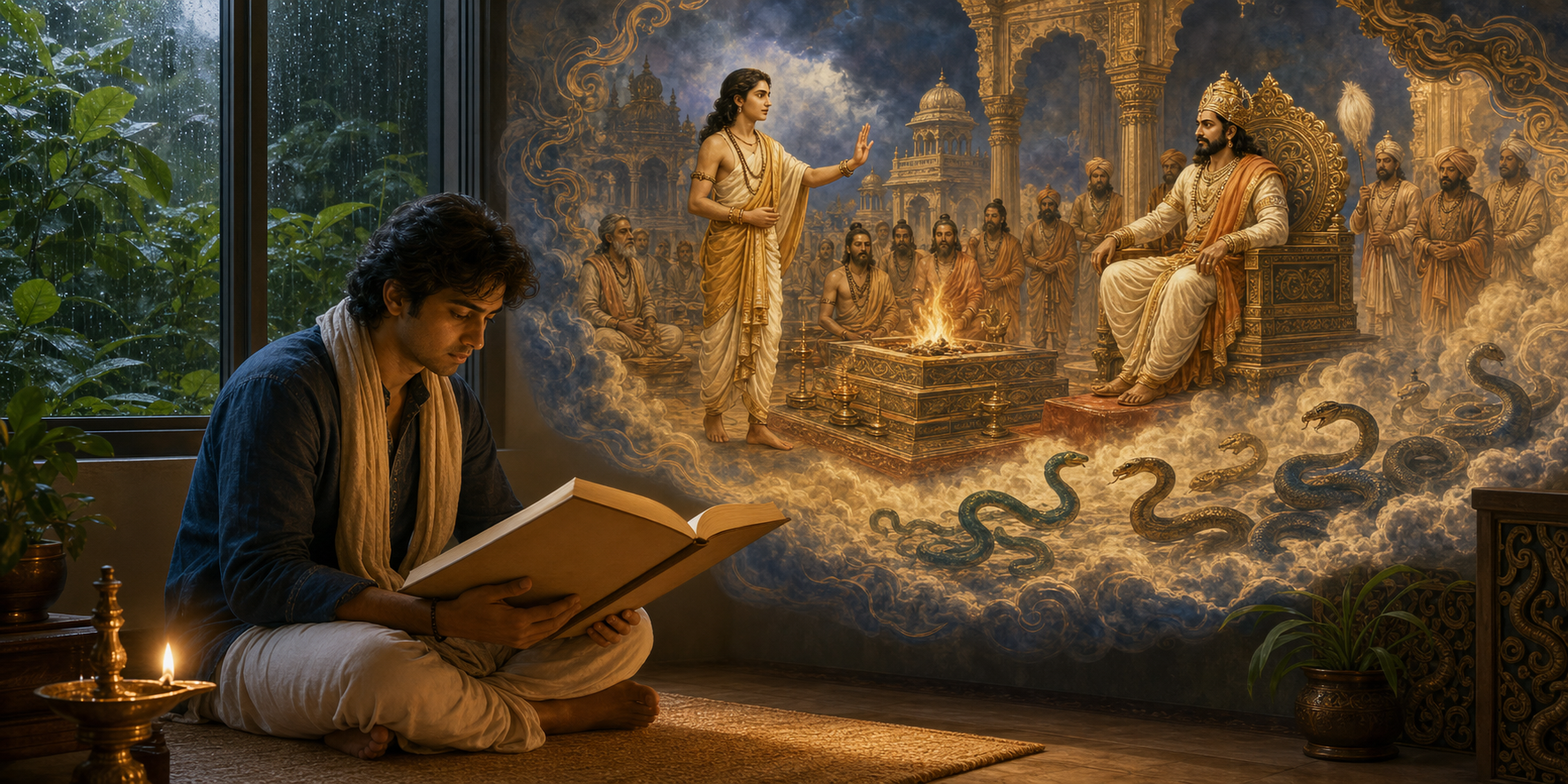
The Astika mantra, preserved in the Mahabharata’s Astika Parva, is a revered protective chant for snake-bite safety that appeals to remembrance, gratitude, and non-violence. By recalling Astika—born of Jaratkaru and Jaratkaru—who halted King Janamejaya’s sarpa-satra, the mantra respectfully addresses nāgas and requests non-injury. This guide presents the original Sanskrit, accurate transliteration, and a clear, line-by-line…
-
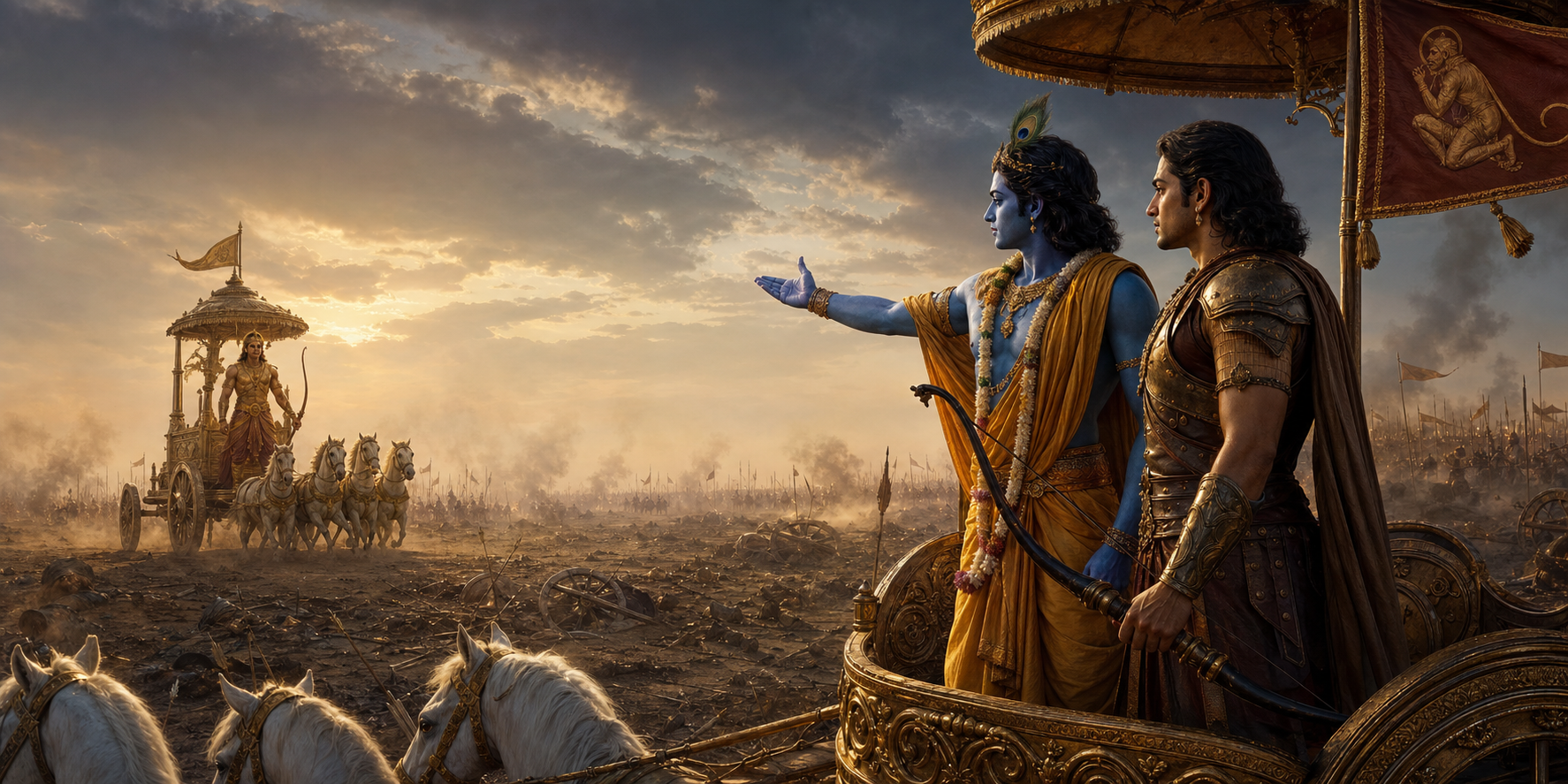
Arjuna’s Grief as Yoga: The Transformative Power of Vishada in Bhagavad Gita Chapter 1

The Bhagavad Gita calls its opening chapter Arjuna-Vishada-Yoga to teach that honest suffering can initiate authentic spiritual discipline. Arjuna’s despondency exposes moha, leads to surrender (śiṣyas te ’haṁ), and prepares the ground for buddhi-yoga, samatva, and Karma Yoga. By defining yoga as equanimity and skill in action, the Gita frames grief as a catalyst that…
-
Why Sanskrit Calls Humans “Nara”: Deep Origins, Dharma, and the Power of Karma

The Sanskrit term “nara” does more than denote a human being; it encodes a civilizational understanding of agency, ethics, and liberation. Its deep Indo-European etymology, rich scriptural presence, and philosophical nuance explain why Hinduism treats human life as uniquely suited to dharma and karma. Classical distinctions—sañcita, prārabdha, and kriyamāṇa karma—show how present choices reshape experience.…
-
Karma and Karmaphala in the Ramayana and Mahabharata: Dharma, Consequence, and Liberation

This essay reads the Ramayana and Mahabharata as precise ethical maps of karma (action) and karmaphala (consequence), showing how intention, duty, and context shape outcomes. It explains sañchita, prārabdha, and āgāmi karma, and situates them within dharma and the puruṣārthas. Through case studies—Daśaratha’s unintended harm, Rāvaṇa’s hubris, the dice hall’s complicity, Karna’s complexity, and Bhīṣma’s…
-
Mahabharata Masterguide: Clear, Powerful Summary of Dharma, War, and Wisdom (18 Parvas)

This academically grounded summary presents the Mahabharata in short while preserving the epic’s depth and coherence. It outlines authorship traditions (Veda Vyasa as composer, Lord Vinayaka as scribe), textual history, and the 18-parva structure. Readers gain a clear, chronological narrative—from the Kuru lineage and the dice game to the Bhagavad Gita and the 18-day Kurukshetra…
-
Decoding the Karaga: Draupadi’s Living Shakti, Symbolism, and Community Unity in South India

The Karaga festival venerates Draupadi Amman as living Shakti through a sophisticated Shakta ritual centered on a sanctified earthen pot crowned with jasmine and neem. Anchored in Bengaluru’s Sri Dharmaraya Swamy Temple and observed across South India, it integrates vows, purity codes, and processional choreography to transform urban space into a sacred field. The martial…
-
Mahabharata Made Clear: A Comprehensive, Soul-Stirring Summary of Dharma, War, and Wisdom

This academically grounded summary presents the Mahabharata’s eighteen parvas with clarity, linking narrative, statecraft, and spirituality into a single, coherent guide. Readers gain a concise understanding of the Kuru lineage, the Kurukshetra War, and the Bhagavad Gita’s integrated path of action, knowledge, and devotion. The overview highlights Vidura-niti and Bhishma’s lectures on just governance, ethical…
-
Hamsa Gita in the Mahabharata: A Timeless Swan-Song of Self-Knowledge and Liberation

The Hamsa Gita in the Mahabharata’s Shanti Parva distills Hindu philosophy into a lucid teaching on witness-consciousness, ethical living, and liberation. It clarifies how ātman stands apart from body and mind, and why steady contemplation and virtue are indispensable for moksha. Read alongside the Bhagavata Purana’s Hamsa avatāra, it reveals a complementary synthesis of jñāna,…
-
Mahabharata’s Karna Reclaimed: Evidence-Based Truths on Dharma, Loyalty, and Fate

This article offers an evidence-based, text-anchored reappraisal of Karna from the Mahabharata, clarifying his birth, training, alliances, battlefield record, and moral complexity. It distinguishes core episodes from later accretions, helping readers separate popular myths from the Critical Edition’s throughlines. By analyzing the Duryodhana–Karna bond through ethical and psychological lenses, it shows how unmet needs for…
-
Why Tagore Called the Mahabharata Indispensable: A Profound Guide to India’s Living Epic

Rabindranath Tagore’s claim that education in India is incomplete without the Mahabharata identifies the epic as a living curriculum in ethics, leadership, and spiritual inquiry. This analysis shows how the text integrates narrative with treatises such as the Bhagavad Gita, Shanti Parva, and Vidura-niti to teach rajadharma, apaddharma, and mokshadharma. Readers discover diplomacy in Udyoga…