-
Duryodhana in Lake Dwaipayana: Decoding Jala Stambhana and the Psychology of Rage

On the final day of the Kurukshetra war, Duryodhana’s concealment in Lake Dwaipayana—linked in tradition to Jala Stambhana vidya—becomes a profound study of mind, emotion, and dharma. This article decodes the water symbolism in the Mahabharata, showing how immersion allegorizes the cooling of rage and the stilling of mental turbulence. It situates the episode within…
-
Prabhasa Patan’s Timeless Confluence: Where Krishna Departed and Somnath Inspires Unity

Set on Gujarat’s Saurashtra coast, Prabhasa (Prabhasa Patan/Prabhasa Kshetra) is the Triveni Sangam of the Hiran, Kapila, and subterranean Sarasvati, long revered as a threshold of purification and insight. Scripture situates epochal events here: the Mahabharata’s Mausala Parva narrates the Yadavas’ final conflict, while the Bhagavata Purana memorializes Sri Krishna’s departure at Bhalka and Dehotsarg…
-
Facing Mortality, Finding Dharma: Why Mastering Dying Is the Ultimate Art of Living

A pivotal episode from the Mahabharata frames a universal insight: death is certain, denial is common, and wisdom begins when that denial ends. This long-form analysis shows how Hinduism, Buddhism, Jainism, and Sikhism converge on a shared discipline—facing mortality to live more ethically, courageously, and compassionately. Drawing on the Bhagavad Gita, the Upanishads, maranasati, samayik–pratikraman,…
-
Krishna Lifts the Wheel: Kurukshetra’s Defining Clash of Dharma, Devotion, and Duty

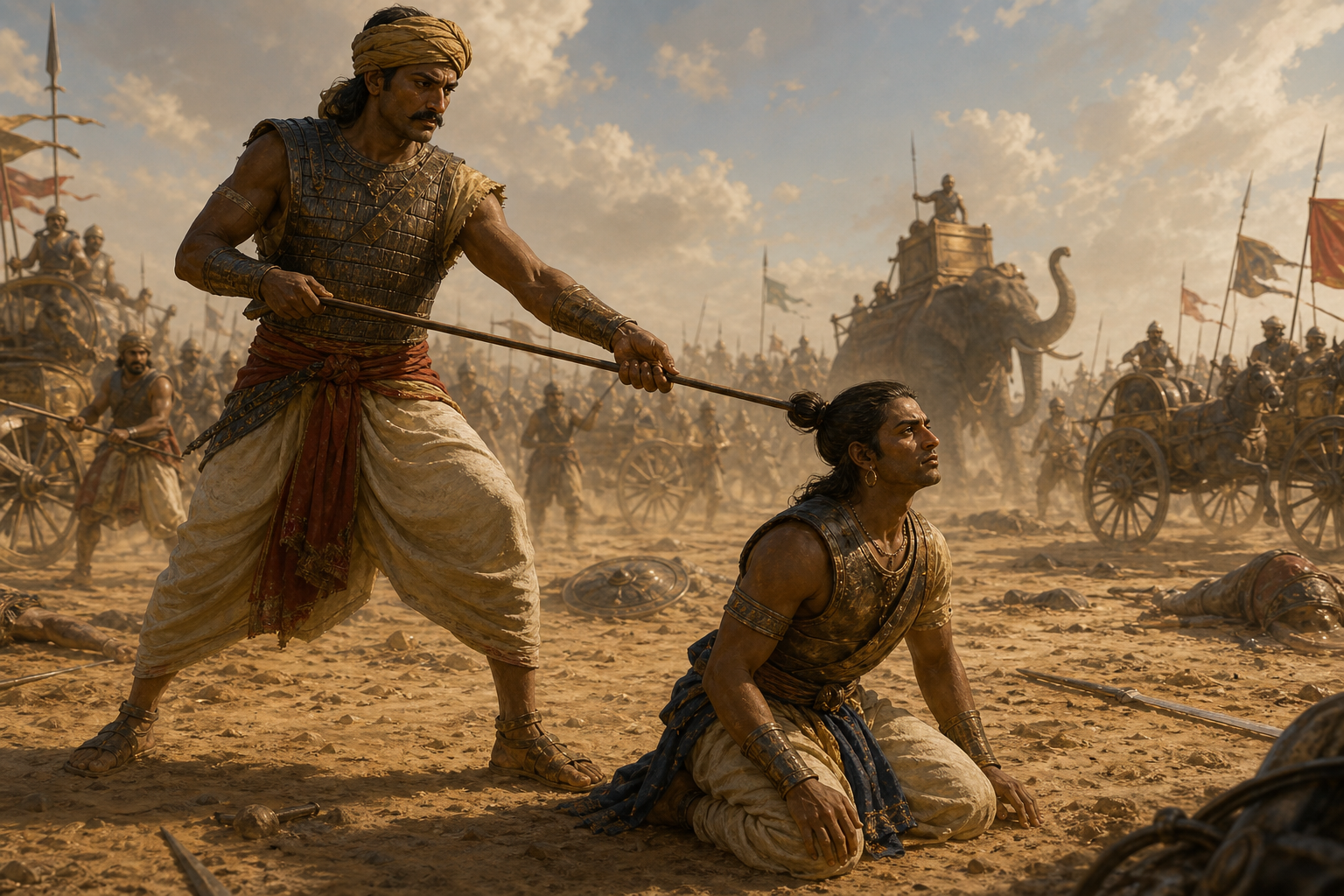
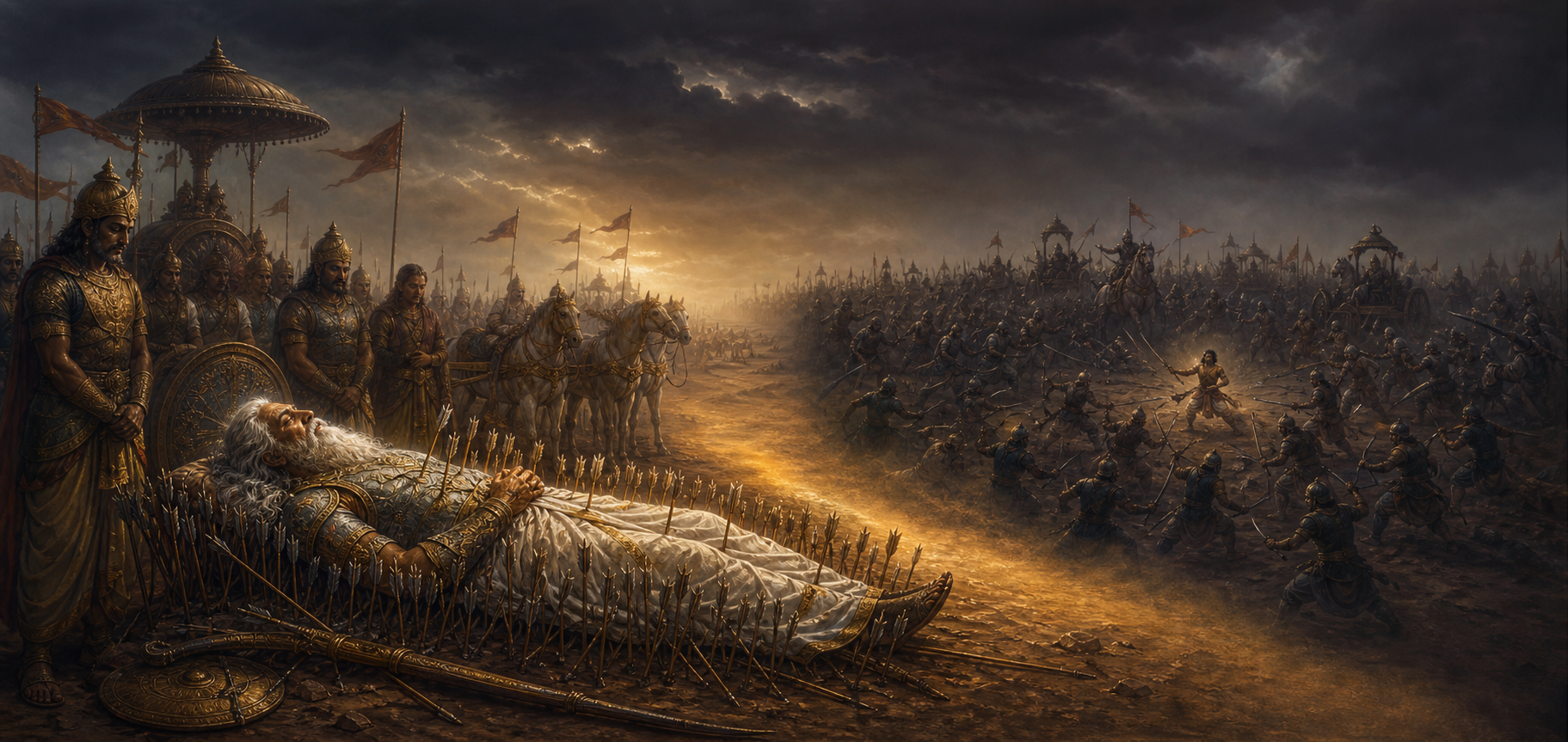
This essay reconstructs the Kurukshetra War’s most arresting moment—when Sri Krishna seized a broken chariot wheel and charged Bhishma—through the converging lenses of history, scripture, and ethics. It situates the scene within the Mahabharata’s early war phase, explains the vows of Krishna and Bhishma, and shows why the choice to protect Arjuna illuminates the logic…
-
Karna’s Final Charity: Unbreakable Dāna, Dharma, and Lessons from Kurukshetra

This long-form analysis examines the widely remembered motif of Karna’s final charity on the battlefield of Kurukshetra and situates it within the Mahabharata’s ethical universe. It distinguishes between the critical Sanskrit text and later regional and oral retellings that amplify Karna’s identity as Dāna-vīra. Through the lens of the Bhagavad Gita’s typology of dāna, the…
-
Mahabrahmana’s Monumental Preface: Viswamitra, Gayatri, and the Atma of Bharatavarsha

This long-form exploration examines the preface to Devudu Narasimha Sastri’s Mahabrahmana as a self-standing literary and philosophical achievement. It situates the preface within the broader history of prefaces, from Sanskritic invocations to modern print culture, and reads it as a Vedantic manual for attentive reading. Drawing on references to the Rg Veda, Brahmanas, Upanishads, the…
-
Why Lord Shiva Eluded the Pandavas: The Haunting Aftermath of Kurukshetra and Panch Kedar

This article examines why, according to epic, Puranic, and Himalayan traditions, Lord Shiva eluded the Pandavas after the Kurukshetra War. It situates the narrative within the Mahabharata’s ethics, where victory still demands prayaścitta for wartime transgressions. It then traces the lore from Kashi to Guptkashi and the Panch Kedar, explaining how Shiva’s concealment pedagogically compels…
-
Controversial Claims on Shri Ram and Shri Krishna: Evidence-Based Review and Dharmic Unity

A viral controversy over alleged disparaging remarks about Shri Ram and Shri Krishna has spotlighted the need for evidence-based reading of Hindu scriptures. This analysis explains how to verify claims using critical editions, Sanskrit philology, and respected commentaries. It clarifies commonly misread episodes from the Ramayana, Bhagavad Gita, and Bhagavata Purana without inflaming tensions. Readers…
-
Yog Dhyan Badri, Pandukeshwar: Pandavas’ Legacy and Vishnu’s Winter Worship in Uttarakhand

Yog Dhyan Badri at Pandukeshwar (Chamoli, Uttarakhand) is a key Panch/Sapt Badri shrine where Vishnu is revered in a rare meditative form. Tradition links the site to King Pandu’s penance and the Pandavas’ birth, embedding the temple in the moral landscape of the Mahabharata. During Badrinath’s winter closure, Yog Dhyan Badri serves as a principal…
-
Krishna’s Masterclass on Letting Go: Powerful Non‑Attachment Strategies for a Changing Life

Bhagavan Sri Krishna’s teaching on non-attachment offers a precise, actionable way to navigate change without clinging to the past. Grounded in the Bhagavad Gita and enriched by the Mahabharata and the Bhagavata Purana, it reframes excellence as duty fulfilled with freedom from possessiveness. The article clarifies anāsakti, vairāgya, aparigraha, tyāga, and sannyāsa, and shows how…
-
Jara’s Arrow and Krishna’s Departure: Time, Dharma, and the Eternal Law of Transformation

The narrative of Jara’s arrow and Krishna’s departure, preserved in the Mahabharata and Bhagavata Purana, encodes a rigorous meditation on time, dharma, and karmic causality. By exploring the Sanskrit semantics of jarā (old age) and the story’s careful framing within prophetic and ethical horizons, the episode becomes a study of impermanence and intentional closure. It…
-
From Hunter to Bridegroom: Decoding Shiva’s Kirata and Kalyanasundara Murtis in Tamil Temple Culture

Shiva’s Kirata and Kalyanasundara murtis together reveal a powerful arc “from hunter to bridegroom,” uniting ordeal and grace, tapas and ananda. Drawing on the Mahabharata’s Kirata episode, Bharavi’s Kiratarjuniya, Puranic sources, and Kalidasa’s Kumarasambhava, this study situates both forms within Tamil temple culture and Chola–Pallava art. Readers gain clear iconographic cues (the Kirata’s hunting regalia;…
-
Beyond Death’s Arrow: How Arishtanemi’s Tapas in the Mahabharata Reveals Deathless Dharma

This essay examines how the Mahabharata’s doctrine of tapas frames spiritual discipline as “divine protection,” reading the image of going beyond death’s arrow as a technical claim about fearlessness and clarity. It situates Ariṣṭanemi (Neminātha in Jain tradition) within a shared Dharmic milieu, linking ahiṃsā and aparigraha to the epic’s tapas-centered ethic. Drawing on Shanti…
-
Draupadi’s Two Boons and a Refusal: Dharma’s Quiet Triumph over the Kuru Court in the Mahabharata

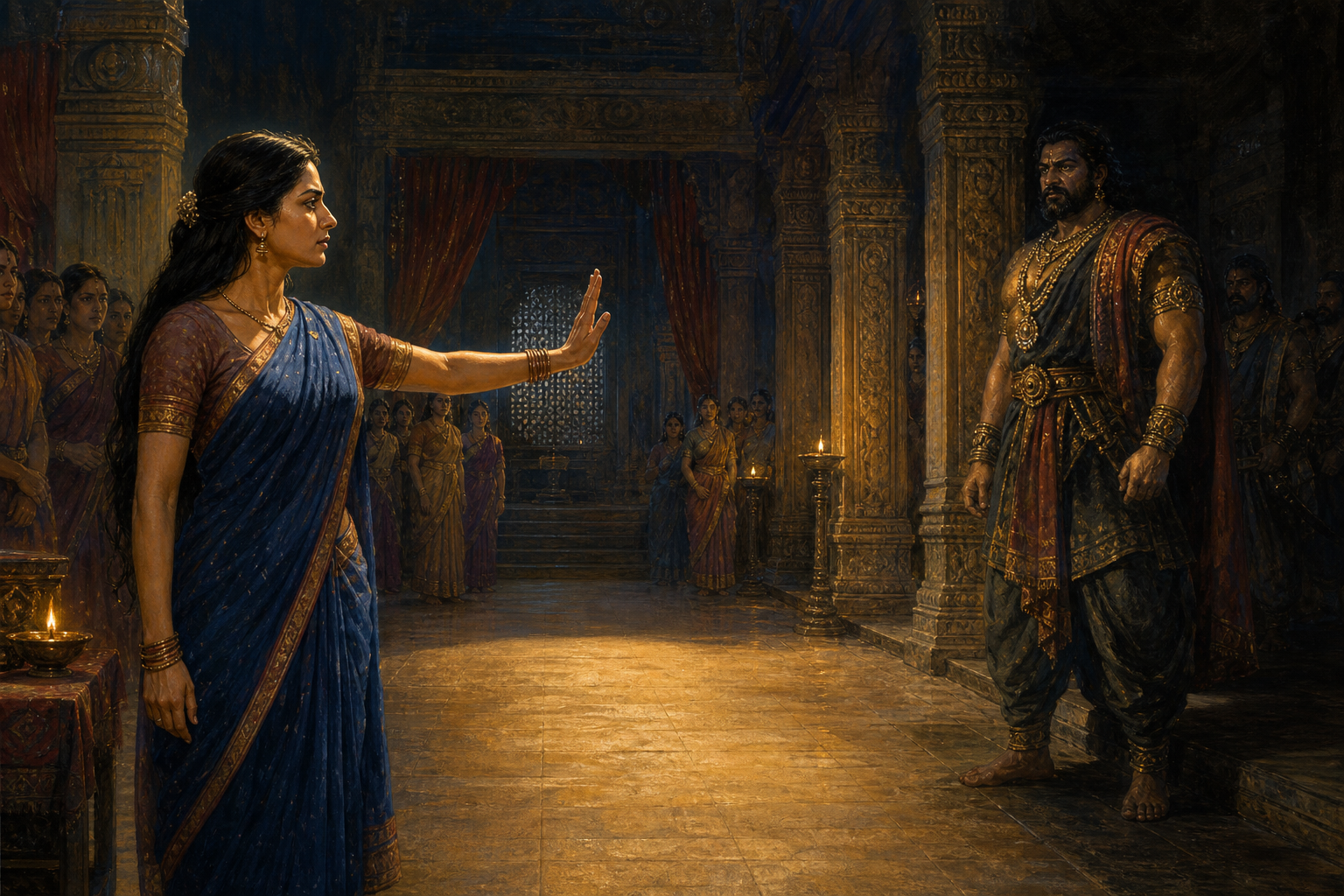
The Dyuta Sabha in the Mahabharata showcases Draupadi’s precise ethical reasoning and strategic restraint: she accepts two boons from Dhritarashtra to restore the Pandavas’ freedom and dignity, then refuses a third to avoid greed. This analysis clarifies the legal-dharmic core of her challenge to the Kuru court—capacity and consent—while situating the episode in Sabha Parva…
-
Kiratamurti Unveiled: Shiva the Divine Hunter—Iconography, Symbolism, and Temple Legacy

Kiratamurti—Shiva as the Divine Hunter—unites textual authority, temple iconography, and living ritual into a single, resonant theology of focus and grace. This long-form study traces the Mahabharata’s Kiratarjuna episode, explains key iconographic features (hunter’s bow, forest attire, Kirāti companion, boar as symbol), and maps the motif across major sites from Kanchipuram and Ellora to Hoysala…
-
Mahabharata’s Fierce Reckoning: Jayadratha, Kichaka, and Dharma’s Unforgiving Verdict

This analysis examines how the Mahabharata adjudicates unrestrained desire through the intertwined fates of Jayadratha and Kichaka. It shows how Dharma calibrates justice—humiliation when restraint advances stability, and decisive force when protection of the vulnerable demands it. Readers gain a clear view of Rajadharma, Dandaniti, Apaddharma, and the atatayin doctrine, applied to real narrative crises.…
-
How Abhimanyu’s Unjust Death Became Kurukshetra’s Moral Pivot and the Kauravas’ Downfall

The thirteenth day of the Mahabharata’s Kurukshetra War became a moral and strategic turning point when Abhimanyu, isolated inside the Chakravyuha, was killed in manifest violation of Dharma-Yuddha. The Kauravas’ many-on-one assault, disarming of a youth, and final mace blow against an unarmed warrior gained a tactical kill but forfeited legitimacy. Arjuna’s vow to slay…