-
Vikarna, the Lone Kaurava of Conscience: A Stirring Lesson in Dharma and Courage

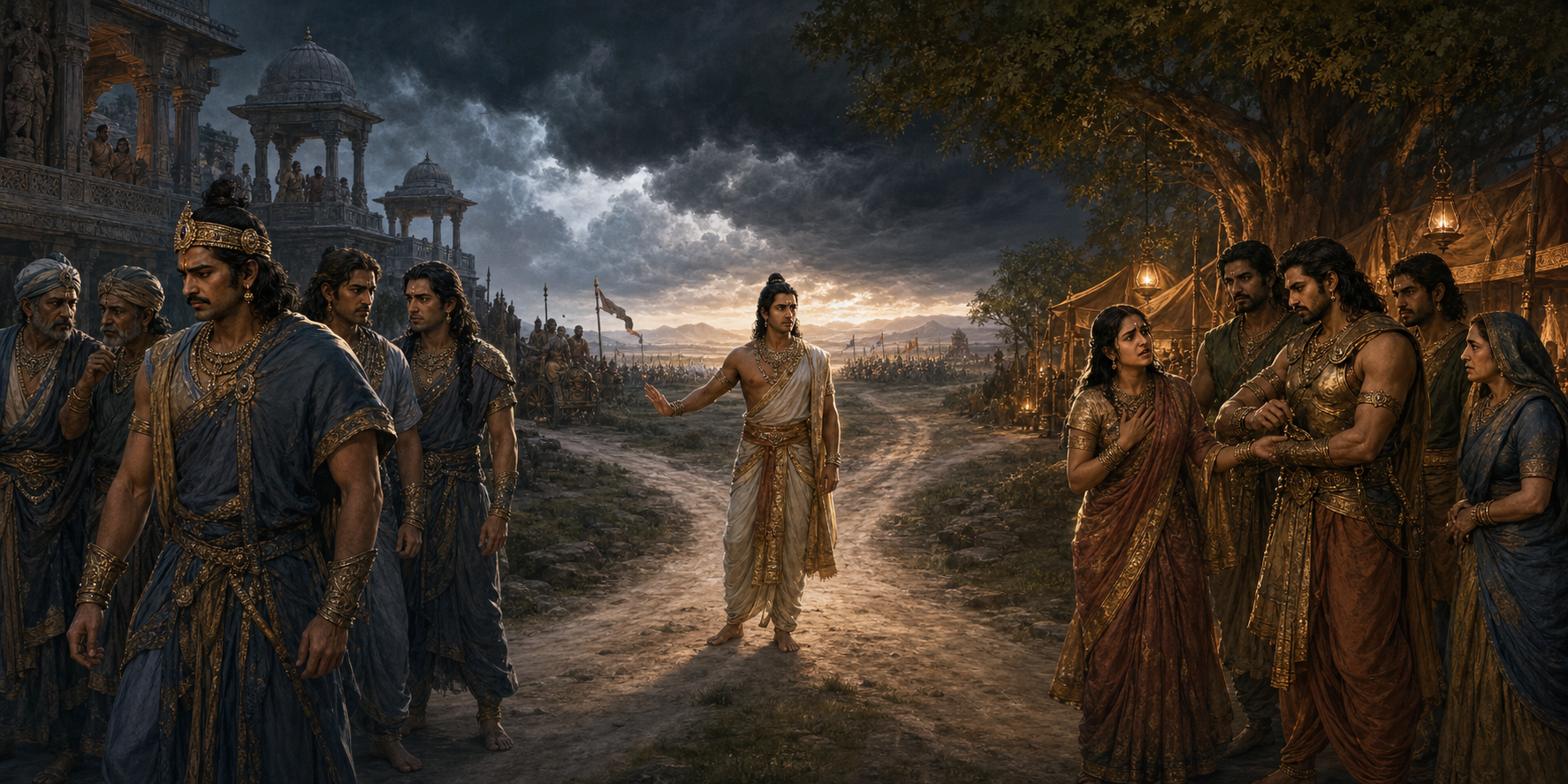
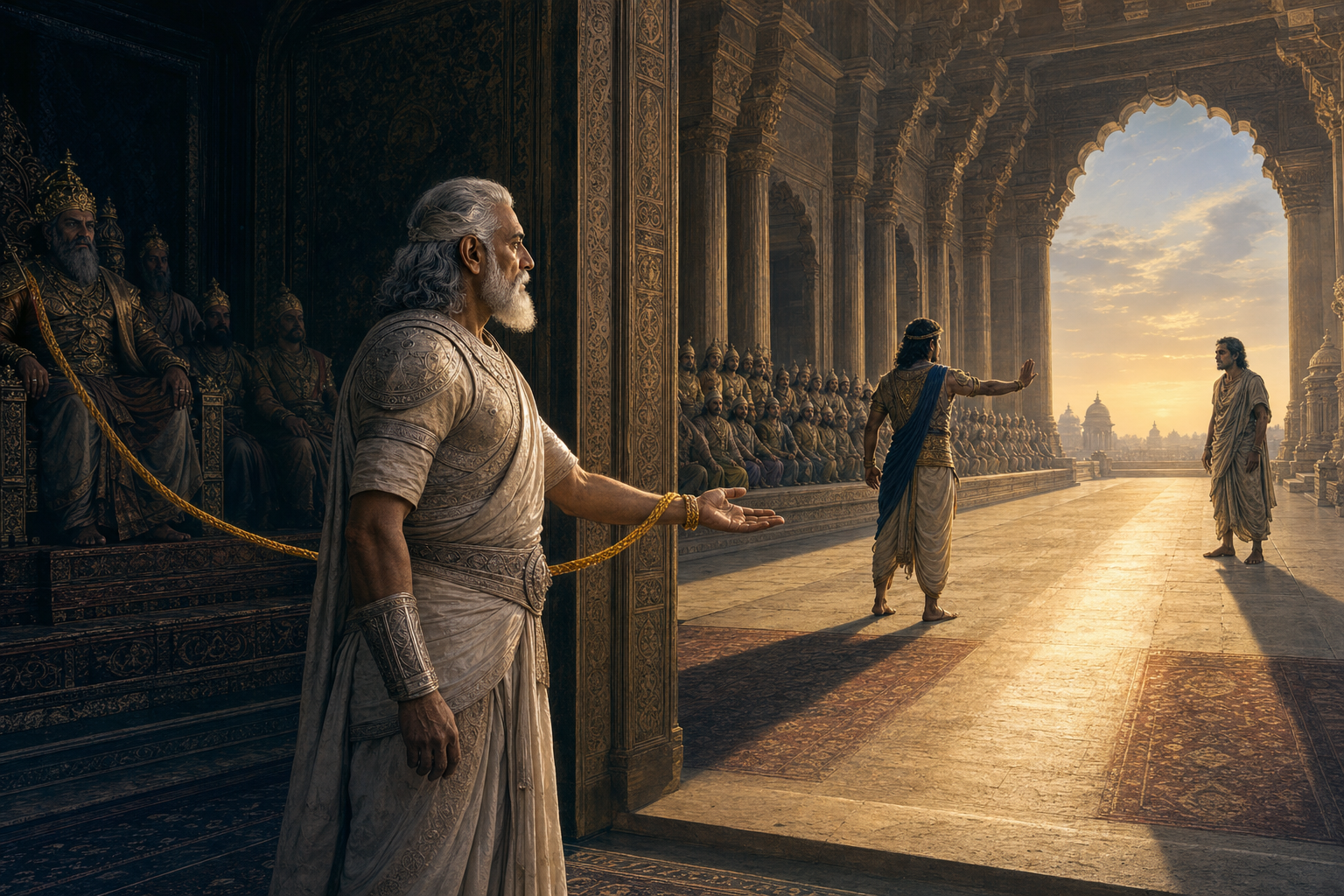
Vikarna stands out in the Mahabharata as a Kaurava who chose conscience over convenience, challenging the humiliation of Draupadi with clear, dharmic reasoning. His solitary dissent in the dice hall reveals how ethical courage can persist amid overwhelming pressure. Yet his later decision to fight for the Kauravas highlights the epic’s deeper paradox of duty…
-
Bhishma Dwadashi 2026: Date, Parana Rituals, and Mahabharata-Inspired Reflections

Bhishma Dwadashi (Bheeshma Dvadasi) in 2026 falls on January 30, the day after Bhishma Ekadashi. Observed on Magha Shukla Dwadashi, it is an auspicious time to perform parana (fast breaking) with devotion and mindfulness. Rooted in the Mahabharata’s ethical teachings, the day honors Bhishma Pitamaha’s steadfast commitment to dharma. Devotees often recite Vishnu Sahasranama, offer…
-
Bhishma’s Birth and Vow: Ganga’s Son Devavrata and the Timeless Dharma of the Mahabharata

Bhishma’s birth as Devavrata—eighth son of King Shantanu and the goddess Ganga—introduces a life shaped by destiny, discipline, and dharma. The Mahabharata explains the early tragedies of his siblings through the Ashta Vasus’ curse, while Ganga ensures Devavrata’s unmatched education before returning him to Hastinapura. The pivotal moment arrives with his vow of brahmacharya to…
-
When Hatred and Jealousy Backfire: Dharmic Wisdom on Karma, Healing, and Freedom

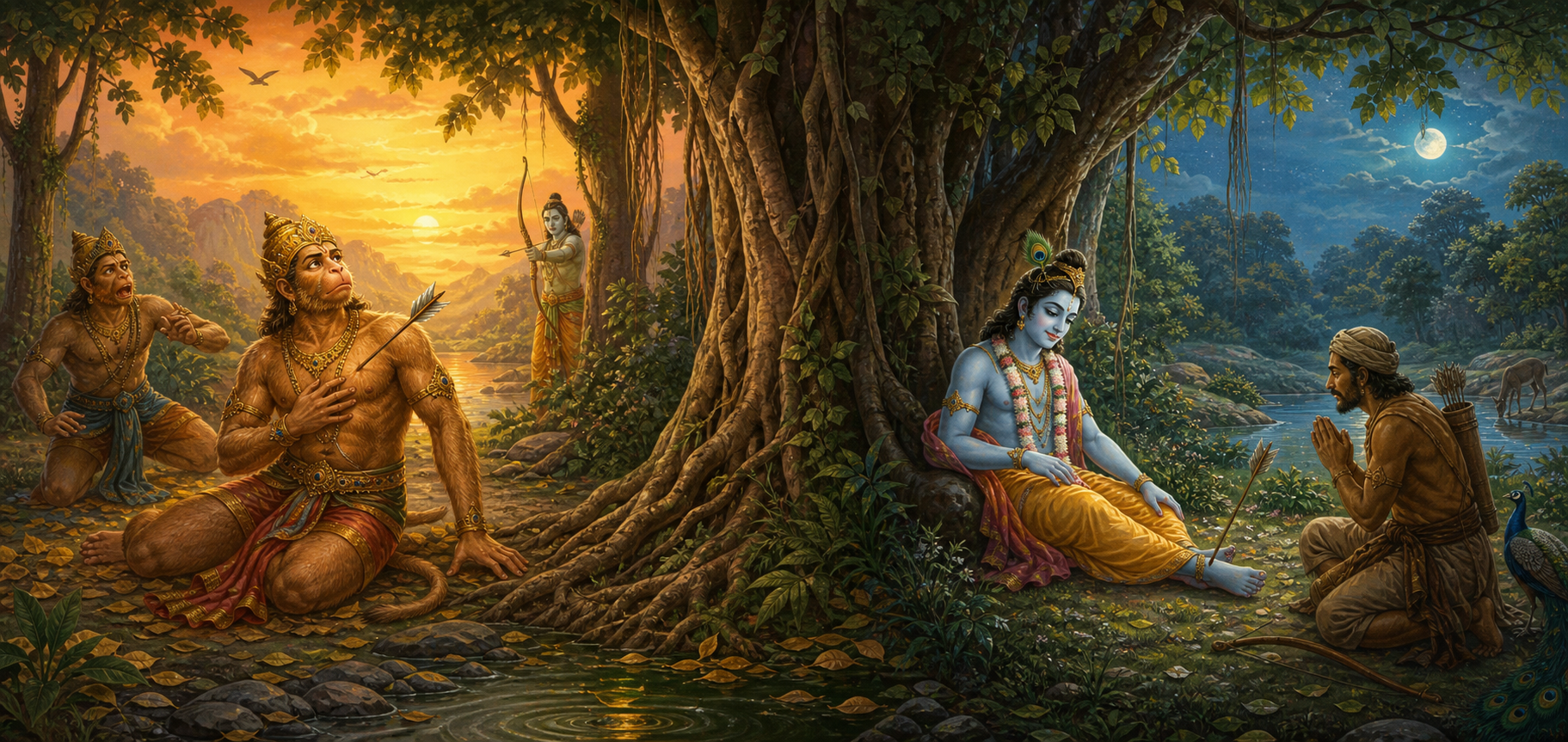
Hatred and jealousy act like venomous darts that ultimately return to the archer, a truth echoed across Hindu, Buddhist, Jain, and Sikh teachings. Drawing on the Bhagavad Gita, Upanishads, Srimad Bhagavata Purana, Ramayana, and Mahabharata, this piece explains how karma and dharma frame these emotions as forces that corrode clarity and freedom. It highlights iconic…
-
Bhishma’s Redemption on Ratha Saptami: A Mahabharata Meditation on Dharma and Legacy

Bhishma’s redemption on Ratha Saptami illuminates how the Mahabharata unites duty, remorse, and renewal under the guiding light of Surya. By situating his vigil and teachings within Uttarayana, the narrative aligns ethical reorientation with cosmic order. Readers gain clear, practical pathways to observe Ratha Saptami and Bhishma Ashtami—through Surya arghya, study of Shanti Parva and…
-
Fierce Grace on Kurukshetra: Goddess Kalaratri’s Sacred Role and Soul-Carrying Symbolism

Goddess Kalaratri emerges in the Mahabharata War as a profound symbol of Time, moral consequence, and fierce compassion. Read as a cosmic witness and soul-carrier, she reframes Kurukshetra not as mere carnage, but as a rite of ethical passage aligned with Dharma-Yuddha. This lens clarifies how endings in the epic serve renewal within a larger…
-
Arjuna and Kirata Shiva vs. Demon Mook: Powerful Spiritual Lessons on Inner Courage

This analysis situates the Kirata episode—where Arjuna and Shiva (as Kirata) slay the demon Mook—within the Mahabharata’s spiritual arc. It clarifies the narrative sequence, from Arjuna’s rigorous tapasya to Shiva’s revelation and the bestowal of the Pashupatastra. It interprets Mook as the symbolic “inner demon” of delusion and tamasic impulse that arises at the threshold…
-
Bhima vs Duryodhana: The Final Reckoning and Symbolic Resolution of the Mahabharata
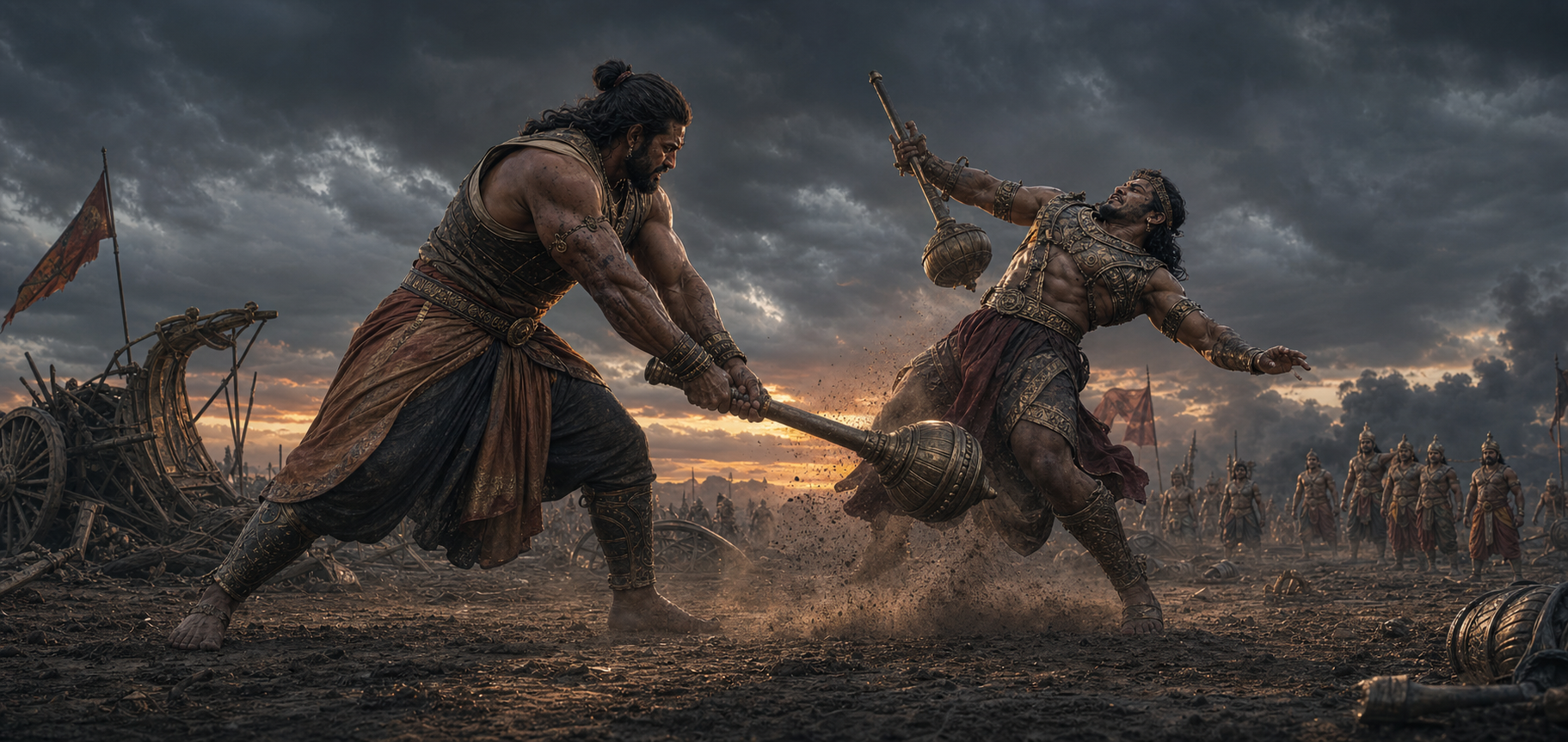
The Mahabharata’s Kurukshetra War resolves in a singular, symbolic duel between Bhima and Duryodhana. Framed by gada-yuddha rules and a stark, dried lake bed, the battle concentrates the epic’s ethical tensions into one decisive moment. Bhima’s controversial blow fulfills a vow while testing the bounds of dharma and procedure. The thigh, marked by prior insult,…
-
Kiratamurti Unveiled: Shiva as Hunter Grants Arjuna the Pashupatastra in Mahabharata

Kiratamurti, the manifestation of Shiva as a hunter, illuminates a defining episode in the Mahabharata where Arjuna receives the Pashupatastra after a test of humility and valor. The narrative demonstrates how tapasya and devotion attract divine grace. It also underscores the ethical governance of power, as even a supreme weapon must be guided by dharma.…
-
Vibhishana and Vikarna: Defiant Voices of Dharma Over Blood in India’s Epics

Vibhishana and Vikarna exemplify moral courage in India’s epics, choosing dharma over kinship and expedience. Vibhishana’s reasoned counsel to Ravana and subsequent alignment with Rama reflect fidelity to righteous order, not betrayal. Vikarna’s protest in the dice hall articulates truth amid power, even as his later choices reveal the tragic weight of duty. Together, they…
-
The Forgotten Warrior: Reclaiming Vrishasena’s Valor Beyond Abhimanyu’s Shadow

This essay re-examines the Kurukshetra War to recover Vrishasena’s overlooked valor alongside Abhimanyu’s celebrated martyrdom. It explains how narrative framing and cultural pedagogy can elevate certain episodes and obscure others in the Mahabharata. Readers gain a clearer view of kshatra-dharma by recognizing courage across both Kaurava and Pandava camps. The piece outlines Vrishasena’s disciplined role…
-
Dharma Beyond Black and White: Hindu Ethics Across Time, Circumstance, and Consequence

Hindu philosophy treats ethics as a disciplined, context-sensitive inquiry rather than a fixed rulebook. Grounded in dharma and guided by deśa–kāla–pātra, it balances intention, action, and consequence while honoring ahimsa, satya, svadharma, and lokasaṅgraha. Epic teachings from the Mahabharata and the Bhagavad Gita model how to act responsibly without attachment to outcomes. Parallels from Jain…
-
Duryodhana’s Lake Dwaipayana Refuge: A Powerful Mahabharata Lesson on Adharma Unmasked

On the war’s final day, Duryodhana’s retreat into Lake Dwaipayana becomes a powerful allegory for how adharma seeks concealment when confronted by truth. The episode’s symbolism reframes water—from purification to evasion—while the subsequent mace duel with Bhima exposes the tension between rule-bound procedure and restorative justice. Read through a dharmic lens, the moment highlights karma’s…
-
Beyond Status and Titles: Hindu Wisdom on Power, Ego, and the Difference Between Fans and Love

Modern culture often confuses admiration for status with genuine love. Hindu philosophy, supported by the Bhagavad Gita, Upanishads, Vidura-niti, Panchatantra, and the Mahabharata, clarifies that bonds rooted in utility fade when advantage fades. Dharmic traditions agree: love grounded in dharma, maitri, aparigraha, and seva sees the person beyond the pedestal. Readers gain practical indicators to…
-
Dronacharya’s Fall at Kurukshetra: How Truth, Dharma, and Strategy Changed the War

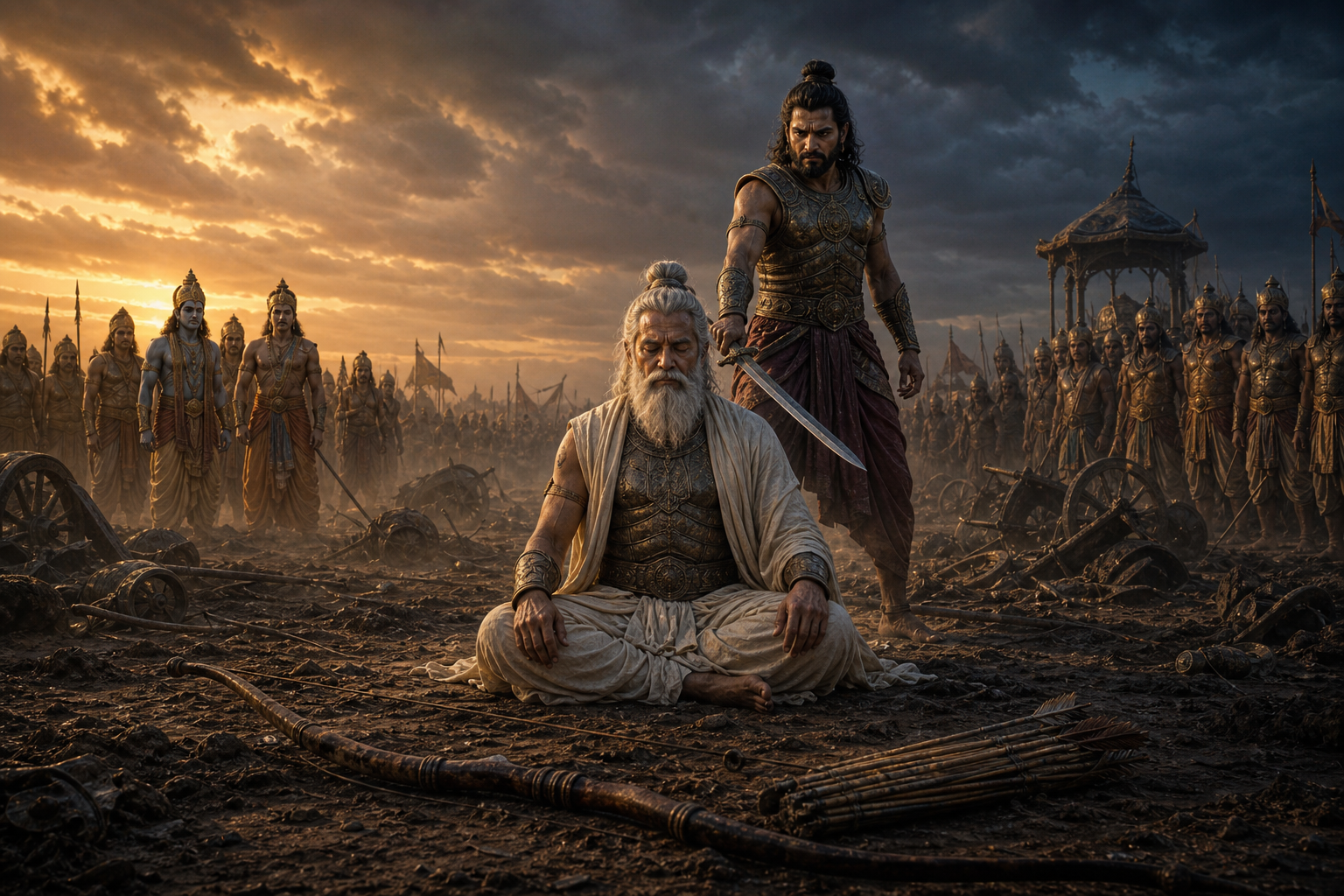
Drona’s death in the Mahabharata marks a pivotal ethical and strategic turning point in the Kurukshetra War. After Bhishma’s fall, Dronacharya’s battlefield mastery proved insurmountable until a plan leveraged his attachment to Ashwatthama. Yudhishthira’s qualified statement—“Ashwatthama hata iti gaja”—preserved the letter of truth while straining its spirit, prompting Drona to lay down arms. Dhrishtadyumna then…
-
Dyutakrida in the Mahabharata: The Fateful Game of Dice That Shaped a Civilization

Dyutakrida—the Game of Dice in the Mahabharata—marks the epic’s moral and political turning point, revealing how desire and deception can erode dharma and destabilize institutions. This clear, academic retelling traces the invitation by Duryodhana, Shakuni’s manipulation, the catastrophic wagers by Yudhishthira, and Draupadi’s courageous challenge to an unjust order. Readers gain a concise sequence of…
-
Yudhishthira’s Half-Truth: Decoding a Heart-Rending Dharma Dilemma of the Mahabharata

Yudhishthira’s half-truth in the Mahabharata presents a timeless ethical dilemma: when personal virtue conflicts with public duty in the midst of war, how should leaders act? The episode, centered on Drona’s disarmament after the ambiguous proclamation “Aśvatthāmā hataḥ,” highlights dharma-sankata and the costs of hard choices. Rather than offering easy answers, it encourages a method…
-
Decoding the Legendary Chakravyuha: The Circular Formation that Shaped Kurukshetra
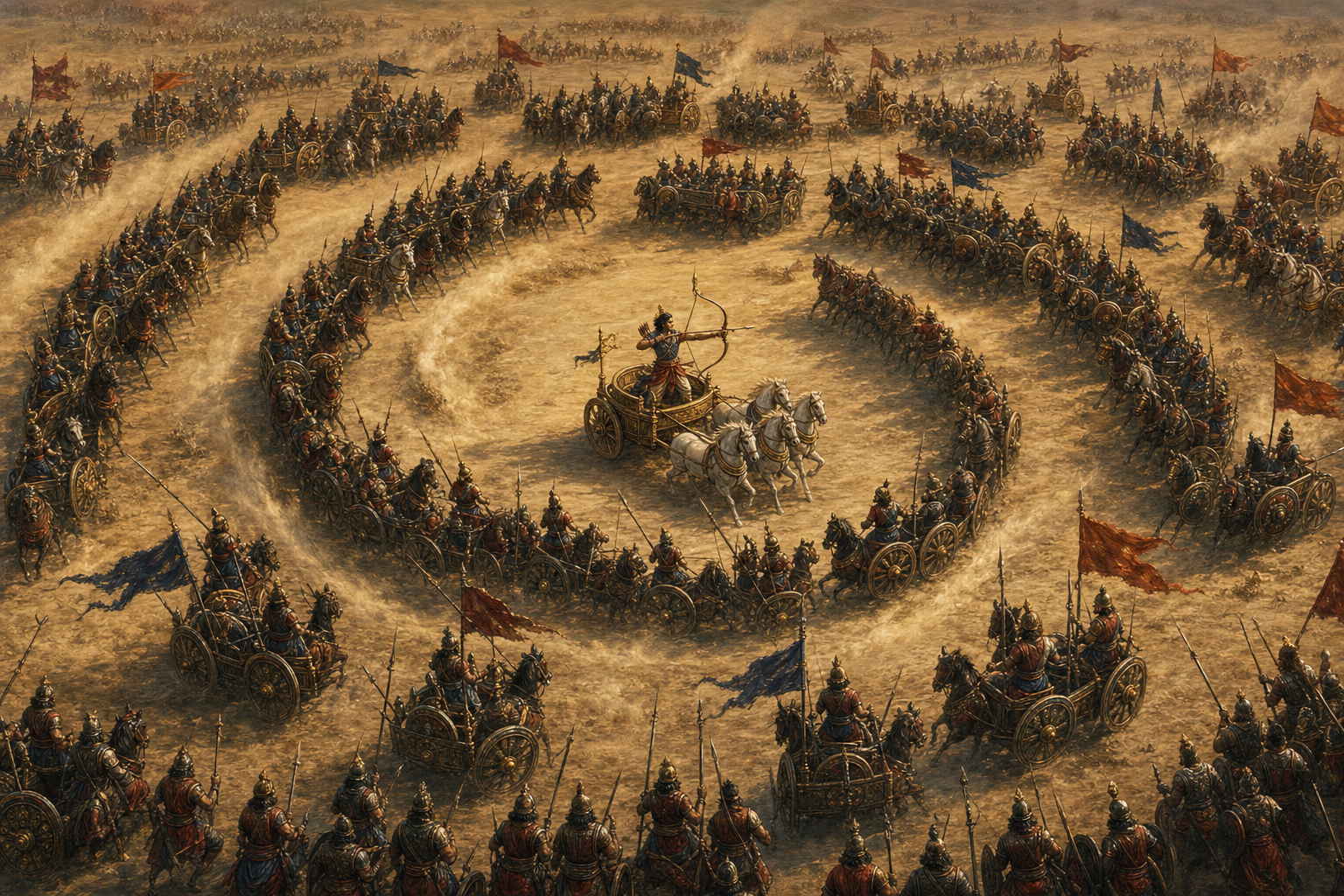
Chakravyuha, the circular battle formation described in the Mahabharata, shaped a decisive phase of the Kurukshetra War through disciplined rotation, dynamic encirclement, and strategic deception. Its layered design illustrates how command, communication, and training determine battlefield outcomes, as seen in Abhimanyu’s valiant ingress and the risks of incomplete procedural knowledge. The formation’s vulnerabilities—especially at coordinated…
-
Bhishma’s Fall in the Mahabharata: Strategy, Dharma, and Leadership Lessons from Kurukshetra

Bhishma’s fall marks a decisive shift in the Kurukshetra War, blending strategy with dharma in a way few epic moments achieve. The account clarifies why Bhishma’s vows shaped both the tactics and ethics of the Mahabharata. Readers gain context for Arjuna’s role, Krishna’s guidance, and the use of Shikhandi in preserving Dharma-Yuddha. The narrative shows…