

Luka Majcen’s Lord Shiva tattoo drew attention because it places sacred imagery on the body of a professional footballer whose career became closely connected with India. The available account presents the tattoo not as an isolated visual choice, but as the visible result of reading, relationships, competition and years of cultural encounter.
Understanding the story therefore requires three questions: what the tattoo signifies, how that meaning relates to Majcen’s sporting life, and why Indian supporters have responded so strongly to it.
What the tattoo represents in Majcen’s story
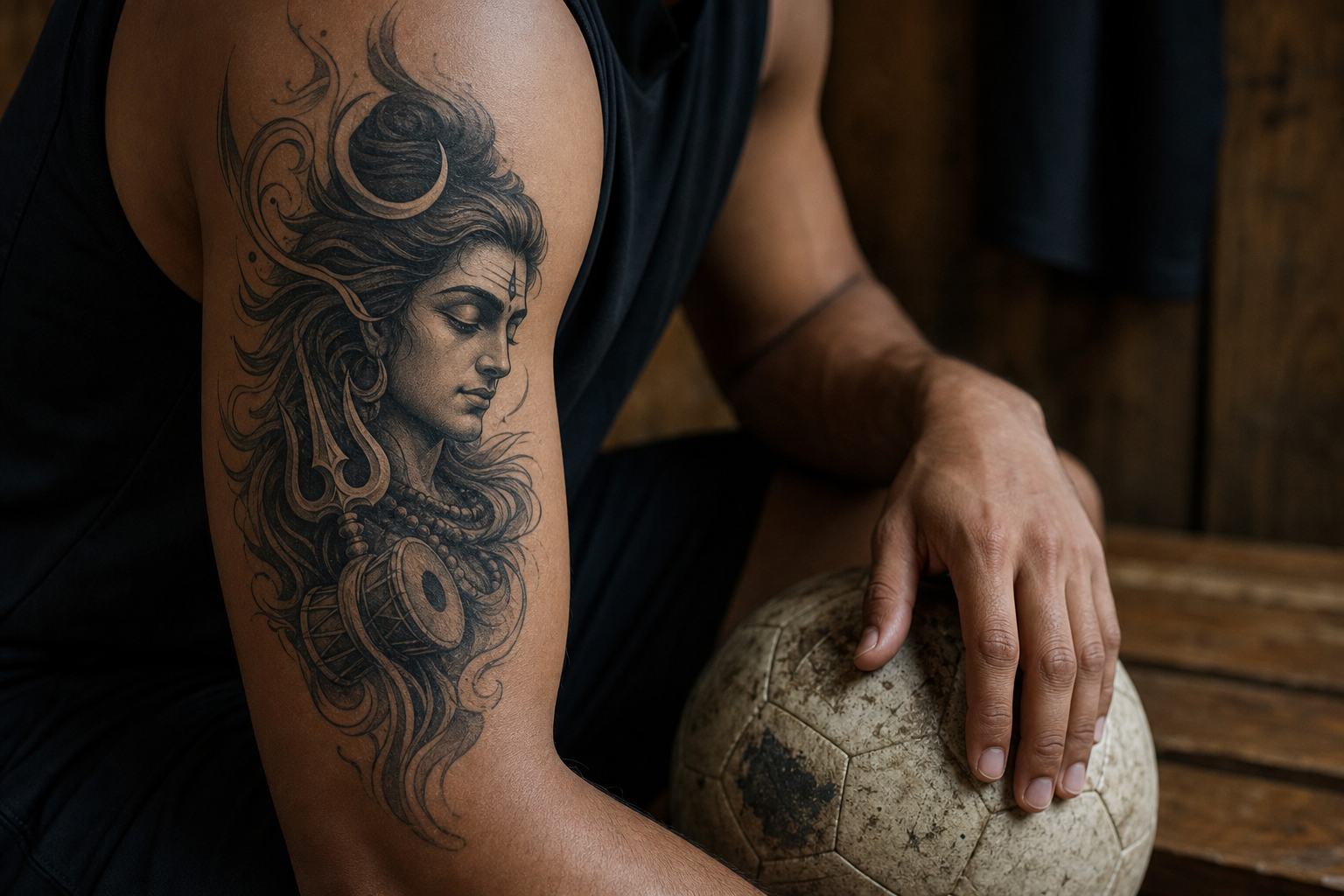
DharmaRenaissance Blog reports that Majcen has a large image of Lord Shiva on his back together with the Mahamrityunjaya mantra. According to the same account, his interest in India began before the tattoo: reading Shantaram prompted him to explore Indian culture, while a teammate’s mother introduced him to the name and idea of Rudra.
That sequence matters. It frames the tattoo as an embodied record of encounters rather than a symbol selected without context. A book opened an intellectual route, a personal relationship supplied a spiritual reference, and life in India gave those influences time to acquire practical meaning.
A tattoo cannot by itself prove the depth of anyone’s beliefs. In this case, however, the source connects the inscription to Majcen’s reported reflections on India, mindfulness and the management of his temperament. The image is therefore best read within that wider pattern of conduct and interpretation, not as self-explanatory evidence of devotion.
Rudra and the mantra as a language of disciplined intensity

The source presents Rudra as a form associated with Shiva whose meanings include intensity, healing, dissolution and renewal. It reports that this symbolism helped Majcen think about regulating force rather than simply repressing it. That distinction is especially relevant to a striker: competitive aggression can create urgency and courage, but effective play still demands judgment, restraint and precision.
The Mahamrityunjaya mantra adds another dimension. The article describes it as a revered invocation associated with Rudra-Shiva and commonly understood in relation to healing, protection, longevity, freedom from fear and inner resilience. On an athlete’s body, those themes sit beside the realities of injury, recovery, public scrutiny and the limited span of a playing career.
The resulting symbolism is not simply a celebration of physical power. Shiva and the mantra together can be understood here as a vocabulary for transforming intensity: strength is acknowledged, vulnerability is not denied, and self-command becomes more important than uncontrolled force.
Why his Indian football career changes the meaning
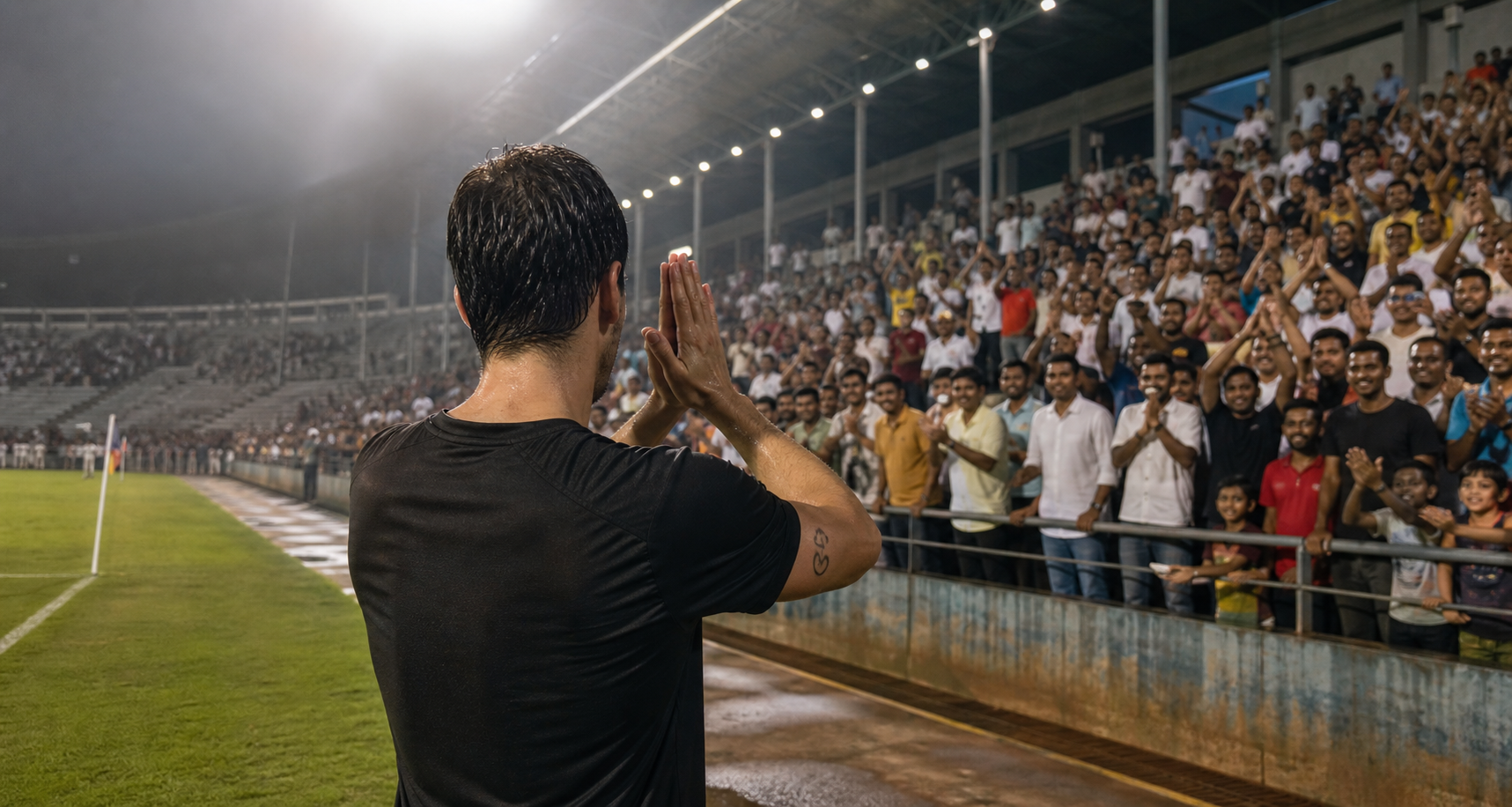
The tattoo attracted interest within an existing relationship between Majcen and Indian football. DharmaRenaissance Blog reports that the Slovenian striker arrived in India during the 2020-21 football period and played in significant I-League chapters involving Churchill Brothers, Gokulam Kerala and RoundGlass Punjab, later Punjab FC.
The same source places him within Gokulam Kerala’s successful I-League period and identifies him as an important figure in RoundGlass Punjab’s 2022-23 title campaign, which helped move the club into the Indian Super League structure. It also notes individual recognition connected with his scoring and attacking influence during his I-League years.
This competitive history gives the cultural story credibility among supporters. Fans were not encountering an unfamiliar visitor displaying a Hindu image; they were responding to a player whose goals, club commitments and time in different parts of India had already made him part of the domestic game’s narrative. Sporting contribution and cultural appreciation reinforce each other without becoming the same thing.
Key takeaways from Majcen’s India story
- The tattoo is reported as a Lord Shiva image accompanied by the Mahamrityunjaya mantra, not merely a generic India-themed design.
- Its reported background includes literature, a teammate’s family connection and prolonged experience in Indian football.
- Rudra provides a framework for interpreting athletic intensity as something to direct with awareness and restraint.
- The mantra introduces themes of healing, protection and resilience alongside the physical risks of professional sport.
- Indian supporters’ response is inseparable from Majcen’s established contribution to clubs and league campaigns in the country.
Appreciation is measured by context and conduct
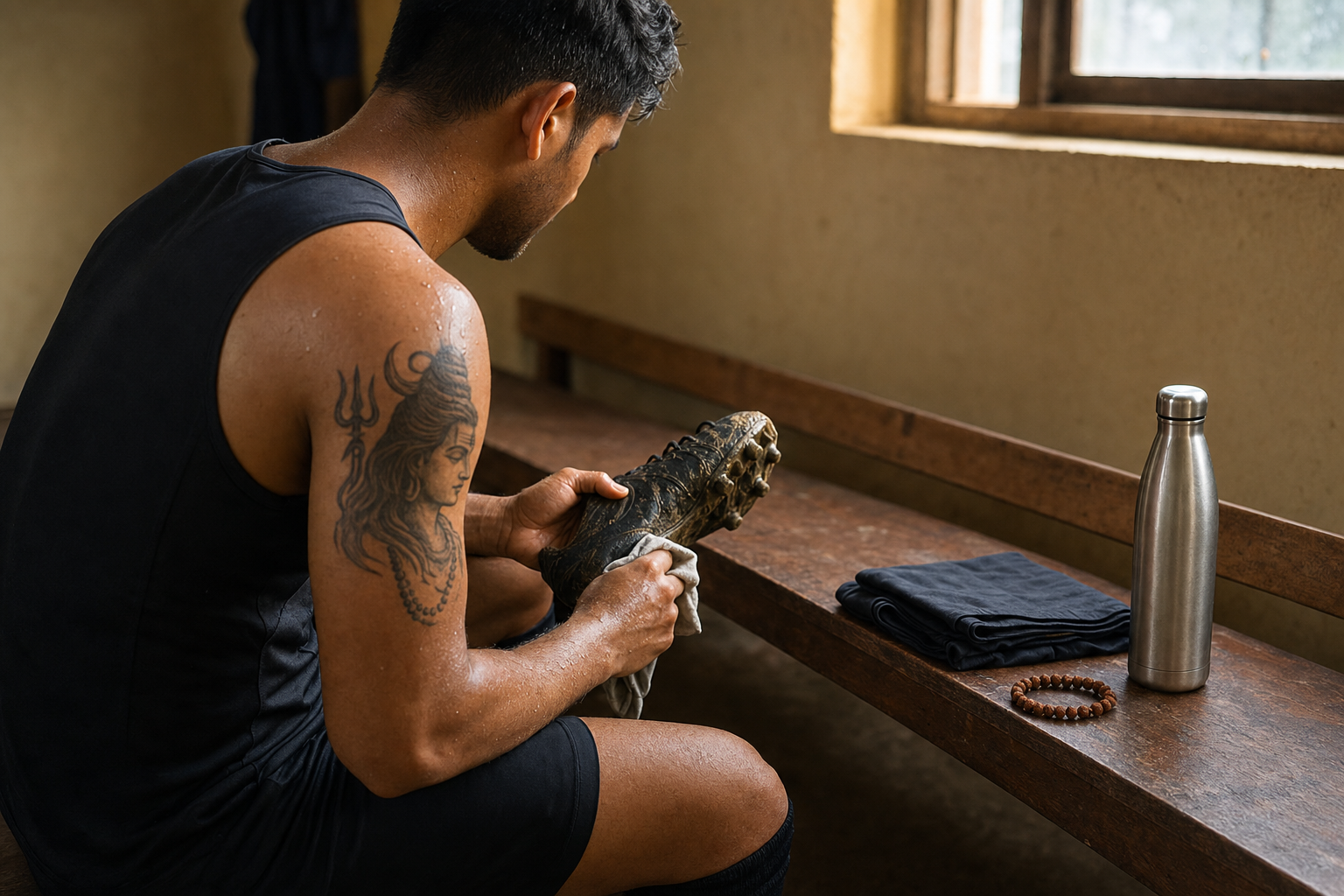
Majcen’s case also raises the broader question of how sacred Hindu symbols travel beyond inherited communities. The source characterizes his tattoo as cultural appreciation rather than casual appropriation, pointing to his years of living and working in India, his acknowledgment of India’s influence on his outlook, and the personal discipline he associates with the symbolism.
That interpretation should remain proportionate. The tattoo does not make Majcen an authority on Hinduism, and a positive fan response does not remove the need to treat sacred images and mantras seriously. A more useful standard considers whether a person seeks understanding, recognizes the source tradition, avoids trivialization and aligns public symbolism with respectful conduct.
The episode also shows how Indian football functions as a cultural meeting place. Clubs bring players into sustained contact with local relationships, regions and practices; occasionally, those encounters reshape how a player understands discipline and belonging. Future discussion of Majcen’s tattoo will be most meaningful when it keeps that lived context beside the viral image.