
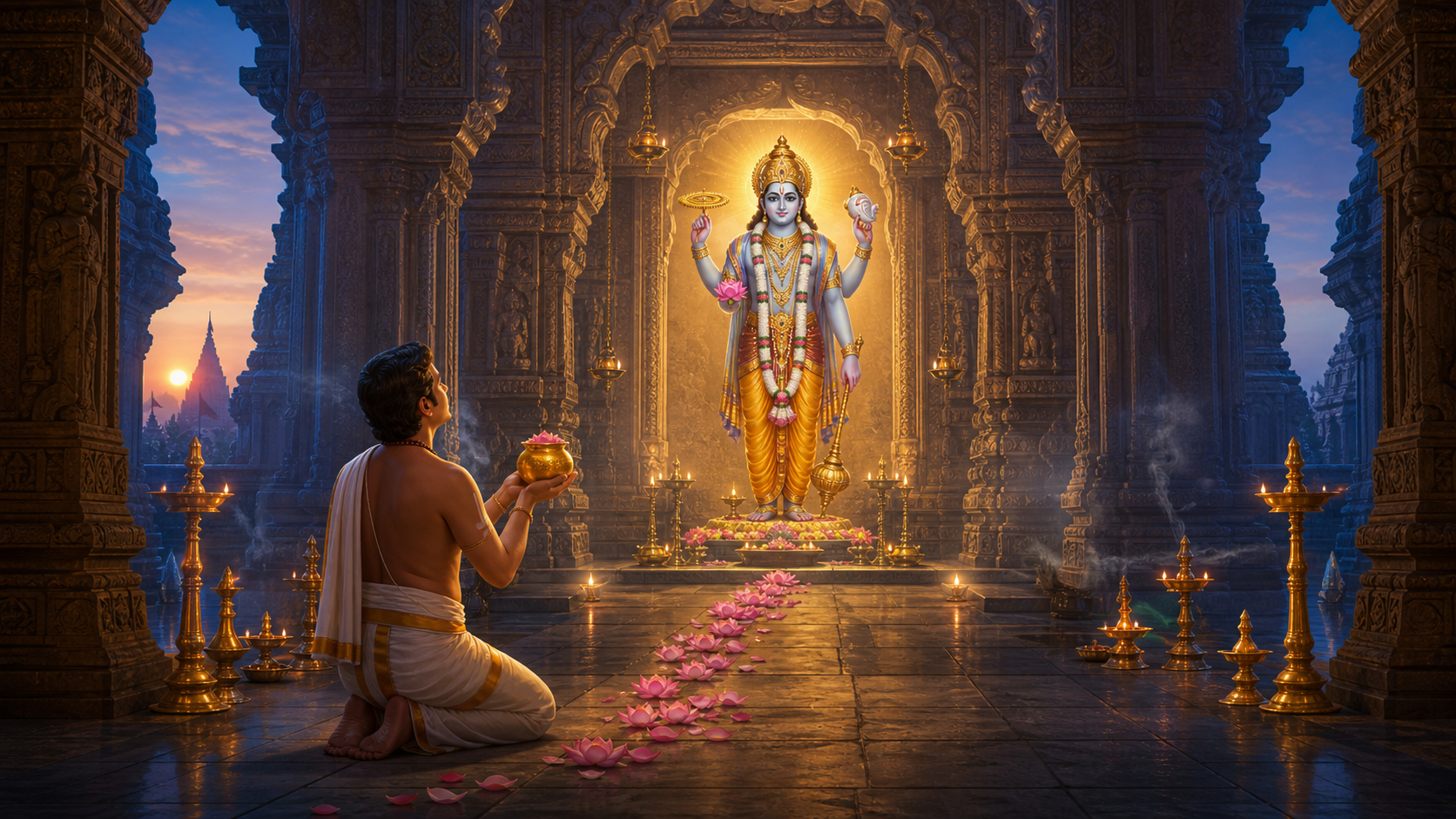
You may know exactly what you want from the Divine: relief from a difficulty, success in an important undertaking, protection for someone you love, or certainty about a decision. The harder question comes after that: if the request were granted, would it bring you closer to the Divine, or would it merely make your present arrangement more comfortable?
Bhakti does not require you to hide an immediate need behind pious language. It asks you to carry that need into a larger prayer. You can ask for help while also asking that the result protect dharma, deepen remembrance, strengthen service, and preserve the company of devotees. That second request reveals your highest aspiration.
A granted wish can still be an incomplete boon
A boon may be genuine and useful without being ultimate. Wealth can settle an obligation but cannot decide whether you become generous or possessive. Victory can remove an obstacle but cannot prevent pride. Recognition can expand your influence while quietly weakening your dependence on prayer. The first result is visible; the effect on your consciousness may appear much later.
Within the Vaiṣṇava bhakti frame, a boon is incomplete when it changes your circumstances without healing the desire that governs them. “Incomplete” does not mean fraudulent, powerless, or unworthy of gratitude. It means incomplete in relation to the soul’s highest good.
You can uncover that distinction by asking three questions before repeating a cherished prayer:
- What would this boon end? Name the concrete burden, danger, uncertainty, or deprivation you want removed.
- What would this boon strengthen? Consider whether fulfillment is likely to nourish humility, gratitude, entitlement, rivalry, service, or attachment.
- Who would be served by it? Decide what you would actually do with the opportunity after the immediate relief arrives.
The third question is especially revealing. If you can describe the possession you want but not the dharmic use you would make of it, the request probably needs to mature before it needs to become larger.
A limit within a boon may be part of its mercy

Bṛhad-Bhāgavatāmṛta 1.3.24–27 presents Śiva’s qualified boons as deliberate protections. Severe austerity did not entitle hostile worshippers to unlimited power against the Vaiṣṇavas. The boon could answer their worship while retaining a condition, exception, or opening through which dharma would be protected.
Jayadratha provides a sharp example of the mechanism: his promised success against the Pāṇḍavas was restricted by an exception for Arjuna and by a limit on its use. The qualification was not evidence that Śiva had carelessly failed to finish the gift. It prevented the recipient’s austerity from becoming a warrant for unrestricted adharma.
This matters when you interpret your own prayers. A delayed, narrowed, or differently answered request is not automatically divine rejection. At the same time, you cannot decode every disappointment as a secret message from God. The practical lesson is more disciplined: do not measure grace only by how completely events obey your preference. Examine whether a limit protects you or someone else from the consequences of an unpurified desire.
Before asking for greater capacity, influence, freedom, or success, pass the request through four filters:
- Harm: Does your preferred outcome depend upon another person’s humiliation, dispossession, fear, or spiritual injury?
- Dharma: Would obtaining or keeping it require deceit, ingratitude, broken duty, or the misuse of trust?
- Attachment: Are you treating the desired result as a tool for service, or as proof that you no longer need guidance?
- Stewardship: If the boon arrives, what specific responsibility will you accept with it?
If the request fails one of these tests, do not merely ask more intensely. Change its terms. A better prayer may seek honest work rather than triumph at any price, sufficient influence rather than domination, reconciliation rather than vindication, or the strength to perform a duty rather than escape it.
Pṛthu chooses the conditions that keep devotion alive
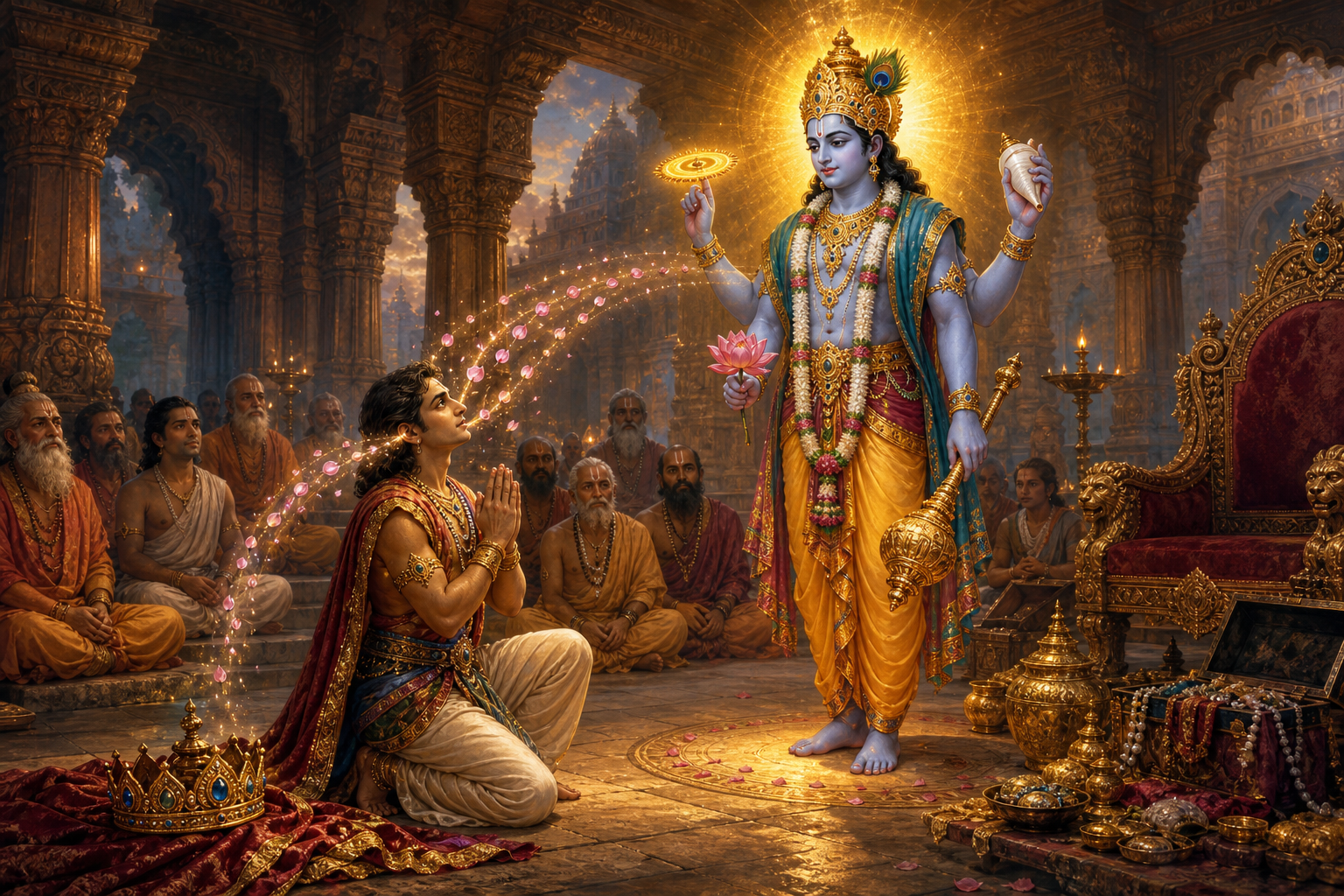
The devotee’s higher aspiration is not simply a more impressive object. It is the preservation of a living relationship. In Śrīmad-Bhāgavatam 4.20.26, King Pṛthu values hearing the Lord’s all-auspicious glories in the company of advanced devotees. The verse says that one who truly appreciates those qualities does not willingly abandon such association after hearing them even once. Lakṣmī is also invoked as one who desires to hear the Lord’s unlimited activities and glories.
The phrase “even once” should not be turned into a mechanical promise that one exposure completes spiritual life. It conveys the attractive power of genuine śravaṇa. A real taste produces the desire to return. Pṛthu therefore points beyond a momentary religious experience to the conditions that renew devotion: worthy company, attentive hearing, appreciation of divine qualities, and the willingness to remain near those who cultivate them.
This gives you a practical criterion for evaluating satsanga. Do not judge it only by the speaker’s charisma, the size of the gathering, the emotional intensity of the kīrtana, or your access to respected people. Ask what remains in you afterward:
- Are the Lord’s qualities more memorable than the personality of the person who spoke?
- Do you leave more willing to hear, chant, serve, and correct your conduct?
- Has your regard for other devotees become more respectful and less competitive?
- Do you want to return to the practice when no social recognition is available?
Association that repeatedly redirects attention toward the Divine is itself a profound boon. It does not merely satisfy one desire; it teaches desire what to seek.
How to ask for help without pretending you have no needs

It is easy to admire an exalted devotee’s refusal of ordinary rewards and then imitate the language without sharing the realization. That produces performance, not surrender. If you need employment, safety, reconciliation, or relief from a burden, say so plainly. Then enlarge the prayer instead of disguising it.
- Name the immediate need. Use one clear sentence. Vagueness makes it easier to confuse anxiety with devotion.
- Add a dharmic boundary. Ask that the result not require harm, deceit, neglected duty, or the spiritual diminishment of another person.
- Ask for the needed inner quality. This may be courage to act, patience to wait, clarity to choose, humility to accept correction, or restraint if success arrives.
- Ask to remain capable of hearing and serving. Include remembrance, sincere satsanga, receptivity to instruction, and freedom from the pride that makes those gifts seem unnecessary.
- Name your next rightful action. Prayer should clarify responsibility, not suspend it. Decide what honest step you will take after the prayer ends.
A complete version might sound like this: “May this undertaking succeed if it can do so without deceit or injury. Give me steadiness to do my duty and humility about the result. Do not let success make me forget You or failure make me resent You. Keep me in the company of devotees who help me hear and remember, and show me the next honest step.”
This form does not make the material request disappear. It places that request under dharma and within bhakti. It also gives you something meaningful to notice before the external outcome is known. A prayer may already be bearing fruit if you are becoming less willing to harm, more open to correction, more serious about service, and more eager for śravaṇa.
After an outcome arrives, conduct a second examination. Did fulfillment make you more grateful or merely more demanding? Did denial deepen dependence on the Divine or harden you against practice? Did the experience return you to good association, or persuade you that you can proceed alone? The event matters, but the direction of your consciousness tells you what kind of boon it became.
Key takeaways
- A boon is incomplete when it changes an external condition but leaves the governing desire untouched.
- A condition or exception within a boon can protect dharma; unlimited fulfillment is not the only form of divine favor.
- Pṛthu’s standard directs you toward hearing divine glories and remaining in the company of devotees who sustain that hearing.
- You do not have to deny an honest need. State it, place it under dharma, and ask for the inner qualities required to use the result well.
- The highest aspiration is not simply to receive something from the Divine, but to remain willing and able to remember, hear, love, and serve.
Before your next pūjā, japa, or private prayer, choose one request you have been repeating. Write it in five lines using the sequence above. Keep the immediate need in the first line, but let satsanga, remembrance, service, and surrender have the final word.
References
- Dandavats — August 16, 2026 – Hungary – Brihad Bhagav. 1.3.24-27 – "Lord Śiva’s Incomplete Boons"
- Dandavats — SB 4.20.26 | HG Hansarupa das
