
-
Pana Patra in Hindu Sculptures: A Powerful Symbol of Abundance, Compassion, and Divine Grace

The pana patrathe ritual bowl seen across Hindu sculpturesserves as a compact key to decode abundance, renunciation, immortality, and grace in temple art. Grounded in Shilpa Shastra logic and Agamic practice, this guide clarifies how Annapūrṇā’s food bowl, Bhairava’s skull-cup, Kubera’s jewel vessel, and cups in Samudra Manthana scenes each signal distinct theological roles. It…
-
Memento Mori as Dharmic Practice: Urgent Living, Clear Priorities, and Courageous Leadership

This article presents a disciplined, Dharmic approach to mortality contemplation as a practical technology for urgent living and ethical leadership. It synthesizes insights from Hinduism, Buddhism, Jainism, and Sikhismmaranasati, pratikraman, simran, and dharmato convert awareness of impermanence into decisive action. A step-by-step protocol guides breath awareness, a regrets inventory, value-based reprioritization, and execution of one…
-
Is Life Easy or Difficult? An Evidence-Backed Dharmic Guide to Joy, Suffering, and Mastery

Is life easy or difficult? A dharmic analysis shows the question spans two complementary levels: the conventional reality of dukkha (unsatisfactoriness) and the ultimate discovery of ananda (joy). Buddhism’s Four Noble Truths, the Yoga Sutra, Vedanta’s ananda doctrine, Jain anekantavada, and Sikh Chardi Kala together form a unified method for transforming difficulty into resilience while…
-
ISKCON Navi Mumbai Unveils IGST 2026: Transformative Gita Scholarship Test and Immersive Retreat

ISKCON Navi Mumbai’s International Gita Scholarship Test (IGST) 2026 pairs rigorous study of the Bhagavad Gita with an immersive retreat to address academic stress, digital distraction, and the need for ethical leadership among youth. The initiative emphasizes comprehension, application, and reflection rather than rote memorization, aligning learning outcomes with established pedagogical frameworks. Daily practice recommendationsspaced…
-
Surrender that Liberates: How Dāsa‑Bhāva Shapes Bhakti, Seva, and Dharmic Unity
The Bhakti concept of “dasa” (dāsa)a chosen identity of loving service and surrenderanchors Hindu spirituality in a disciplined ethic of humility, seva, and śaraṇāgati. Grounded in scriptural sources like the Bhagavad Gita and Srimad Bhagavatham, dāsya-bhāva appears across Vaishnava, Śaiva, and Śākta traditions and is elaborated by Ramanujacharya, Madhvacharya, and Chaitanya Mahaprabhu. It flourishes in…
-
How Sharing Food Heals Enmity: Timeless Dharmic Practices from Hindu, Buddhist, Jain, Sikh Traditions
Hinduism and its sister dharmic traditions treat shared food as a deliberate instrument of reconciliation. Philosophical axioms such as Annam Brahma, Atithi Devo Bhava, and Vasudhaiva Kutumbakam elevate feeding from charity to peacecraft. Ramayana narratives, temple prasada, Sikh langar, Jain anna-kshetras, and Buddhist dana converge on a single ethic: dignified, vegetarian commensality dissolves social distance…
-
Kamsa Syndrome: How Fear Breeds Tyranny and How Dharmic Wisdom Defuses It
The Bhagavata Purana’s portrait of Kamsa presents a precise psychology of tyranny: fear, mishandled as policy, becomes a self-fulfilling catastrophe. This article defines the “Kamsa syndrome” and analyzes how a single prophecy, filtered through insecurity, produced surveillance, purges, and escalating violence in Mathura. It reads the narrative alongside the Bhagavad Gita’s ethics of abhaya and…
-
Self‑Born, Mind‑Born, Womb‑Born: Decoding the Profound Hindu Cosmology and Sanat Kumaras
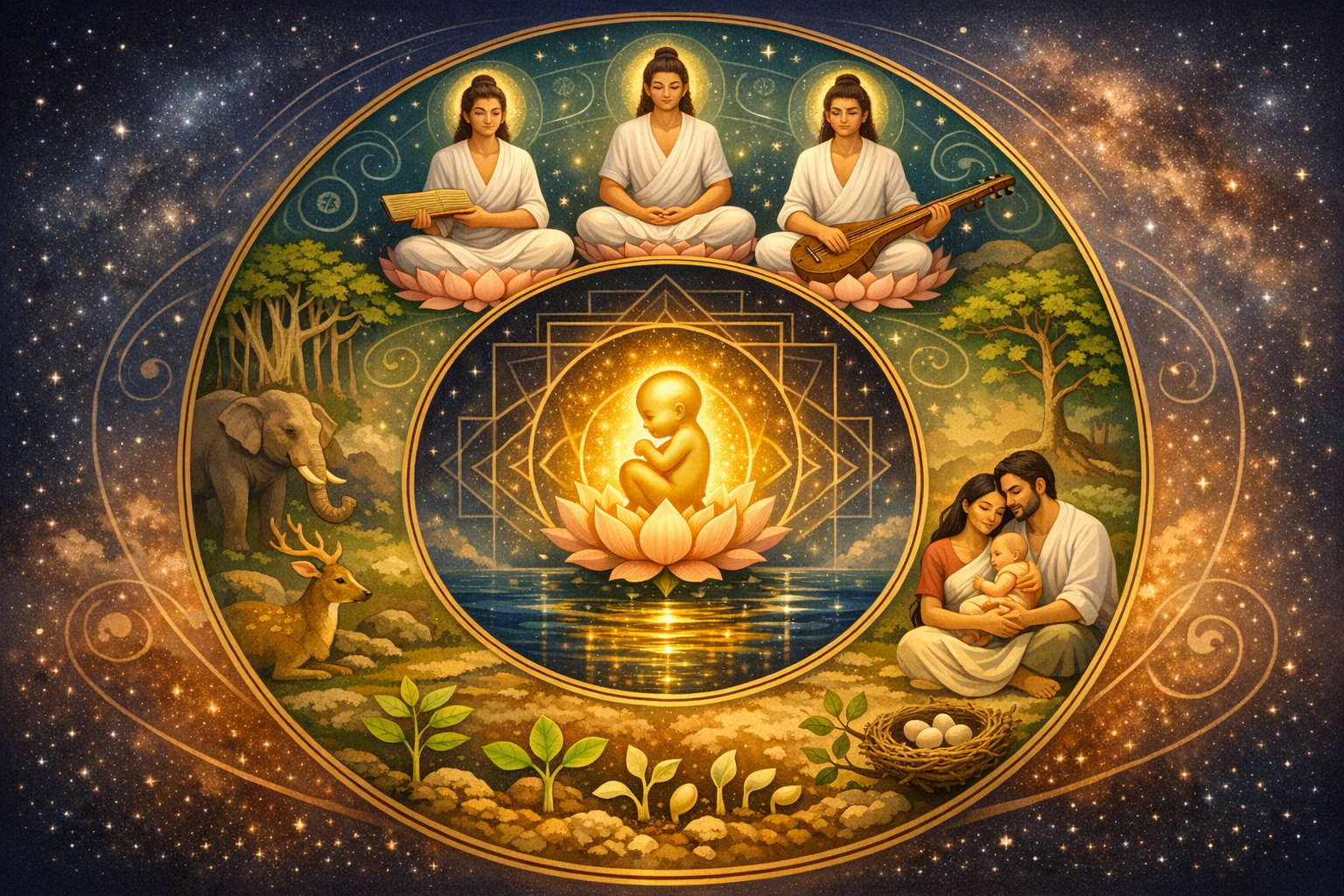
Hindu cosmology describes creation in three interlinked stages: self-born (svayambhū), mind-born (mānasa), and womb-born (jarāyujā). Drawing on the Viṣṇu Purāṇa, Śrīmad-Bhāgavatam, and allied texts, this analysis shows how sarga (primary emanation) and visarga (secondary diversification) structure a descent from subtle principle to mental formation and biological life. The Sanat Kumaras and Nārada exemplify the mind-born…
-
Dhumavati and Shiva Unveiled: Origin Myths, Smoke-Clad Symbolism, and Transformative Wisdom

Dhumavati, the smoke-clad Mahavidya, teaches how endings and absence become gateways to discernment across the Dharmic family. This in-depth essay clarifies her origin myths, including the Sati–Shiva narratives and the Daksha yajna smoke motif, and interprets their philosophical stakes. It decodes her iconographycrow, broom, winnowing basket, cremation groundas a curriculum in viveka and vairagya. Readers…
-
Laghu Shyamala: The Enigmatic Dark Goddess of Shakti, Speech, and Fertile Creation in Hinduism
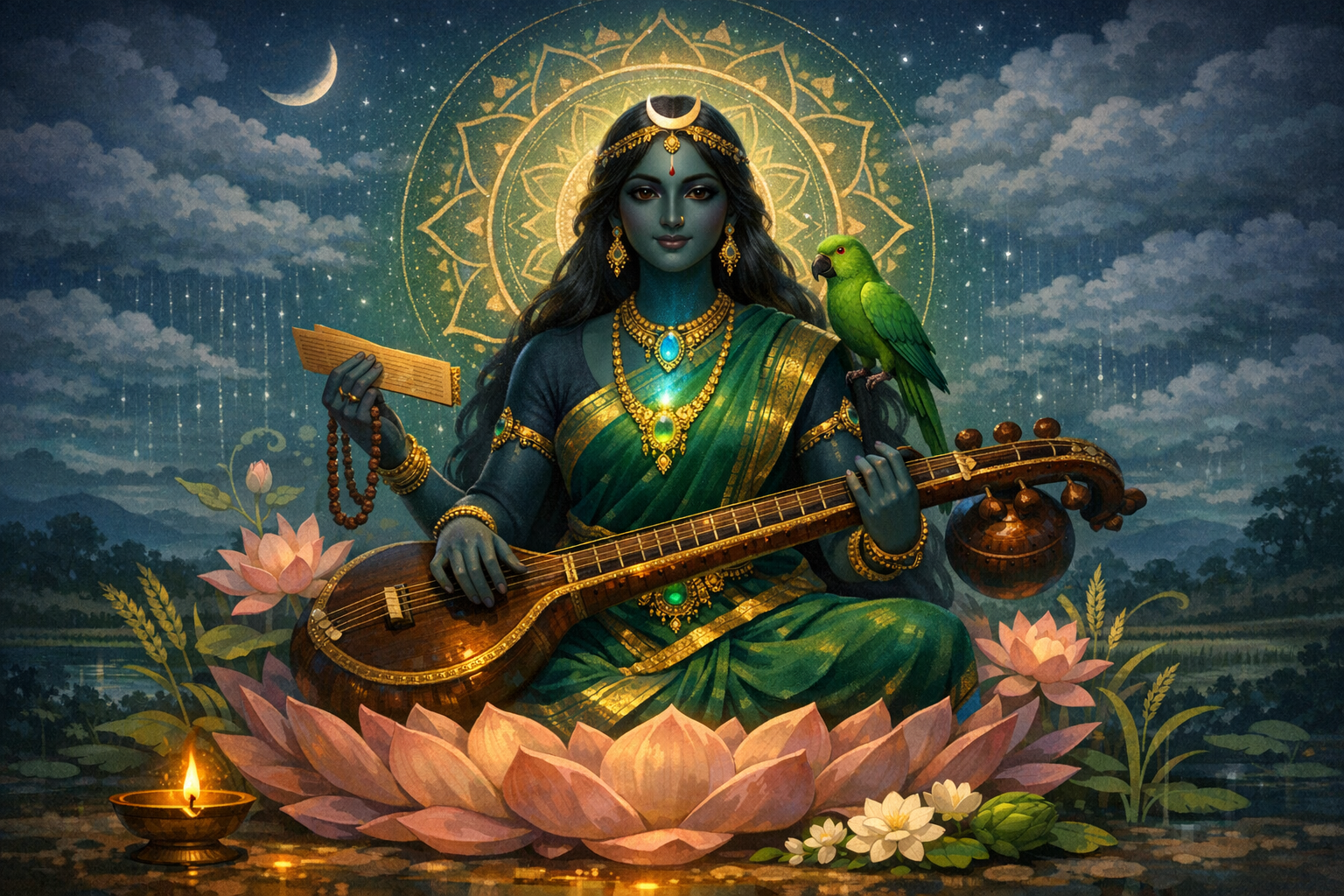
Laghu Shyamala is honored as a dark-hued, esoteric form of the Divine Mother whose power concentrates knowledge, speech, creativity, and fertility. The name reveals an accessible pathway to Shakti, pairing the generative symbolism of “Shyamala” with the concise, practical emphasis of “Laghu.” Iconographyveena, parrot, book, and japa-malamaps a theology of cultured eloquence and compassionate learning.…
-
Avatar vs Prophet: Decoding Sacred Roles, Divine Presence, and Dharma Across Faiths

This in-depth analysis explains the core difference between a Hindu avatāra and an Abrahamic prophet by examining ontology, revelation, soteriology, and ritual life. It shows how the avatāra is the Divine Presence entering the world to restore dharma, while the prophet is a human messenger who conveys God’s guidance. The piece nuances the comparison by…
-
Seeking the Supreme: An Academic Exploration of Hindu Pluralism, Ishta, and One Reality
Many seekers raised in temple-centered Hindu life wrestle with two enduring questions: Why so many gods, and who is the Supreme? Hindu philosophy answers with a precise synthesis: the One Reality (Brahman) is accessible both without attributes (nirguna) and with attributes (saguna), and Ishta-devata personalizes that access without denying unity. Rig Veda’s “Ekam sat vipra…
-
Tapasya in Kali Yuga: Powerful, Scripture-Sourced and Science-Backed Austerities for Modern Life

Tapasya in Kali Yuga is not self-mortification but an intelligent discipline that purifies body, speech, and mind for clarity and resilient living. Drawing on the Bhagavad Gita, Yoga Sutras, the Bhagavatam, and the Kali-Santarana Upanishad, it reframes penance as preparatory purification rather than an attempt to please the divine or force realization. Practical śarīra-, vāk-,…
-
Hinduism’s ‘330 Million Gods’ Demystified: Unity, Ishta, and the Logic of Many Paths

Why Hindus follow many gods is not a contradiction but a cornerstone of Sanatan Dharma. This essay clarifies the famous “330 million gods” as a later linguistic and devotional interpretation of the Vedic 33 categories (koti) of deities, grounding the discussion in the Vedas, Upanishads, and the Bhagavad Gita. It explains Ishta-devata as a rigorous,…
-
Tapasya in Hinduism: Transformative Austerity for Self-Realization, Clarity, and Inner Power

Tapasya in Hinduism is a disciplined, life-affirming austerity that refines body, speech, and mind to foster Self-Realization and ethical clarity. Drawing on the Upanishads, Bhagavad Gita, and Yoga philosophy, it is defined as a transformative heat that burns impurities and ripens insight. The Gita’s typology (sāttvika, rājasika, tāmasika) and Patañjali’s Kriyā Yoga supply practical guardrails…
-
Beyond 330 Million Gods: How Hinduism Unites Many Deities into One Supreme Reality

The familiar claim that Hinduism has 33 crores (330 million) gods is a popular misreading; classical sources enumerate thirty-three devaseight Vasus, eleven Rudras, twelve Adityas, plus Indra and Prajapati. By clarifying the Sanskrit term koṭi (class/category vs. crore), the article shows how Vedic and Upanishadic texts integrate divine plurality within a single metaphysical reality. It…
-
Rihanna Performs Aarti in Mumbai: Ritual Meaning, Cultural Respect, and Dharmic Unity

Rihanna’s participation in a puja ceremony and performance of Aarti at the Ambani residence in Mumbai became a touchstone for cultural respect and interfaith understanding. The moment illustrates how Hindu rituals like puja and Aarti, when approached with humility and guidance, are accessible to people of all backgrounds. This article explains the ritual logic of…
-
Ravana, Ganesha, and Shiva’s Atmalinga: Decoding the Gokarna Legend, Symbolism, and Dharma

The legend of Shiva’s Atmalinga and Ravanacentral to the Gokarna Mahabaleshwar Temple traditionexplains how Ganesha redirected immense power to uphold dharma without violating Shiva’s boon. It frames the Atmalinga as Shiva’s undivided essence and shows that vows ethically constrain even divinely granted power. Ravana’s devotion is honored, yet the narrative cautions against concentrating absolute power…
-
From Flower to Faith: Uncovering Puja’s Roots, Vedic Evolution, and Sacred Simplicity

This essay explores the timeless essence of puja by tracing its etymology, ritual history, and lived practice, from the Dravidian echo of ‘pu’ (flower) to Sanskrit notions of honor and reverence. It clarifies how Vedic, Purāṇic, and Agamic sources shaped today’s home and temple worship, including pañcopacāra and śoḍaśopacāra frameworks. Readers gain practical guidance for…
-
Kalachakra in Hindu Tantra: Decoding the Wheel of Time, Consciousness, and Dharmic Unity
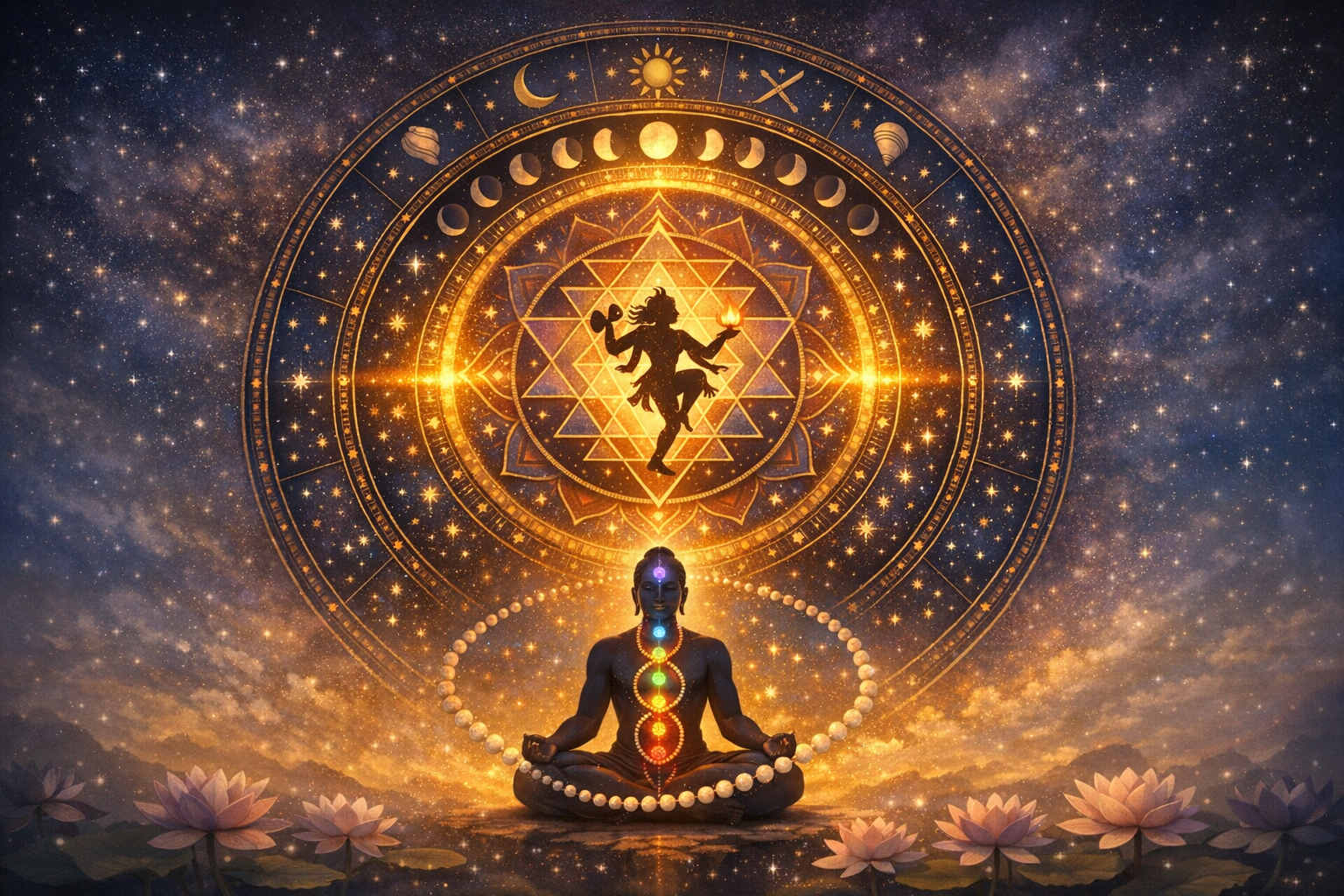
Kalachakra in Hindu Tantra presents time as a living cycle that unifies microcosm and macrocosm, offering a precise path to the timeless ground of awareness. Drawing on the Maitri Upanishad and the Bhagavad Gita, it treats time as both measurable rhythm and doorway to the Akāla, the unconditioned. The framework integrates Vedic cosmology, pañcāṅga timing,…